Barred Cuckoo-Dove
Macropygia unchall
斑尾鹃鸠
Introduction
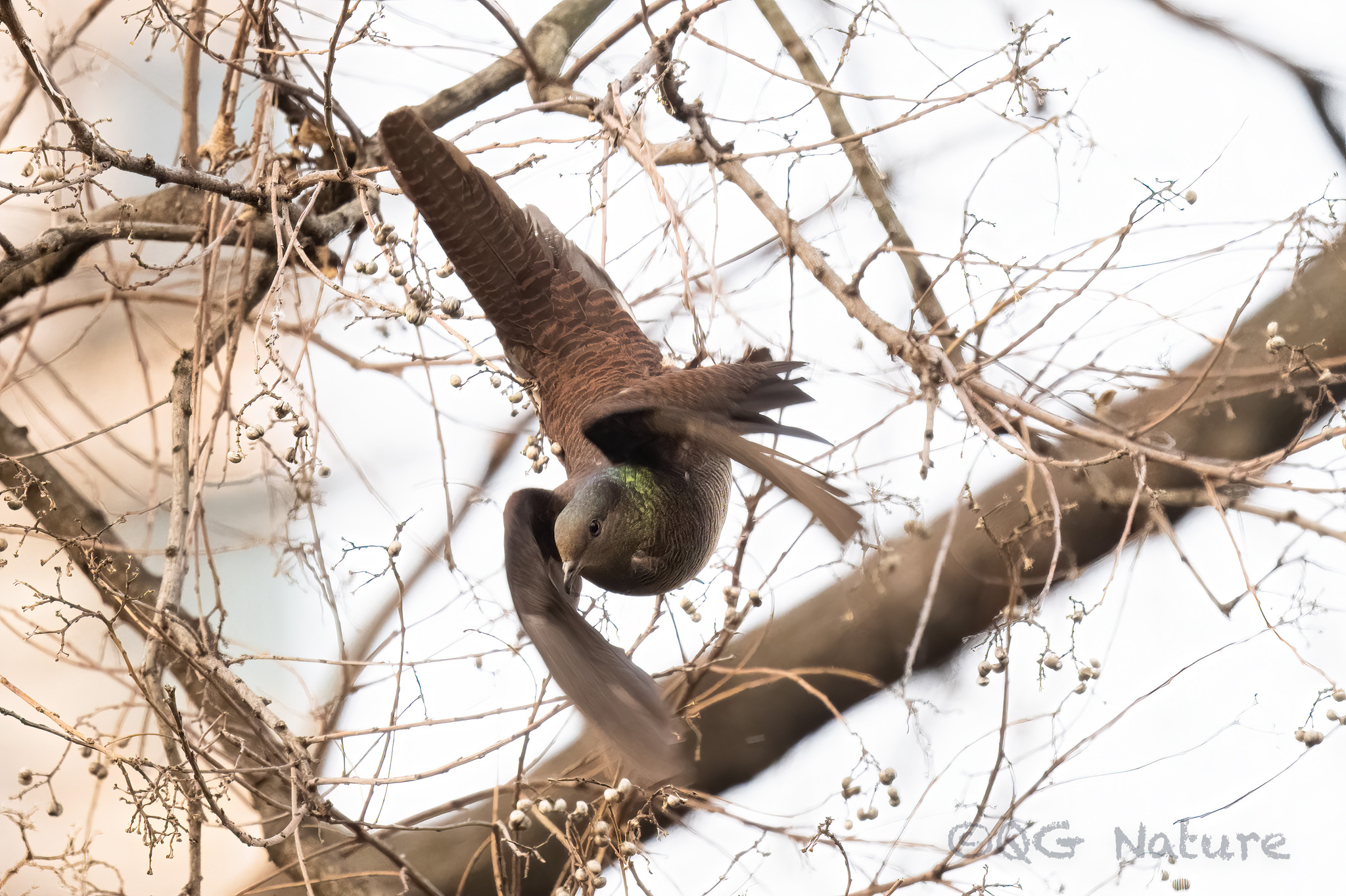
The barred cuckoo-dove is a medium-sized species in the family Columbidae. It inhabits montane forests across South and Southeast Asia, including the Himalayas. This species occurs in small flocks in subtropical woodlands, typically in the canopy and at forest edges. It exhibits an undulating flight pattern typical of doves and prefers dense habitat. The barred cuckoo-dove plays a role in seed dispersal within its ecosystem. Its population trend is decreasing.
Description
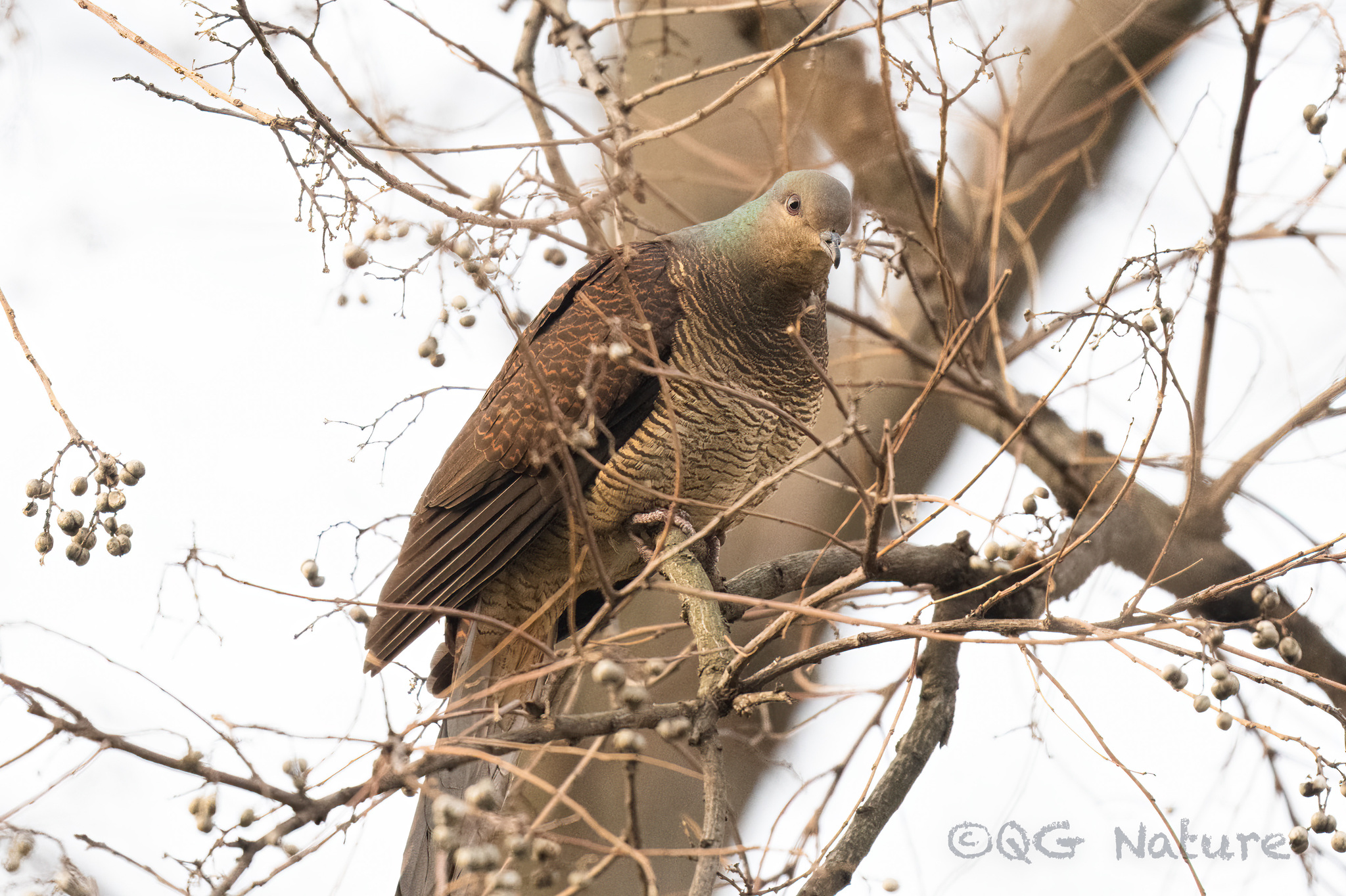
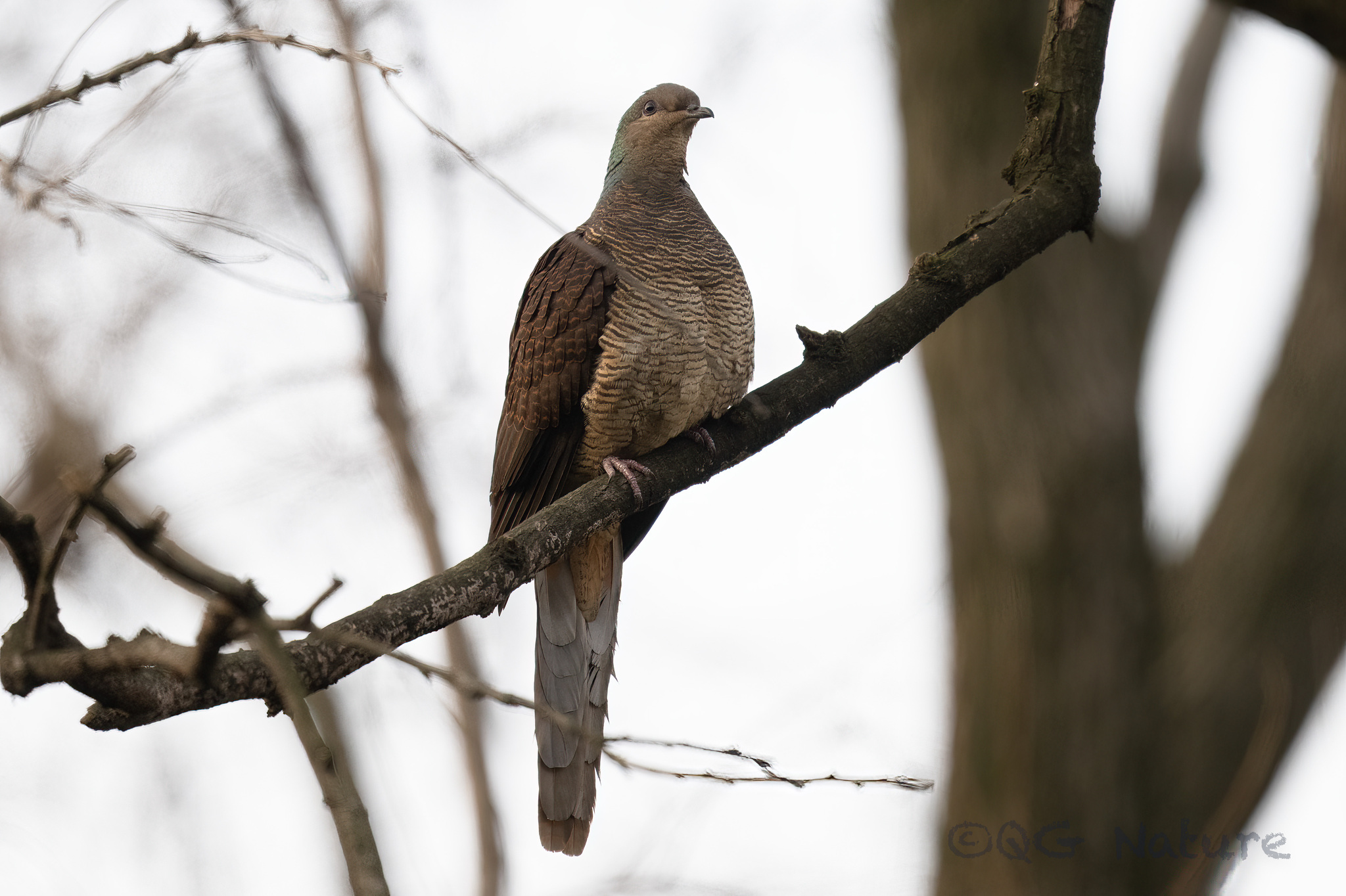
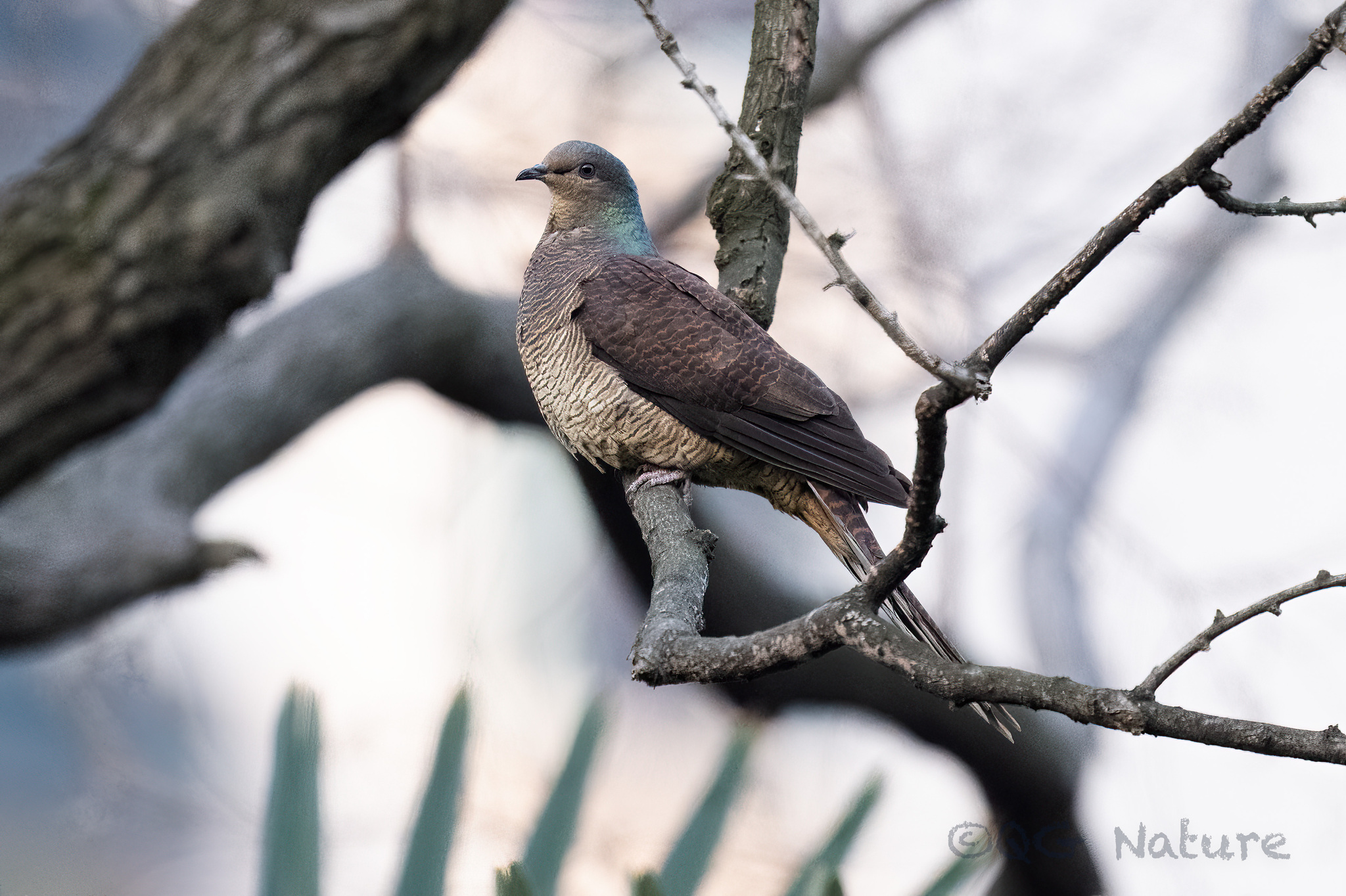
This medium-sized dove measures 37 to 41 centimeters in length and weighs between 153 and 182 grams. The species exhibits a buff-colored throat and forehead, with pinkish-gray tones grading to the crown. The iris appears yellow or pale brown, contrasting with a short black beak and vivid red feet. The upperparts are blackish brown, with reddish brown fringes adorning the back, mantle, rump, wing coverts, and scapulars. The tail is blackish brown and heavily barred with reddish brown markings. These bold barring characteristics, particularly on the tail, mantle, breast, and coverts, are distinguishing features of this species.
Identification
This species is most likely to be confused with the little cuckoo-dove, but several distinguishing characteristics separate them. The barred cuckoo-dove is notably larger and darker overall compared to its smaller relative. The bold black barring on the mantle, breast, wing coverts, and tail provides the most reliable field mark for identification. In flight, the heavy barring on the tail is particularly conspicuous. The combination of larger size, darker coloration, and distinctive barring pattern should distinguish it from similar species in its range.
Distribution & Habitat
The barred cuckoo-dove ranges across South and Southeast Asia, from the Himalayas through the region. It inhabits dense subtropical woodlands at elevations between 800 and 3,000 meters, favoring montane slopes throughout its range. This species shows a preference for forest clearings and edges, where it can be found in both old-growth and second-growth forests. It appears to be resident within its range rather than migratory.
Behavior & Ecology
This species is social, living in small flocks throughout the year. Its vocalization is distinctive and loud, described as a kro-uum or u-va call, with the second note notably louder than the first. This call often gives away the bird's presence in dense habitat before it becomes visible. The article provides no specific information about diet or breeding behavior.
Conservation
The barred cuckoo-dove has been listed as Least Concern on the IUCN Red List since 1998. This assessment reflects its large range exceeding 20,000 square kilometers and a stable population trend. Although the total population size has not been precisely determined, it is estimated to number more than 10,000 individuals. No specific threats are identified in the available information, and the species appears to persist across its extensive range.
Culture
The barred cuckoo-dove holds cultural significance among several indigenous communities in its range. The Lepcha people of Sikkim refer to this bird as 'ka ar fo,' while the Mizo people of Mizoram call it 'Ṭhumimeisei.' These traditional names reflect the species' presence in local cultures and its recognition by communities living in its habitat.
Source: Wikipedia · CC BY-SA 3.0
Taxonomy
- Order
- Columbiformes
- Family
- Columbidae
- Genus
- Macropygia
- eBird Code
- bacdov1
Subspecies (3)
-
Macropygia unchall minor
mountains of southeastern China to Vietnam, Laos, northern Thailand, and Hainan
-
Macropygia unchall tusalia
Himalayas (Kashmir to Assam, southwestern China, and Myanmar)
-
Macropygia unchall unchall
mountains of Malay Peninsula, Sumatra, Java, Lombok, and Flores
Data Sources
Species description from Wikipedia, licensed under CC BY-SA 3.0.
Bird images and sounds sourced from GBIF, contributed by citizen scientists worldwide under Creative Commons licenses.
Taxonomy data from AviList 2025.