
Passeriformes / Muscicapidae / Luscinia
Bluethroat
Luscinia svecica · 蓝喉歌鸲
Introduction
A small passerine in the Old World flycatcher family, this migratory insectivorous species breeds in wet birch wood or bushy swamp across Europe and the Palearctic, with a population in western Alaska. It nests in tussocks or low in dense bushes and winters in the Iberian Peninsula, northern Africa, and southern Asia.
Description
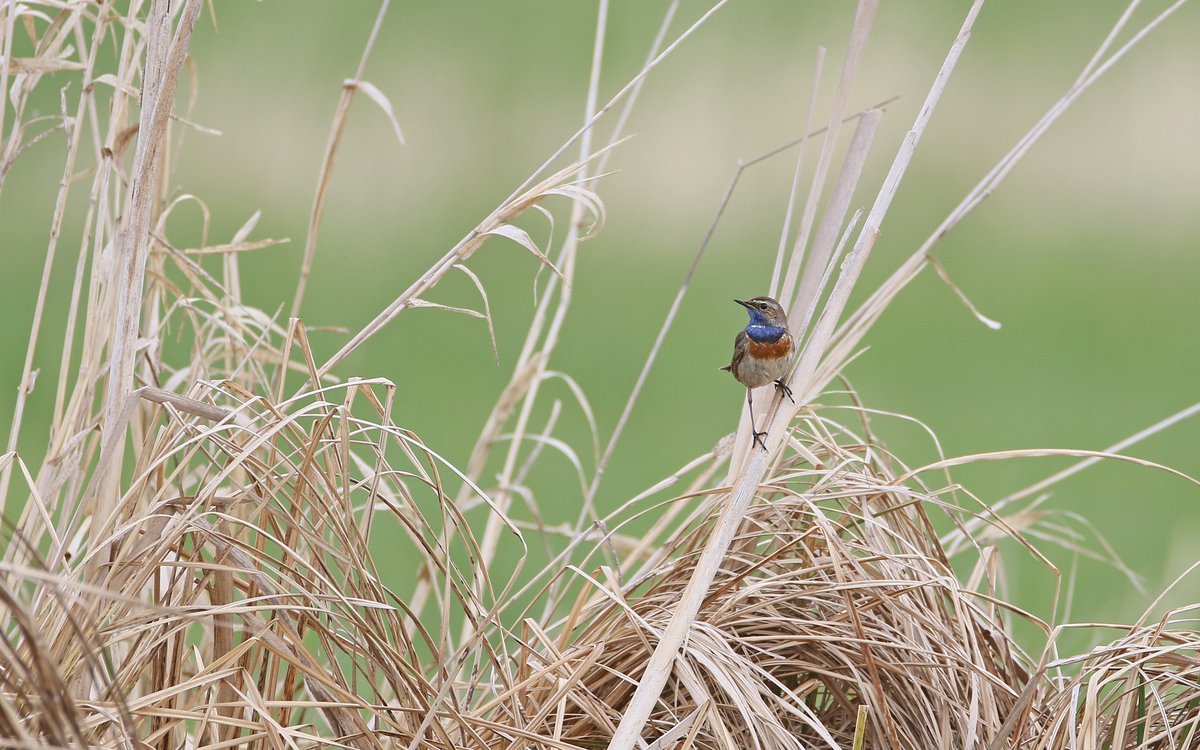
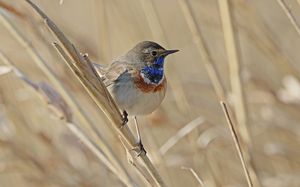
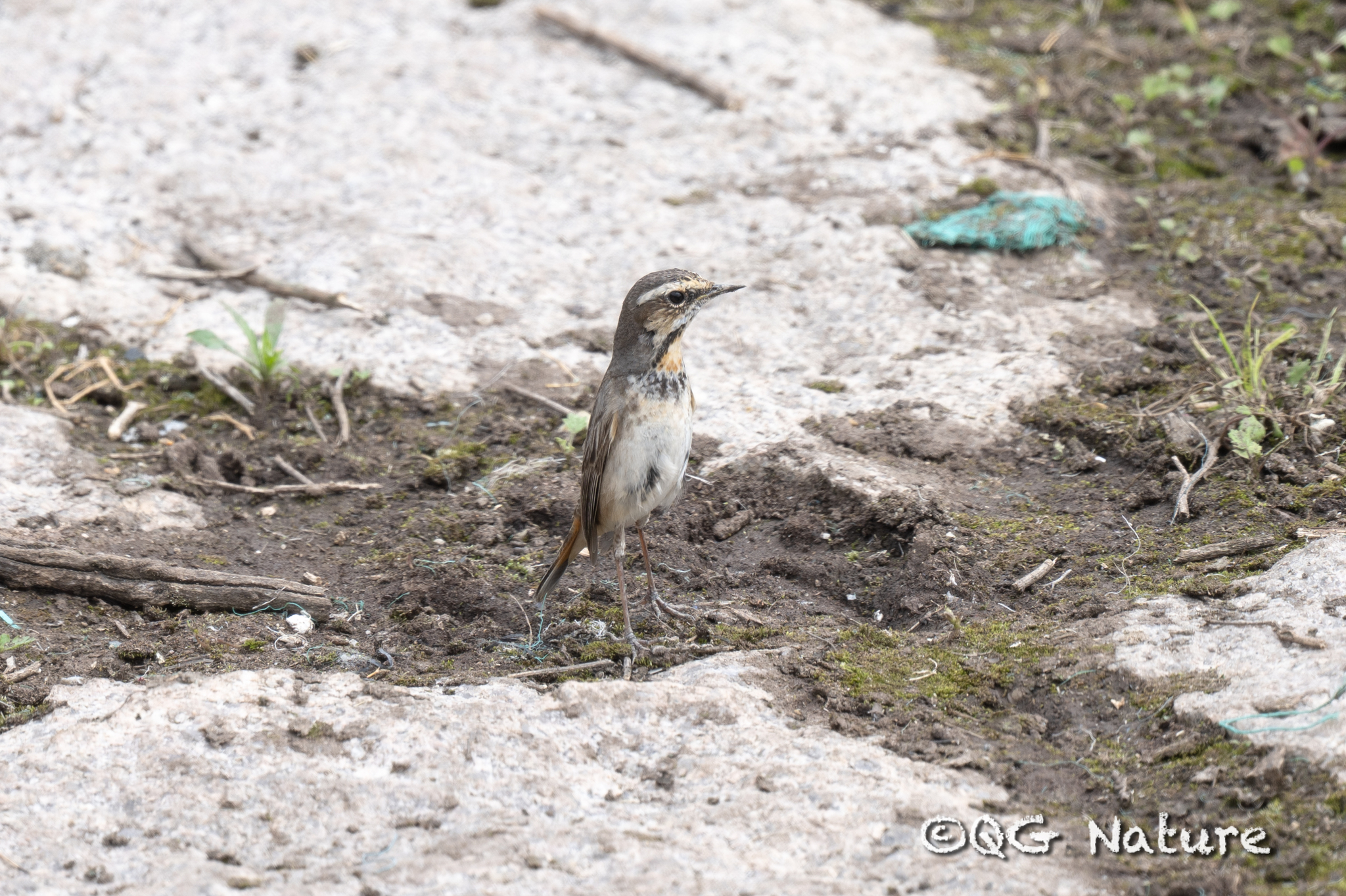
Similar in size to the European robin at 13–14 cm. Plain brown above with a distinctive tail featuring brown feathers, black outer corners, and red basal side patches. Possesses a strong white supercilium. Males display a vivid glossy blue throat bordered below by a narrow black band and a broad brick-red band, often with a central red or white spot. Male plumage is brightest in spring and summer; fresh feathers after July moult have pale tips that obscure the pattern until they abrade in late winter. Females usually have a blackish crescent and limited blue on an otherwise cream throat and breast. Newly fledged juveniles are freckled and spotted dark brown above and below.
Identification
Males are identified by the striking throat pattern: glossy blue with a black band and brick-red band below, plus a central spot (color varies by subspecies). Females show a blackish crescent and limited blue on a cream background. Call is a typical chat 'chack' noise. Subspecies differ in throat spot color (red, white, or absent) and intensity of blue.
Distribution & Habitat
Breeds in wet birch wood or bushy swamp in Europe and across the Palearctic, with a foothold in western Alaska. Specific subspecies ranges include: L. s. svecica in subarctic shrub tundra from Scandinavia to western Alaska; L. s. namnetum in lowland reedbeds in western France; L. s. cyanecula in lowland reedbeds from northern/eastern France to Baltic States and Ukraine; L. s. azuricollis in northern Spain; L. s. volgae in lowland western Russia; L. s. magna in mountains of eastern Turkey, Caucasus, and northern Iran; L. s. pallidogularis in southeastern Russia and northern Kazakhstan to Tien Shan; L. s. abbotti from Afghanistan to NW Himalaya; L. s. saturatior in southern Siberia and northern Mongolia; L. s. kobdensis in western Mongolia and western China; L. s. przevalskii in central China. A disjunct population of L. s. svecica breeds in the northern Carpathian Mountains. Winters in the Iberian Peninsula, northern Africa, southern Asia (including Indian subcontinent), Middle East, and SW Europe.
Behavior & Ecology
Insectivorous. Nests in tussocks or low in dense bushes. Moult begins in July after breeding and is completed in 40–45 days before migration. The male has a varied and very imitative song.
Source: Wikipedia · CC BY-SA 3.0
Taxonomy
- Order
- Passeriformes
- Family
- Muscicapidae
- Genus
- Luscinia
Subspecies (11)
-
Luscinia svecica abbotti
breeds western Pakistan and northwestern India; winters to northern India
Data Sources
Species description from Wikipedia, licensed under CC BY-SA 3.0.
Bird images and sounds sourced from GBIF, contributed by citizen scientists worldwide under Creative Commons licenses.
Taxonomy data from AviList 2025.