Common Nightingale
Luscinia megarhynchos
新疆歌鸲
Introduction
The common nightingale (Luscinia megarhynchos) is a small passerine bird belonging to the family Muscicapidae (Old World flycatchers), formerly classified with thrushes due to convergent evolution. This migratory insectivorous species breeds in forest and scrub across Europe and the Palearctic, wintering in Sub-Saharan Africa. The species is renowned for its powerful and melodious song, with males capable of producing up to 250 distinct song types (average 190). Three subspecies are recognized: L. m. megarhynchos (western Europe, North Africa, Asia Minor), L. m. africana (Caucasus to Iran), and L. m. golzii (Aral Sea to Mongolia). The breeding range overlaps with the closely related thrush nightingale (Luscinia luscinia), with which hybrids have occurred.
Description
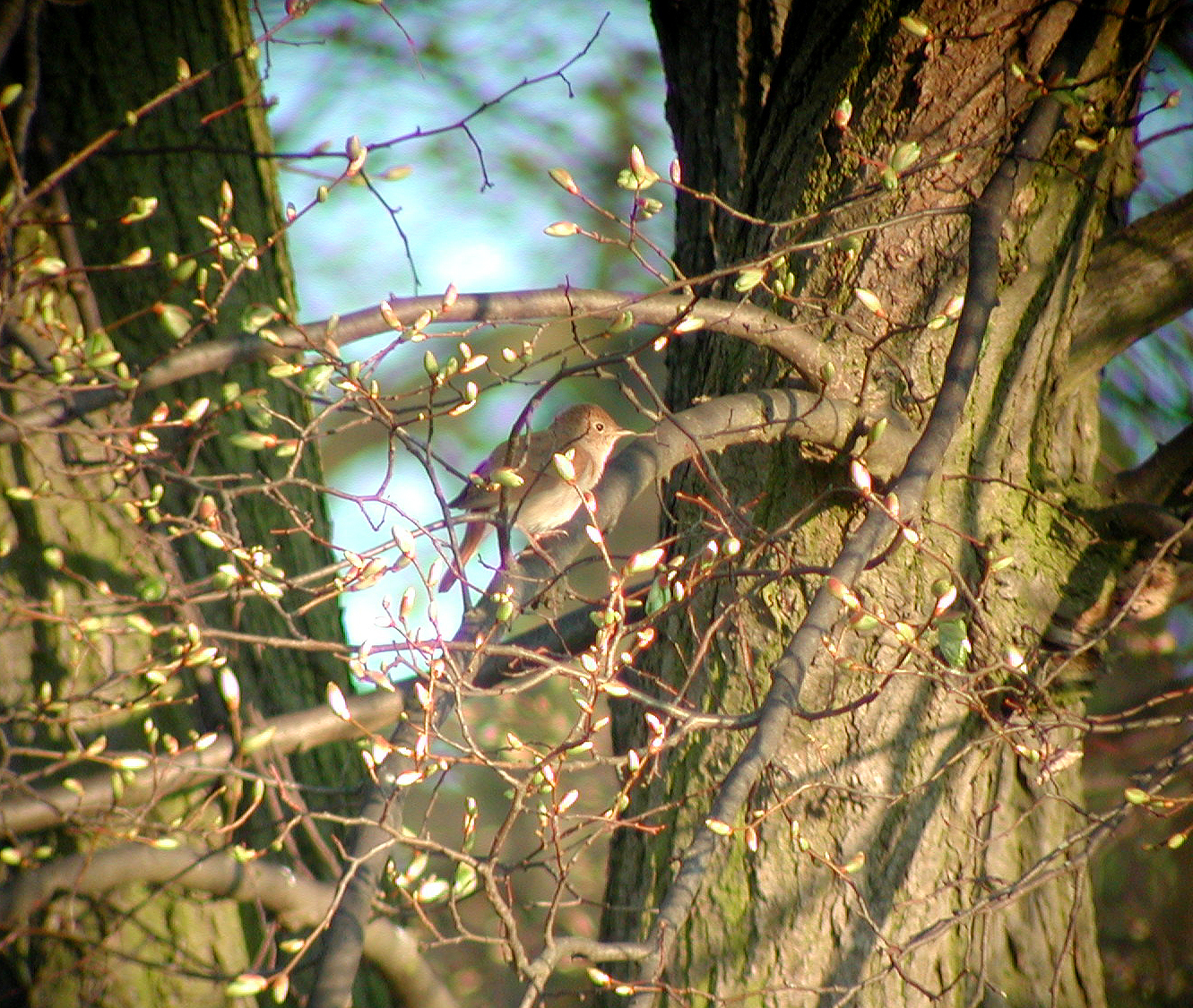
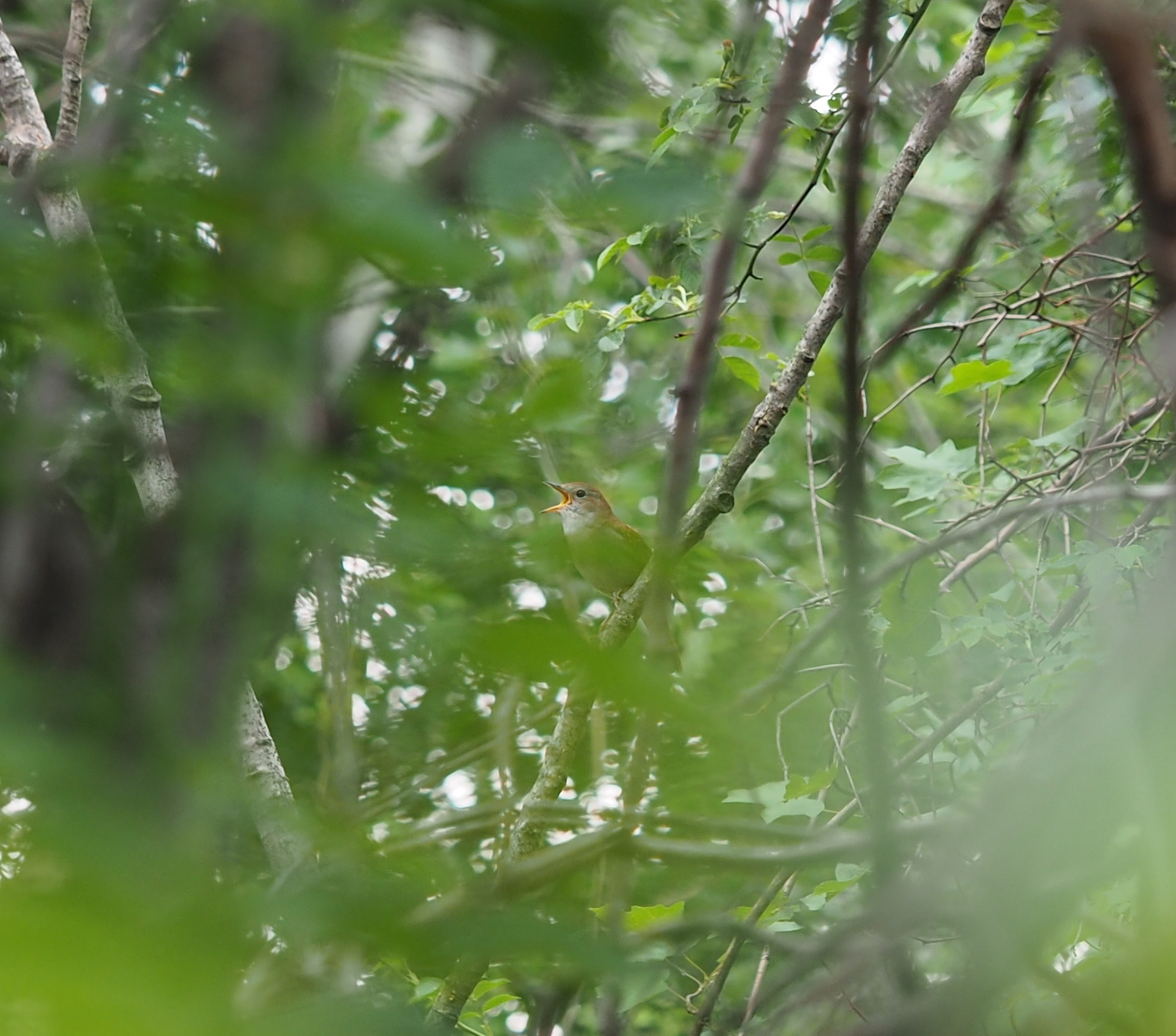
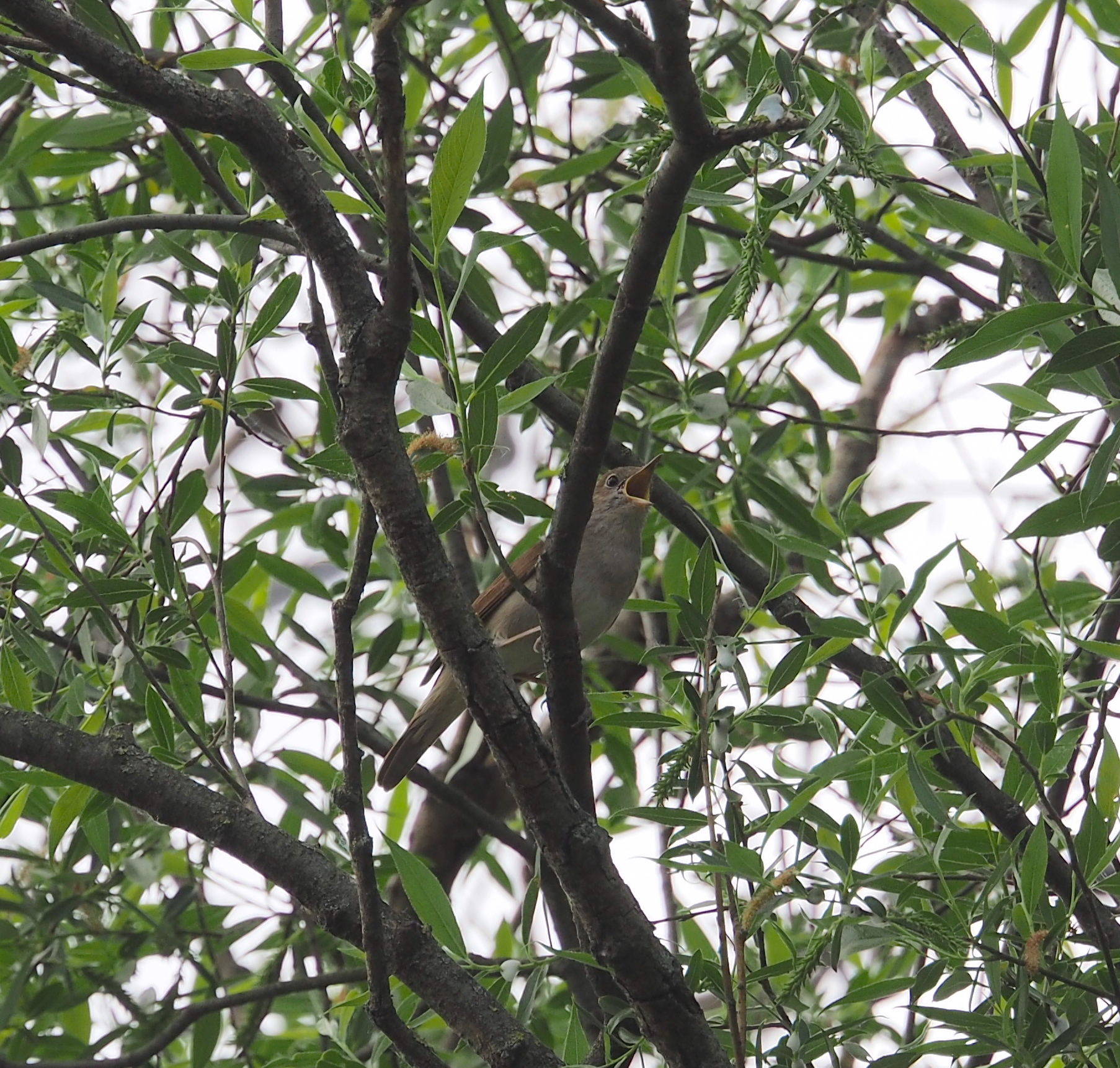
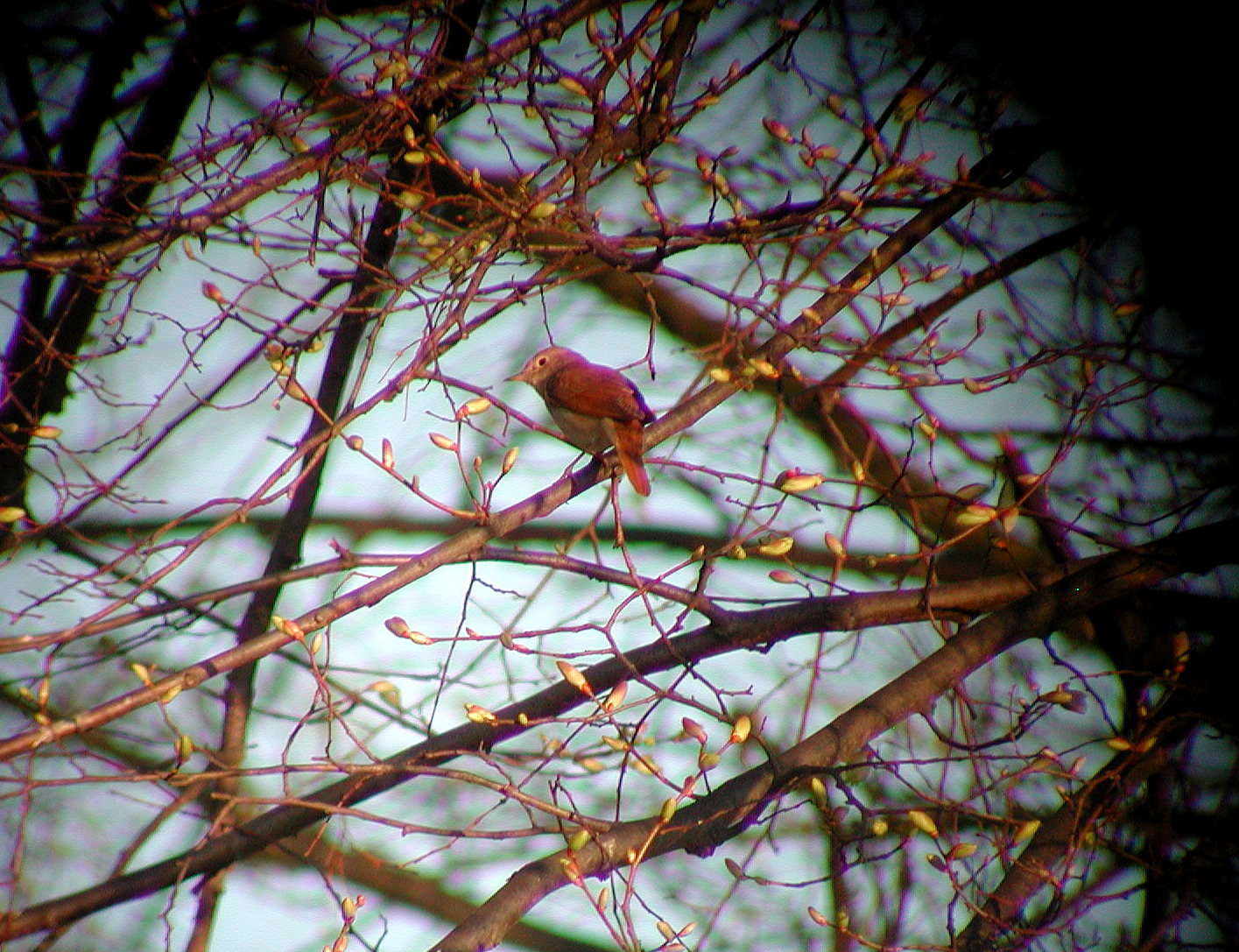
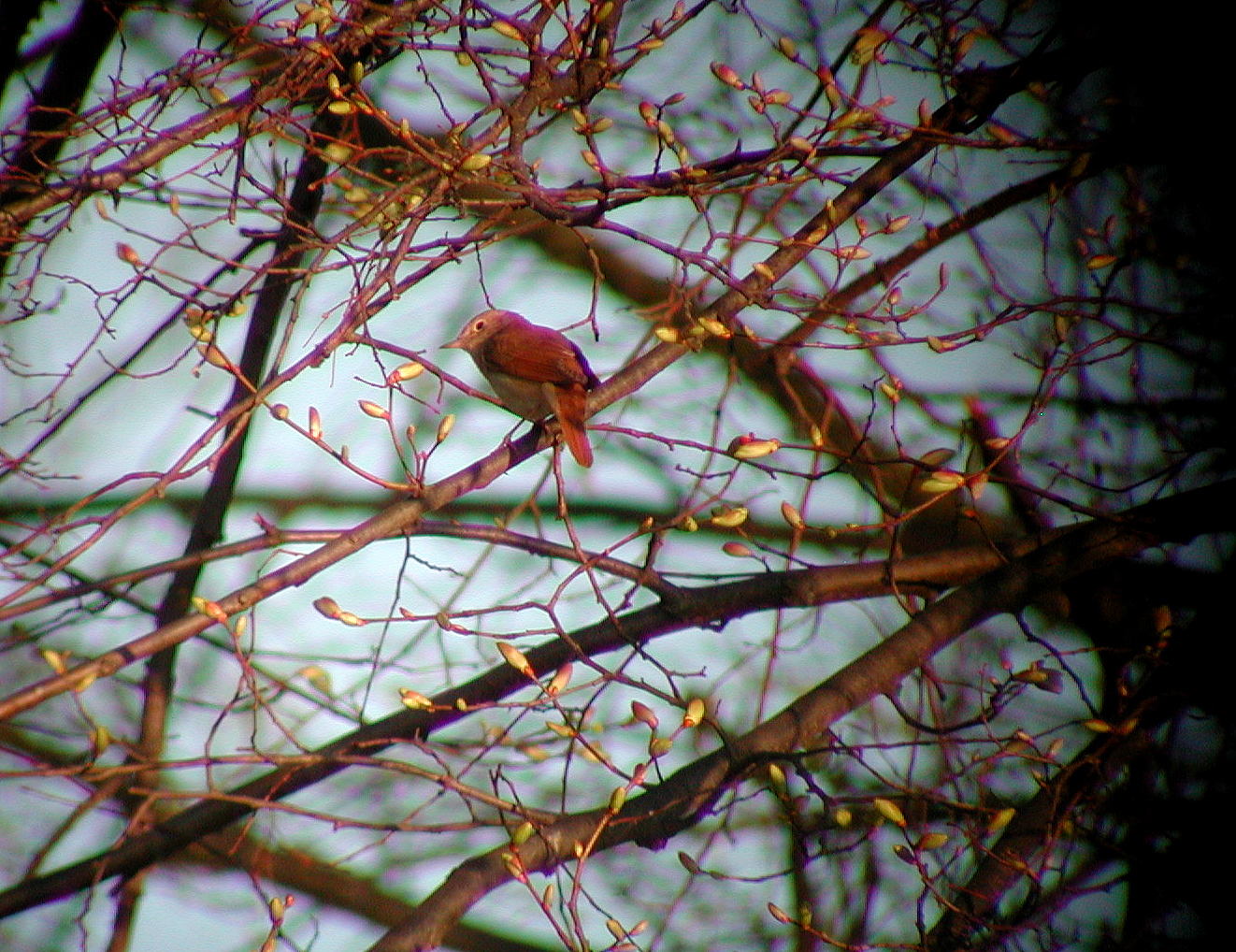
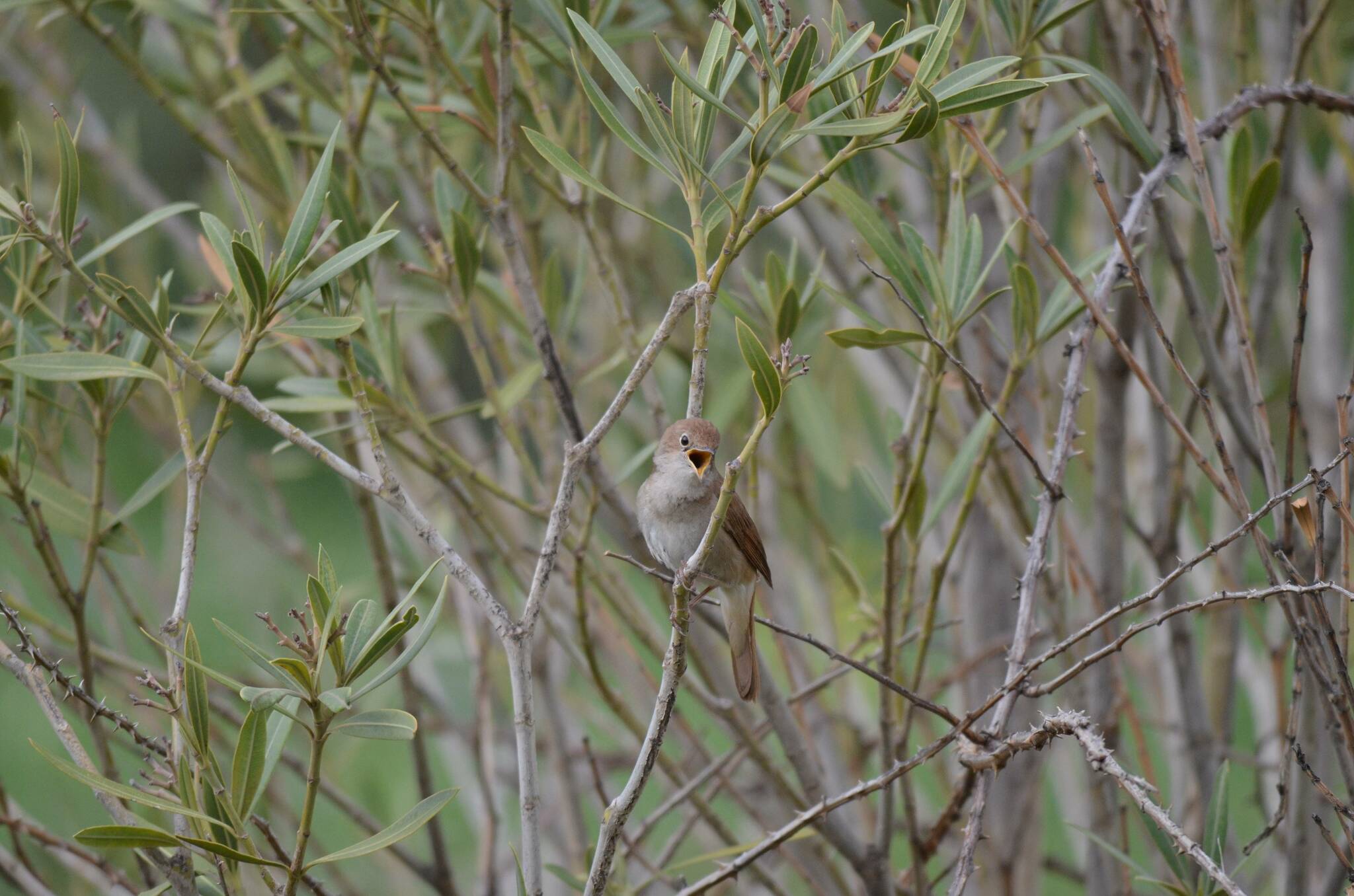
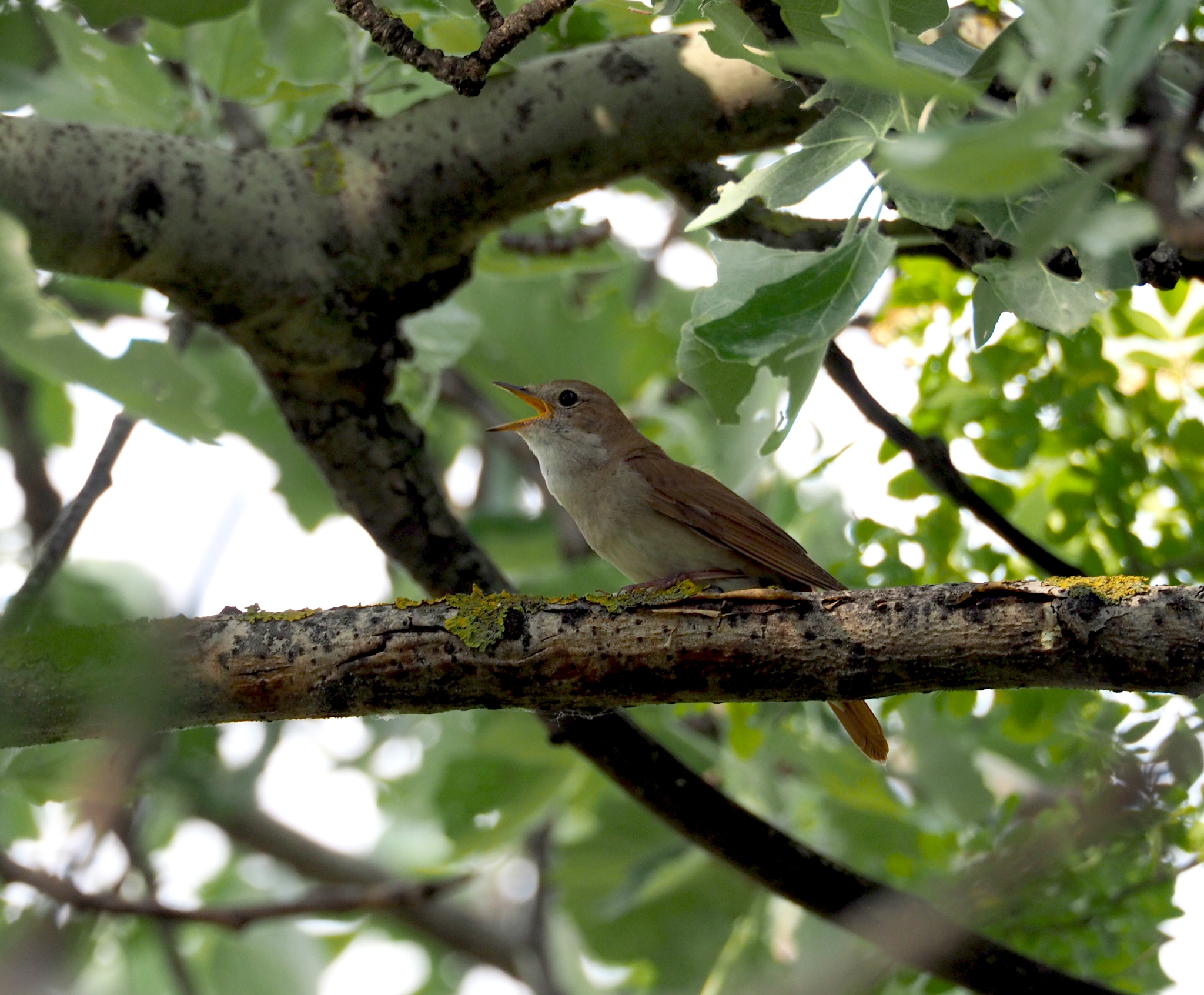
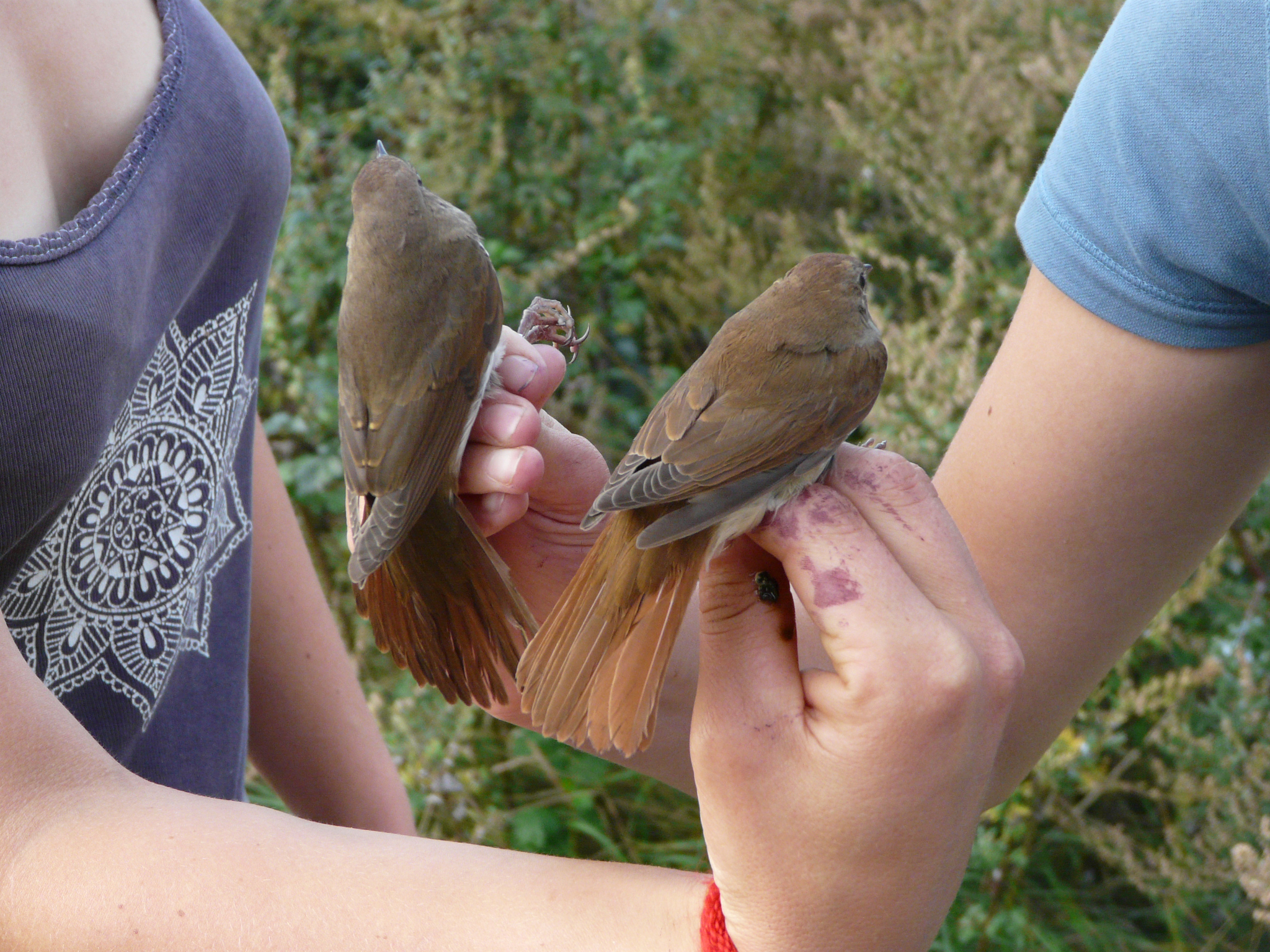
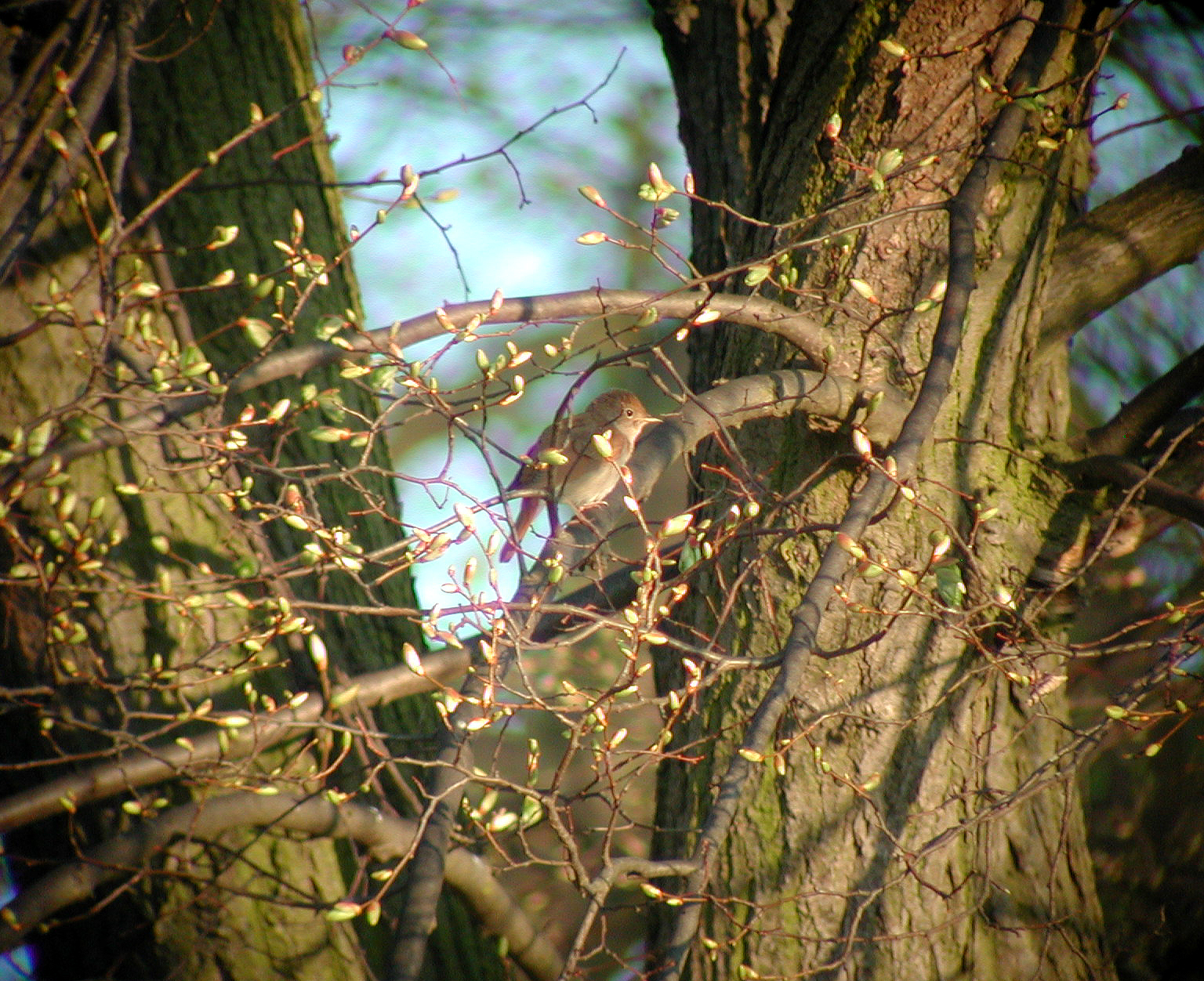
The common nightingale measures 15–16.5 cm (5.9–6.5 in) in length, making it slightly larger than the European robin. The upperparts are plain brown, contrasting with the reddish-brown tail. Underparts range from buff to white. The sexes are identical in plumage. The eastern subspecies (L. m. golzii) and Caucasian subspecies (L. m. africana) exhibit paler upperparts and more pronounced facial markings, including a pale supercilium. The plumage is relatively undistinguished compared to the species' renowned vocal abilities.
Identification
In the field, the nightingale is recognized by its plain brown upperparts, reddish tail, and buff-white underparts. It is larger than the European robin but shares a similar overall brown coloration. The song is the most reliable identification feature: males produce a powerful, varied performance with whistles, trills, and gurgles, culminating in a distinctive loud whistling crescendo absent from the similar thrush nightingale's song. Only unpaired males sing regularly at night. The species gives a frog-like alarm call.
Distribution & Habitat
This migratory species breeds throughout Europe and the Palearctic from Spain east to Mongolia, with a more southerly distribution than the thrush nightingale. It winters across Sub-Saharan Africa. In the UK, the range has contracted significantly, with populations confined primarily to South East England and East Anglia (Kent, Essex, Suffolk, and East and West Sussex), where 3,300 territories were recorded in 2012-2013. The species nests on or near the ground in dense vegetation. Favoured breeding habitat includes areas below 400m elevation with mean growing season temperatures above 14°C, more than 20 days annually exceeding 25°C, annual precipitation under 750mm, and no closed canopy.
Behavior & Ecology
Nightingales feed on insects and other small invertebrates. The species is named for its habit of singing both day and night, though only unpaired males sing regularly at nocturnal hours to attract mates. Dawn singing serves territorial defense. Males have exceptionally large song repertoires, averaging 190 distinct song types with a maximum of 250. The song is notably loud and includes a characteristic whistling crescendo. Birds increase vocal intensity in urban environments to overcome background noise. The species has a frog-like alarm call and hosts the acanthocephalan intestinal parasite Apororhynchus silesiacus.
Conservation
The European breeding population is estimated at 3.2–7 million pairs, warranting IUCN Red List status of Least Concern. However, the UK population has declined dramatically by 53% between 1995 and 2008, resulting in red list classification. The 2012-2013 British survey recorded only 3,300 territories, concentrated in a few southeastern counties. Primary threats include habitat loss from agricultural intensification and changes in woodland management, particularly the loss of coppice and scrub habitat. Conservation efforts focus on protecting and restoring favoured breeding habitat.
Culture
The nightingale holds profound cultural significance across civilizations. In Greek mythology, the bird is associated with Philomela and Procne, transformed after tragic violence—explaining the long-held interpretation of its song as lament. The species became a potent symbol for poets from Homer to Shakespeare, who in Sonnet 102 compared his love poetry to the nightingale's song. Romantic-era poets viewed it as a poet in its own right and muse. Keats's 'Ode to a Nightingale' and T.S. Eliot's 'The Waste Land' exemplify this literary tradition. The nightingale is the national bird of both Ukraine and Iran. In Persian literature, the nightingale's love for the rose serves as a metaphor for the lover's devotion. The species appears throughout classical music, from Beethoven's Pastoral Symphony to Liszt's Mephisto Waltzes and Stravinsky's opera 'The Nightingale'. A nightingale features on the reverse of the Croatian 1 kuna coin (1993-2009).
Source: Wikipedia · CC BY-SA 3.0
Taxonomy
- Order
- Passeriformes
- Family
- Muscicapidae
- Genus
- Luscinia
- eBird Code
- comnig1
Subspecies (3)
-
Luscinia megarhynchos africana
breeds Caucasus and eastern Türkiye to southwestern Iran and Iraq; winters to eastern Africa
-
Luscinia megarhynchos golzii
breeds Aral Sea to Mongolia; winters to coastal eastern Africa
-
Luscinia megarhynchos megarhynchos
breeds western Europe, northern Africa, and Türkiye; winters in tropical Africa
Data Sources
Species description from Wikipedia, licensed under CC BY-SA 3.0.
Bird images and sounds sourced from GBIF, contributed by citizen scientists worldwide under Creative Commons licenses.
Taxonomy data from AviList 2025.