Passeriformes / Fringillidae / Loxia
Red Crossbill
Loxia curvirostra · 红交嘴雀
Introduction
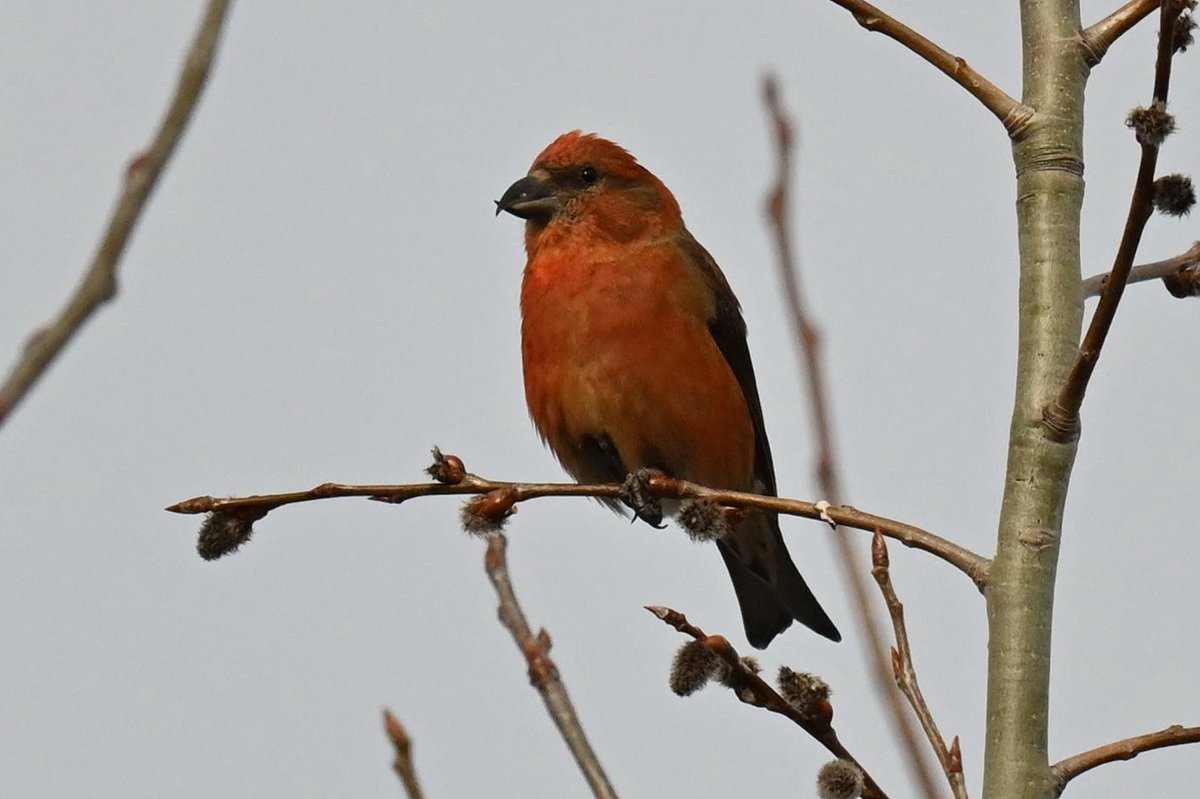
A small passerine in the finch family Fringillidae, characterized by distinctive mandibles crossed at the tips. This adaptation enables the extraction of seeds from conifer cones and other fruits. The species exhibits wide variation in beak size, shape, and call types, leading to numerous identified variants across North America and Eurasia.
Description
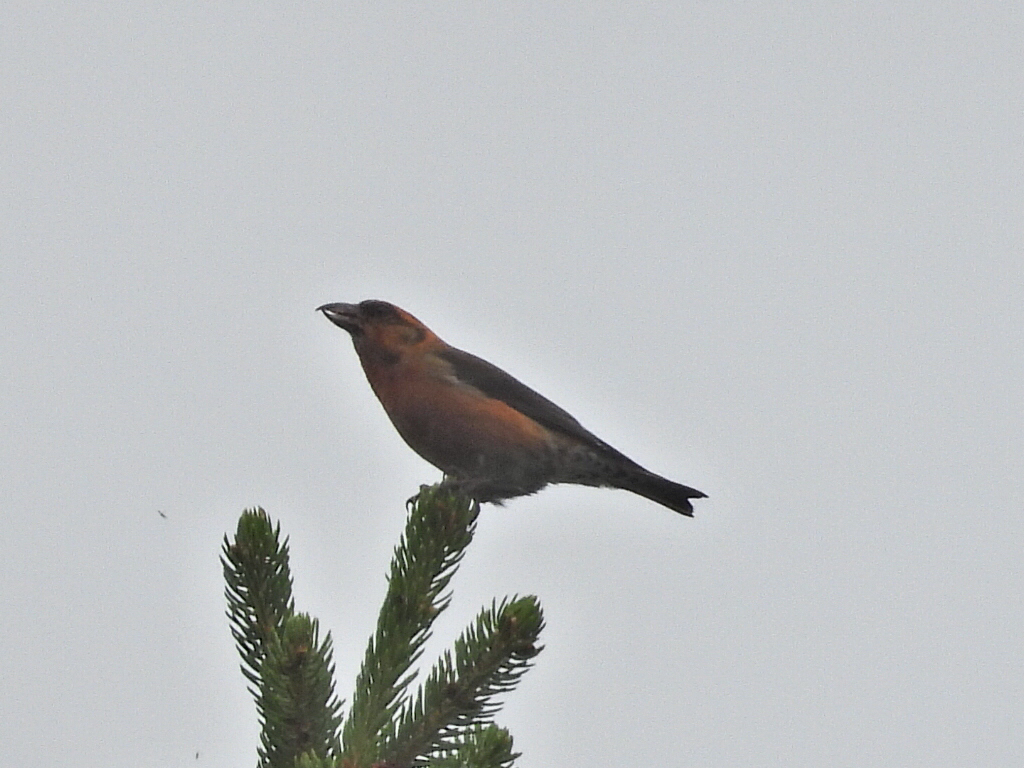
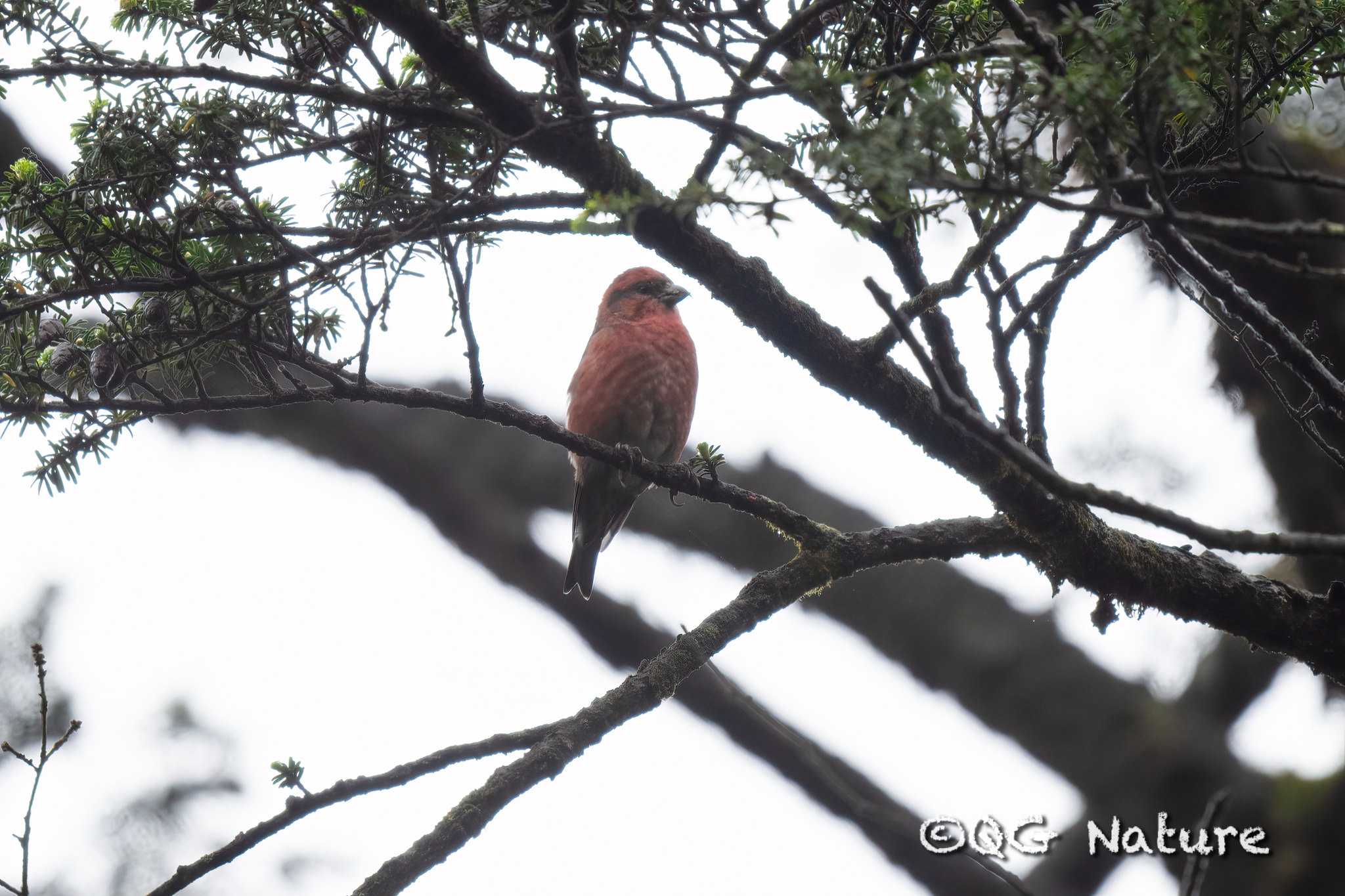
Length: 20 cm; Weight: 40–53 g; Wingspan: 27–29 cm. Adult males are typically red or orange, while females are green or yellow, though significant color variation exists. The wings are entirely brownish-black. The defining physical feature is the mandibles crossing at their tips.
Identification
Distinguished by crossed mandibles. Differentiated from the similar two-barred crossbill by the absence of white wing bars; wings are entirely brownish-black. Visually difficult to distinguish from parrot, Scottish, and Cassia crossbills due to negligible plumage differences; these species are best identified by distinct single-note 'chip' calls.
Distribution & Habitat
Breeds in coniferous forests across North America and Eurasia. Movements are nomadic and highly irruptive, linked closely to conifer seed availability. Populations may be irregular in many areas. Some populations, such as the Newfoundland crossbill, are resident. Irruptions into the British Isles occur infrequently but have established permanent breeding colonies in England and Ireland.
Behavior & Ecology
Feeds primarily on conifer seeds, using crossed mandibles for leverage to separate cone scales. Breeding typically occurs in late summer (June–September) when seeds mature, but can happen at any time if a suitable cone crop is located. Non-breeding birds may flock together or with other crossbill species. Different types prefer specific conifer species, influencing irruption timing and direction.
Culture
Irruptions in the British Isles were recorded by writers dating back to the 13th century. Chronicler Matthew Paris documented an arrival in England in 1254, describing birds with crossed beaks eating apple pippins. Thomas Bewick noted irregular visits in the 19th century, citing historical accounts of large numbers arriving in 1821 and 1593.
Source: Wikipedia · CC BY-SA 3.0
Taxonomy
- Order
- Passeriformes
- Family
- Fringillidae
- Genus
- Loxia
Subspecies (19)
-
Loxia curvirostra altaiensis
Altai Mountains
Data Sources
Species description from Wikipedia, licensed under CC BY-SA 3.0.
Bird images and sounds sourced from GBIF, contributed by citizen scientists worldwide under Creative Commons licenses.
Taxonomy data from AviList 2025.