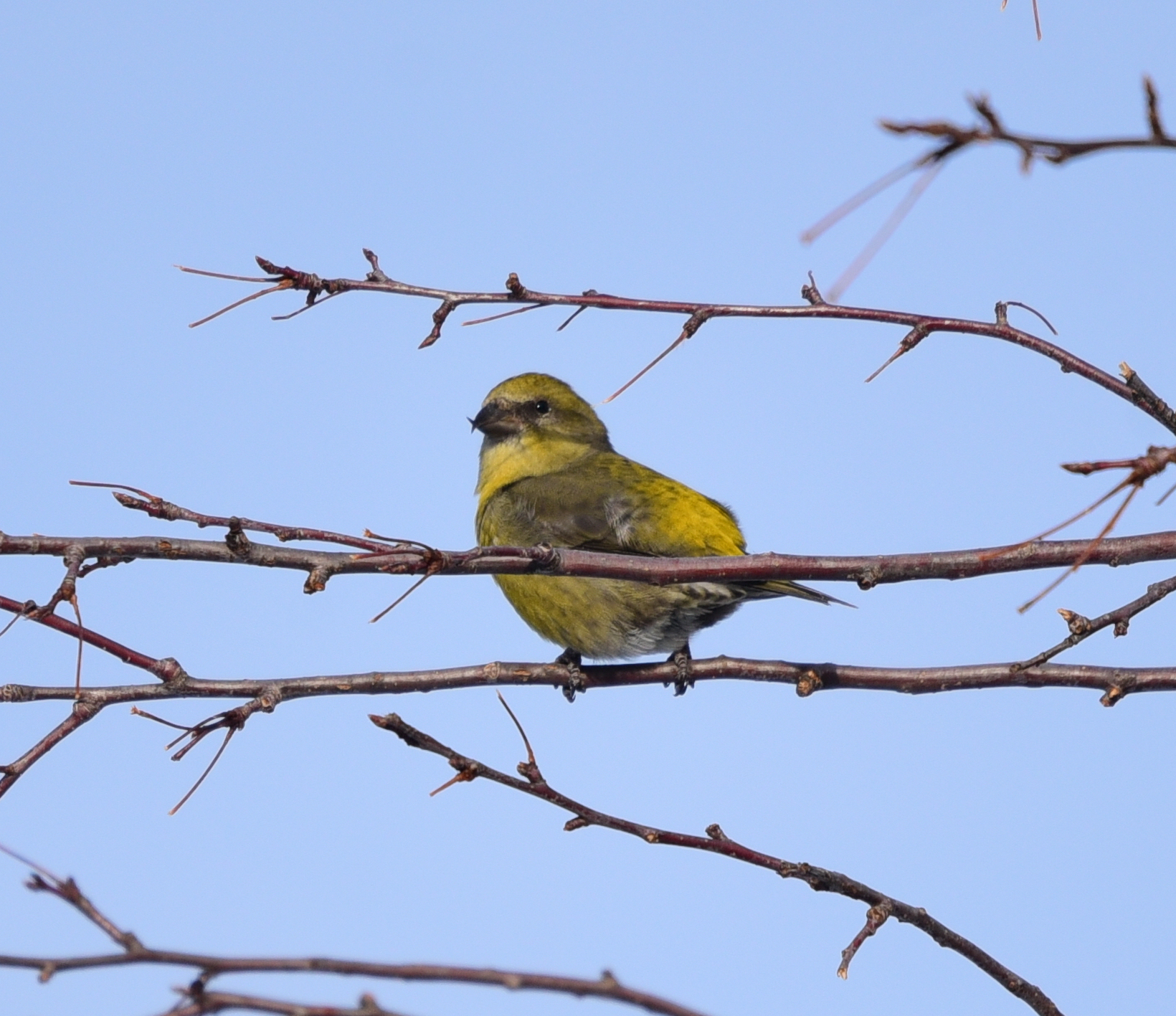
Red Crossbill
Loxia curvirostra
红交嘴雀
Introduction
Passerine bird in the finch family Fringillidae. Inhabits coniferous forests across North America and Eurasia. Characterized by uniquely crossed mandible tips that enable efficient extraction of seeds from conifer cones. Shows high variation in beak size and shape correlated with different conifer types. Exhibits nomadic and irruptive behavior tied to conifer seed availability, with populations following cone crop failures. Multiple call types exist, some corresponding to genetically distinct populations. Some populations formerly considered subspecies have been elevated to full species status (Scottish, Parrot, Cassia crossbills).
Description
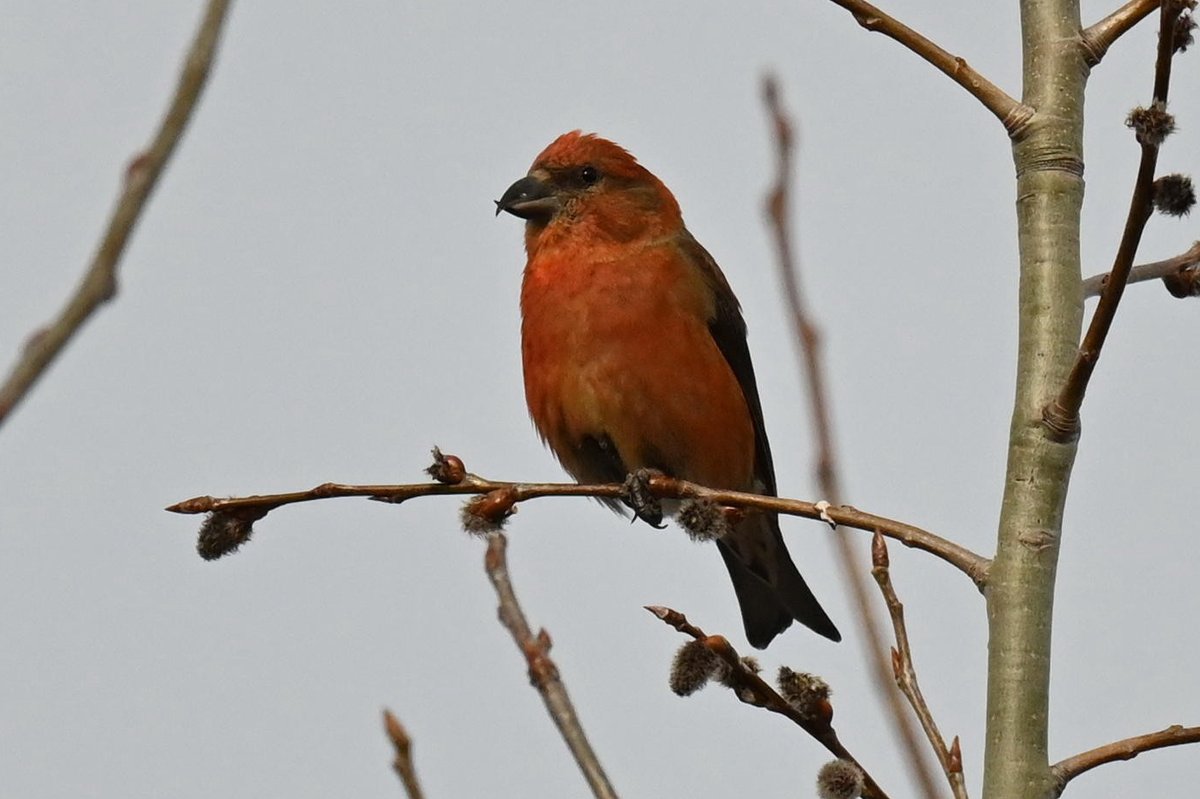
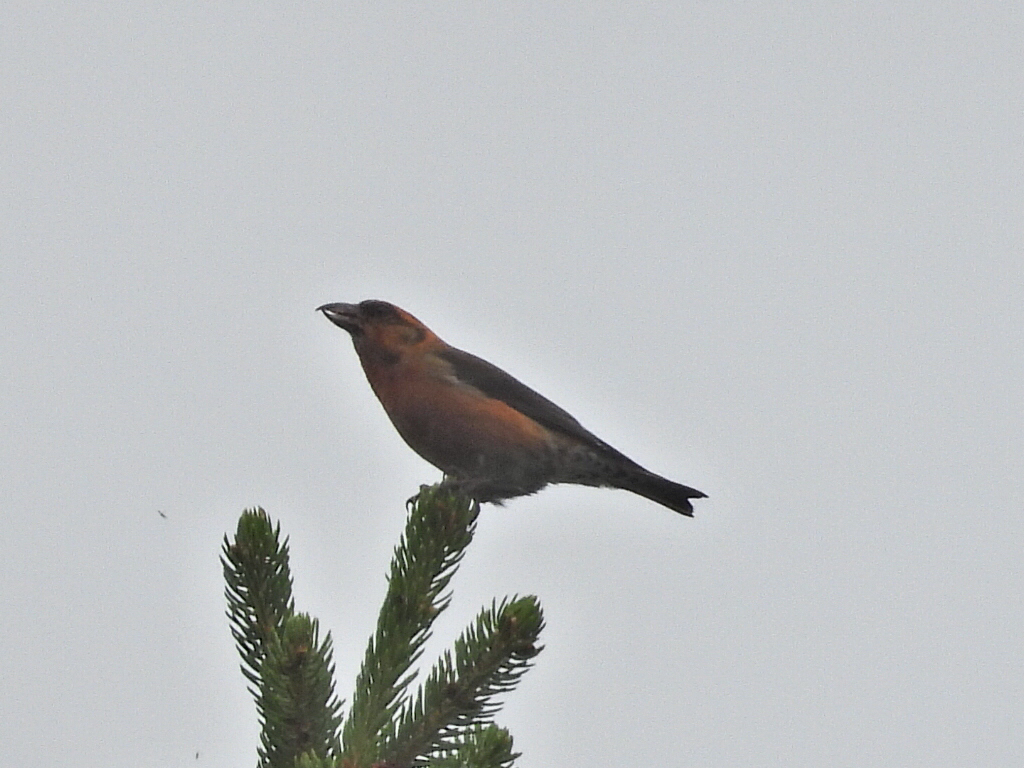
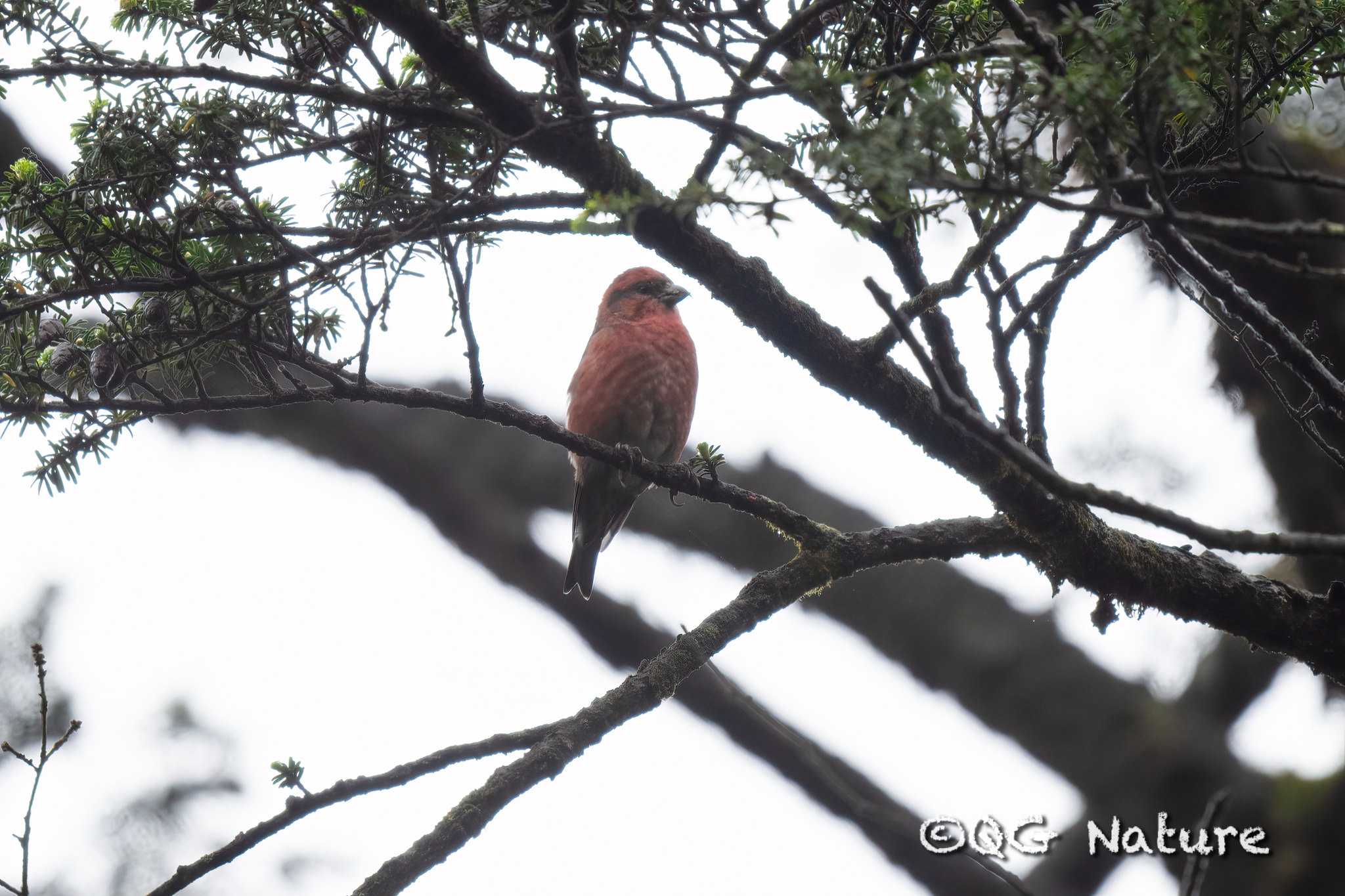
Small finch with distinctive crossed mandibles at the tips. Adults show sexual dimorphism: males are red or orange, females are green or yellow. Considerable variation exists in beak size and shape across populations. Measurements: length 20 cm, weight 40-53 g, wingspan 27-29 cm. Plumage is relatively uniform across populations, with brownish-black wings lacking wing bars.
Identification
Crossed mandibles are diagnostic but shared with similar species. Best distinguished from two-barred crossbill by wing pattern: red crossbill has plain brownish-black wings, while two-barred crossbill has two prominent white wing bars. Overlaps with parrot, Scottish, and Cassia crossbills throughout much of its range; these four species are nearly identical in plumage with minimal differences between them. Visual identification is extremely difficult—call type is the most reliable distinguishing feature. Different call types (about 10 in North America, 18 in Eurasia) often correspond to populations specialized on specific conifer species.
Distribution & Habitat
Breeds across coniferous forest habitats throughout North America and Eurasia. Occurrence is highly irregular and tied to conifer cone crops—present in some years, absent in others. Movements are nomadic and irruptive, with birds dispersing widely when local cone production fails. Different populations (types) show variation in irruption timing and direction based on their preferred conifer species. Some populations, such as the Newfoundland crossbill, are resident and do not undertake significant movements. Permanent breeding colonies have become established in England and Ireland following irruption events.
Behavior & Ecology
Specialist feeder on conifer seeds, using crossed mandibles as leverage to separate cone scales. Each population type shows preference for particular conifer species, which drives reproductive isolation. Breeding typically occurs June-September when most conifer seeds mature, but can happen year-round if suitable cone crops are found. Highly nomadic, with irruptive movements following cone crop failures. Social outside breeding season—different types and species may flock together. Vocalizations consist of frequent single-note 'chip' calls that differ considerably between types and are the primary method of identification in the field.
Culture
Historical records of irruptions in the British Isles date back to the 13th century. Matthew Paris recorded the first documented irruption in England in 1254, describing unfamiliar birds appearing in orchards that ate only apple pippins using their crossed beaks. Another major irruption occurred in 1593, which contemporary accounts also described as unknown birds. Thomas Bewick noted hundreds arriving in 1821 and commented on their irregular visits. These periodic invasions eventually led to permanent breeding colonies establishing in England during the 20th century and more recently in Ireland.
Source: Wikipedia · CC BY-SA 3.0
Taxonomy
- Order
- Passeriformes
- Family
- Fringillidae
- Genus
- Loxia
- eBird Code
- redcro
Subspecies (19)
-
Loxia curvirostra altaiensis
Altai Mountains
-
Loxia curvirostra balearica
Balearic Islands
-
Loxia curvirostra bendirei
southern Yukon and northern British Columbia to western USA east of Cascades; winters to Baja California
-
Loxia curvirostra benti
mountains of southeastern Montana and northeastern Wyoming to southwestern USA; winters to southern Texas
-
Loxia curvirostra corsicana
coniferous forest of Corsica
-
Loxia curvirostra curvirostra
coniferous forest of northern Europe to eastern Siberia and northern Mongolia
-
Loxia curvirostra grinnelli
mountains of southwestern USA
-
Loxia curvirostra guillemardi
eastern Balkans and Türkiye to the Caucasus and southern Ukraine
-
Loxia curvirostra himalayensis
Himalayas (Kashmir to Nepal, Sikkim, southwestern China, and southwestern Tibet)
-
Loxia curvirostra japonica
far northeastern Asia; winters to east-central China and southern Japanese islands
-
Loxia curvirostra luzoniensis
northern Philippines (mountains of northern Luzon)
-
Loxia curvirostra meridionalis
mountains of southern Vietnam (Da Lat Plateau)
-
Loxia curvirostra mesamericana
montane pine forest from Guatemala to northern Nicaragua
-
Loxia curvirostra minor
south-central Canada and north-central USA; winters to southeastern USA
-
Loxia curvirostra percna
Newfoundland
-
Loxia curvirostra poliogyna
Morocco, Algeria, and Tunisia
-
Loxia curvirostra sitkensis
coastal southern Alaska to northwestern California; winters to northeastern USA
-
Loxia curvirostra stricklandi
southeastern Arizona and southern New Mexico southward through western Mexico (Sierra Nevada Occidental) to Chiapas
-
Loxia curvirostra tianschanica
Tien Shan Mountains (Kazakhstan)
Data Sources
Species description from Wikipedia, licensed under CC BY-SA 3.0.
Bird images and sounds sourced from GBIF, contributed by citizen scientists worldwide under Creative Commons licenses.
Taxonomy data from AviList 2025.