Kalij Pheasant
Lophura leucomelanos
黑鹇
Introduction
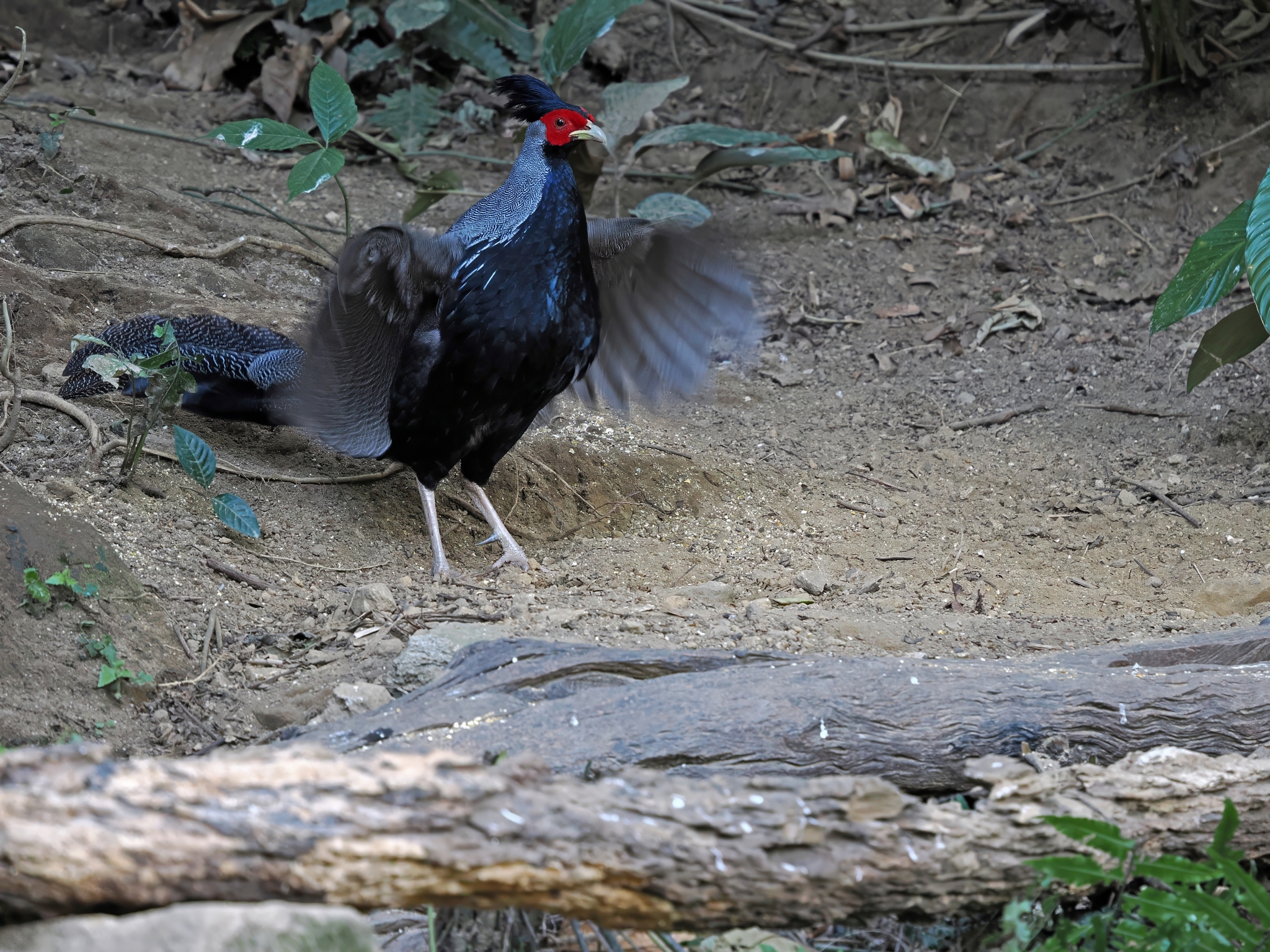
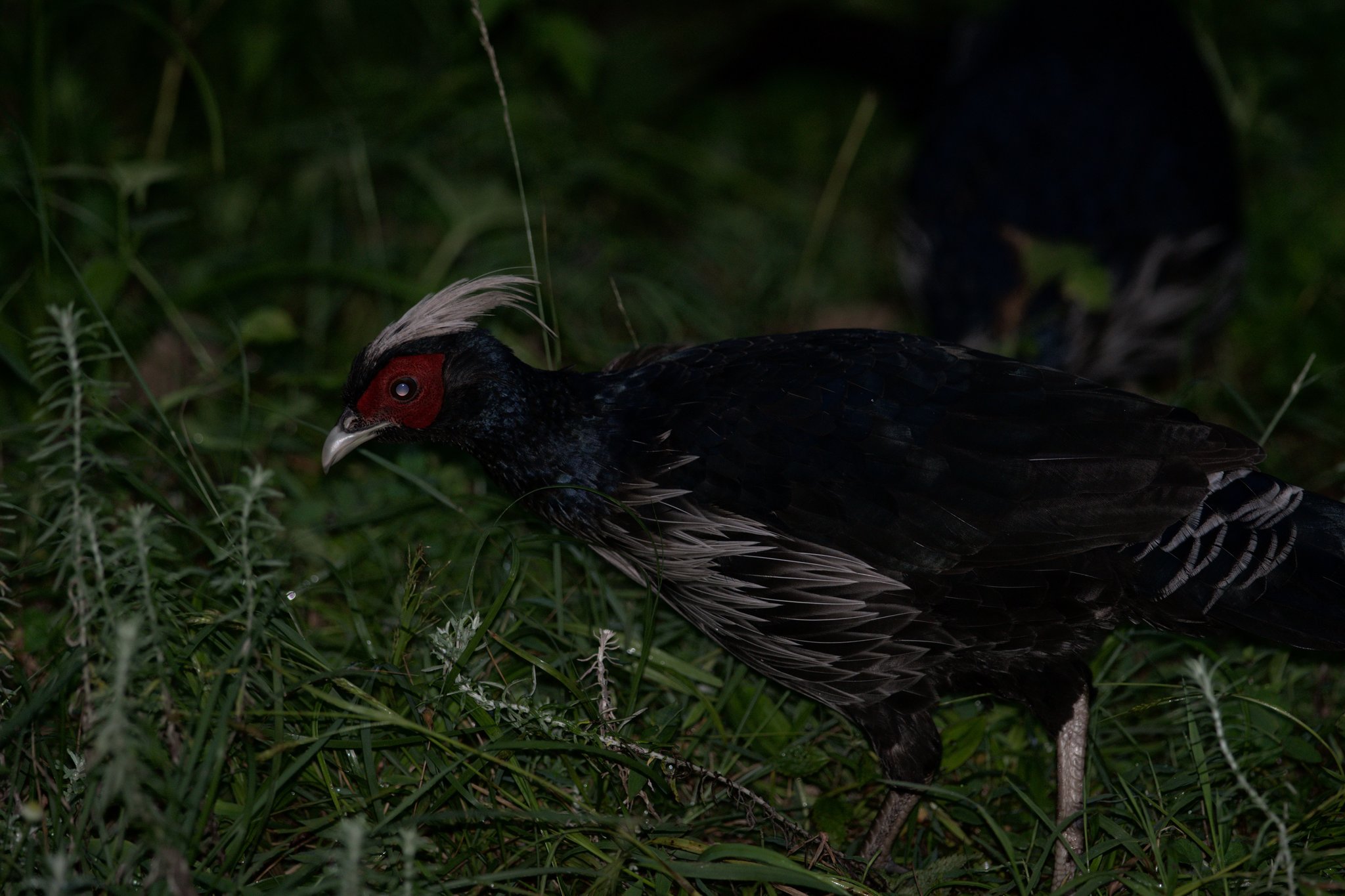
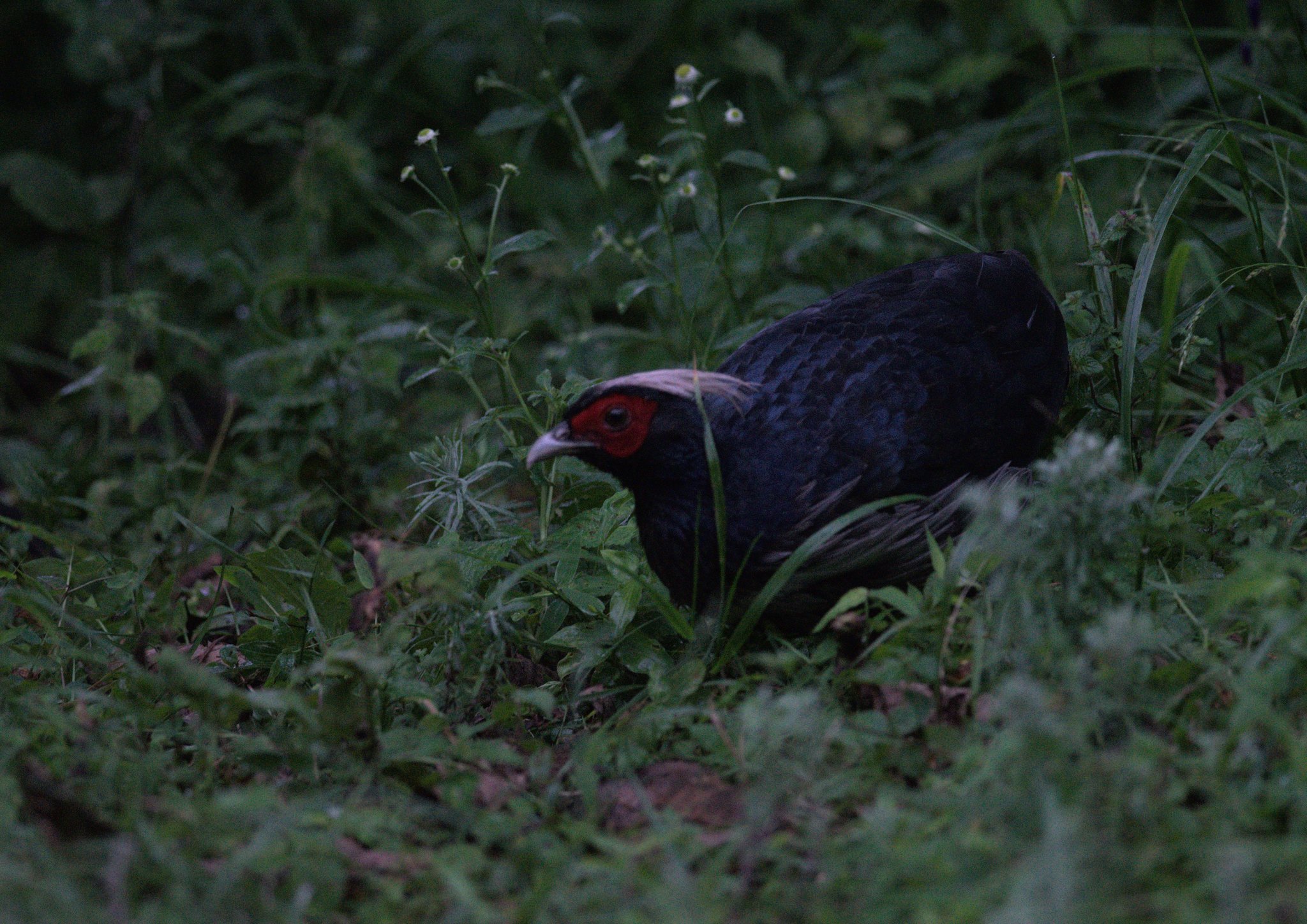
A pheasant species (Lophura leucomelanos) found in forests and thickets of the Himalayan foothills from Nepal and Pakistan to western Thailand. Both sexes have a bare red face and greyish legs, which distinguishes them from the closely related red-legged silver pheasant. Males display variable glossy bluish-black plumage depending on subspecies, while females are overall brownish. The species is generally widespread, though three eastern subspecies (L. l. oatesi, L. l. lineata, and L. l. crawfurdi) are considered threatened, and L. l. moffitti is virtually unknown in the wild.
Description
Males measure 63 to 74 cm (25 to 29 in) in total length, while females are smaller at 50 to 60 cm (20 to 24 in). Males typically have glossy blue-black plumage, with western subspecies (L. l. hamiltoni, L. l. leucomelanos, L. l. melanota, L. l. moffitti, L. l. lathami) showing white on the rump or underparts and L. l. hamiltoni uniquely having a white crest. Eastern subspecies (L. l. williamsi, L. l. oatesi, L. l. lineata, L. l. crawfurdi) have blue-black underparts and crest with white or pale grey upperparts densely vermiculated with black. Females are brownish with some subspecies showing whitish and black underpart markings or pale-edged feathers creating a scaly appearance.
Identification
The greyish legs distinguish this species from the similar silver pheasant, which has red legs. Male plumage varies significantly by subspecies but always includes glossy bluish-black areas. Western males tend toward solid blue-black coloration with white accents, while eastern males have white or pale grey upperparts with fine black barring. Females are brown and less distinctive but can be separated from silver pheasant females by leg coloration and regional distribution.
Distribution & Habitat
Inhabits the Himalayan foothills from Pakistan and Nepal eastward through India, Bhutan, and Myanmar to western Thailand. Nine subspecies occupy distinct ranges: western Himalayas (L. l. hamiltoni), Nepal (L. l. leucomelanos), Sikkim and western Bhutan (L. l. melanota), central Myanmar (L. l. moffitti), eastern Bhutan to Myanmar (L. l. lathami), western Myanmar (L. l. williamsi), southern Myanmar (L. l. oatesi), southeastern Myanmar to peninsular Thailand (L. l. crawfurdi), and southern Myanmar to northwestern Thailand (L. l. lineata). The Irrawaddy River serves as a major zoogeographic barrier between western and eastern subspecies. Introduced to Hawaii in 1962 as a gamebird.
Behavior & Ecology
Forages on the ground in forest and thicket habitats. Diet consists primarily of seeds, fruits, insects, and other small invertebrates. Breeding behavior typical of pheasants: males are polygynous and display at leks to attract females. The nest is a shallow scrape on the ground lined with vegetation. Females incubate the eggs and raise the young alone. Vocalizations include typical pheasant calls including crowing notes and alarm calls. Social behavior includes forming small flocks outside the breeding season.
Conservation
IUCN status: Generally widespread, but three eastern subspecies (L. l. oatesi, L. l. lineata, and L. l. crawfurdi) are classified as threatened due to habitat loss and hunting pressure. L. l. moffitti from central Myanmar is virtually unknown in the wild and may be critically endangered or extinct. Main threats include deforestation, agricultural expansion, and hunting for food and the pet trade. Conservation measures include protected area coverage in parts of the range and hunting regulations in some regions.
Culture
On 21 October 2021, the Government of Jammu and Kashmir declared this species as the official bird of the Union Territory of Jammu and Kashmir. In the Kashmiri language, it is known as Wan Kokur, Wan Kokud, or Ban Kokur, which translates to 'wild cock'. The species was historically referred to as 'kaleege' in older texts such as Frank Finn's Game Birds of India and Asia.
Source: Wikipedia · CC BY-SA 3.0
Taxonomy
- Order
- Galliformes
- Family
- Phasianidae
- Genus
- Lophura
- eBird Code
- kalphe
Subspecies (9)
-
Lophura leucomelanos crawfurdii
southeastern Myanmar (Tenasserim) and peninsular Thailand
-
Lophura leucomelanos hamiltonii
western Himalayas (Indus River to western Nepal)
-
Lophura leucomelanos lathami
eastern Bhutan and northern India to Myanmar
-
Lophura leucomelanos leucomelanos
subtropical pine, sal, and moist temperate forest of Nepal
-
Lophura leucomelanos lineata
southern Myanmar (east of Irrawaddy River) to northwestern Thailand
-
Lophura leucomelanos melanota
Sikkim and western Bhutan
-
Lophura leucomelanos moffitti
range unknown; possibly central Bhutan
-
Lophura leucomelanos oatesi
southern Myanmar (Arakan Mountains)
-
Lophura leucomelanos williamsi
western Myanmar (eastward to Irrawaddy River)
Data Sources
Species description from Wikipedia, licensed under CC BY-SA 3.0.
Bird images and sounds sourced from GBIF, contributed by citizen scientists worldwide under Creative Commons licenses.
Taxonomy data from AviList 2025.