Passeriformes / Estrildidae / Lonchura
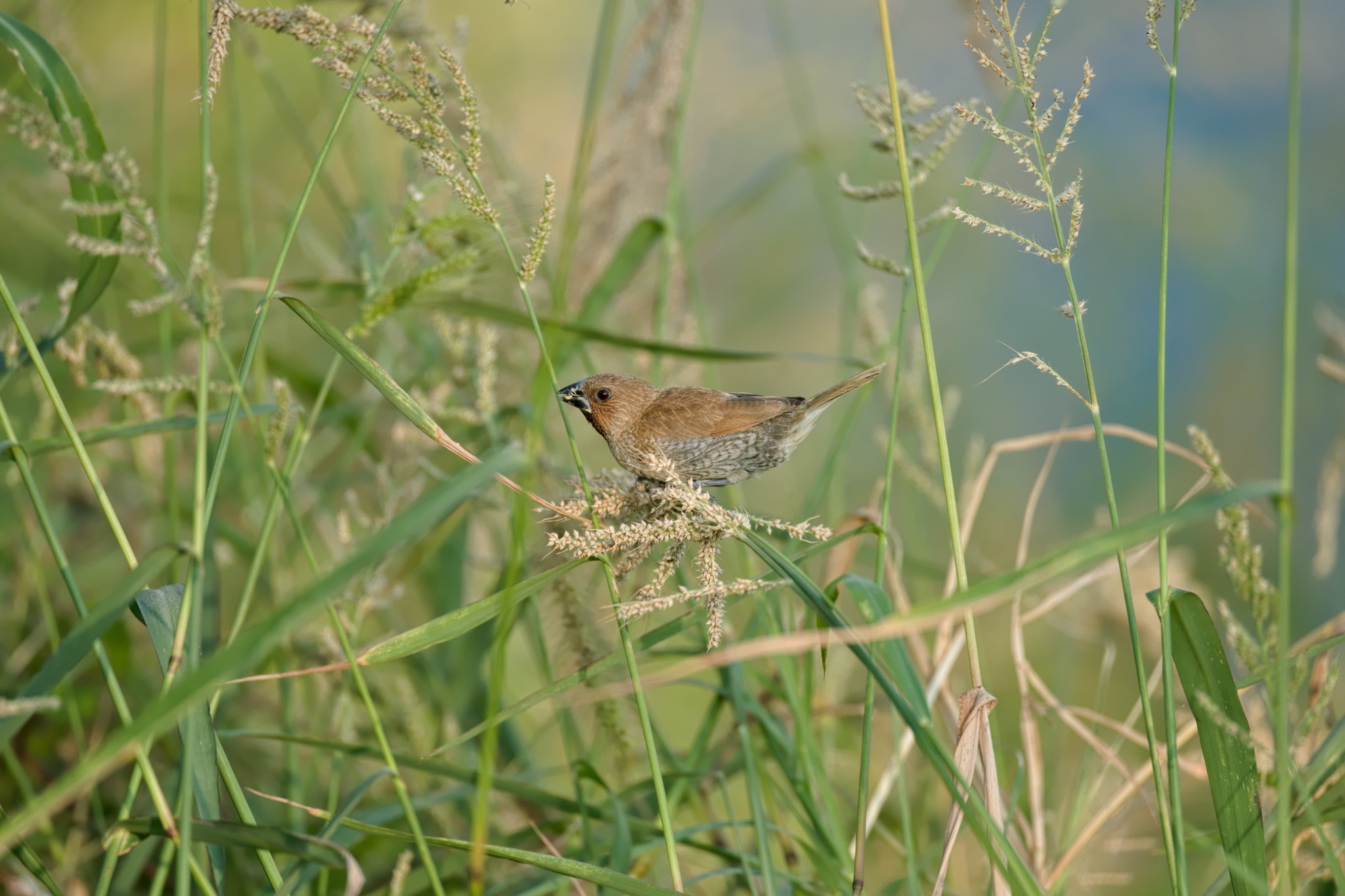
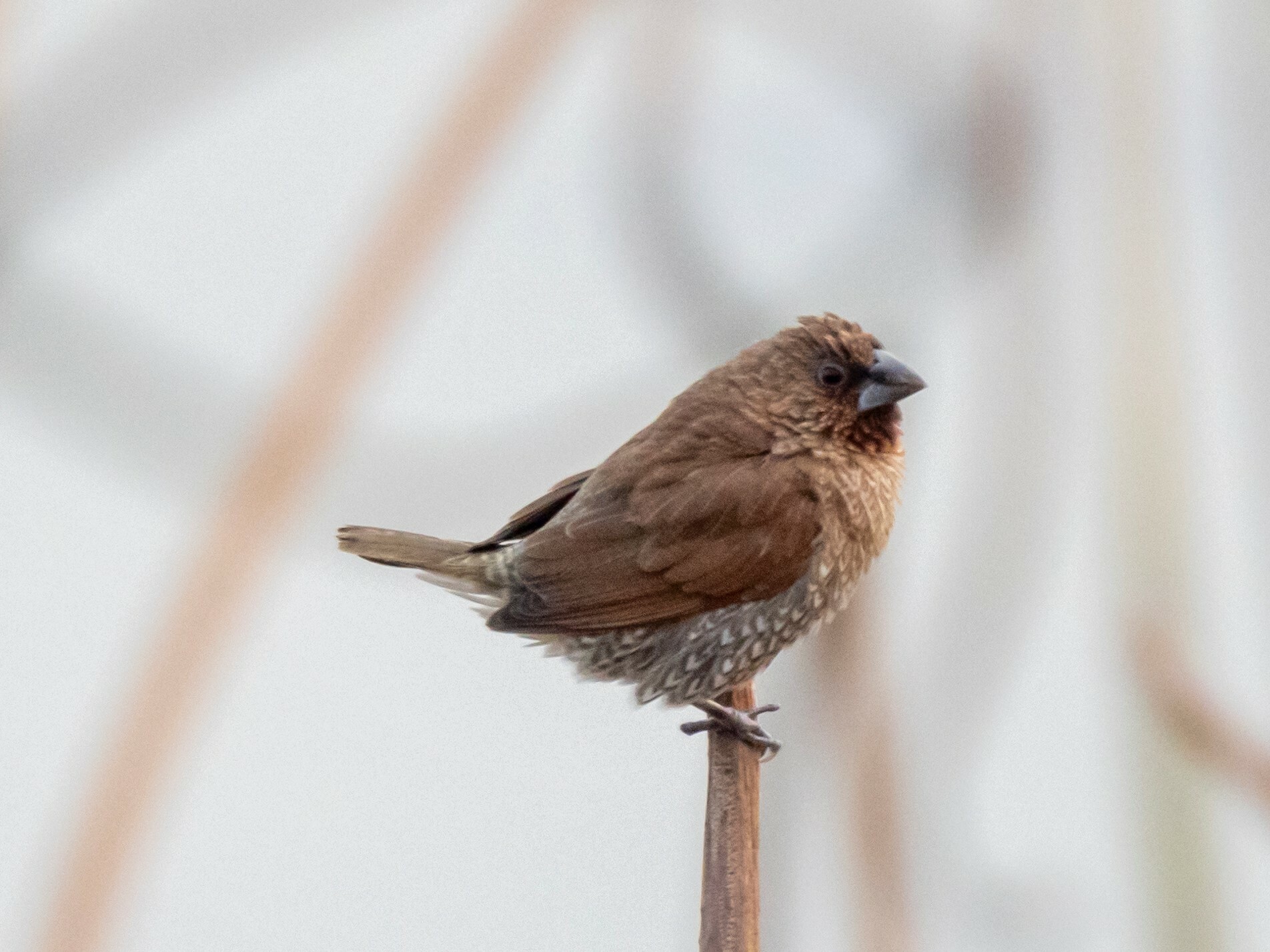
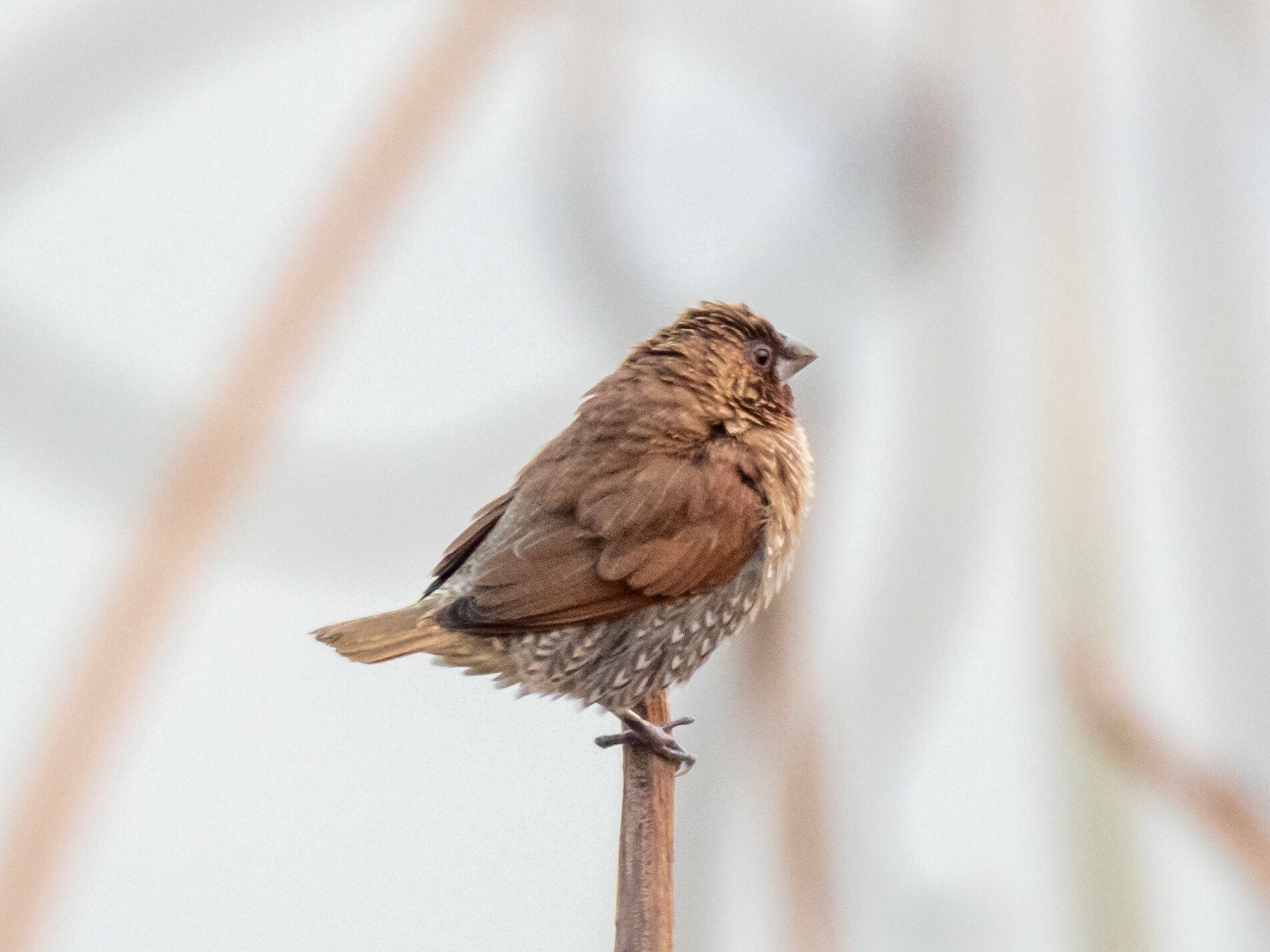
Scaly-breasted Munia
Lonchura punctulata · 斑文鸟
Introduction
A sparrow-sized estrildid finch native to tropical Asia, occurring from India and Sri Lanka east to Indonesia and the Philippines. It inhabits tropical plains, grasslands, and areas close to water, including paddy fields. The species is highly social, foraging in flocks and communicating with soft calls. It is listed as Least Concern by the IUCN.
Description
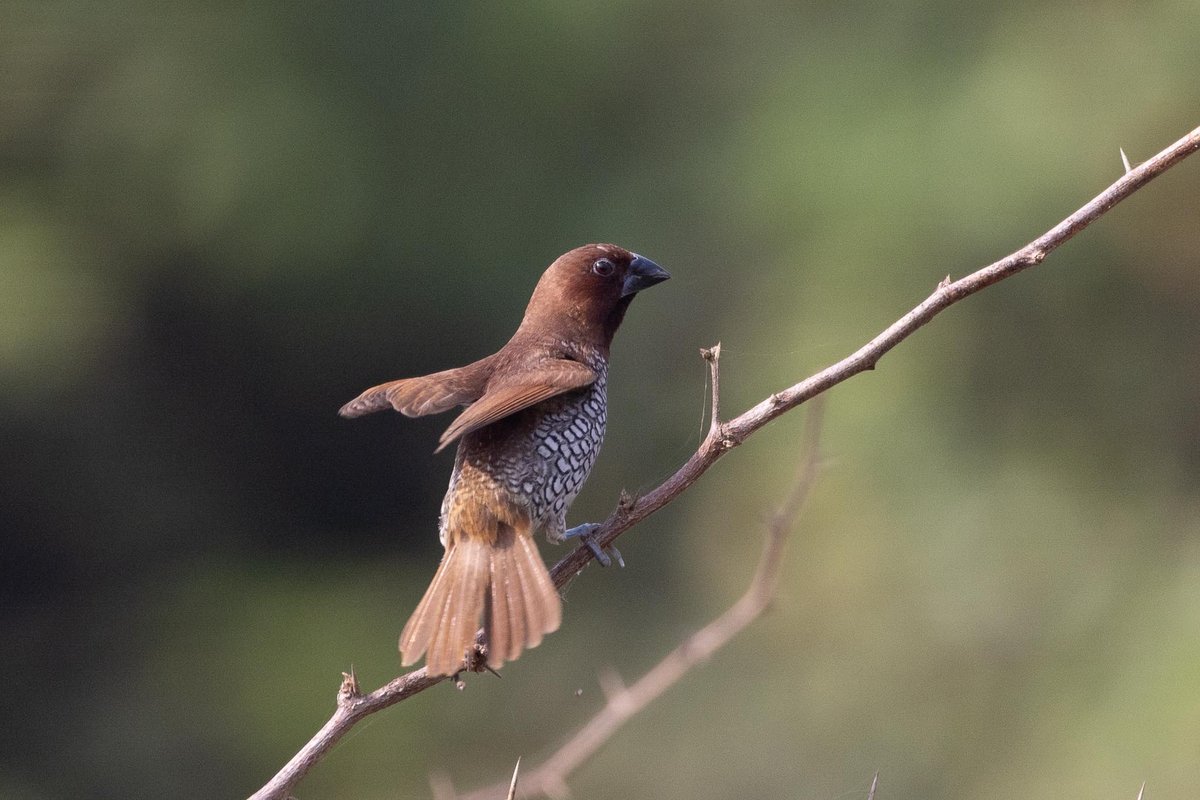
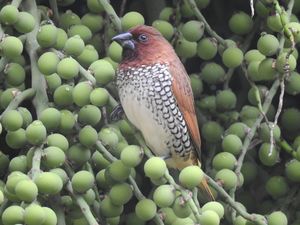
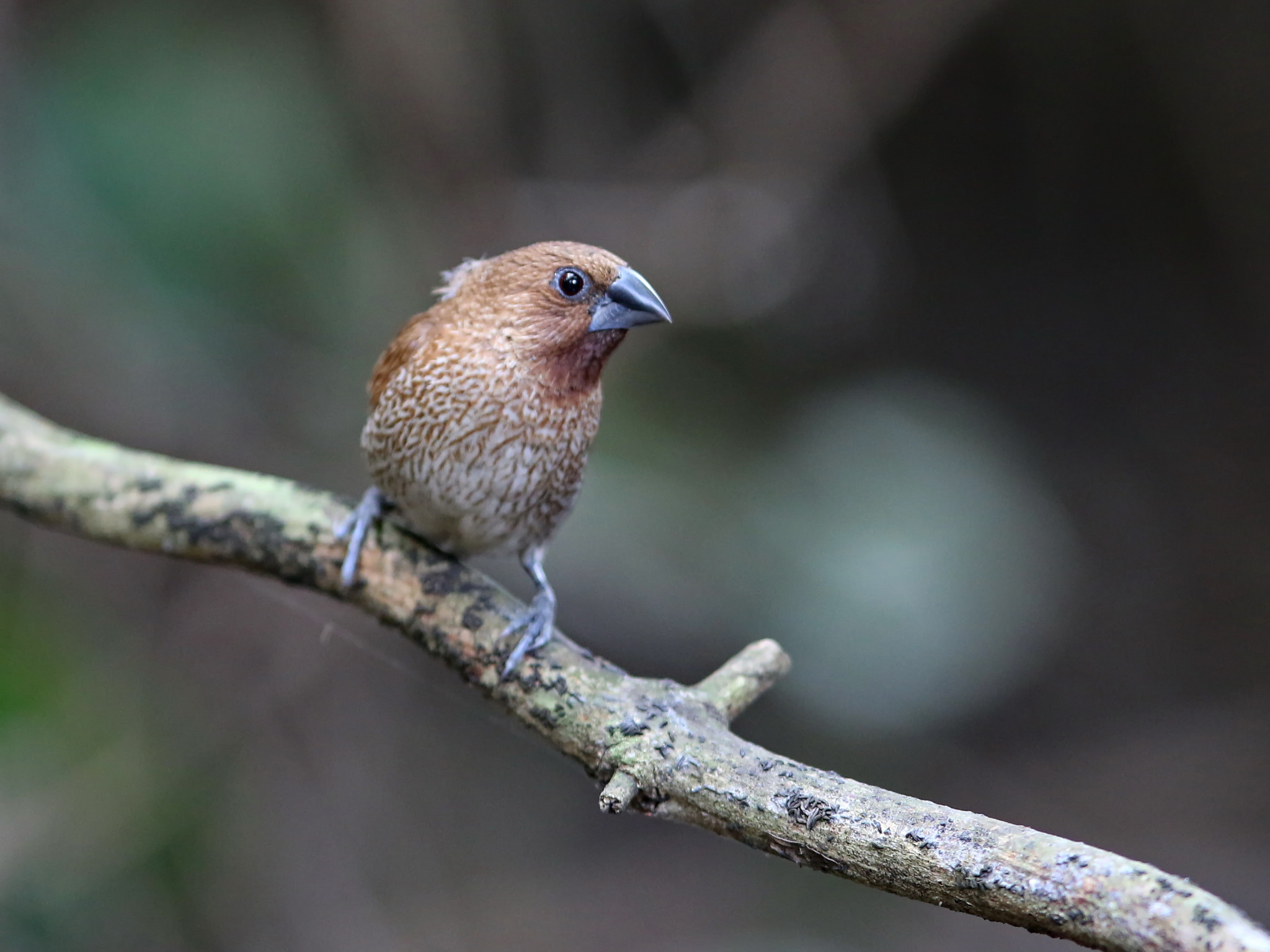
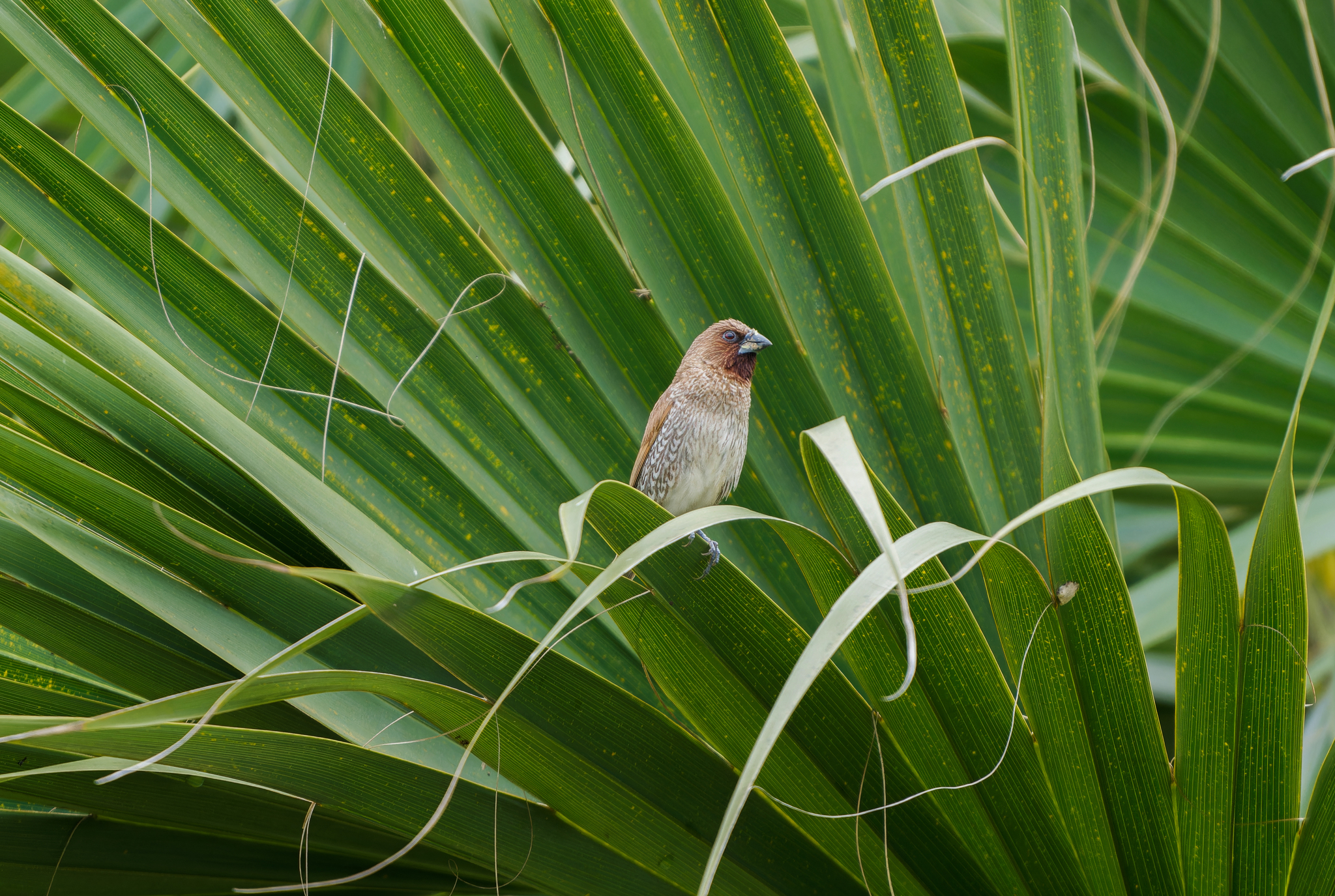
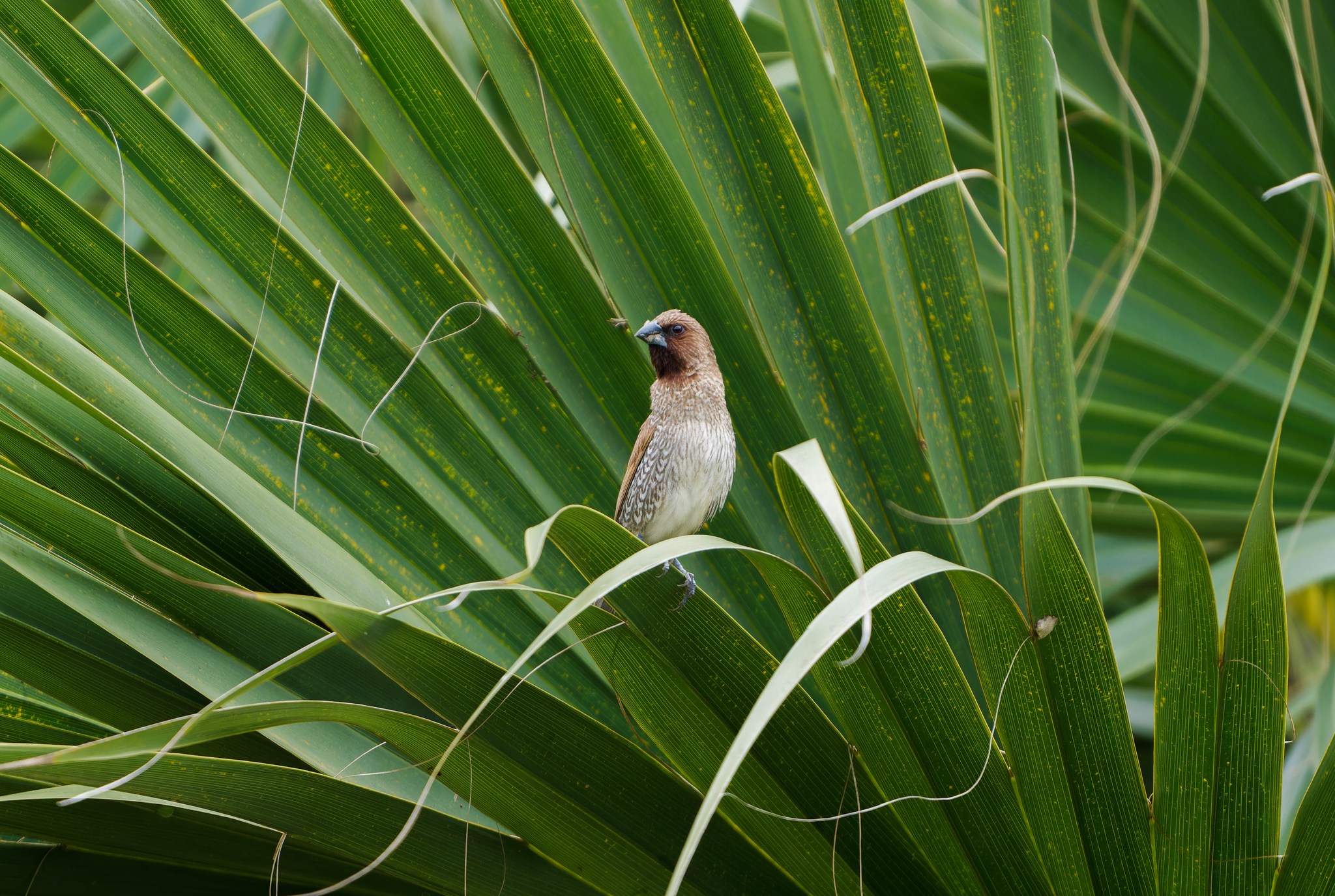
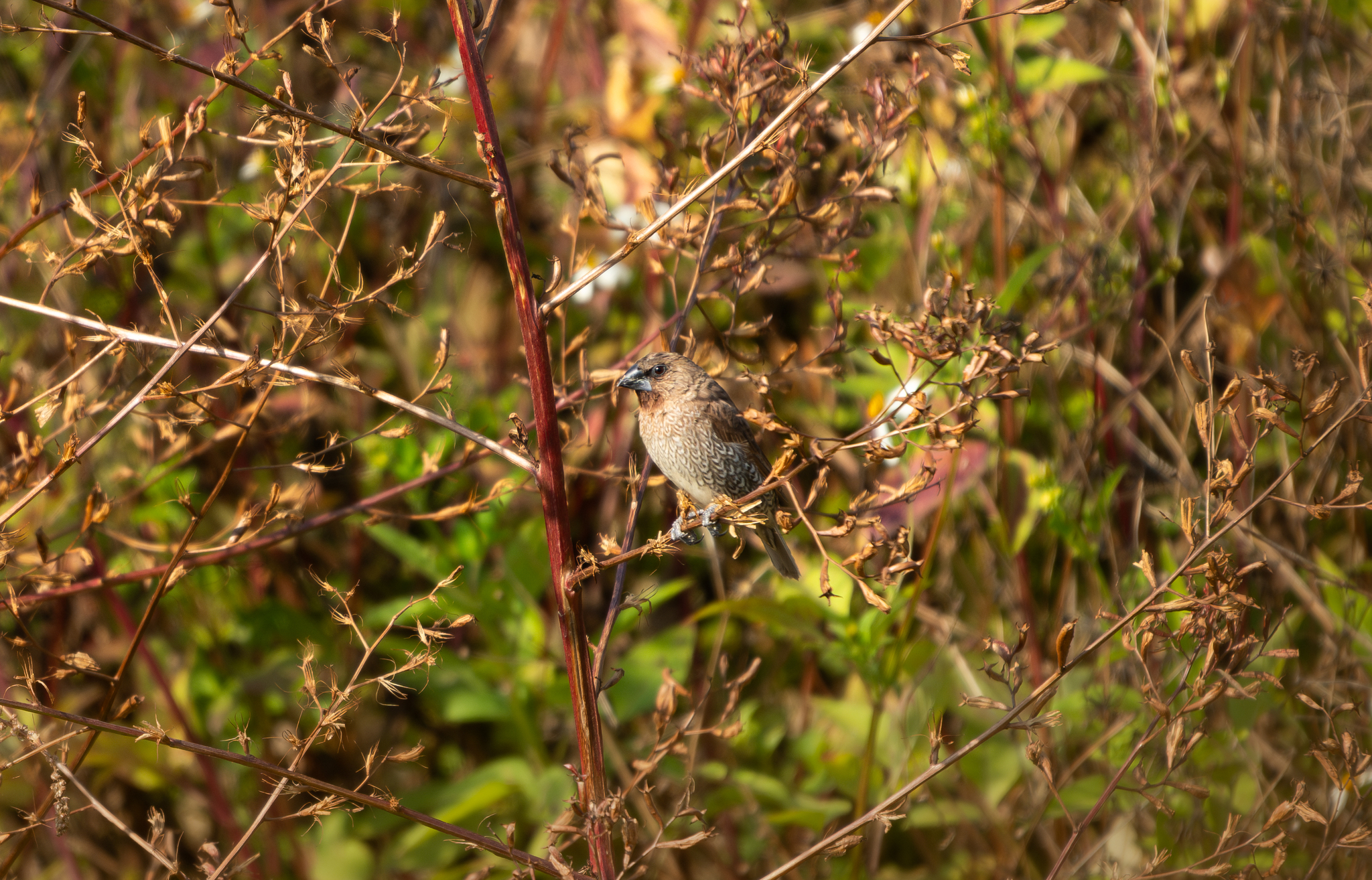
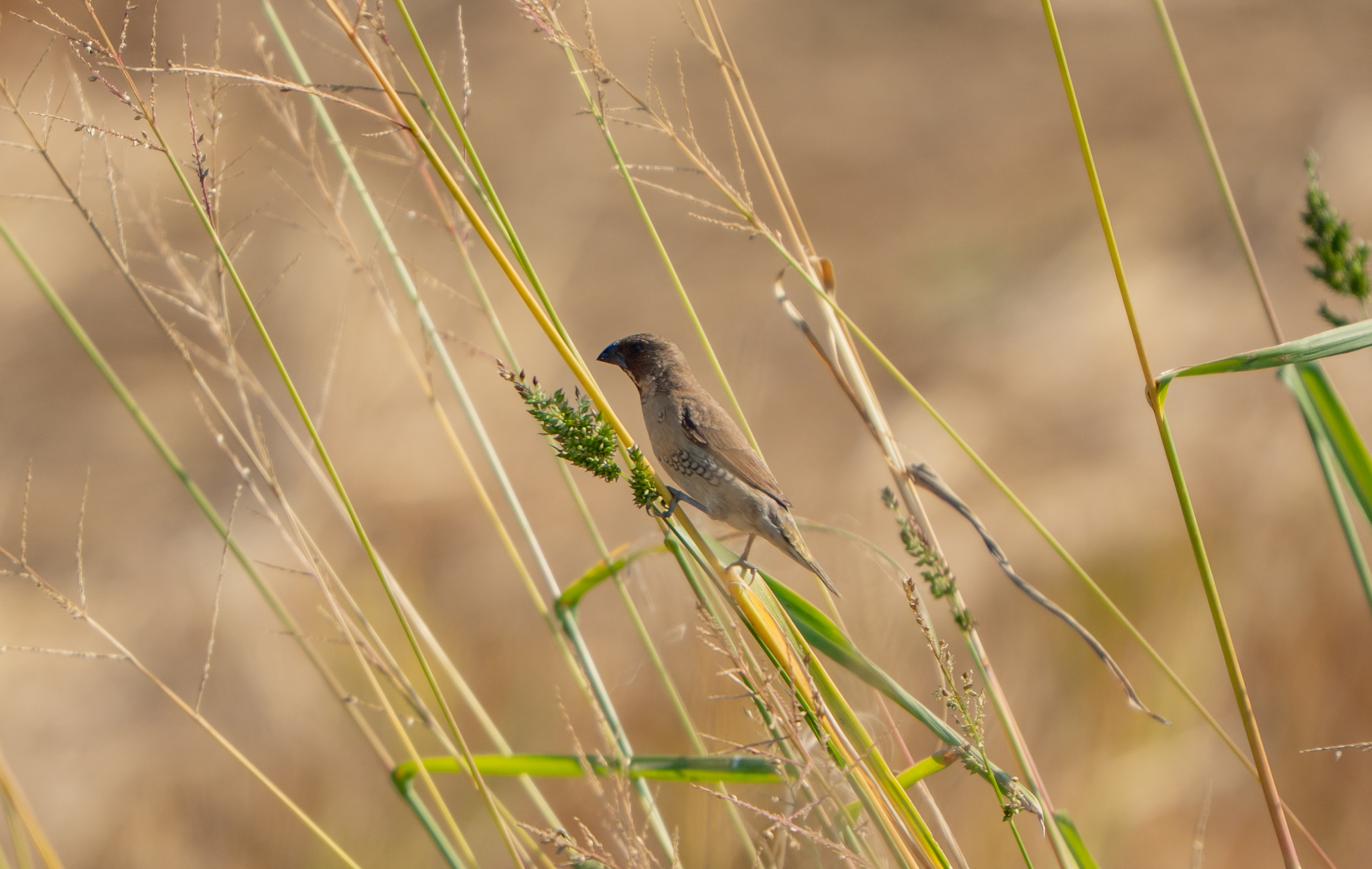
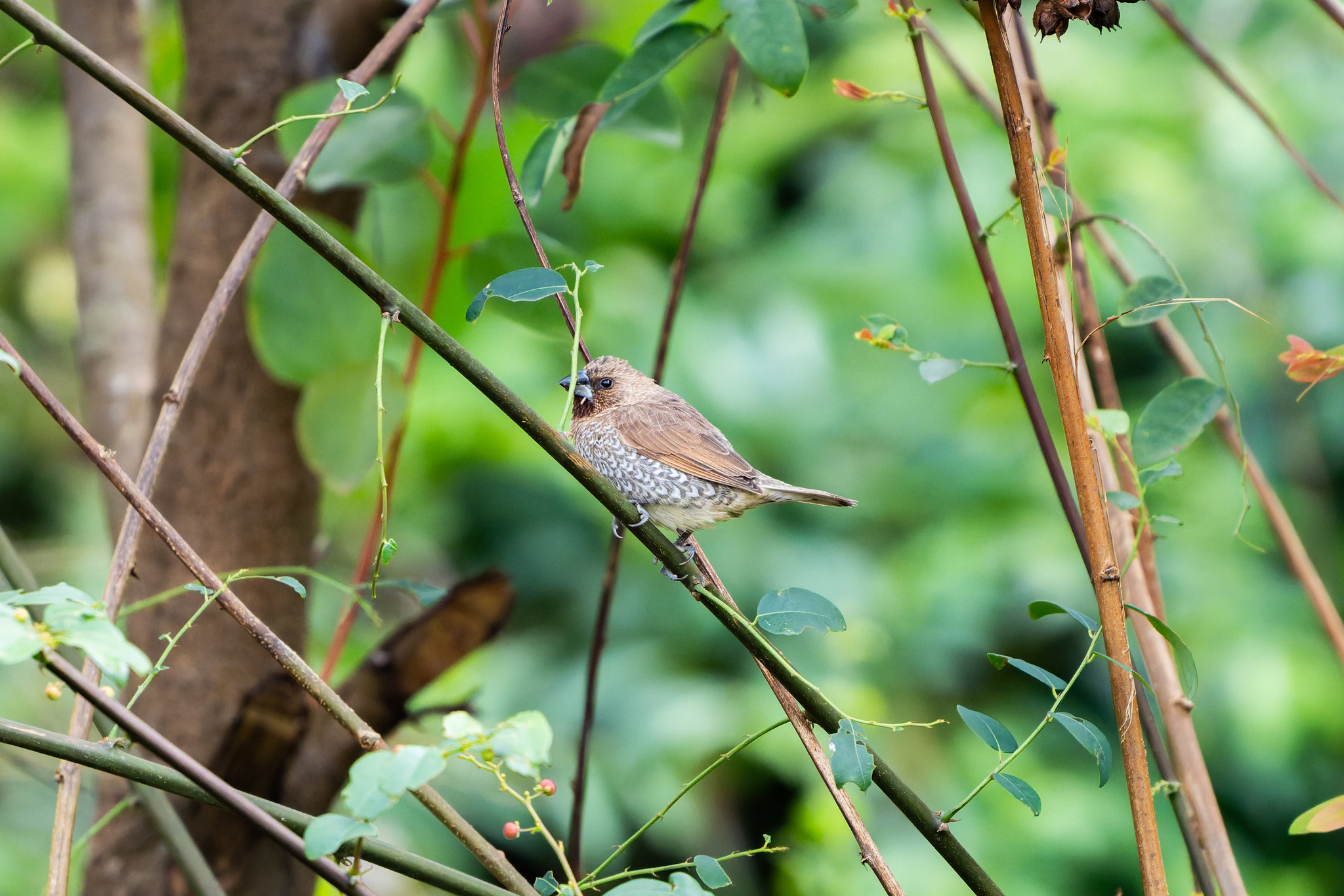
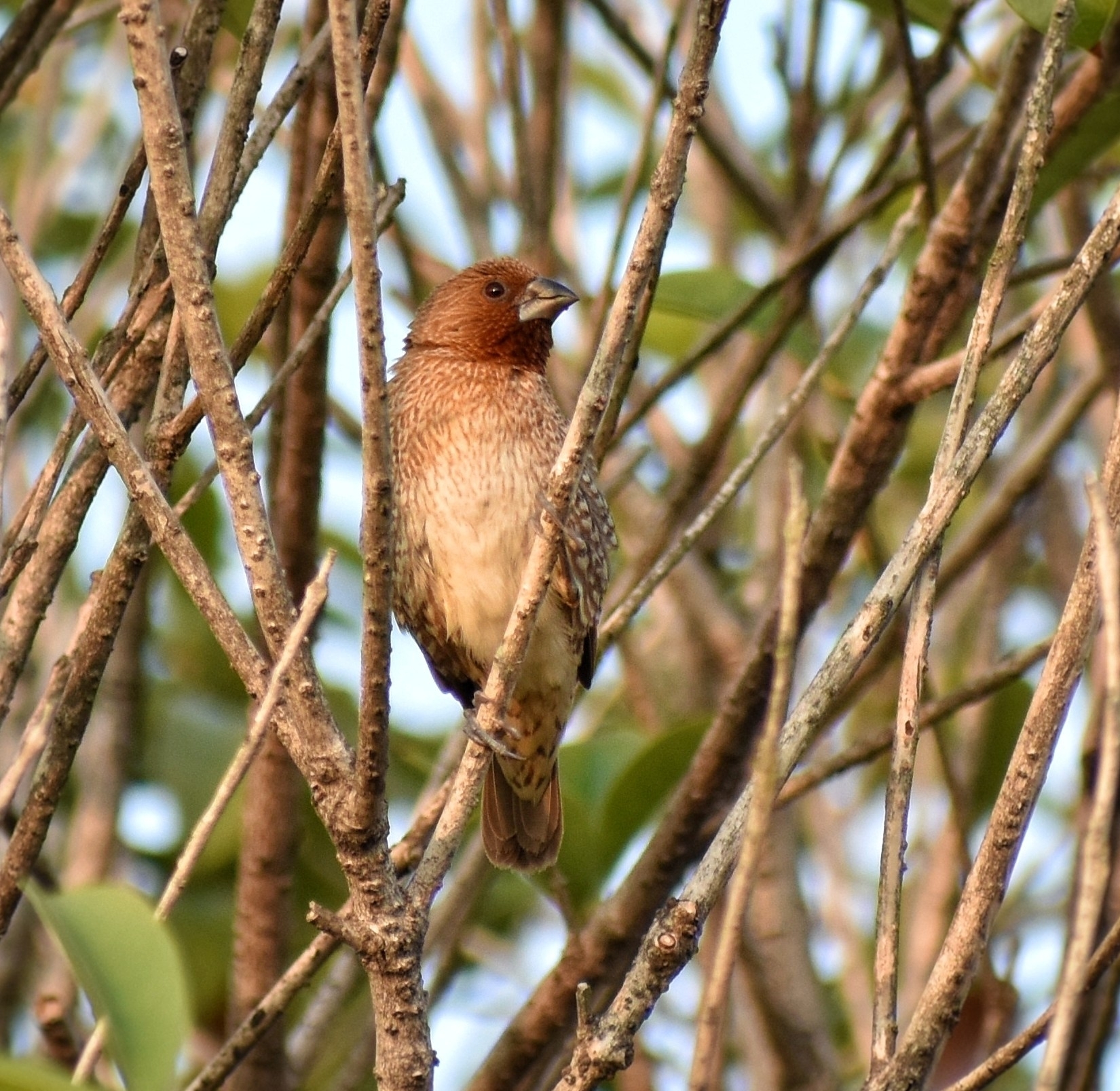
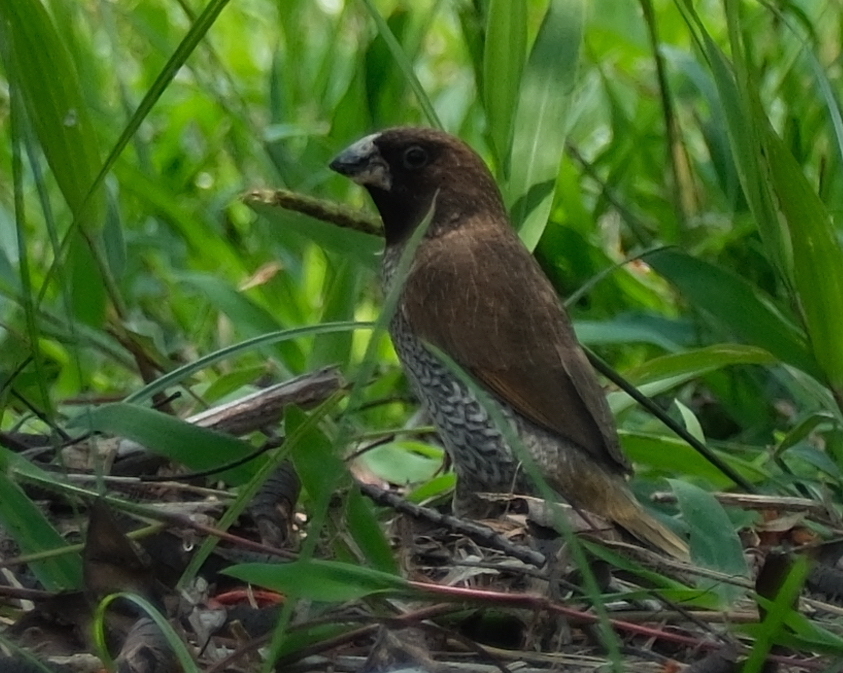
Adults are 11–12 cm (4.3–4.7 in) long and weigh 12–16 g (0.026–0.035 lb). They have brown upperparts, a dark brown head, and a stubby dark conical bill. Underparts are white with distinct dark scale-like markings. Males exhibit darker underside markings and a darker throat than females. Immature birds have pale brown upperparts, lack the dark adult head, and possess uniform buff underparts.
Identification
Key marks include the dark conical bill and scale-patterned breast. Juveniles may be confused with tricoloured or black-throated munias due to uniform buff underparts and lack of dark head. Vocalizations include soft whistles, 'kitty-kitty-kitty' calls, and sharp chipping alarm notes. Flight involves vertical or horizontal tail and wing flicking while hopping.
Distribution & Habitat
Native range extends from Pakistan, India, Nepal, Bangladesh, and Sri Lanka east through Myanmar, Thailand, southern China, Laos, Cambodia, Vietnam, Malaysia, Singapore, Indonesia, and the Philippines. Found on plains up to 2,500 m in the Himalayas and 2,100 m in the Nilgiris. Introduced and feral populations exist in Puerto Rico, Hispaniola, Hawaii, Japan, Australia, and the United States (Florida, California).
Behavior & Ecology
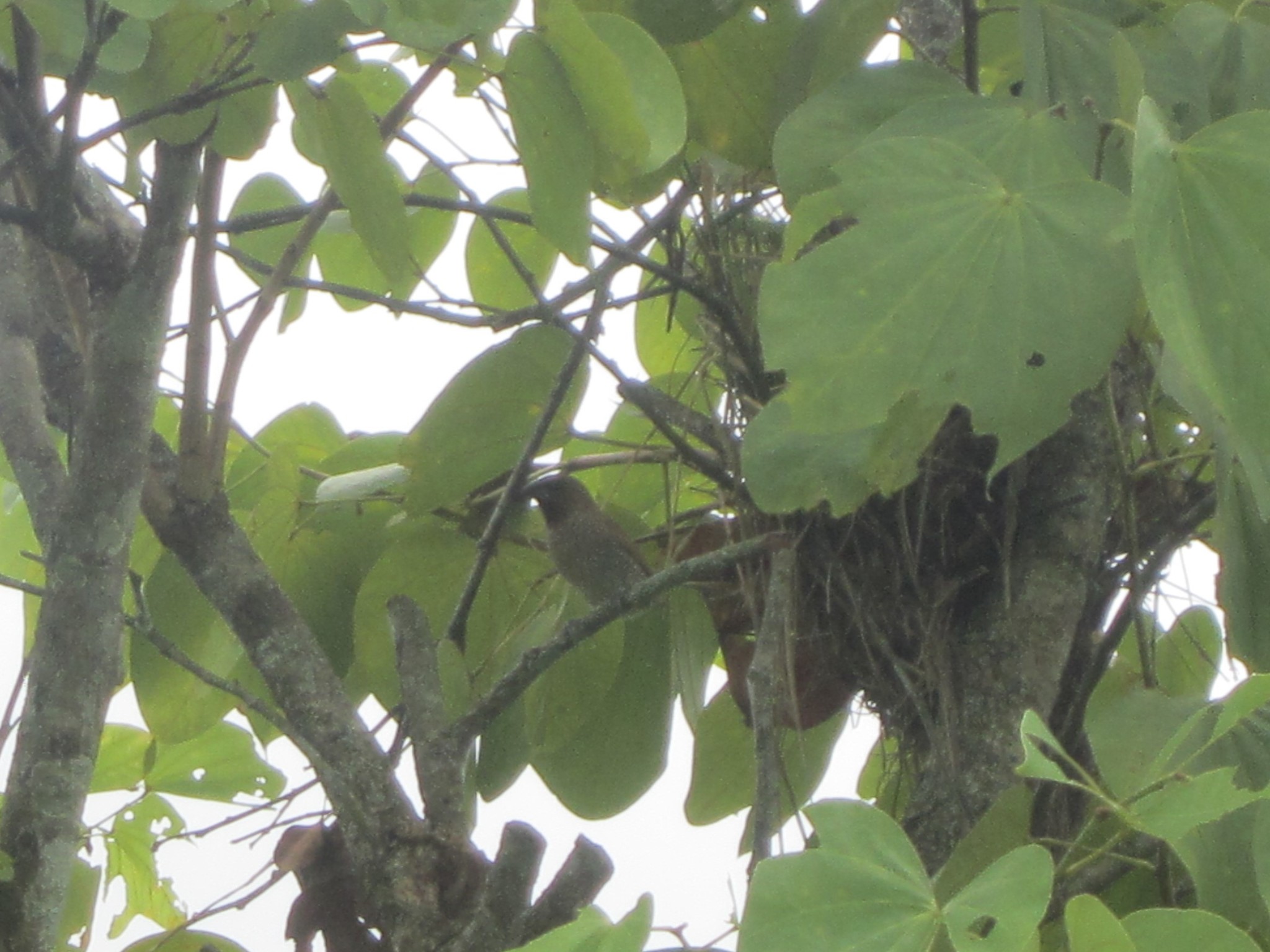
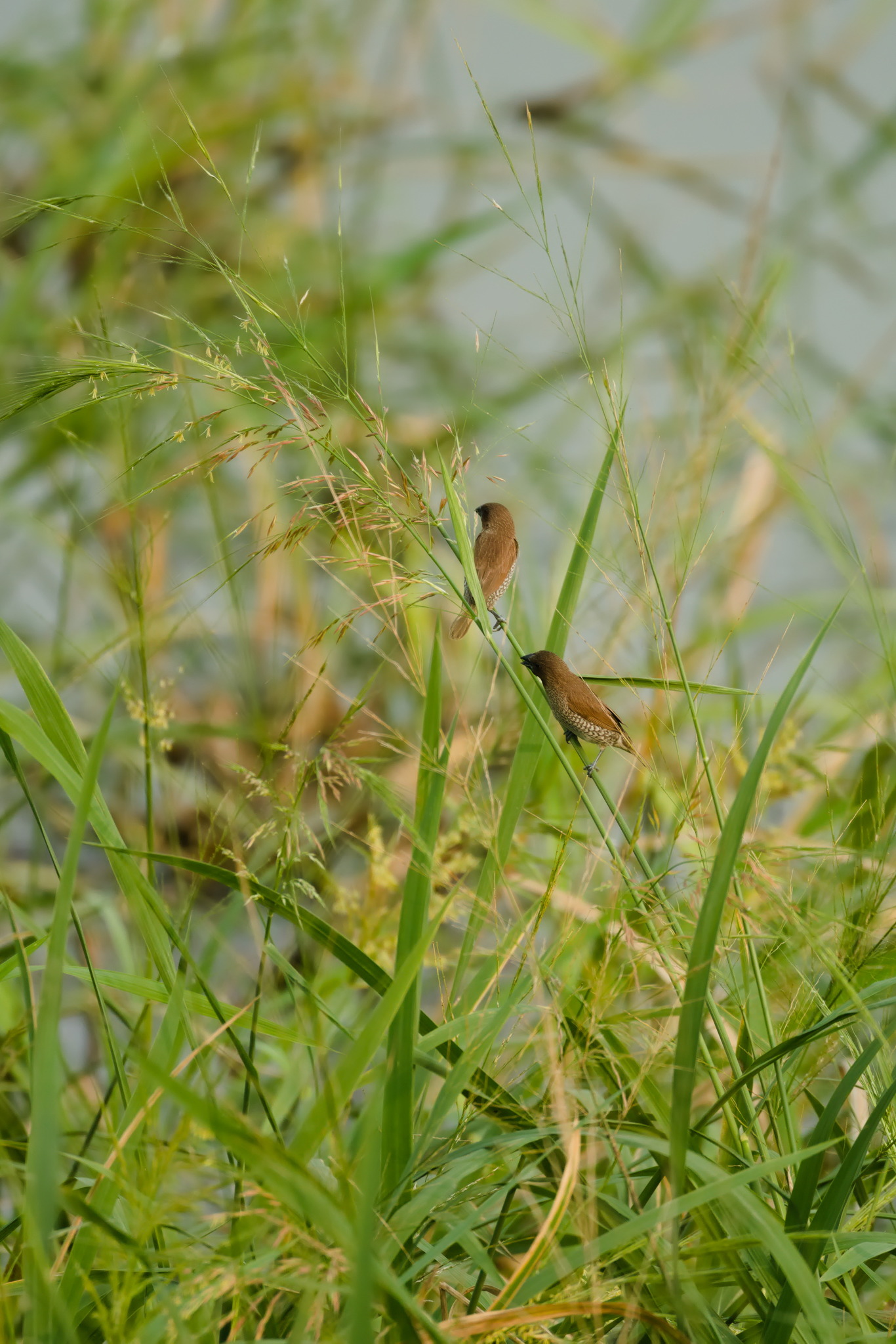
Forms flocks of up to 100 individuals; roosts in close contact. Diet consists mainly of grass seeds, berries (e.g., Lantana), insects, and algae prior to breeding. Breeding occurs during summer rainy seasons (June–August, October in India). Nests are large, domed structures of grass or bamboo leaves with side entrances, placed in trees or under eaves. Clutches contain 4–6 eggs (up to 10), incubated by both sexes for 10–16 days. Exhibits producer-scrounger foraging strategies.
Conservation
Listed as Least Concern on the IUCN Red List. Population is large, stable, and unquantified, occupying an extremely large range. Not globally threatened. Some populations decline due to trapping for the cage bird trade and Buddhist life release rituals, where post-release mortality can reach 90%. Regarded as an agricultural pest in some areas for feeding on cultivated cereals like rice.
Culture
Known in the pet trade as nutmeg mannikin or spice finch. In the Philippines, it is called mayang pakíng. Historically referred to as 'Gowry Bird' by George Edwards. Extensively used in captivity for behavioral and physiological studies.
Source: Wikipedia · CC BY-SA 3.0
Taxonomy
- Order
- Passeriformes
- Family
- Estrildidae
- Genus
- Lonchura
Subspecies (11)
-
Lonchura punctulata baweana
Bawean Island (Java Sea)
Data Sources
Species description from Wikipedia, licensed under CC BY-SA 3.0.
Bird images and sounds sourced from GBIF, contributed by citizen scientists worldwide under Creative Commons licenses.
Taxonomy data from AviList 2025.