Scaly-breasted Munia
Lonchura punctulata
斑文鸟
Introduction
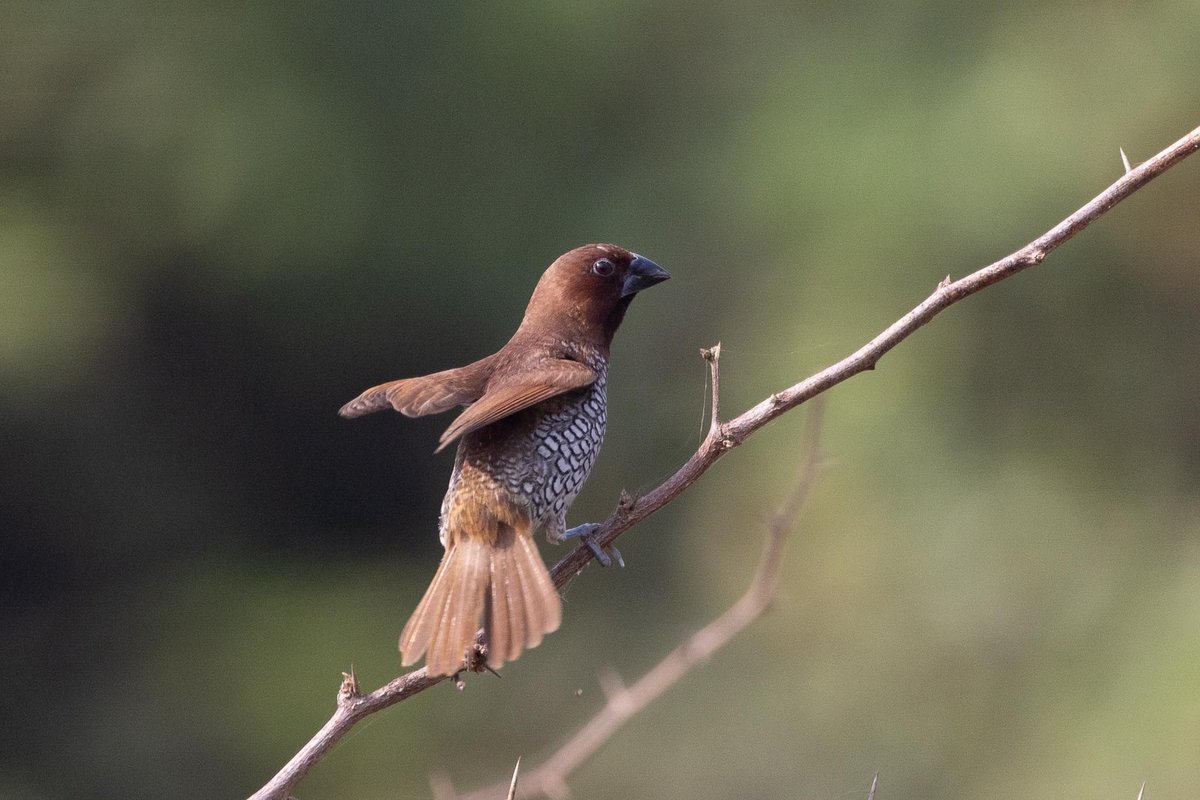
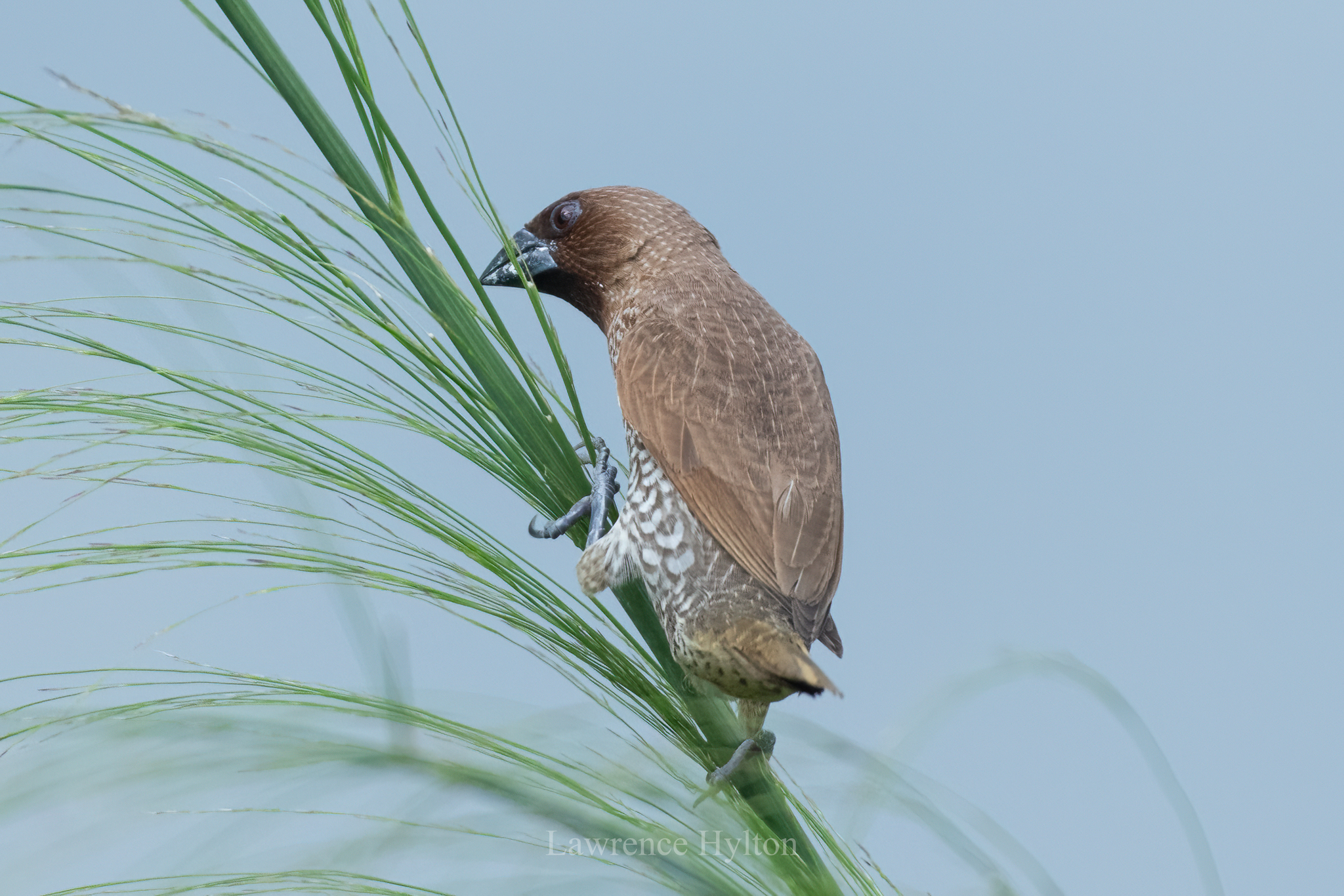
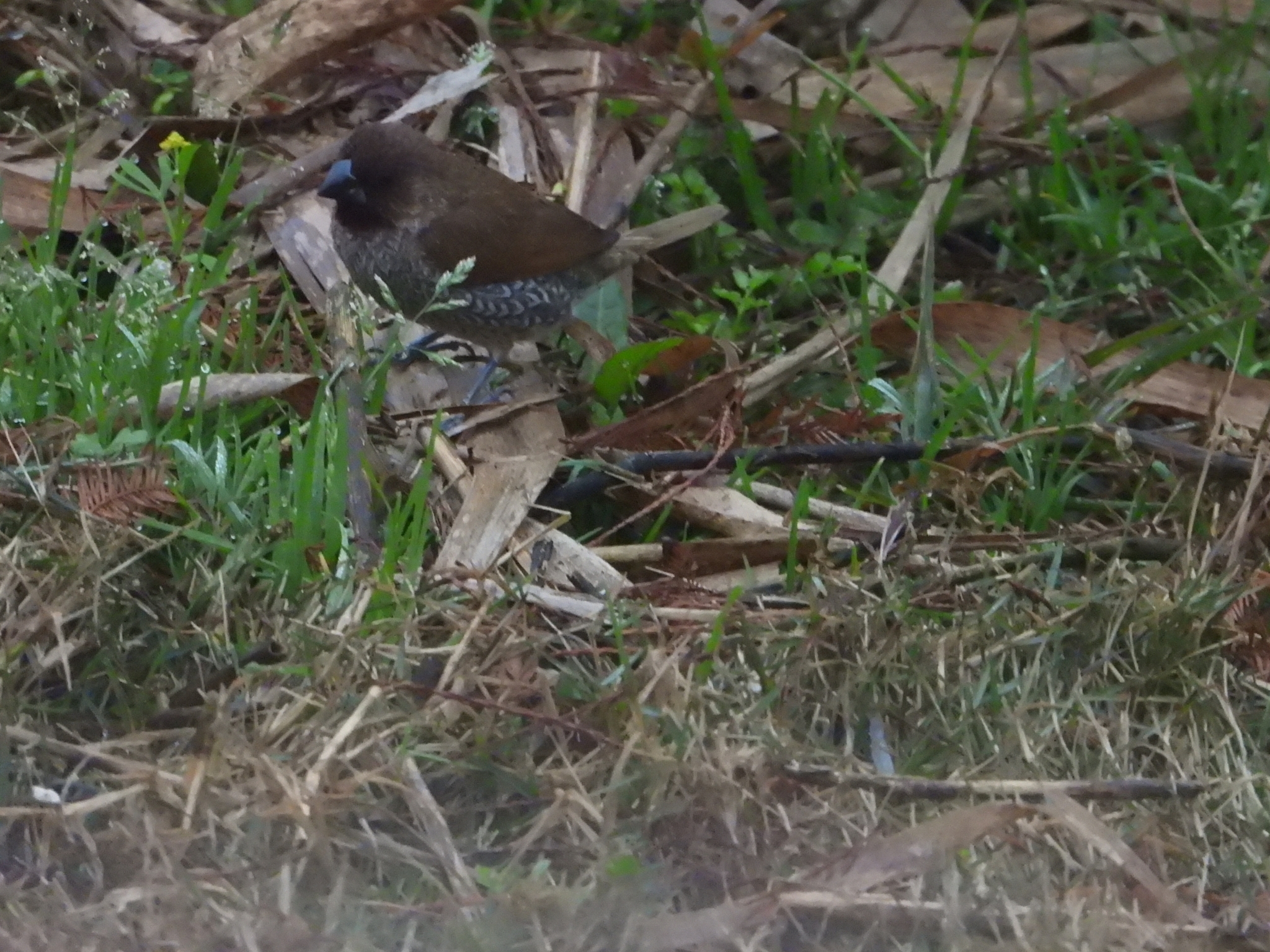
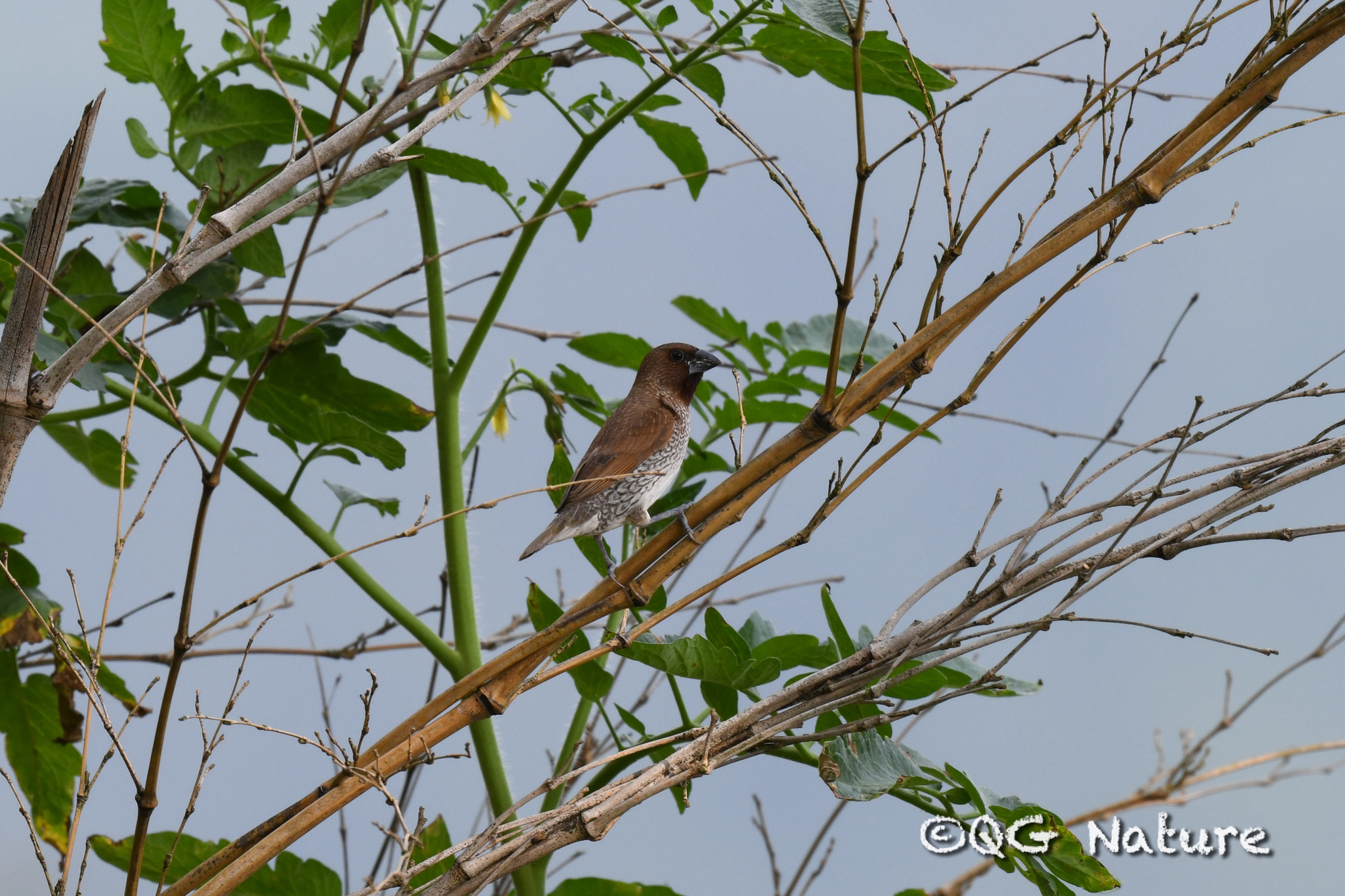
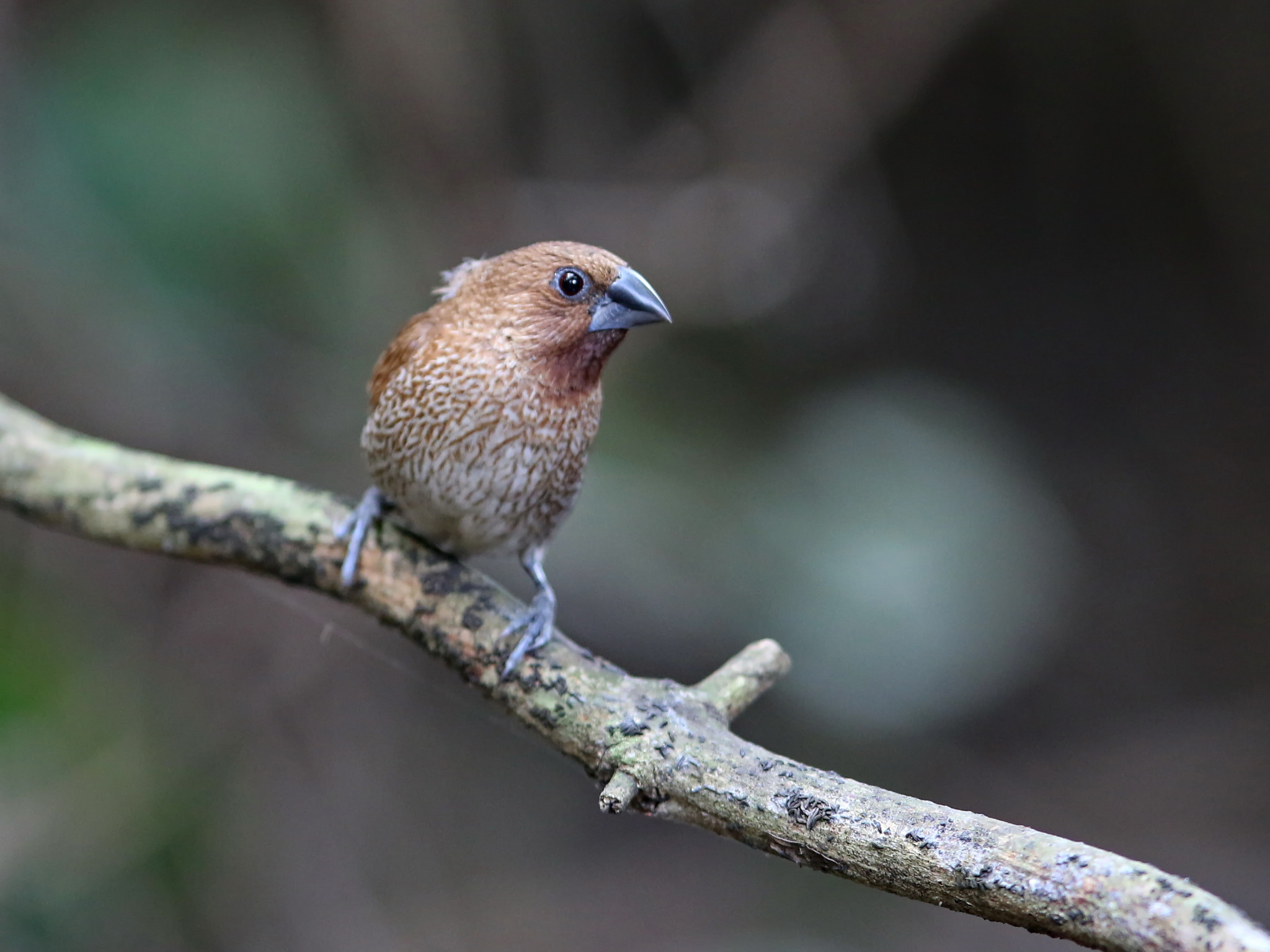
This sparrow-sized estrildid finch occurs across tropical Asia. It inhabits open habitats including agricultural areas and human settlements. The species is characterized by scale-like feather markings on the breast and belly, a dark conical bill, and brown plumage. It forms flocks while foraging. Eleven subspecies are recognized across its range, showing slight variation in size and coloration. The species is also known as nutmeg mannikin and spice finch. Introductions through the pet trade have established feral populations in suitable habitats worldwide.
Description
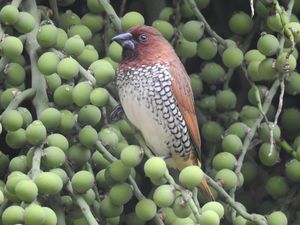
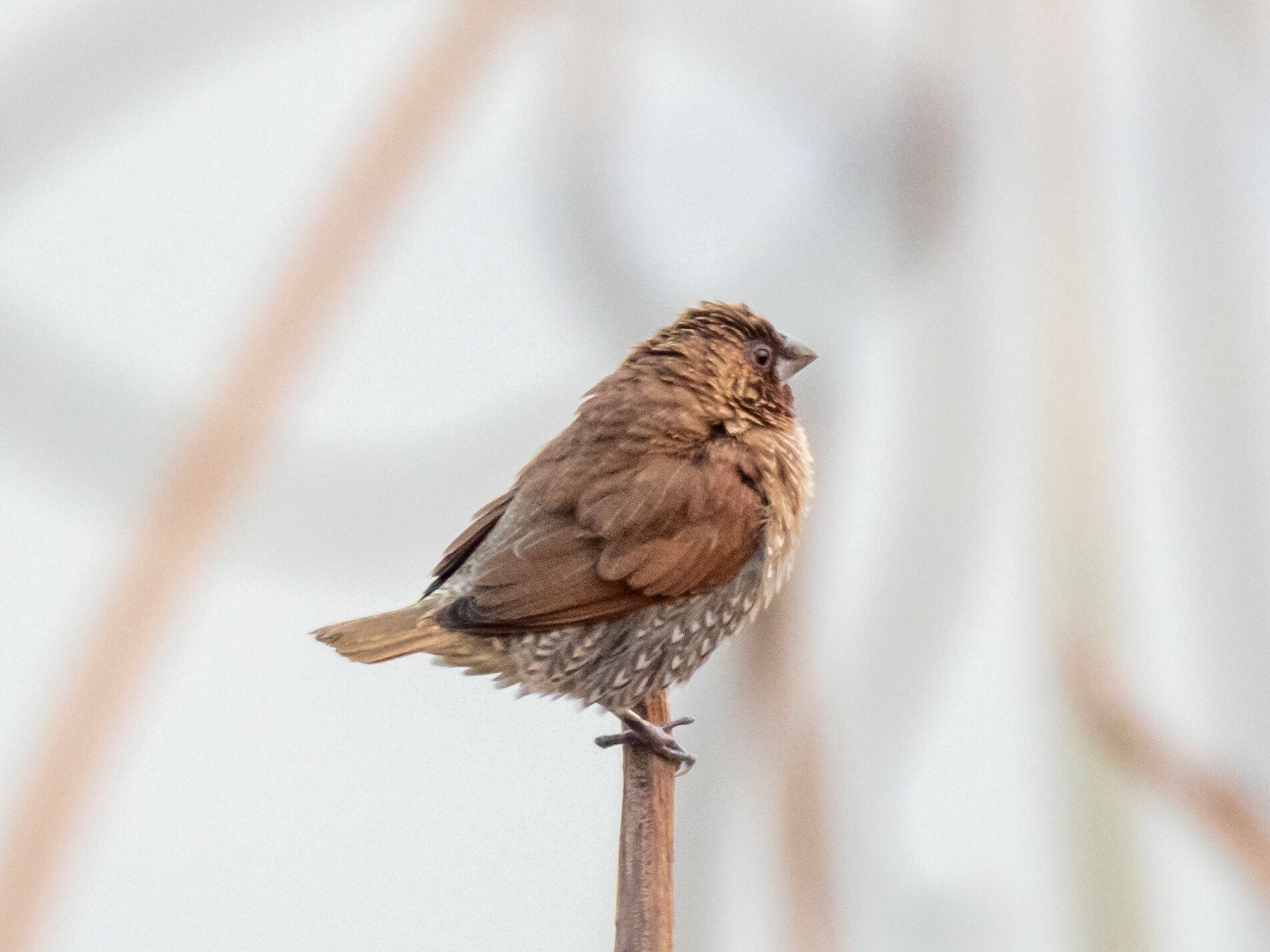
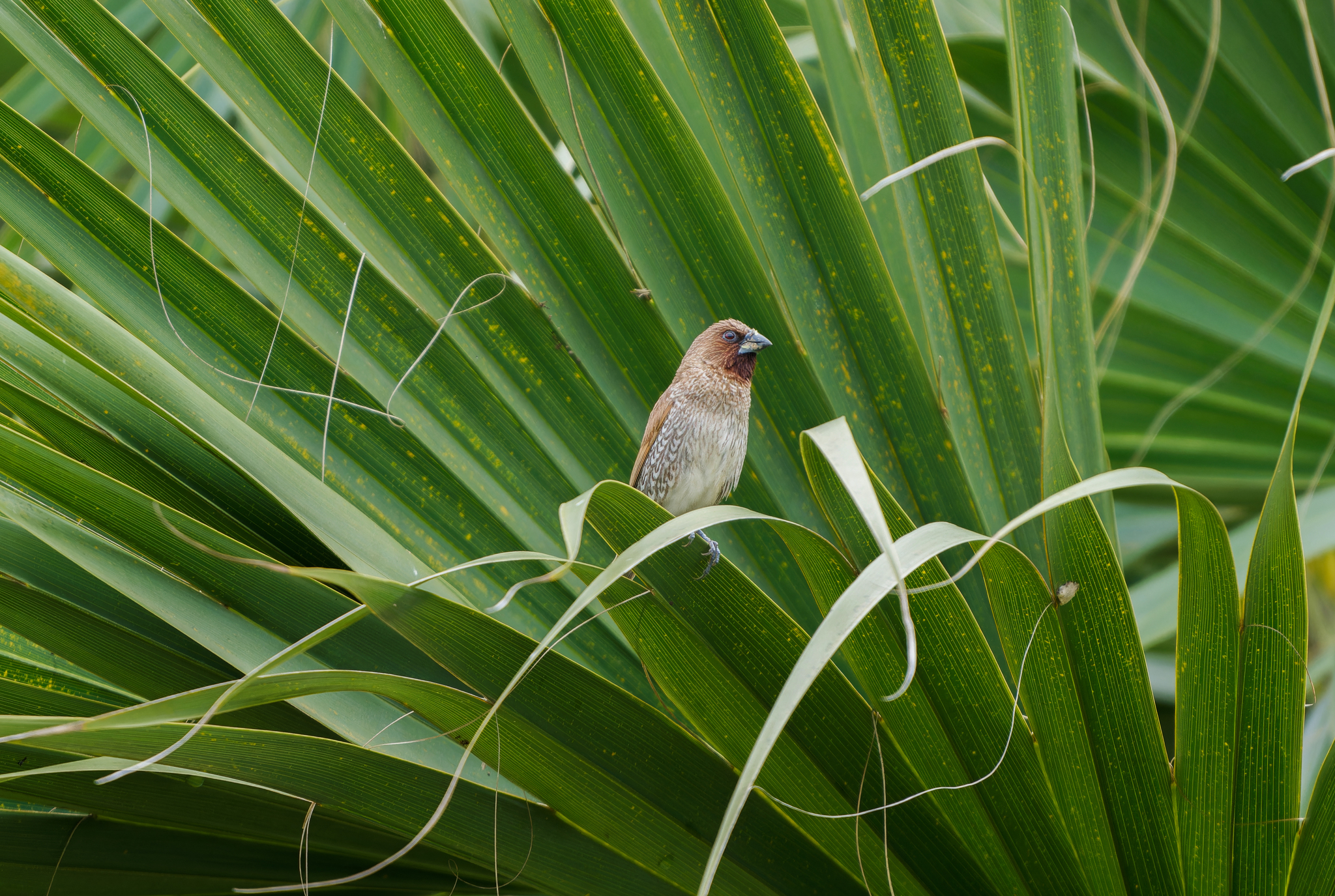
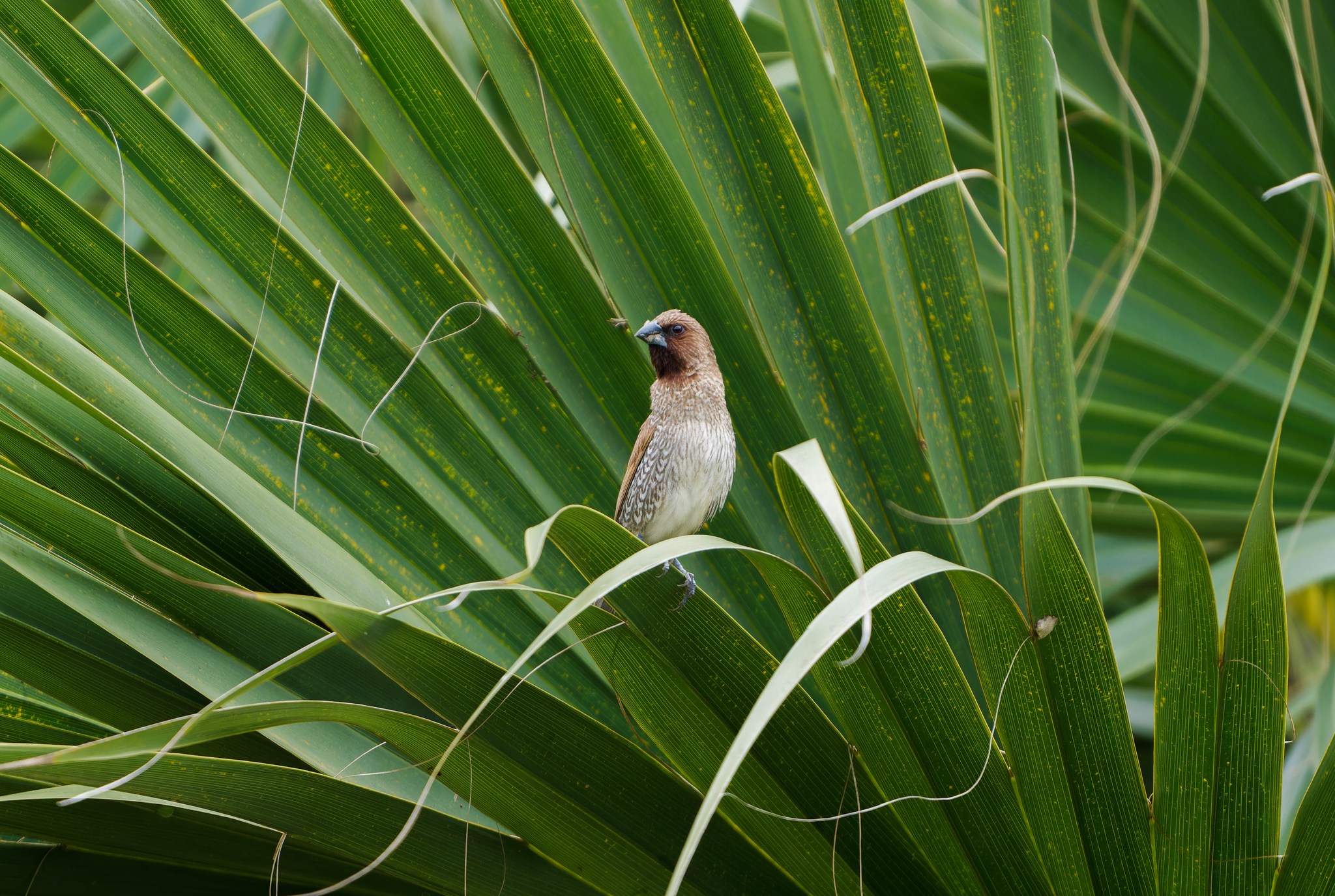
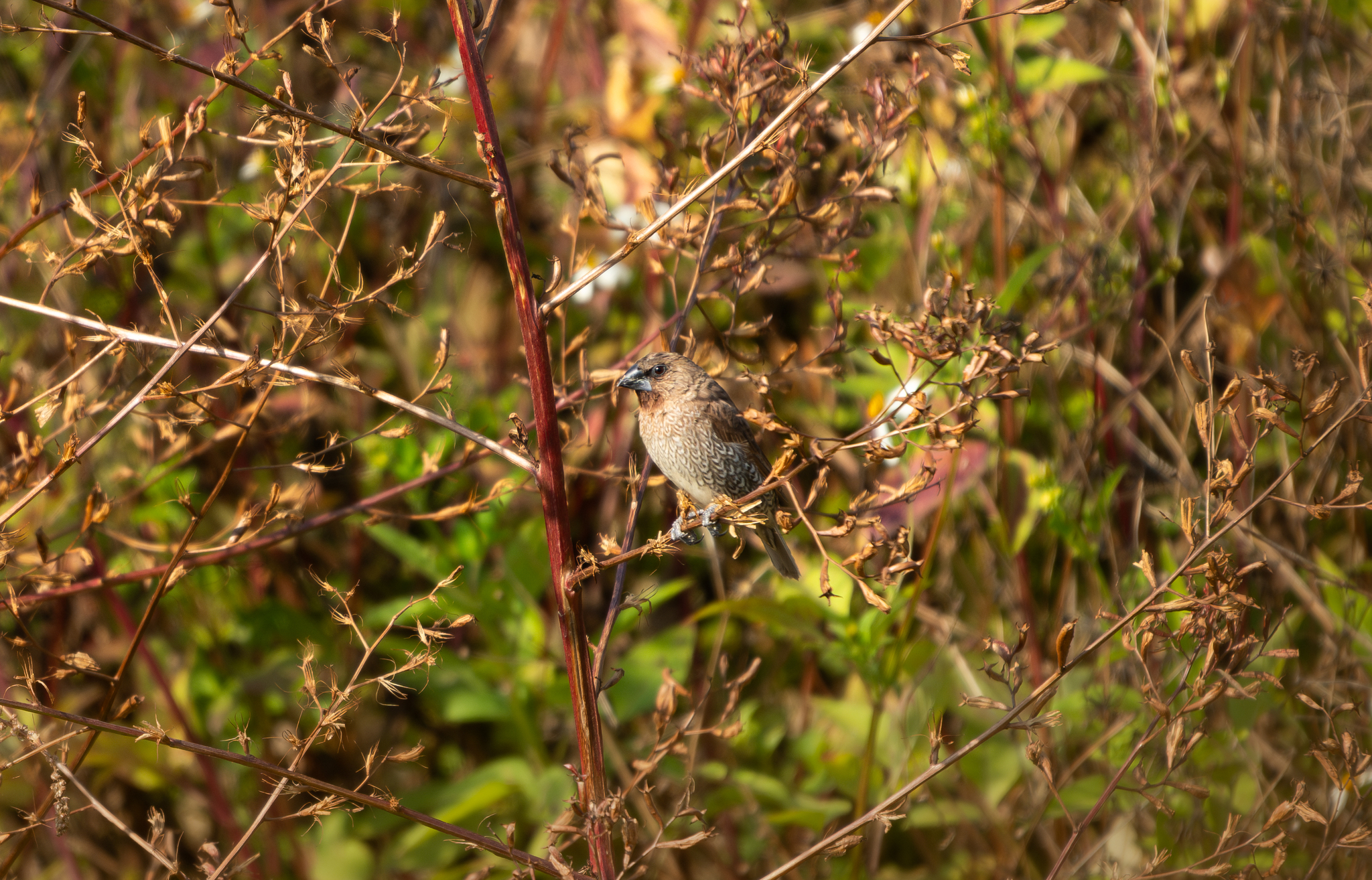
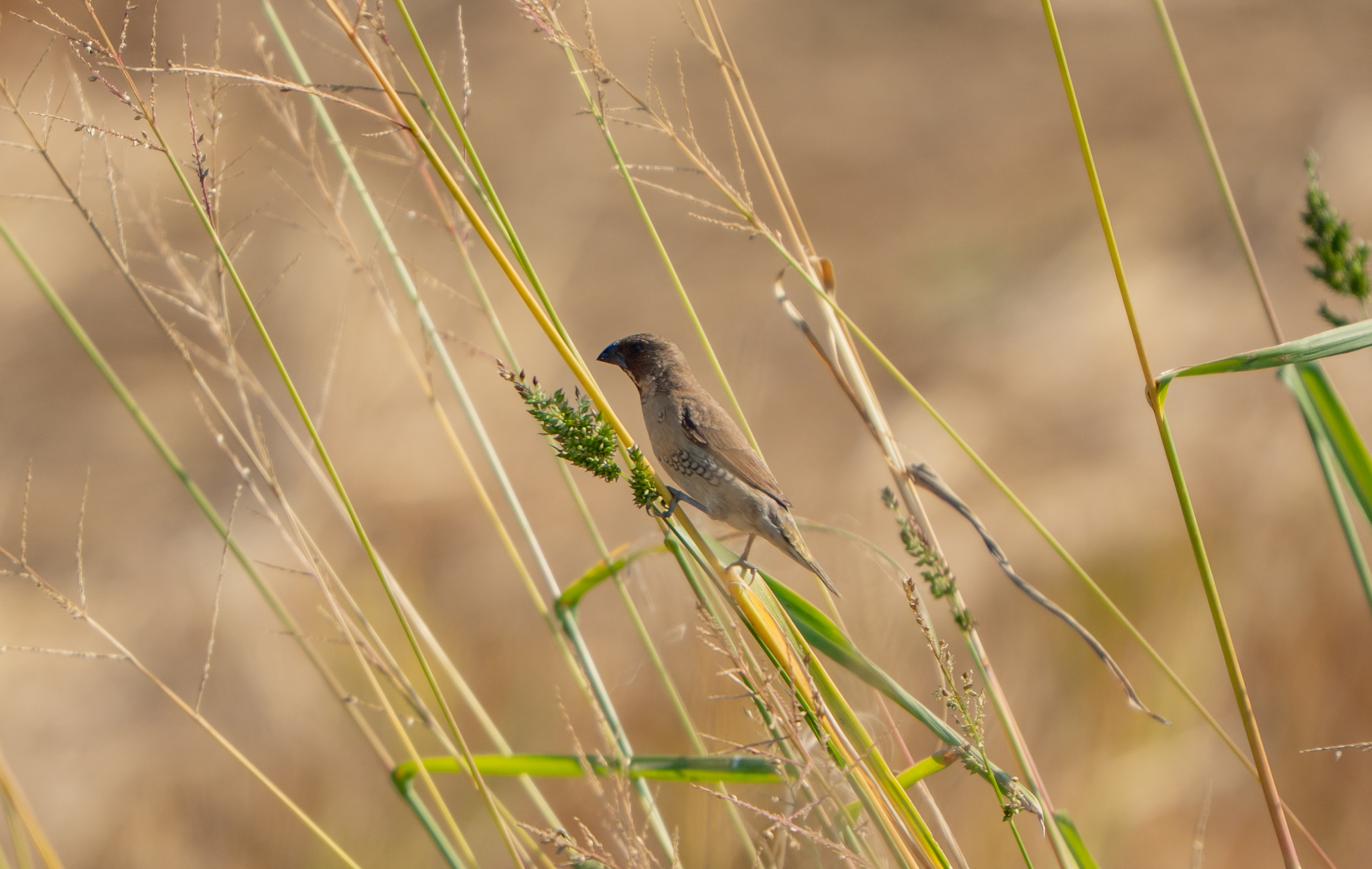
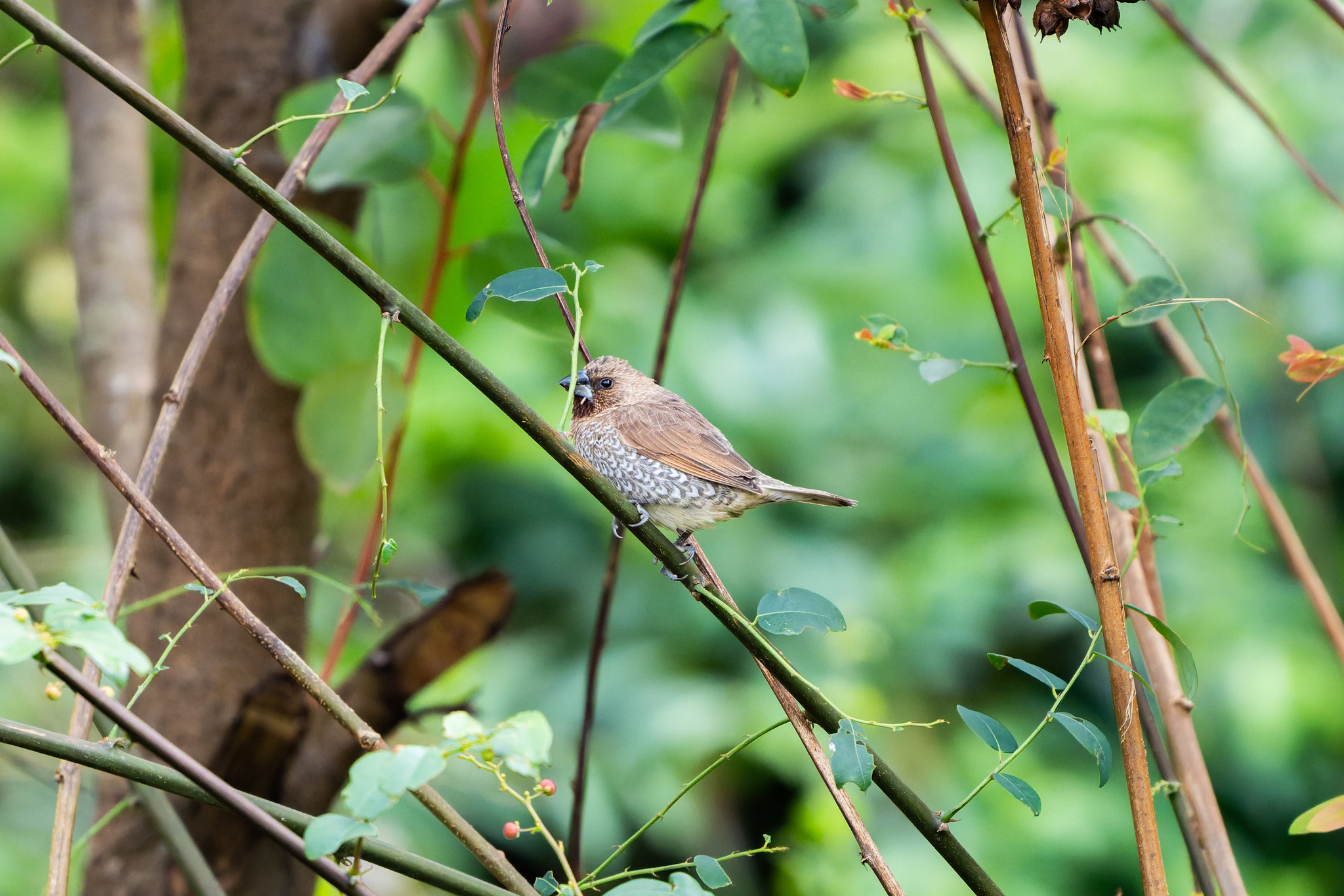
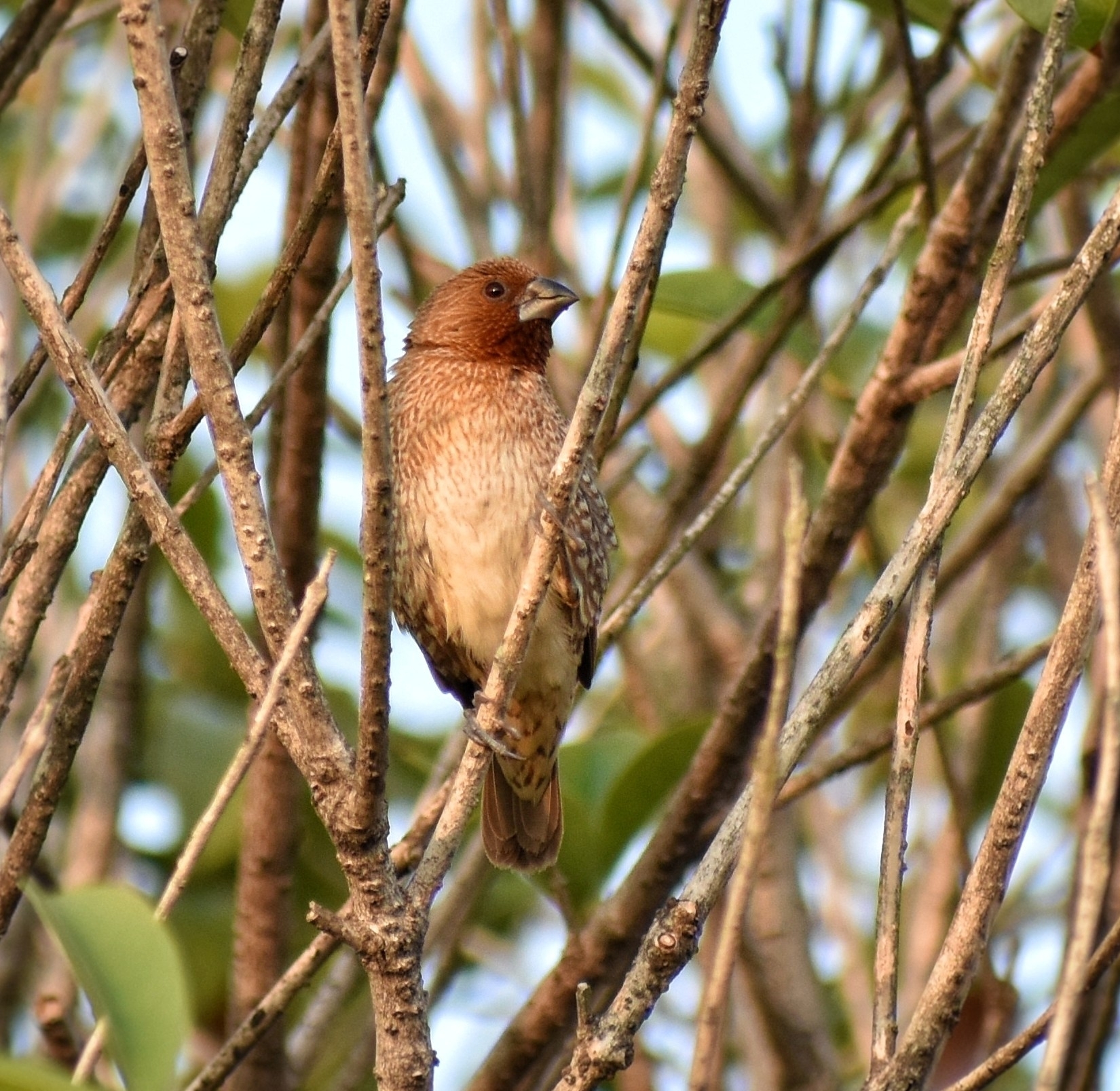
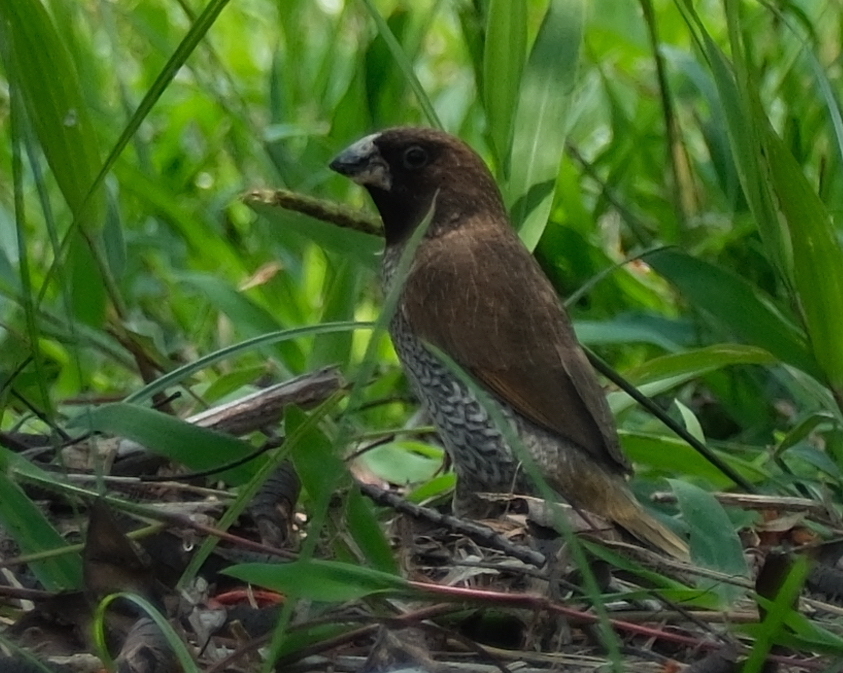
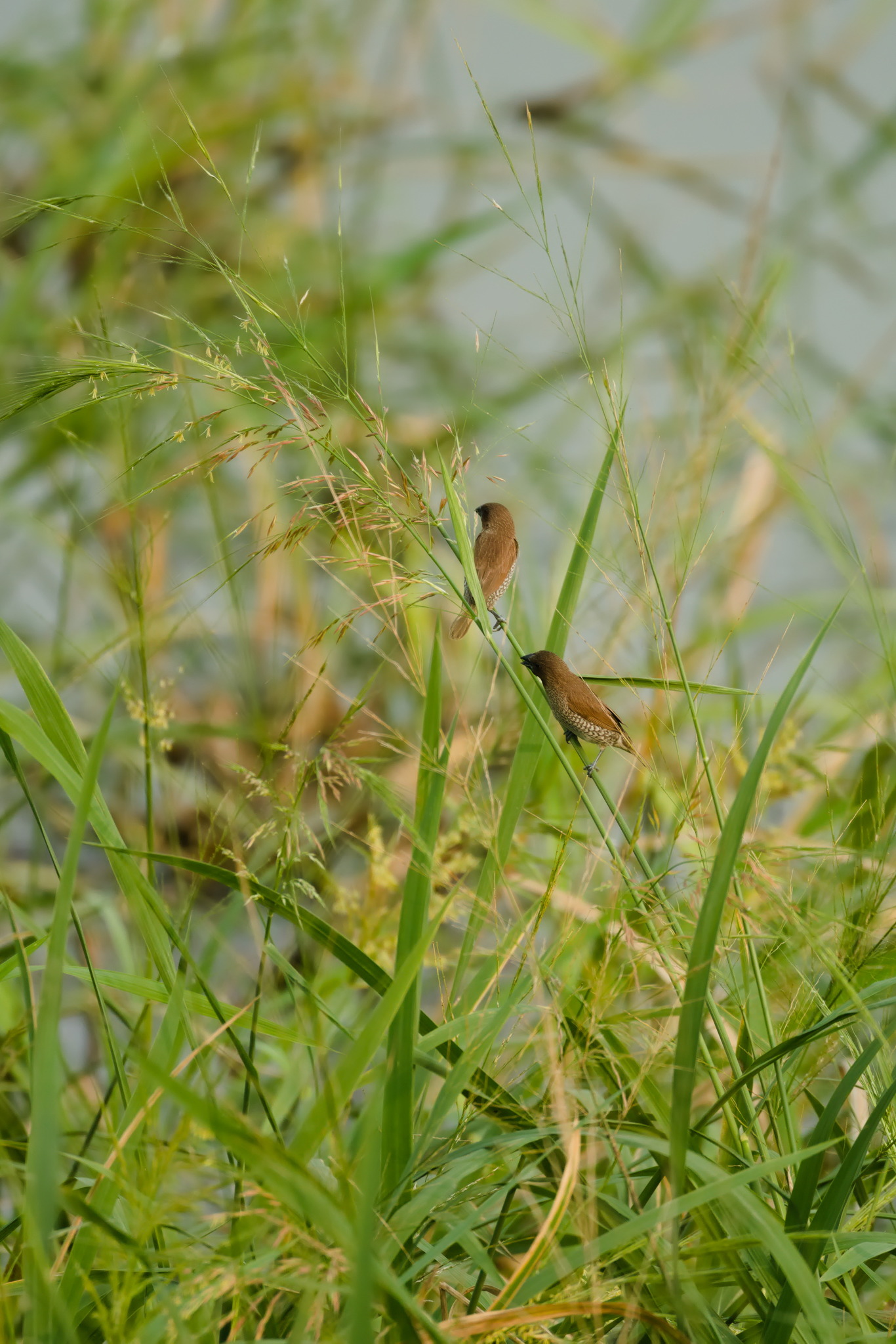
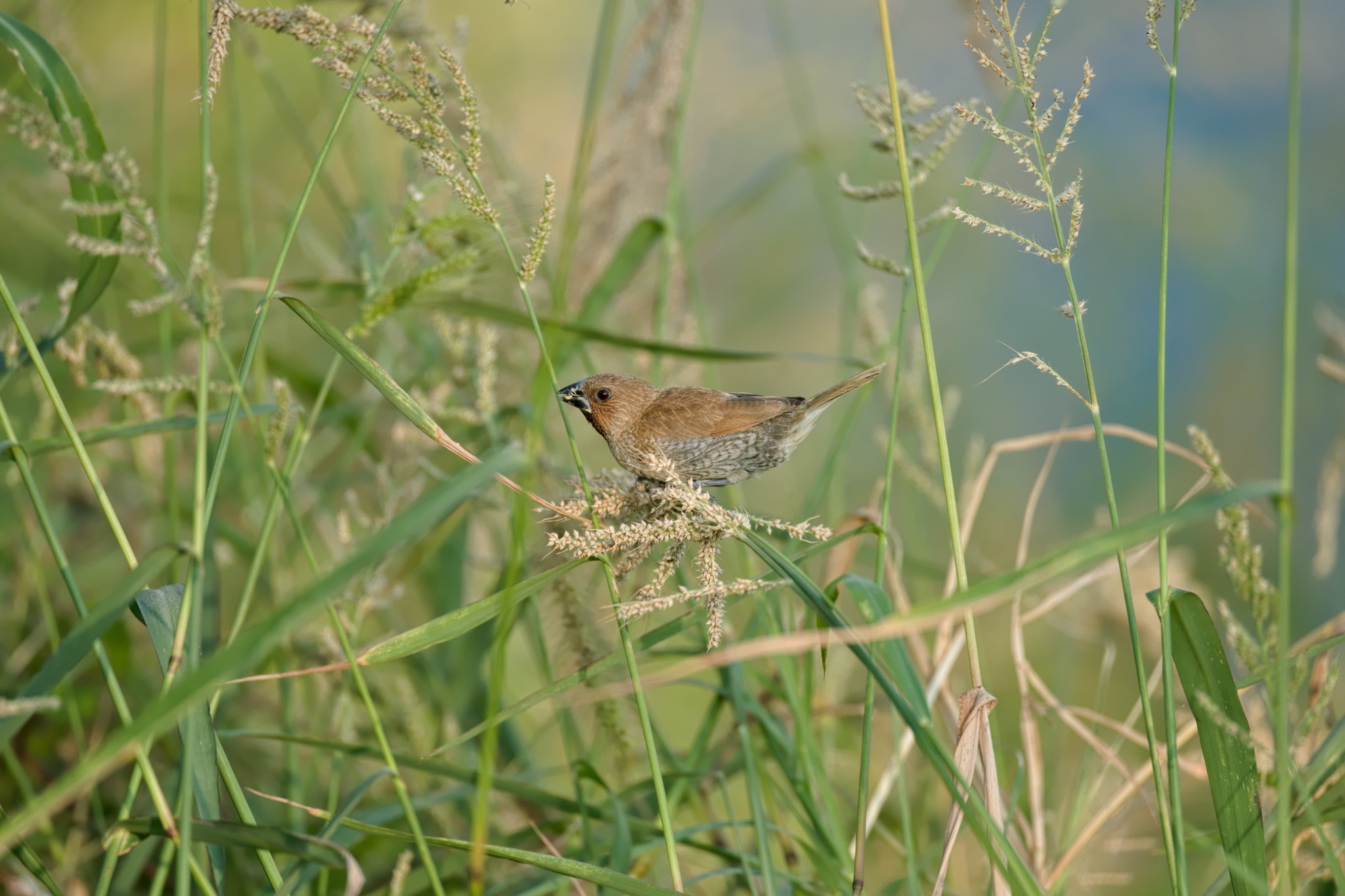
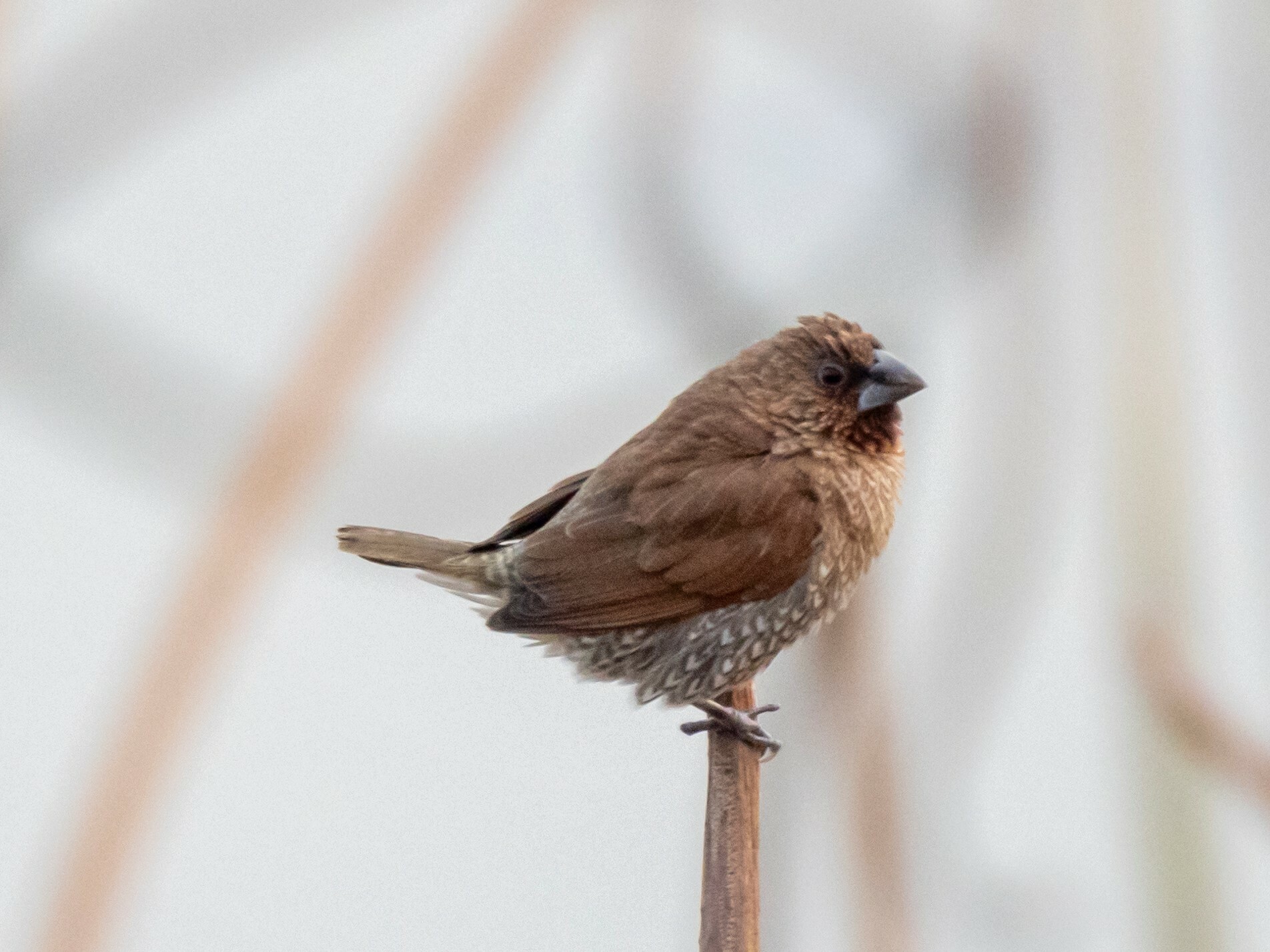
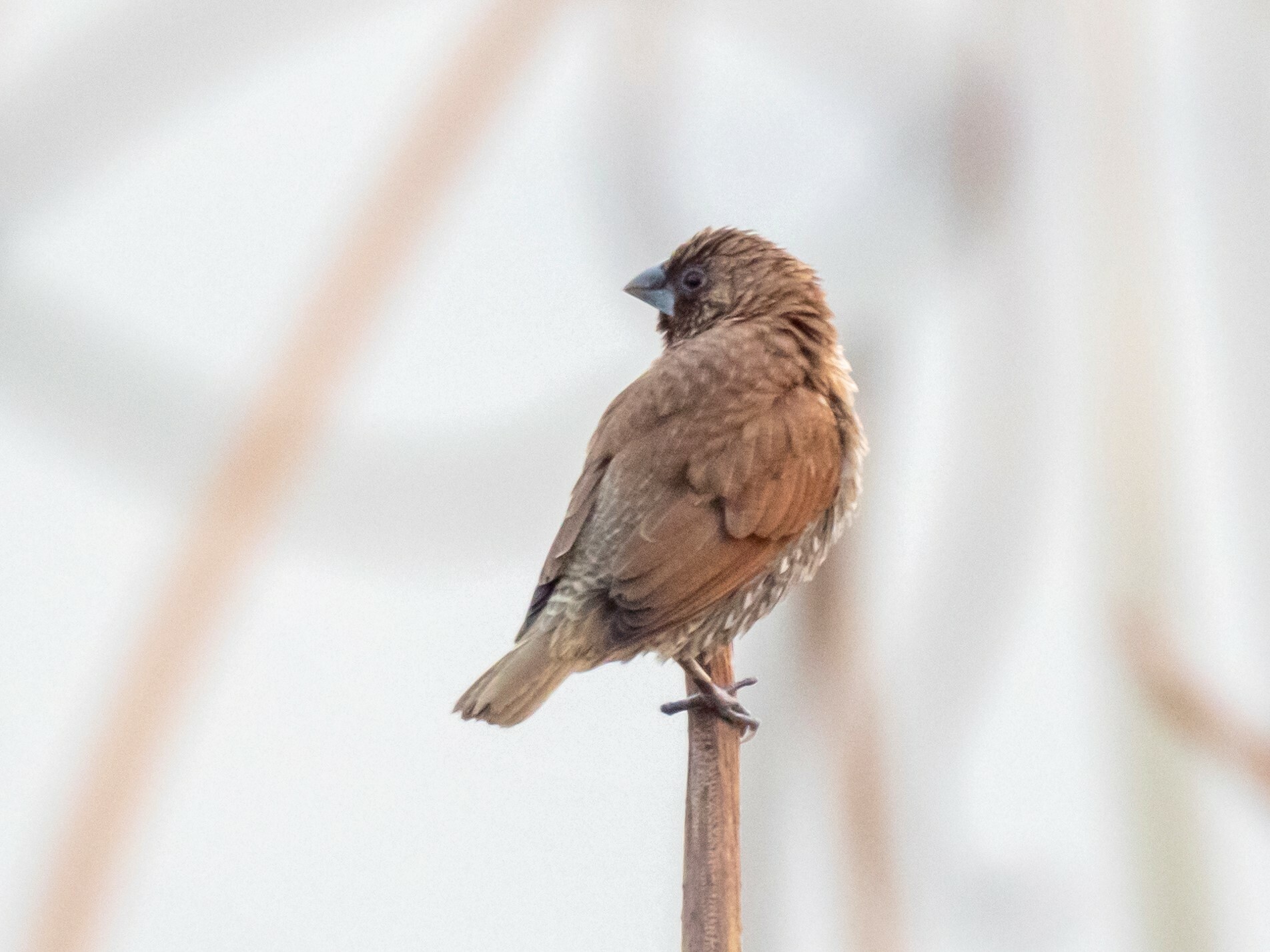
A compact finch measuring 11-12 centimeters in length and weighing 12-16 grams, this species has a stubby dark bill typical of seed-eating birds. The upperparts and head are uniformly brown, while the underparts are white adorned with distinctive dark scale-like markings that create the species' characteristic pattern. The sexes appear similar, though males typically display darker throat coloration and more pronounced markings on the underside. Juveniles are distinctly different, showing pale brown upperparts without the dark head of adults and uniform buff underparts that lack the scalation entirely. The tail is relatively short and the wings are rounded, suited for short flights through grassland and vegetation.
Identification
The scaly underpart pattern is the most reliable field mark, distinguishing this species from most other munias. The dark brown head without facial markings separates it from similar species like the tricoloured munia, which has a black head and breast patch. Juvenile birds can be challenging, as they lack the scale pattern and may be confused with young tricoloured munias or black-throated munias; the absence of a dark throat and more uniform buff underparts in juveniles helps distinguish them. In flight, the brown plumage and pale rump create a subtle contrast. The dark bill and brown upperparts separate it from white-headed munia species. The heavy, conical bill indicates its granivorous diet and distinguishes it from more slender-billed weaver species.
Distribution & Habitat
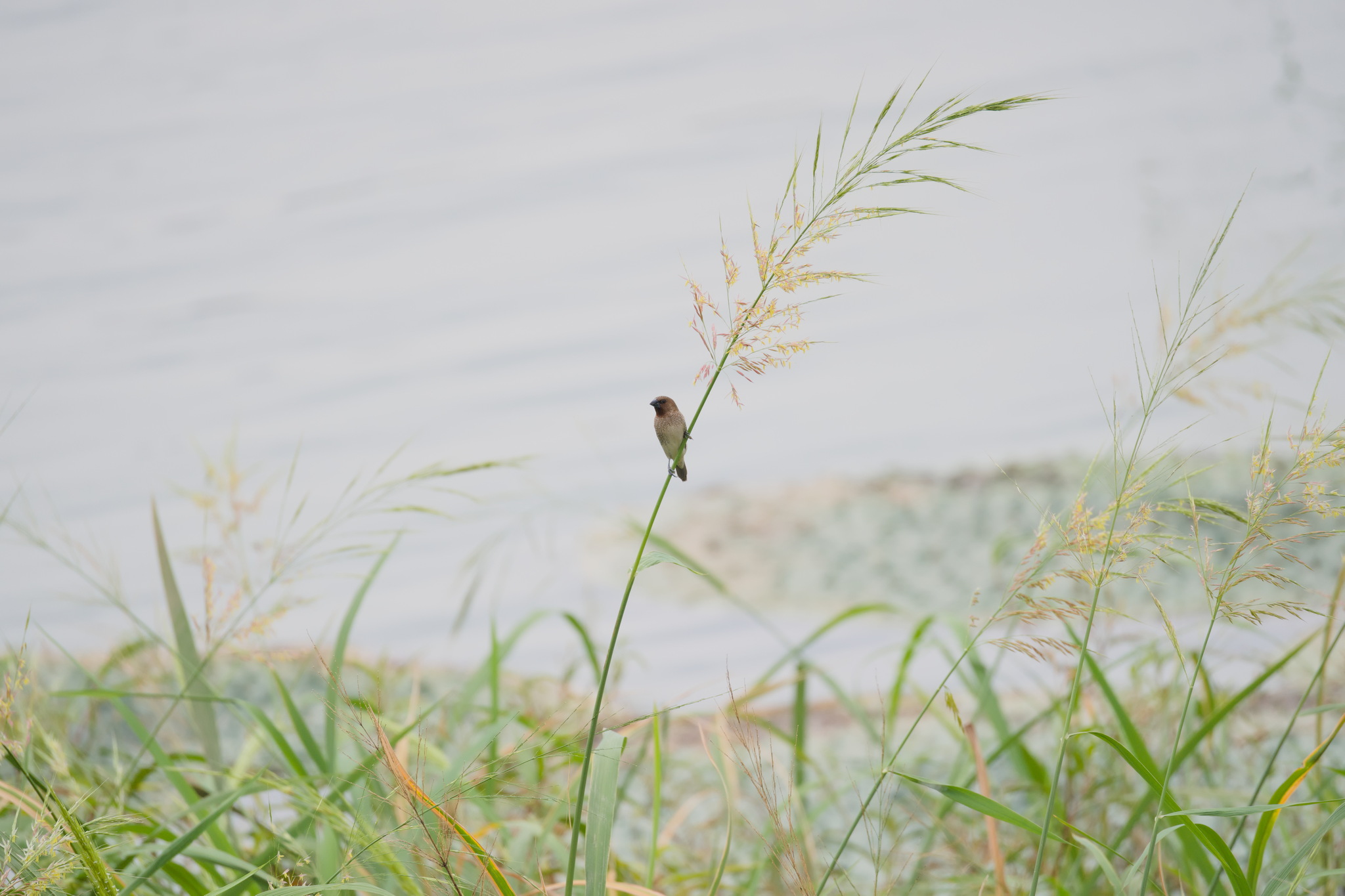
Native across tropical Asia from India and Sri Lanka eastward through Southeast Asia to Indonesia and the Philippines, this species occupies an extensive range spanning multiple countries and island groups. It inhabits tropical plains, grasslands, and cultivated areas, showing a particular fondness for rice paddies and other agricultural landscapes. The species commonly occurs near water and can be found in foothill regions up to 2,500 meters in the Himalayas and 2,100 meters in the Nilgiris. Introduced populations have established in Puerto Rico, Hispaniola, Hawaii, parts of Australia, Japan, and the southern United States including Florida and California, where escaped cagebirds have formed feral colonies. It has become naturalized in many regions outside its native range due to its popularity in the pet trade.
Behavior & Ecology
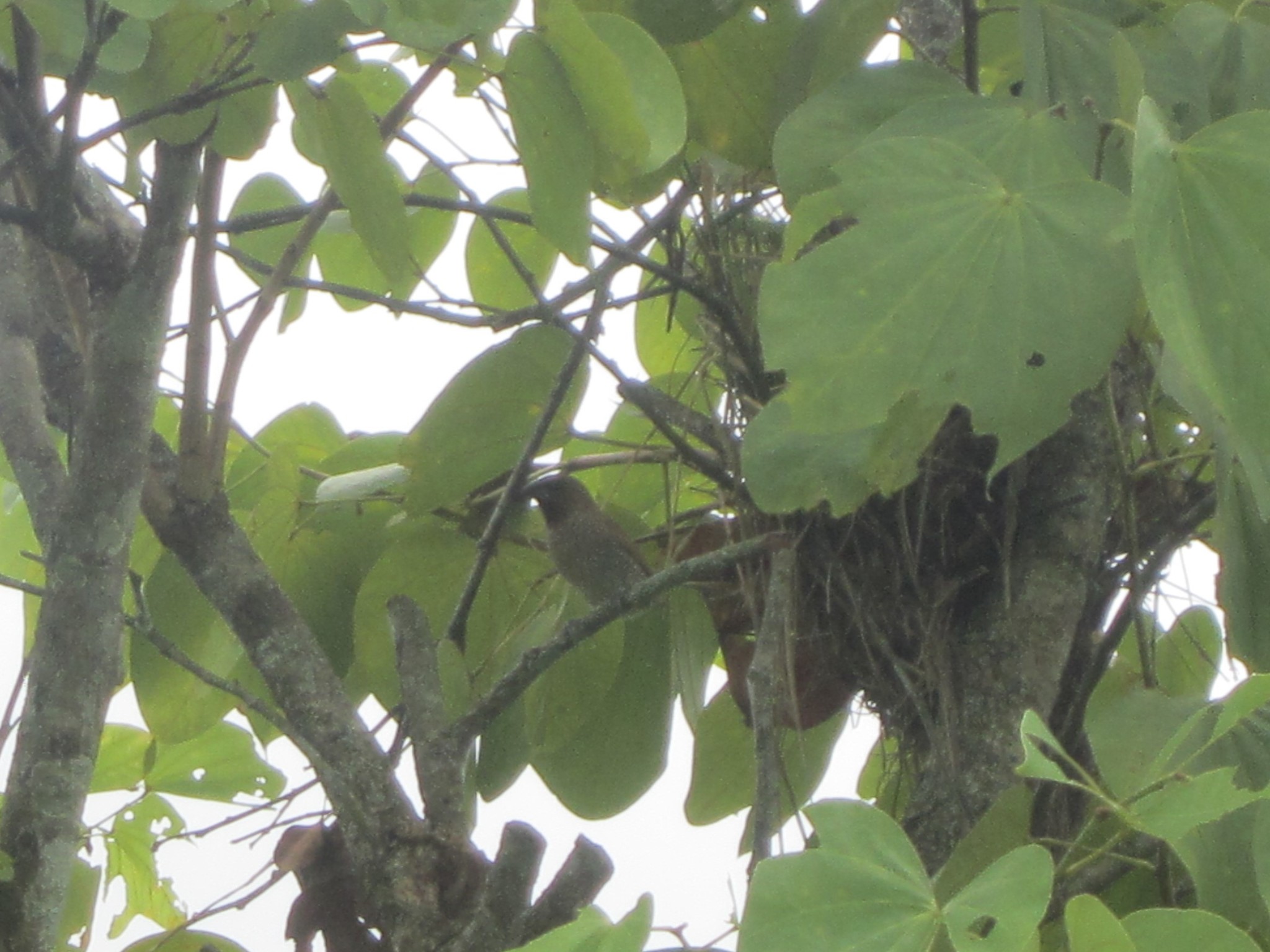
Highly social by nature, this species forms large flocks of up to 100 birds that move and forage together, maintaining contact through soft whistles and chattering calls including variations of 'kitty-kitty-kitty' and a sharp chipping alarm note. The flock engages in characteristic tail-flicking movements that serve as social signals indicating intent to fly. During breeding season, males perform a soft but complex song audible only at close range, delivered from an erect posture with raised head feathers. Courtship involves elaborate sequences including nest-material play, zigzag flight displays, and bill-wiping movements. Both sexes participate in building large domed nests of grass or bamboo leaves with a side entrance, typically placed in trees or under building eaves. The species serves as an unusual brood host for pin-tailed whydahs in feral California populations, a novel parasitic relationship not found in their native ranges. They feed primarily on grass seeds supplemented by berries and insects.
Conservation
Classified as Least Concern on the IUCN Red List, this abundant species occupies an extremely large range with a population that remains large and stable despite going unquantified. It is common to very common throughout most of its native distribution. However, local populations face pressure from increased bird trapping for the cage trade, and agricultural persecution occurs where flocks damage rice crops. A significant concern involves large-scale trapping in Southeast Asia for Buddhist life release rituals, where despite eventual release, post-release mortality can reach 90%. The species' adaptability to modified habitats and introduced ranges suggests resilience, though trapping pressure may impact some regional populations.
Culture
Known in the pet trade as nutmeg mannikin or spice finch, this species has long been popular as an aviary bird due to its ease of maintenance and calm disposition. In the Philippines, it is locally called mayang pakíng. The species has featured in natural history literature since the 18th century, with early descriptions by George Edwards in 1743 who called it the Gowry Bird. Its scientific placement has evolved over time, originally classified with crossbills by Linnaeus before being moved to its current genus Lonchura. The species serves as a model organism in behavioral and physiological research, particularly in studies of foraging behavior and social dynamics. In parts of Asia, particularly India, it is sometimes considered a minor agricultural pest when feeding in large flocks on ripening grain crops.
Source: Wikipedia · CC BY-SA 3.0
Taxonomy
- Order
- Passeriformes
- Family
- Estrildidae
- Genus
- Lonchura
- eBird Code
- nutman
Subspecies (11)
-
Lonchura punctulata baweana
Bawean Island (Java Sea)
-
Lonchura punctulata blasii
central and eastern Lesser Sundas (Flores eastward to Timor and Tanimbar Islands)
-
Lonchura punctulata cabanisi
Philippines (Luzon, Mindoro, Calauit, Palawan, Panay, Negros, Cebu, and Mindanao) and northern Borneo (coastal western Sabah and Brunei)
-
Lonchura punctulata fretensis
southern Thailand and Malay Peninsula to Sumatra and adjacent islands
-
Lonchura punctulata nisoria
Java to Sumbawa (western Lesser Sundas) and southern Borneo
-
Lonchura punctulata particeps
Sulawesi
-
Lonchura punctulata punctulata
Nepal to Sikkim, India, and Sri Lanka
-
Lonchura punctulata subundulata
northeastern India (Assam) to Bhutan and western Myanmar
-
Lonchura punctulata sumbae
Sumba (Lesser Sundas)
-
Lonchura punctulata topela
southern China to northern Thailand, Indochina, Hainan, and Taiwan; introduced Arabian Peninsula, Japan, Indian Ocean islands, North American coastal regions, Caribbean islands, western Europe, and eastern Australia (Wet Tropics region to Sydney)
-
Lonchura punctulata yunnanensis
northeastern Myanmar and southwestern China
Data Sources
Species description from Wikipedia, licensed under CC BY-SA 3.0.
Bird images and sounds sourced from GBIF, contributed by citizen scientists worldwide under Creative Commons licenses.
Taxonomy data from AviList 2025.