Passeriformes / Locustellidae / Locustella
Lanceolated Warbler
Locustella lanceolata · 矛斑蝗莺
Introduction
A species of Old World warbler in the genus Locustella. It breeds from northeast European Russia across the Palearctic to northern Hokkaidō, Japan, and winters in Southeast Asia. It inhabits grassland with shrubby vegetation or trees, often near water in bogs or wet clearings. The species is migratory and a rare vagrant to western Europe.
Description
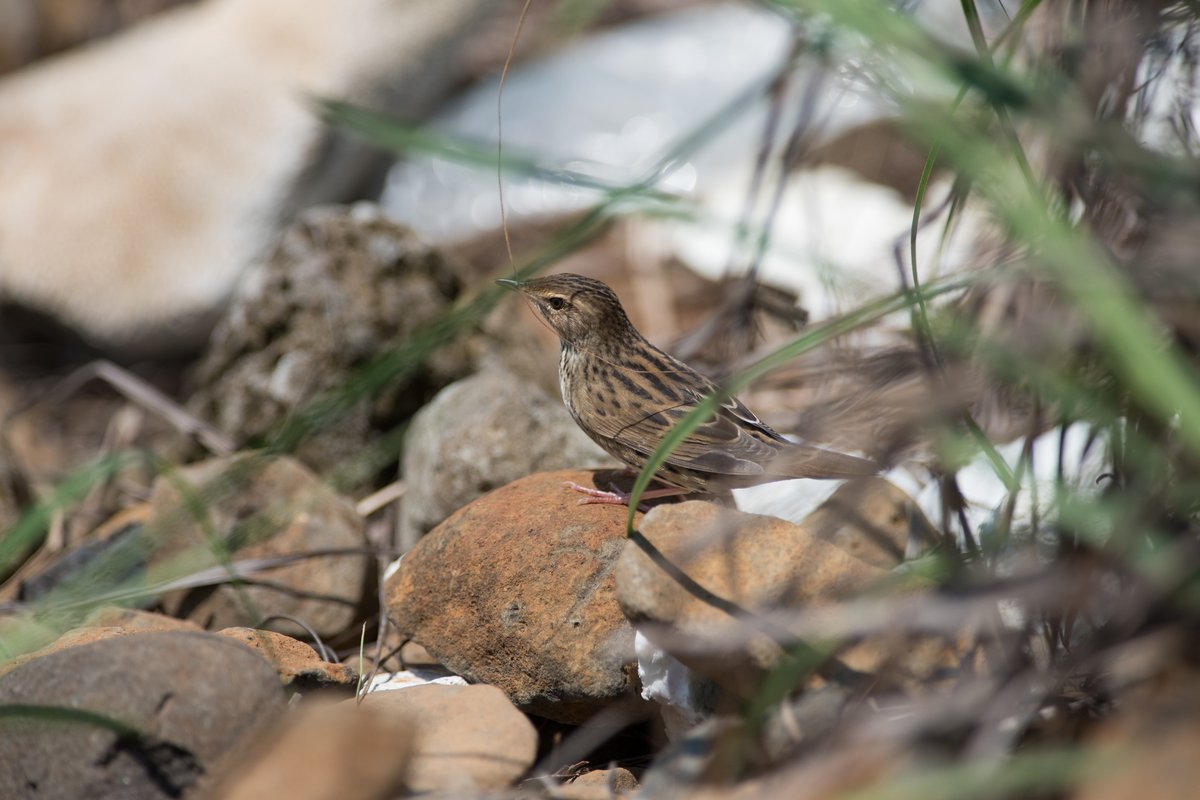
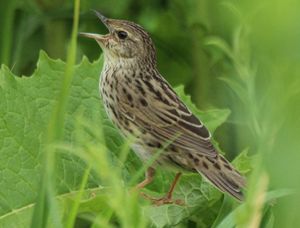
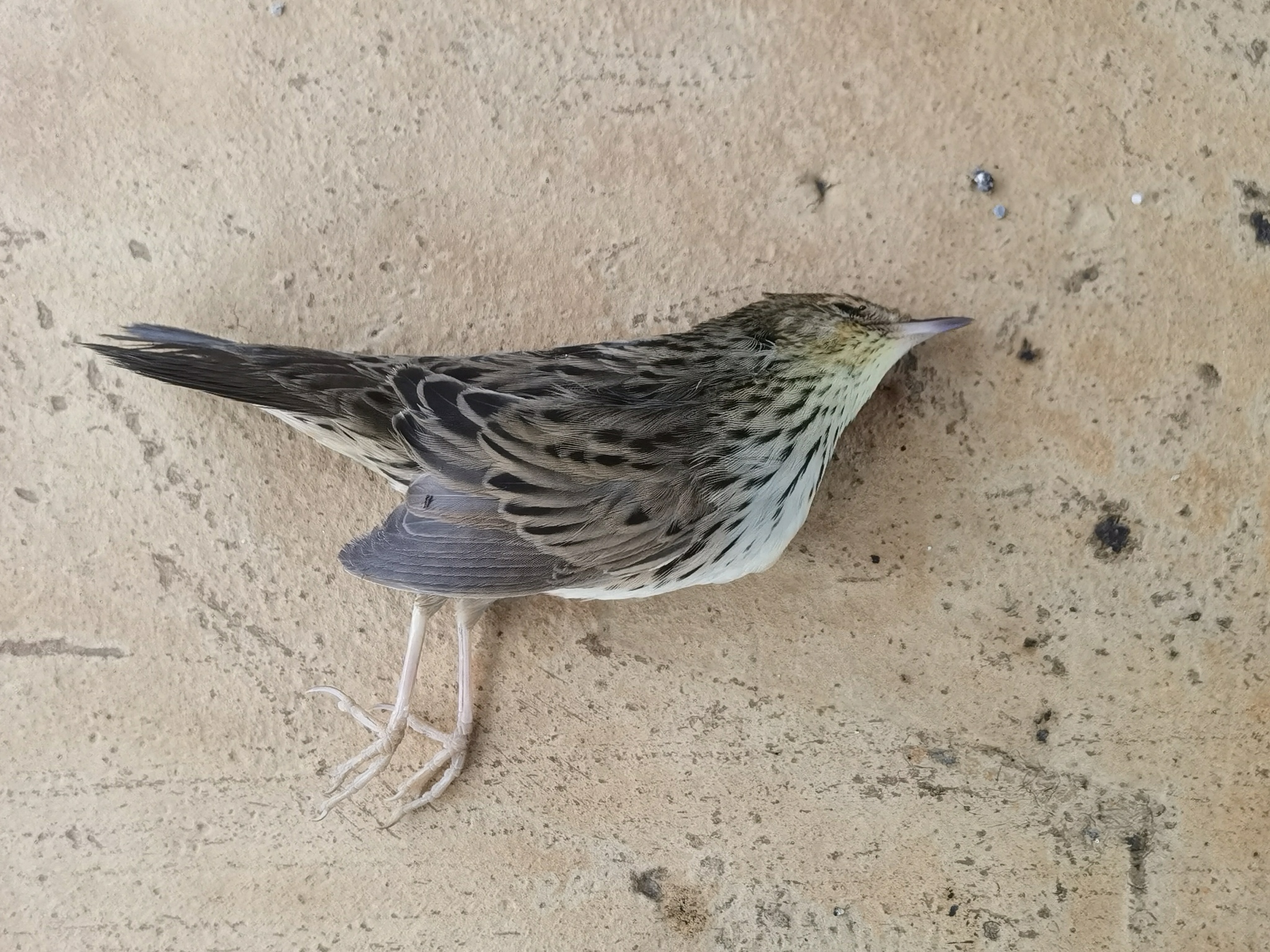
A small passerine bird. The adult has a streaked brown back and whitish grey underparts with small lance-head like streaks, which are also found on the undertail. The sexes are identical. Young birds are yellower below.
Identification
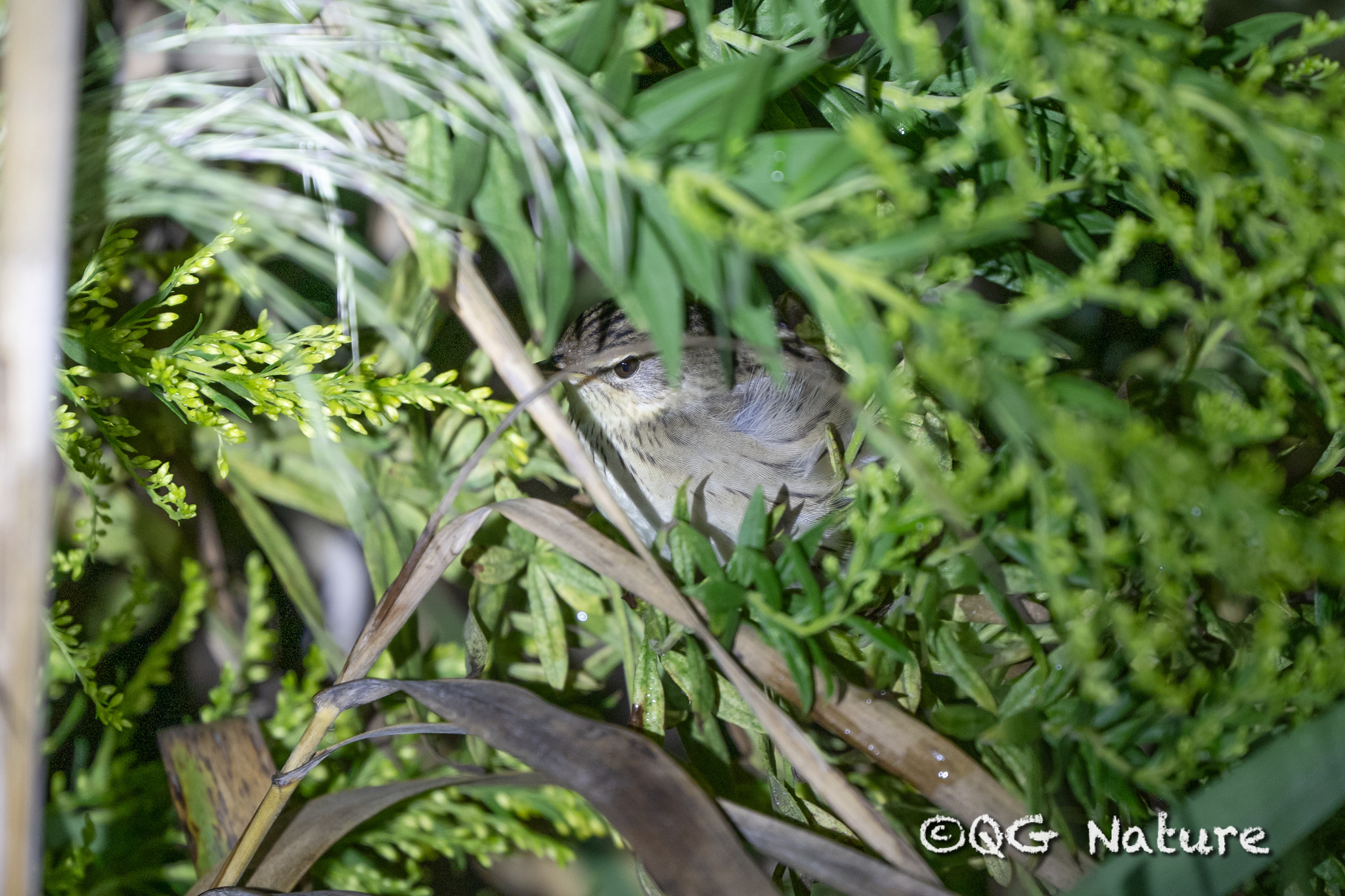
A skulking species that is very difficult to see except sometimes when singing. Key identification features include the streaked brown back and lance-head like streaks on the whitish grey underparts and undertail. The song is a monotonous mechanical insect-like reeling, often given at dusk.
Distribution & Habitat
Breeds from northeast European Russia across the Palearctic to northern Hokkaidō, Japan. Migratory, wintering in Southeast Asia. Found in grassland with some thicker shrubby vegetation or trees, often close to water in bogs or wet clearings. A rare vagrant to western Europe, with Fair Isle, Shetland being one of the best places to see it as a vagrant. Two subspecies are recorded: L. l. lanceolata and L. l. hendersonii.
Behavior & Ecology
Insectivorous. Creeps through grass and low foliage. Five eggs are laid in a nest in a tussock. The song is a monotonous mechanical insect-like reeling, often given at dusk.
Source: Wikipedia · CC BY-SA 3.0
Taxonomy
- Order
- Passeriformes
- Family
- Locustellidae
- Genus
- Locustella
Vocalizations
Subspecies (2)
-
Locustella lanceolata hendersonii
breeds Sakhalin Island, southern Kuril Islands, and northern Japan; winters to southeastern Asia
Data Sources
Species description from Wikipedia, licensed under CC BY-SA 3.0.
Bird images and sounds sourced from GBIF, contributed by citizen scientists worldwide under Creative Commons licenses.
Taxonomy data from AviList 2025.