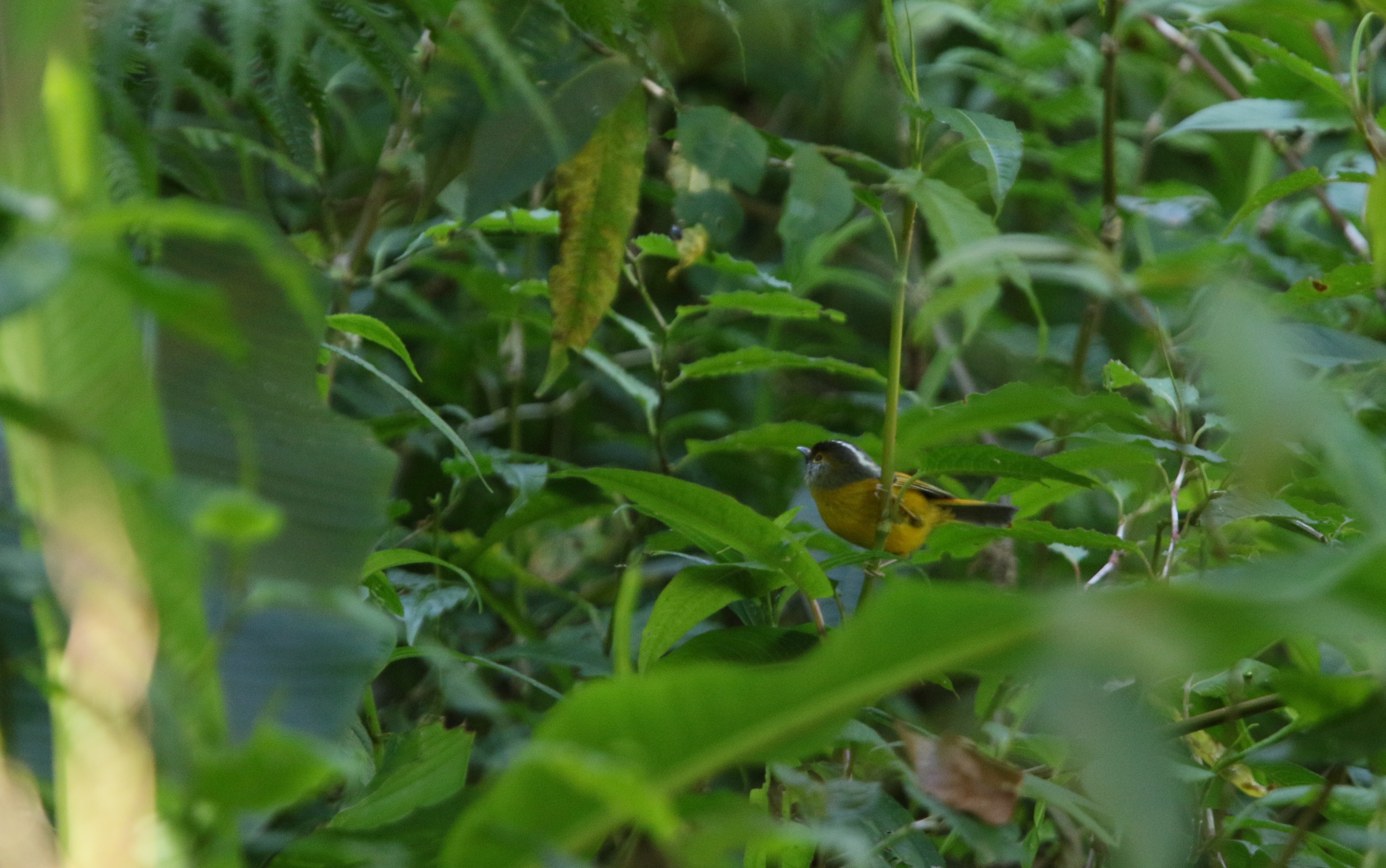
Passeriformes / Paradoxornithidae / Lioparus
Golden-breasted Fulvetta
Lioparus chrysotis · 金胸雀鹛
Introduction
A small songbird species found in Bhutan, China, India, Myanmar, Nepal, and Vietnam. It inhabits temperate forests and subtropical or tropical moist montane forests. The species is an altitudinal migrant and often joins mixed-species foraging flocks. It is listed as Least Concern by the IUCN.
Description
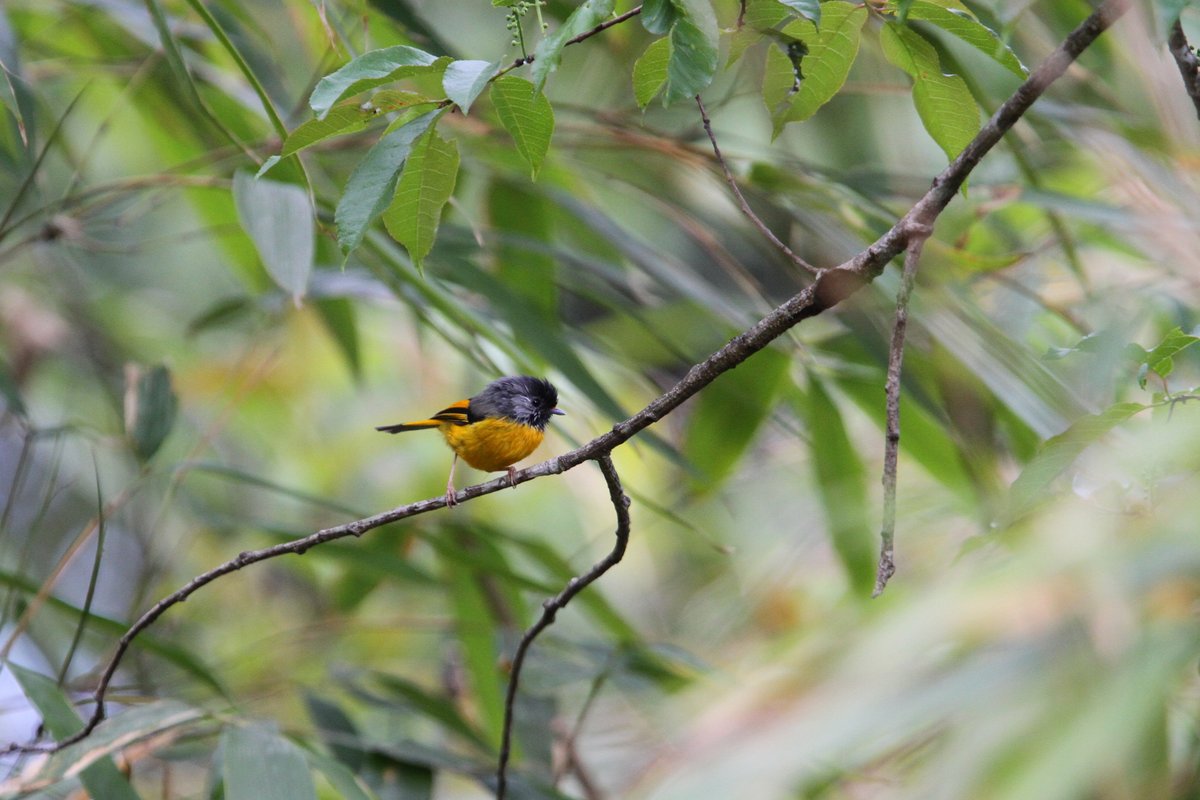
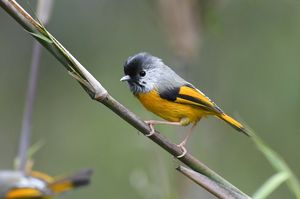
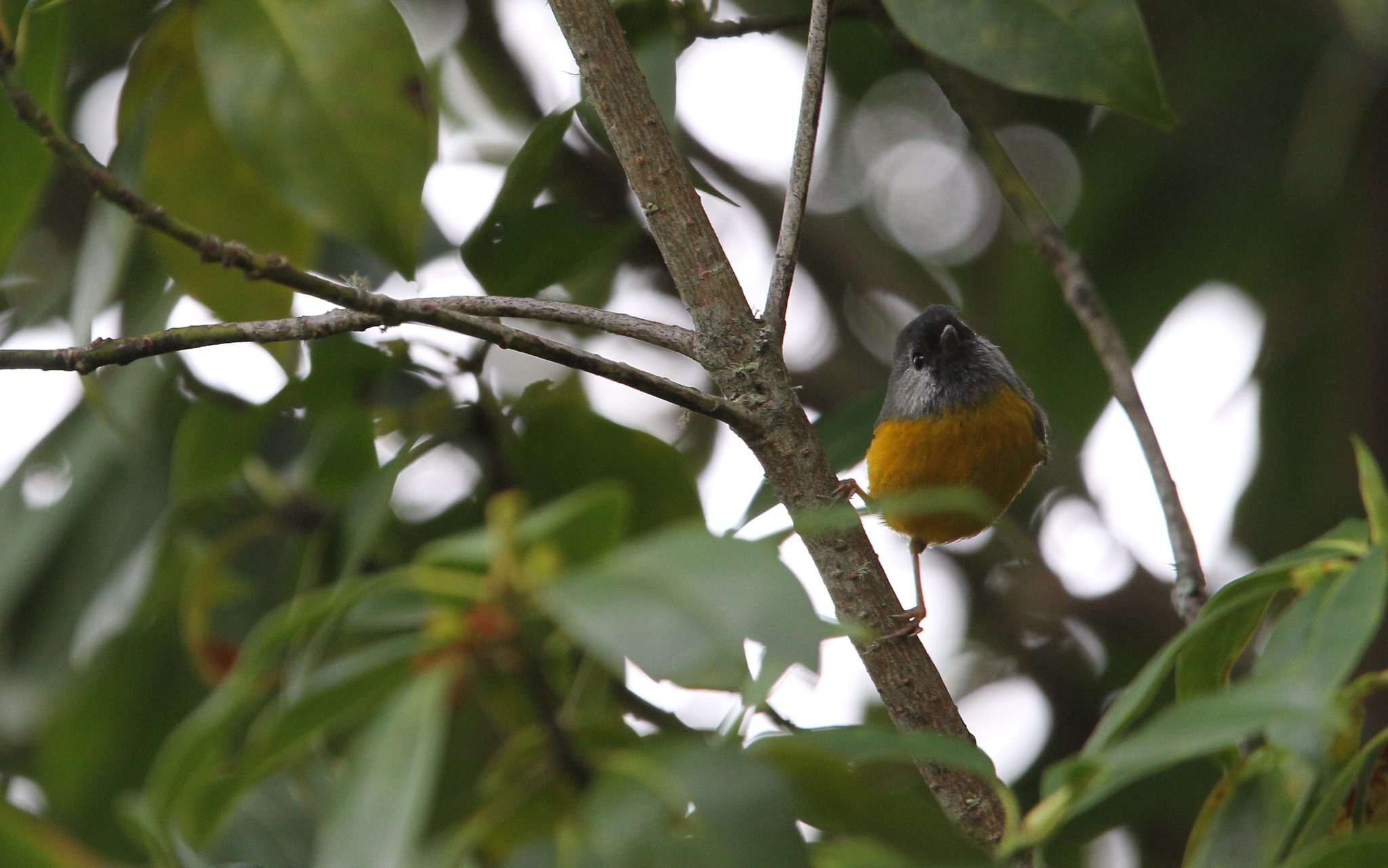
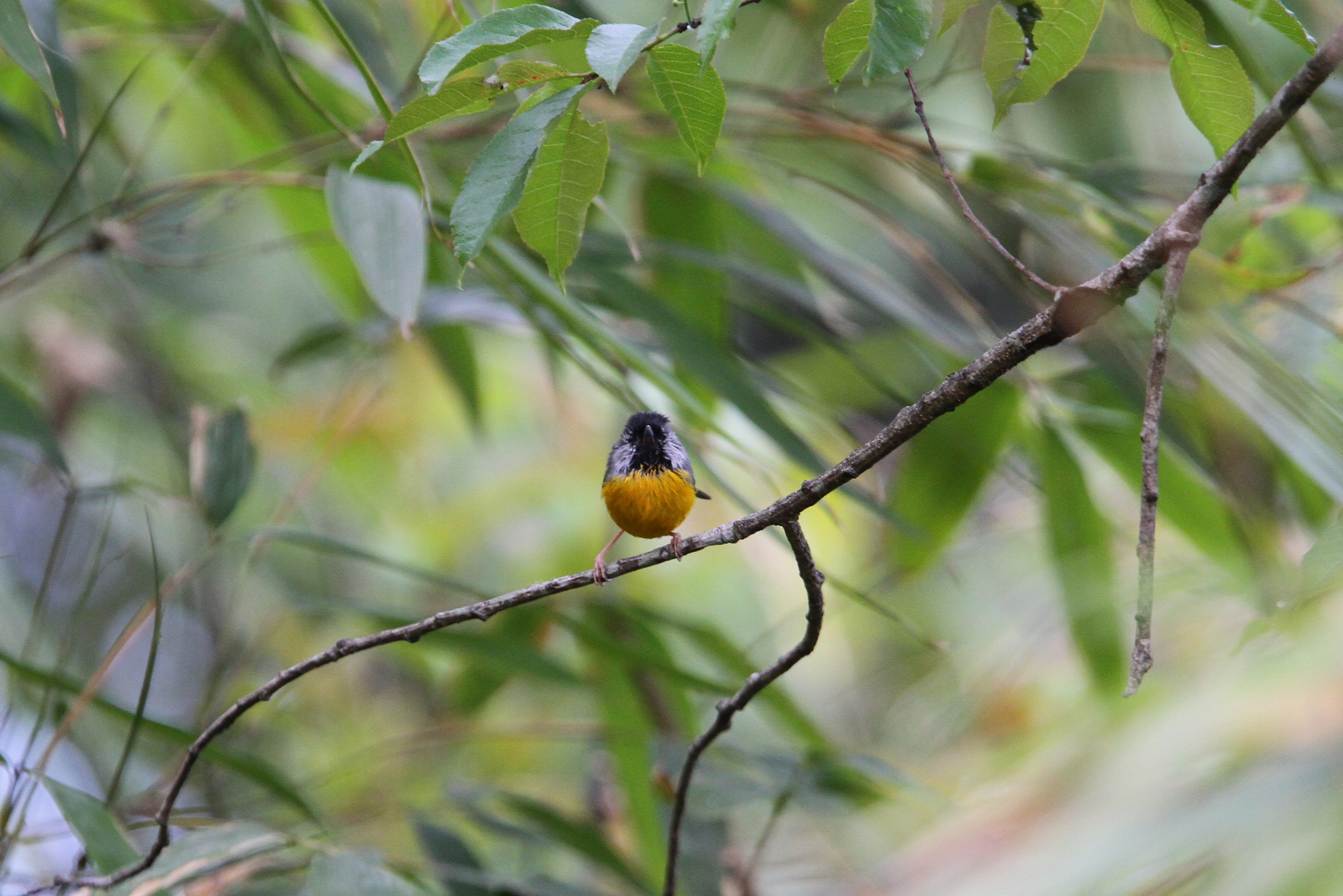
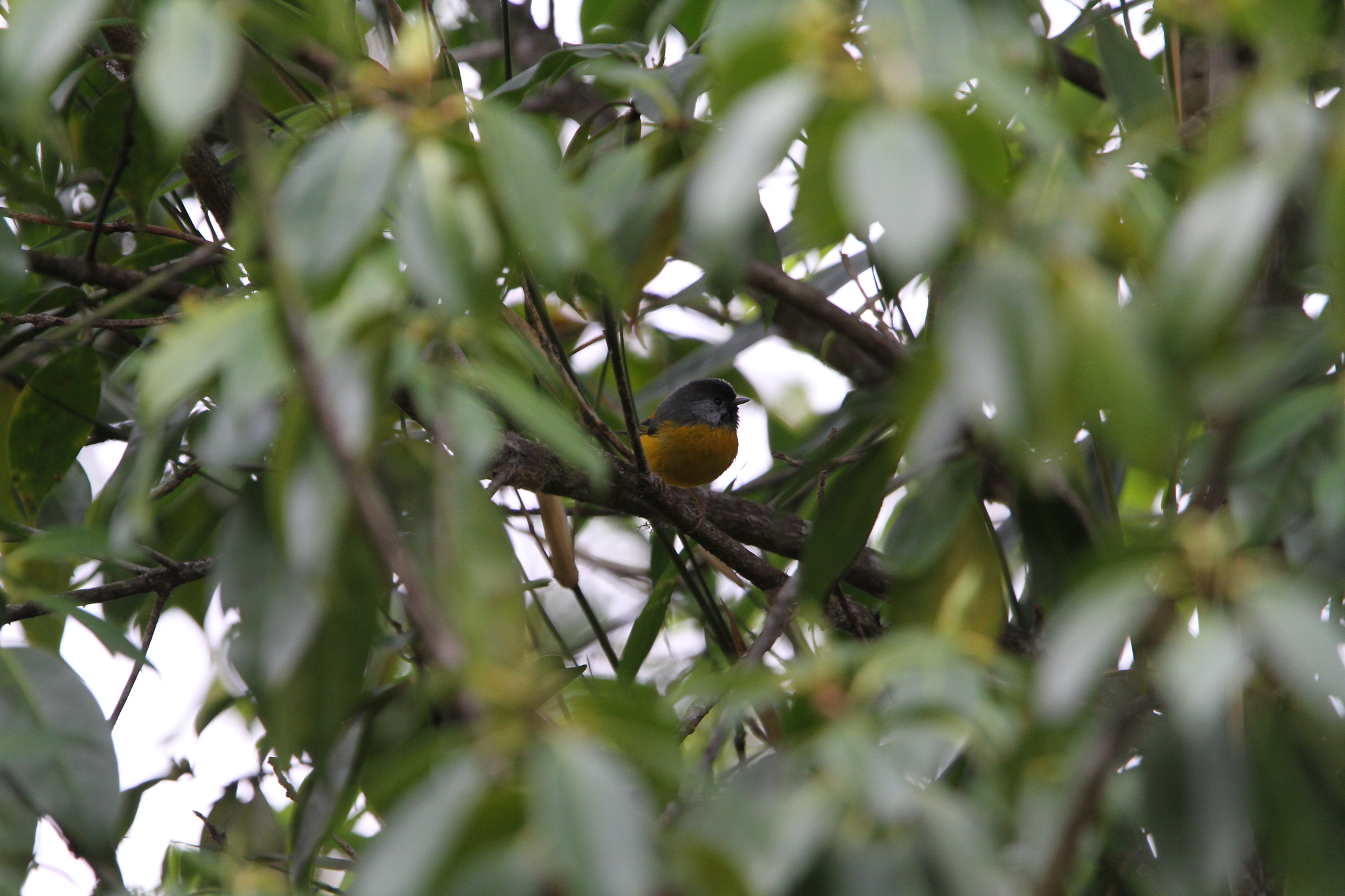
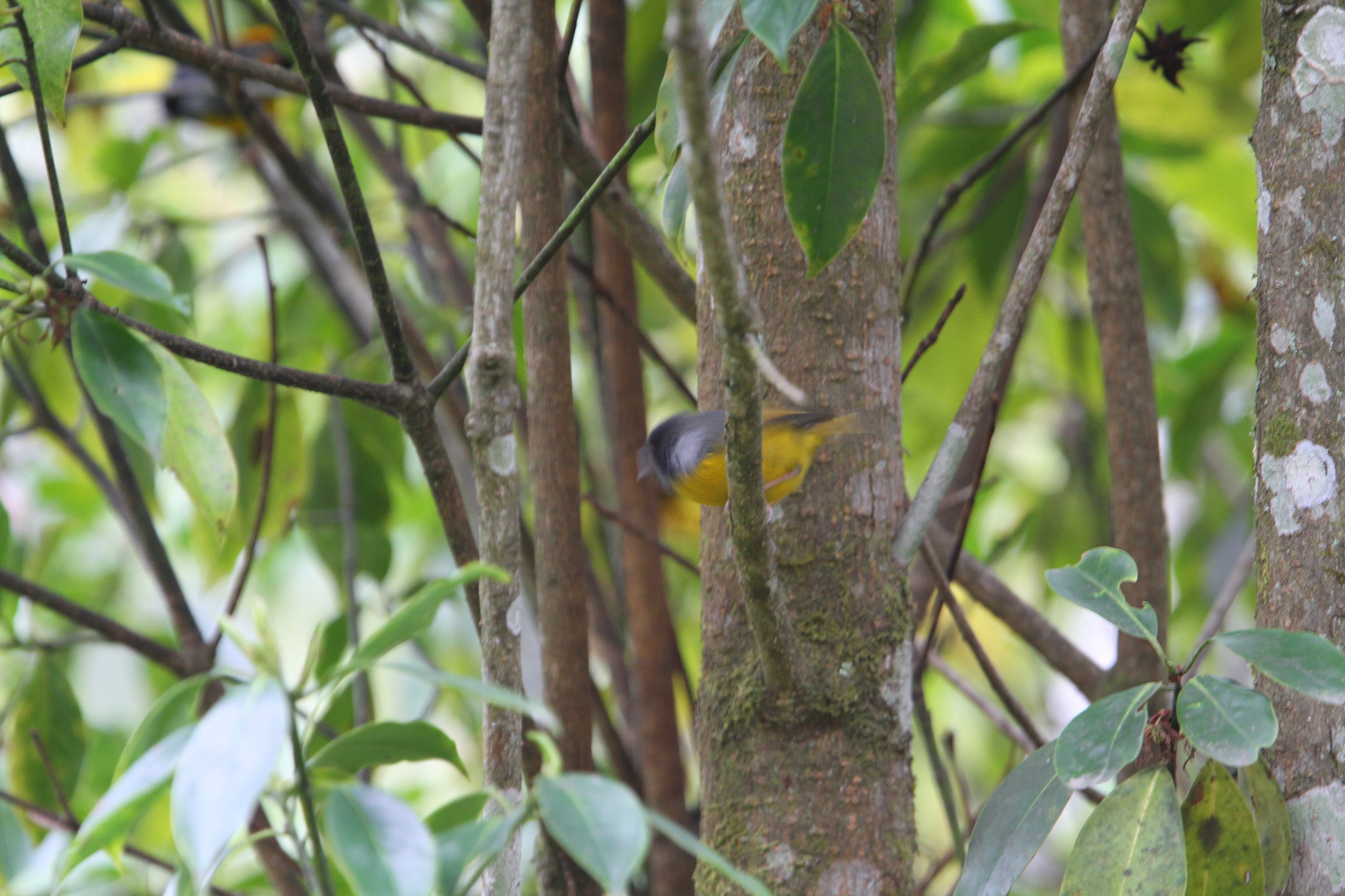
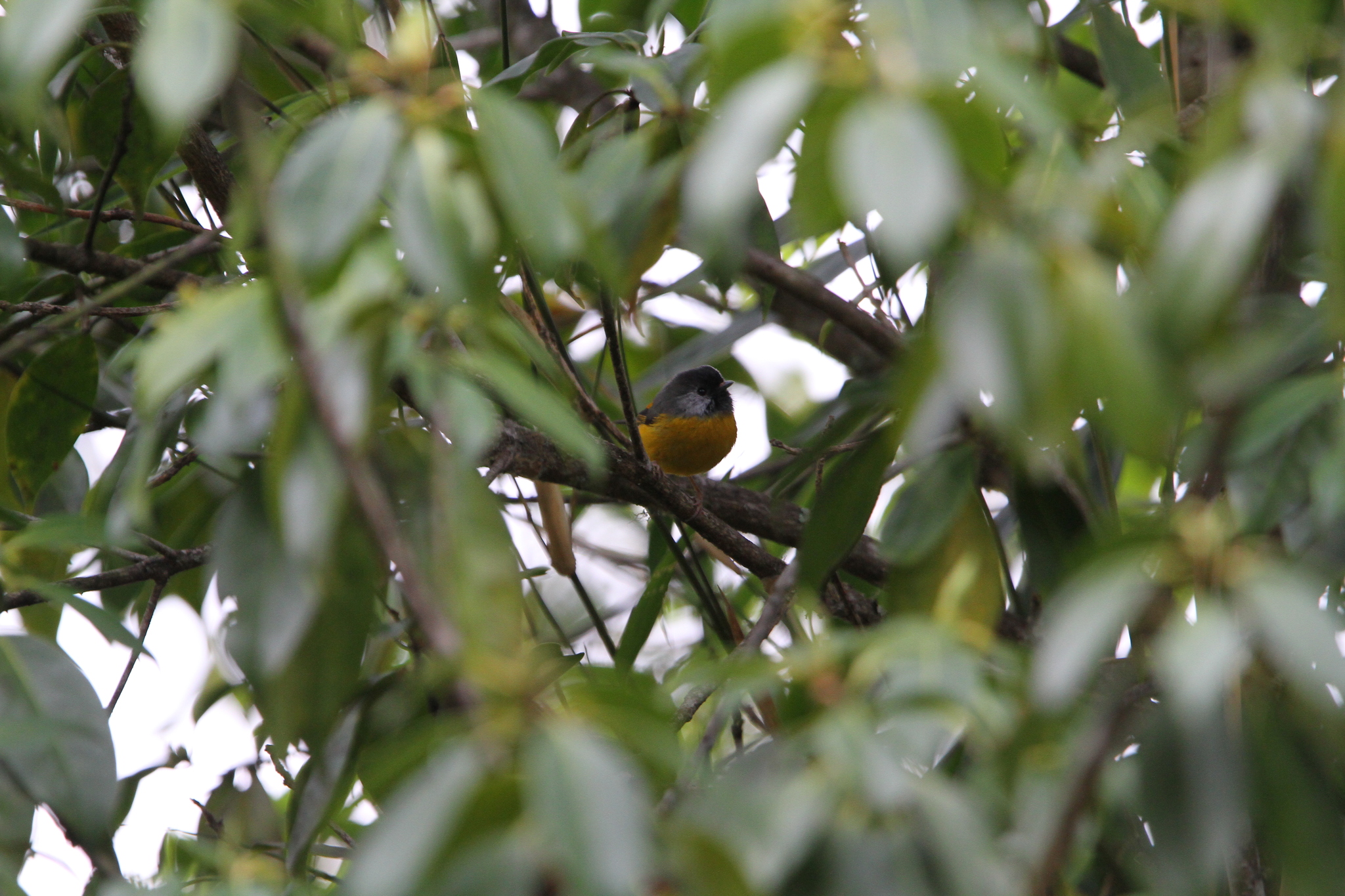
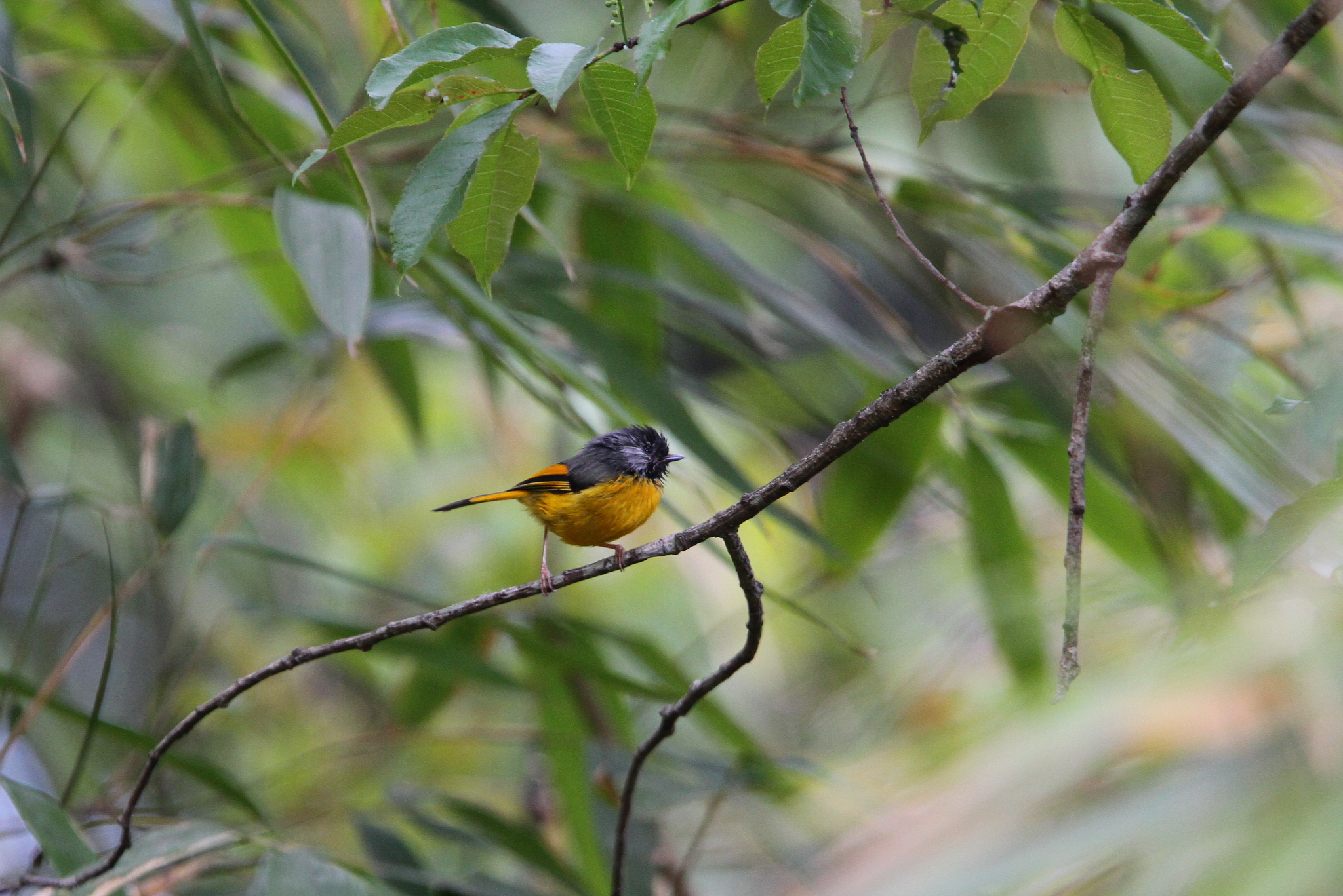
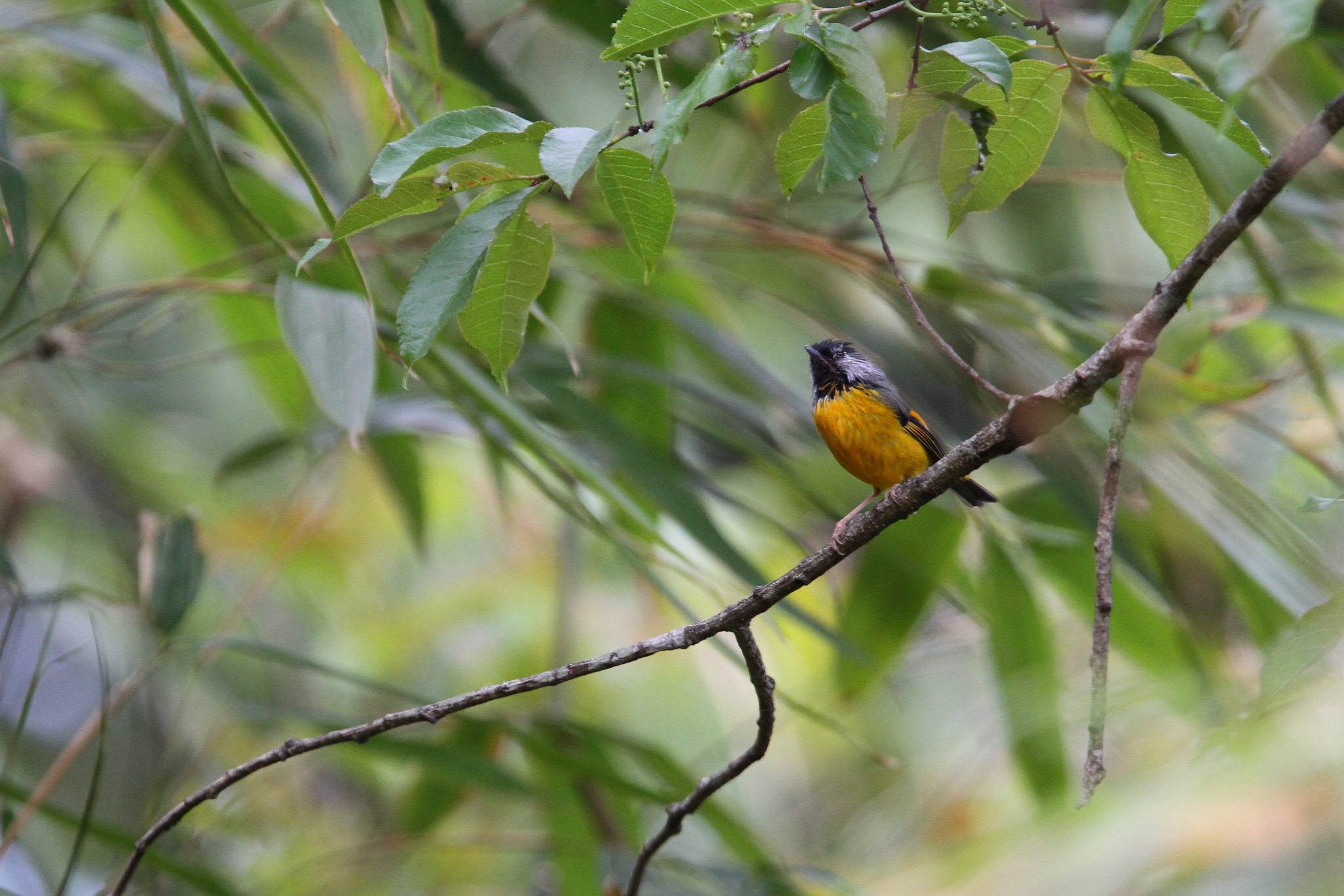
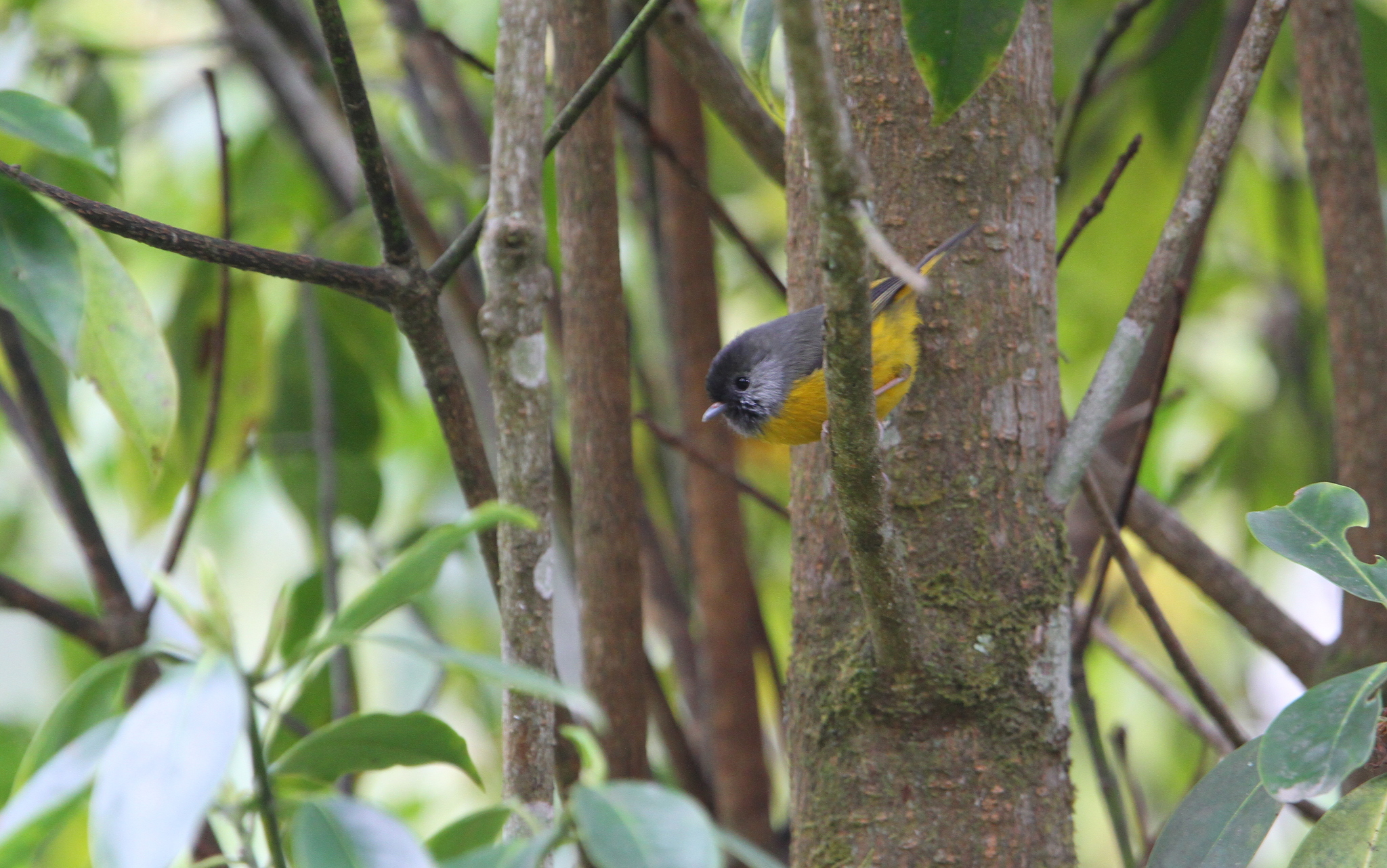
Measures 10–11.5 cm (3.9–4.5 in) in length with a mass between 5 and 10 g (0.18 and 0.35 oz). The head and crown are black or grey, and the black wings feature orange-yellow slashes. Secondaries are tipped white, and the brown tail has two-thirds of the base edged in orange-yellow. Underparts are predominantly yellow, with the throat varying from grey to yellowish depending on the population. The presence, prominence, and color of the median crown stripe vary among populations. Sexes are indistinguishable by plumage.
Identification
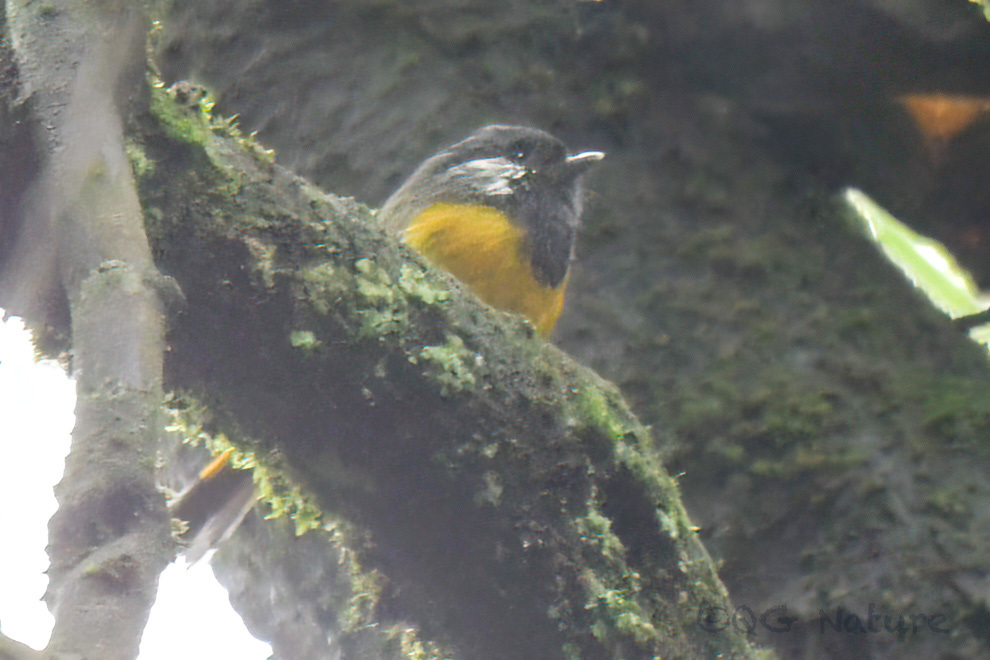
Key marks include orange-yellow slashes on black wings and an orange-yellow edge on the base of the brown tail. The median crown stripe varies by subspecies: the nominate subspecies has a grey chin and throat with silvery white tips, lacking or having a narrow white median crown stripe; L. c. albilineatus has a prominent white coronal stripe; L. c. forresti has a coronal stripe of white spots yellowish towards the nape; L. c. robsoni has a yellow throat and chin, an off-white central crown stripe, and olive-grey ear coverts.
Distribution & Habitat
Range extends from central Nepal through Bhutan, northern India, and Myanmar to western China and northern Vietnam. Six recognized subspecies occupy specific areas: L. c. chrysotis in central Nepal to northeastern India and southeastern Tibet; L. c. albilineatus in Assam, Nagaland, and Manipur; L. c. forresti in northeastern Myanmar and northwestern Yunnan; L. c. swinhoii in southeastern Gansu, southern Shaanxi, central Sichuan, Guangxi, southeastern Hunan, and northern Guangdong; L. c. amoenus in southeastern Yunnan and Tonkin; and L. c. robsoni in central Vietnam. It is an altitudinal migrant, breeding at 2,000–2,800 m and moving to foothills as low as 1,600 m, occasionally down to 1,300 m, in winter.
Behavior & Ecology
Forages at low heights for insects in broad-leaved evergreen forests and montane bamboo. In winter, it moves in groups of up to 30 individuals and often joins mixed-species foraging flocks.
Conservation
Listed as Least Concern by the IUCN. The population has not been quantified and is thought to be declining, but not precipitously, due to its vast overall range. Threats include collection for food and as pets.
Source: Wikipedia · CC BY-SA 3.0
Taxonomy
- Order
- Passeriformes
- Family
- Paradoxornithidae
- Genus
- Lioparus
Subspecies (6)
-
Lioparus chrysotis albilineatus
hill forest of southern Assam (south of the Brahmaputra)
Data Sources
Species description from Wikipedia, licensed under CC BY-SA 3.0.
Bird images and sounds sourced from GBIF, contributed by citizen scientists worldwide under Creative Commons licenses.
Taxonomy data from AviList 2025.