Golden-breasted Fulvetta
Lioparus chrysotis
金胸雀鹛
Introduction
The golden-breasted fulvetta (Lioparus chrysotis) is a songbird species in the family Sylviidae. It occurs across Bhutan, China, India, Myanmar, Nepal, and Vietnam. Its natural habitats include temperate forests and subtropical or tropical moist montane forests. This species exhibits altitudinal migration, moving from breeding grounds at 2,000–2,800 m to lower elevations of 1,600 m (occasionally 1,300 m) in winter. It forages for insects at low heights in broad-leaved evergreen forests and montane bamboo, typically moving in groups of up to 30 individuals and frequently joining mixed-species foraging flocks. The International Union for Conservation of Nature (IUCN) assesses it as a species of least concern.
Description
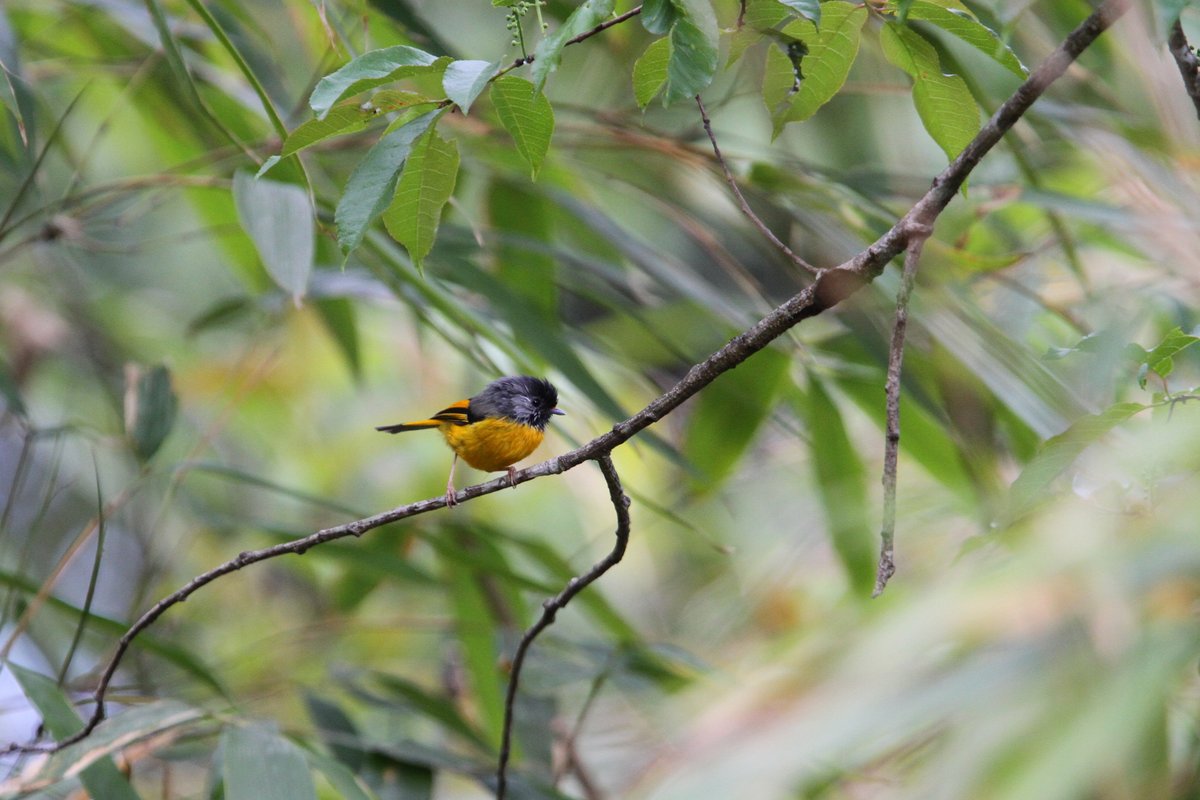
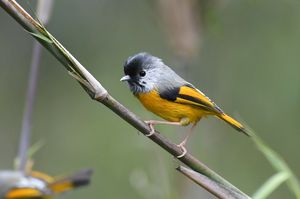
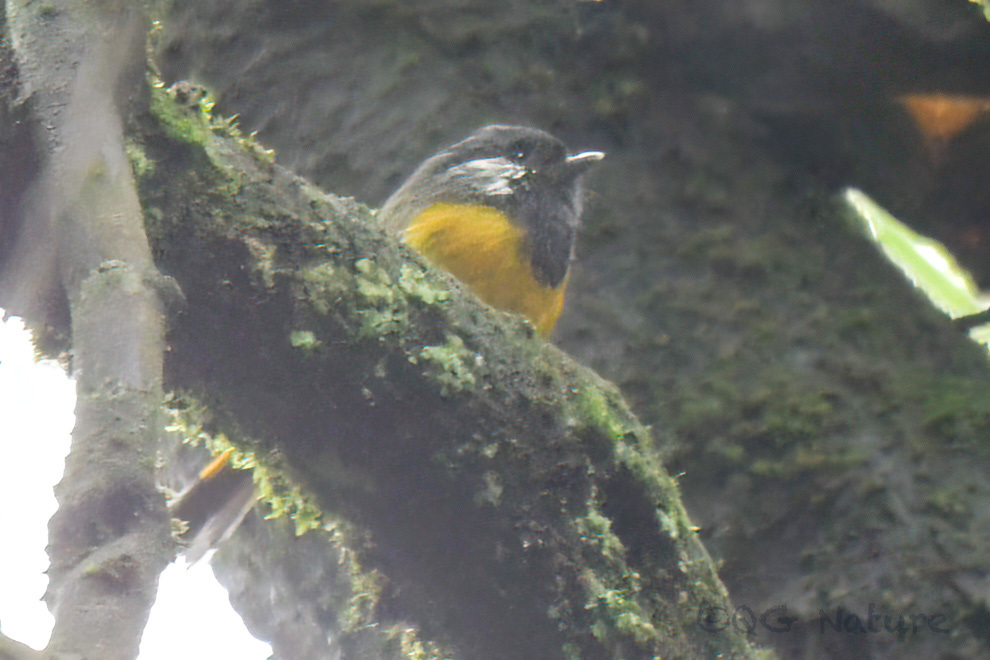
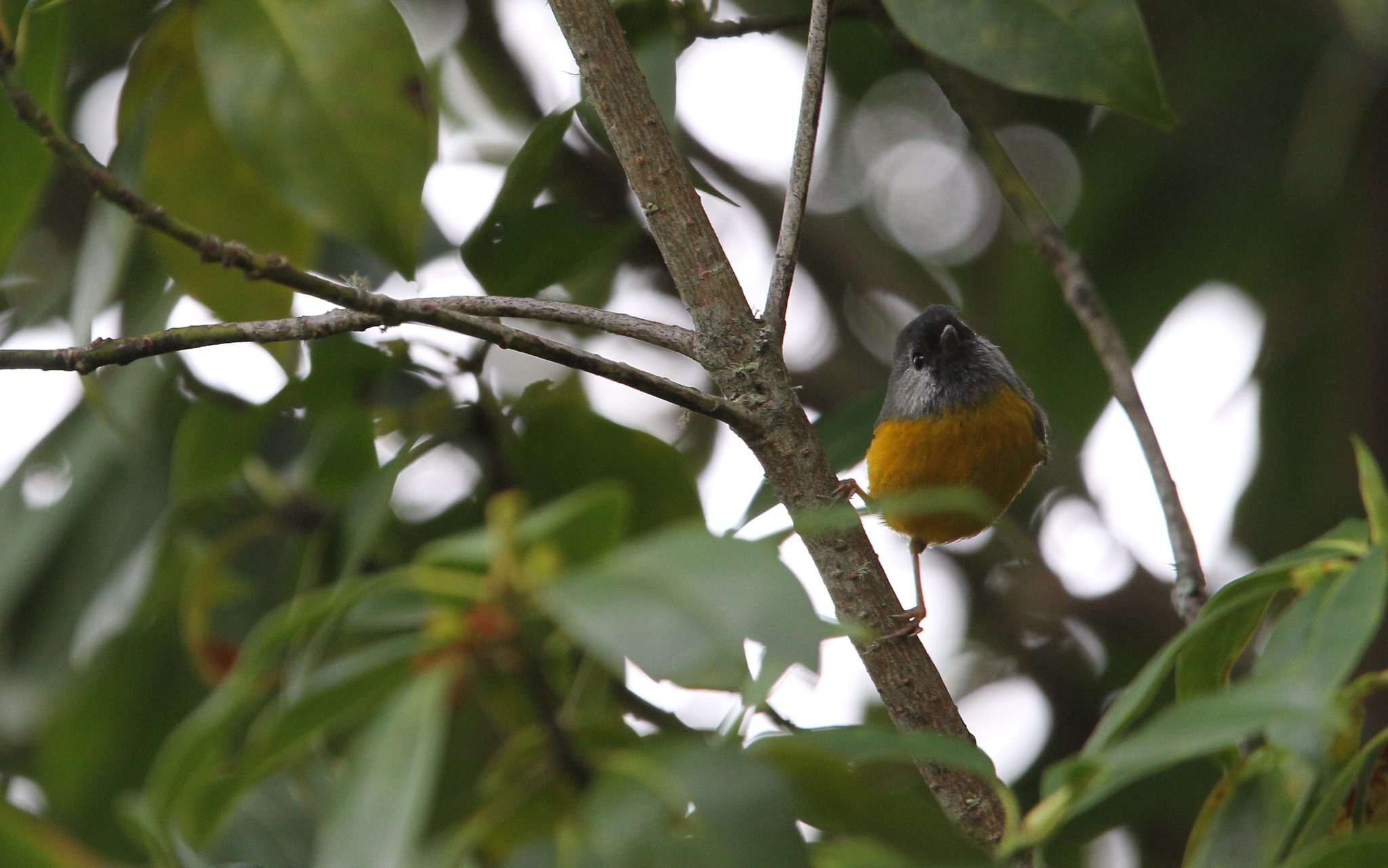
This is a small bird measuring 10–11.5 cm in length with a body mass of 5–10 g. The head and crown are black or grey, while the black wings feature orange-yellow slashes. The secondaries are tipped with white, and the brown tail has two-thirds of the base edged in orange-yellow. The underparts are predominantly yellow, with the throat varying from grey to yellowish depending on the population. The presence, prominence, and color of the median crown stripe varies geographically among subspecies. The sexes are indistinguishable by plumage.
Identification
The combination of small size, yellow underparts, orange-yellow wing slashes, and orange-yellow edging on the tail base helps distinguish this species. The variable median crown stripe (ranging from absent to prominent white or yellowish spots) differs among subspecies. The grey or yellowish throat also varies by population. No specific comparison with similar species is provided.
Distribution & Habitat
The species ranges from central Nepal through Bhutan, northern India, and Myanmar to western China and northern Vietnam. It breeds at elevations of 2,000–2,800 m and migrates to lower foothills around 1,600 m in winter, occasionally descending to 1,300 m. It inhabits broad-leaved evergreen forests and montane bamboo thickets where it forages at low heights.
Behavior & Ecology
The golden-breasted fulvetta forages for insects at low heights in the understory. In winter, it forms groups of up to 30 individuals and frequently joins mixed-species foraging flocks. No detailed breeding information or vocalization descriptions are provided in the source material.
Conservation
The IUCN lists this species as least concern. While the global population has not been quantified and is thought to be declining, the decline is not considered precipitous due to the species' vast range. Local pressures include collection for food and as pets. Several feather mite species have been documented from specimens, including Timalinyssus grallator, Neocalcealges chrysotis, Anhemialge lioparus, and Resartor extraneus.
Culture
No cultural significance, folklore, or human uses are documented for this species.
Source: Wikipedia · CC BY-SA 3.0
Taxonomy
- Order
- Passeriformes
- Family
- Paradoxornithidae
- Genus
- Lioparus
- eBird Code
- gobful1
Subspecies (6)
-
Lioparus chrysotis albilineatus
hill forest of southern Assam (south of the Brahmaputra)
-
Lioparus chrysotis amoenus
southern China (southeastern Yunnan) and northwestern Tonkin
-
Lioparus chrysotis chrysotis
Himalayas (eastern Nepal to Sikkim, Bhutan, and eastern Assam)
-
Lioparus chrysotis forresti
northeastern Myanmar to southern China (northwestern Yunnan)
-
Lioparus chrysotis robsoni
central Vietnam (Mount Ngoc Linh, Kon Tum Province)
-
Lioparus chrysotis swinhoii
southern China (southern Shaanxi, central Sichuan, northeastern Yunnan, and northwestern Guangxi)
Data Sources
Species description from Wikipedia, licensed under CC BY-SA 3.0.
Bird images and sounds sourced from GBIF, contributed by citizen scientists worldwide under Creative Commons licenses.
Taxonomy data from AviList 2025.