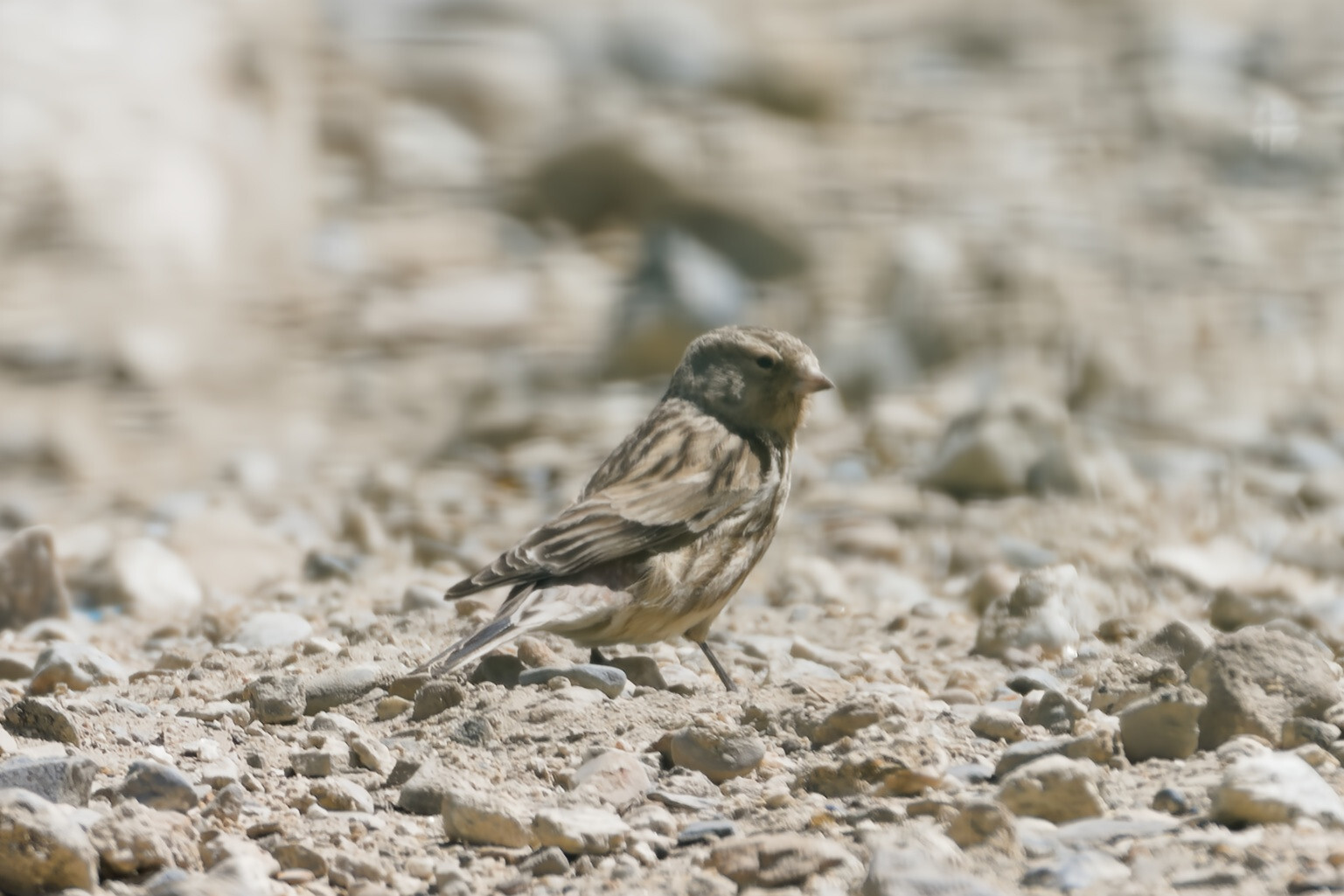
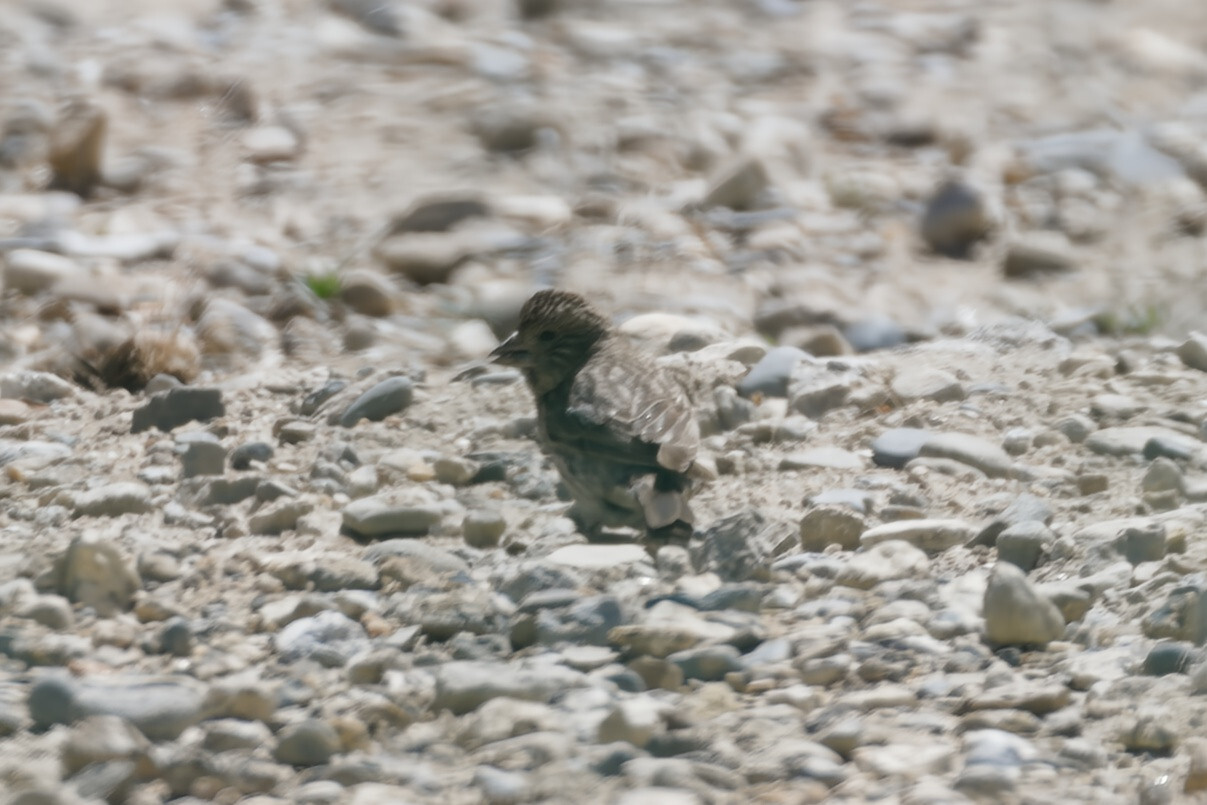
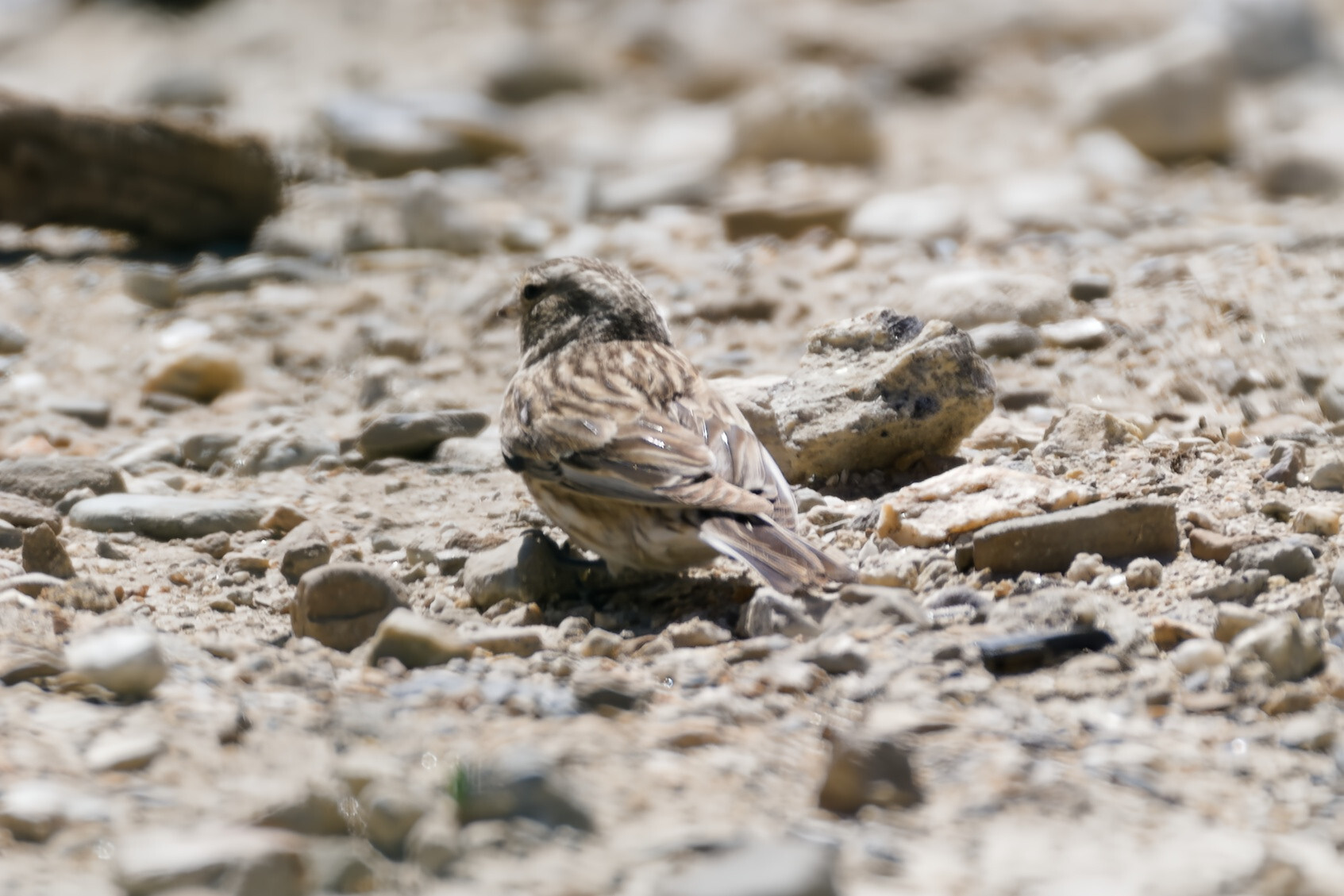
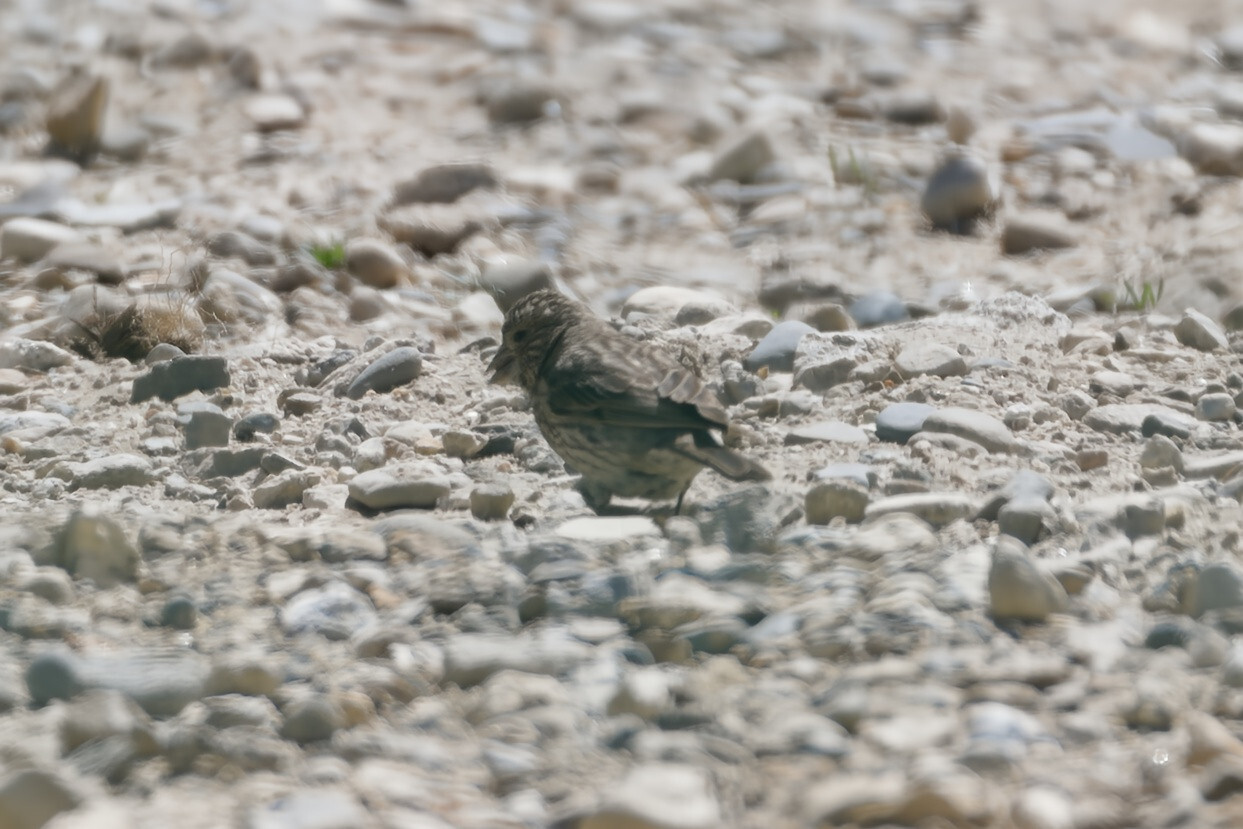
Twite
Linaria flavirostris
黄嘴朱顶雀
Introduction
Small brown passerine bird in the finch family Fringillidae. Partially migratory species with strongly disjunct distribution in northern Europe and in Asian mountains from eastern Turkey to Nepal, western China and Mongolia. Nine subspecies recognized. Mainly feeds on small seeds, occasionally insects. Associated with alpine grassland and low shrubland; in Asia breeds at high altitudes of 3,600–4,900 m, but in northwestern Europe breeds down to sea level on coastal machair grassland. Has declined sharply in parts of its range, notably in Ireland.
Description
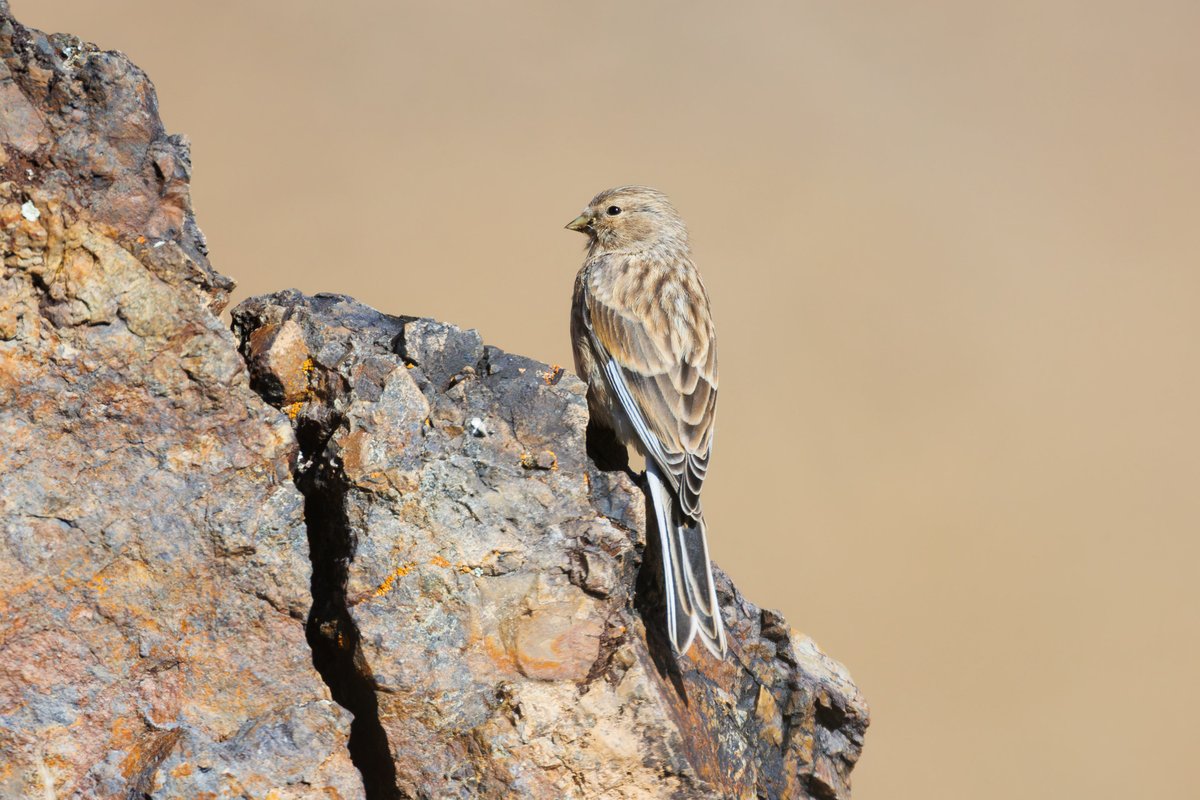
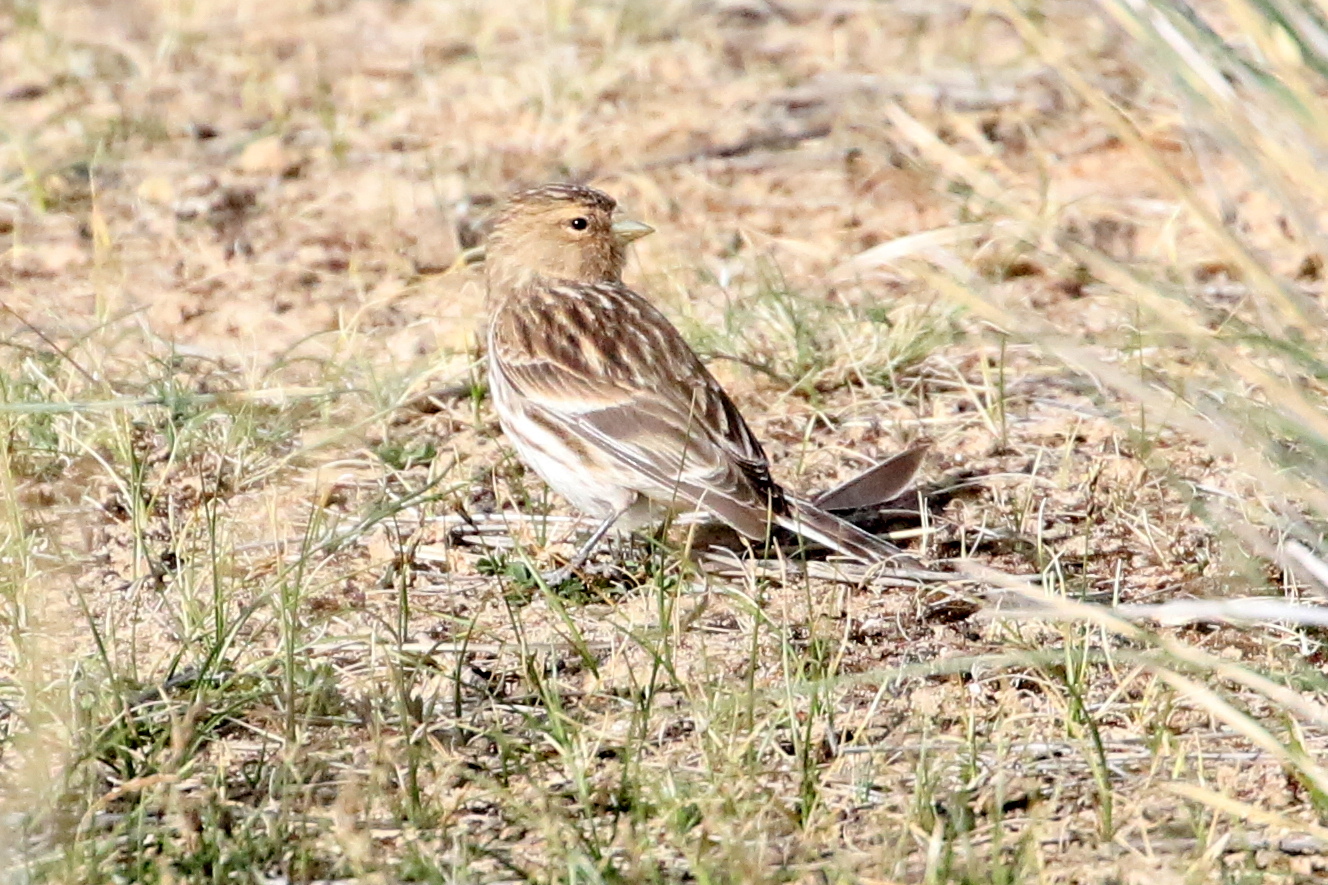
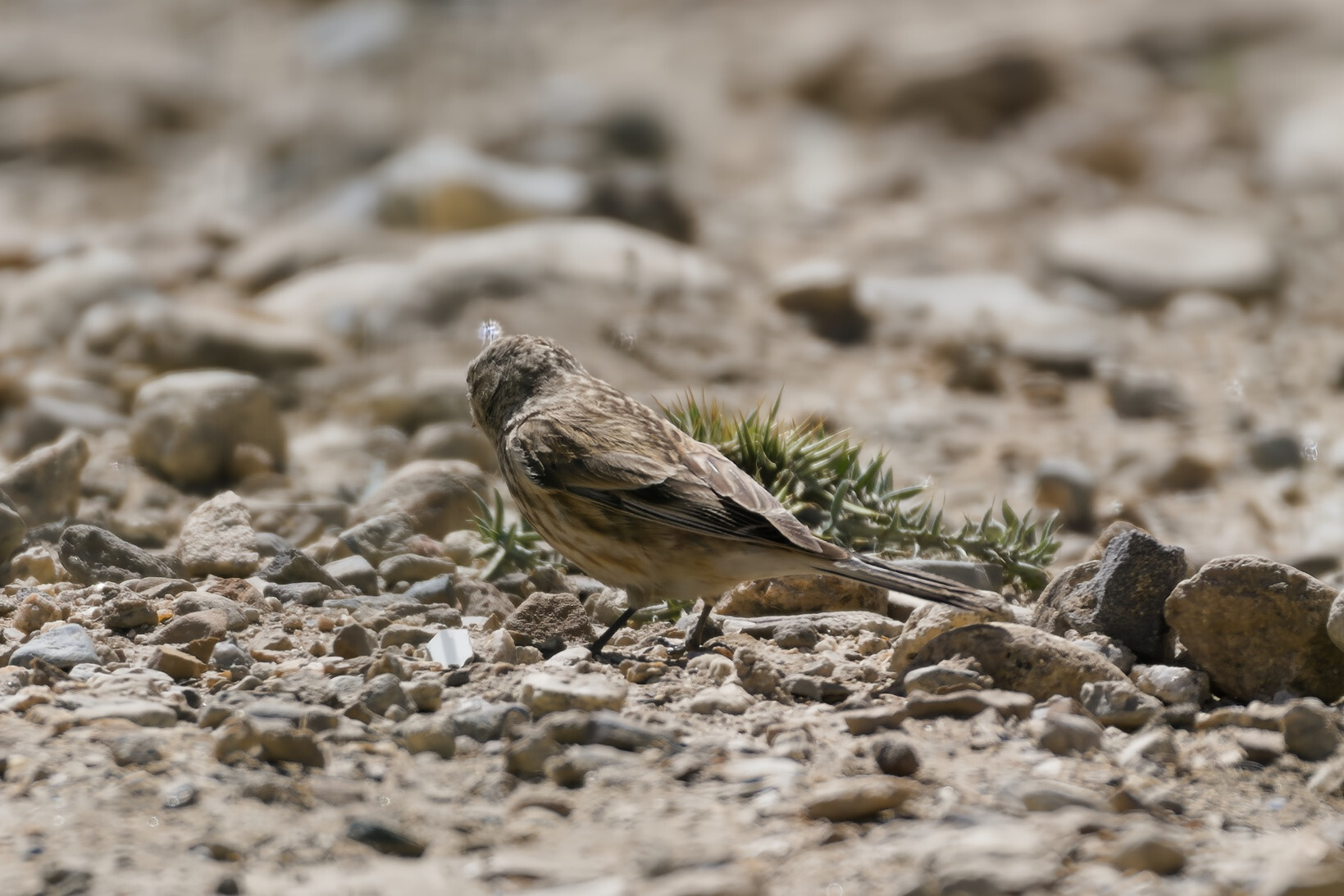
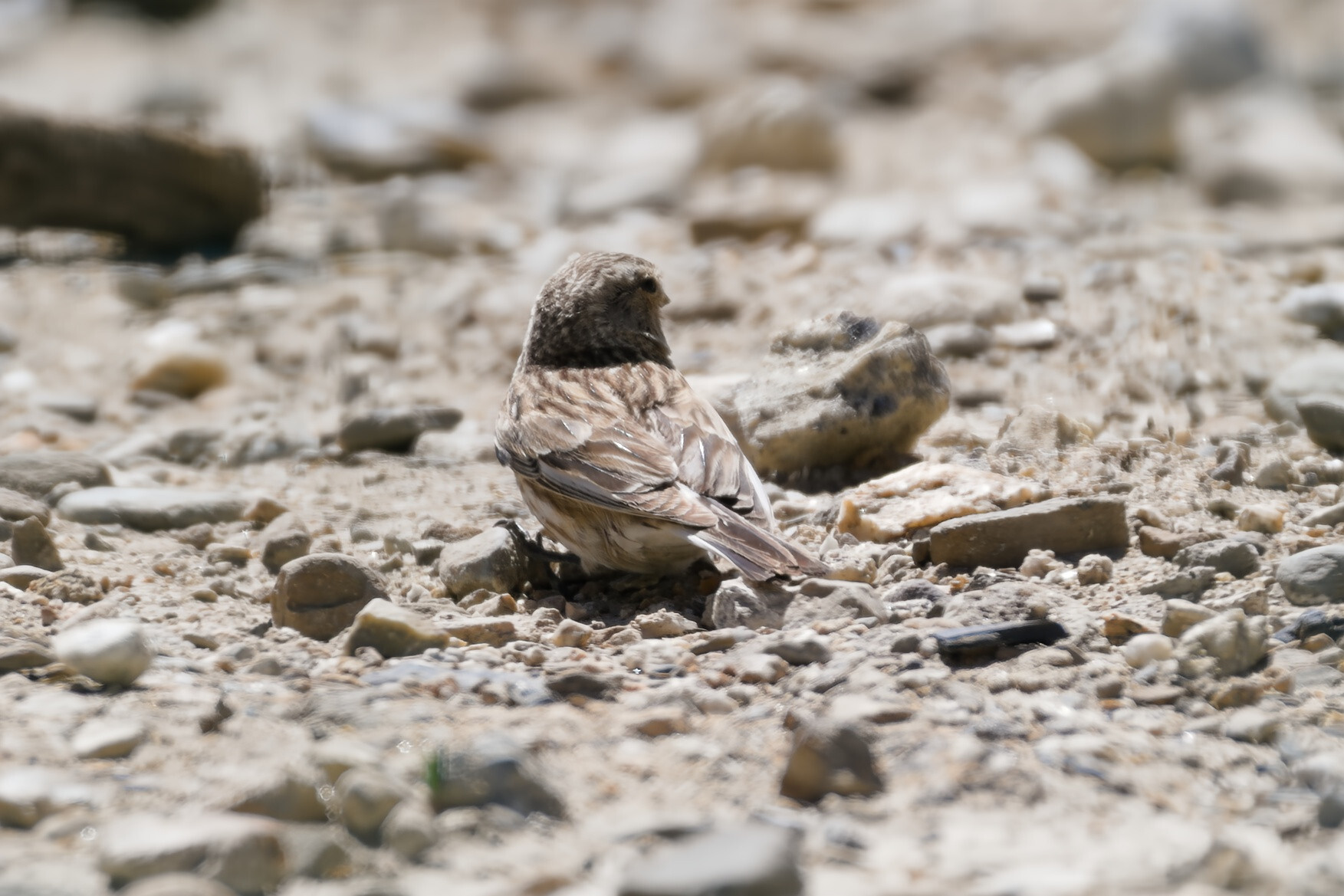
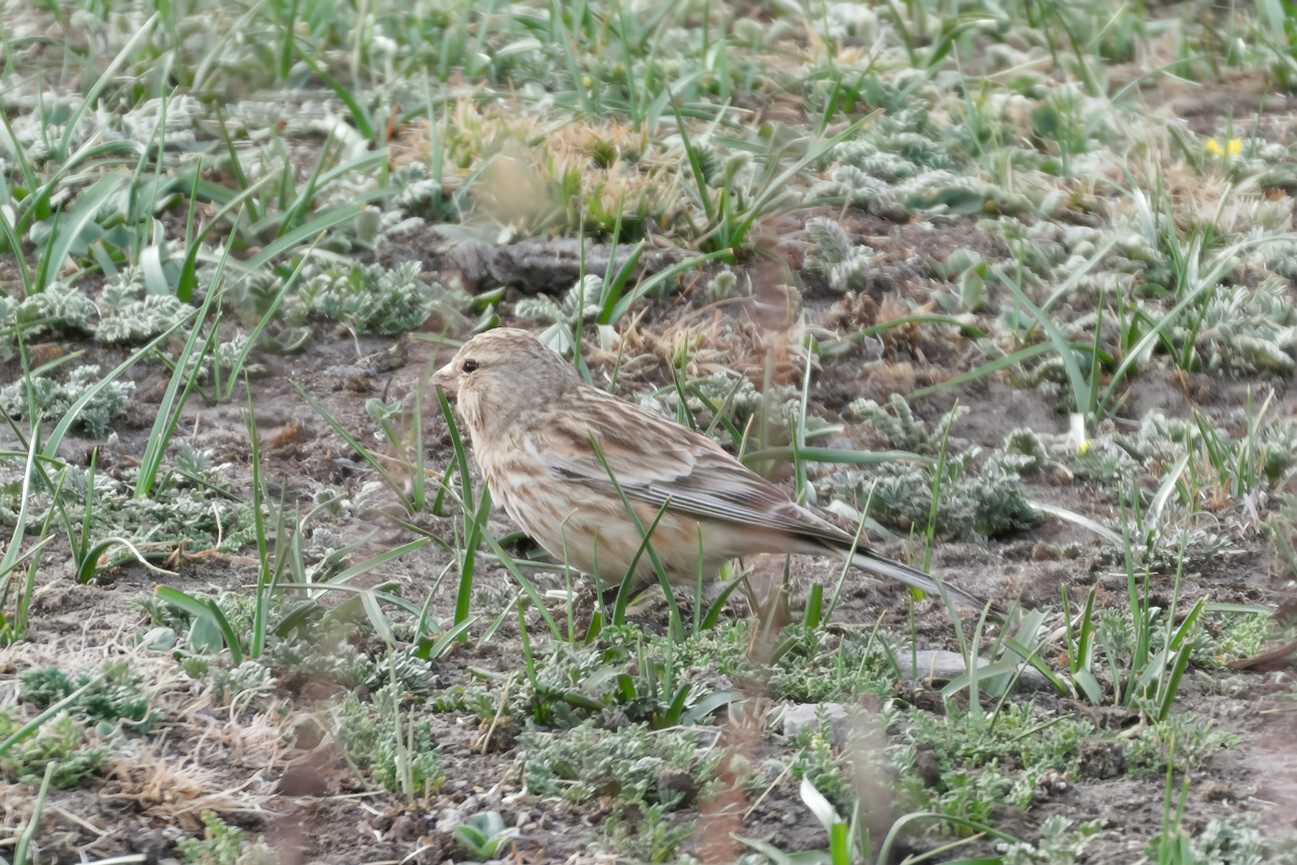
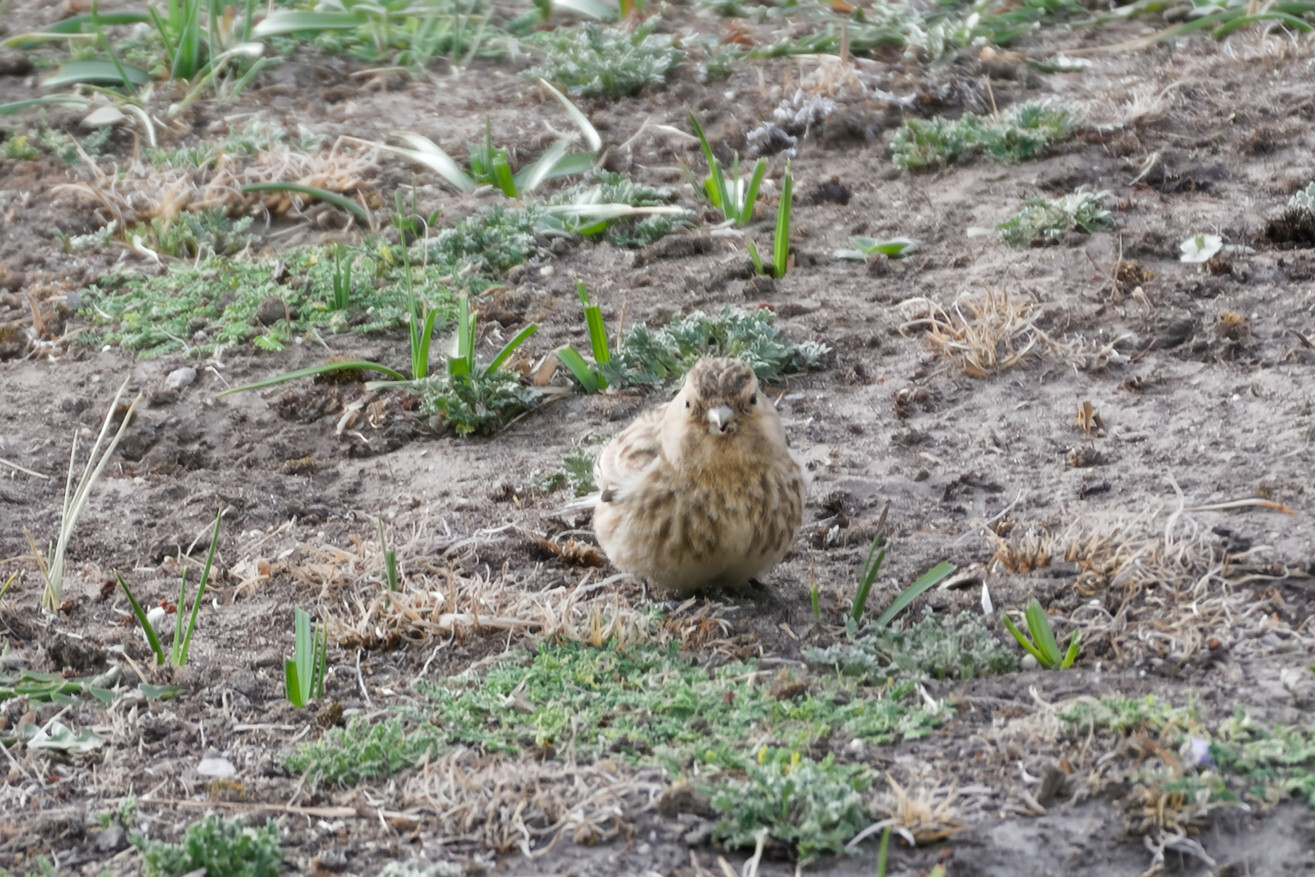
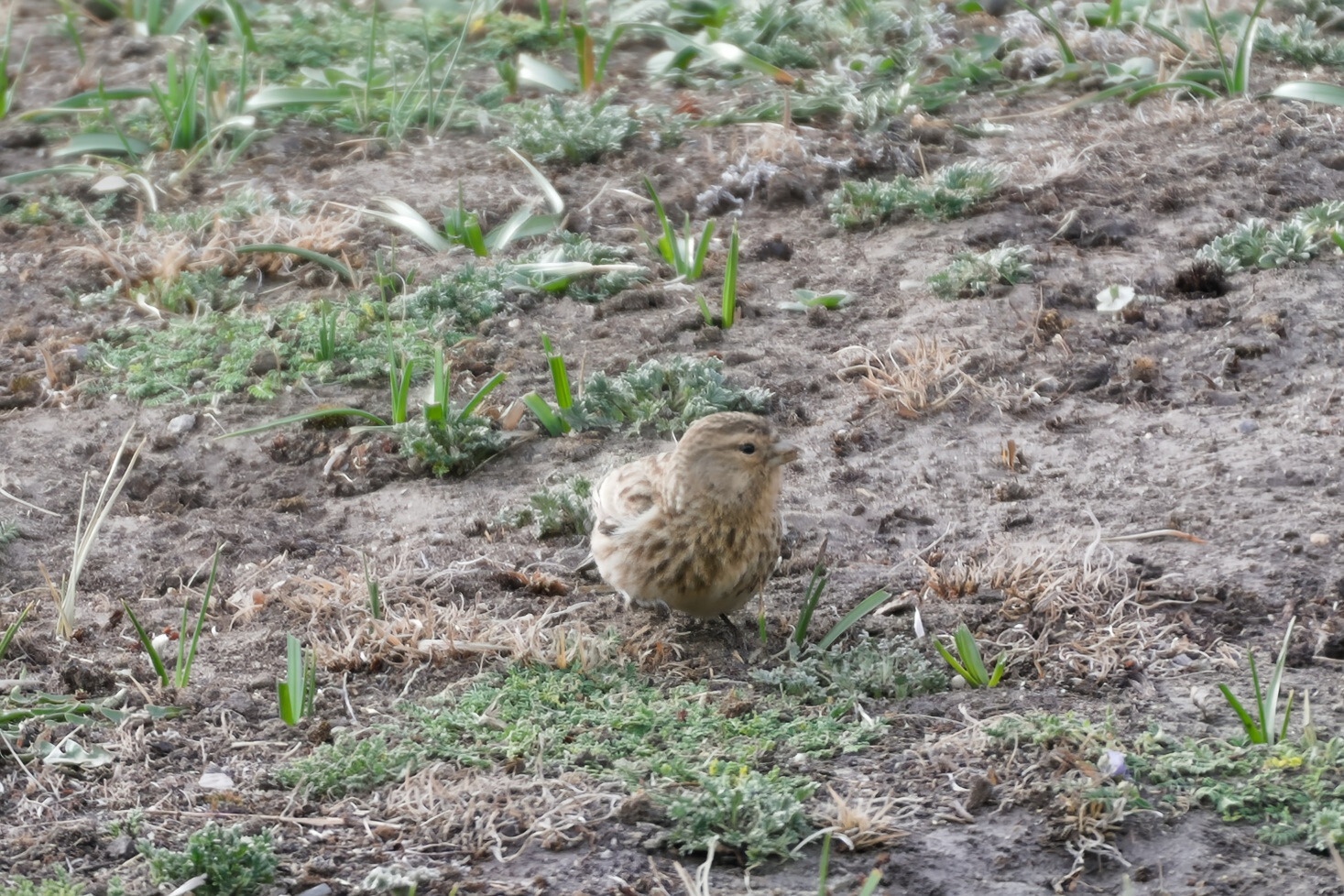
Length 13 to 13.5 cm (5.1 to 5.3 in). Brown plumage streaked with black above; underparts buff to whitish with brown streaking. Adult males have a pink rump, while immatures and females have a brown rump. Conical bill is yellow in winter and grey in summer. Lacks the red head patch and breast shown by linnets and redpolls. Subspecies vary in plumage tone—British and Irish populations are darkest, Scandinavian birds are intermediate, and Asian subspecies are much paler.
Identification
Similar in size and shape to linnet but distinguished by absence of red head patch and breast. The pink rump of breeding males is distinctive. Very distinctive nasal 'twaa-it' call, from which the name derives. Plumage tone helps separate subspecies: darkest birds occur in the hyper-humid oceanic climate of Britain and Ireland, while the paler Asian subspecies inhabit much drier mountain habitats.
Distribution & Habitat
Breeds in northern Europe across the Palearctic to Siberia and China. Favors alpine grassland and low shrubland; in Asian range breeds at high altitudes of 3,600–4,900 m, but in northwestern Europe breeds at much lower elevations, down to sea level in northwestern Ireland, western and northern Scotland, and Norway. Strongly associated with traditional low-intensity farming on coastal machair grassland. Partially resident; many birds migrate further south or move to coasts in winter.
Behavior & Ecology
Female builds nest on ground or low in bush, laying 3-6 eggs. Eggs are light or dark blue with variable dark purplish-brown specks or blotches concentrated around the broad end, measuring 17.4 mm × 13.2 mm (0.69 in × 0.52 in). Female incubates for 12-13 days. Both parents feed young, which fledge at 11-12 days and continue being fed for two weeks after leaving nest. Forms large flocks outside breeding season, sometimes mixed with other finches on coasts and salt marshes. Song contains fast trills and twitters.
Conservation
Classified as Least Concern globally, but has declined sharply in parts of its range, particularly in Ireland where numbers have fallen significantly. The decline is linked to changes in agricultural practices affecting machair grassland habitat. In the UK, several research projects monitor populations in the Pennines, Scottish Highlands, and North Wales and Lancashire coastlines. Ringing data shows British populations use different non-breeding areas that do not overlap with continental twite wintering areas.
Culture
The name derives from its distinctive nasal call 'twaa-it'. The specific epithet flavirostris means 'yellow-billed', and the genus name linaria is Latin for a linen-weaver, from linum (flax).
Source: Wikipedia · CC BY-SA 3.0
Taxonomy
- Order
- Passeriformes
- Family
- Fringillidae
- Genus
- Linaria
- eBird Code
- twite1
Subspecies (9)
-
Linaria flavirostris altaica
Altai Mountains of central Russia to northwestern Outer Mongolia
-
Linaria flavirostris brevirostris
eastern Türkiye and Caucasus to northwestern Iran
-
Linaria flavirostris flavirostris
breeds Norway, northern Sweden, northern Finland, and Kola Peninsula; winters to southern Europe
-
Linaria flavirostris kirghizorum
northern and central Kazakhstan
-
Linaria flavirostris korejevi
northeastern Kazakhstan to northwestern China; winters to central Afghanistan
-
Linaria flavirostris miniakensis
western China (eastern Xinjiang, Qinghai, and Gansu) to southeastern Tibet
-
Linaria flavirostris montanella
Kyrgyzstan (Alai Mountains) to Pamirs and western China (western Xinjiang)
-
Linaria flavirostris pipilans
Shetland Islands, Hebrides, Orkneys, Scotland, northern England, and Ireland
-
Linaria flavirostris rufostrigata
Himalayas (northern Kashmir to northern Nepal and southwestern Tibet)
Data Sources
Species description from Wikipedia, licensed under CC BY-SA 3.0.
Bird images and sounds sourced from GBIF, contributed by citizen scientists worldwide under Creative Commons licenses.
Taxonomy data from AviList 2025.