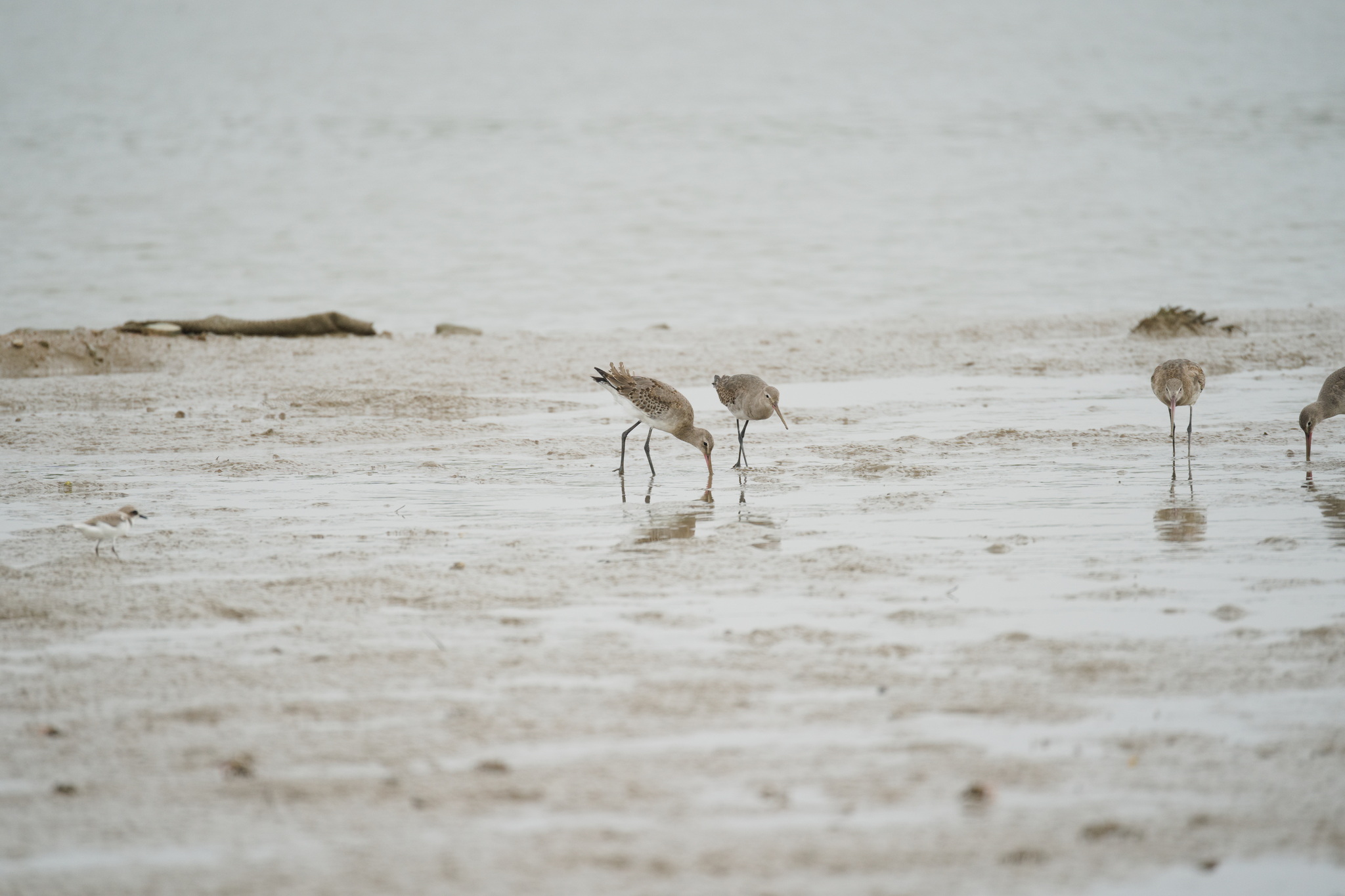
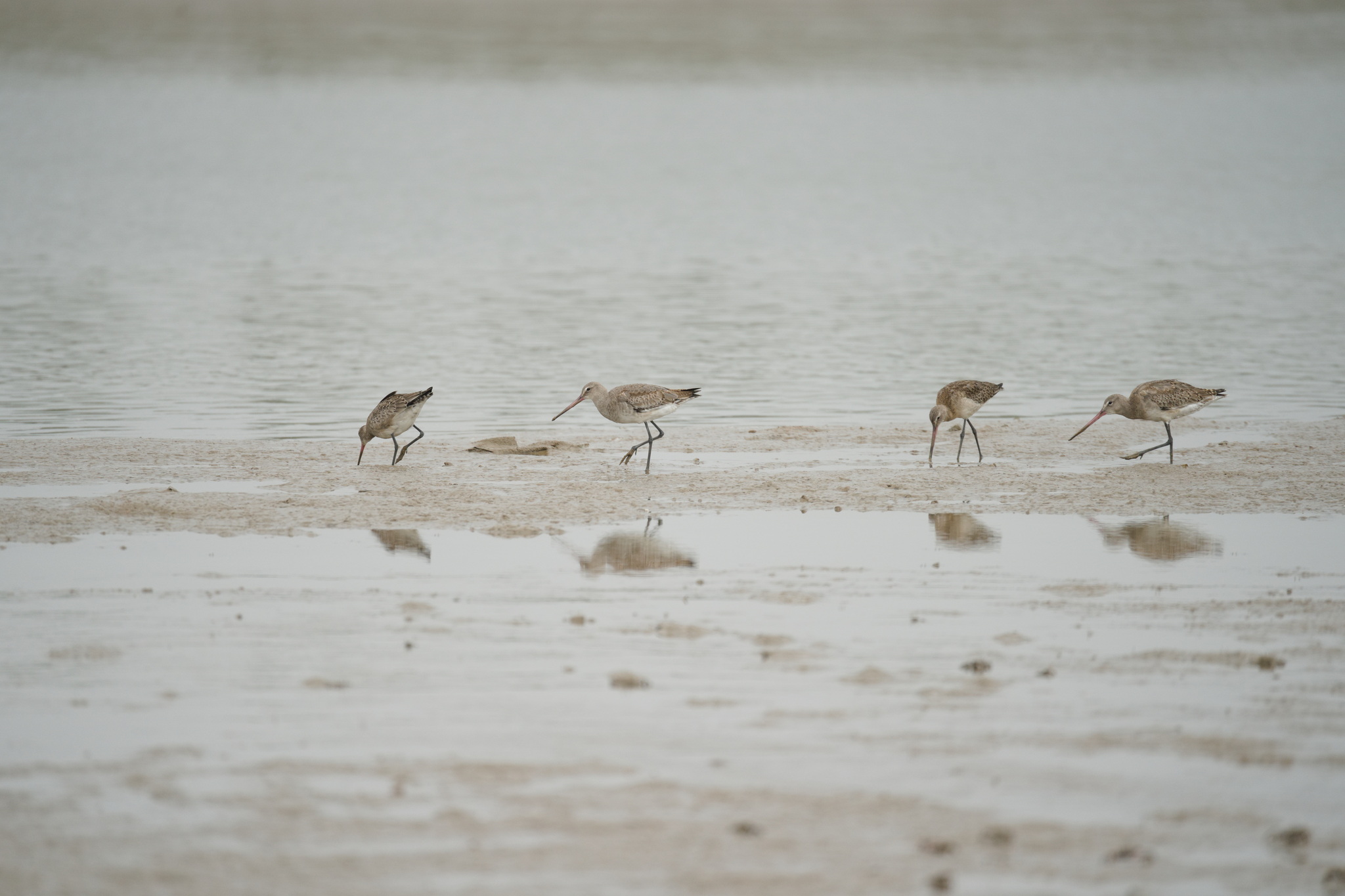
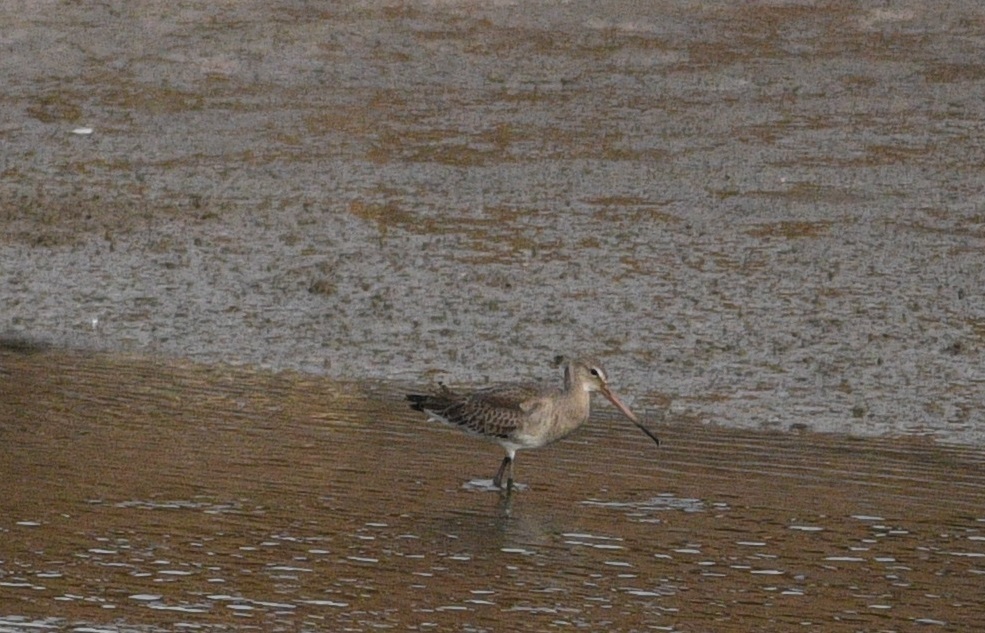
Charadriiformes / Scolopacidae / Limosa
Black-tailed Godwit
Limosa limosa · 黑尾塍鹬
Introduction
A large, long-legged, long-billed shorebird in the genus Limosa. It breeds in fens, lake edges, damp meadows, moorlands, and bogs across Iceland, Europe, and central Asia, wintering in western Europe, Africa, the Indian subcontinent, Australia, and New Zealand. Distinctive for its black and white wingbars visible in flight and preference for inland freshwater habitats over coastal areas compared to similar species. The global population is estimated at 634,000 to 805,000 birds, and the species is classified as Near Threatened.
Description
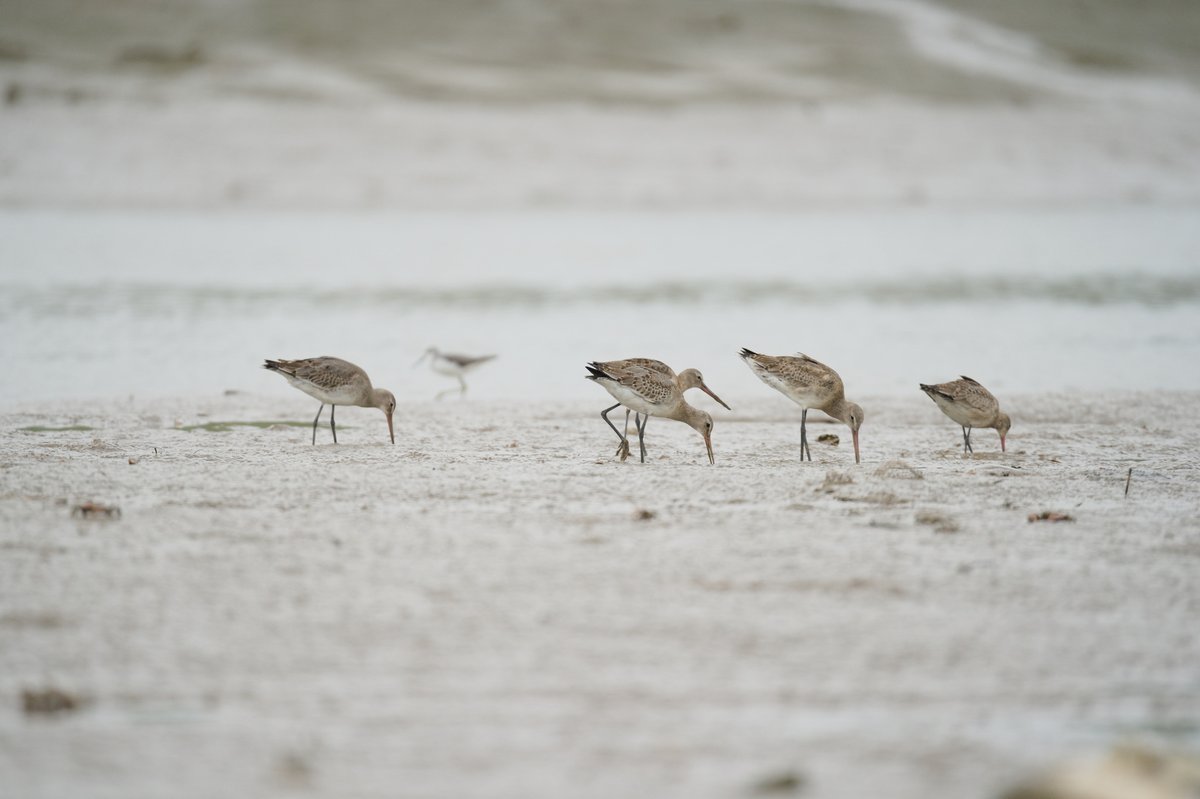
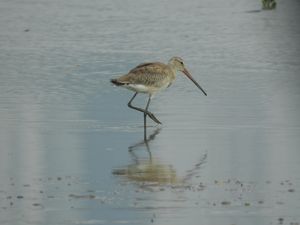
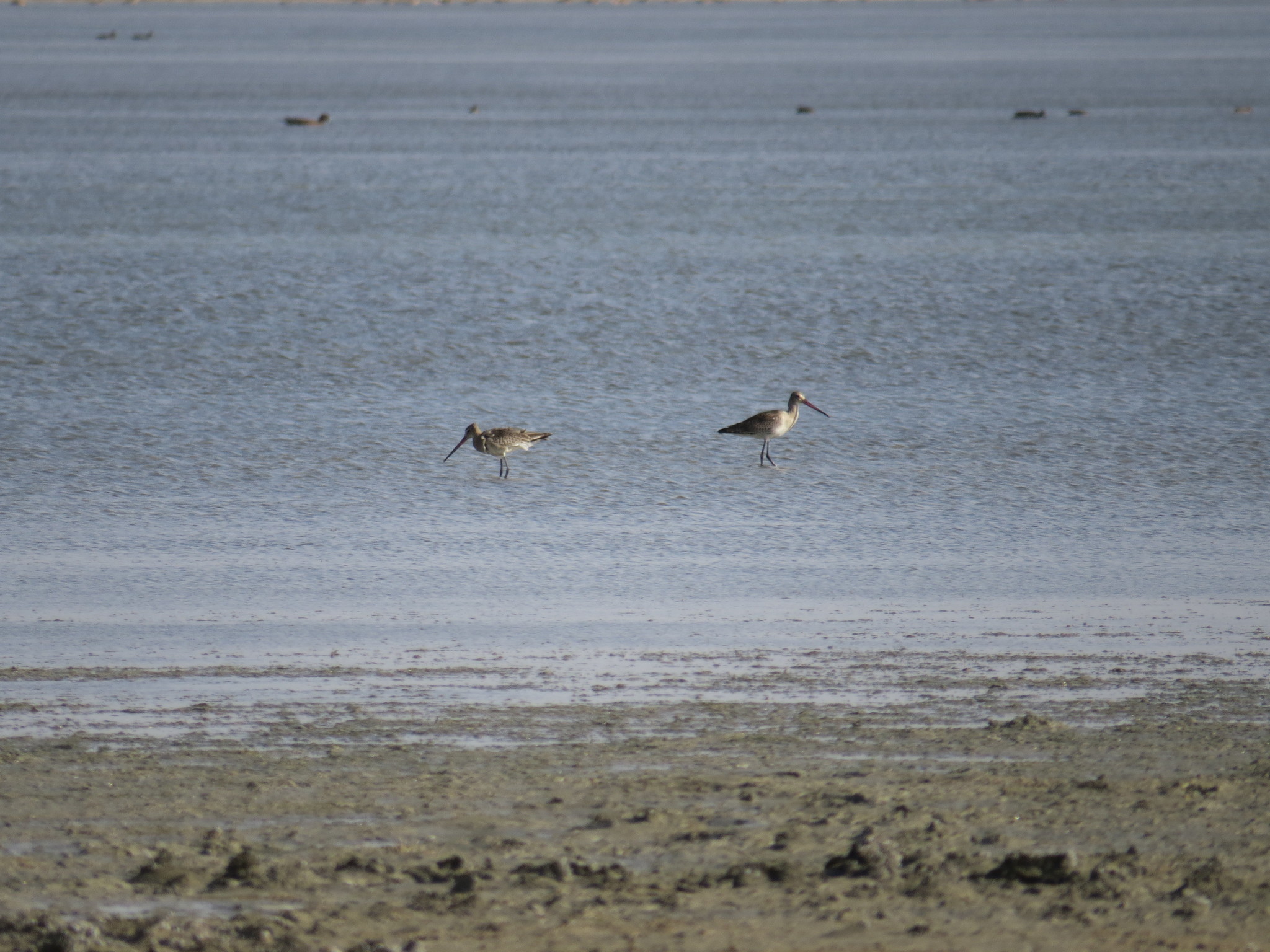
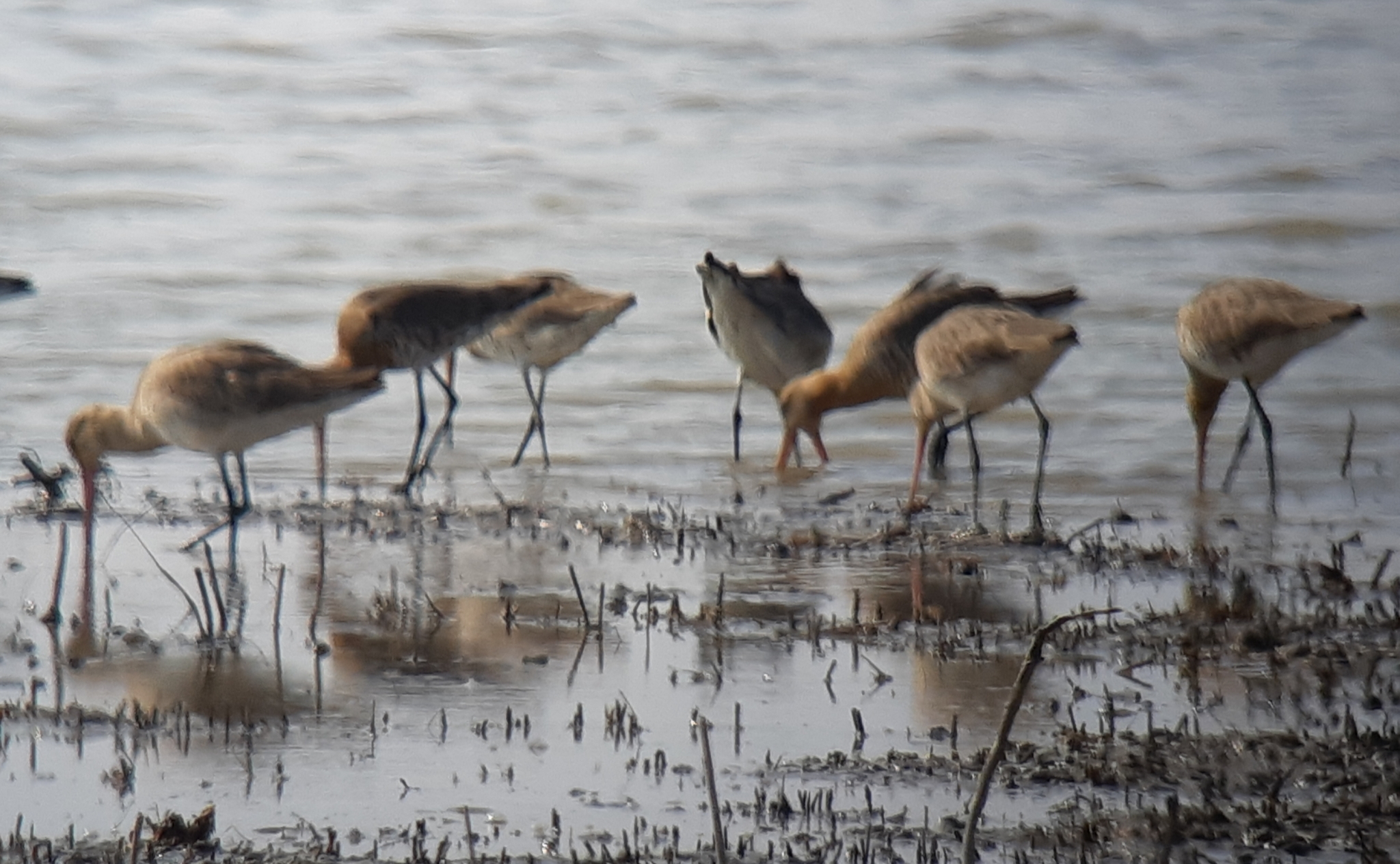
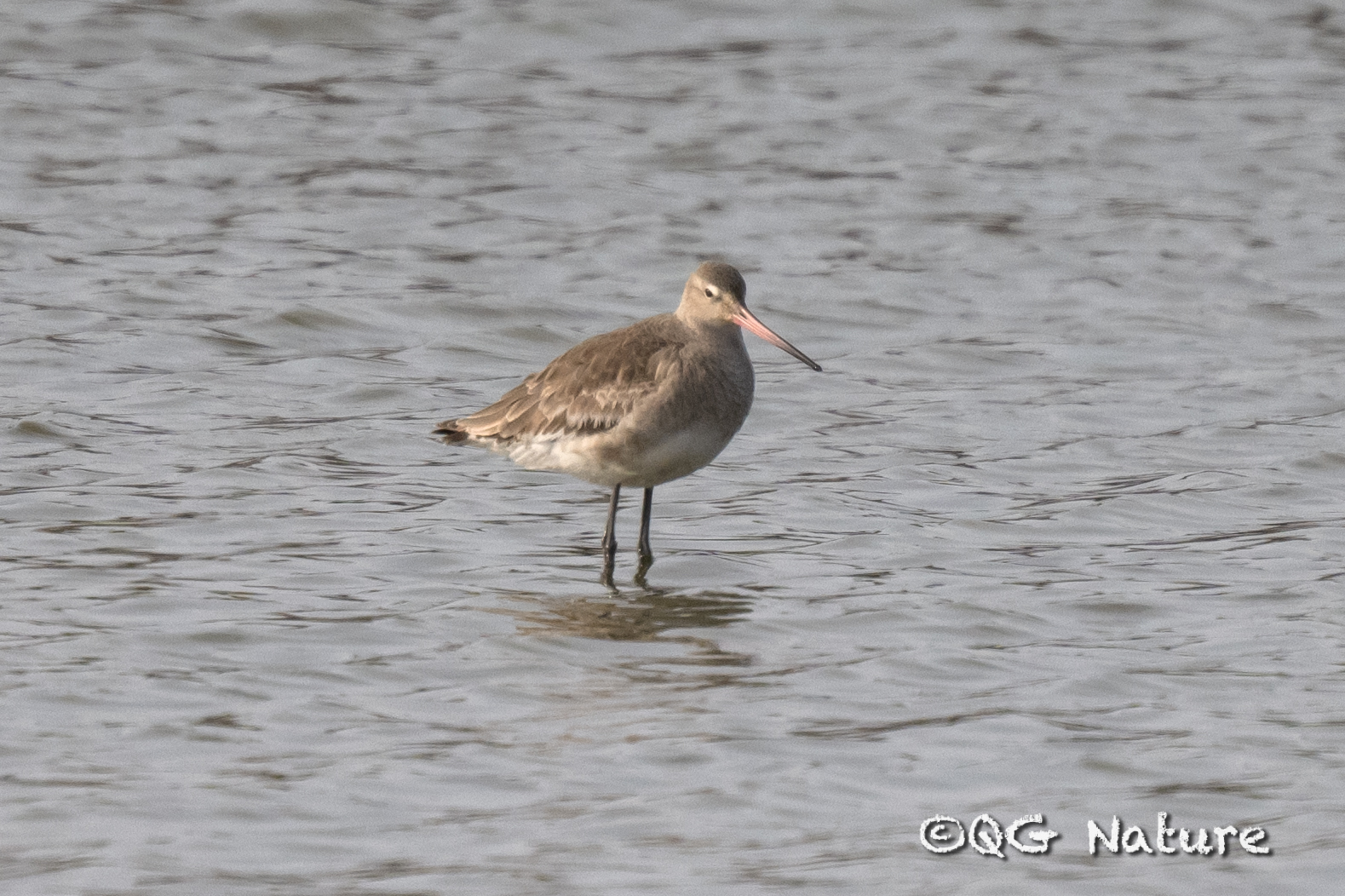
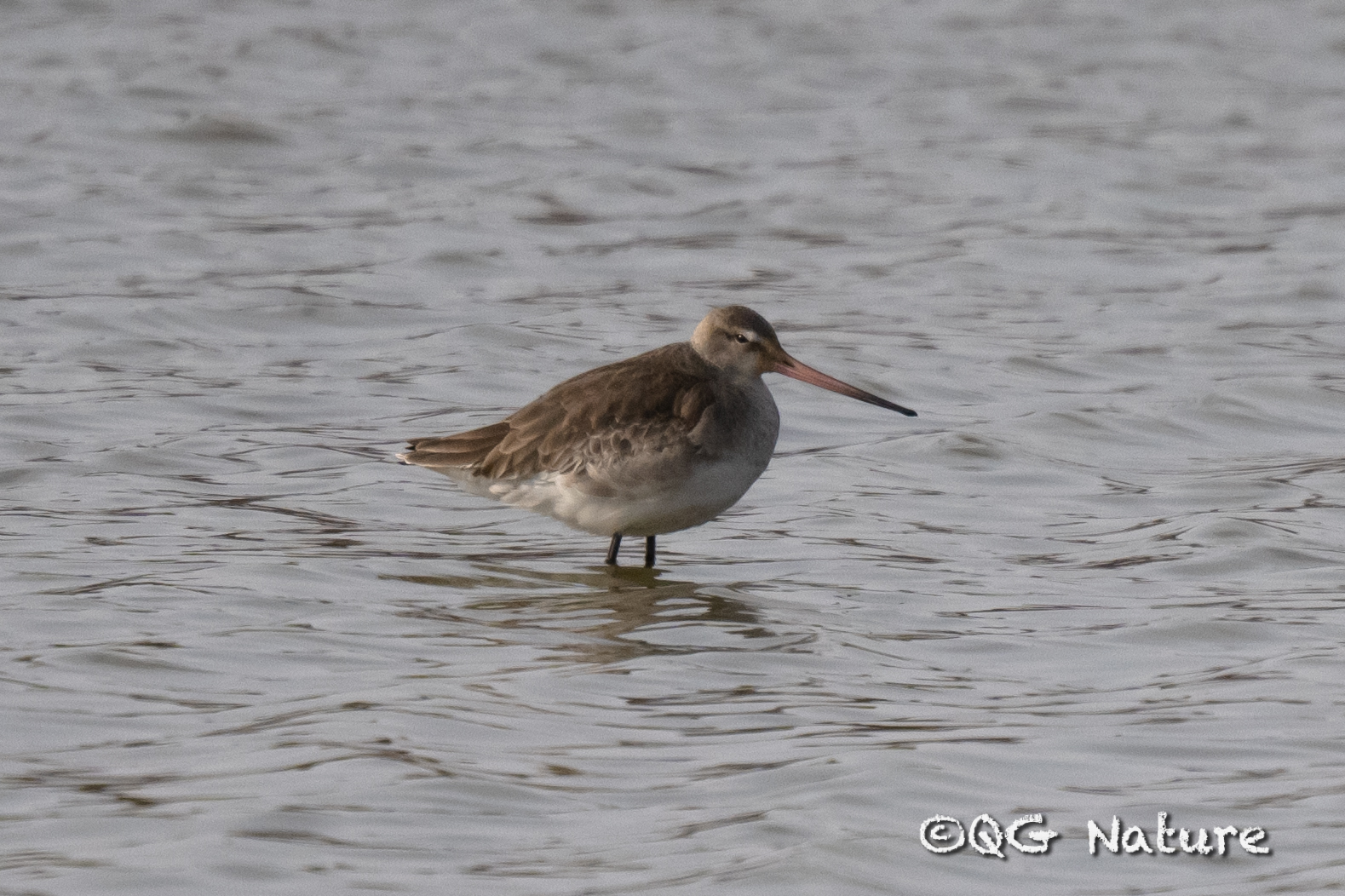
Measures 42 cm (17 in) in length with a wingspan of 70–82 cm (28–32 in). Males weigh around 280 g (9.9 oz) and females 340 g (12 oz), with females being approximately 5% larger and having bills 12–15% longer. The bill is 7.5 to 12 cm (3.0 to 4.7 in) long, straight, with a yellowish or orange-pink base and dark tip in breeding season, turning pink-based in winter. Legs are dark grey, brown, or black. Breeding plumage features an orange head, neck, and chest; males display brighter and more extensive orange coloration than females. Winter plumage is uniform dull grey-brown on the breast and upperparts. Juveniles show a pale orange wash on the neck and breast. A distinctive black and white wingbar is present year-round.
Identification
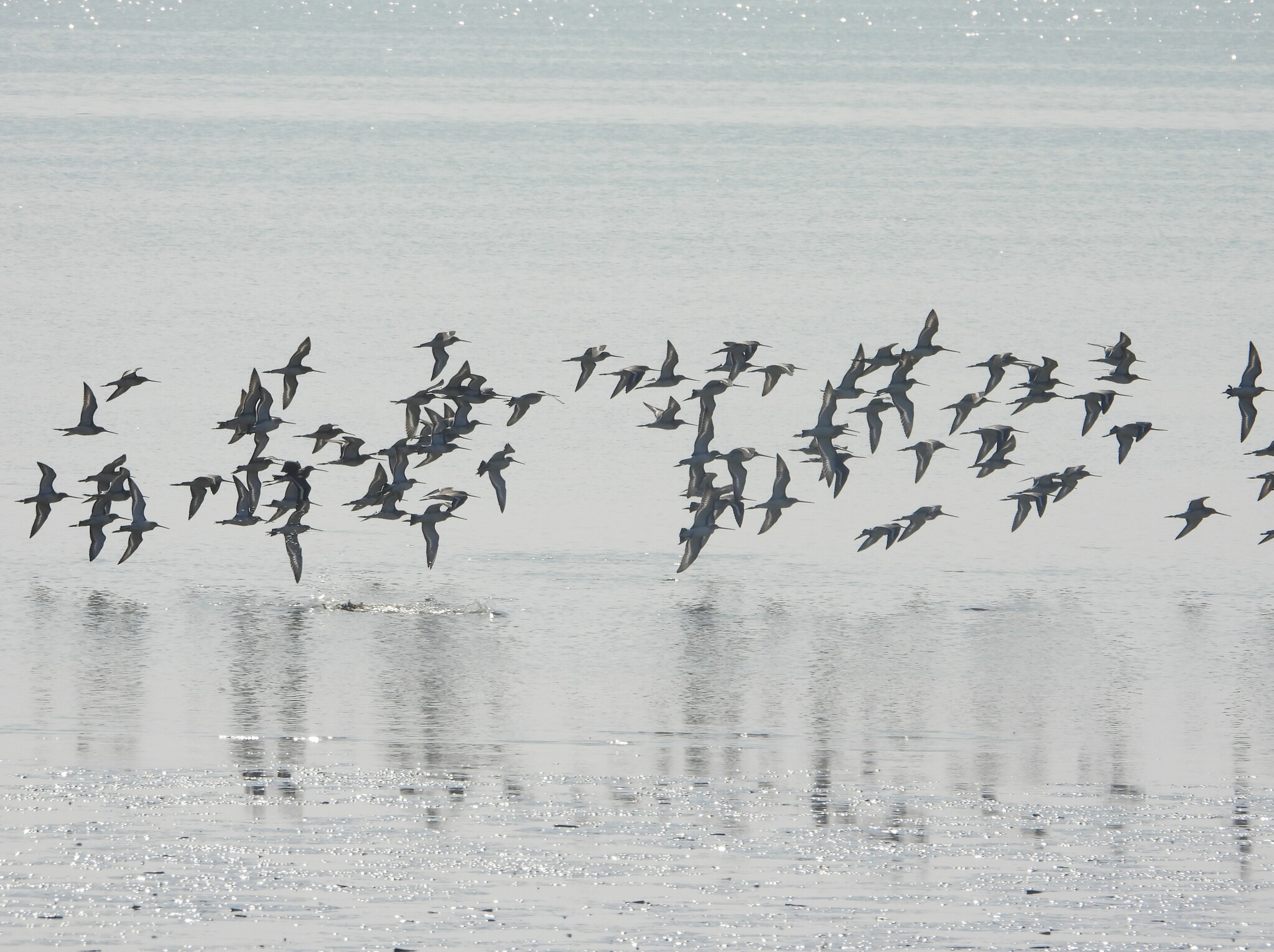
Identified by bold black and white wings and a white rump in flight. On the ground, distinguished from the similar bar-tailed godwit by a longer, straighter bill, longer legs, and taller stance. Winter plumage is uniform brown-grey, lacking the streaked back of the bar-tailed godwit. More likely to be found on inland wetlands and freshwater than the bar-tailed godwit. The most common call is a strident 'weeka weeka weeka'.
Distribution & Habitat
Breeding range extends discontinuously from Iceland through Europe to central Asia and the far east of Russia. Four subspecies are recognized: L. l. islandica (Iceland, Faeroe, Shetland, Lofoten), L. l. limosa (western/central Europe to Asiatic Russia), L. l. melanuroides (Mongolia, northern China, Siberia, Far Eastern Russia), and L. l. bohaii (assumed Russian Far East breeding). Migrates to wintering grounds in western Europe, west Africa, the Indian subcontinent, Australia, New Zealand, Taiwan, the Philippines, Indonesia, and Papua New Guinea. Icelandic populations winter mainly in the UK, Ireland, France, and the Netherlands. Uses river valley fens, damp steppes, raised bogs, and moorlands for breeding; estuaries, swamps, floods, and irrigated paddy fields in winter. Occasionally occurs in the Aleutian Islands and rarely on the Atlantic coast of North America.
Behavior & Ecology
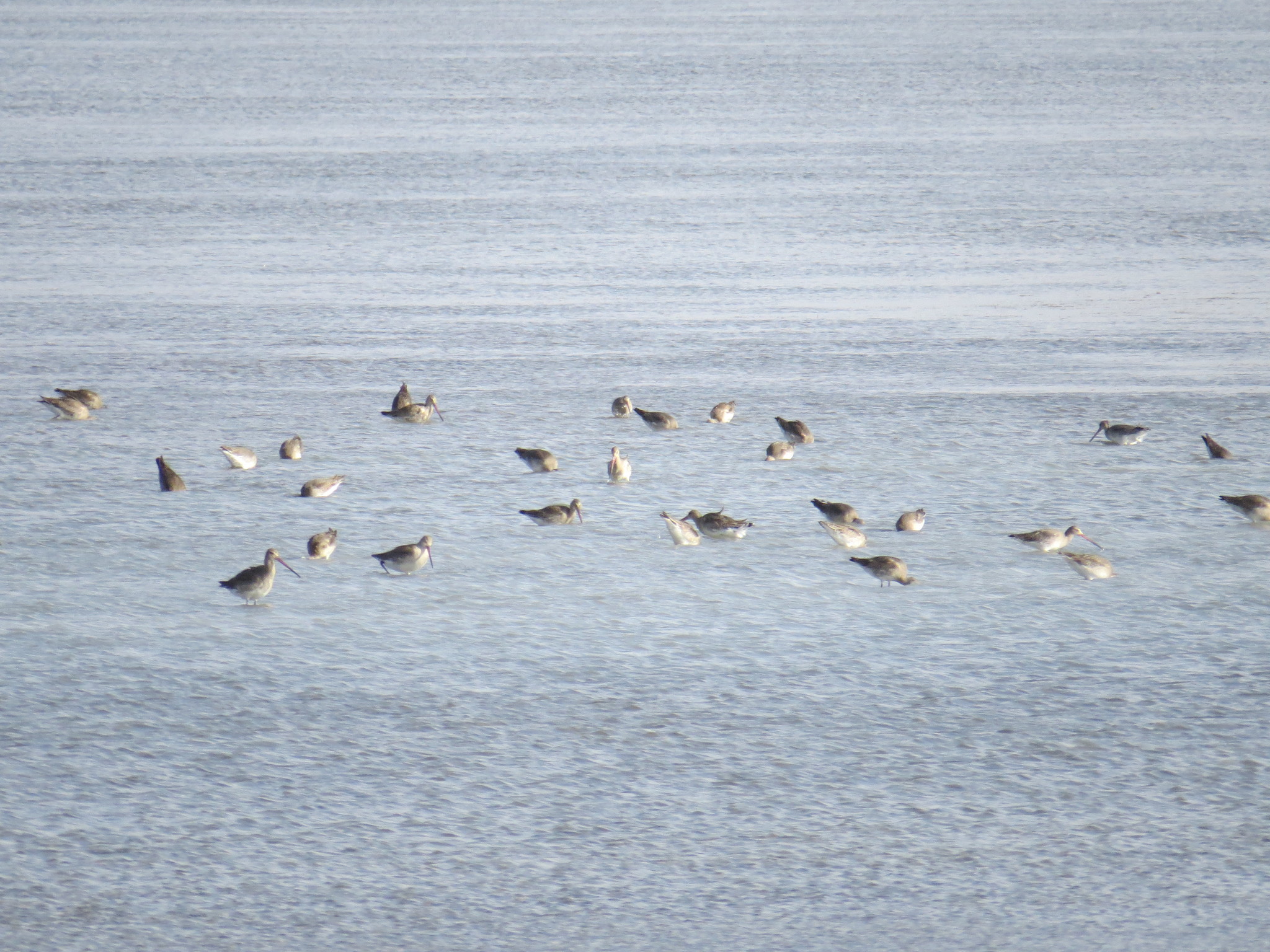
Mostly monogamous, nesting in loose colonies. Unpaired males defend temporary territories and perform display flights. Nests are shallow scrapes in short vegetation, with 3–6 olive-green to dark brown eggs incubated by both parents for 22–24 days. Chicks are precocial, fledging after 25–30 days. Feeds mainly on invertebrates such as beetles, flies, worms, and molluscs, probing vigorously in mud or water up to 36 times per minute; also consumes aquatic plants, fish eggs, and tadpoles. Migrates in flocks. Mortality rate is 37.6% in the first year, 32% in the second, and 36.9% thereafter. Maximum recorded lifespan is 29 years 2 months.
Conservation
Classified as Near Threatened by BirdLife International due to a 25% population decline over 15 years prior to 2006. Global population estimated at 634,000 to 805,000. Listed as Endangered under the Australian EPBC Act in 2024. Subject to hunting in France, with an annual kill estimated at 6,000 to 8,000 birds. Covered by the Agreement on the Conservation of African-Eurasian Migratory Waterbirds (AEWA).
Culture
National bird of the Netherlands. Historically prized for food in England, described by Sir Thomas Browne as 'the daintiest dish in England'. Old names include Blackwit, Whelp, Yarwhelp, Shrieker, Barker, and Jadreka Snipe. The Icelandic name is Jaðrakan.
Source: Wikipedia · CC BY-SA 3.0
Taxonomy
- Order
- Charadriiformes
- Family
- Scolopacidae
- Genus
- Limosa
Subspecies (4)
-
Limosa limosa bohaii
breeding range not well established, but probably in northeastern Siberia (Sakha Republic); winter range also incompletely known, but reported from Hong Kong and Vietnam to Thailand and Malaysia
Data Sources
Species description from Wikipedia, licensed under CC BY-SA 3.0.
Bird images and sounds sourced from GBIF, contributed by citizen scientists worldwide under Creative Commons licenses.
Taxonomy data from AviList 2025.