Charadriiformes / Scolopacidae / Limosa
Bar-tailed Godwit
Limosa lapponica · 斑尾塍鹬
Introduction
A large, strongly migratory wader in the family Scolopacidae. It breeds on Arctic coasts and tundra from Scandinavia to Alaska and overwinters on coasts in temperate and tropical regions of Australia, New Zealand, Europe, and Africa. Distinctive for its long non-stop migrations, particularly the Pacific crossing by the subspecies L. l. baueri. Conservation status is Near Threatened with a declining population.
Description
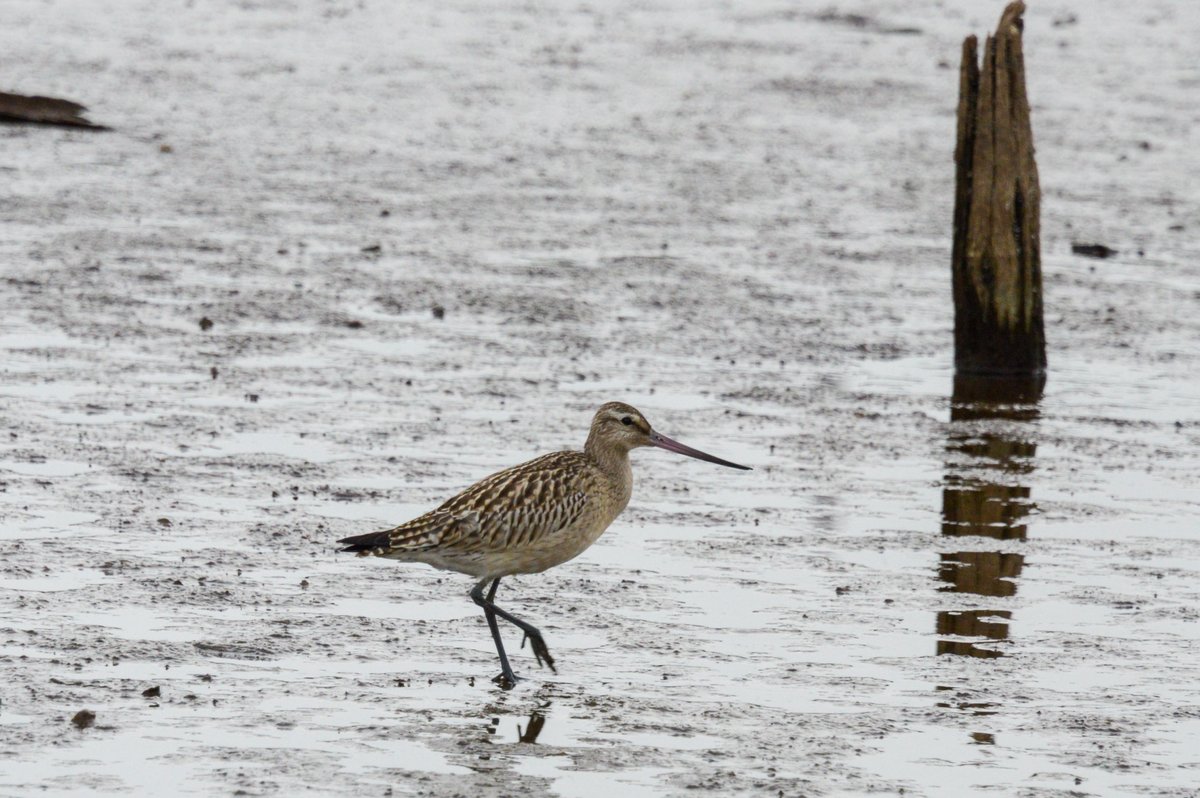
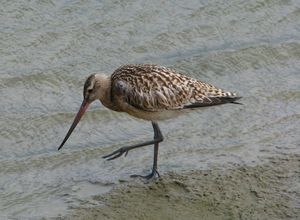
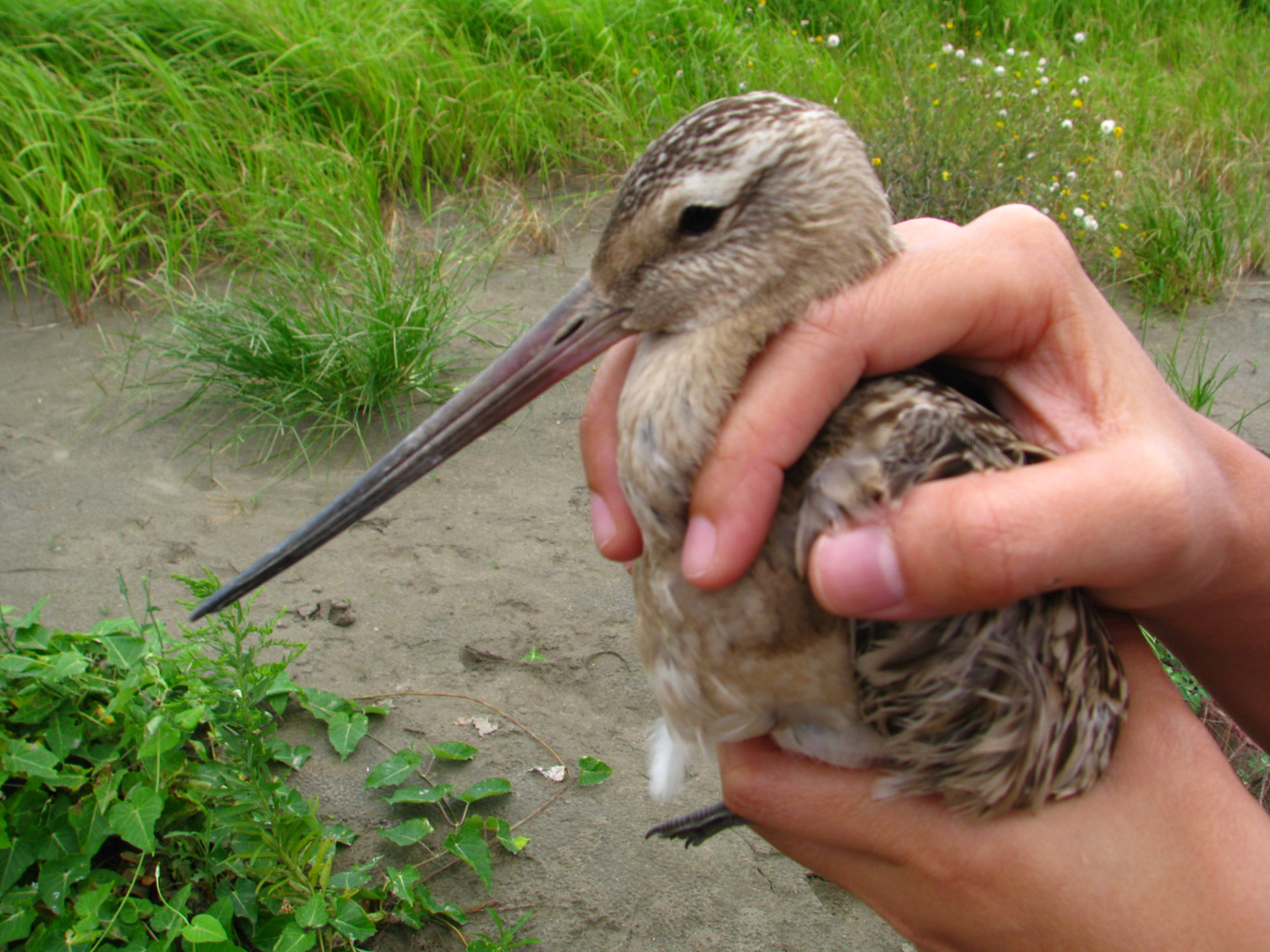
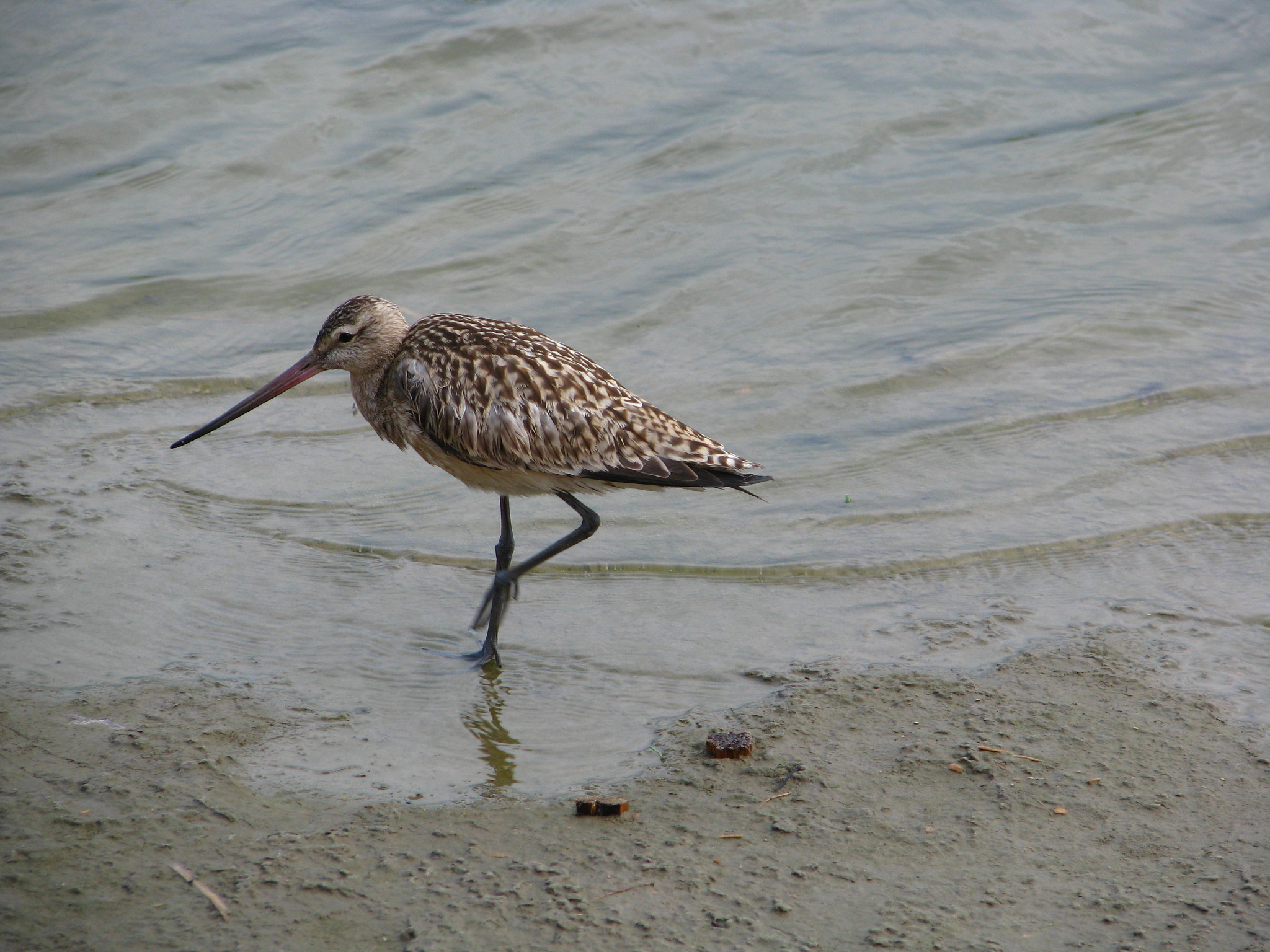
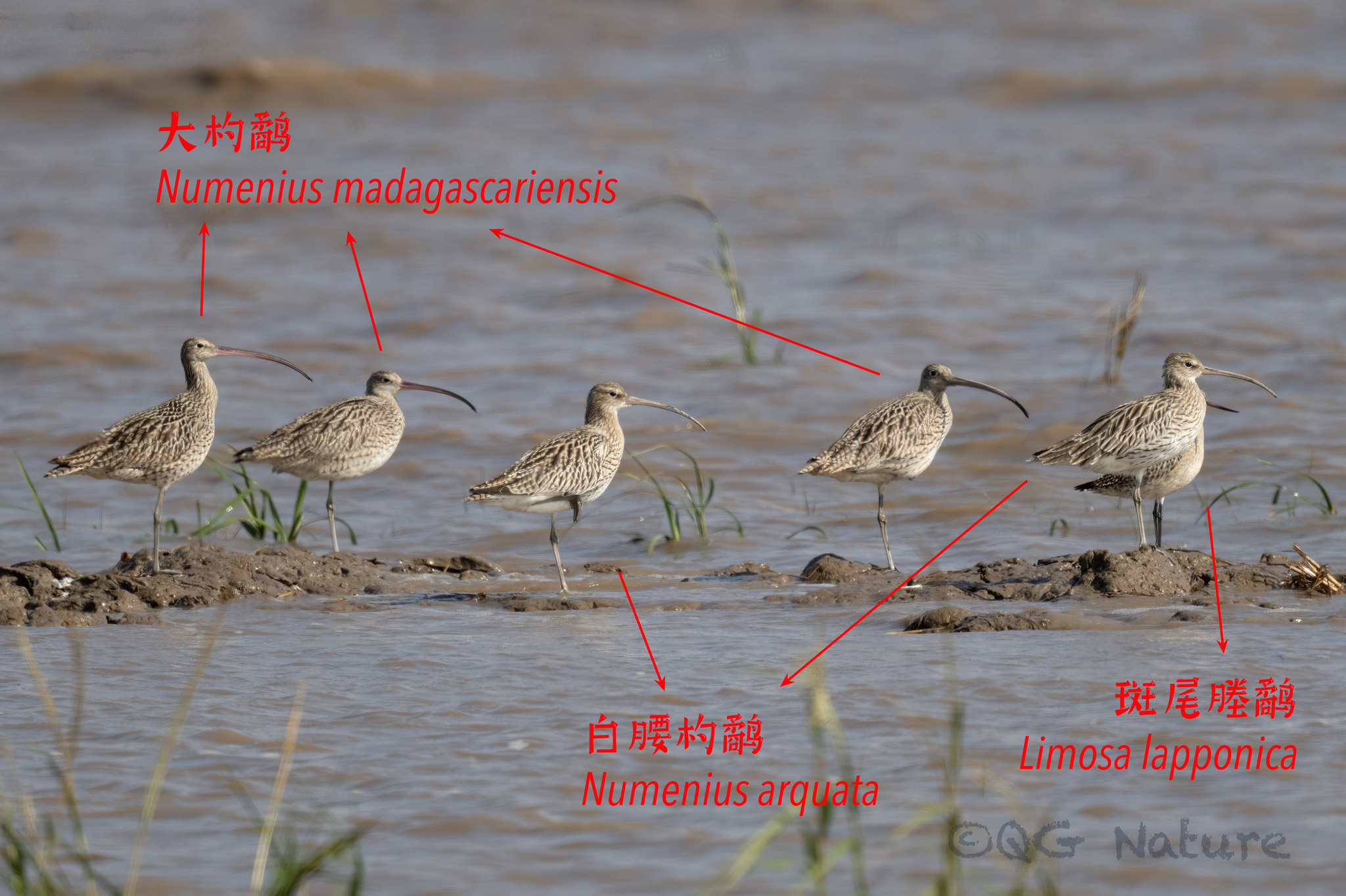
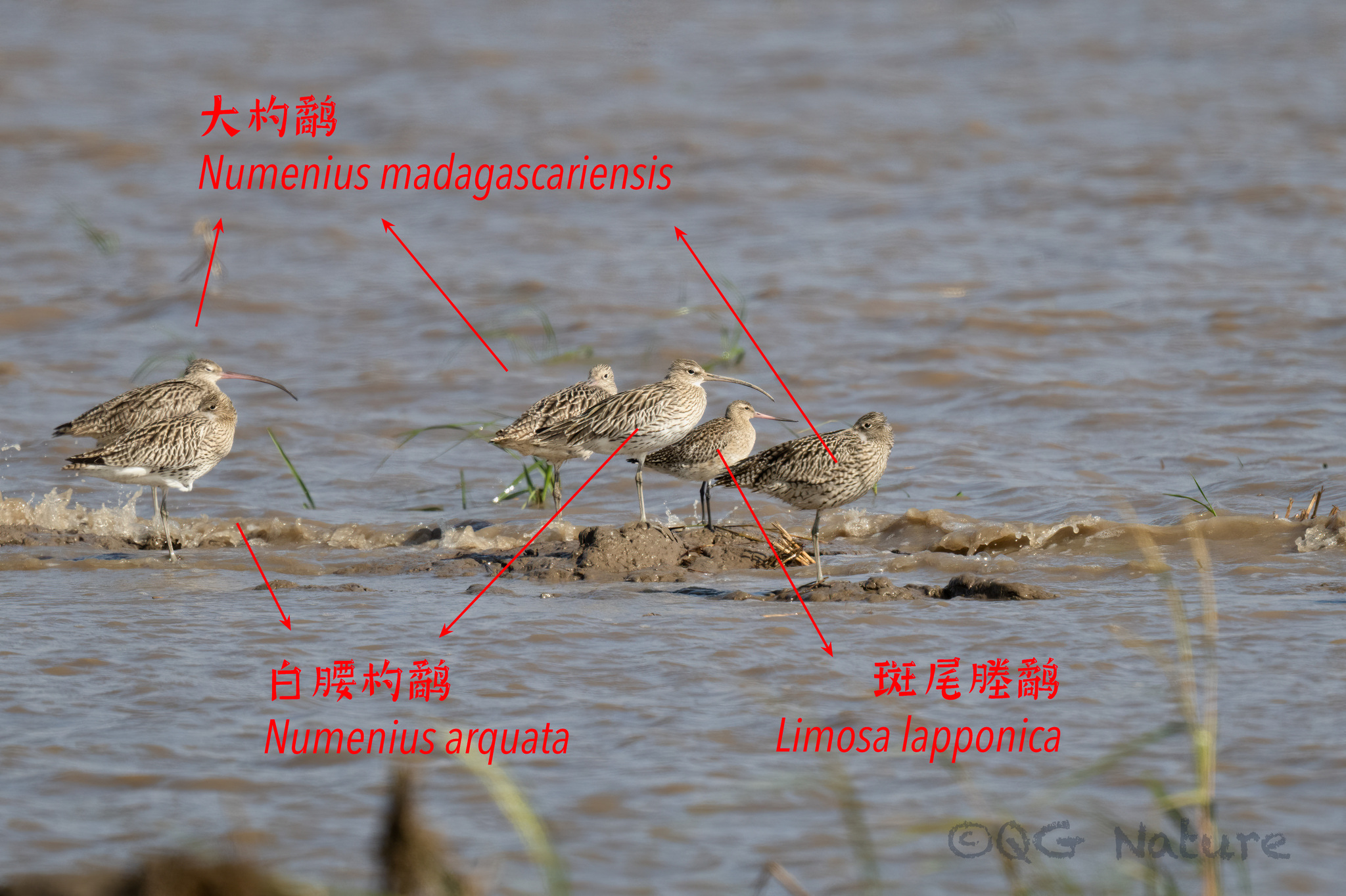
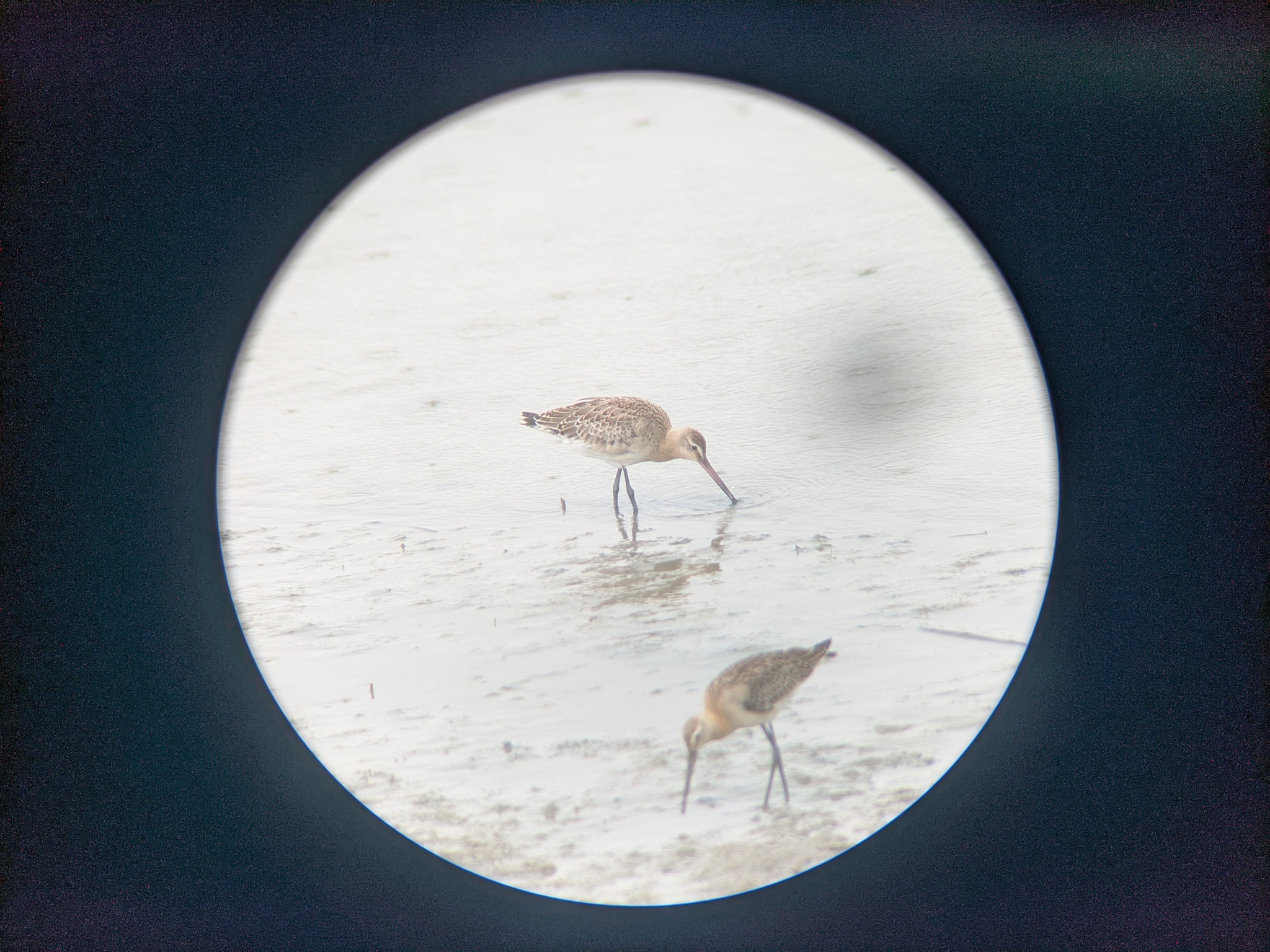
Bill-to-tail length is 37–41 cm (15–16 in), with a wingspan of 70–80 cm (28–31 in). Males weigh 190–400 g (6.7–14.1 oz), while females weigh 260–630 g (9.2–22.2 oz). Adults have blue-grey legs and a long, tapering, slightly upturned bi-coloured bill, pink at the base and black towards the tip. Breeding plumage features unbroken brick red on the neck, breast, and belly, with dark brown upperparts; females are duller with chestnut to cinnamon bellies. Non-breeding birds are plain grey-brown with darker feather centres and whitish underneath. Juveniles are buff overall with streaked flanks and breast.
Identification
Distinguished from the black-tailed godwit by its black-and-white horizontally-barred tail and lack of white wing bars. The most similar species is the Asian dowitcher. Key marks include the long upturned bill and, in breeding season, the extensive red plumage.
Distribution & Habitat
Breeds on Arctic coasts and tundra from Scandinavia to Alaska. Five subspecies are recognized: L. l. lapponica (Scandinavia to Yamal Peninsula; winters Europe, Africa, Persian Gulf); L. l. yamalensis (northwest Siberia; winters Oman to India, possibly east Africa); L. l. taymyrensis (central north Siberia; winters western Europe to western Africa); L. l. menzbieri (northeastern Asia; winters southeast Asia and northwest Australia); L. l. baueri (Chukotka to Alaska; winters Australasia). Migrates directly across the Pacific Ocean or along the Asian coast, utilizing staging grounds like the Yellow Sea.
Behavior & Ecology
Feeds on bristle-worms, small bivalves, and crustaceans on coastal mudflats and estuaries, probing into sediment or picking surface prey. Sexual dimorphism influences foraging: males with shorter bills feed on surface prey like snails, while females probe for deeper-buried worms. Breeding occurs in shallow moss cups; clutch size averages four eggs. Both sexes incubate for 20–21 days. Young fledge at around 28 days. Performs ceremonial flights with distinct stages (ascent, limping flight, gliding, descent) primarily by males. Undertakes extreme non-stop migrations, carrying high fat loads and reducing digestive organ size.
Conservation
Status is Near Threatened with a declining global population estimated at 1,099,000–1,149,000 individuals. Threats include habitat loss and degradation in the Yellow Sea due to seawall construction and mudflat reclamation, leading to reduced food supplies. Adult survival rates for L. l. baueri and L. l. menzbieri decreased between 2005 and 2012. Numbers in New Zealand declined from over 100,000 in the late 1980s to 67,500 in 2018. Listed as Endangered under the Australian EPBC Act in 2024. Protected under the AEWA agreement and New Zealand's 1953 Wildlife Act.
Source: Wikipedia · CC BY-SA 3.0
Taxonomy
- Order
- Charadriiformes
- Family
- Scolopacidae
- Genus
- Limosa
Subspecies (5)
-
Limosa lapponica baueri
northeastern Siberia to northern and western Alaska; winters to Australasia
Data Sources
Species description from Wikipedia, licensed under CC BY-SA 3.0.
Bird images and sounds sourced from GBIF, contributed by citizen scientists worldwide under Creative Commons licenses.
Taxonomy data from AviList 2025.