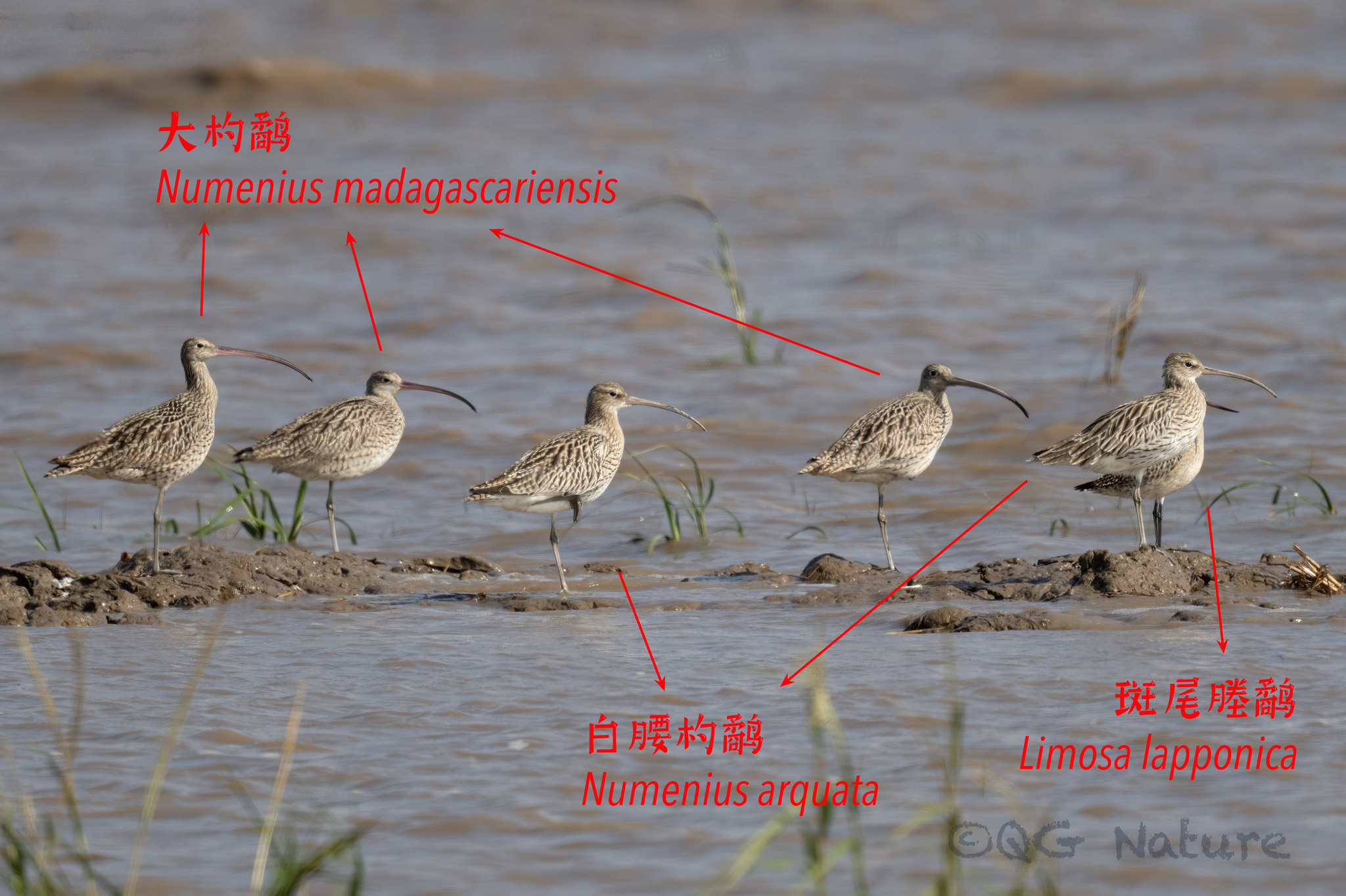
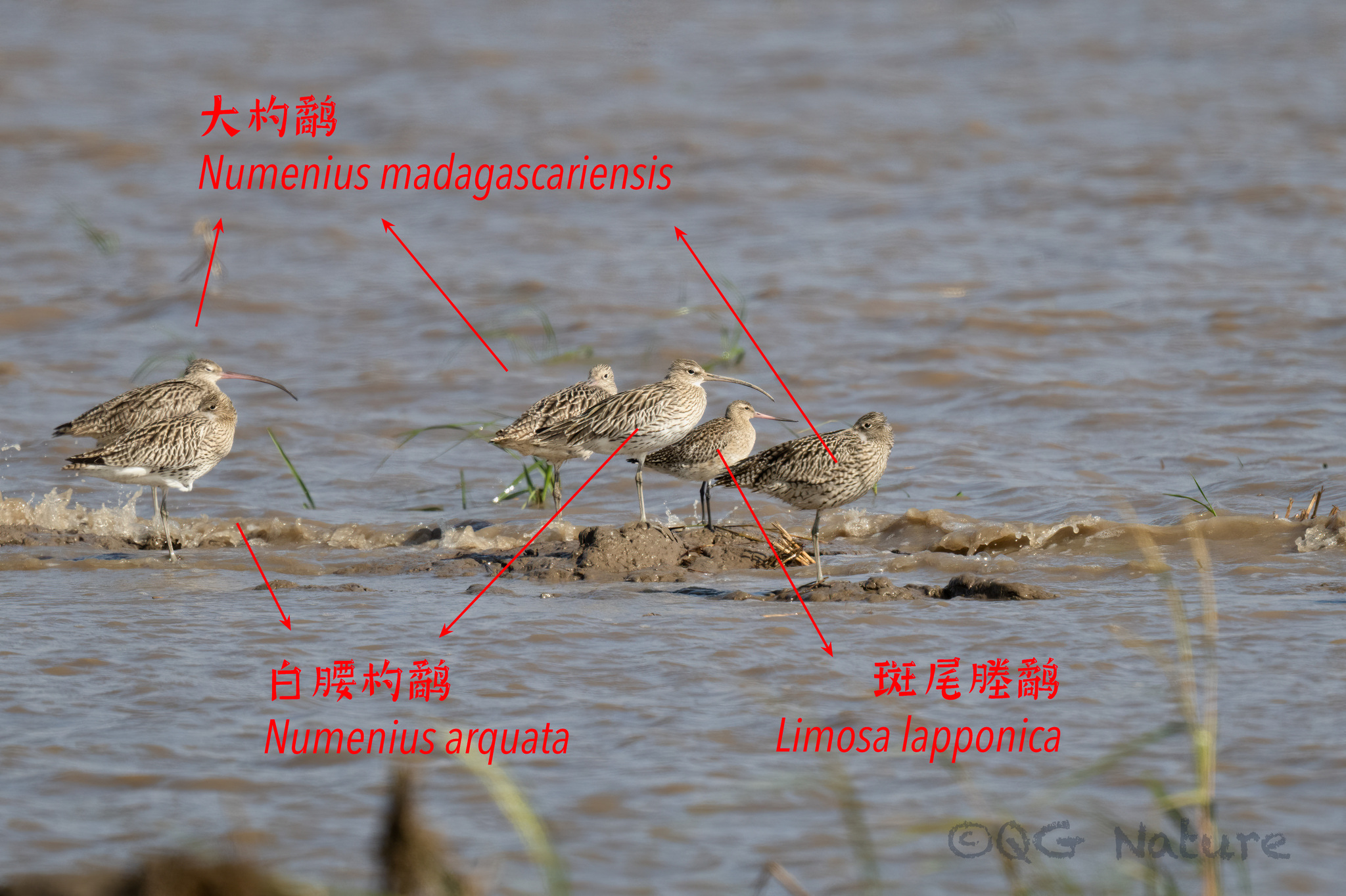
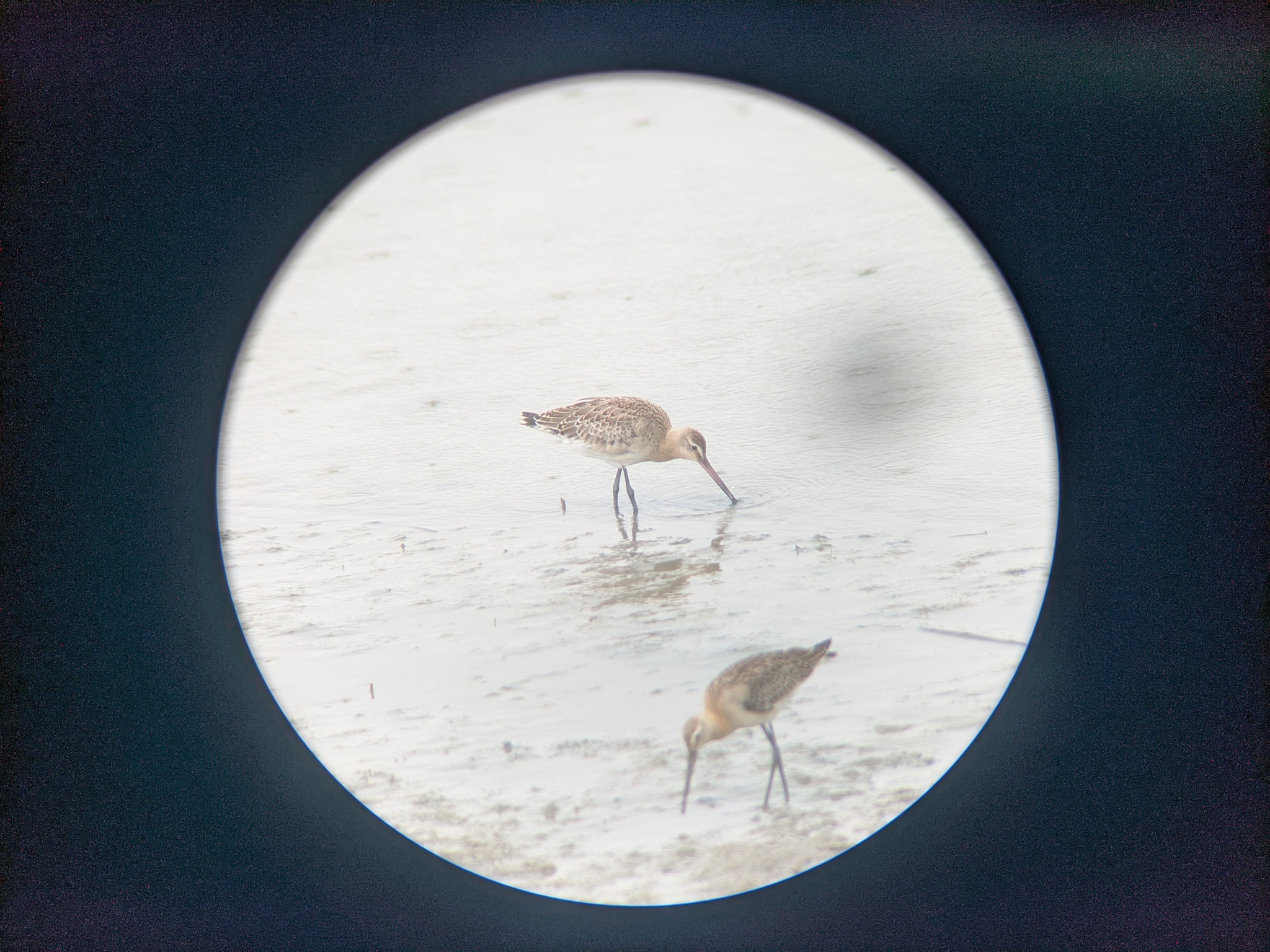
Bar-tailed Godwit
Limosa lapponica
斑尾塍鹬
Introduction
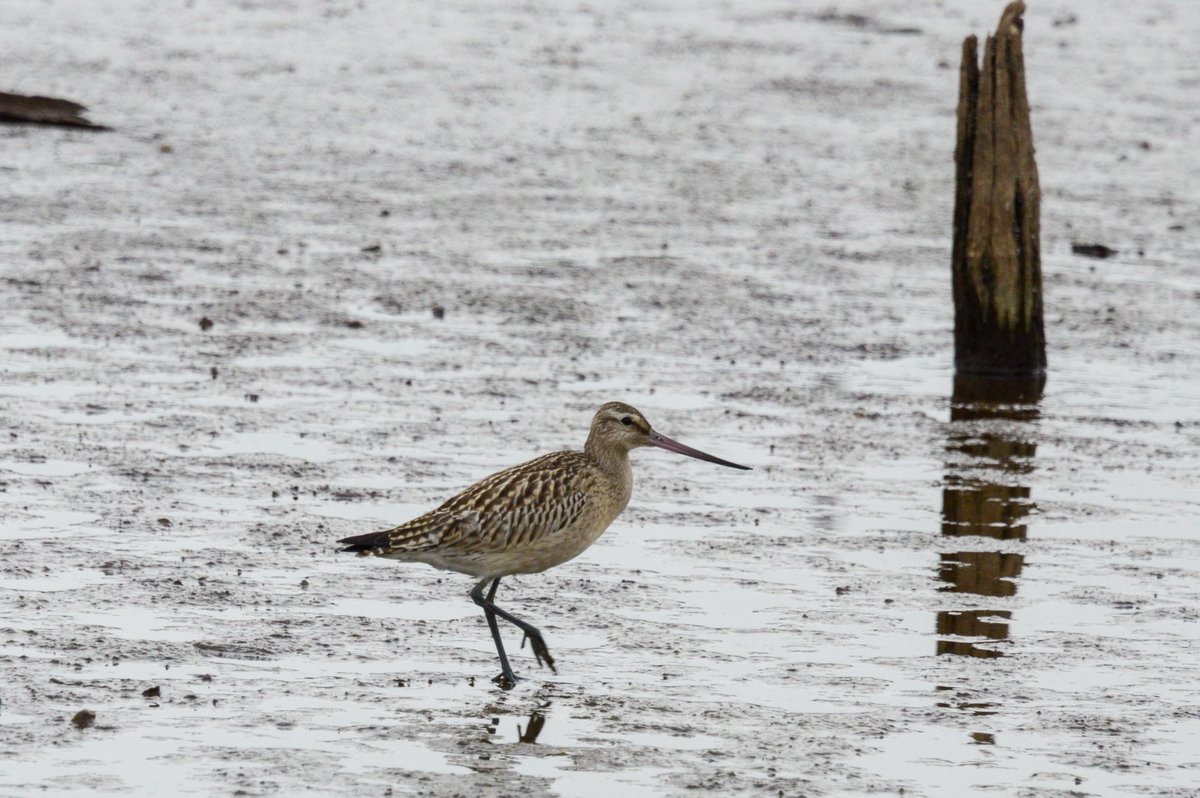
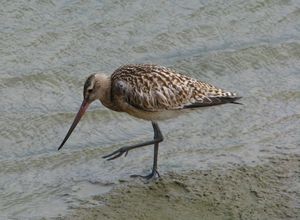
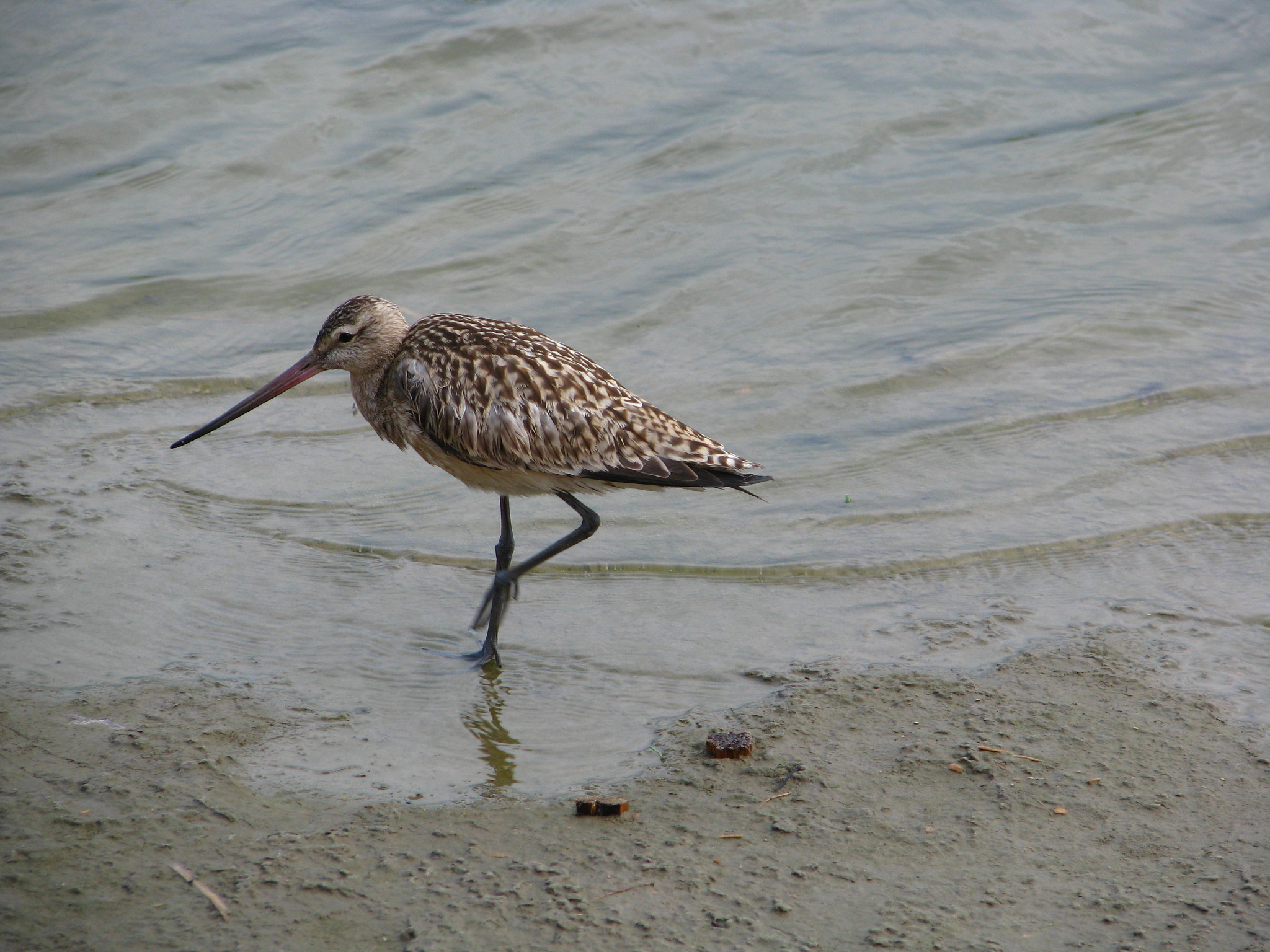
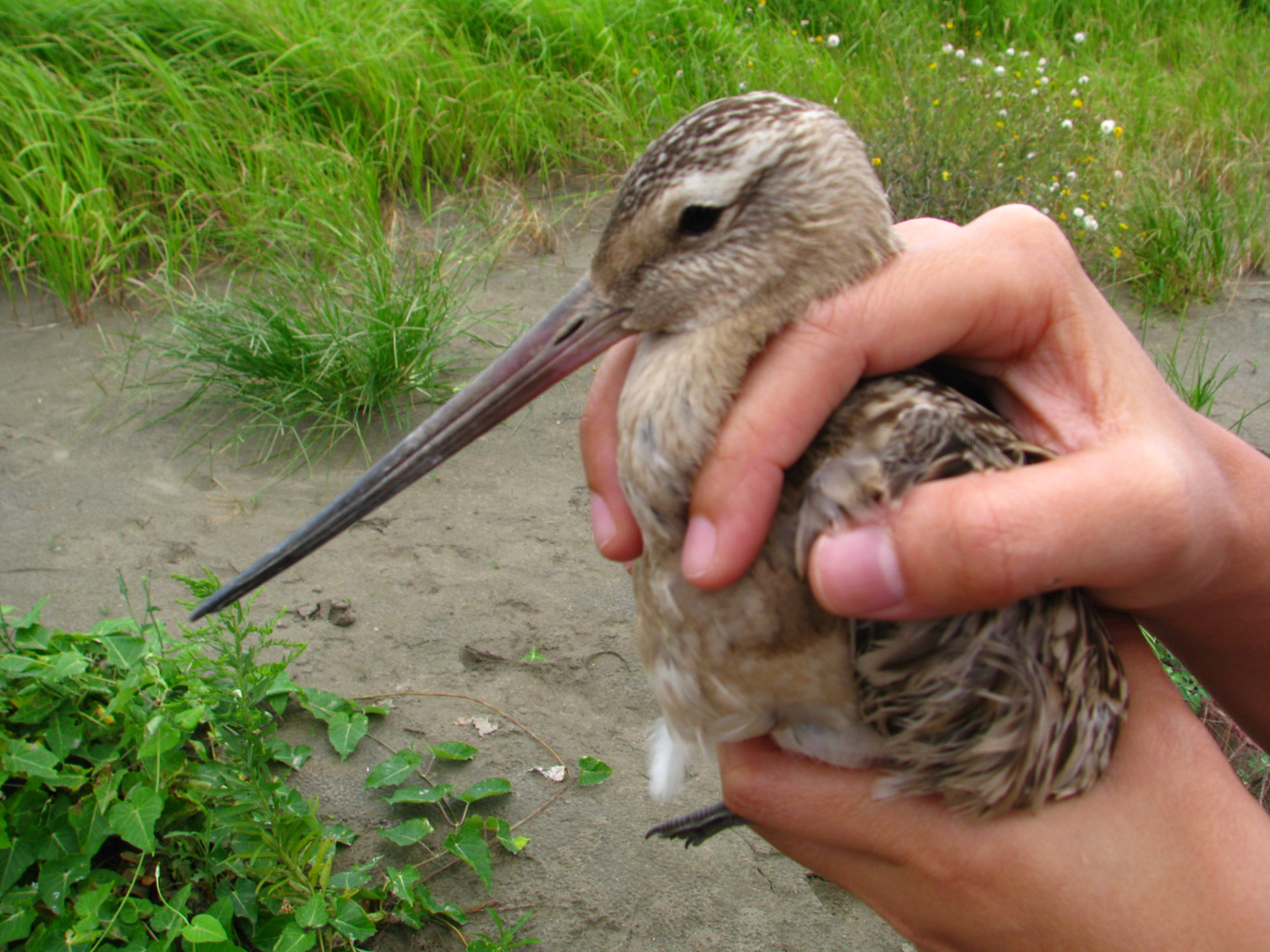
This godwit undertakes the longest non-stop flight of any bird, migrating 11,000 km across the Pacific from New Zealand to breeding grounds. During the breeding season, males display brick-red plumage on the neck, breast, and belly, while females show chestnut-to-cinnamon coloration. Both sexes have a long, slightly upturned bi-coloured bill (pink at the base, black at the tip) and short blue-grey legs. In non-breeding plumage, the species appears grey-brown with darker feather centres creating a subtle striped pattern on whitish underparts.
Description
A relatively short-legged godwit with a bill-to-tail length of 37-41 centimetres and wingspan of 70-80 centimetres. Males weigh 190-400 grams while larger females range from 260-630 grams. The species' most distinctive feature is its long, tapering, slightly upturned bill, pink at the base and black towards the tip. Breeding adults have blue-grey legs, with males showing unbroken brick-red plumage on the neck, breast, and belly, and dark brown upperparts. Females are considerably duller, with chestnut to cinnamon underparts. Non-breeding birds are plain grey-brown with darker feather centres creating a striped effect and whitish underparts. Juveniles resemble non-breeding adults but appear more buff overall with streaked flanks and breast. The tail and upper tail coverts display the distinctive black-and-white horizontal barring that gives the species its name.
Identification
The black-and-white horizontally-barred tail and lack of white wing bars distinguish this species from the similar black-tailed godwit, which has a wholly black tail and prominent wing bars. The Asian dowitcher is the most similar species but can be distinguished by its much shorter, straighter bill and different body proportions. In flight, the barred tail pattern is particularly distinctive. Males in breeding plumage are unmistakable with their bright red underparts, though care must be taken not to confuse them with male black-tailed godwits, which have more extensive black on the tail and different call notes. Females require more careful study, as their duller plumage can be challenging, but the bill shape and tail pattern remain reliable identifiers.
Distribution & Habitat
Breeds on Arctic coasts and tundra across Scandinavia, northern Siberia, and Alaska. The western subspecies L. l. lapponica winters on coasts from the British Isles and Netherlands south to South Africa and around the Persian Gulf. The eastern subspecies L. l. baueri breeds in Chukotka and Alaska and migrates to eastern Australia and New Zealand, undertaking the longest non-stop migration of any bird—over 11,000 kilometres across the Pacific. L. l. menzbieri breeds in northeastern Siberia and winters in southeast Asia and northwest Australia. Migration follows coastlines, with birds stopping at crucial staging areas in the Yellow Sea, particularly the Yalu Jiang coastal wetland, where they rest and refuel for approximately 38-41 days before continuing to breeding grounds.
Behavior & Ecology
Feeds primarily on bristle-worms comprising up to 70 percent of the diet, supplemented by small bivalves, crustaceans, and snails. Sexual dimorphism influences foraging behaviour: shorter-billed males typically feed on surface prey like small snails, while longer-billed females exploit deeply-buried prey such as worms. The species forages actively day and night, either picking items from the surface or probing in mud and vegetation. Breeding begins at age two to four years. Nests are shallow cups lined with vegetation, containing clutches of two to five eggs, averaging four. Both parents share incubation over 20-21 days, with the male covering daytime duties and the female at night. The young fledge at around 28 days. During courtship, males perform elaborate ceremonial flights involving ascent, limping flight, gliding, and descent, producing various vocalizations. The species produces nine distinct call types used in territorial, courtship, and aggressive contexts.
Conservation
Classified as Near Threatened with a declining global population estimated at 1,099,000-1,149,000 individuals. Numbers have declined significantly since the 1980s, with New Zealand populations falling from over 100,000 to approximately 67,500 by 2018. The subspecies L. l. baueri and L. l. menzbieri were listed as Endangered under Australia's EPBC Act in 2024. The primary threat is habitat loss and degradation, particularly the destruction of intertidal staging areas in the Yellow Sea due to seawall construction and mudflat reclamation for development. L. l. menzbieri, which relies heavily on the Yalu Jiang estuary during both northward and southward migrations, has been severely impacted. Adult survival rates for both Australasian subspecies decreased between 2005 and 2012. The species is protected under the Agreement on the Conservation of African-Eurasian Migratory Waterbirds and New Zealand's 1953 Wildlife Act.
Culture
The English name derives from the distinctive black-and-white barring on the tail and upper tail coverts. The term 'godwit' was first recorded around 1416-1417 and may originate from an imitation of the bird's call, or alternatively from the Old English 'god whit' meaning 'good creature', possibly referring to its qualities as food. The species holds particular significance in New Zealand and Australia, where birdwatchers eagerly track the arrival and departure of migrating godwits. The remarkable migration journeys, particularly the non-stop Pacific crossing documented through satellite tagging, have captured public imagination and featured prominently in nature documentaries and scientific reporting, raising awareness about the species and its conservation needs.
Source: Wikipedia · CC BY-SA 3.0
Taxonomy
- Order
- Charadriiformes
- Family
- Scolopacidae
- Genus
- Limosa
- eBird Code
- batgod
Subspecies (5)
-
Limosa lapponica baueri
northeastern Siberia to northern and western Alaska; winters to Australasia
-
Limosa lapponica lapponica
breeds from northern Scandinavia eastward to northwestern Russia; winters from the North Sea, western Iberia, and northwestern Africa southward to western South Africa
-
Limosa lapponica menzbieri
breeds northern Siberia; winters southeastern Asia to coastal Australia including Tasmania
-
Limosa lapponica taymyrensis
breeds north-central Siberia, roughly from the lower Yenisei River Valley eastward to the lower Anabar River Valley; winter range incompletely known but primarily coasts of West Africa
-
Limosa lapponica yamalensis
breeds on the northern West-Siberian Plain, including the Yamal Peninsula and the lower Ob River Valley; winter range incompletely known, but extends from Oman eastward to western India, and probably the eastern coast of Africa, perhaps southward to South Africa
Data Sources
Species description from Wikipedia, licensed under CC BY-SA 3.0.
Bird images and sounds sourced from GBIF, contributed by citizen scientists worldwide under Creative Commons licenses.
Taxonomy data from AviList 2025.