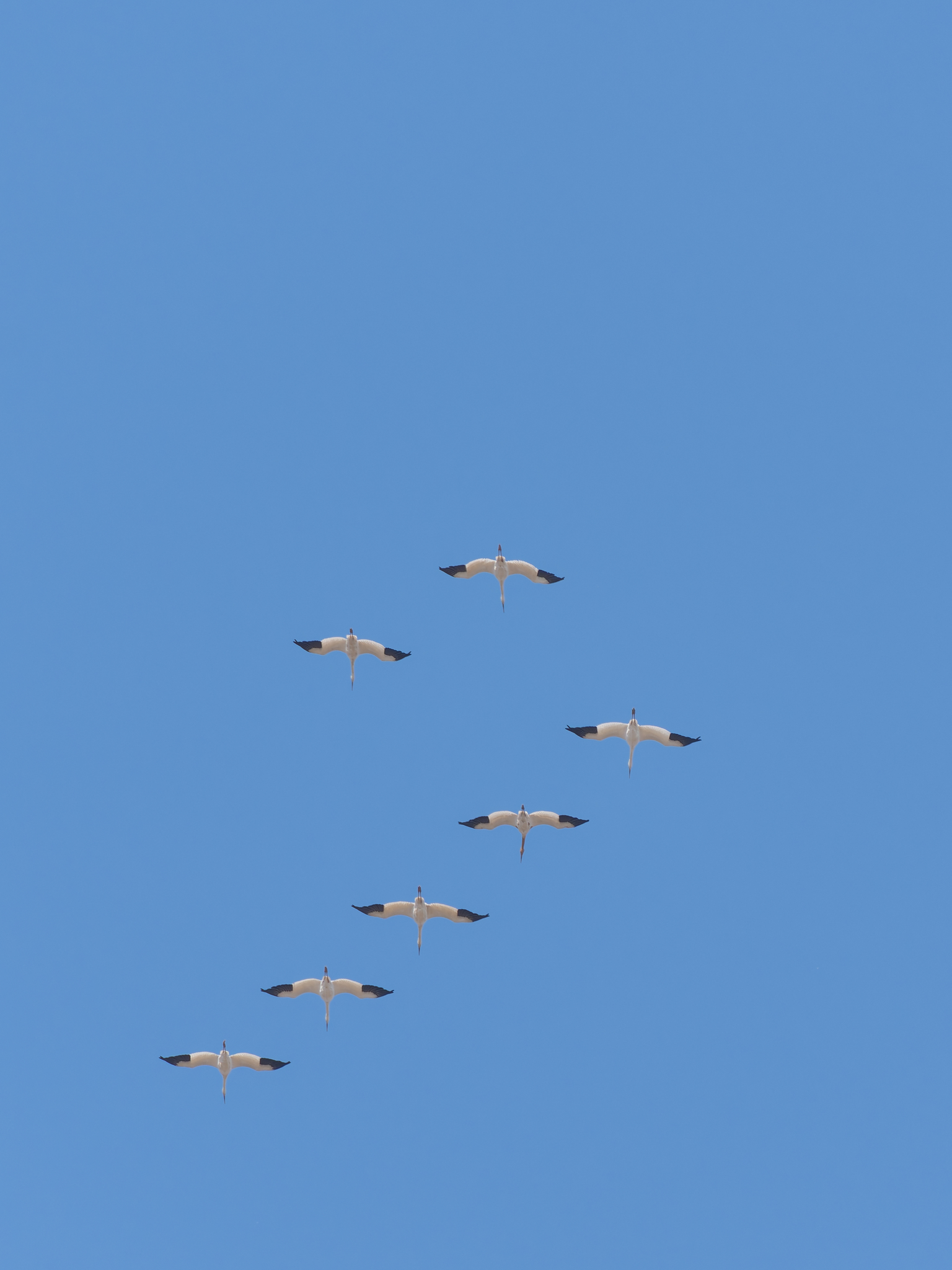
Siberian Crane
Leucogeranus leucogeranus
白鹤
Introduction
A member of the crane family Gruidae. Two disjunct breeding populations exist on the Arctic tundra of Russia: a western population in the Ob, Konda and Sossva river basins, and a much larger eastern population in Yakutia between the Yana and Alazeya rivers. Eastern populations migrate to winter in China, primarily at Poyang Lake basin, while the western population winters in Iran (formerly also in India). Makes the longest distance migrations among cranes. World population was estimated at about 3,200 birds in 2010, with approximately 93% belonging to the eastern population wintering at Poyang Lake. The species is critically endangered due to hunting along migration routes and habitat degradation from agricultural expansion and wetland drainage.
Description
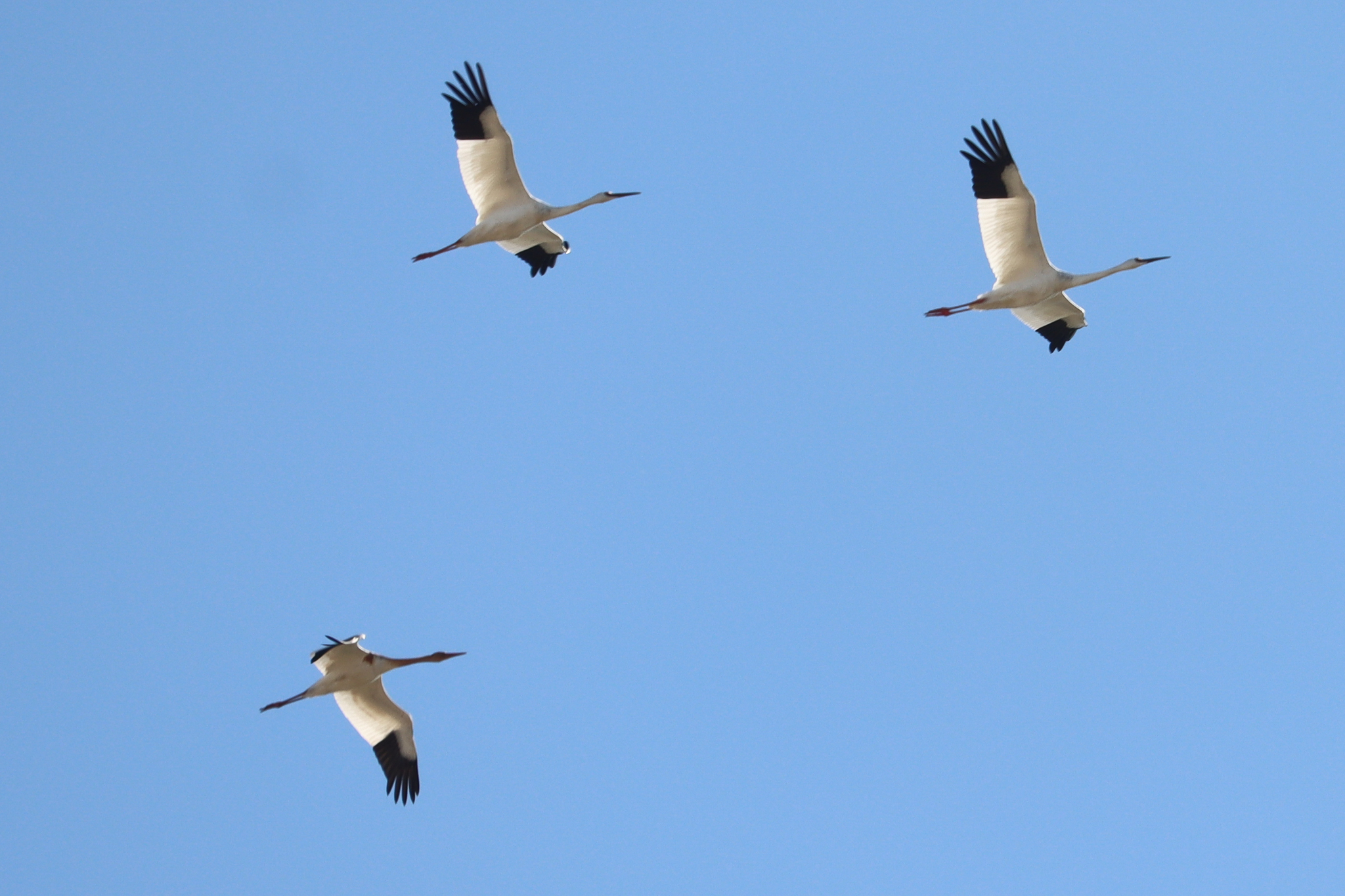
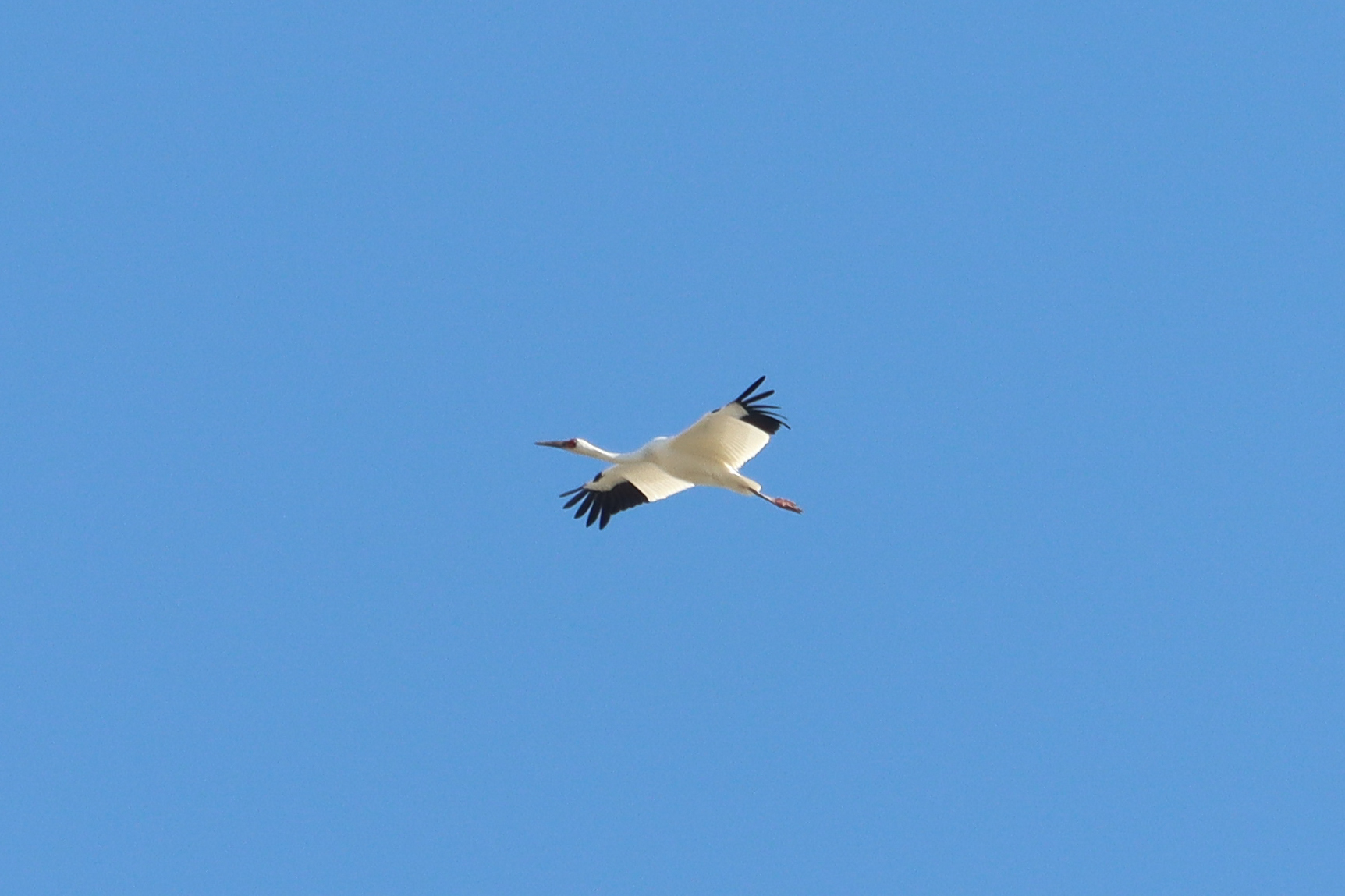
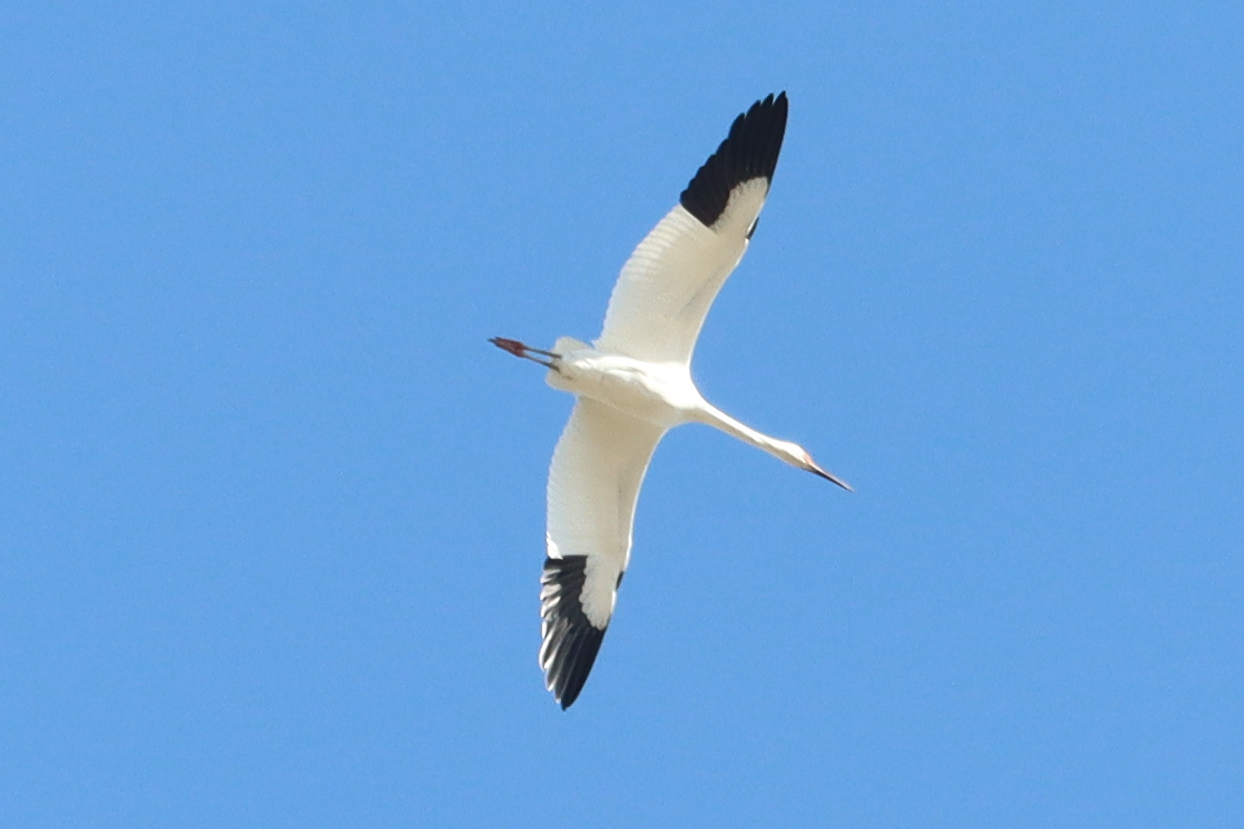
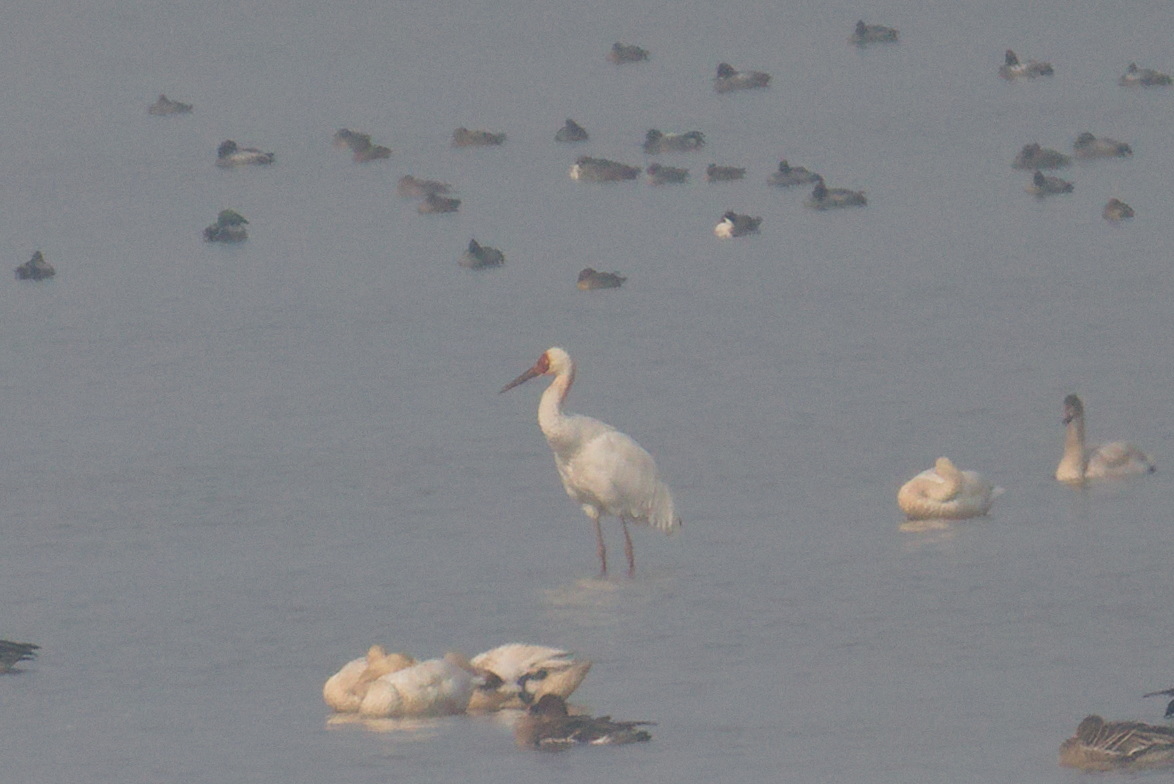
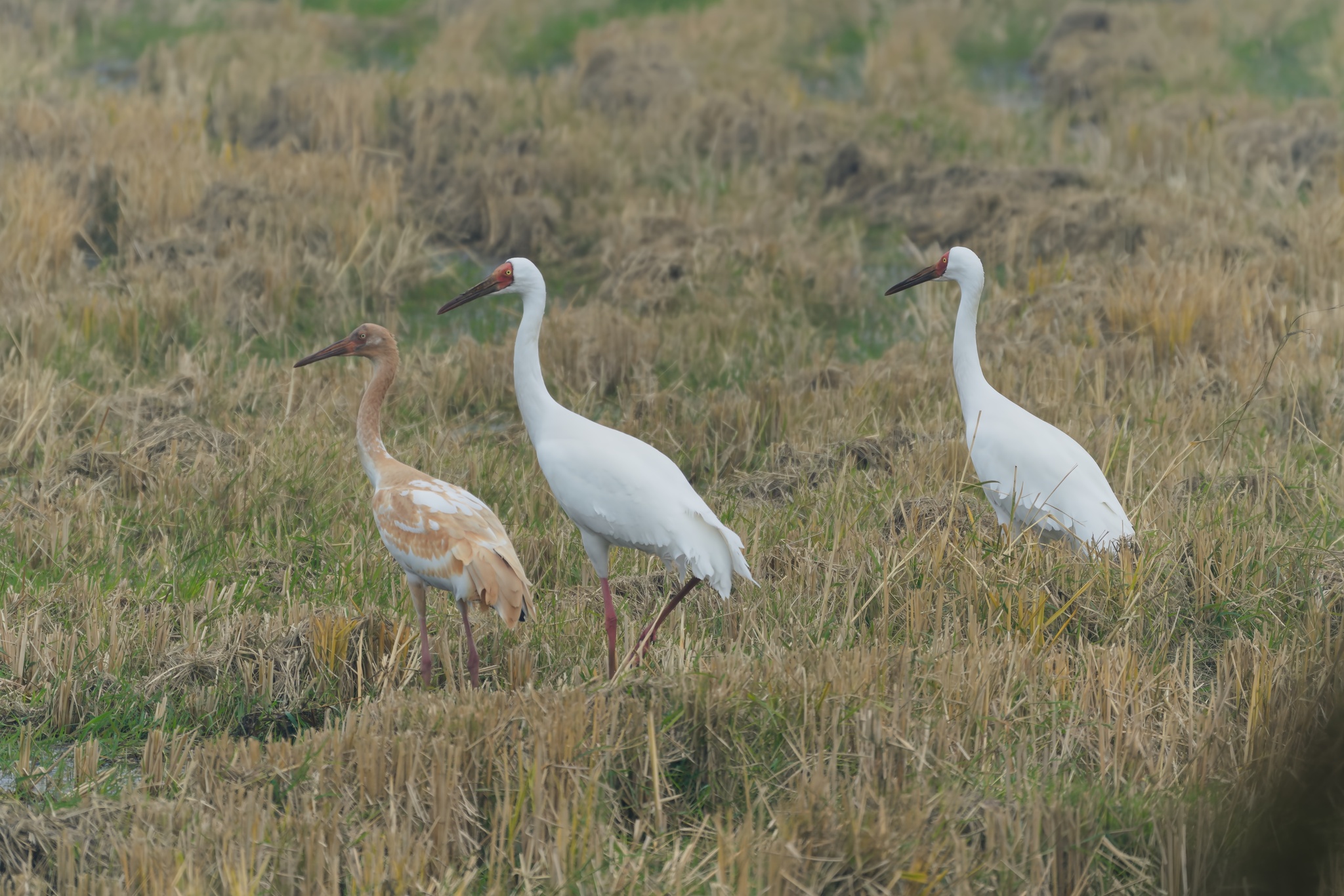
A large crane species. Adults have pure white plumage except for black primaries, alula, and primary coverts visible in flight. The fore-crown, face, and sides of head are bare and brick red. The bill is dark, legs are pinkish, and iris is yellowish. Juveniles have feathered faces and dingy brown plumage. Lacks the elongated tertial feathers found in some other crane species. Males are larger on average. Weight ranges from 4.9 to 8.6 kg, standing approximately 140 cm tall. Wingspan measures 210 to 260 cm, with body length of 115 to 127 cm.
Identification
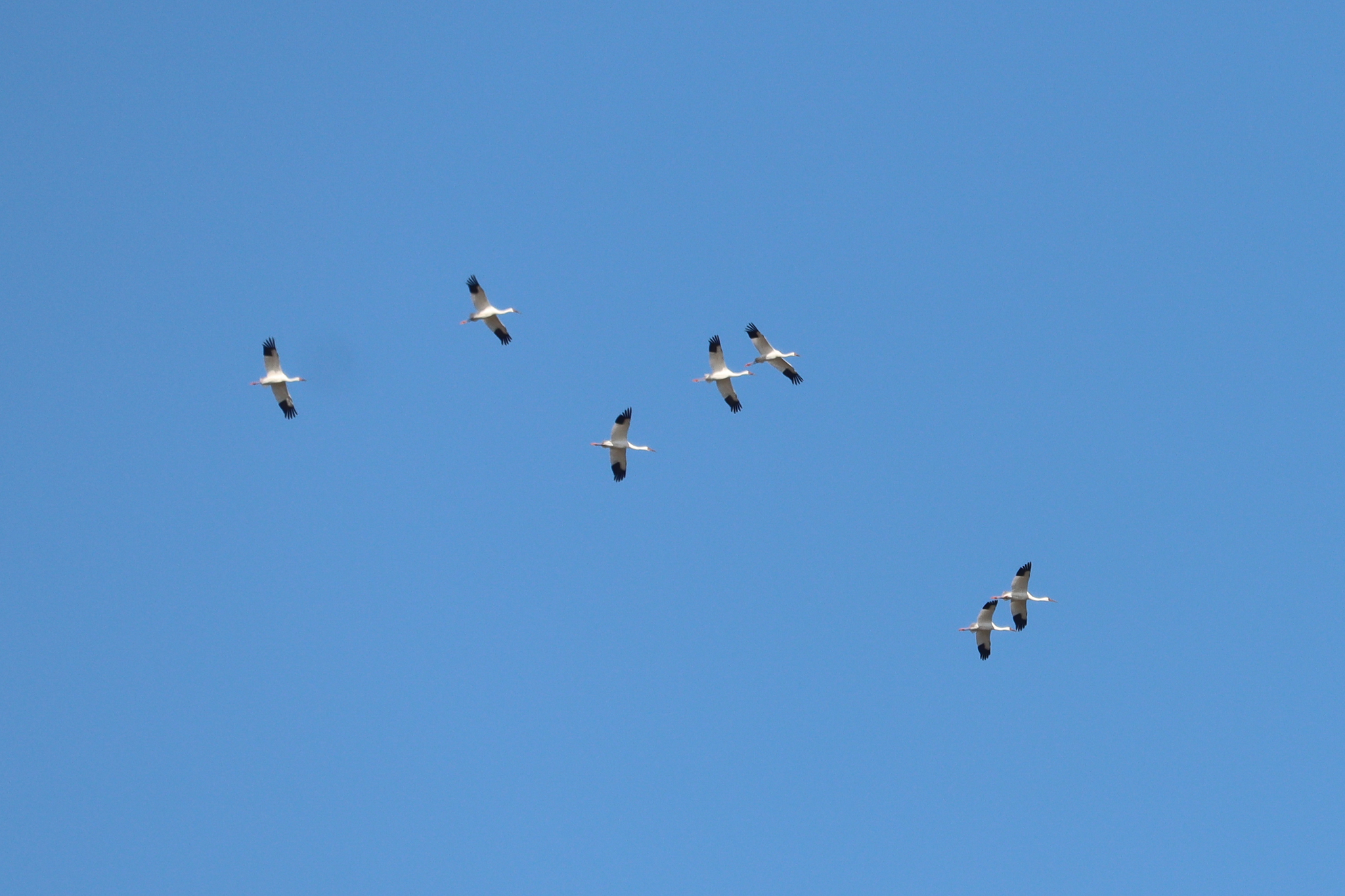
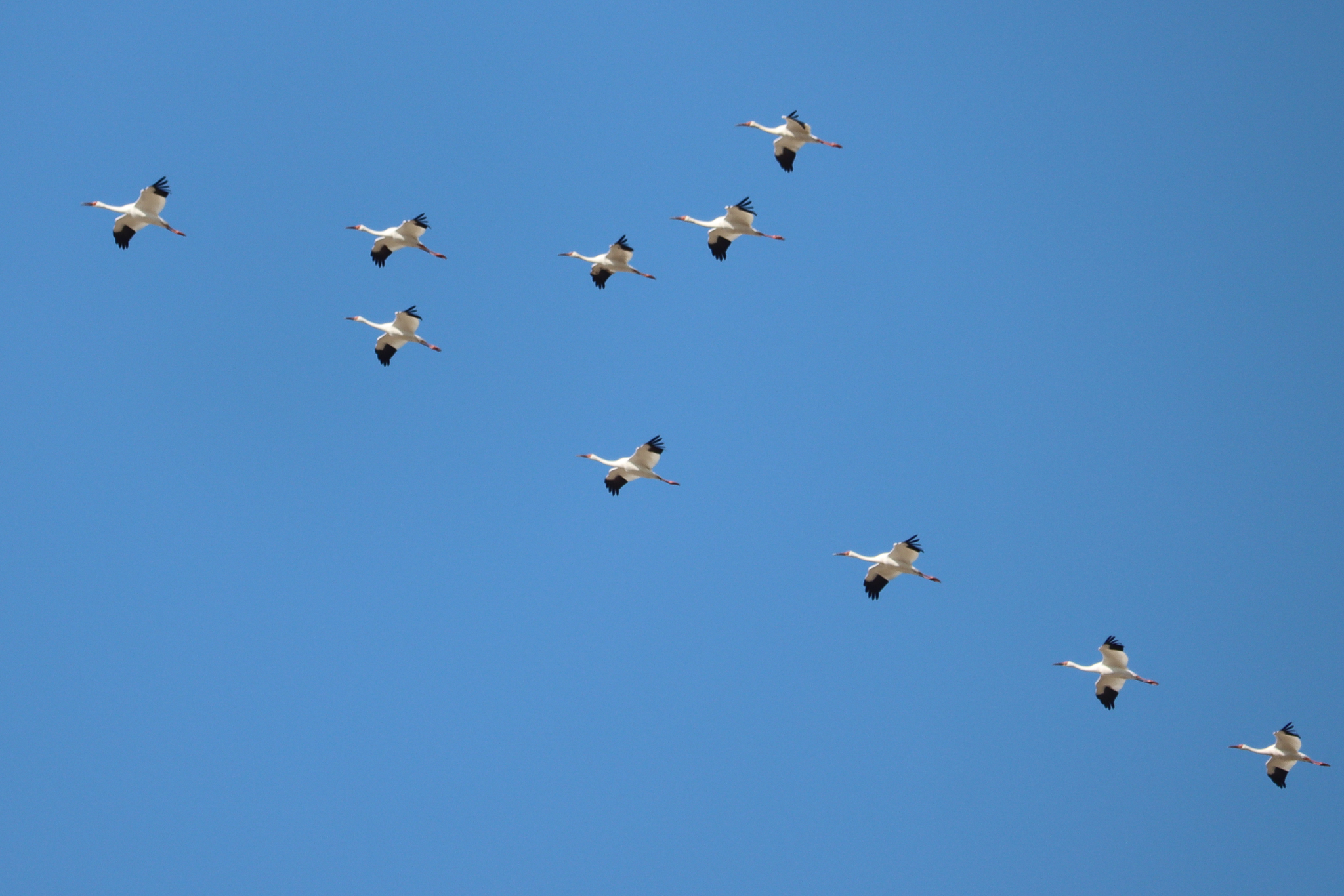
Nearly all-white plumage with black wingtips visible in flight distinguishes this species from other cranes. The bare brick-red face and head are distinctive field marks. It is slightly smaller and lighter than the sarus crane, wattled crane, and red-crowned crane. Juveniles can be identified by their dingy brown plumage and fully feathered faces, lacking the red facial skin of adults.
Distribution & Habitat
Breeds on Arctic tundra in two disjunct regions of Russia: western Siberia (Ob, Konda, and Sossva river basins) and eastern Siberia (Yakutia, between the Yana and Alazeya rivers). Inhabits shallow marshlands and wetlands, often foraging in deeper water than other crane species. Shows very high site fidelity to both breeding and wintering areas. Eastern populations winter mainly at Poyang Lake in China. Western population winters in Iran. Formerly wintered as far south as India (Bharatpur, Nagpur, Bihar), but this population is now extinct.
Behavior & Ecology
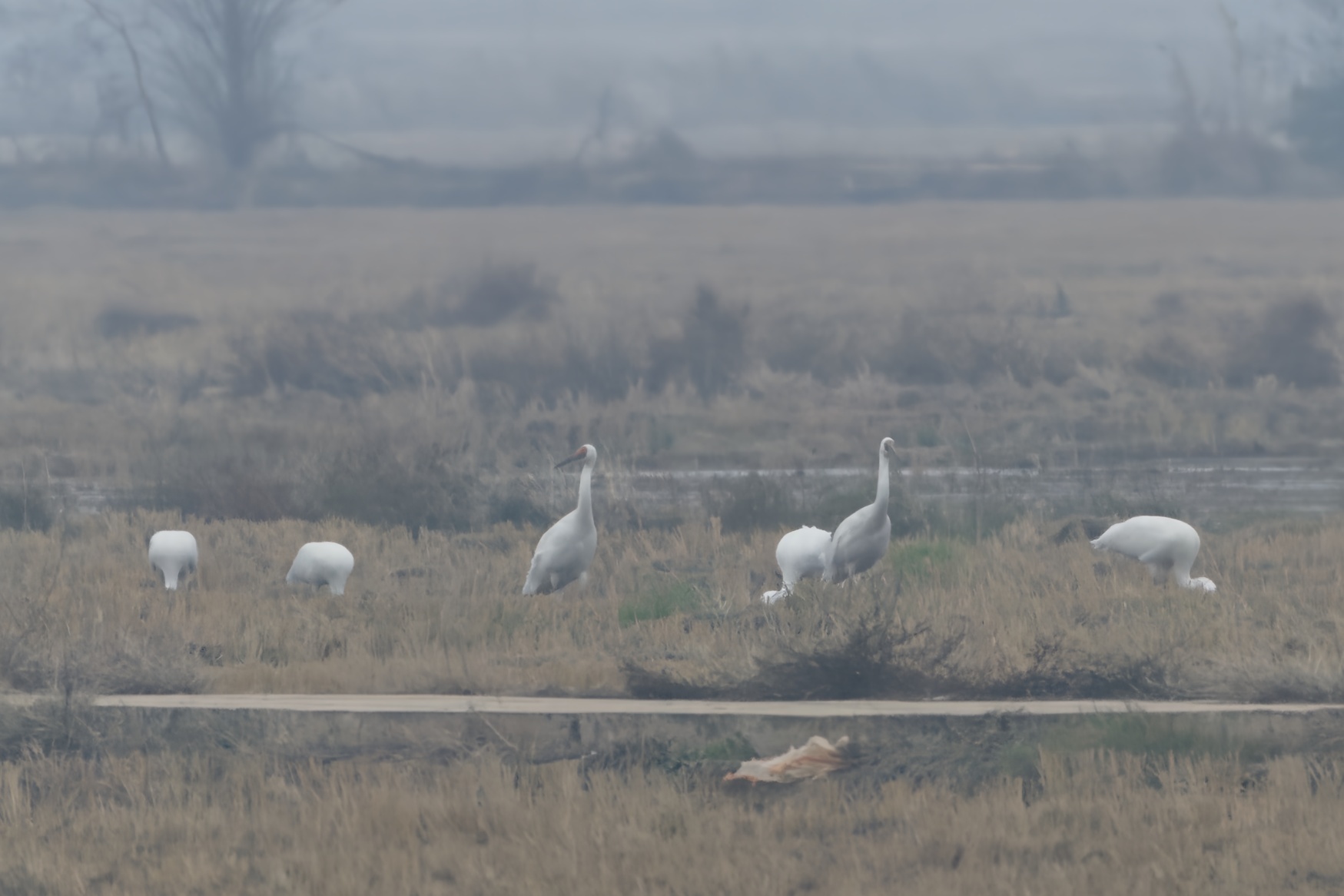
Highly territorial during breeding season. Maintains feeding territories in winter but may form small, loose flocks, gathering more closely at roosts. Very diurnal, feeding throughout the day. Feeds on submerged vegetation by immersing the head entirely underwater. Vocalizations include a goose-like high-pitched whistling 'toyoya' call; the unison duetted call is 'doodle-loo' with the female producing a higher pitched 'loo' component. Diet is omnivorous with preference for plant matter: roots, seeds, small rodents, earthworms, fish, and aquatic plants. Returns to breeding grounds late April to early May. Nests on lake edges in boggy ground; clutch size is two eggs, incubated by the female for 27-29 days. Young fledge in about 80 days; usually only one chick survives due to aggression between siblings. Lifespan in captivity can reach 62-83 years.
Conservation
Critically endangered, the only crane species in this highest threat category. World population estimated at 3,500-4,000 individuals in 2008. The western population declined to just four birds in 2002 and was thought extirpated; a single male named 'Omid' has wintered in Iran since 2006-2007. A reintroduction attempt using a captive-bred female named Roya in 2022 was unsuccessful. Approximately 98% of the population winters at Poyang Lake in China, where habitat is threatened by hydrological changes from the Three Gorges Dam and other water development projects. Major threats include hunting along migration routes, agricultural expansion, wetland drainage, and disturbance from reindeer herders. Protected under AEWA and the Bonn Convention's Siberian Crane Memorandum of Understanding.
Culture
Considered sacred by the Yakuts and Yukaghir peoples of Siberia. Associated with the sun, spring, and benevolent celestial spirits called ajyy. In Yakut epic poetry (Olonkho), shamans and shamanesses are described as transforming into white cranes.
Source: Wikipedia · CC BY-SA 3.0
Taxonomy
- Order
- Gruiformes
- Family
- Gruidae
- Genus
- Leucogeranus
- eBird Code
- sibcra1
Distribution
breeds Arctic Siberia; winters to northern India and China
Data Sources
Species description from Wikipedia, licensed under CC BY-SA 3.0.
Bird images and sounds sourced from GBIF, contributed by citizen scientists worldwide under Creative Commons licenses.
Taxonomy data from AviList 2025.