

Galliformes / Phasianidae / Lerwa
Snow Partridge
Lerwa lerwa · 雪鹑
Introduction
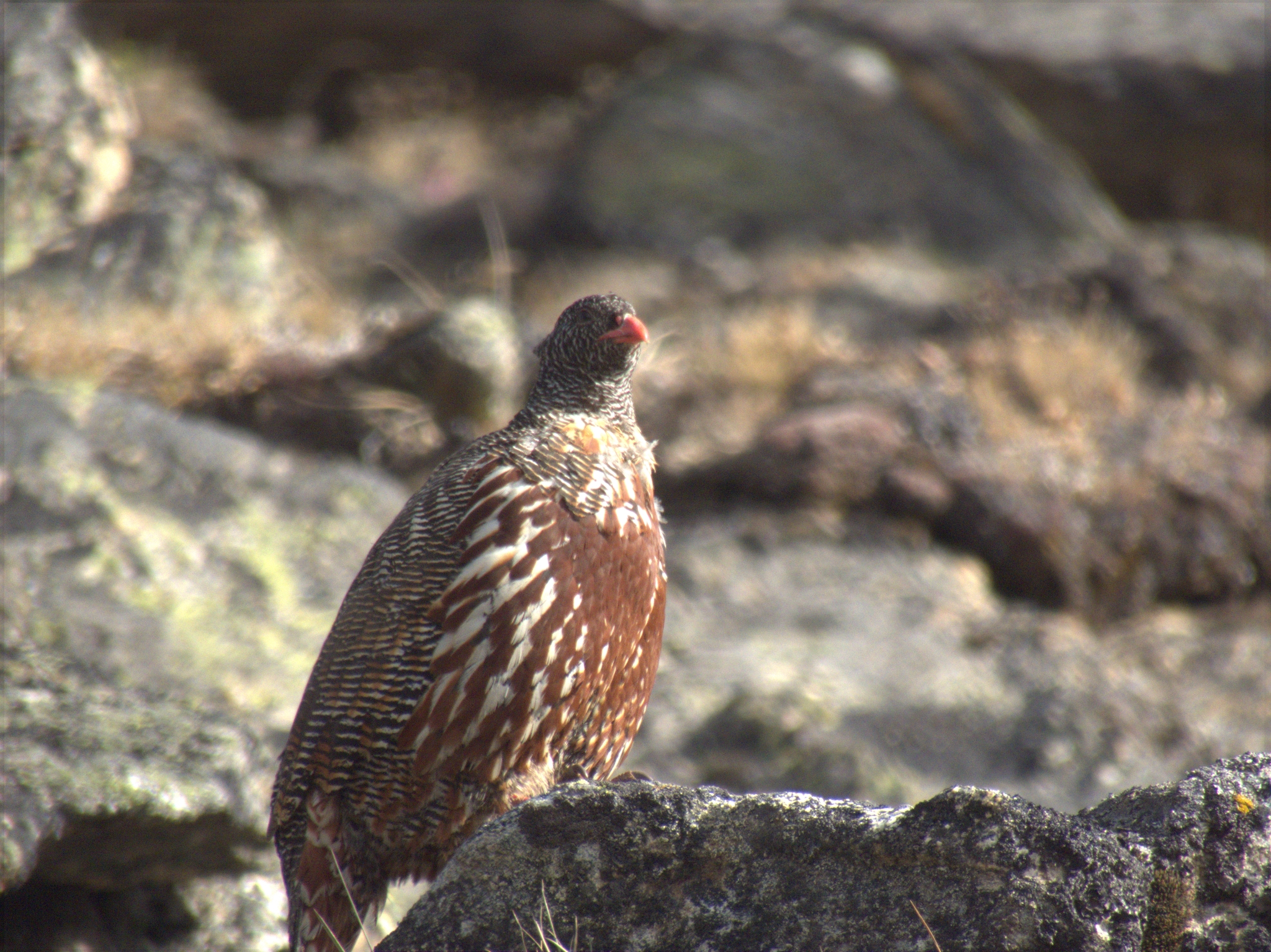
A gamebird in the pheasant family Phasianidae, it is the only species within its genus and considered the most basal member of the 'erectile clade' of the subfamily Phasianinae. It inhabits alpine pastures and open hillsides above the treeline in high-altitude Himalayan regions. Distinctive traits include feathered tarsi, lack of clear sexual dimorphism in plumage, and a habit of being less wary than similar snowcocks.
Description
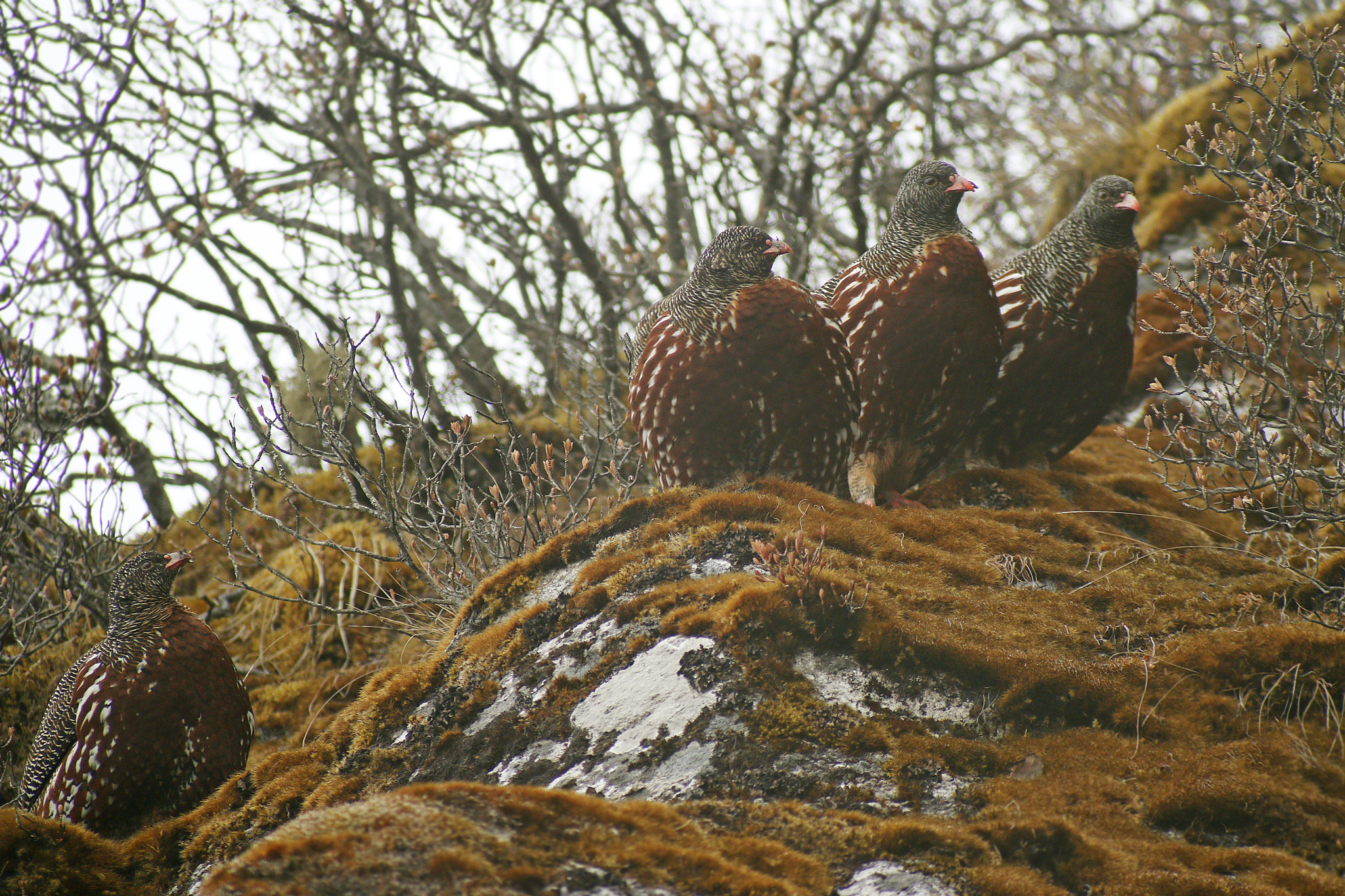
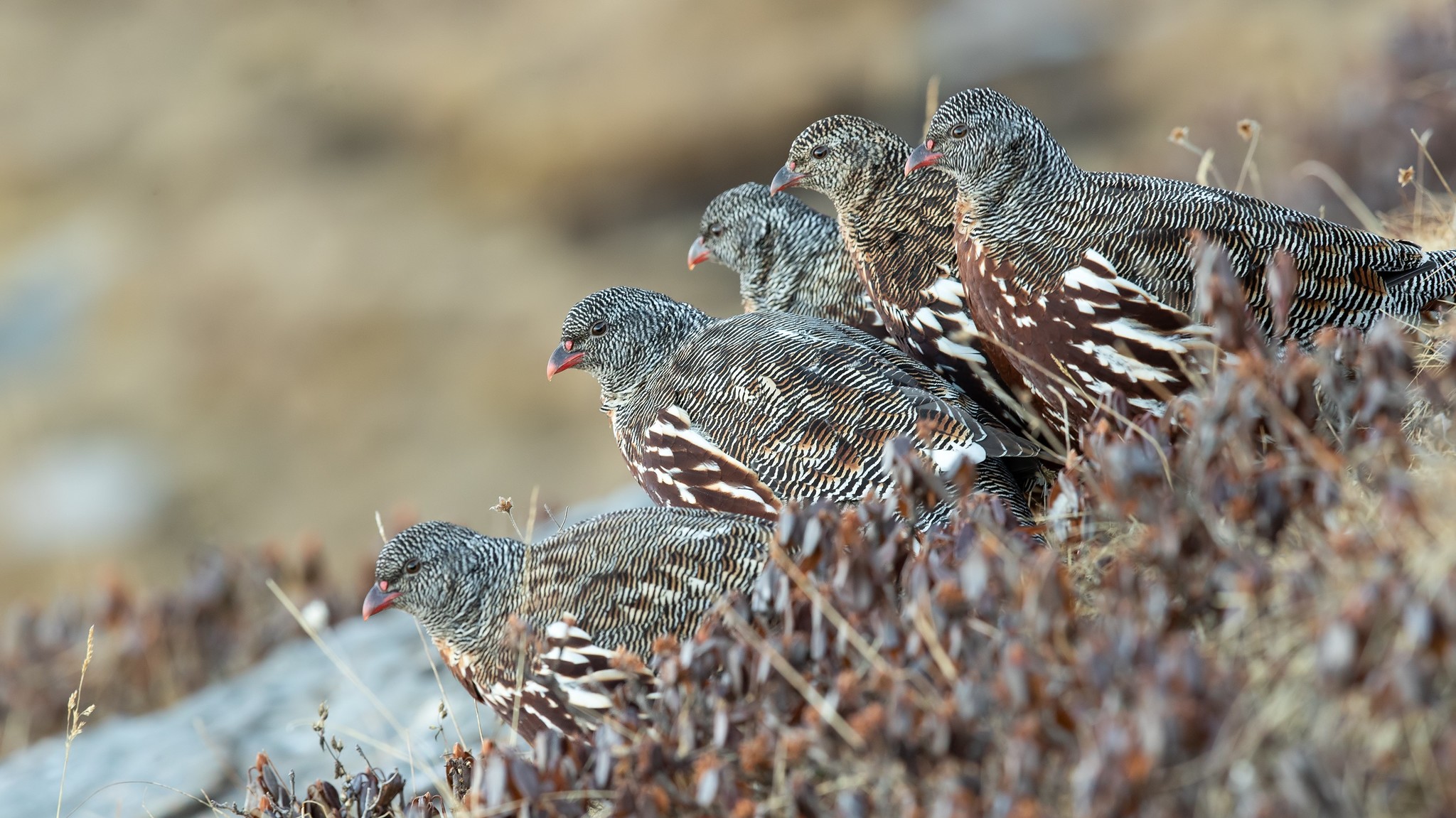
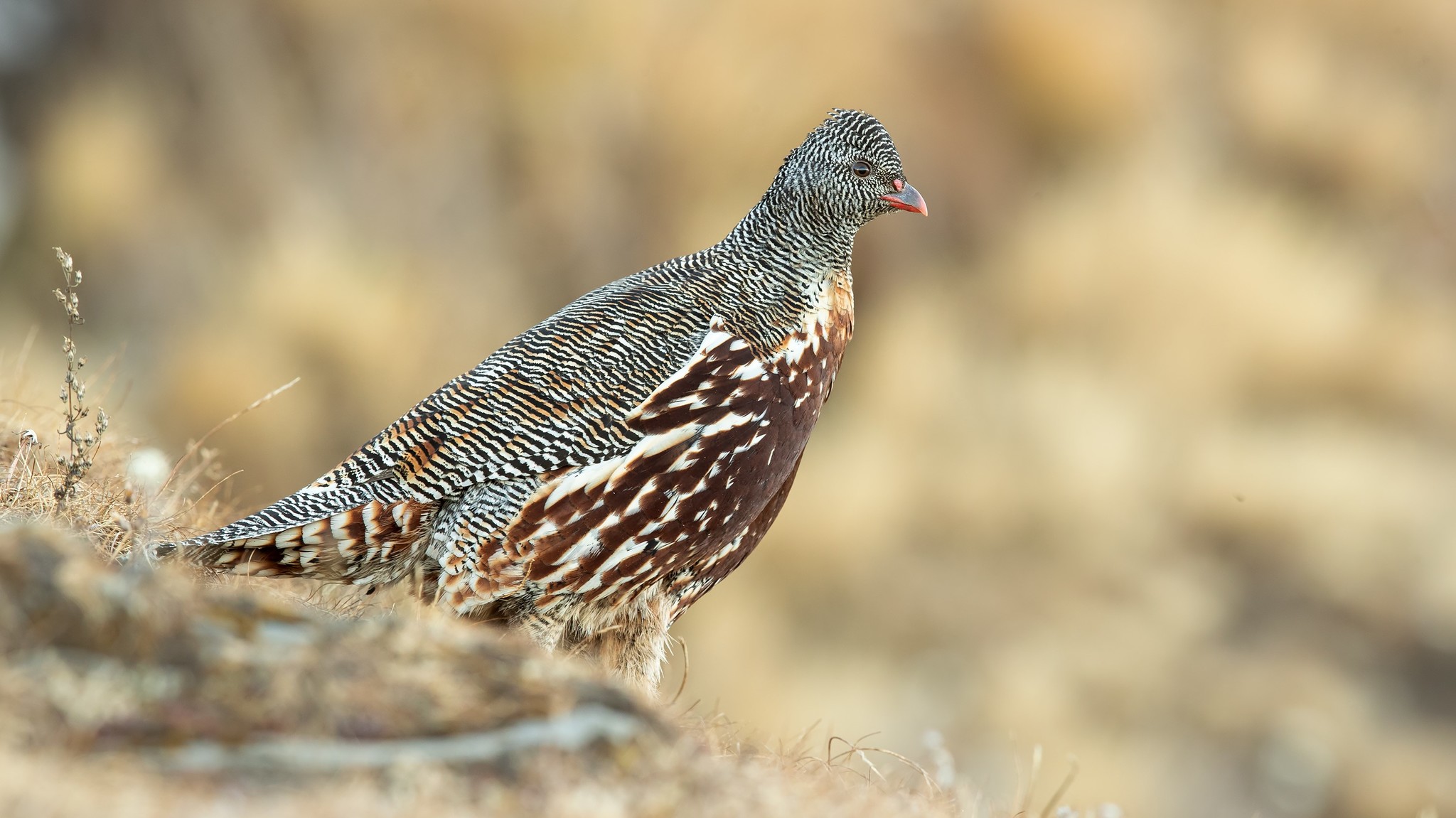
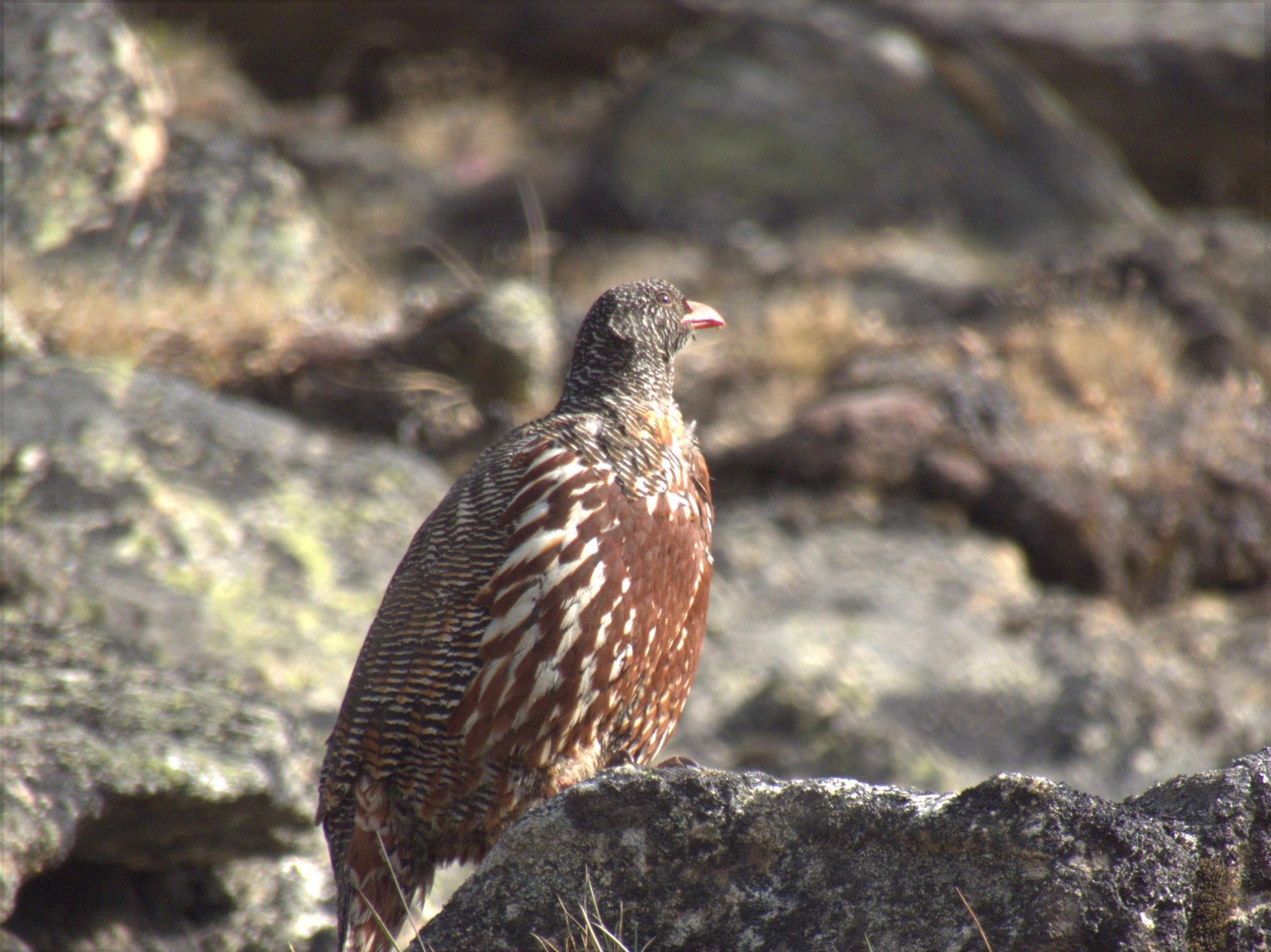
Measures 38–40 cm in length. Females weigh 450–580 g; males weigh 550–700 g. Plumage is grey above, finely barred in black and white, and chestnut below. The bill and legs are bright red. Primaries and secondaries are dark brown with a narrow trailing white margin. The 14-feathered tail is dark and barred in white. The abdomen has more white, while lower flanks and vent feathers are barred brown and white. Under-tail coverts are chestnut with black shaft streaks and white tips. Some individuals have a nearly black crown. Males possess a blunt spur on the tarsus, sometimes with a second incipient spur, while females lack spurs. The tarsus is feathered on the front halfway to the toes. Young birds have mottled lower parts with less distinct barring.
Identification
Key marks include bright red bill and legs, grey upperparts with fine black-and-white barring, and chestnut underparts. In flight, dark brown wings with a narrow trailing white margin distinguish it, though resembling the larger Tibetan snowcock. Males have tarsal spurs; females do not. Less wary and found in less bare, rocky terrain than the Himalayan snowcock.
Distribution & Habitat
Found in the Himalayas from Pakistan to Arunachal Pradesh, including China, India, and Nepal. Mainly occurs at 3000 to 5000 m altitude, rarely below 2000 m. Habitat includes alpine pastures, open grassy hillsides with grass, lichens, moss, ferns, and rhododendrons, often among small snow-patches. Distribution is local. Claims of presence in Afghanistan lack evidence.
Behavior & Ecology
Forms small groups of 6–8 individuals, up to 30 in the non-breeding season. Flies rapidly with noisy wing beats when flushed. Sunning on rocks during midday is common. Diet consists of mosses, lichens, berries, plant shoots, and grit for digestion. Breeding season is May to July. Nests are scrapes on hillsides under sheltering rocks, sometimes lined with moss. Clutch size is 3–5 pale yellow eggs with reddish-brown markings. Female incubates while male stands sentinel. Parents use distraction displays against predators. Chicks respond with chicken-like cheep calls.
Conservation
Generally considered of low conservation concern due to large range, though hunted to some extent because it is approachable. Popations have declined in some areas.
Source: Wikipedia · CC BY-SA 3.0
Taxonomy
- Order
- Galliformes
- Family
- Phasianidae
- Genus
- Lerwa
Distribution
Himalayas from eastern Afghanistan to southern Tibet and southwestern China
Data Sources
Species description from Wikipedia, licensed under CC BY-SA 3.0.
Bird images and sounds sourced from GBIF, contributed by citizen scientists worldwide under Creative Commons licenses.
Taxonomy data from AviList 2025.