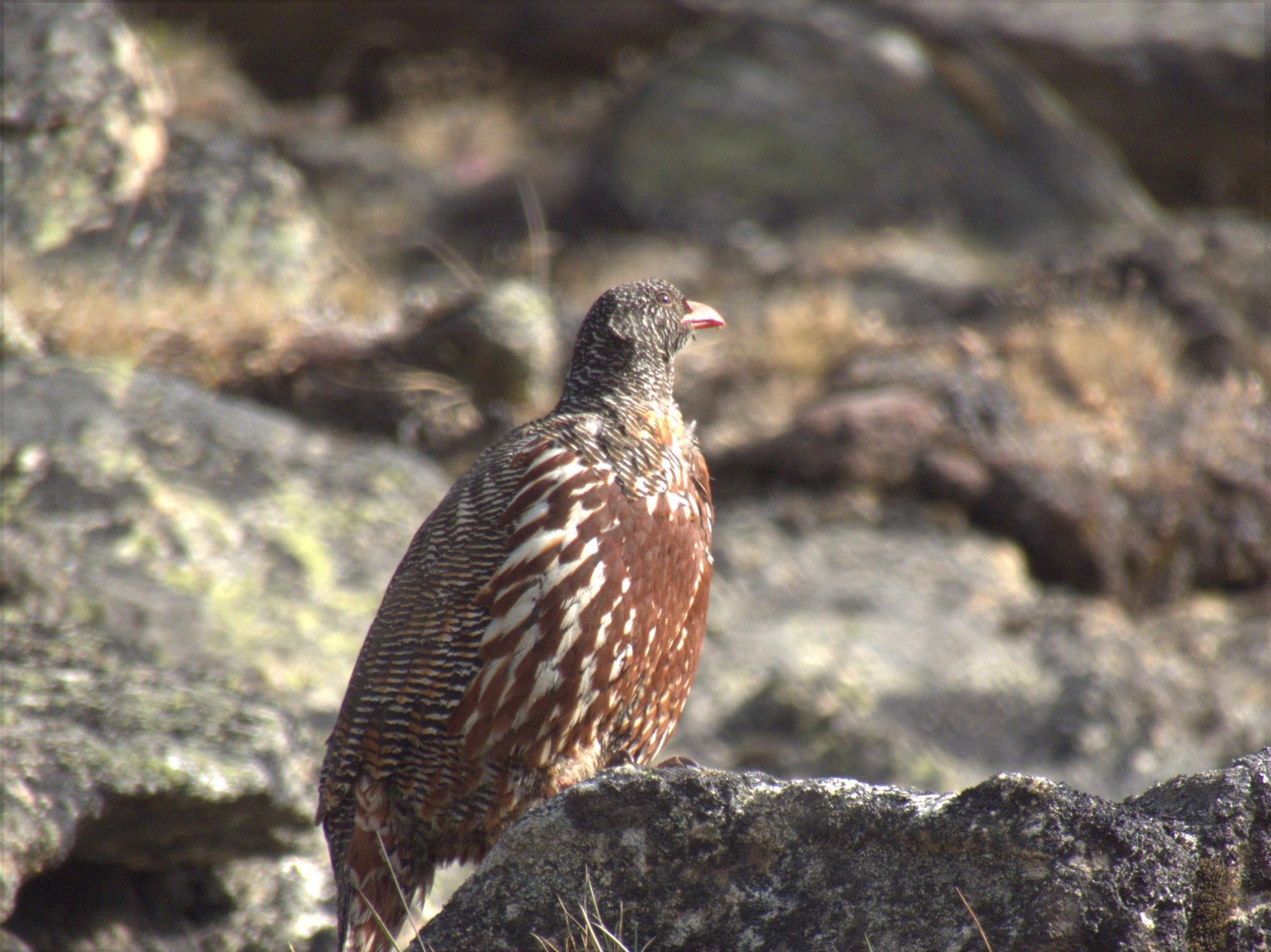
Snow Partridge
Lerwa lerwa
雪鹑
Introduction
Gamebird in the pheasant family Phasianidae, monotypic genus Lerwa, considered the most basal member of the 'erectile clade' of subfamily Phasianinae. Inhabits high-altitude Himalayan regions of Pakistan, China, India, and Nepal. Found in alpine pastures and open hillsides above the treeline, typically at 3000-5000 meters altitude, though rarely below 2000 meters. Prefers terrain with grass, lichens, moss, ferns, and rhododendrons among small snow-patches, but avoids the bare, stony terrain favored by Himalayan snowcock. Two notable traits: lacks strong sexual plumage dimorphism compared to related species, and is notably less wary than Himalayan snowcock, making it more approachable. Population generally stable across large range, though hunted locally and declined in some areas.
Description
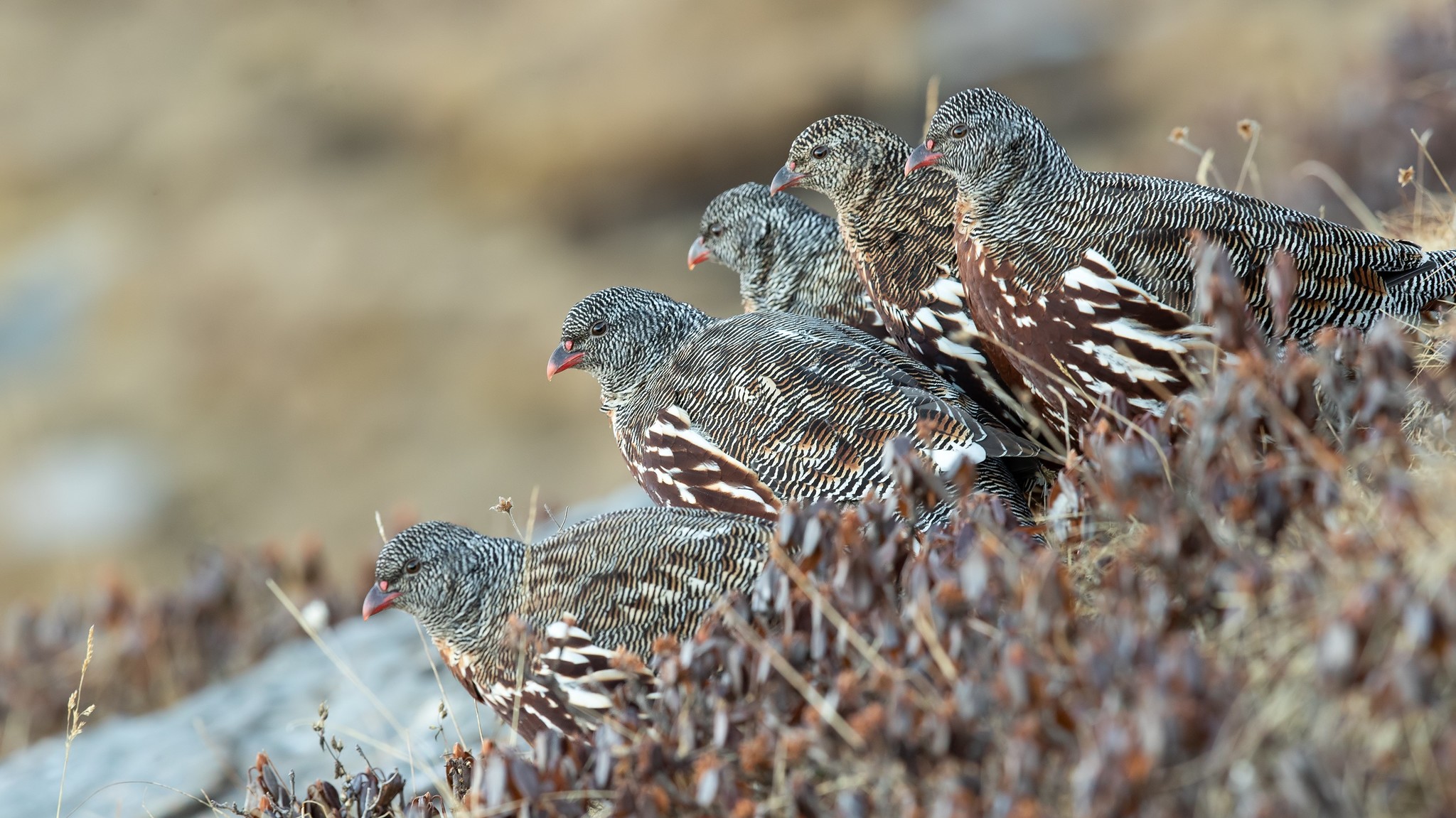
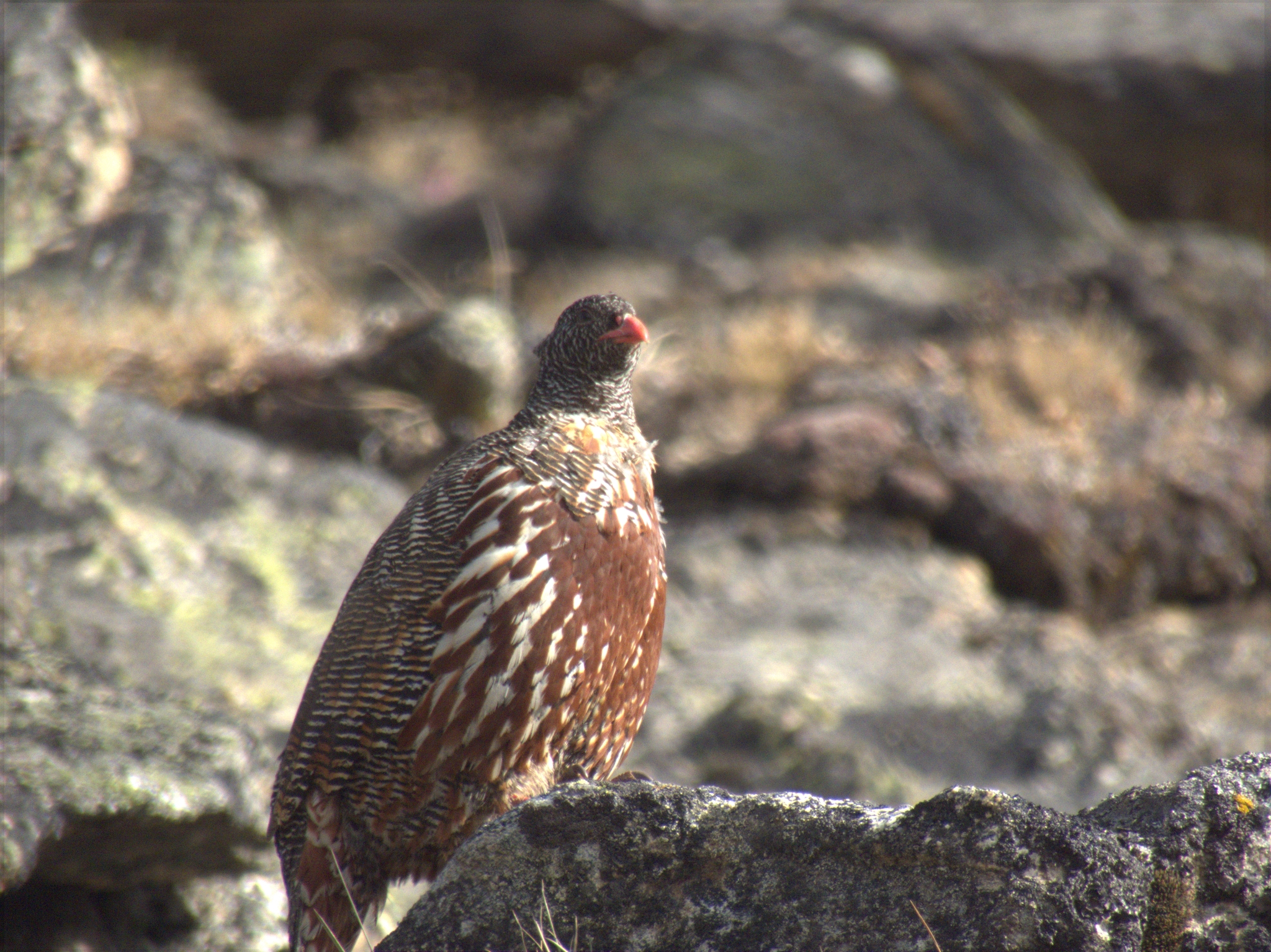
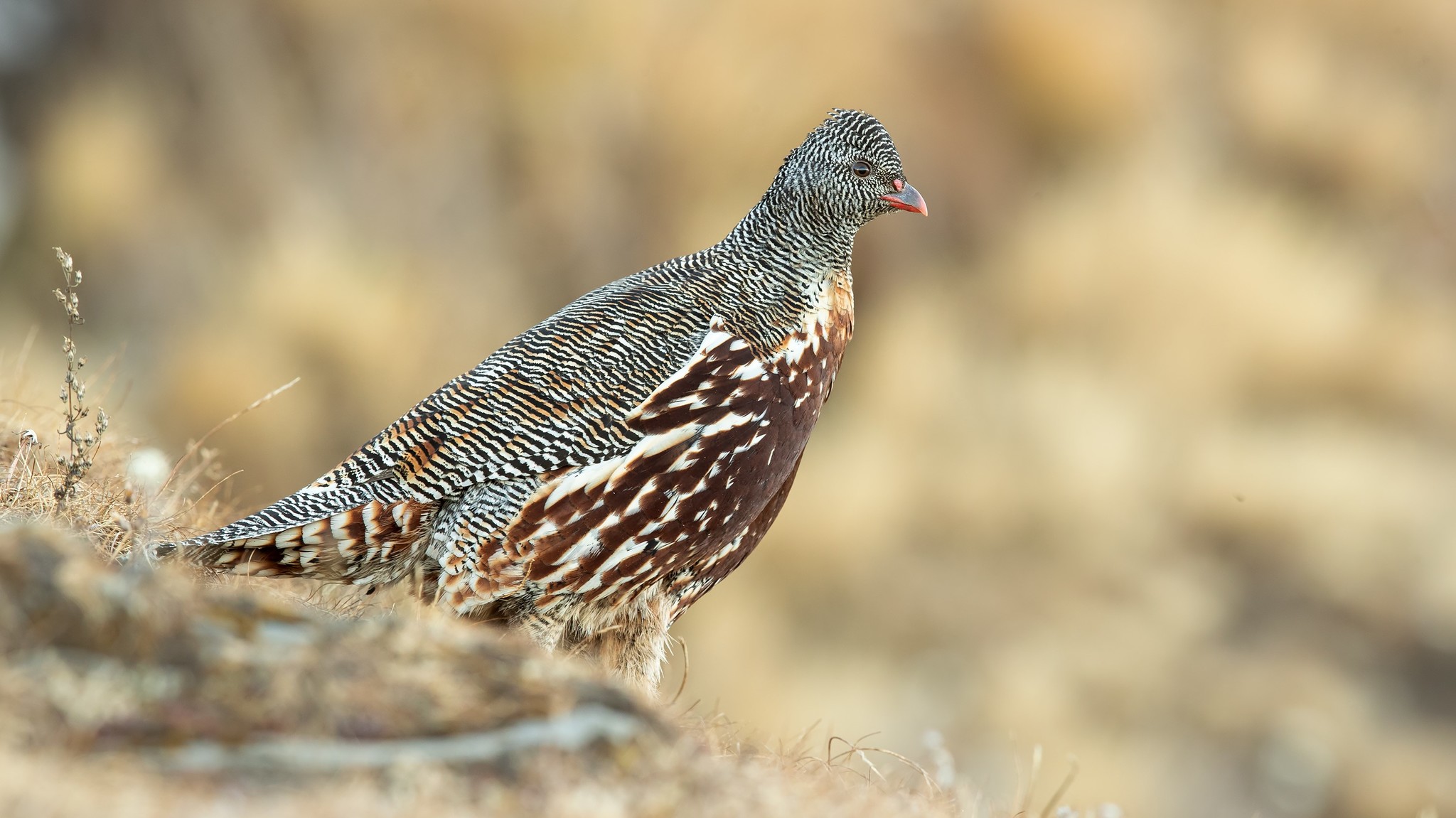
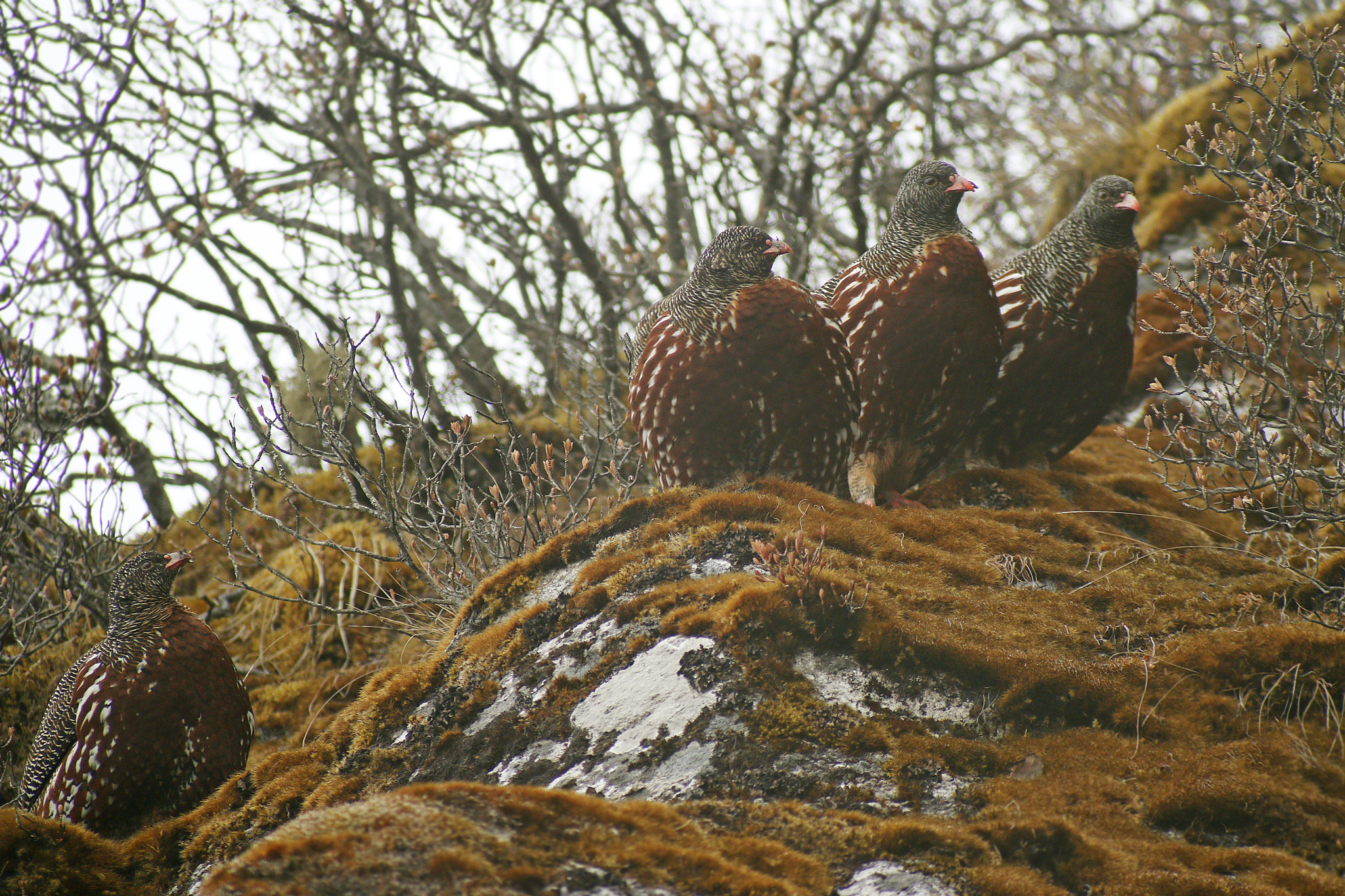
Medium-sized partridge measuring 38-40 cm in length. Females weigh 450-580 g, males 550-700 g. Plumage appears grey above and chestnut below. Upperparts finely barred in black and white. Bright red bill and legs are distinctive. In flight shows dark brown primaries and secondaries with narrow trailing white margin. The 14-feathered tail is dark and barred in white. Breast is deep chestnut, while abdomen has more white; lower flanks and vent feathers barred brown and white. Under-tail coverts chestnut with black shaft streaks and white tips. Some individuals have nearly black crown. Tarsus feathered on front half-way to toes. Sexes similar in plumage; males distinguished by blunt tarsal spur (sometimes second incipient spur), which females lack. Young birds show mottled lower parts with less distinct barring.
Identification
Field identification centered on combination of grey-and-chestnut plumage with bright red bill and legs. The finely barred black-and-white upperparts and red legs are distinctive in Himalayan high-altitude habitats. In flight, the dark brown wing feathers with narrow white trailing edge create an impression similar to much larger Tibetan snowcock, though smaller size is apparent. The feathered tarsus (halfway to toes) is a useful identification mark. Males can be separated by presence of tarsal spurs. Differs from Himalayan snowcock by occupying less bare, rocky terrain and by being considerably less wary when approached.
Distribution & Habitat
Restricted to Himalayan mountain system from Pakistan through northern India, Nepal, and China to Arunachal Pradesh. Found at high altitudes, typically 3000-5000 meters, though occasionally as low as 2000 meters. Range extends along higher ranges above the treeline but avoids the extremely stony, barren terrain preferred by snowcocks. Presence in Afghanistan reported but not confirmed by specimen records. Distribution is patchy and local throughout range, though the species occurs over a substantial geographic area.
Behavior & Ecology
Occurs in small groups of 6-8 birds, expanding to up to 30 during non-breeding season. When flushed, typically flies up before scattering with noisy wing beats; flight is rapid. Shows habit of sunning on exposed rocks during midday. Breeding season spans May to July; males believed to be monogamous. Nest is a scrape on hillside under sheltering rock, sometimes natural but often scratched by birds, lined with moss and well-concealed. Clutch size 3-5 pale yellow eggs with reddish-brown markings on rounded end; female incubates while male guards. Diet includes mosses, lichens, berries, and plant shoots; birds swallow grit for digestion. Vocalization in breeding season compared to grey francolin; softer notes used to communicate with chicks, which respond with chicken-like cheeps. Parents employ distraction displays against predators.
Conservation
IUCN assessment: Least Concern. Species has a large range and presumed substantial global population. However, hunting pressure exists due to the bird's relative approachability compared to snowcocks, and local population declines reported in some areas. No comprehensive population estimates available; overall trend considered stable to slowly declining. Primary threats are localized hunting pressure and potential habitat modification, though extensive high-altitude range provides substantial refugia.
Culture
No significant cultural, traditional, or folklore associations documented in available sources. Scientific description by Brian Hodgson in 1833 noted the Bhutia name 'Lerwa' as basis for genus name, but no deeper cultural significance reported in ethnological literature.
Source: Wikipedia · CC BY-SA 3.0
Taxonomy
- Order
- Galliformes
- Family
- Phasianidae
- Genus
- Lerwa
- eBird Code
- snopar1
Distribution
Himalayas from eastern Afghanistan to southern Tibet and southwestern China
Data Sources
Species description from Wikipedia, licensed under CC BY-SA 3.0.
Bird images and sounds sourced from GBIF, contributed by citizen scientists worldwide under Creative Commons licenses.
Taxonomy data from AviList 2025.