Passeriformes / Aegithalidae / Leptopoecile
White-browed Tit-warbler
Leptopoecile sophiae · 花彩雀莺
Introduction
A passerine bird in the family Aegithalidae, first described by Nikolai Severtzov in 1873. It inhabits boreal forests and dry mountainous shrublands across the Tian Shan, central China, and the Himalayas. Distinctive traits include early breeding onset relative to other local songbirds and a diet primarily of insects and spiders caught on the ground.
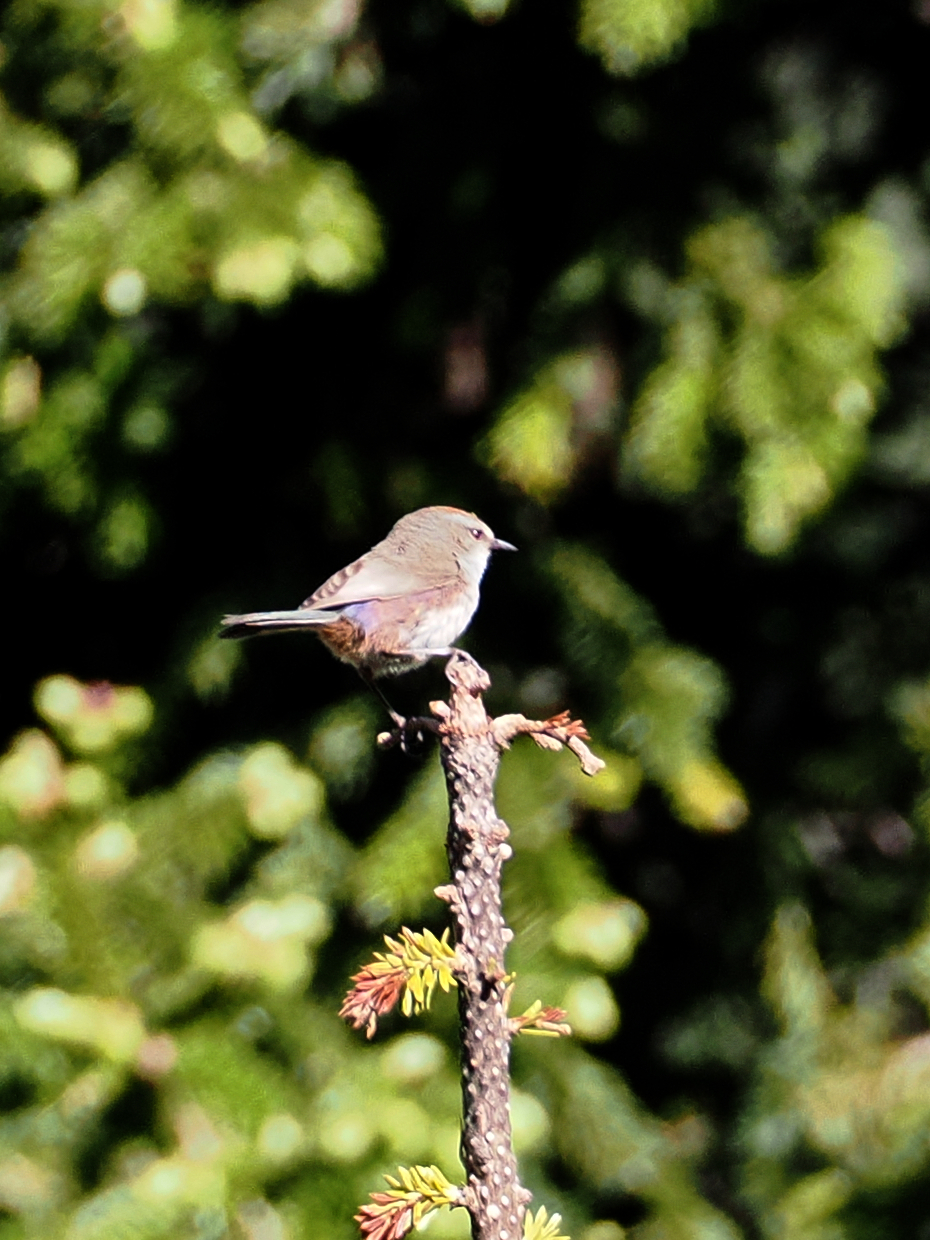
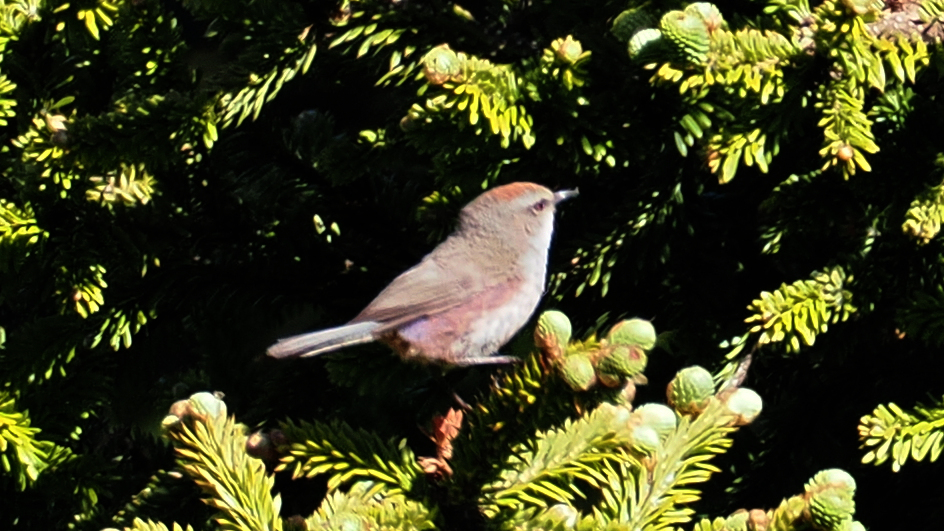
Description
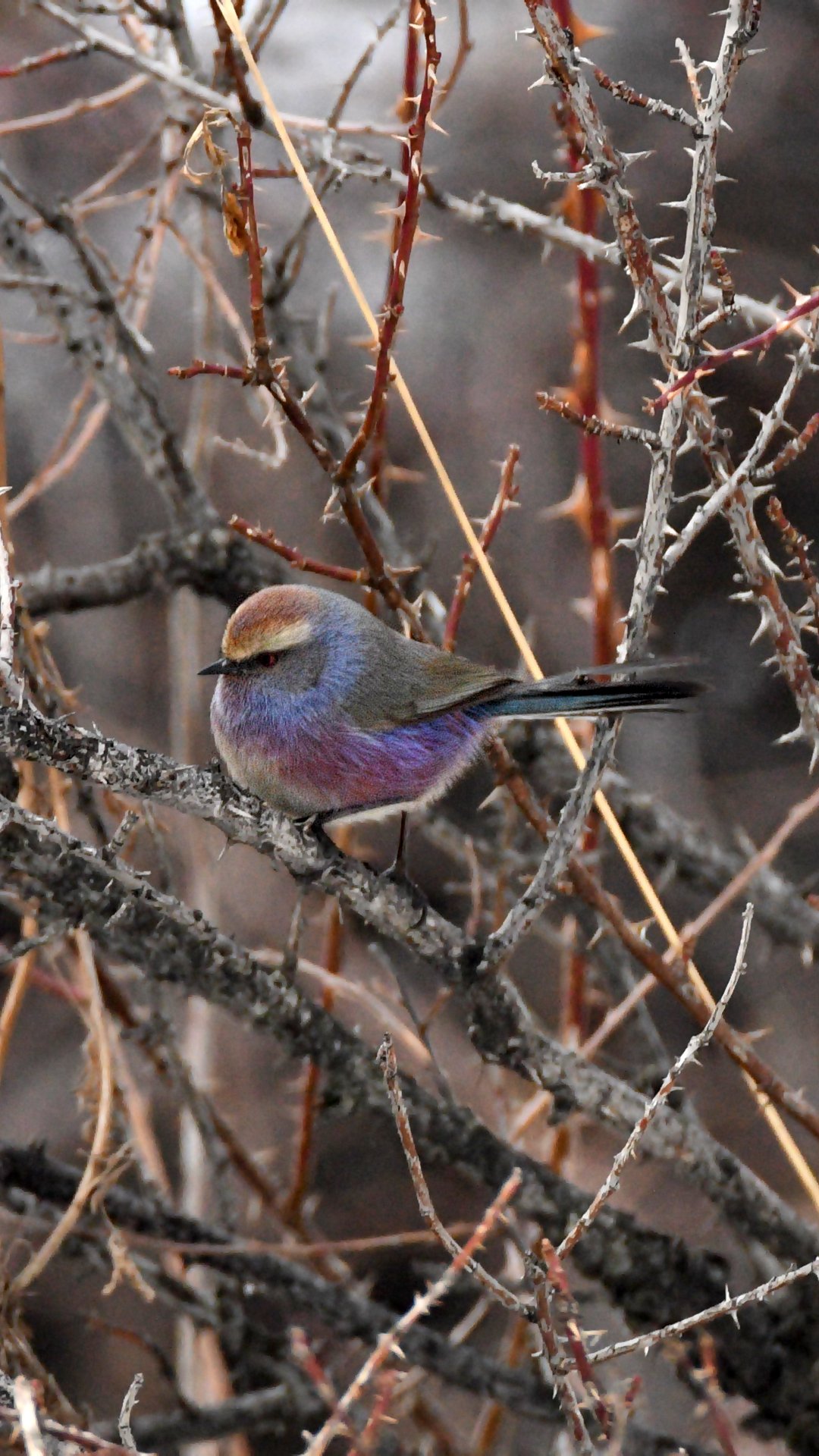
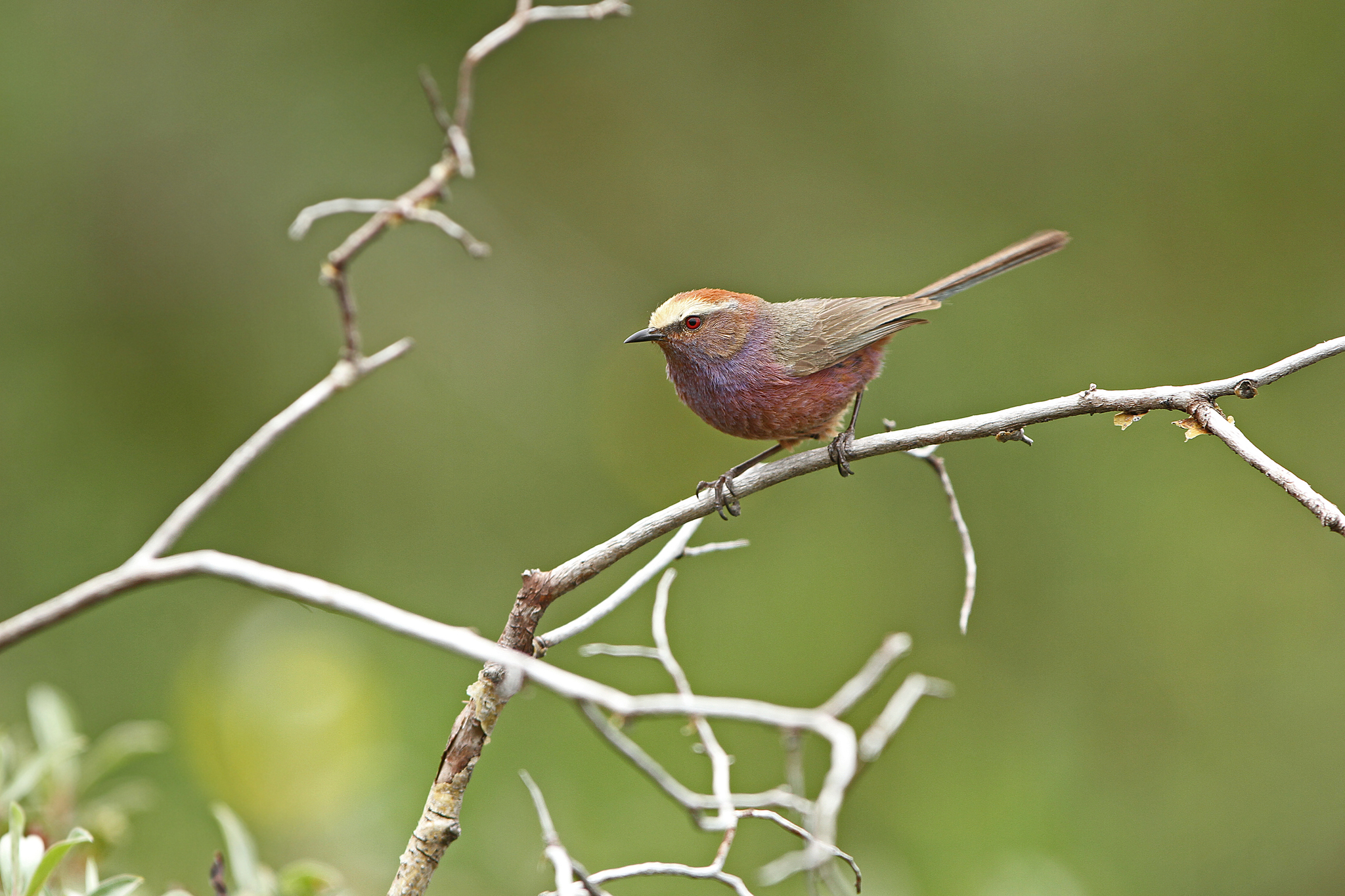
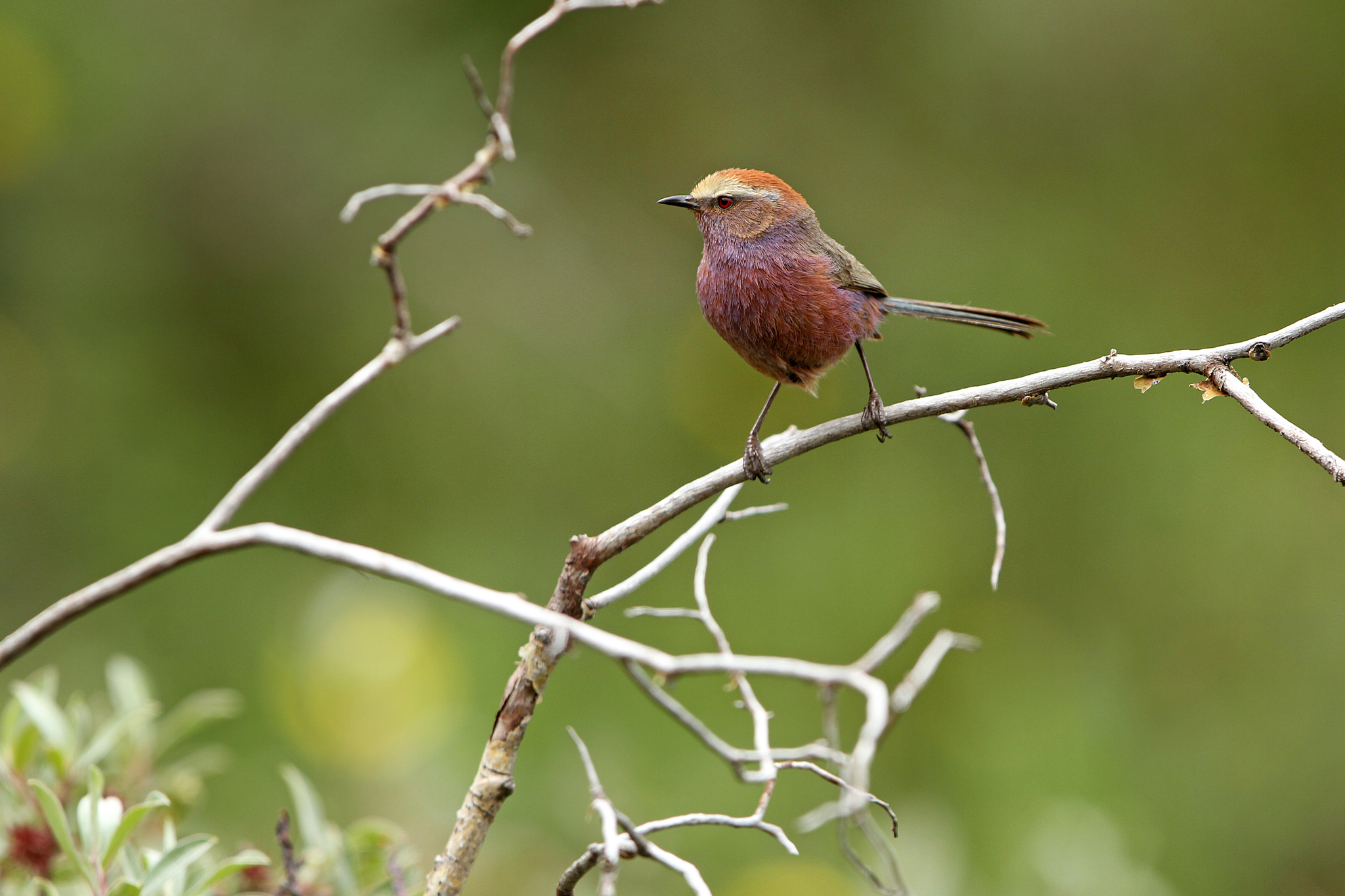
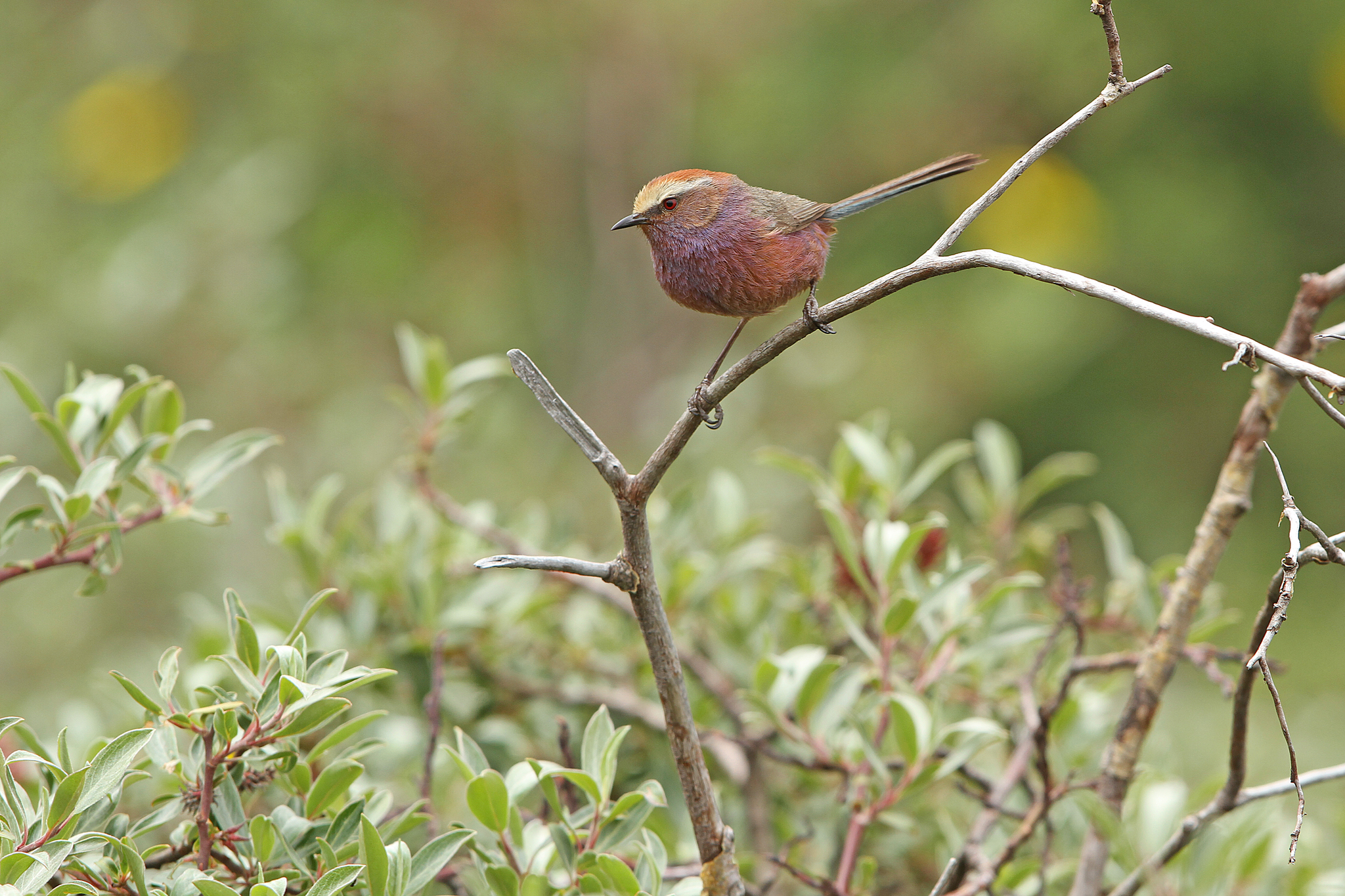
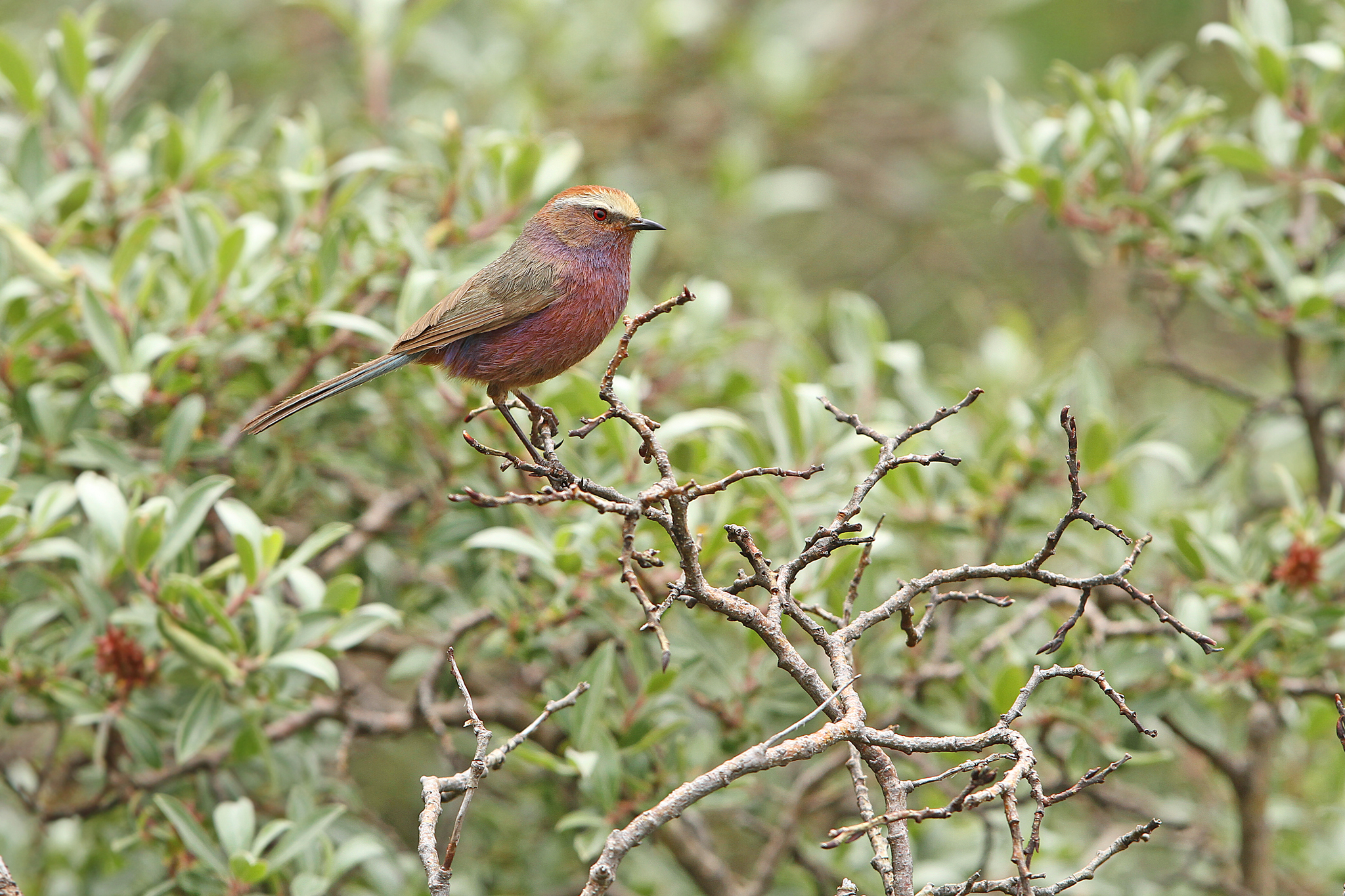
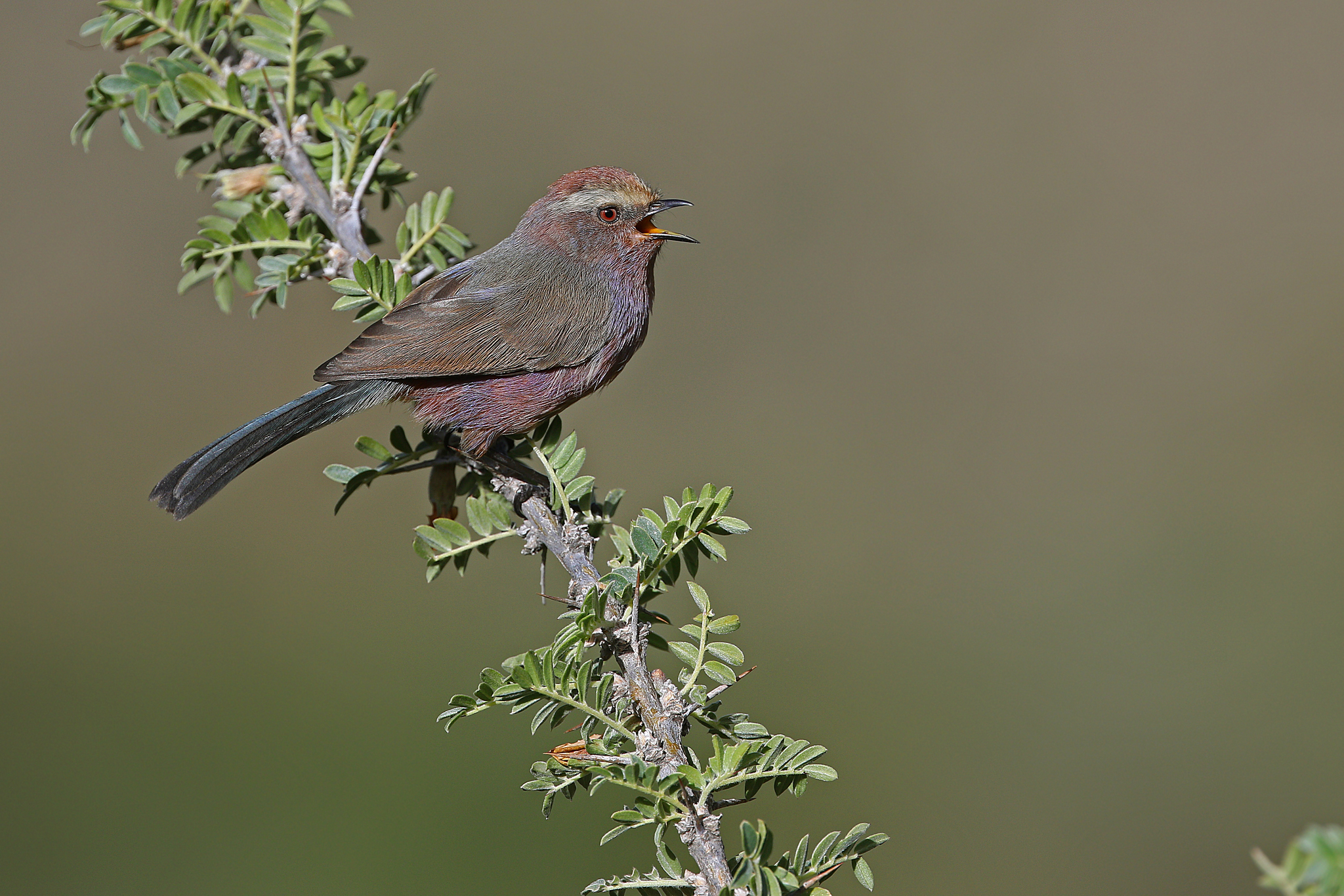
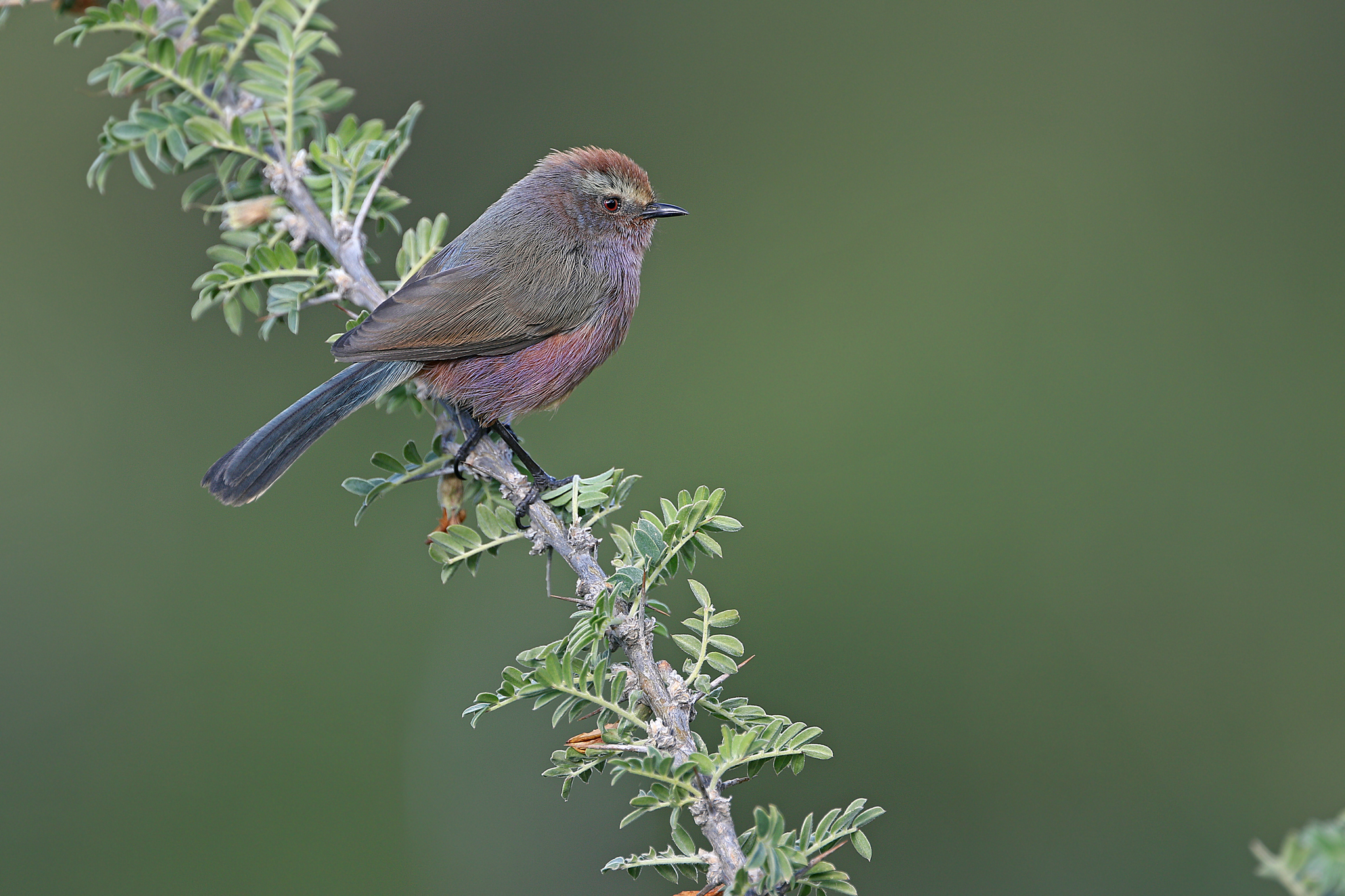
Small birds weighing 6–8 g and measuring 8.5–10 cm in length. Males display vibrant blue-mauve underparts and chest, while females are duller with pale underparts. Both sexes have a light brown crown, white supercilium, violet-blue rump and upper tail-coverts, and a relatively long tail. Subspecies vary in plumage darkness and altitude preference: L. s. stoliczkae has the lightest plumage with extensive buff underparts; L. s. major is drab but lighter than the nominate; L. s. obscurus is darker with a rufous crown.
Identification
Key marks include the white eyebrow, light brown crown, and violet-blue rump. Males are distinguished by blue-mauve underparts, whereas females have pale underparts. L. s. obscurus is identified by darker plumage and a rufous crown at higher elevations, while L. s. stoliczkae shows lighter plumage with buff underparts at lower altitudes.
Distribution & Habitat
Ranges from southeast Kazakhstan to northwest China, northwest India, north Pakistan, and the Himalayas. Found in the Tian Shan, Tibetan Plateau, and Northwest China. Subspecies L. s. sophiae ranges from southeast Kazakhstan to northwest China, northwest India, and north Pakistan. L. s. stoliczkae occurs in south Xinjiang, west Qinghai, and extreme west Xizang. L. s. major is found in west Xinjiang and north Qinghai. L. s. obscurus is present in central Nepal, south and southeast Xizang, and south and east Qinghai to south Gansu and Sichuan. Prefers dry mountainous shrubland between 2,000–5,000 m, dispersing to lower elevations in winter.
Behavior & Ecology
Lives in pairs during breeding season, joining flocks of 25 or more individuals post-breeding; winter flocks may be multi-species. Breeding starts in early April through July, delayed at higher elevations. Nests are dome-shaped, placed in shrubs about 0.9 m off the ground, built by both sexes over two weeks. Clutches contain 4–6 whitish eggs with red-brown spots (up to nine), averaging 1.14 g mass and 15.6 mm × 11.6 mm dimensions. Incubation lasts around 20.5 days; fledging occurs at 17.5 days. Nestlings are naked and open eyes at 7 days. Diet consists chiefly of small insects and spiders caught on the ground, under roots and rocks, supplemented by seeds and berries in colder months. Chicks are fed solely insect matter. Predation accounts for 34% of nest failure. Lacks arteria ophthalmica externa.
Culture
The specific epithet sophiae likely refers to Sofia Alexandrovna Poltoratskaya, wife of Nikolai Severtzov, who participated in his Tian Shan expedition. Subspecies L. s. stoliczkae is named for Czech zoologist Ferdinand Stoliczka.
Source: Wikipedia · CC BY-SA 3.0
Taxonomy
- Order
- Passeriformes
- Family
- Aegithalidae
- Genus
- Leptopoecile
Subspecies (4)
-
Leptopoecile sophiae major
Kazakhstan (eastern Tien Shan Mountains) to western China (Xinjiang)
Data Sources
Species description from Wikipedia, licensed under CC BY-SA 3.0.
Bird images and sounds sourced from GBIF, contributed by citizen scientists worldwide under Creative Commons licenses.
Taxonomy data from AviList 2025.