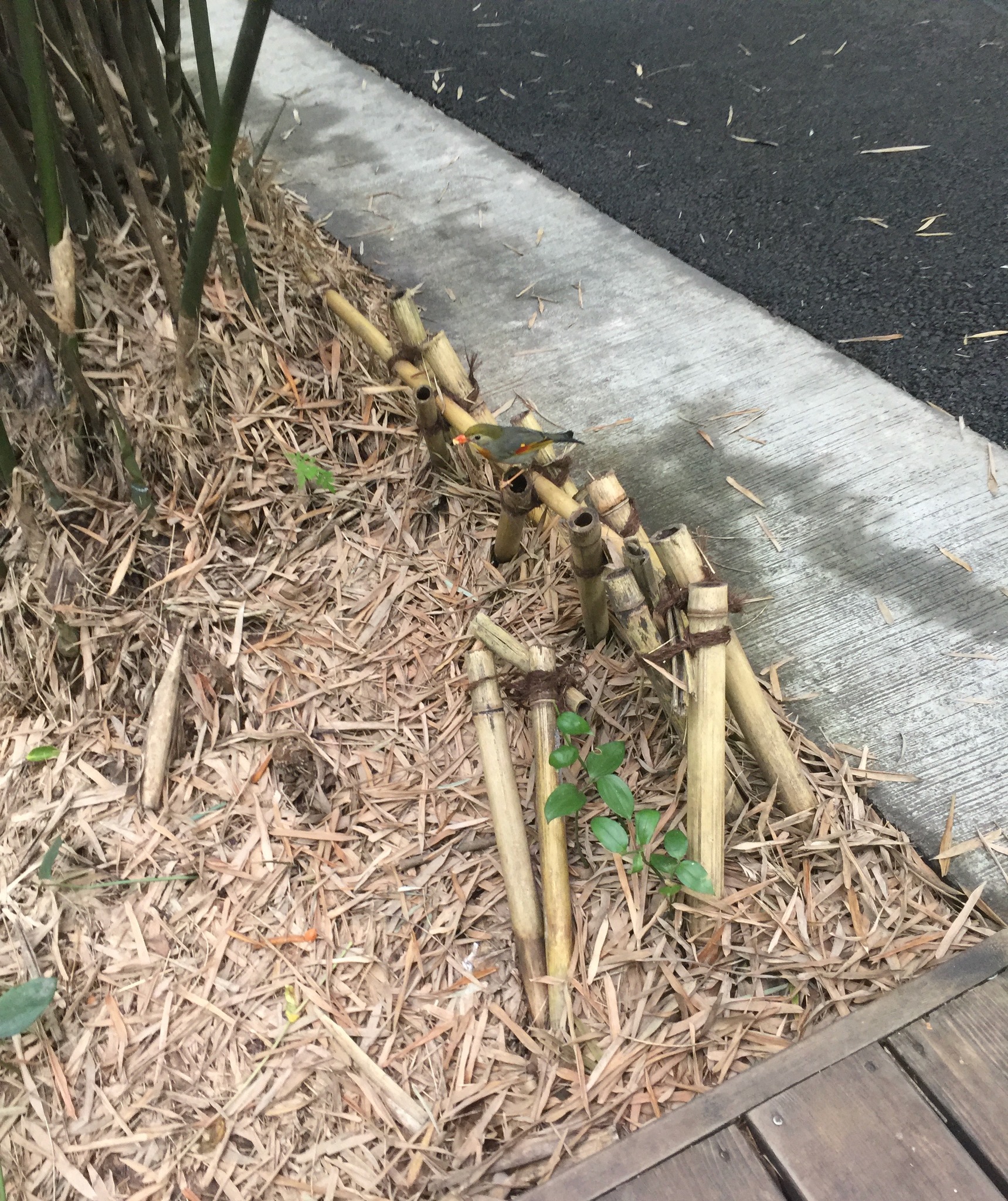
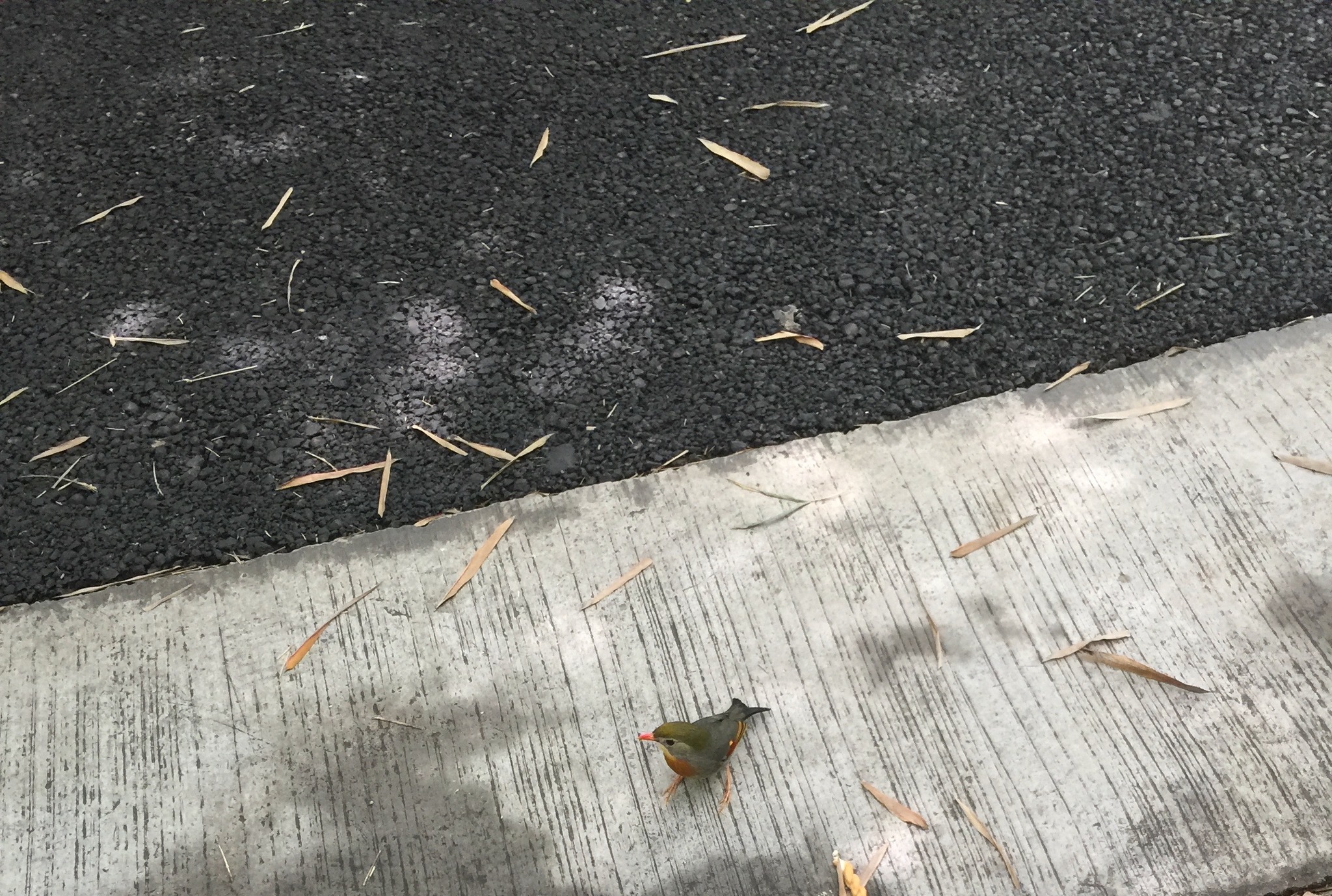
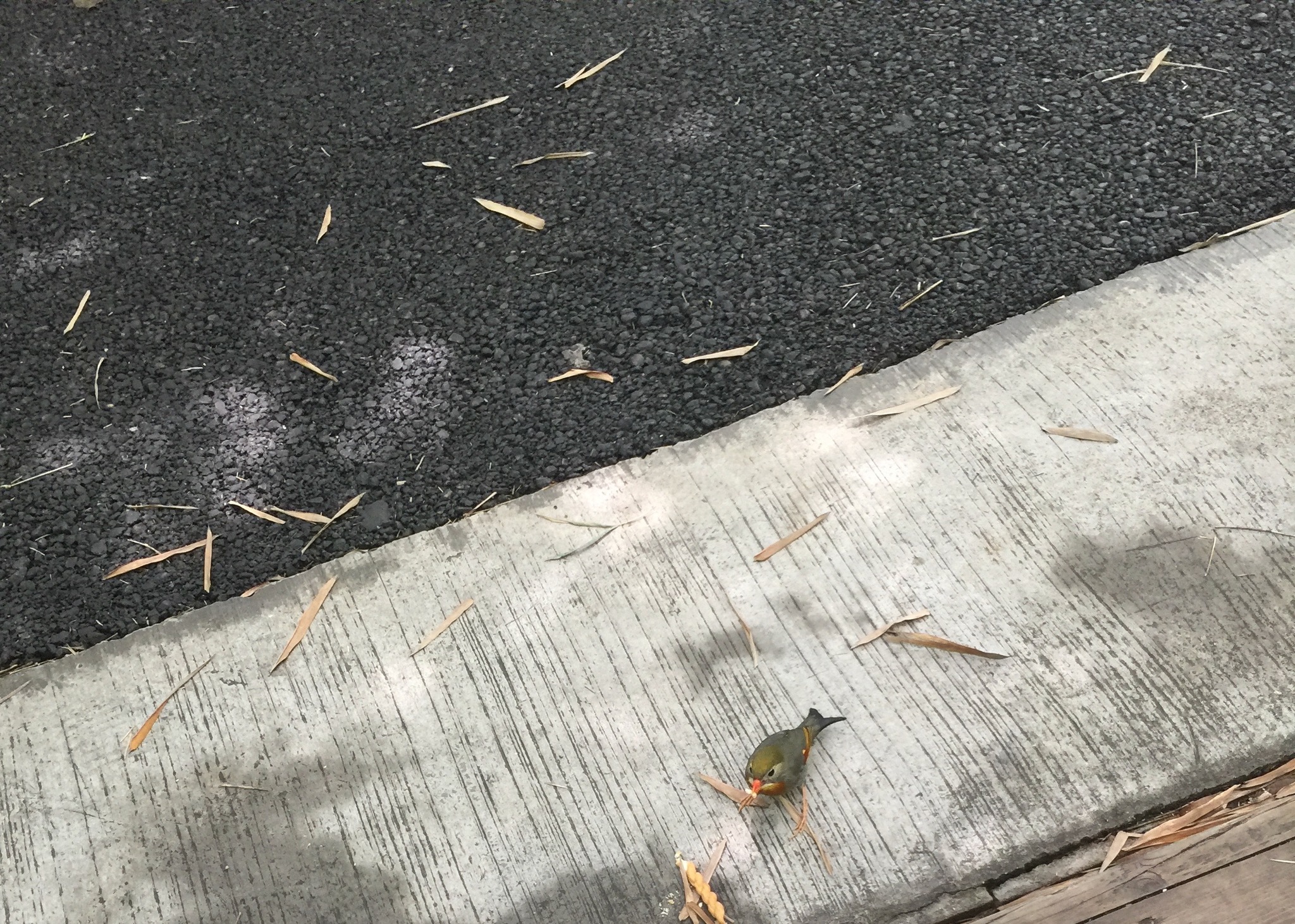
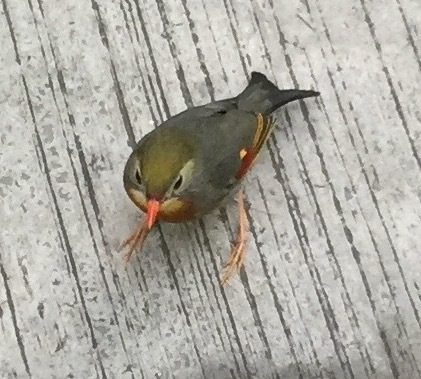
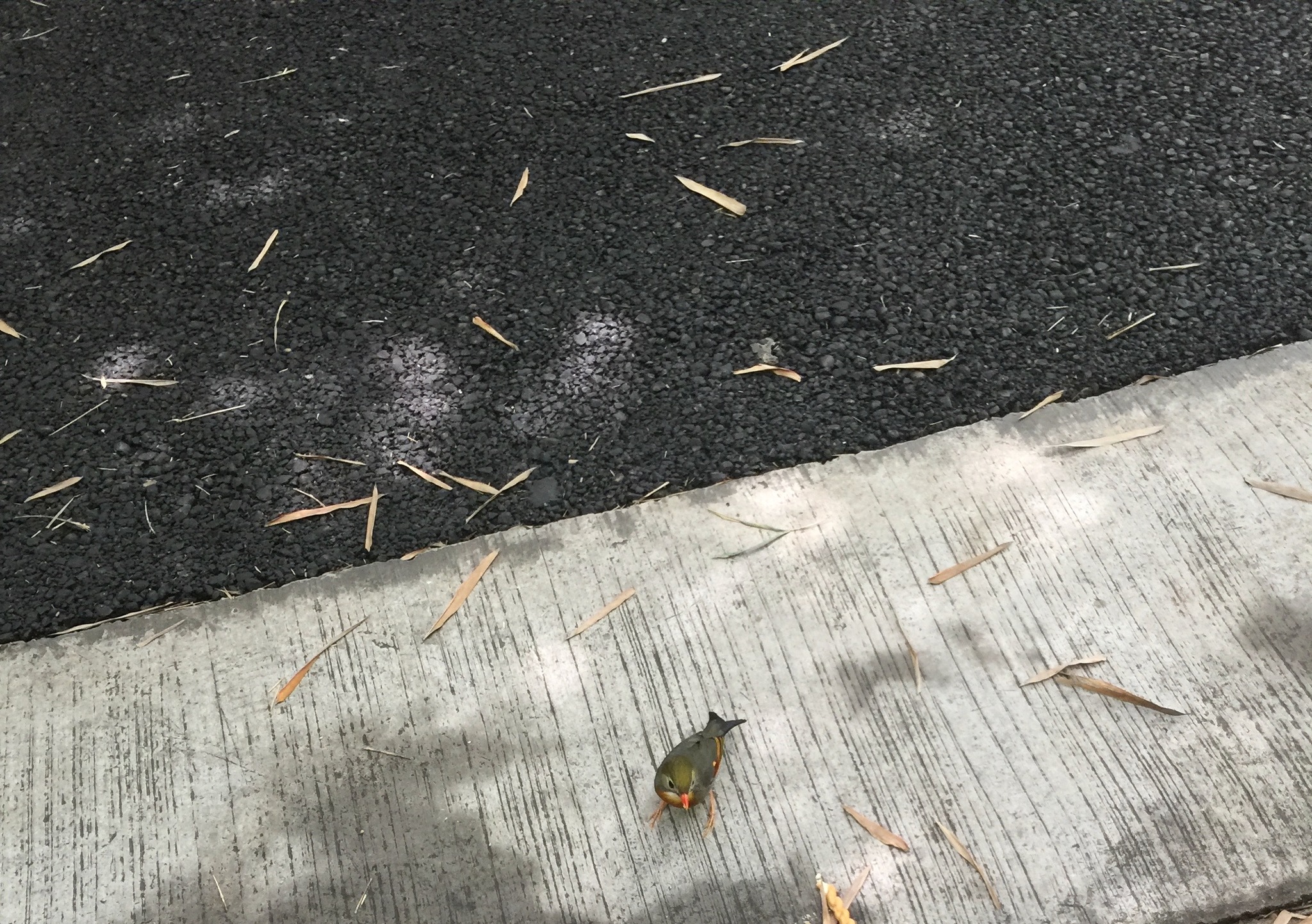
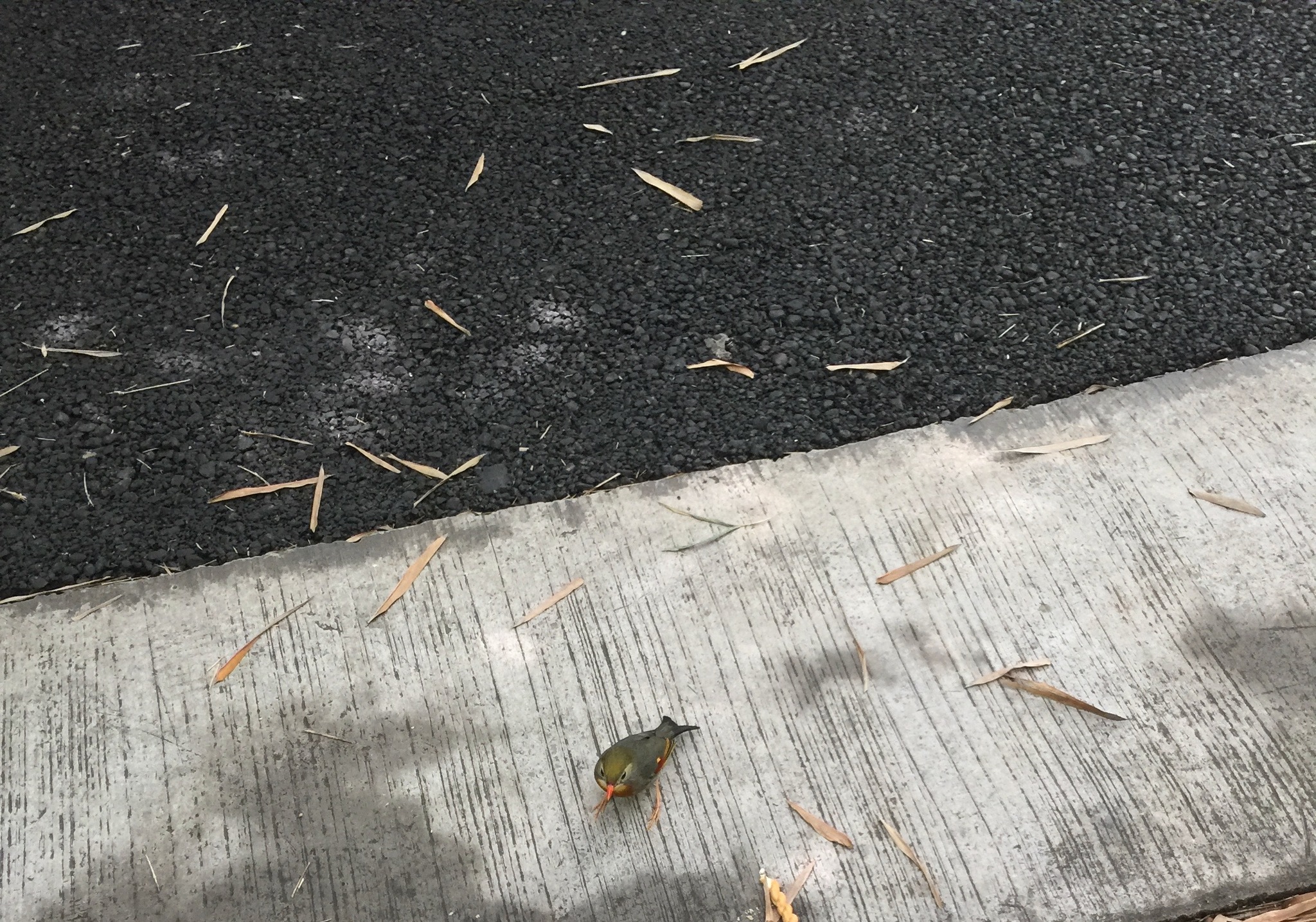
Red-billed Leiothrix
Leiothrix lutea
红嘴相思鸟
Introduction
A member of the family Leiothrichidae, this species is native to southern China and the Himalayas, ranging across India, Bhutan, Nepal, Burma, and Tibet. It inhabits hill forests of various types, preferring pine forests with bushes, at elevations from near sea level to approximately 7,500 feet (2,300 m). Distinguished by bright red bills and a dull yellow eye ring, with males displaying a bright yellow-orange throat and yellow chin. The species has become established in multiple regions following introductions, including Japan since the 1980s, the Hawaiian Islands (1918), France, Spain, Portugal, Italy, and Réunion.
Description
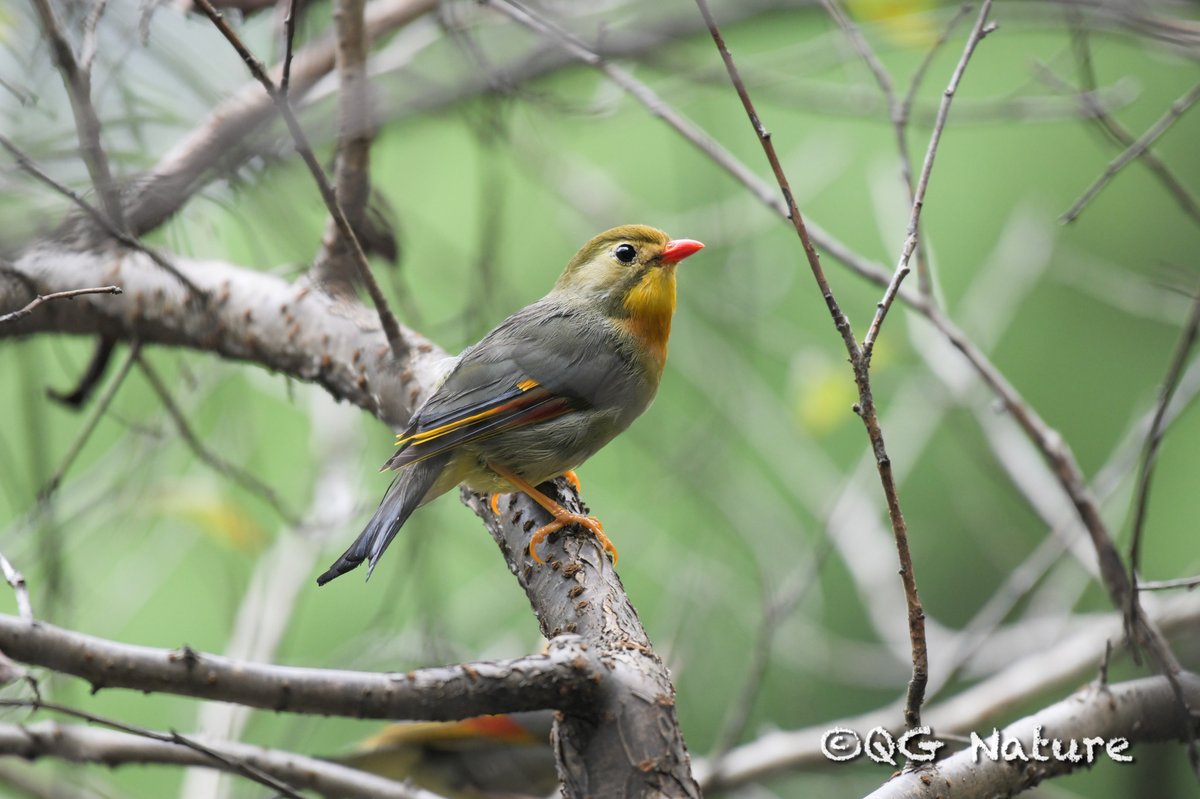
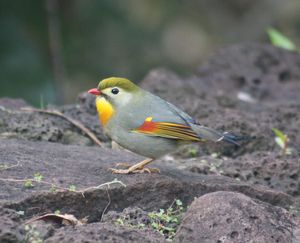
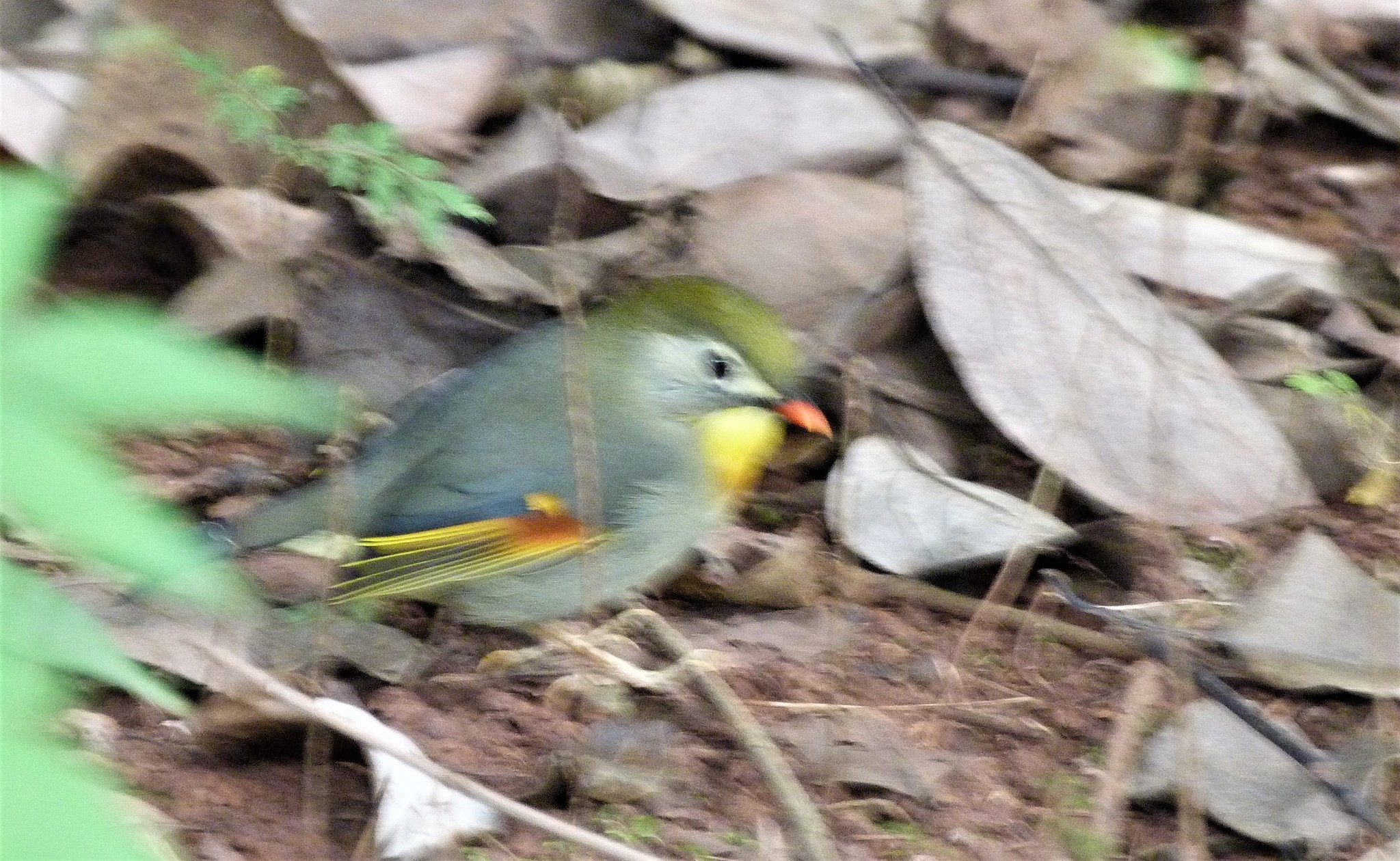
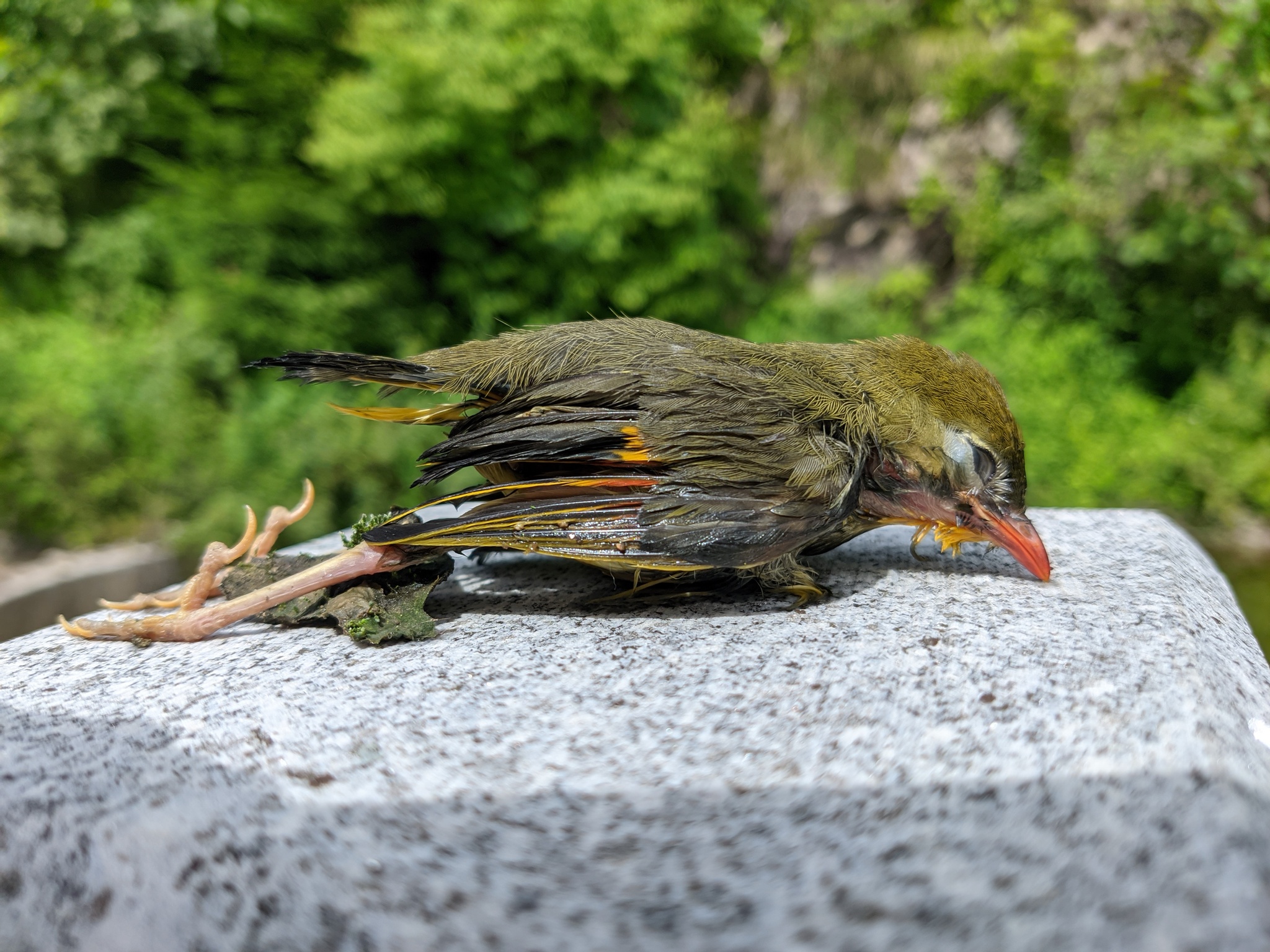
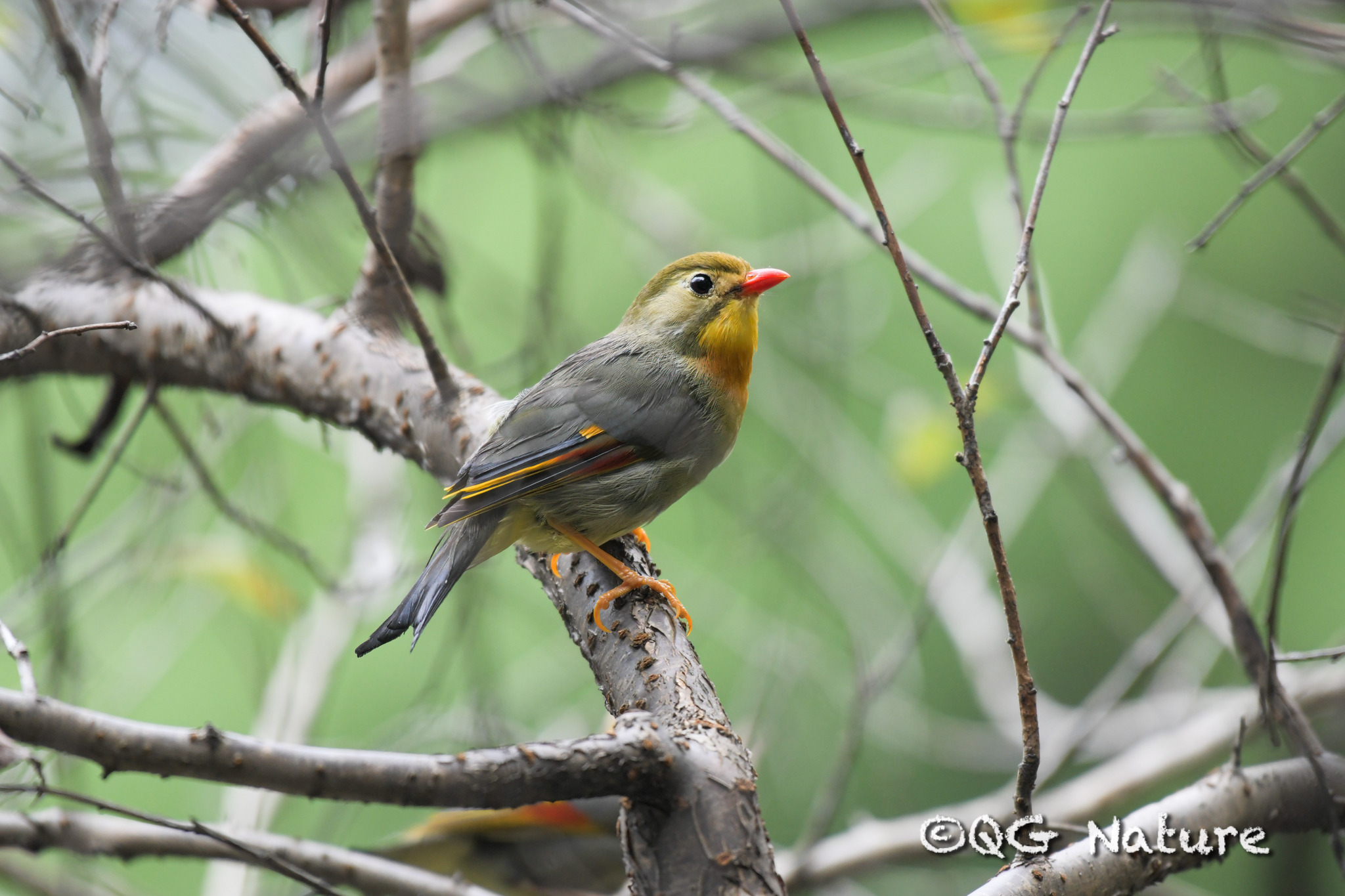
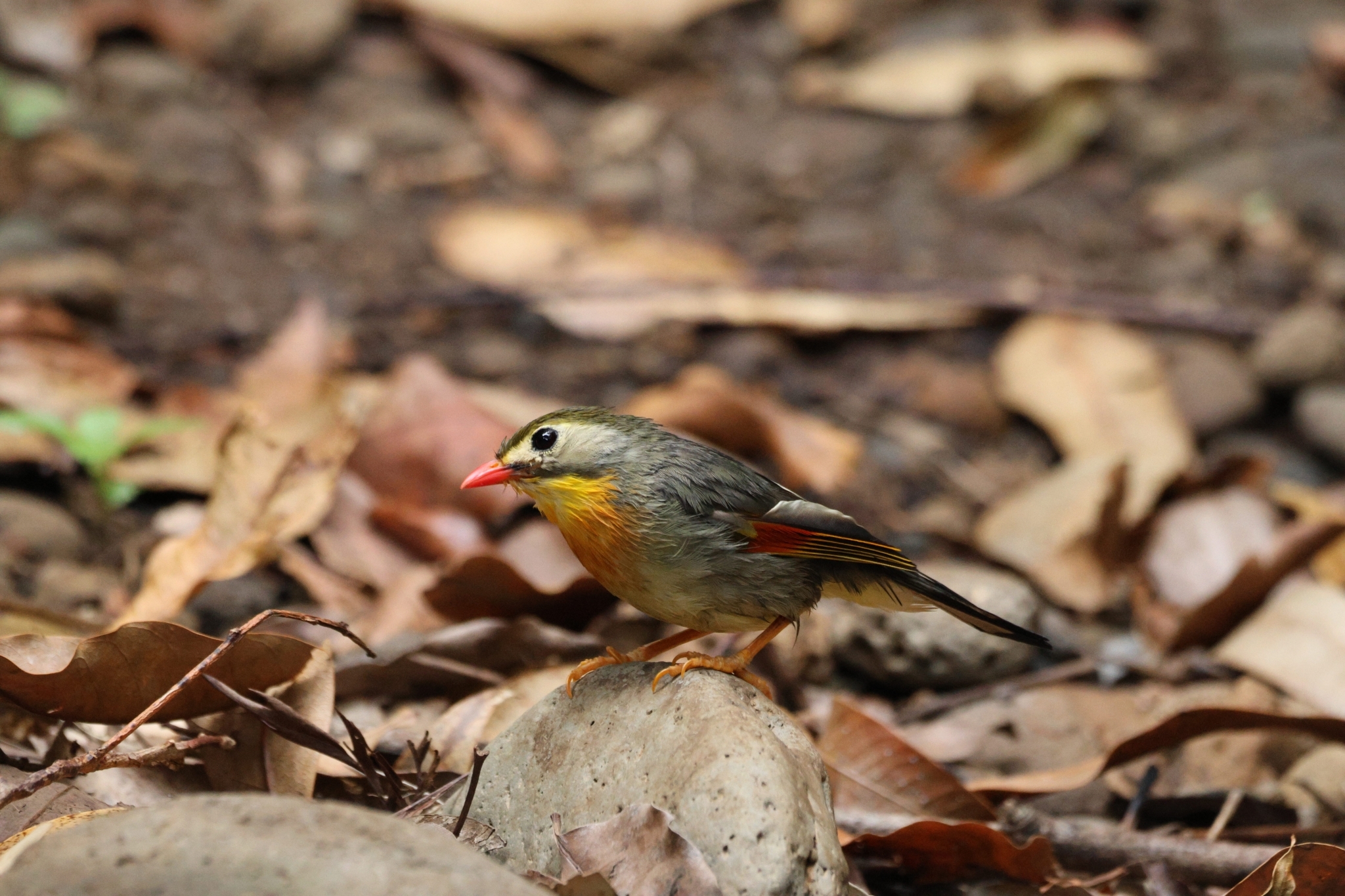
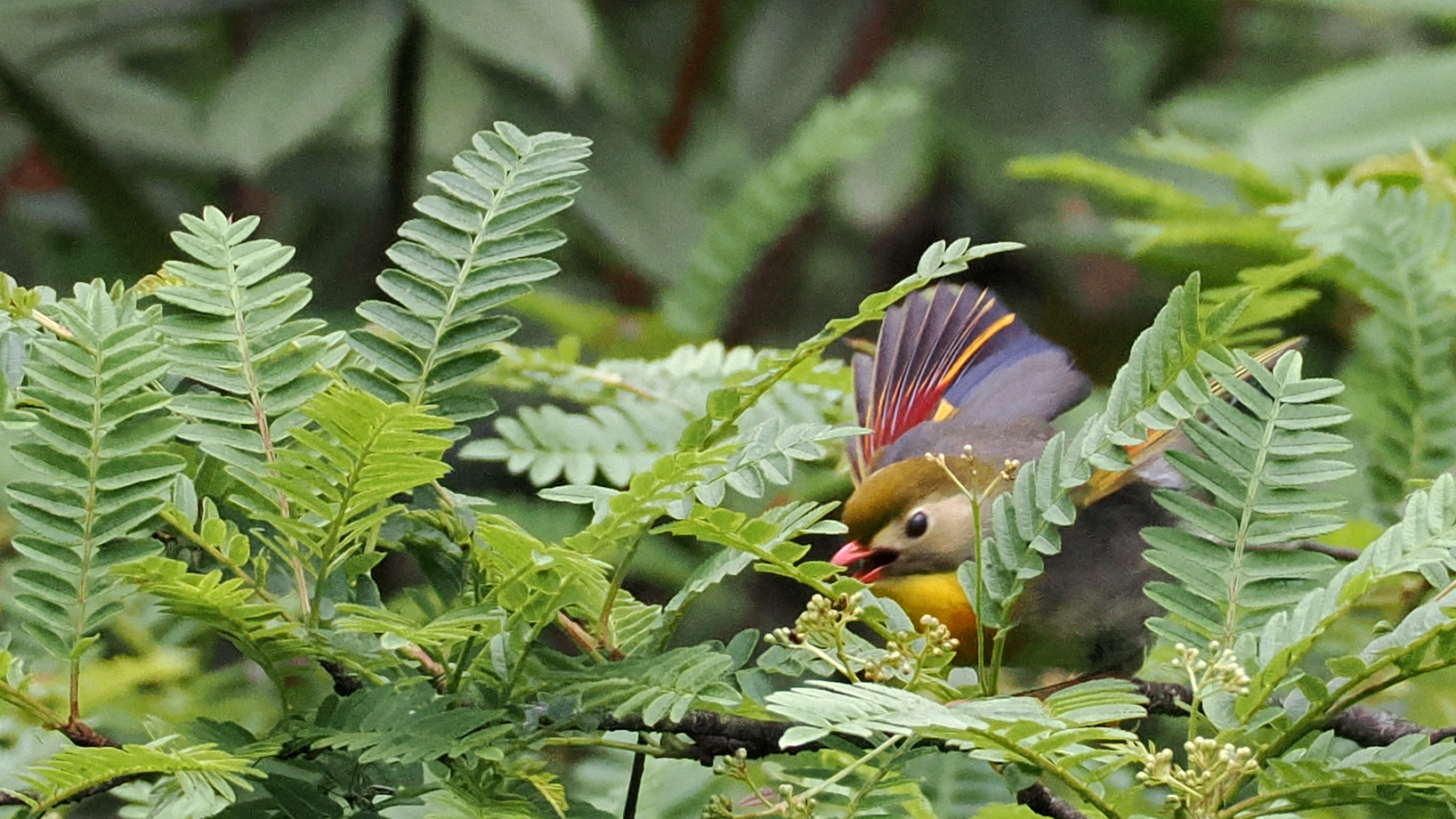
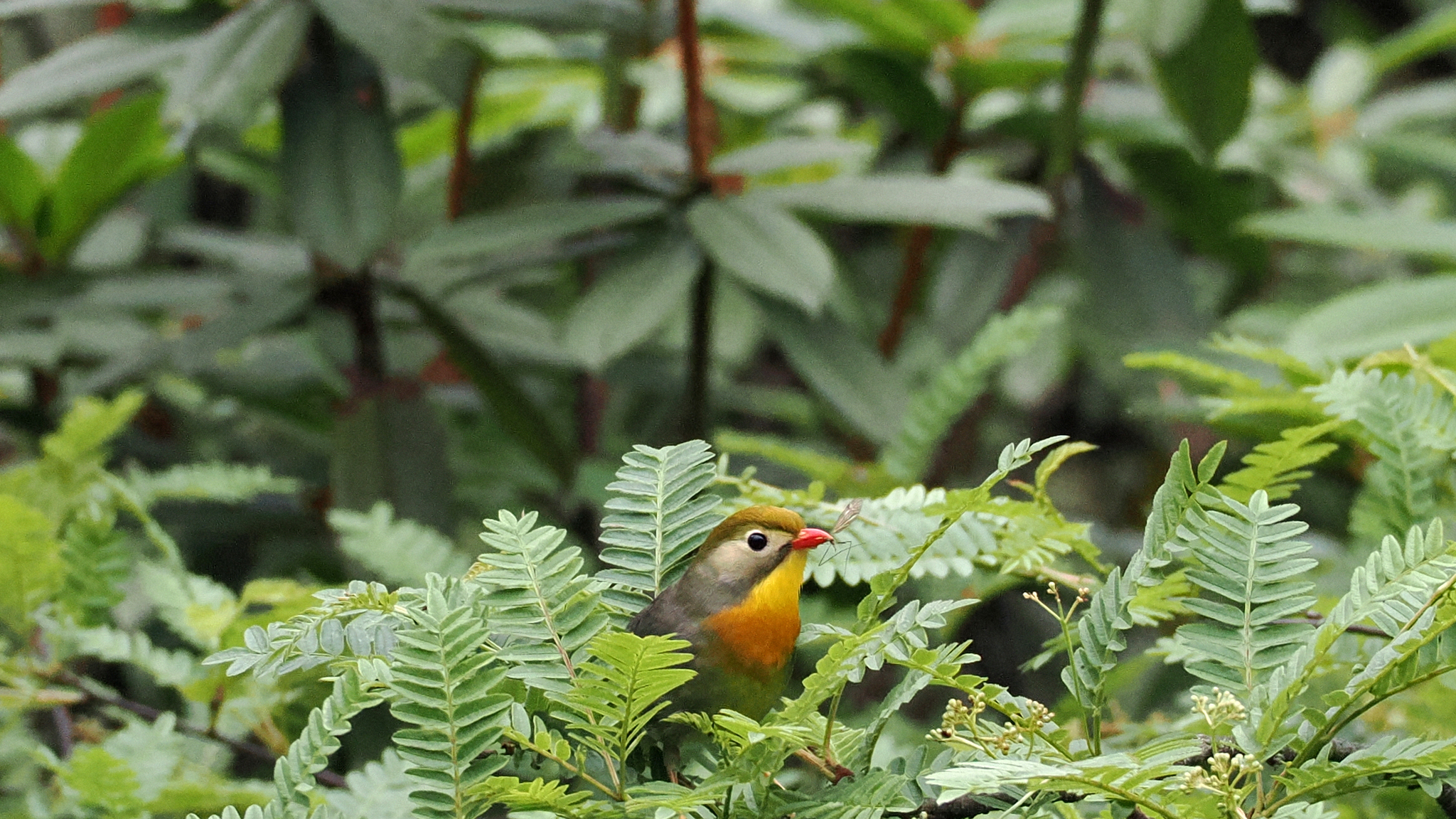
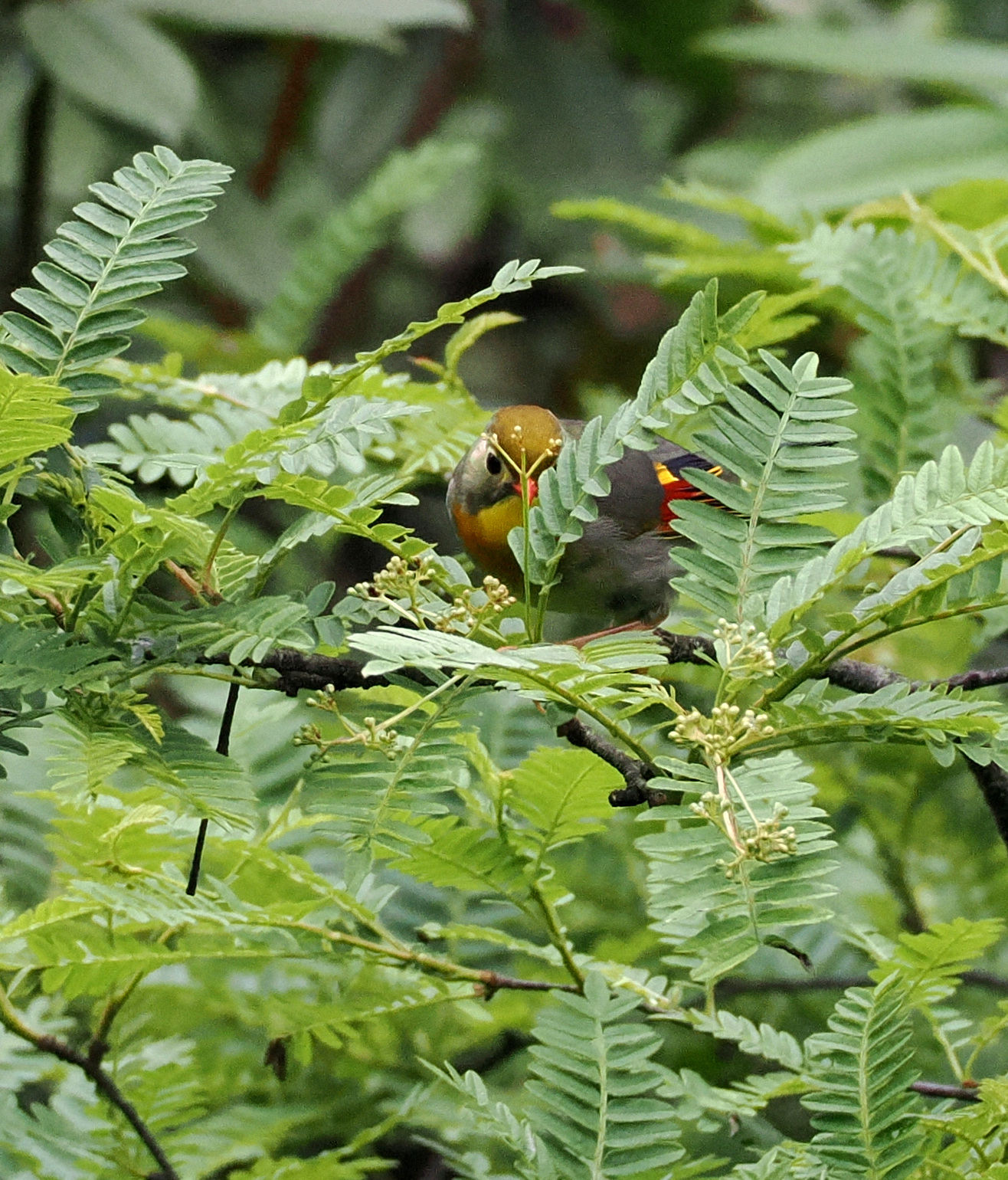
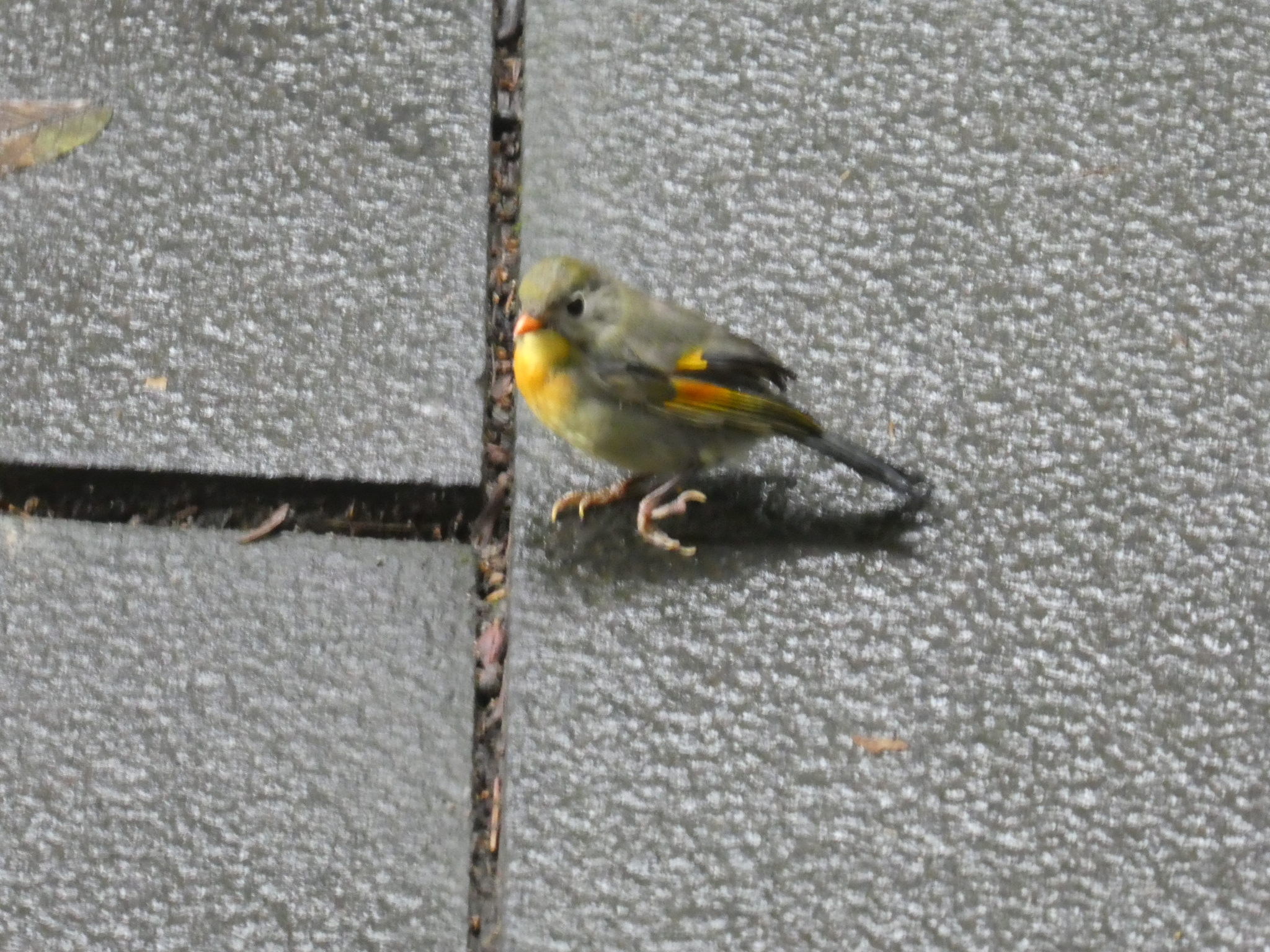
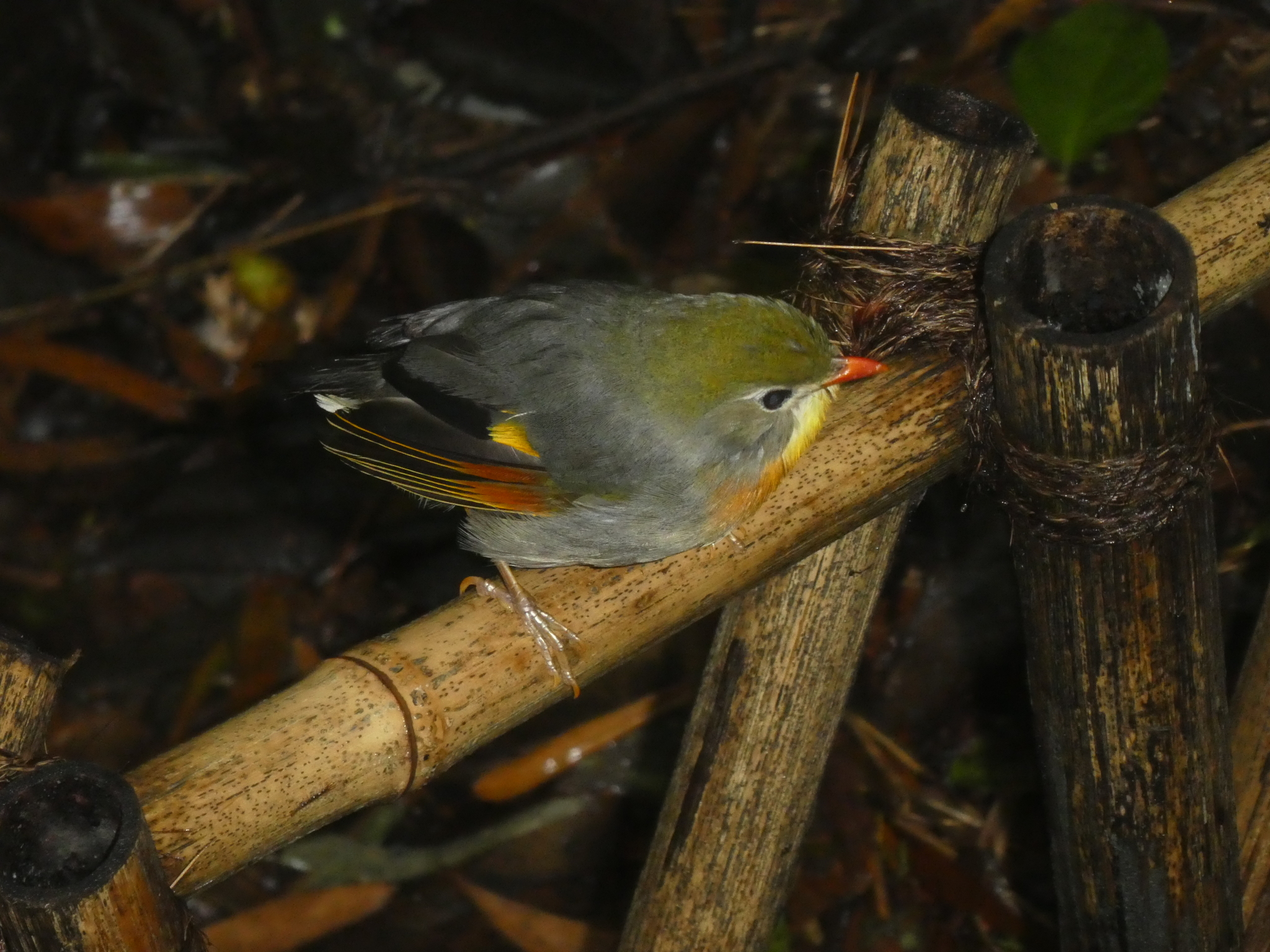
This species measures approximately six inches (15 cm) in length. The upperparts are dull olive green, while the throat is bright yellow-orange with a yellow chin. Adults have bright red bills and a dull yellowish eye ring extending to the beak. Wing feathers have brightly colored edges in yellow, orange, red, and black. The forked tail is olive brown with a blackish tip. Cheeks and the sides of the neck are bluish grey. Females are significantly paler overall and lack the red wing patches present in males. Juveniles have black bills.
Identification
The bright red bill is the most distinctive field mark in adults. The yellow-orange throat and yellow eye ring distinguish it from similar species. The combination of olive green upperparts, yellow throat, and red bill in males is diagnostic. Females are more challenging to identify due to their paler plumage but can be recognized by the yellow throat and eye ring. The species is often detected first by its song rather than visual observation due to its secretive nature.
Distribution & Habitat
Native range extends across the Himalayas and southern China, including India, Bhutan, Nepal, Burma, Tibet, and southeastern regions. In Japan, introduced populations prefer Abies and Tsuga forests with dense bamboo understorey. The species was introduced to the Hawaiian Islands in 1918 and now occurs on all forested islands except Lanai, with populations recovering on Oahu after a crash in the 1960s. Established populations exist in France, Spain (spreading from Collserola Park), Portugal, and Italy (Tuscany, Liguria, Latium, Colli Euganei). Recent sightings in southern England (2020-2022) suggest possible colony establishment.
Behavior & Ecology
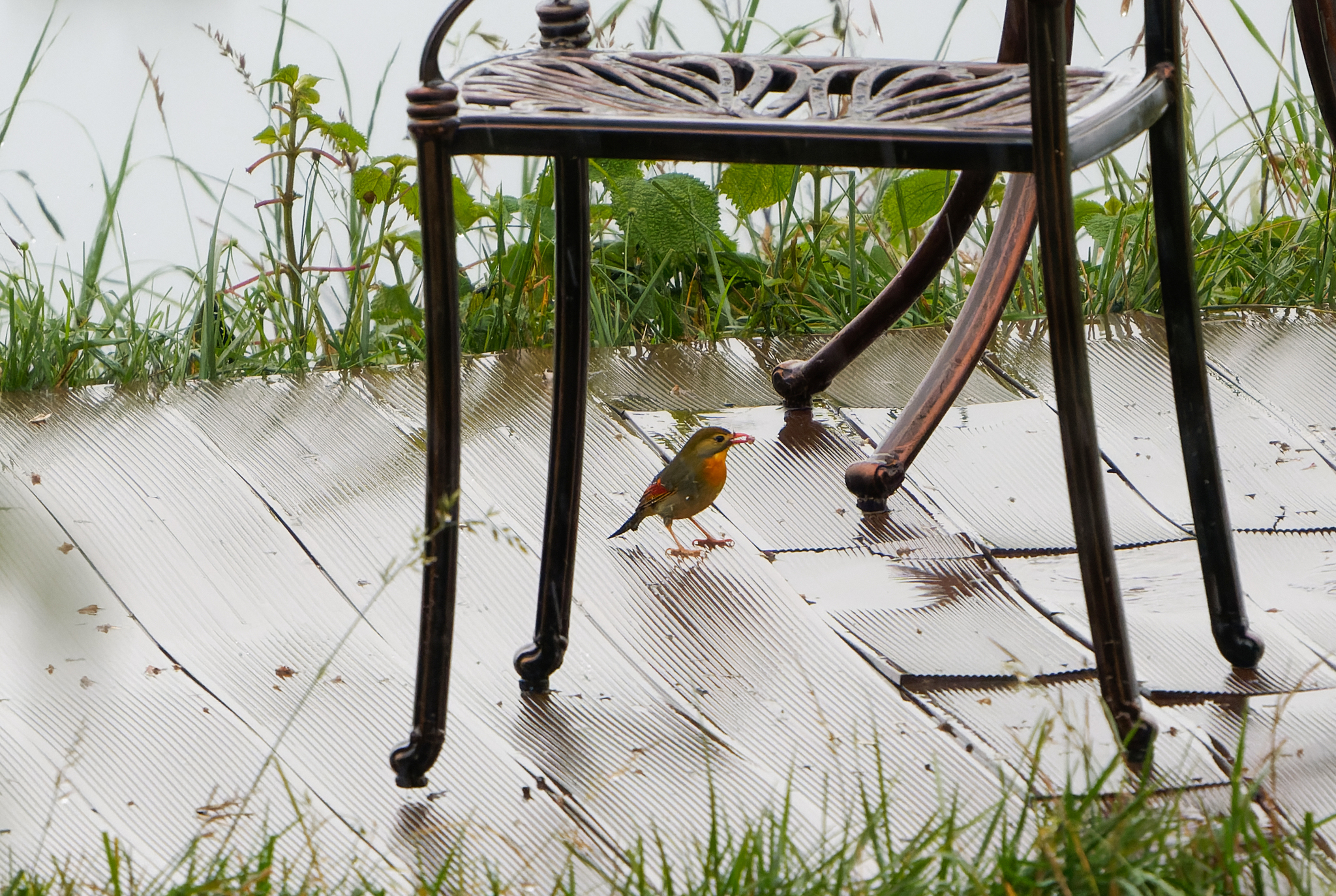
Forages in lower vegetation strata, feeding on fruits including strawberries, papaya, and guavas, as well as insects (Diptera, Lepidoptera, Hymenoptera) and mollusks. Non-breeding season social groups consist of approximately 10-30 individuals. During breeding (April through September), birds form territorial pairs. Males produce long, complex songs with diverse syllables throughout the year, intensifying during breeding season. Nests are open cups constructed from dry leaves, moss, and lichen, typically placed within ten feet of the ground in dense vegetation. Clutches contain 2-4 eggs (average 3), which are pale blue with reddish-brown spots around the larger end.
Culture
This species has been kept extensively in captivity and is known among aviculturists by various names including Pekin robin, Pekin nightingale, Japanese nightingale, and Japanese (hill) robin. The latter two names are misnomers as the species is not native to Japan, despite being introduced and naturalized there. It remains a popular cage bird in the pet trade.
Source: Wikipedia · CC BY-SA 3.0
Taxonomy
- Order
- Passeriformes
- Family
- Leiothrichidae
- Genus
- Leiothrix
- eBird Code
- reblei
Vocalizations
Subspecies (5)
-
Leiothrix lutea calipyga
Nepal eastward to Bhutan, the northeastern Indian hill states, southern China (southeastern Xizang), and far northwestern Myanmar (possibly southward to the northern Chin Hills)
-
Leiothrix lutea kumaiensis
Himalayas (Kashmir to northwestern Uttar Pradesh)
-
Leiothrix lutea kwangtungensis
southern China (southeastern Yunnan, Guangxi, and Guangdong) to northeastern Tonkin
-
Leiothrix lutea lutea
central and southeastern China
-
Leiothrix lutea yunnanensis
northeastern Myanmar to southwestern China (southeastern Qinghai and northwestern Yunnan)
Data Sources
Species description from Wikipedia, licensed under CC BY-SA 3.0.
Bird images and sounds sourced from GBIF, contributed by citizen scientists worldwide under Creative Commons licenses.
Taxonomy data from AviList 2025.