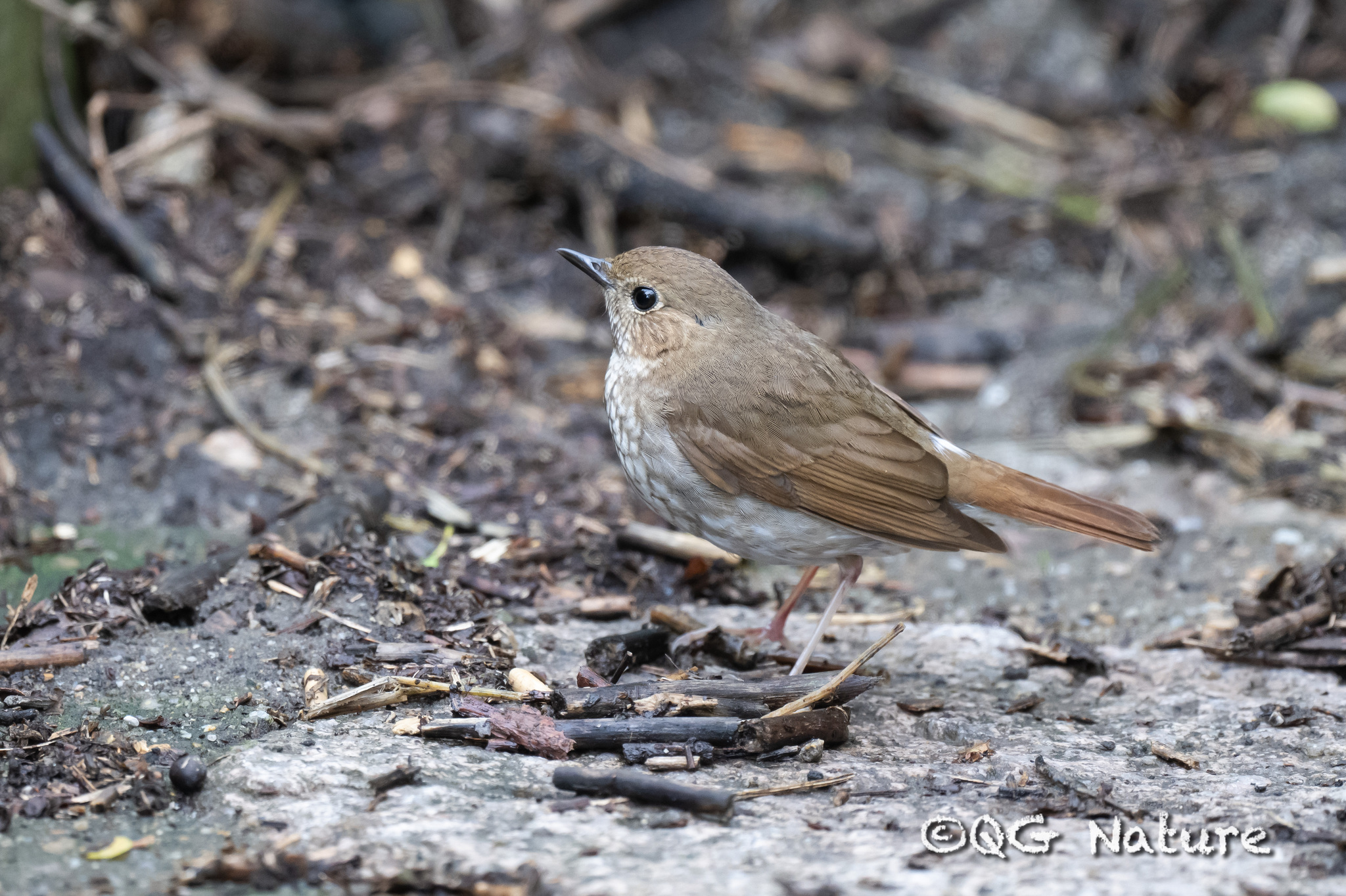
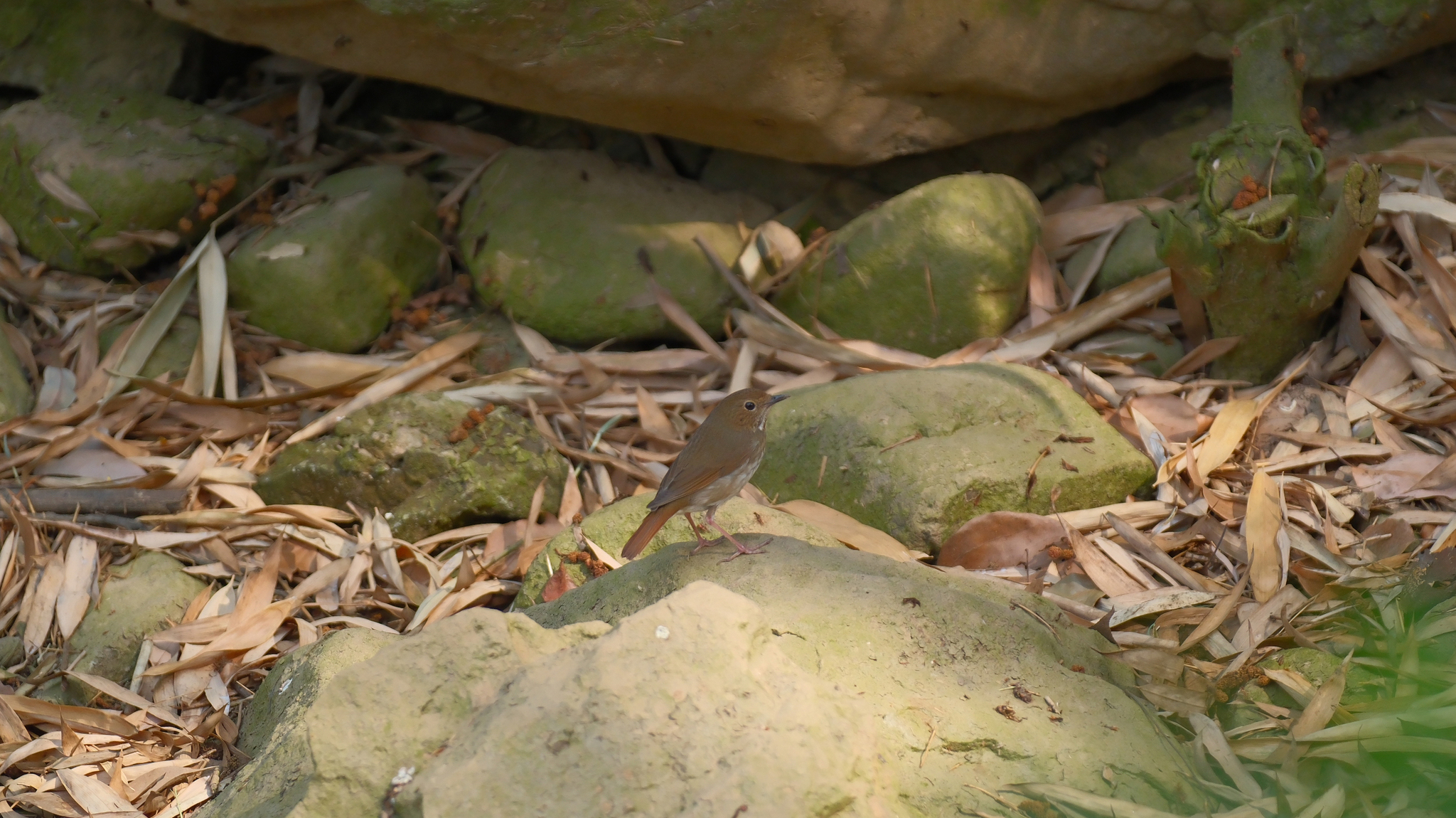
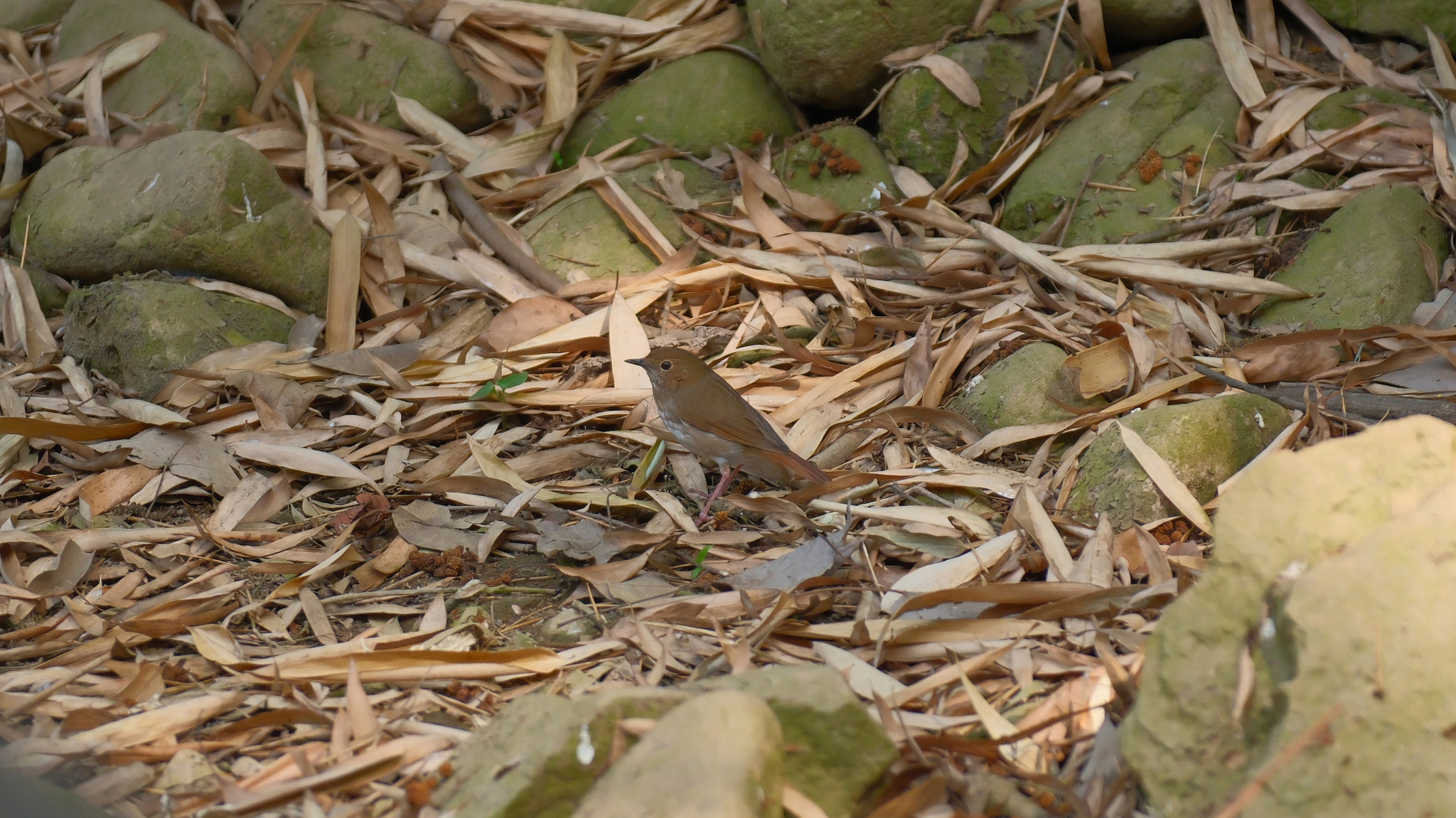
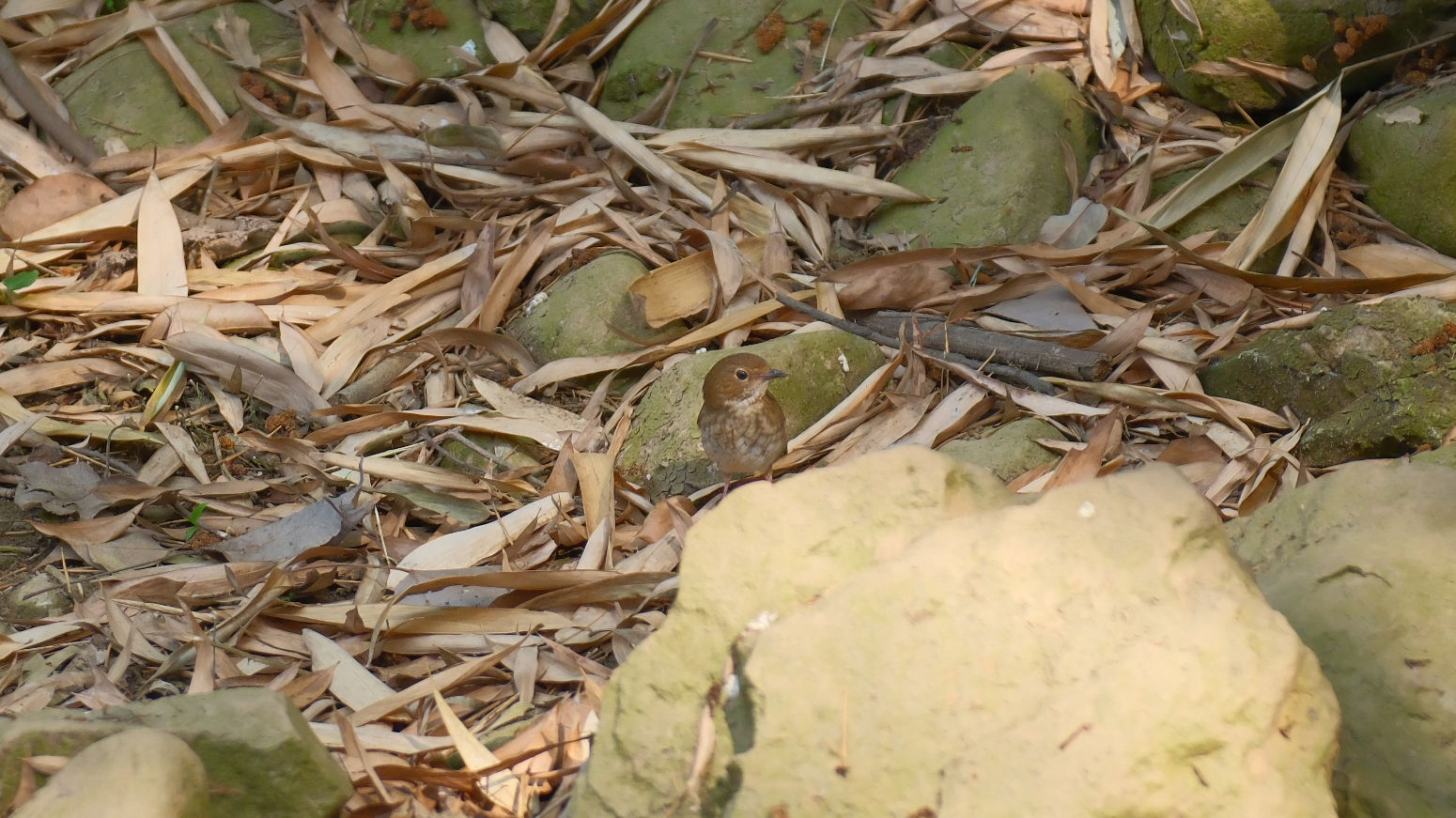
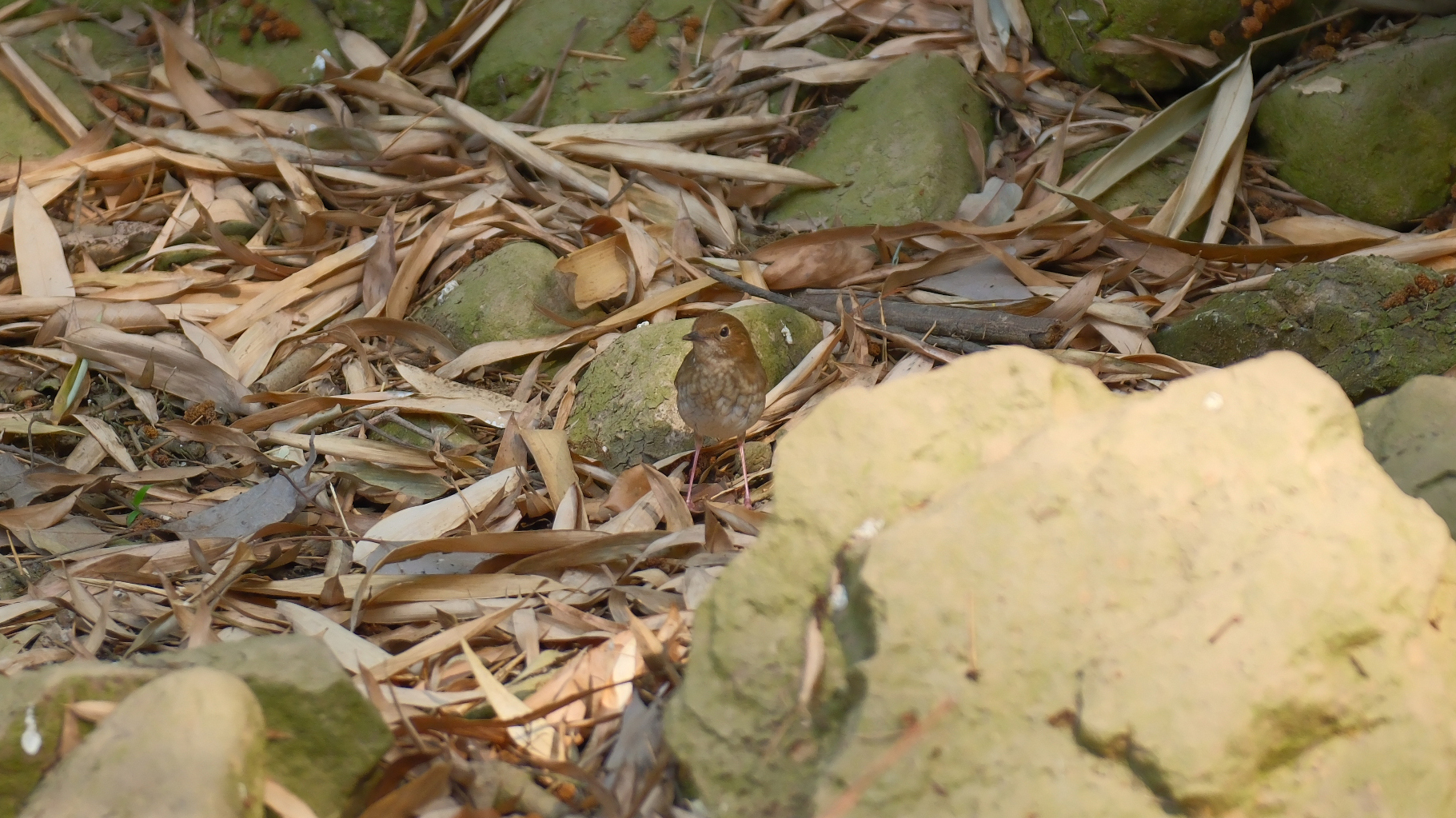
Rufous-tailed Robin
Larvivora sibilans
红尾歌鸲
Introduction
A small passerine found in northeastern Asia's boreal forests. It inhabits dense undergrowth among fallen trees and thick vegetation within the taiga zone. The species measures approximately 14 centimeters in length. Its breeding range extends from southern Siberia to Mongolia, with wintering grounds extending through Southeast Asia to southern China. The species is relatively common within its range. It produces a loud, cascading song that begins high and descends, delivered both by day and during nocturnal hours in the breeding season.
Description
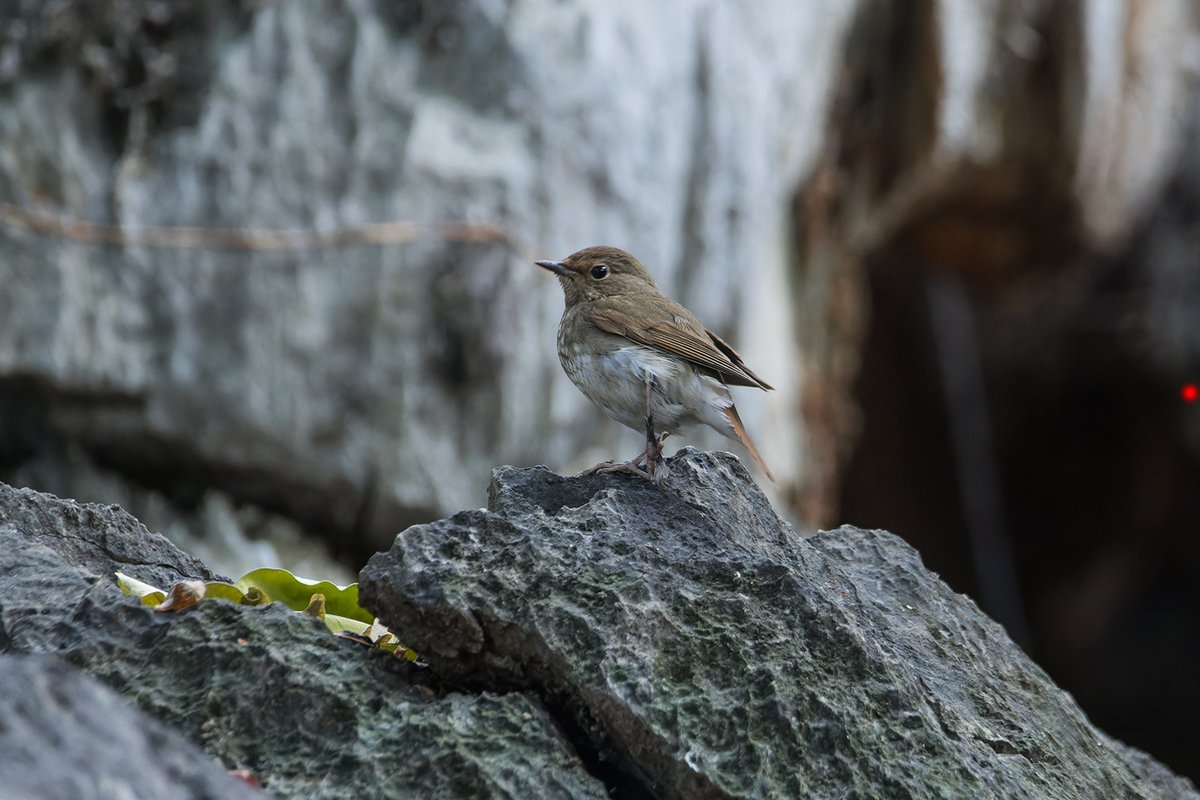
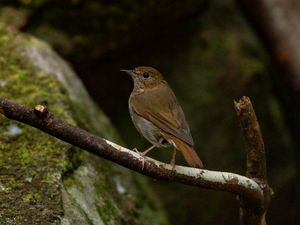
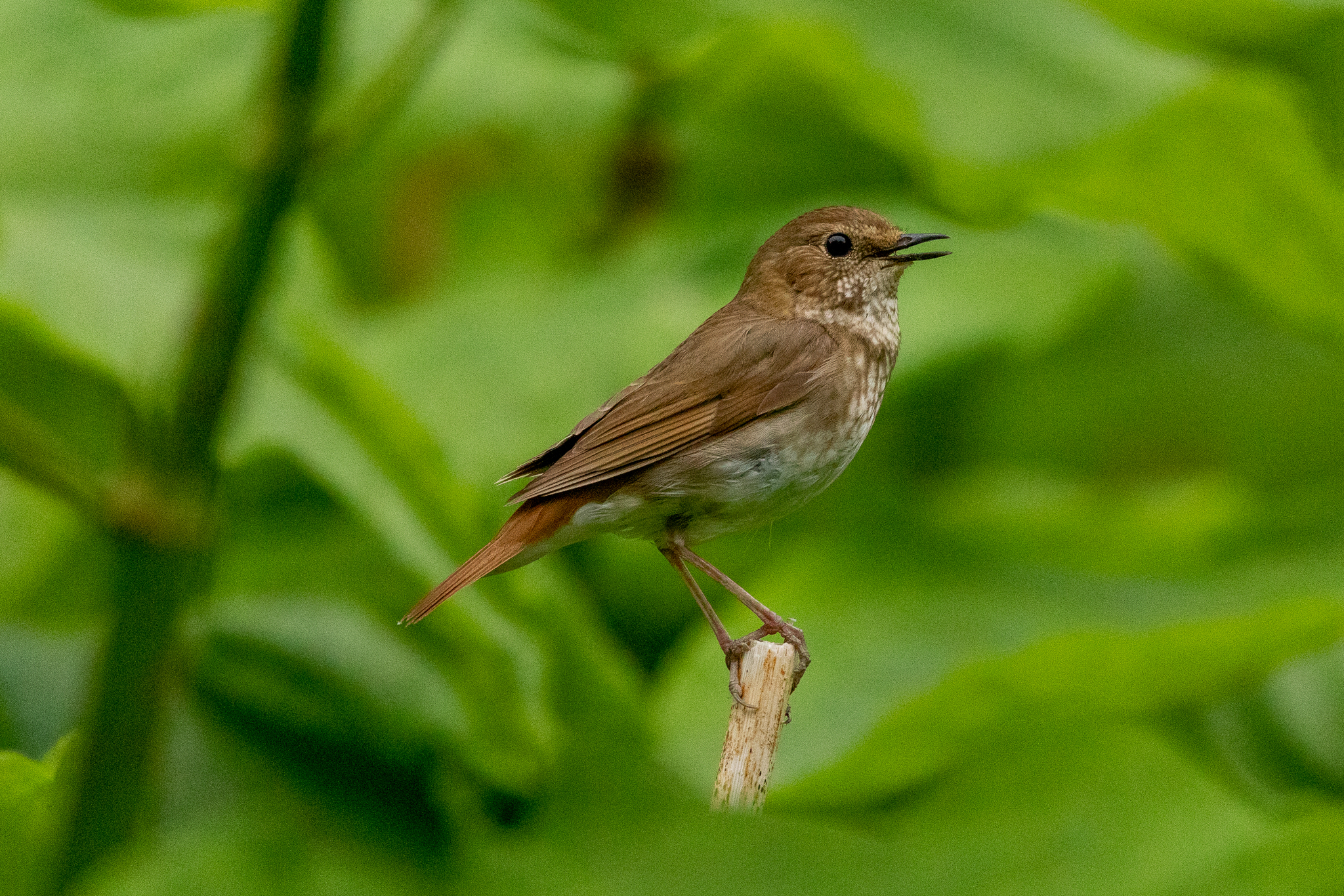
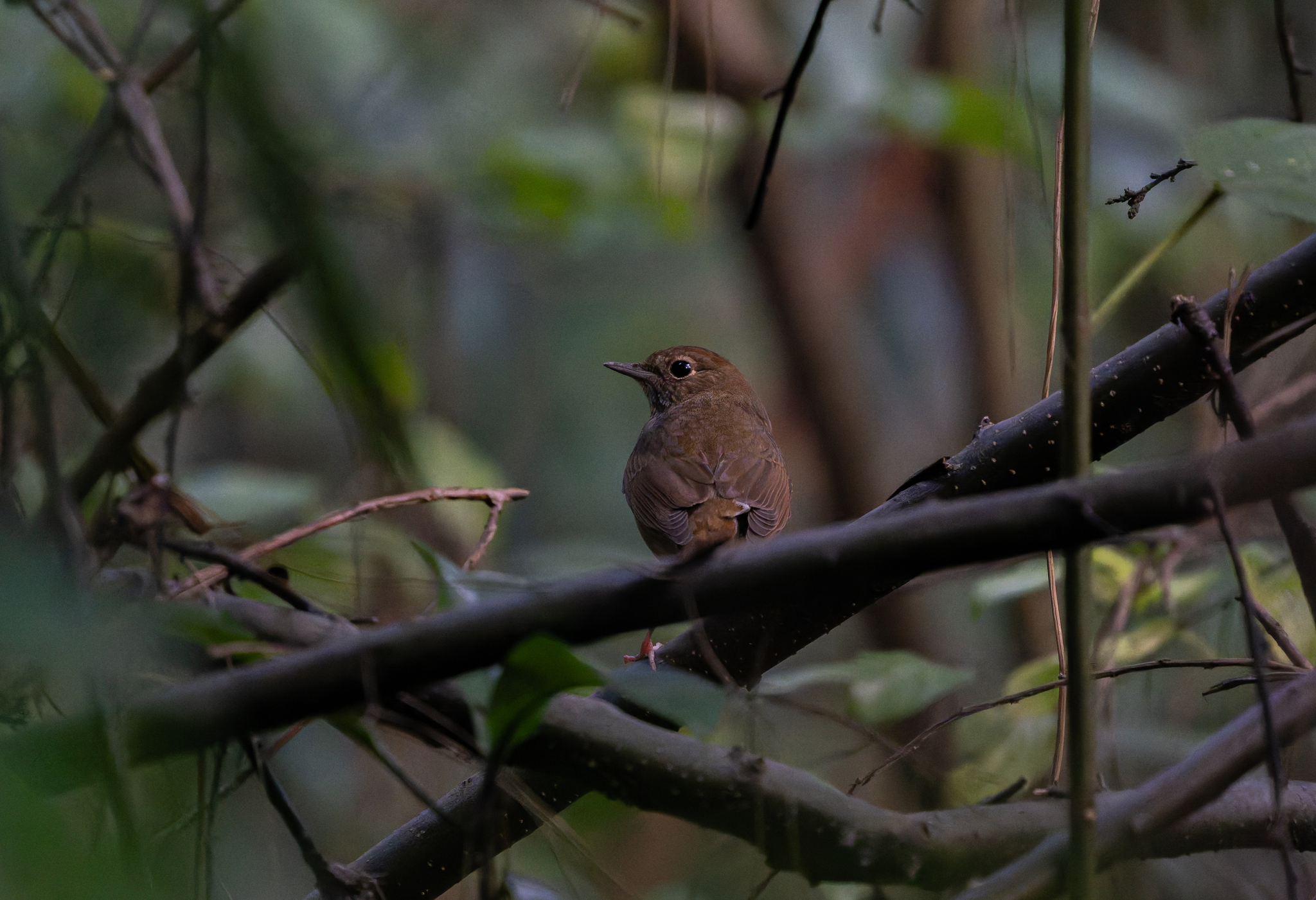
A small thrush-sized bird measuring 14 cm in length with a compact build. The upperparts are plain greyish-brown, while the underparts range from grey to white with distinctive circular pale markings heavily mottling the throat and breast. The most striking feature is the bright rufous rump and tail, which contrast markedly with the otherwise subdued plumage. The flanks show buff coloration, and the face displays a whitish eye-ring and a prominent buffish cheek stripe. The bill is brownish-black with a slightly upturned tip to the lower mandible, and the legs are pinkish-grey. Sexes appear similar, though females may be marginally paler. Juveniles resemble adults but show ochre tinging and dark edges to the upper plumage.
Identification
The combination of small size, rufous tail and rump, and heavily mottled throat and breast helps distinguish this species. At first glance, it may be mistaken for North American Catharus thrushes such as the veery or hermit thrush, but its range and habitat preferences are quite different. The characteristic tail-flicking behavior, done in a distinctive manner, can be a useful field mark when observation conditions permit. Its terrestrial habits and preference for dense understory vegetation are typical behavioral clues. The whistled alarm call and jangling chok-chok contact notes also assist identification by ear.
Distribution & Habitat
Breeds across the taiga forests of northeastern Asia from southern Siberia and the Sea of Okhotsk southward through Mongolia to northern China. Winters in Southeast Asia, southern China, Thailand, Laos, and Vietnam. A rare vagrant to Western Europe, with records from Fair Isle, Scotland (2004), Poland (2006), Norfolk, England (2011, 2013), and Denmark (2012). Inhabits coniferous woodlands and damp broad-leafed forest with fallen trees and thick undergrowth, particularly spruce and fir stands mixed with willow, alder, birch, poplar, and bird cherry. Mainly a lowland species but occurs up to 1,200 meters elevation. Migration begins in late August, with birds reaching wintering areas around Hong Kong by November and returning north in spring.
Behavior & Ecology
An extremely elusive and difficult-to-observe bird that remains concealed among dense branches, often staying motionless for considerable periods. Terrestrial in habits, it forages on the ground for ants, beetles, spiders, and other invertebrates. The characteristic tail-flicking movement is a typical behavioral trait. Breeding occurs in June-July, with cup-shaped nests placed in tree holes or stumps, usually near the ground, constructed from dead leaves, grasses, and moss lined with finer materials. Clutches contain 5-6 eggs, plain pale blue or blueish-grey with irregular brown blotches. The male's song consists of loud cascading trills starting high and descending, delivered day and night during breeding. Calls include whistled alarm notes and a jangling chok-chok when attending young.
Conservation
Classified as Least Concern by the IUCN due to its extremely large range, apparently stable population numbers, and relative commonness within its breeding and wintering territories. No specific population estimates are provided, but the species is not considered threatened. Its extensive range across northeastern Asia and multiple wintering areas provides a buffer against localized habitat changes. No particular conservation concerns are noted in the source material.
Culture
The article does not provide information on cultural significance, folklore, or historical significance of this species.
Source: Wikipedia · CC BY-SA 3.0
Taxonomy
- Order
- Passeriformes
- Family
- Muscicapidae
- Genus
- Larvivora
- eBird Code
- rutrob1
Distribution
breeds southern Siberia to Sea of Okhotsk; winters southern China to southeastern Asia
Vocalizations
Data Sources
Species description from Wikipedia, licensed under CC BY-SA 3.0.
Bird images and sounds sourced from GBIF, contributed by citizen scientists worldwide under Creative Commons licenses.
Taxonomy data from AviList 2025.