Passeriformes / Laniidae / Lanius
Tiger Shrike
Lanius tigrinus · 虎纹伯劳
Introduction
A small passerine in the shrike family Laniidae, genus Lanius. Found in wooded habitats across eastern Asia. It is a shy, often solitary bird, less conspicuous than most other shrikes. Predatory, feeding on small animals. Conservation status is Least Concern.
Description
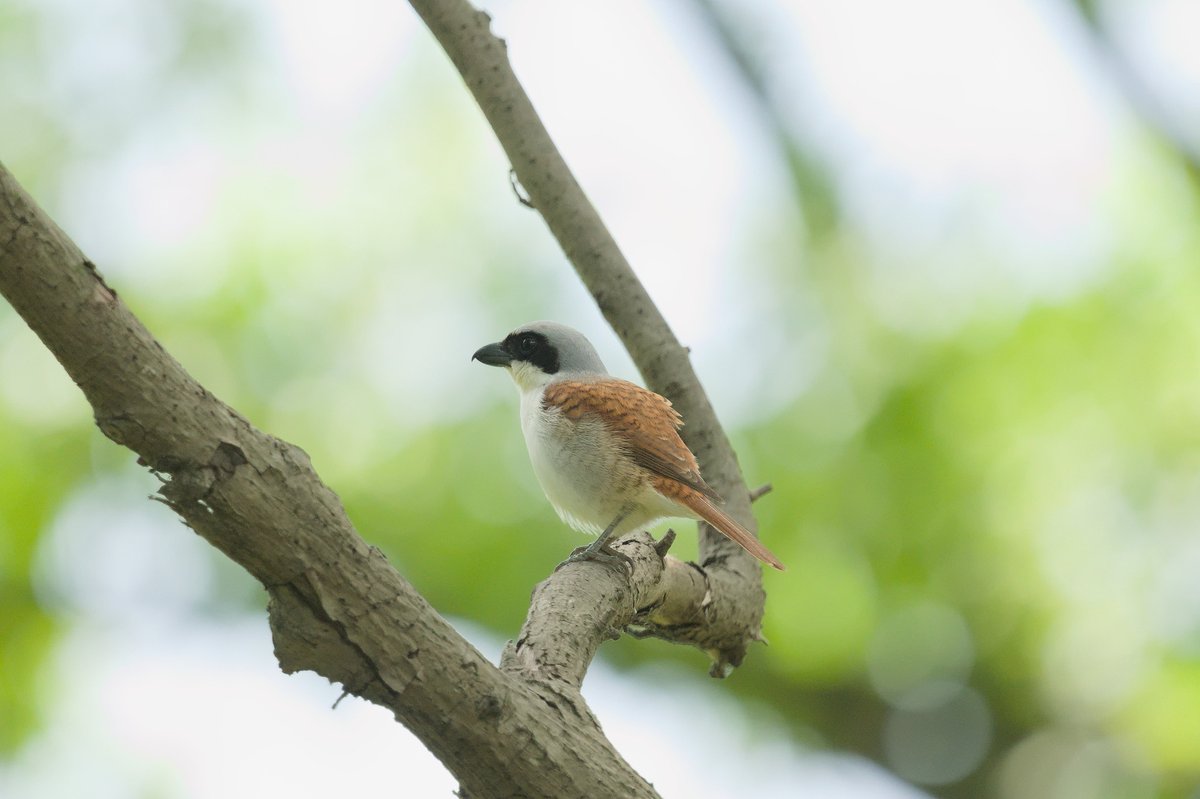
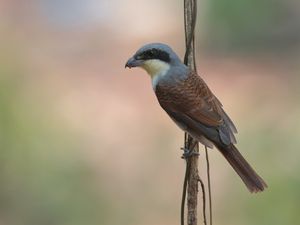
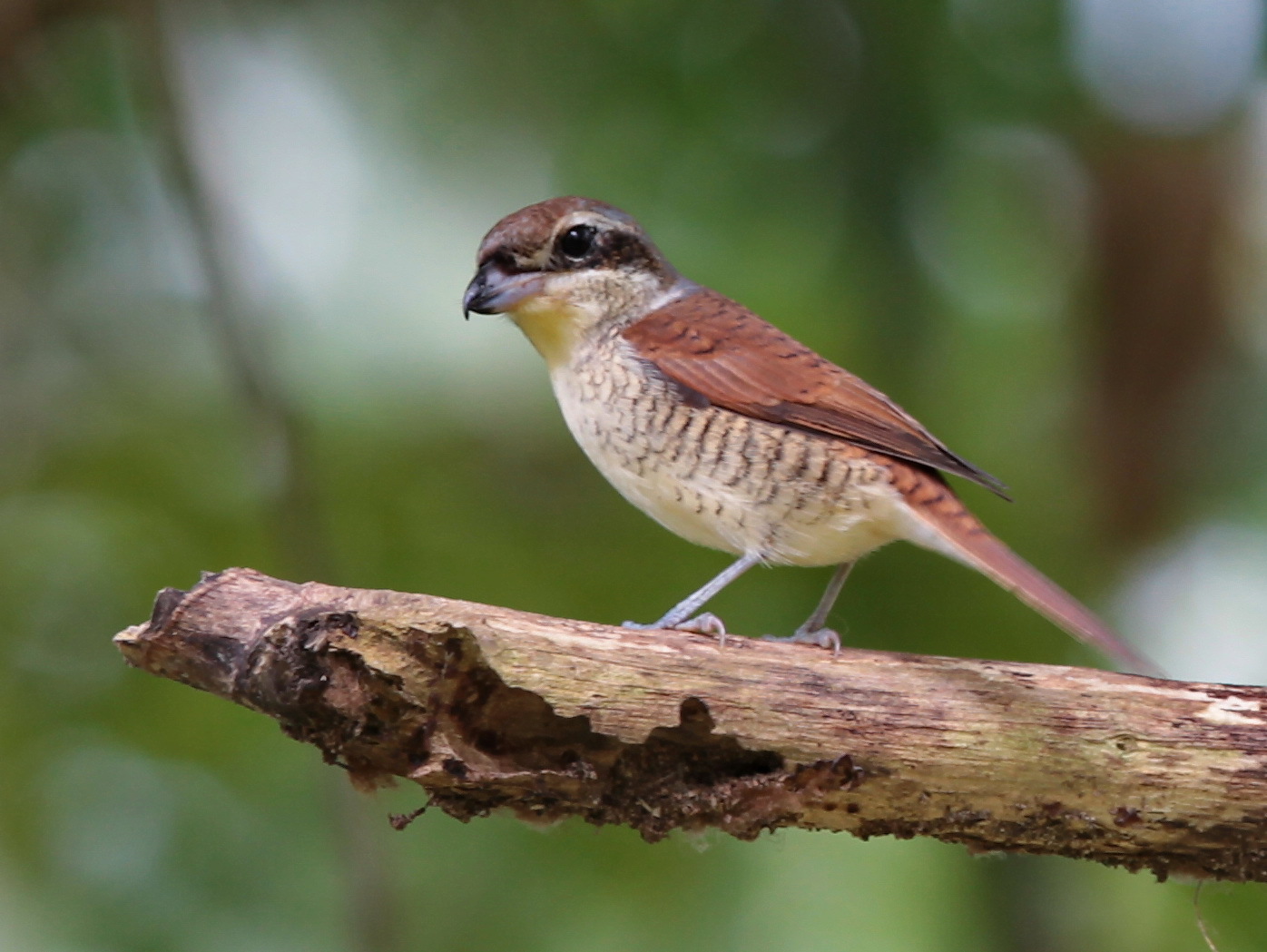
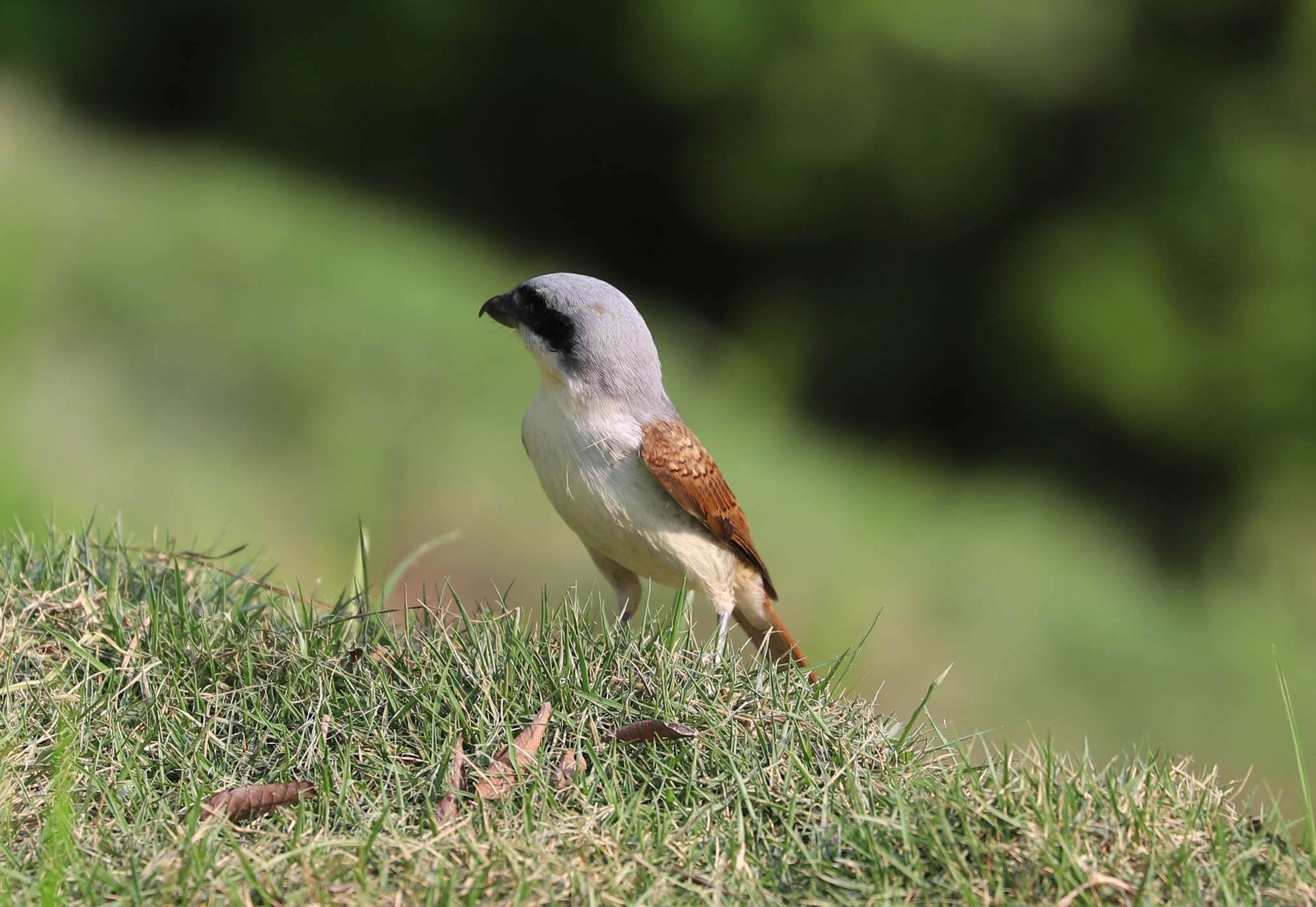
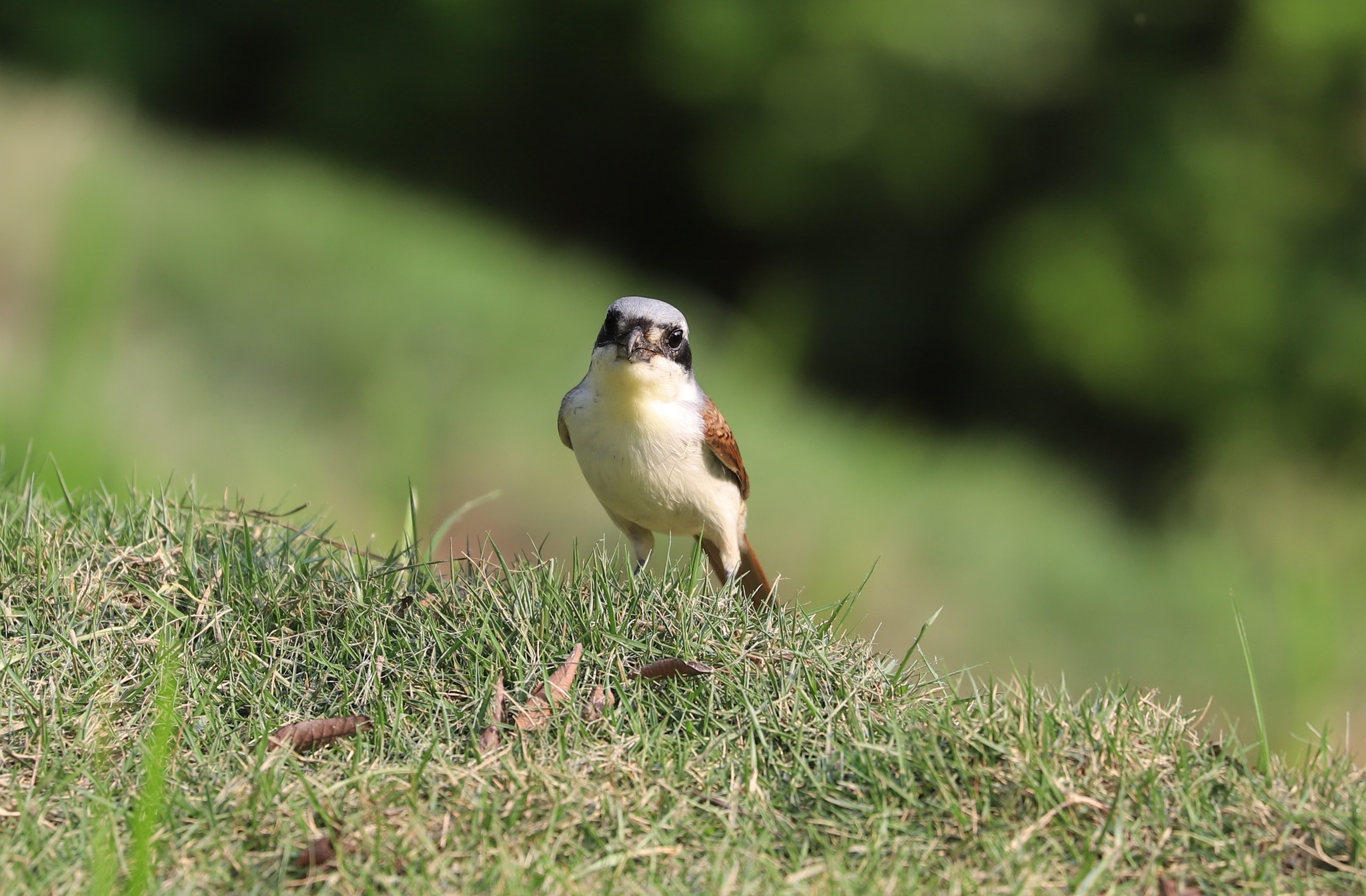
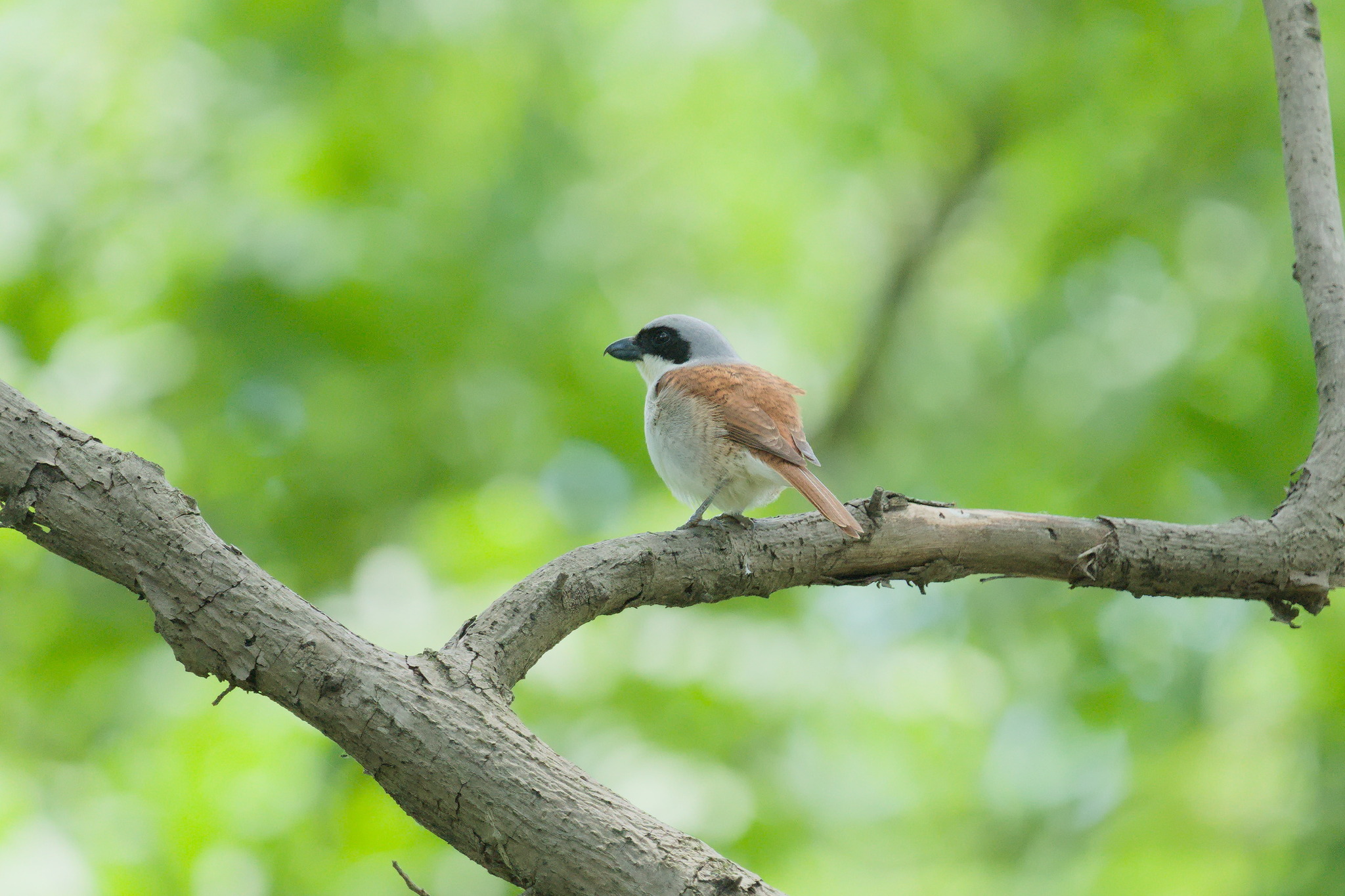
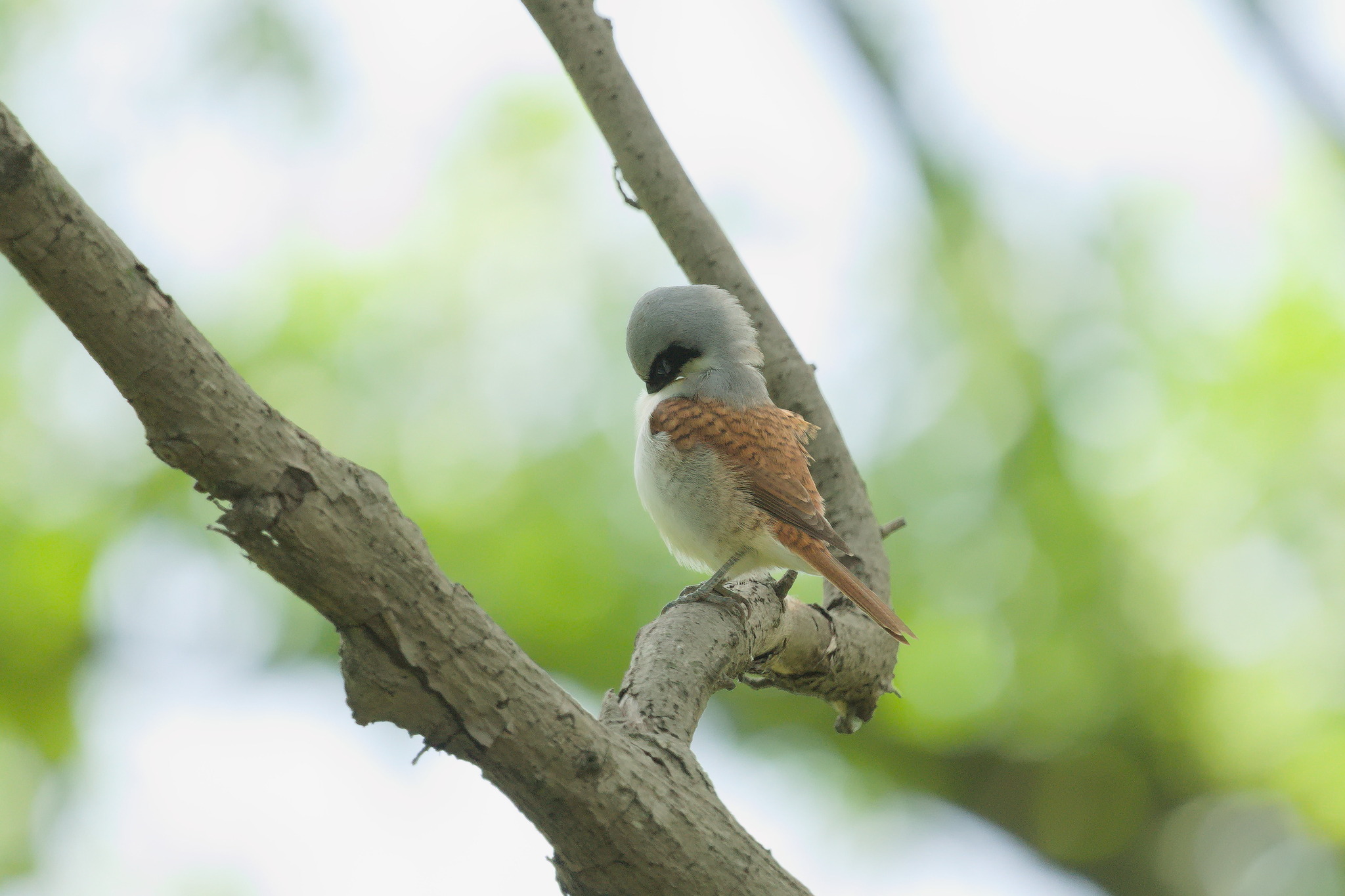
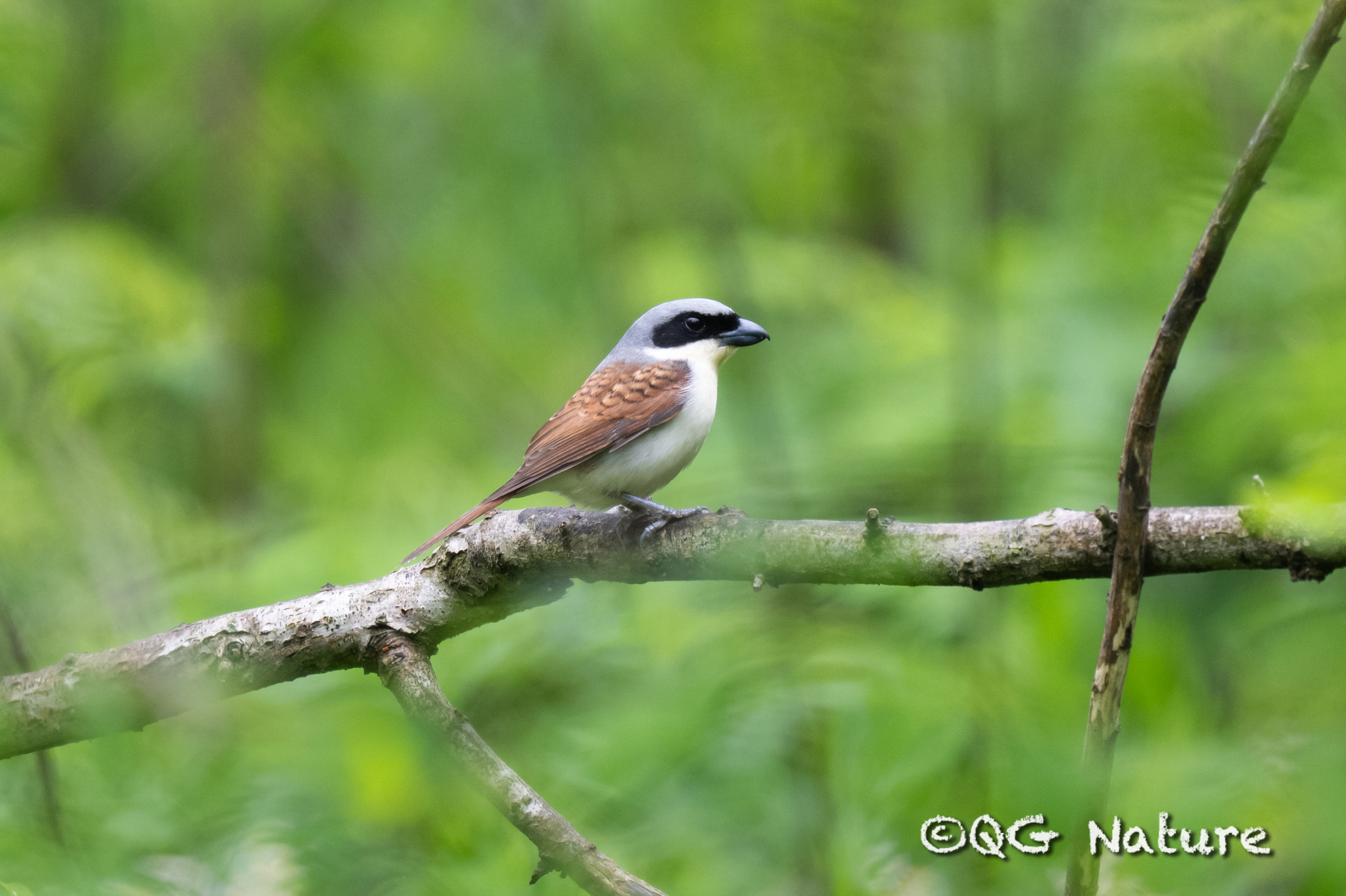
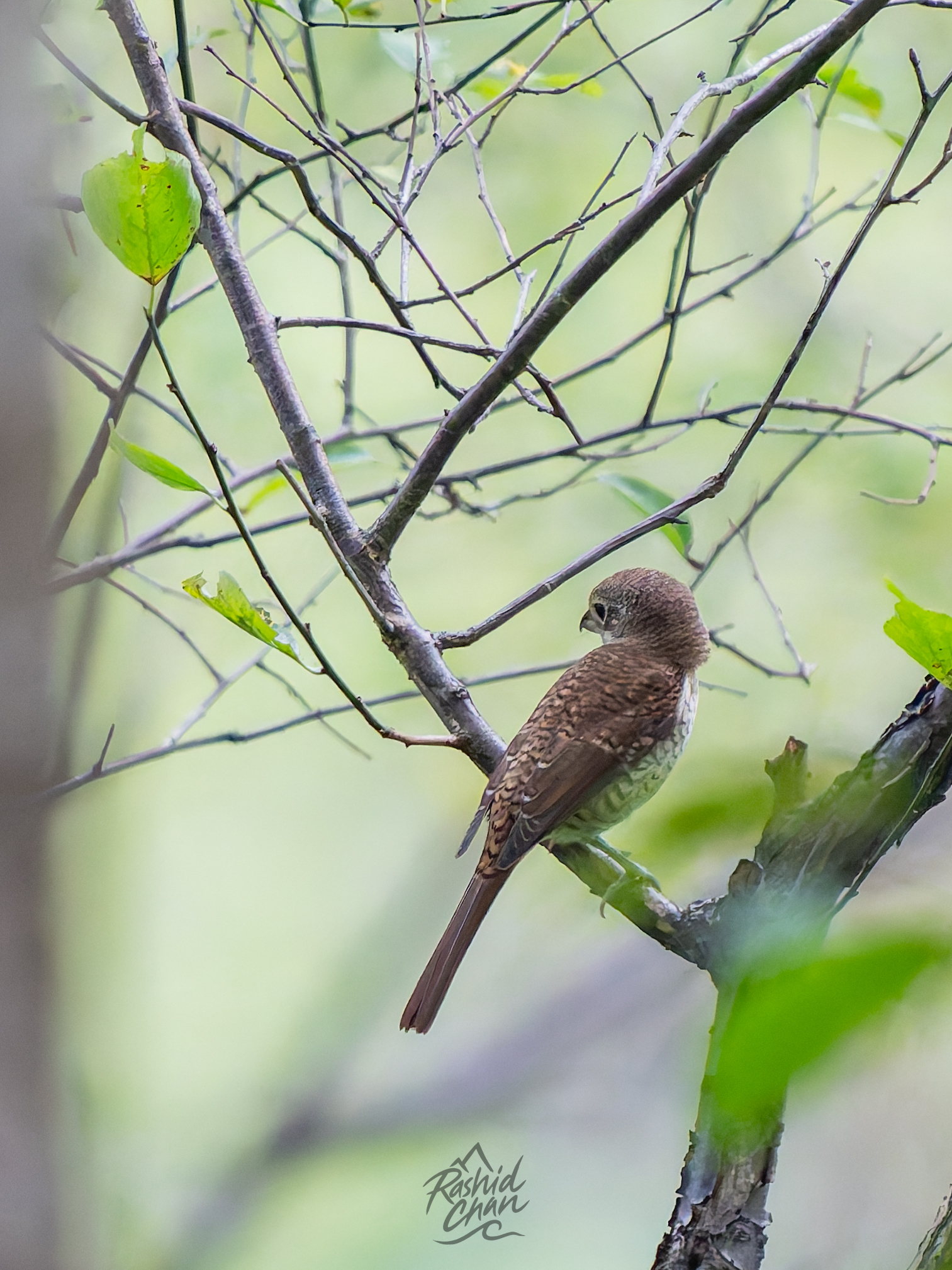
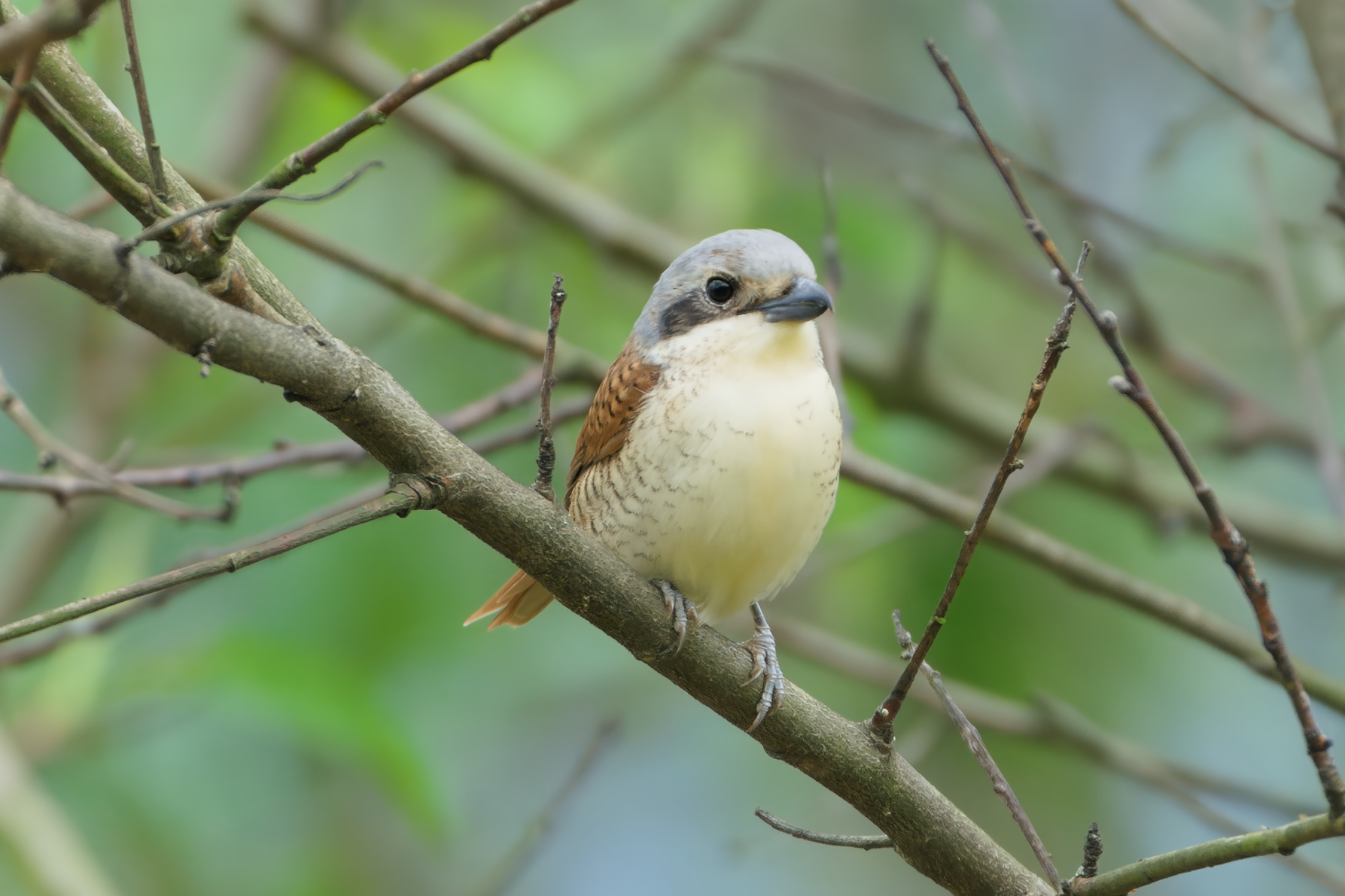
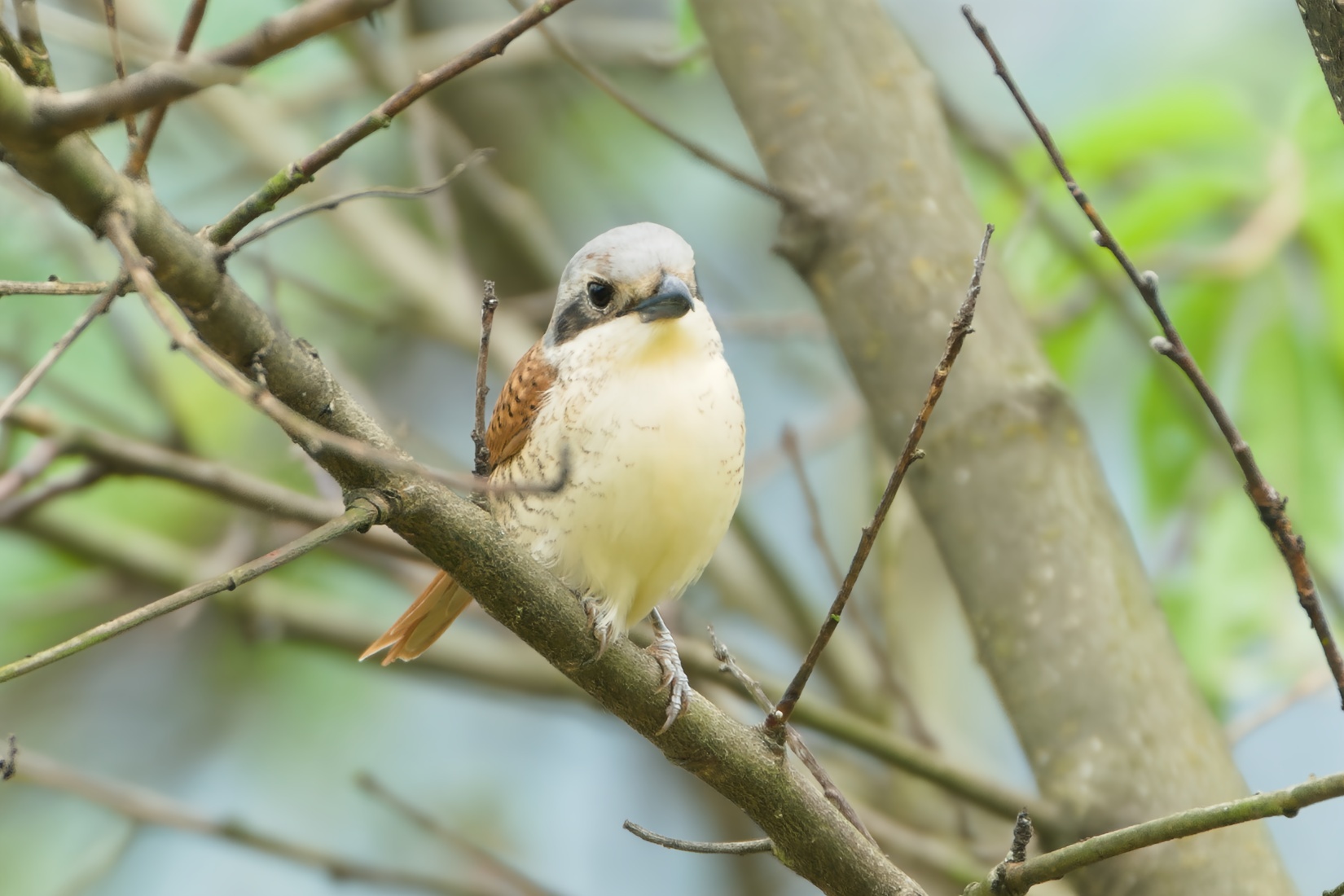
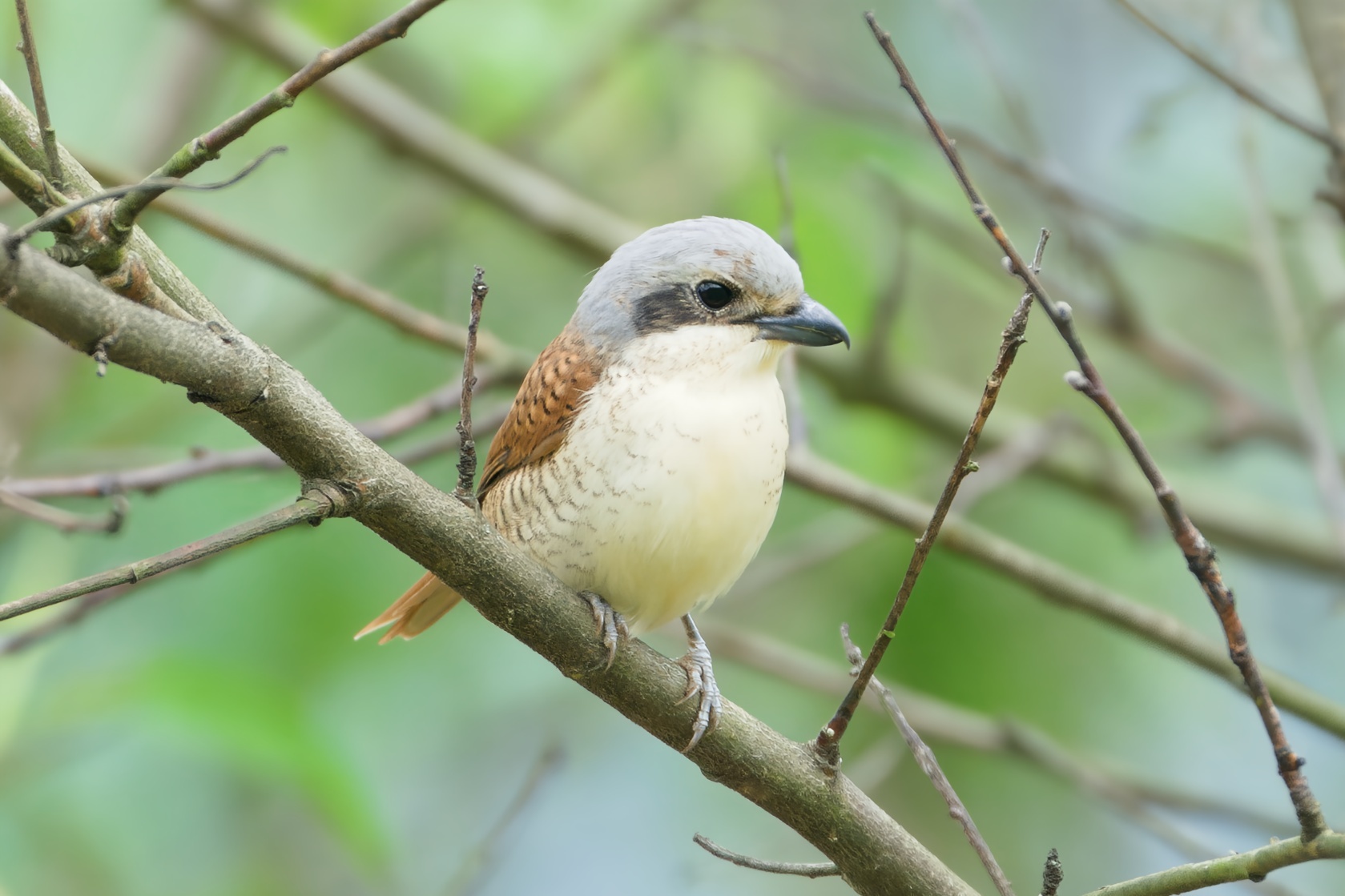
Fairly small and stocky, 17–19 cm long. Males weigh 27-29 g; females 29-37 g. The bill is thick, blue-black with a black tip; legs are grey-black. Adult males have reddish-brown upperparts with blackish bars creating a tiger-like pattern, a black forehead and mask, grey crown and nape, brown wings and tail, and white underparts sometimes with faint flank barring. Females are duller and browner with a less extensive black mask, less grey on the head, a narrow white stripe above the eye, a pale patch between the bill and eye, and buff-white flanks with black barring. Juveniles have dark scale-like markings on the head, back, and underparts, lack grey and black on the head, have a bill with a pale base, and a large-appearing eye due to a pale ring.
Identification
Key marks include the tiger-like barred upperparts of adults. Similar species differences: Brown shrike is larger with a longer tail, thinner bill, brown crown/nape, plain brown back, and white eye-stripe; its juveniles are less contrastingly marked with a dark mask. Bull-headed shrike is larger and longer-tailed with a reddish-brown crown/nape and males have a white wing-patch. Burmese shrike is slimmer, longer-tailed, has a white wing-patch and plain chestnut back. Vocal cues include a musical warbling song and harsh calls such as a loud repeated territorial call, chattering alarm, and soft trilling.
Distribution & Habitat
Breeds in temperate regions of eastern Asia (Ussuriland in Russian Far East north to about 44°N, central and eastern China, Korea, northern and central Honshū, Japan) in deciduous or mixed woodland, forest edges, and farmland with scattered trees. Occurs mainly below 150 m in Russia, 800 m in Japan, and 900 m in China. Migrates southward in August and September, returning May and June. Winters in tropical and subtropical south-east Asia below 1,000 m, from south-east China through eastern Burma, Thailand, Laos, Vietnam to Malaysia and Indonesia (including Java, Bali, Sulawesi). Habitat in winter includes forest clearings, edges, cultivated land, mangroves, and gardens. Vagrants recorded in Hong Kong, Philippines, and Christmas Island.
Behavior & Ecology
Feeds mainly on insects (grasshoppers, crickets, beetles, bugs, butterflies, moths), other arthropods, small birds, and lizards. Hunts from a perch at forest edge or forages among branches and leaves. Breeding season is May to July. Monogamous pairs form during migration or upon arrival. Courting males bow body up and down, move head side-to-side while uttering soft subsong, and perform fast display-flights. Both sexes build a cup-shaped nest of stems, twigs, roots, and vegetation lined with grasses, usually 1.5 to 5 m high in a deciduous tree. Three to six eggs (usually five) are laid, variable in color with dark markings on whitish, pinkish, or blue-green background, measuring 21.2-24.1 mm by 15.3-17.8 mm. Female incubates for 14–16 days. Young fledge after about two weeks and stay near the nest for another two weeks. Usually one clutch per year, but a second is laid if the first is destroyed. Eggs are lost to strong winds and predation by common magpies.
Conservation
Classified as Least Concern by BirdLife International due to wide distribution and fairly large population. However, it has declined recently in Japan and Russia, where it is now uncommon and local.
Source: Wikipedia · CC BY-SA 3.0
Taxonomy
- Order
- Passeriformes
- Family
- Laniidae
- Genus
- Lanius
Distribution
breeds northeastern Asia; winters to southeastern Asia, Greater Sundas, and Philippines
Data Sources
Species description from Wikipedia, licensed under CC BY-SA 3.0.
Bird images and sounds sourced from GBIF, contributed by citizen scientists worldwide under Creative Commons licenses.
Taxonomy data from AviList 2025.