
Tiger Shrike
Lanius tigrinus
虎纹伯劳
Introduction
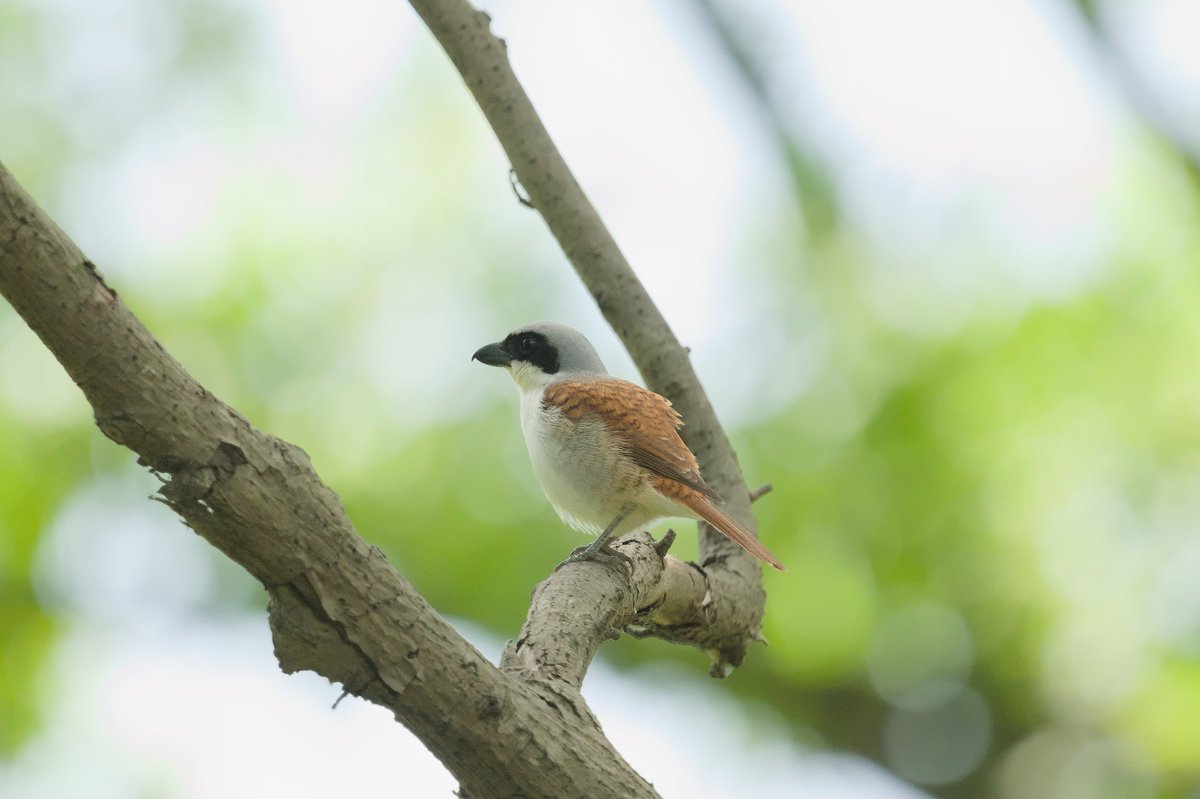
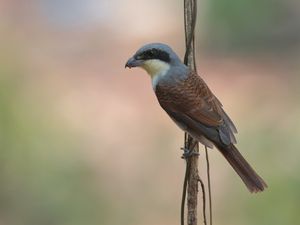
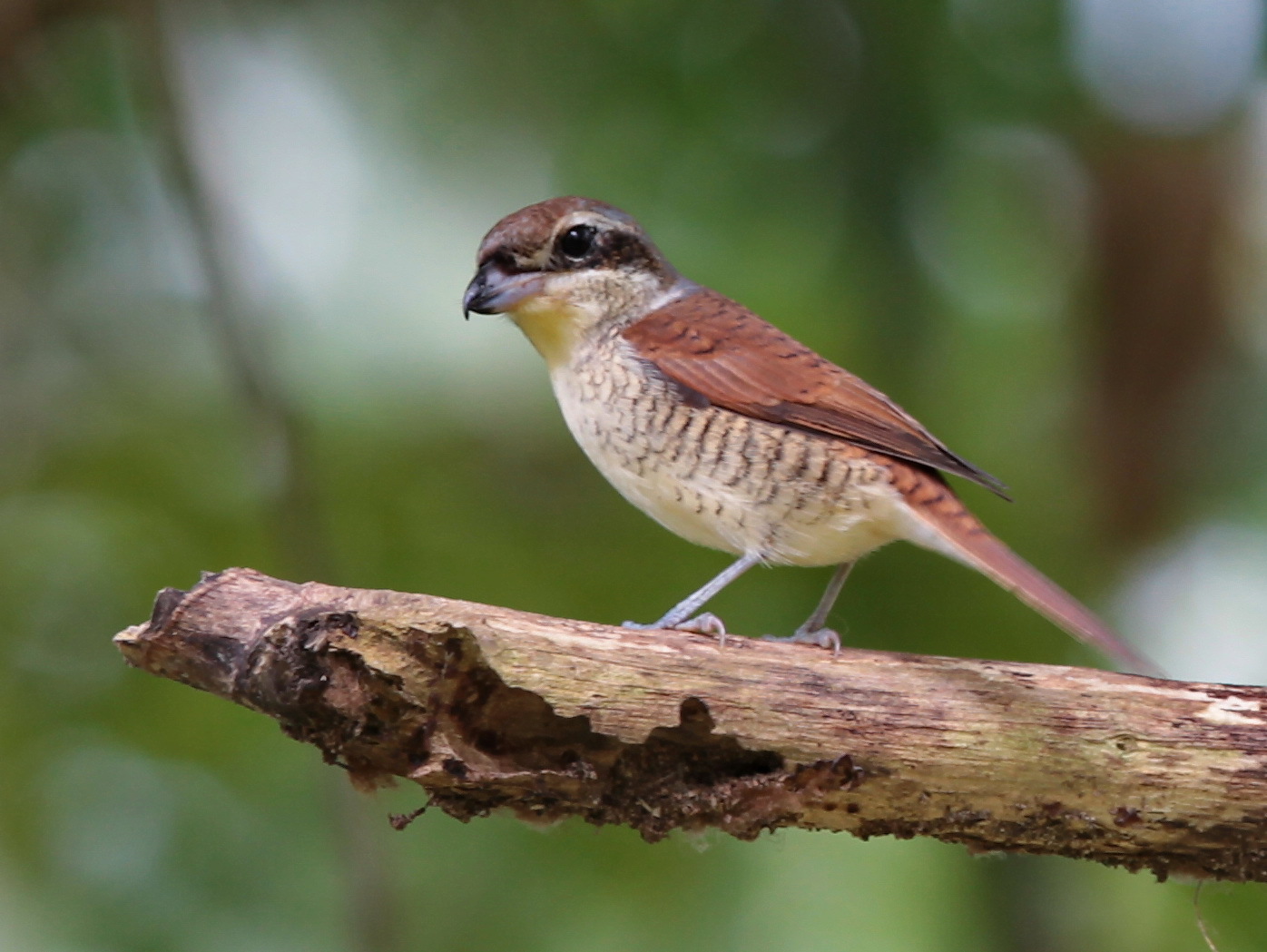
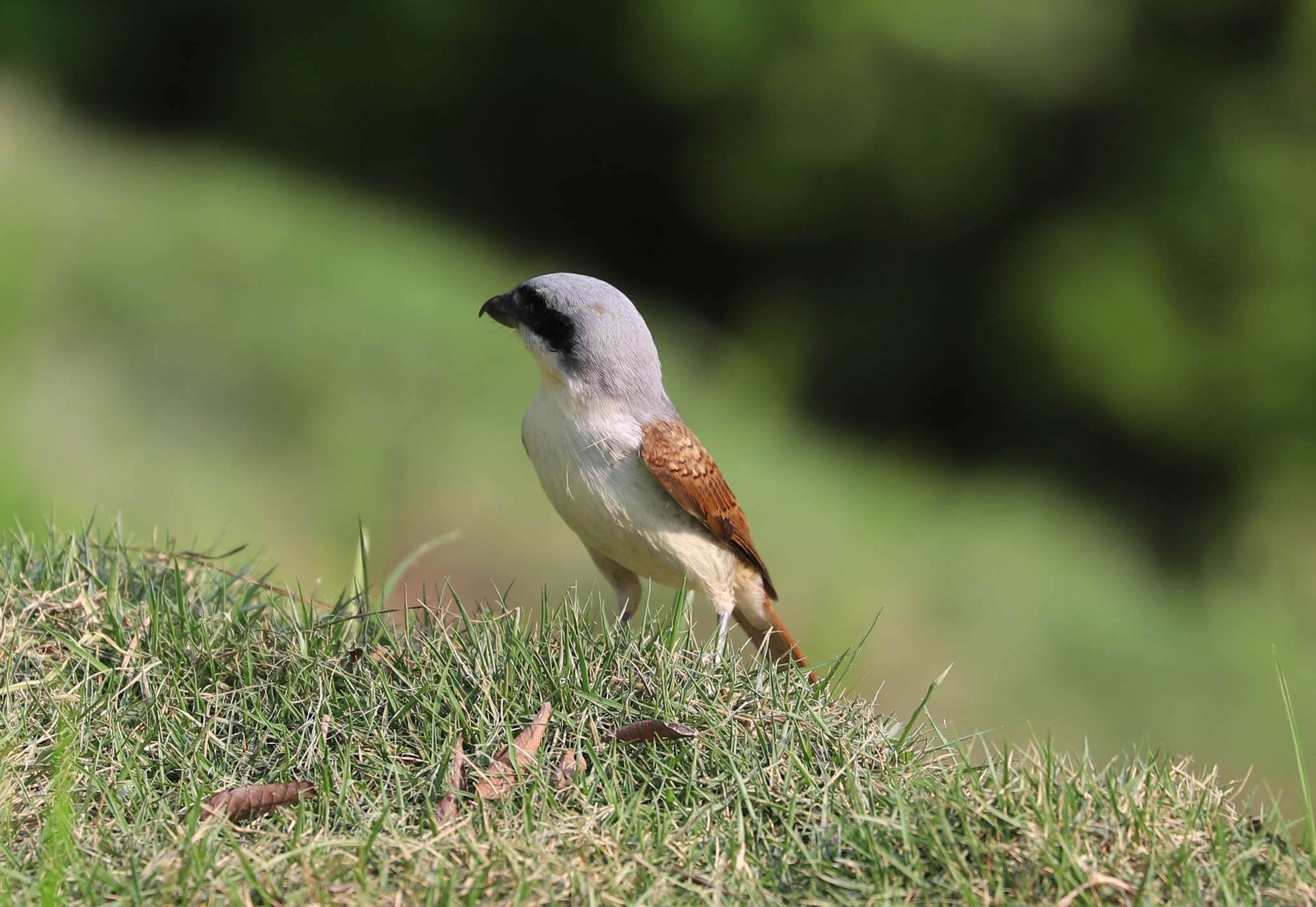
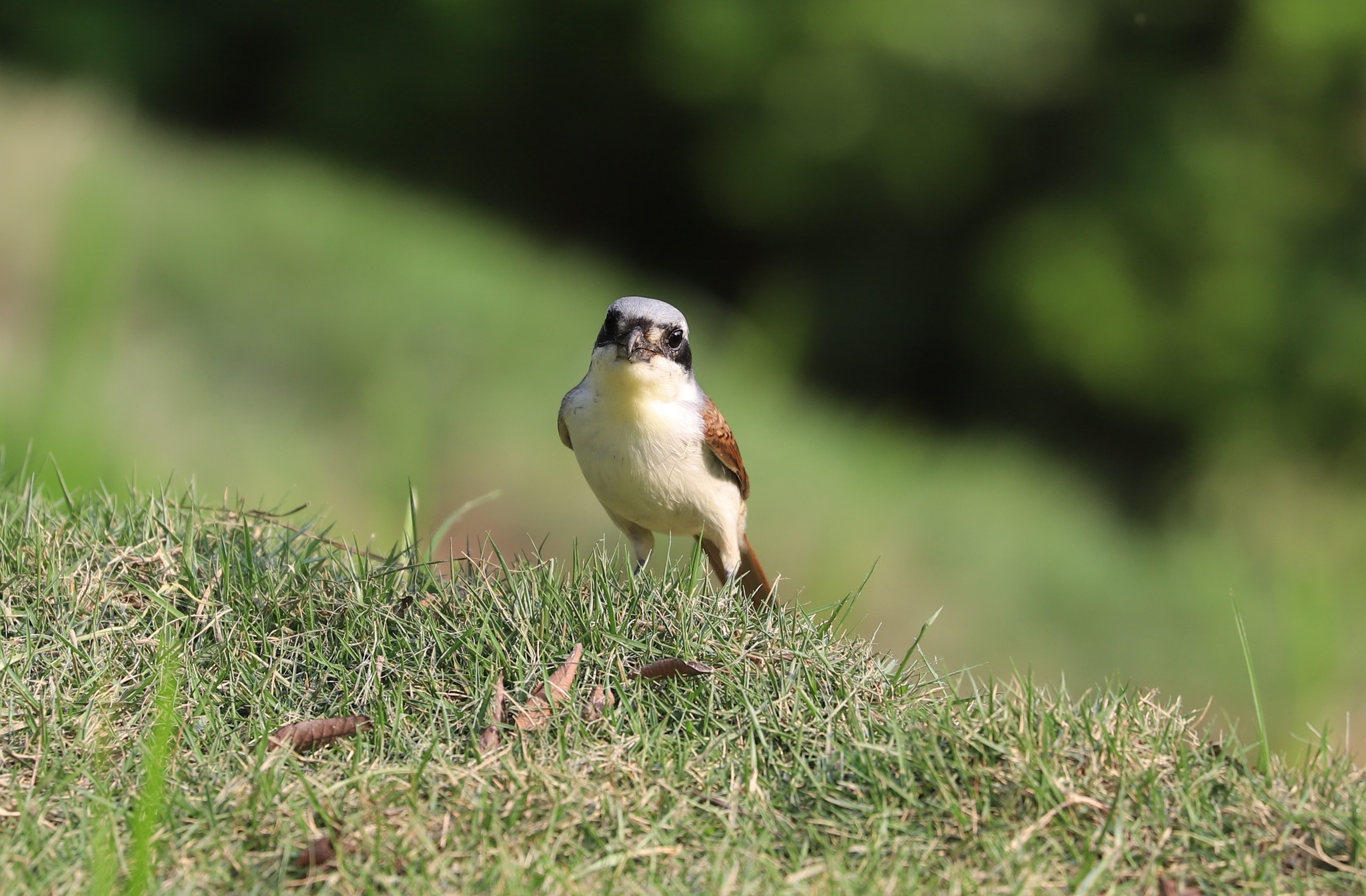
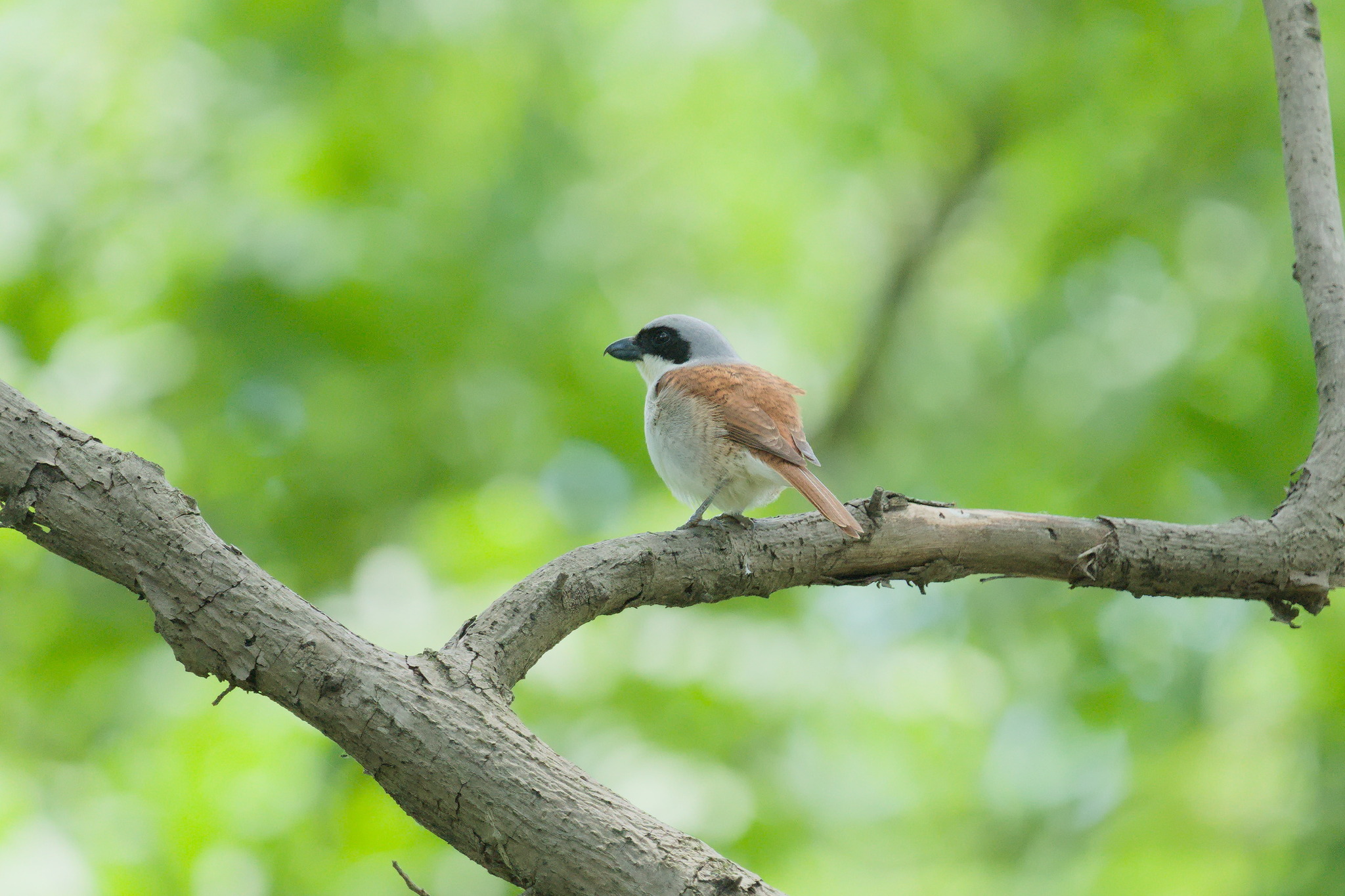
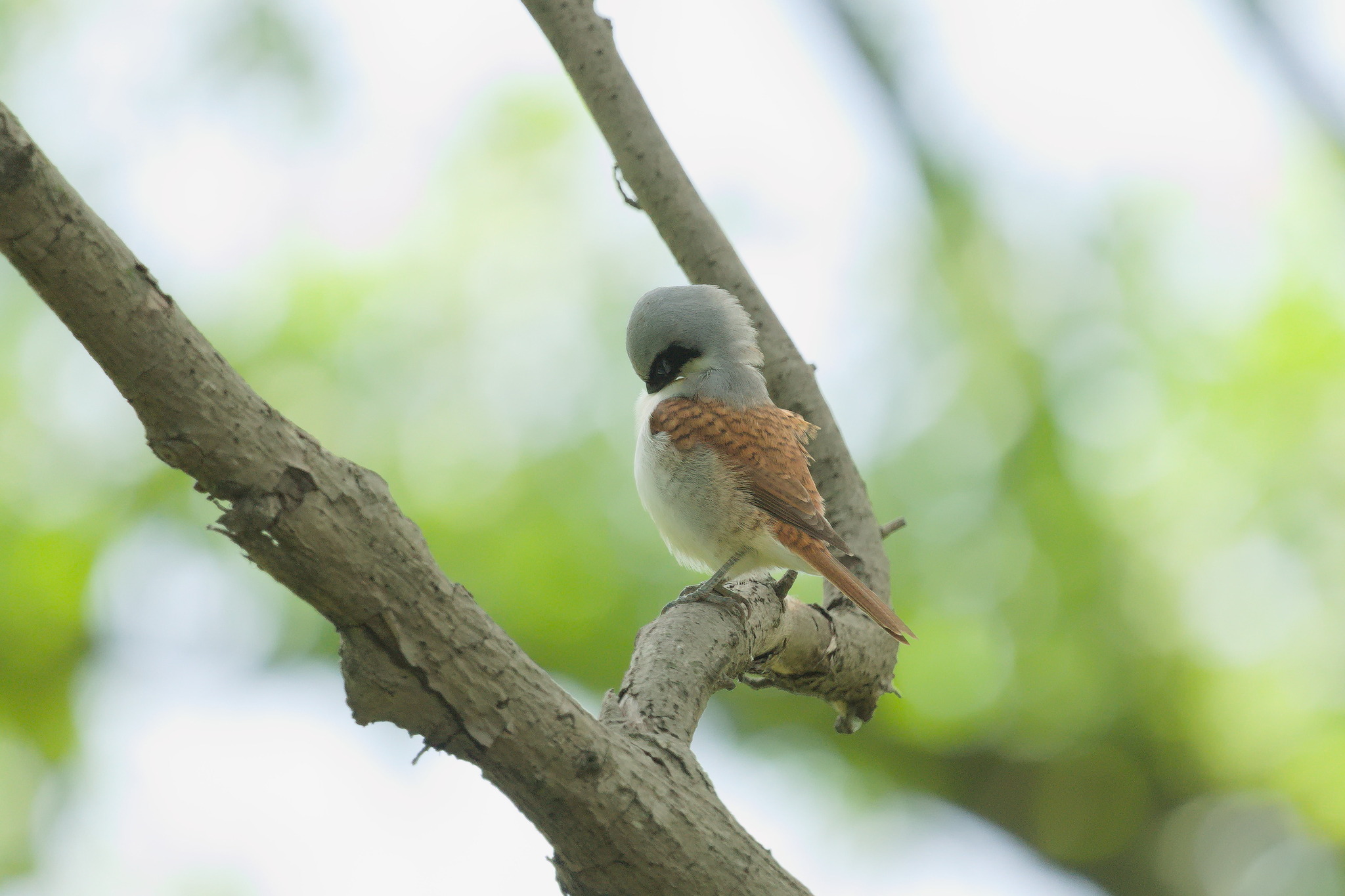
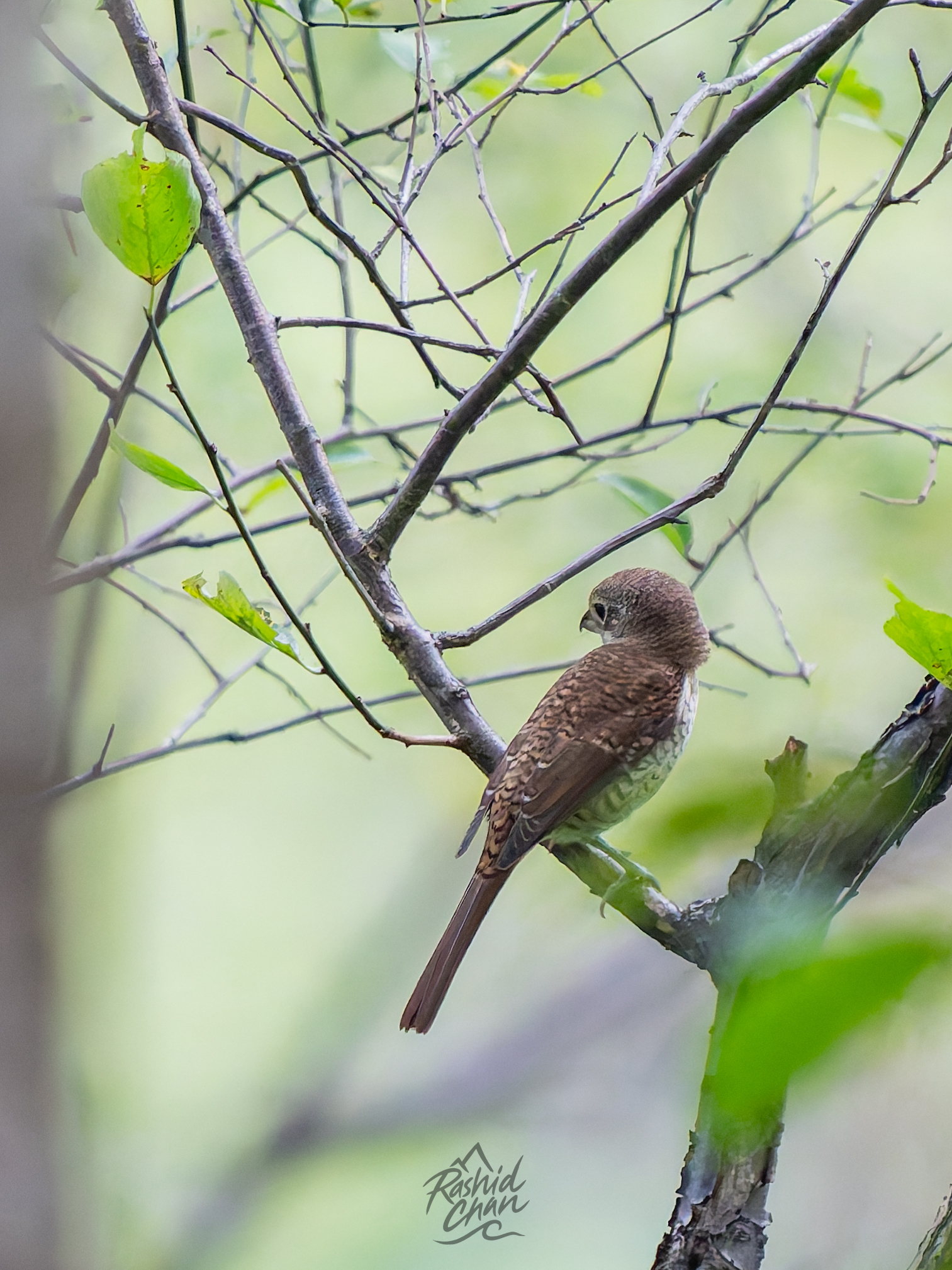
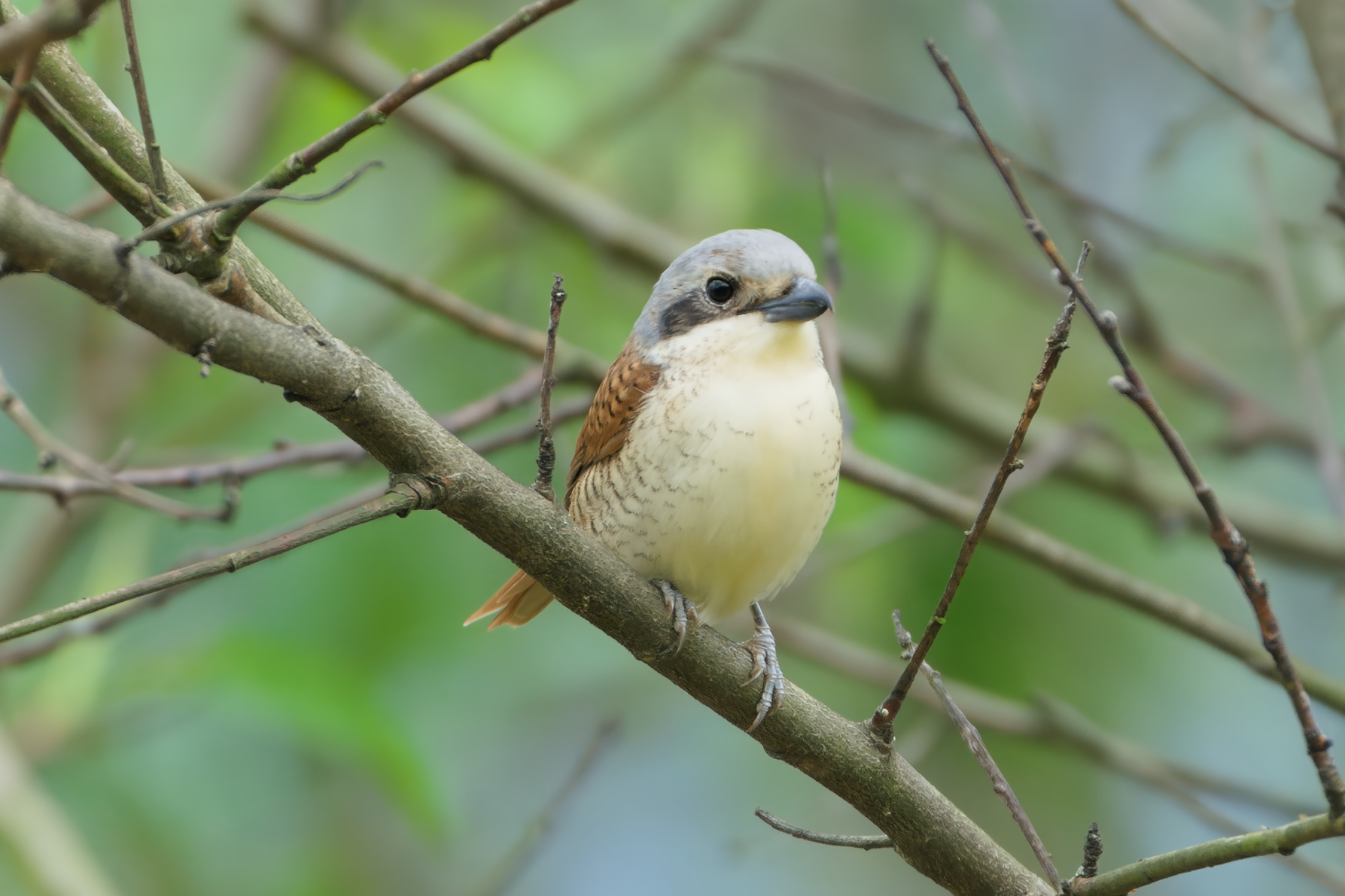
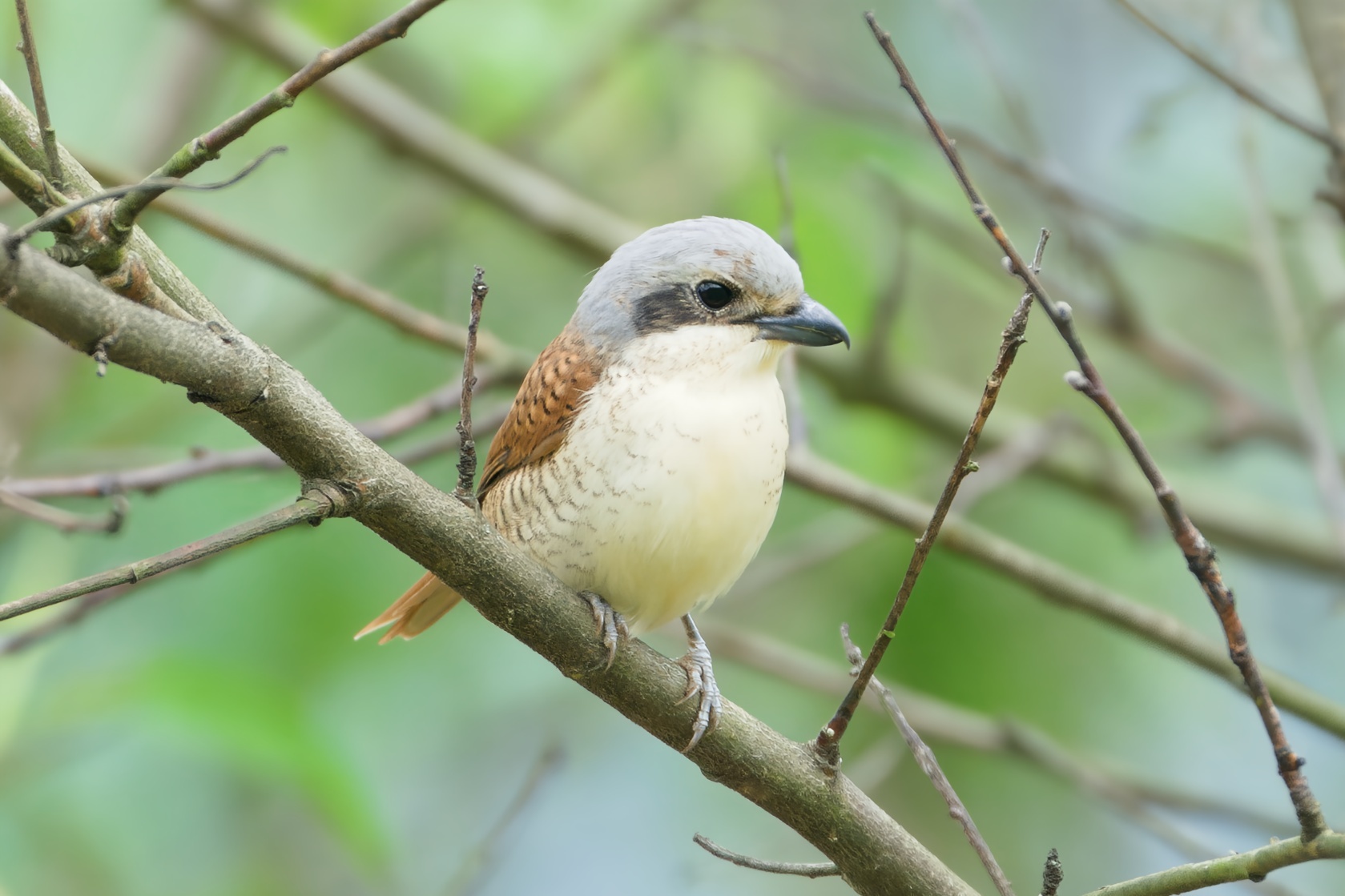
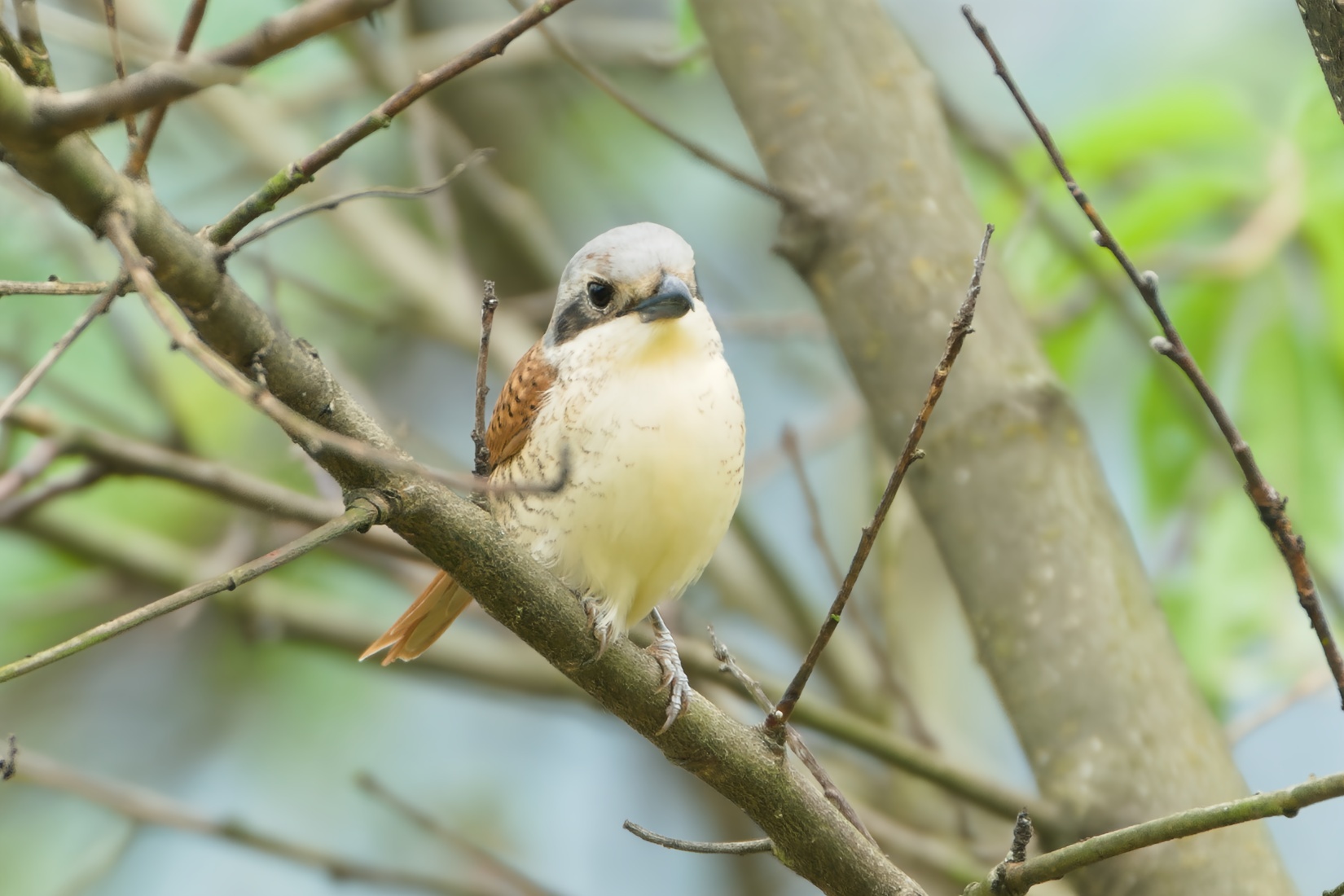
This small, stocky shrike inhabits wooded landscapes across eastern Asia. Adults display distinctive tiger-like barring on the reddish-brown upperparts, which gives the species its common name. Adult males have white underparts, a grey head, and a black mask. Females and immature birds show brown plumage overall. Like other shrikes, this species is predatory and takes prey items larger than typical for its size. The relatively thick bill, noted in the alternative name of thick-billed shrike, distinguishes it from more slender-billed relatives within the genus.
Description
A small, robust shrike measuring 17-19 cm in length. Males weigh 27-29 g with wings measuring 77.8-83.9 mm, while females are slightly heavier at 29-37 g with wings of 79.5-85.3 mm. The thick bill is blue-black with a black tip, and the legs are grey-black. Adult males display reddish-brown upperparts with blackish barring creating a tiger-stripe effect, combined with a black forehead and mask, grey crown and nape, brown wings and tail, and white underparts. Females are duller and browner with reduced black mask markings, limited grey on the head, a narrow white stripe above the eye, and buff-white flanks with black barring. Juveniles show dark scale-like markings across the head, back, and underparts, lacking the adult's grey and black head coloration, with a pale-based bill and a prominent pale eye-ring.
Identification
This species is best distinguished from the brown shrike by its smaller size, stockier build, and notably thicker bill. Brown shrikes also show a plain brown back and crown rather than the tiger-shrike's barred reddish-brown upperparts, and they possess a prominent white supercilium. The bull-headed shrike is larger with a longer tail and shows a distinctive white wing patch in males, which this species lacks. Juvenile tiger shrikes are more contrastingly marked than juvenile brown shrikes and show a distinctive pale eye-ring making the eye appear larger. The species' preference for wooded habitats and more concealed perching behavior also helps separate it from open-country shrikes.
Distribution & Habitat
Breeds across temperate eastern Asia in deciduous and mixed woodland, forest edges, and farmland with scattered trees. Its breeding range extends from Ussuriland in the Russian Far East south through central and eastern China and Korea to northern and central Honshū in Japan, occurring mainly below 150 m in Russia, 800 m in Japan, and 900 m in China. The species migrates southward from August to September, returning to breeding grounds between May and June. Wintering grounds lie in tropical and subtropical Southeast Asia below 1,000 m, from southeastern China through eastern Burma, Thailand, Laos, and Vietnam to Malaysia, Indonesia, Java, Bali, and Sulawesi. In winter, it inhabits forest clearings, cultivated land, mangroves, and gardens. Vagrants have occurred in Hong Kong, the Philippines, and Christmas Island.
Behavior & Ecology
Primarily insectivorous, feeding on grasshoppers, crickets, beetles, bugs, butterflies, moths, other arthropods, small birds, and lizards. It hunts from perches at forest edges and also forages actively among branches and foliage. The breeding season runs from May to July, with pairs forming during migration or shortly after arrival. Males perform courtship displays including bowing movements while singing softly and executing display-flights while calling. Both sexes construct a cup-shaped nest 1.5-5 m above ground on a branch in deciduous trees, using stems, twigs, and roots lined with grasses. Clutches of three to six eggs, most commonly five, are incubated by the female for 14-16 days. Fledglings remain near the nest for two weeks post-fledging. The song is a musical warble, supplemented by harsh calls including a loud territorial call and chattering alarm call. Males often call from prominent perches while females remain in cover.
Conservation
Classified as Least Concern by BirdLife International due to its wide distribution and relatively large population. However, the species has shown recent population declines in Japan and Russia, raising local conservation concerns. In Japan, it has become uncommon and local, having vanished from suburban Tokyo areas where it was formerly common. Threats include predation on eggs by common magpies and nest losses due to strong winds. The overall population trend appears downward, warranting continued monitoring across its range.
Culture
No specific cultural significance or folklore is documented for this species.
Source: Wikipedia · CC BY-SA 3.0
Taxonomy
- Order
- Passeriformes
- Family
- Laniidae
- Genus
- Lanius
- eBird Code
- tigshr1
Distribution
breeds northeastern Asia; winters to southeastern Asia, Greater Sundas, and Philippines
Data Sources
Species description from Wikipedia, licensed under CC BY-SA 3.0.
Bird images and sounds sourced from GBIF, contributed by citizen scientists worldwide under Creative Commons licenses.
Taxonomy data from AviList 2025.