Passeriformes / Laniidae / Lanius
Bull-headed Shrike
Lanius bucephalus · 牛头伯劳
Introduction
A passerine bird of the shrike family Laniidae found in eastern Asia. It inhabits open habitats such as farmland and woodland edges, as well as urban parks. Distinctive behaviors include hunting from prominent perches and impaling prey on thorns.
Description
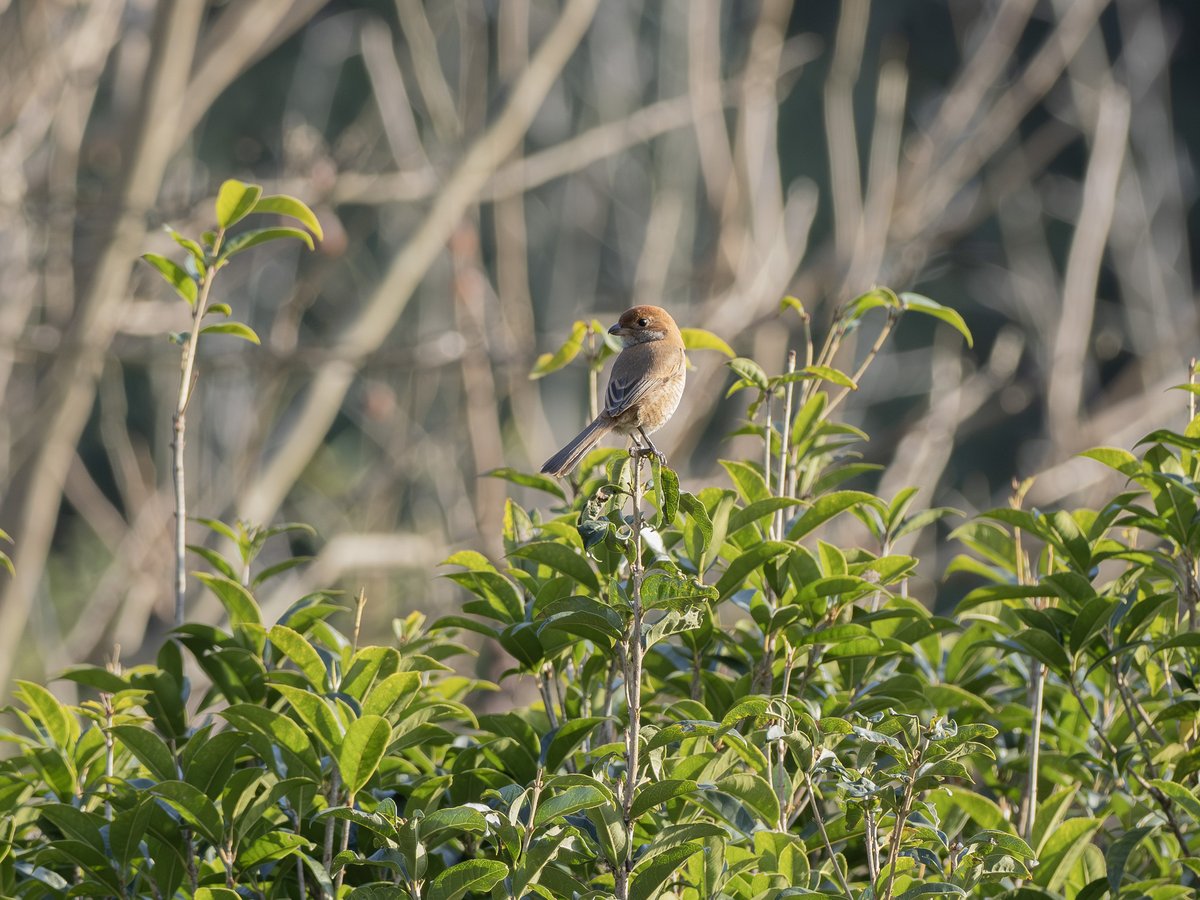
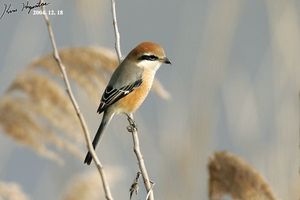
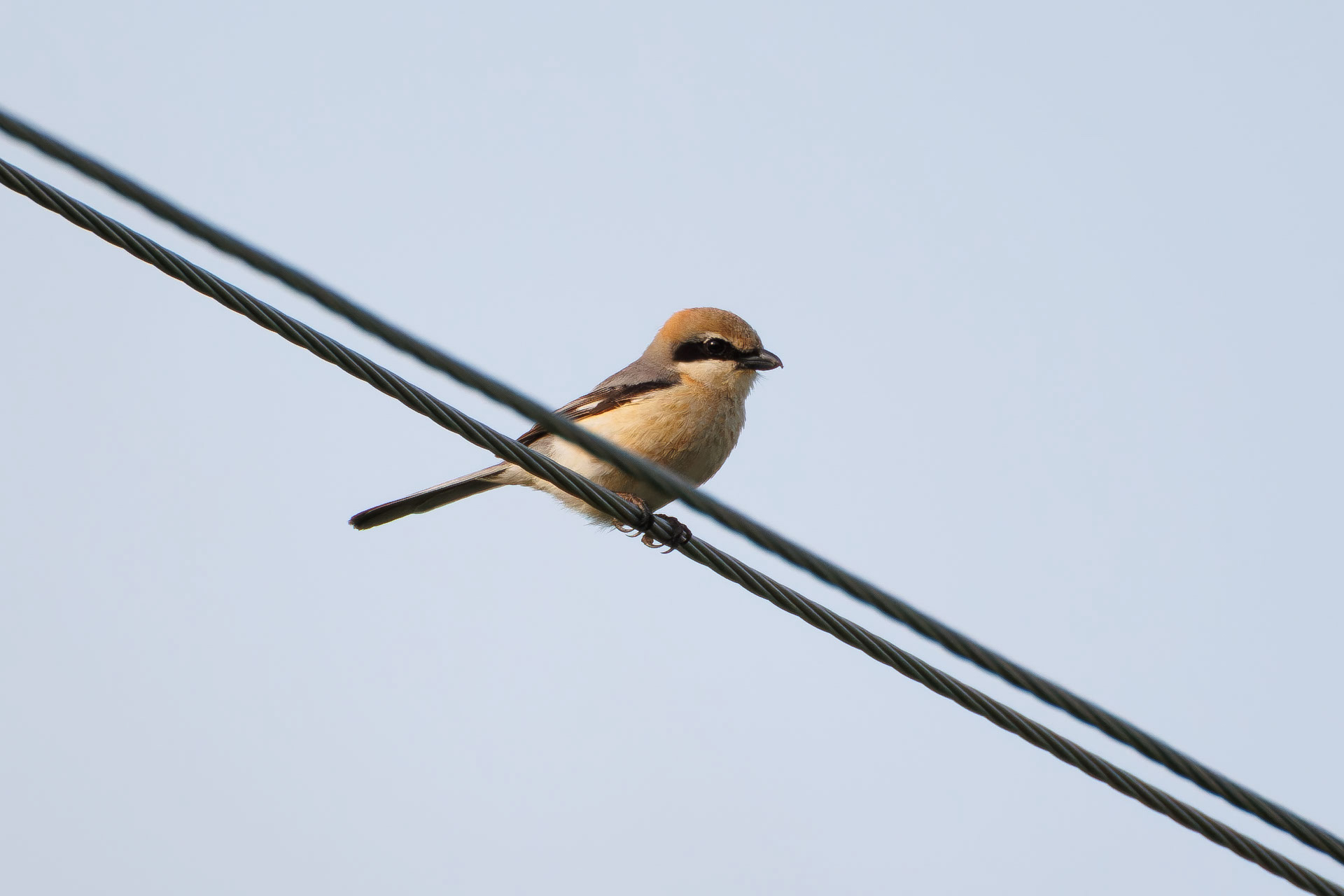
Length is 19–20 cm. The male has a brown crown, white eyebrow, black mask, grey-brown back, dark wings with a white patch, rufous flanks, and whitish underparts with fine barring. Females are similar but duller and browner, featuring a brown mask and lacking the white wing-patch.
Identification
Males are identified by the black mask and white wing-patch. Females lack the white wing-patch and have a brown mask. Vocalizations include harsh grating and chattering calls, along with mimicry of other birds.
Distribution & Habitat
Breeds in north-east China, Korea, Japan, and far-eastern Russia (Ussuriland, Sakhalin, and the Kuril Islands). Northern populations migrate south for winter, reaching southern China. Vagrants occur in Taiwan, Hong Kong, and Vietnam. The isolated race sicarius is found in the mountains of Gansu Province, west-central China.
Behavior & Ecology
Prefers open habitats like farmland and woodland edges. Hunts from prominent perches, feeding mainly on insects such as beetles and crickets, but also preys on lizards and crustaceans. Impales prey on sharp points like thorns to rip food into bite-sized pieces, cache it, or mark territory boundaries. Nests are built among bushes or bamboo. Clutches contain two to six eggs, incubated for 14 to 15 days, with young fledging 14 days after hatching.
Source: Wikipedia · CC BY-SA 3.0
Taxonomy
- Order
- Passeriformes
- Family
- Laniidae
- Genus
- Lanius
Vocalizations
Subspecies (2)
-
Lanius bucephalus bucephalus
eastern Asia, Japan, Korea, and northeastern China
Data Sources
Species description from Wikipedia, licensed under CC BY-SA 3.0.
Bird images and sounds sourced from GBIF, contributed by citizen scientists worldwide under Creative Commons licenses.
Taxonomy data from AviList 2025.