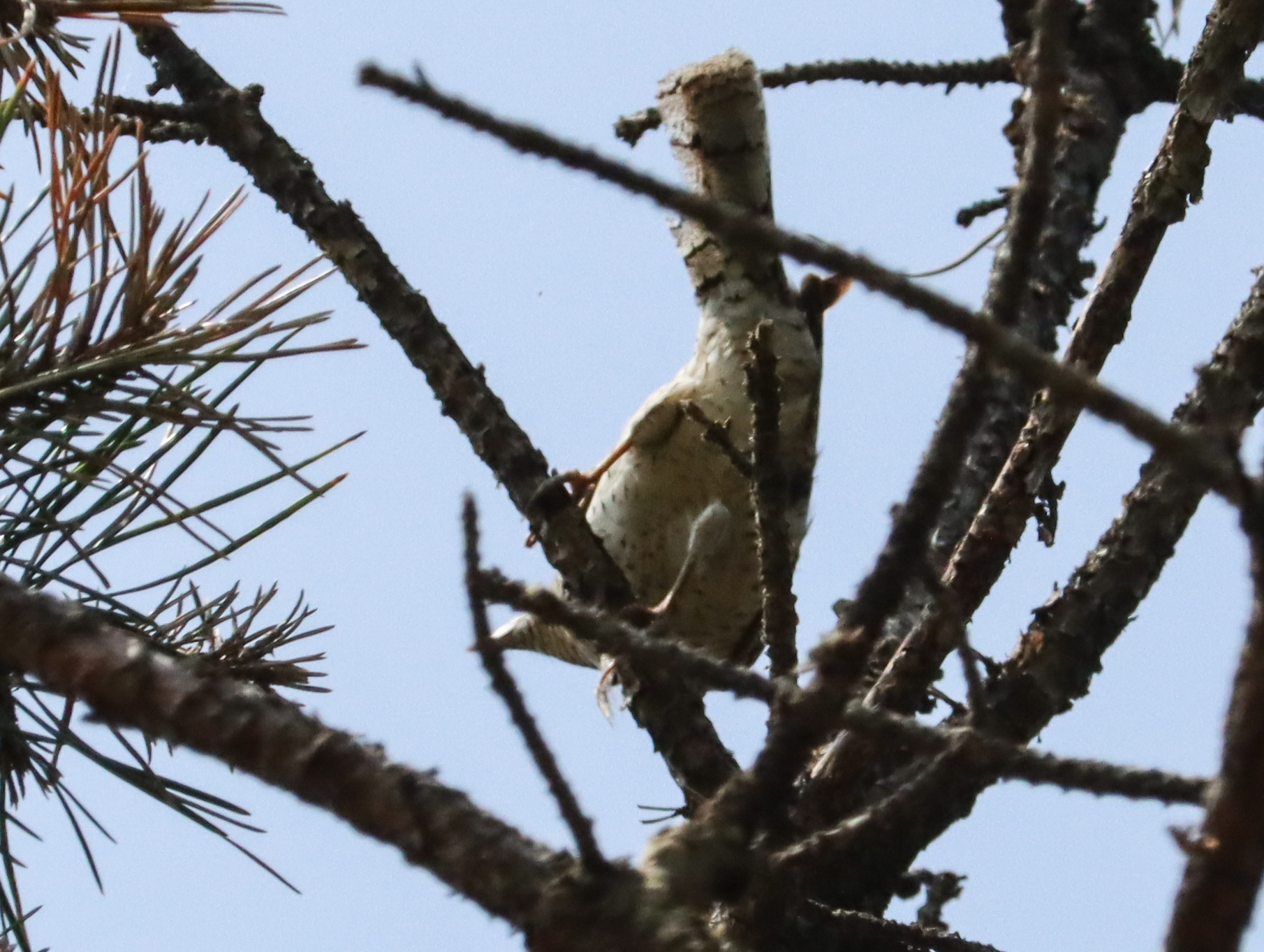
Eurasian Wryneck
Jynx torquilla
蚁鴷
Introduction
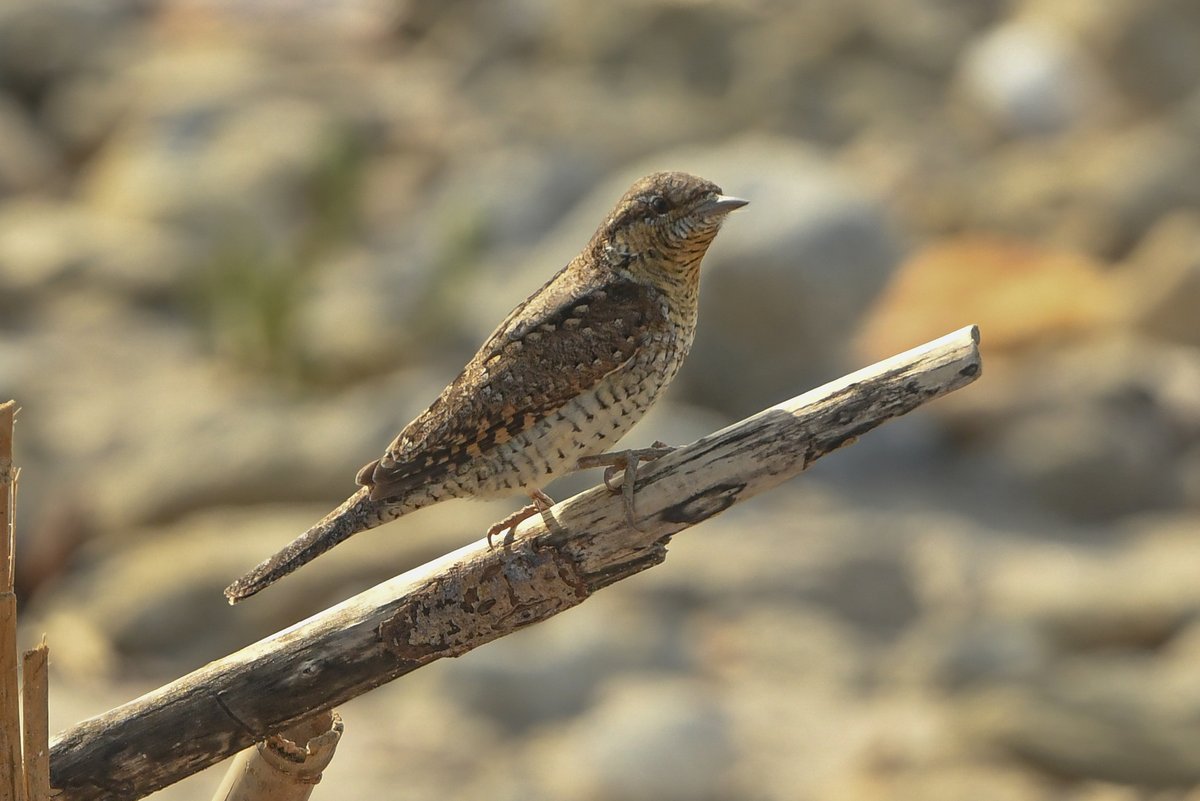
A ground-foraging woodpecker with a thrush-like silhouette. Unlike most woodpeckers, it forages primarily on the ground, hunting ants and other insects. It possesses a highly flexible neck, capable of rotating the head through approximately 180 degrees, used as a defense display at the nest. The species is highly migratory across most of its range, breeding in Europe and Asia and wintering in tropical Africa or southern Asia. It inhabits open countryside, including old orchards, hedgerows, and woodland edges. Plumage is cryptic, with brown, rufous, and cream markings. The call consists of harsh, shrill notes.
Description
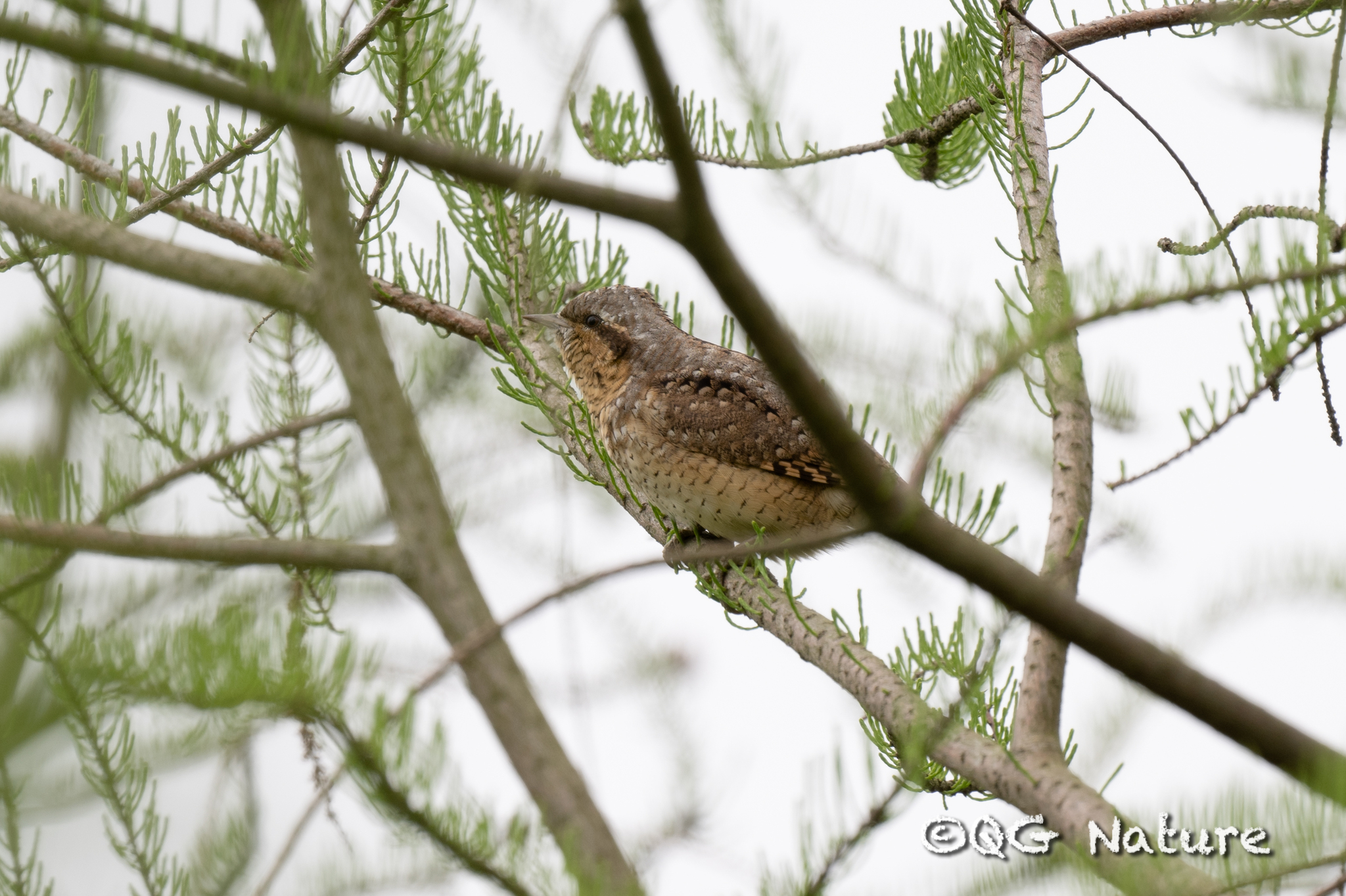
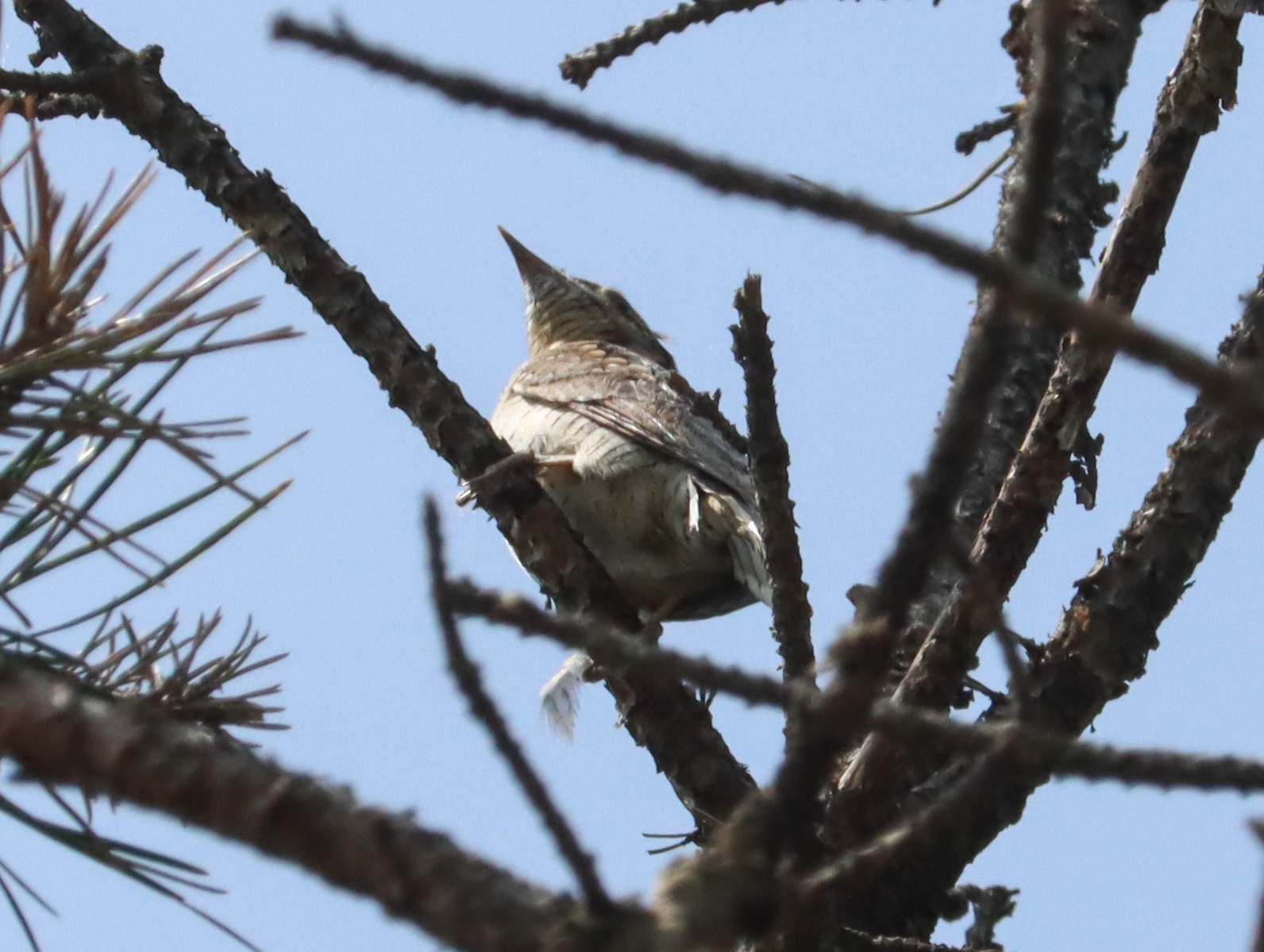
This slim, elongated bird measures 16-18 cm in length and weighs between 23-52 grams, with a body shape more resembling a thrush than a typical woodpecker. The upperparts display complex barring and mottling in pale brown, rufous, and blackish tones, while the rump and tail coverts are grey with speckles and irregular brown bands. The rounded tail is grey speckled with brown, showing faint greyish-brown bands. The cheeks and throat are buff with brown barring, and the underparts are creamy white marked with brown arrow-shaped spots that become smaller on the lower breast and belly. The flanks are buff with similar markings. The brown beak is long, slender, and pointed, adapted for picking insects rather than drilling wood. Hazel eyes and pale brown legs complete the appearance. The zygodactyl foot arrangement—with toes pointing two forward and two backward—enables efficient climbing. Juveniles resemble adults but with duller, less contrasting plumage.
Identification
This species' most distinctive identification feature is its behavioral display rather than plumage. The extraordinary head-twisting ability, where the bird can rotate its neck through nearly 180 degrees while hissing, is unique among European and Asian birds and immediately separates it from similar species. Its overall shape—a slim, elongated body unlike the stocky build of typical woodpeckers—further aids identification. The plumage pattern of barred upperparts and spotted underparts, combined with the relatively long, slender beak (shorter and less dagger-like than other woodpeckers), helps distinguish it from smaller spotted woodpeckers. The call, a repeated series of harsh 'quee-quee-quee-quee' notes lasting several seconds, resembles the lesser spotted woodpecker but is generally louder and more falcon-like.
Distribution & Habitat
This species has a Palearctic distribution spanning temperate Europe and Asia. The breeding range extends across most of Europe to the Urals, reaching the Arctic Circle in the north and Portugal and Spain in the southwest. Several subspecies occupy different regions: the nominate form covers most of Europe, while smaller reddish-brown populations inhabit Corsica, Italy, and the Balkans, and a non-migratory resident subspecies occurs in northwestern Africa. Asian populations breed across Siberia to the Pacific coast, including the Himalayas, Sakhalin, Japan, and coastal China. While the species has disappeared as a breeding bird from Great Britain, small numbers pass through during migration. Most populations are long-distance migrants, with European birds wintering across tropical Africa from Senegal to Ethiopia, and Asian populations wintering in the Indian subcontinent or southern East Asia including Japan. The species inhabits open countryside, orchards, woodland edges, parkland, and gardens, preferring drier habitats with old trees.
Behavior & Ecology
During summer, this species is usually encountered in pairs, though small groups may form during migration and in winter quarters. It forages primarily on the ground for ants, using short hops with its tail raised, but will also climb tree trunks obliquely and occasionally catch insects in flight. The tongue extends rapidly to capture prey rather than drilling into bark. The diet consists chiefly of ants, supplemented by beetles and their larvae, moths, spiders, and woodlice. The breeding season sees pairs establishing territories in areas with abundant ant populations, particularly favoring old orchards. Nest sites are highly variable—tree crevices, wall cracks, bank holes, or even abandoned sand martin burrows—requiring no additional nesting material. Both parents share incubation of seven to ten dull white eggs over twelve days, with the female contributing more. Chicks fledge after approximately twenty days of feeding by both adults. A notable display involves two birds facing each other, bobbing heads and twisting them violently when excited. When disturbed at the nest, the bird twists its neck serpent-like while hissing, and may even feign death.
Conservation
The species holds a status of Least Concern on the IUCN Red List due to its extremely large global population estimated at up to fifteen million individuals and extensive geographic range. However, populations across much of continental Europe are declining, with only Romania showing an upward trend. The largest European populations occur in Spain, Italy, Germany, Poland, Romania, Hungary, Belarus, and Ukraine, while Russia holds an estimated 300,000 to 800,000 individuals. In the United Kingdom, where the species is protected under Schedule 1 of the Wildlife and Countryside Act and listed on the Bern Convention, numbers continue to decrease. The primary threats stem from modern agricultural practices, including hedge removal, loss of isolated trees and forest patches, and increased pesticide use that reduces ant populations. Switzerland has implemented conservation measures such as installing nestboxes in suitable habitats, with some positive response. The species is protected as a migratory species under the European Union Birds Directive.
Culture
This bird holds a unique place in European folklore as a charm to retrieve errant lovers. The traditional practice involved tying the bird to a piece of string and whirling it around, with the belief that this ritual would magically compel a wandering lover to return. This magical use of the bird connected its remarkable head-twisting movement to themes of desire, attraction, and the pulling force of love. The English name 'wryneck,' first recorded in 1585, directly references the same twisting motion that inspired the folk magic tradition. While not as prominent in modern cultural references, this historical association with love magic distinguishes the species from other birds and adds an intriguing layer to encounters with it in the field.
Source: Wikipedia · CC BY-SA 3.0
Taxonomy
- Order
- Piciformes
- Family
- Picidae
- Genus
- Jynx
- eBird Code
- eurwry
Subspecies (6)
-
Jynx torquilla chinensis
breeds eastern Siberia (east of the Yenisei River) eastward to Sakhalin and northern Japan (Hokkaido), southward to northern Mongolia and northeastern China; winters Nepal and northeastern India to southeastern China, Indochina, and southern Japan
-
Jynx torquilla himalayana
northwestern Himalayas; winters to southern India at lower elevations
-
Jynx torquilla mauretanica
northwestern Africa
-
Jynx torquilla sarudnyi
breeds western Siberia, from the Ural Mountains eastward to the Altai and the Yenisei River
-
Jynx torquilla torquilla
breeds from western Europe (except for areas occupied by tschusii) eastward to the Ural Mountains, southward to Türkiye and Caucasus; winters in central Africa and India
-
Jynx torquilla tschusii
Italy, Sardinia, Corsica, and eastern Adriatic coast; winters in Africa
Data Sources
Species description from Wikipedia, licensed under CC BY-SA 3.0.
Bird images and sounds sourced from GBIF, contributed by citizen scientists worldwide under Creative Commons licenses.
Taxonomy data from AviList 2025.