Galliformes / Phasianidae / Ithaginis
Blood Pheasant
Ithaginis cruentus · 血雉
Introduction
A galliform bird in the pheasant family Phasianidae and the only species in the genus Ithaginis. It is a relatively small, short-tailed pheasant widespread in the lower Himalayas, ranging across North and East India, Nepal, Bhutan, South China, and northern Myanmar. Classified as Least Concern on the IUCN Red List since 2009, with a stable global population.
Description
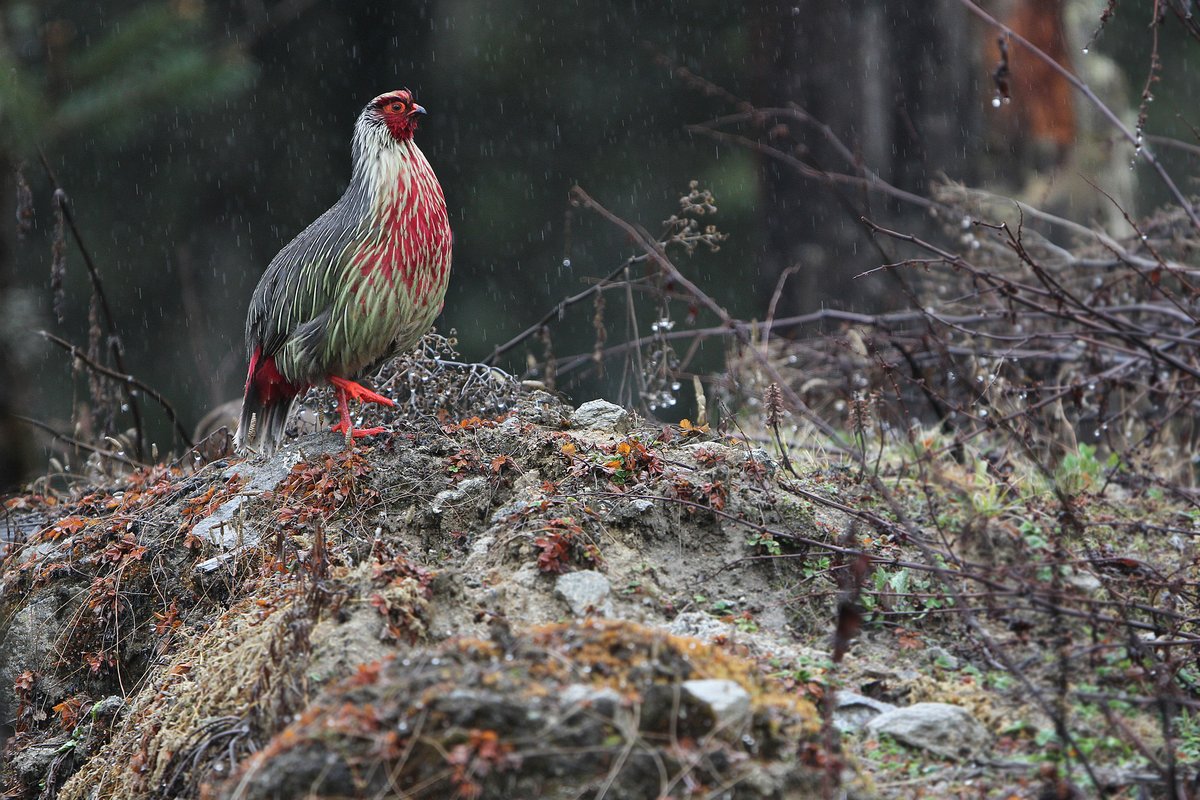
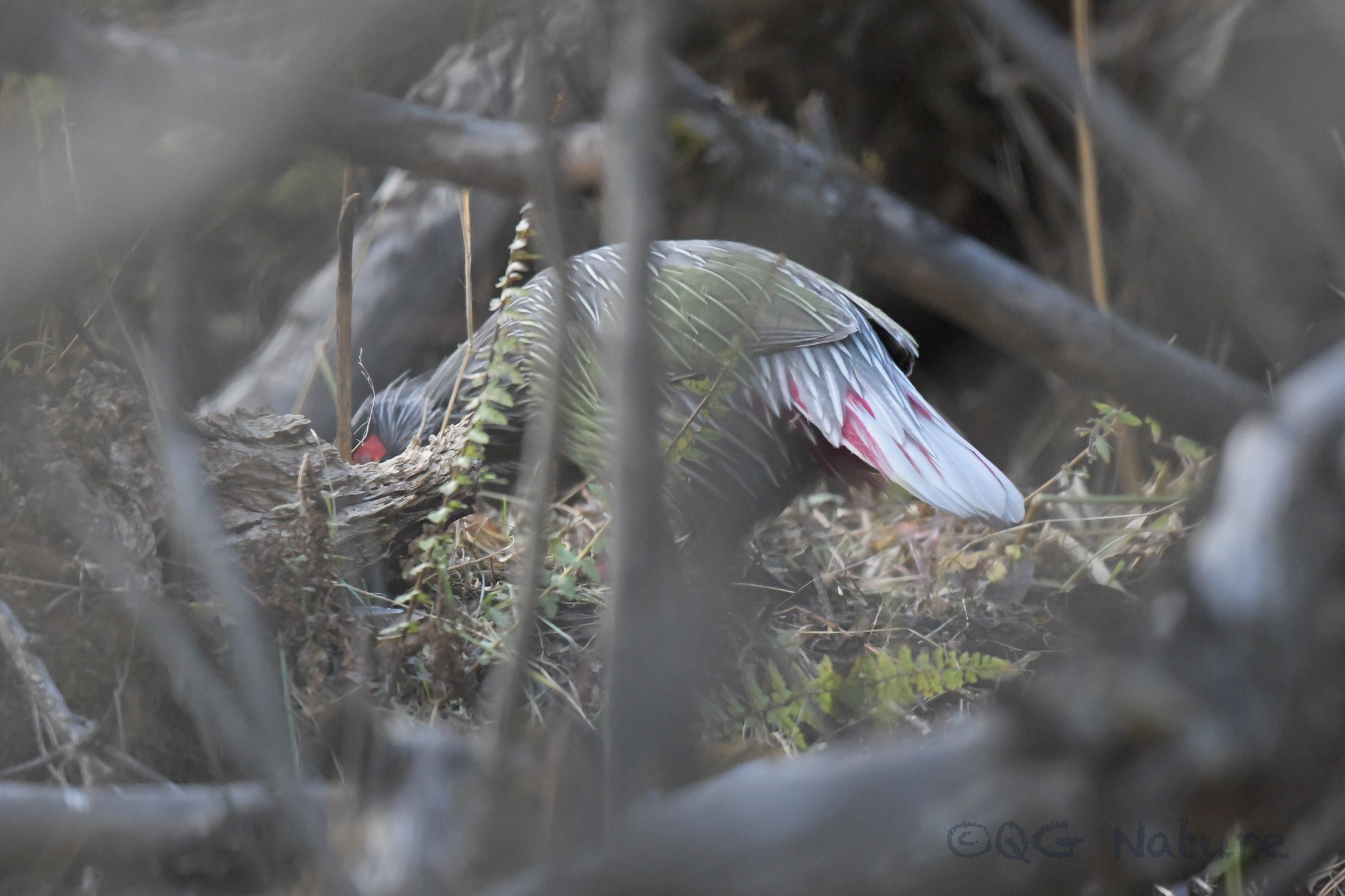
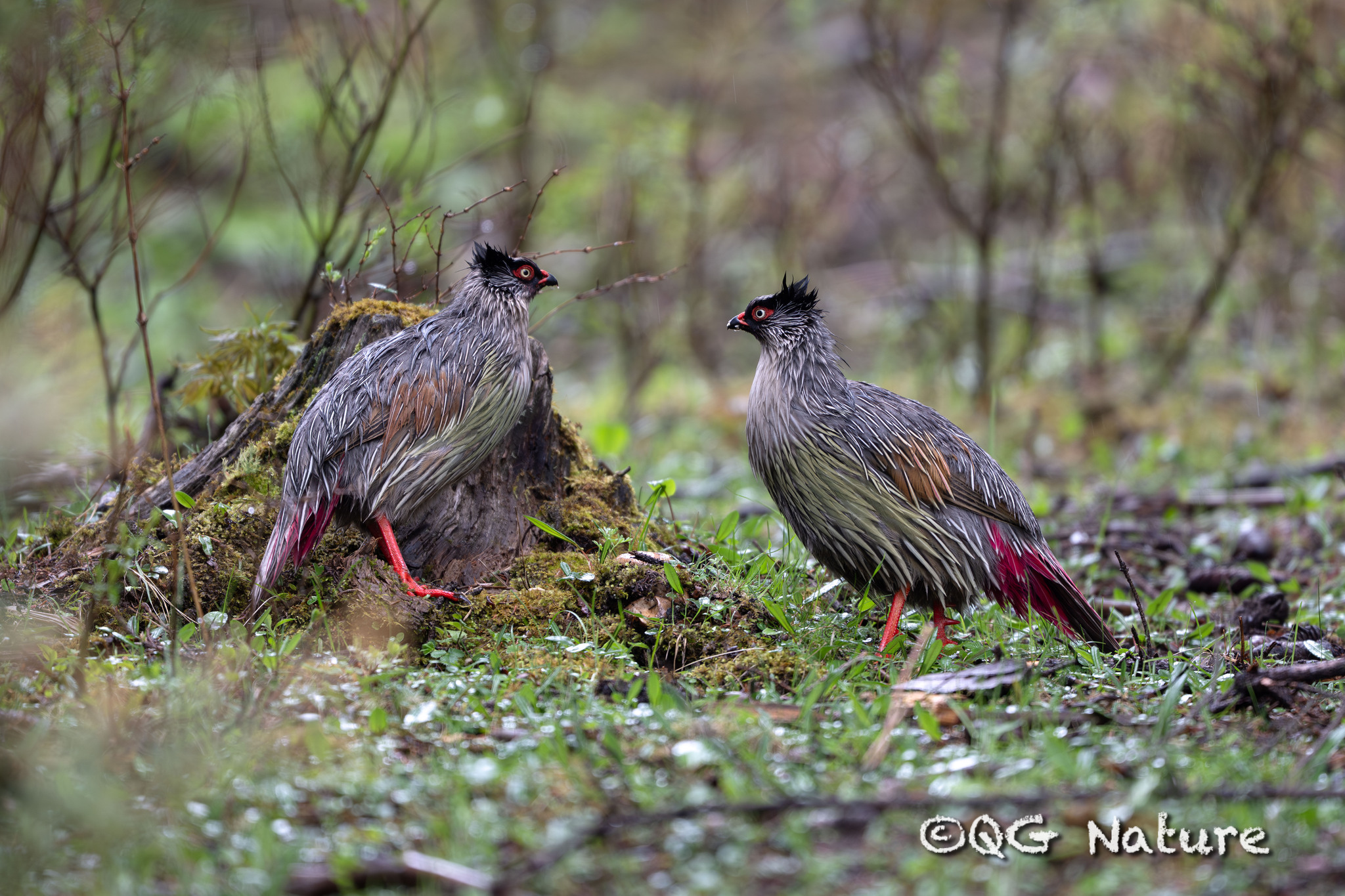
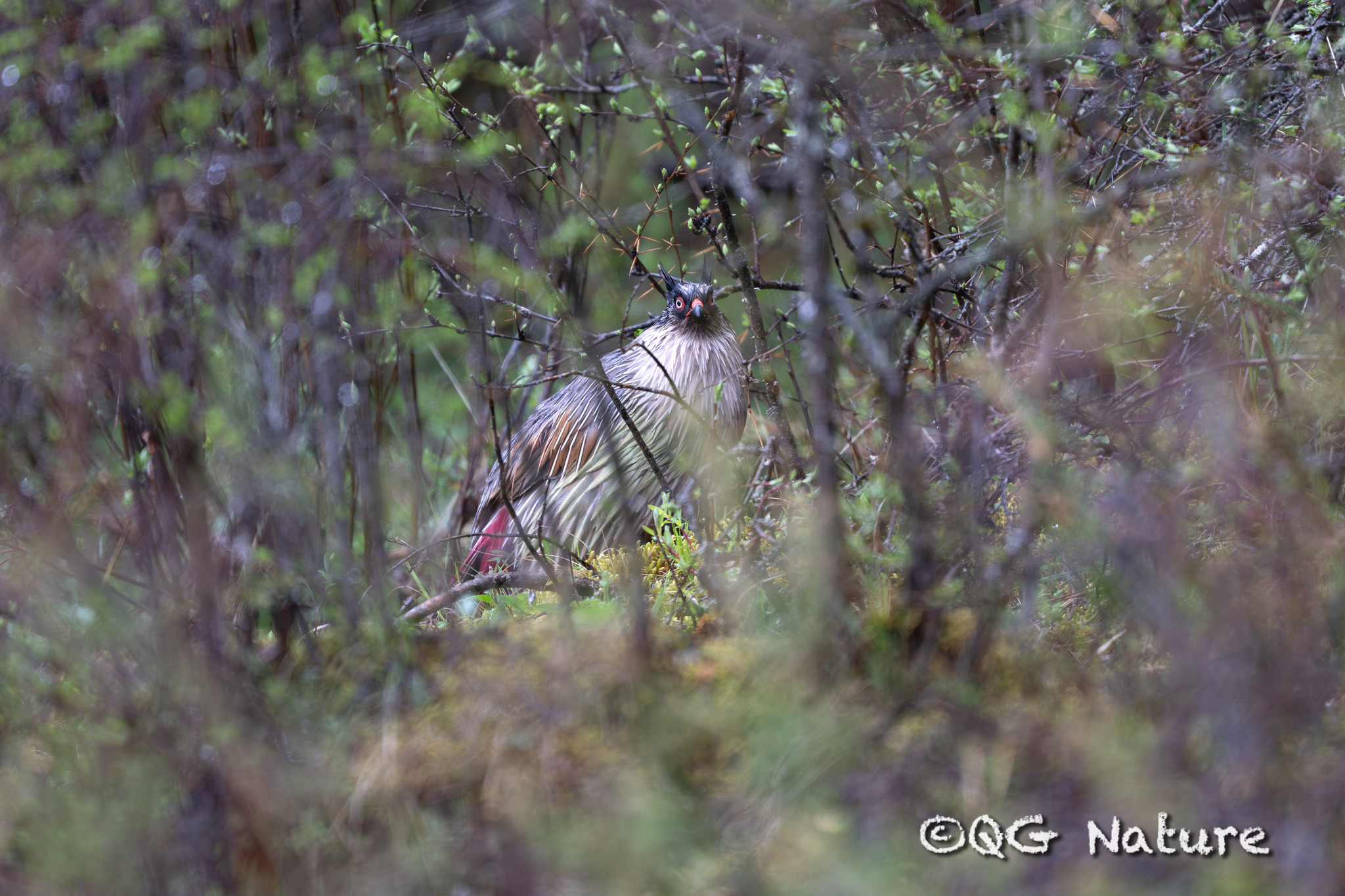
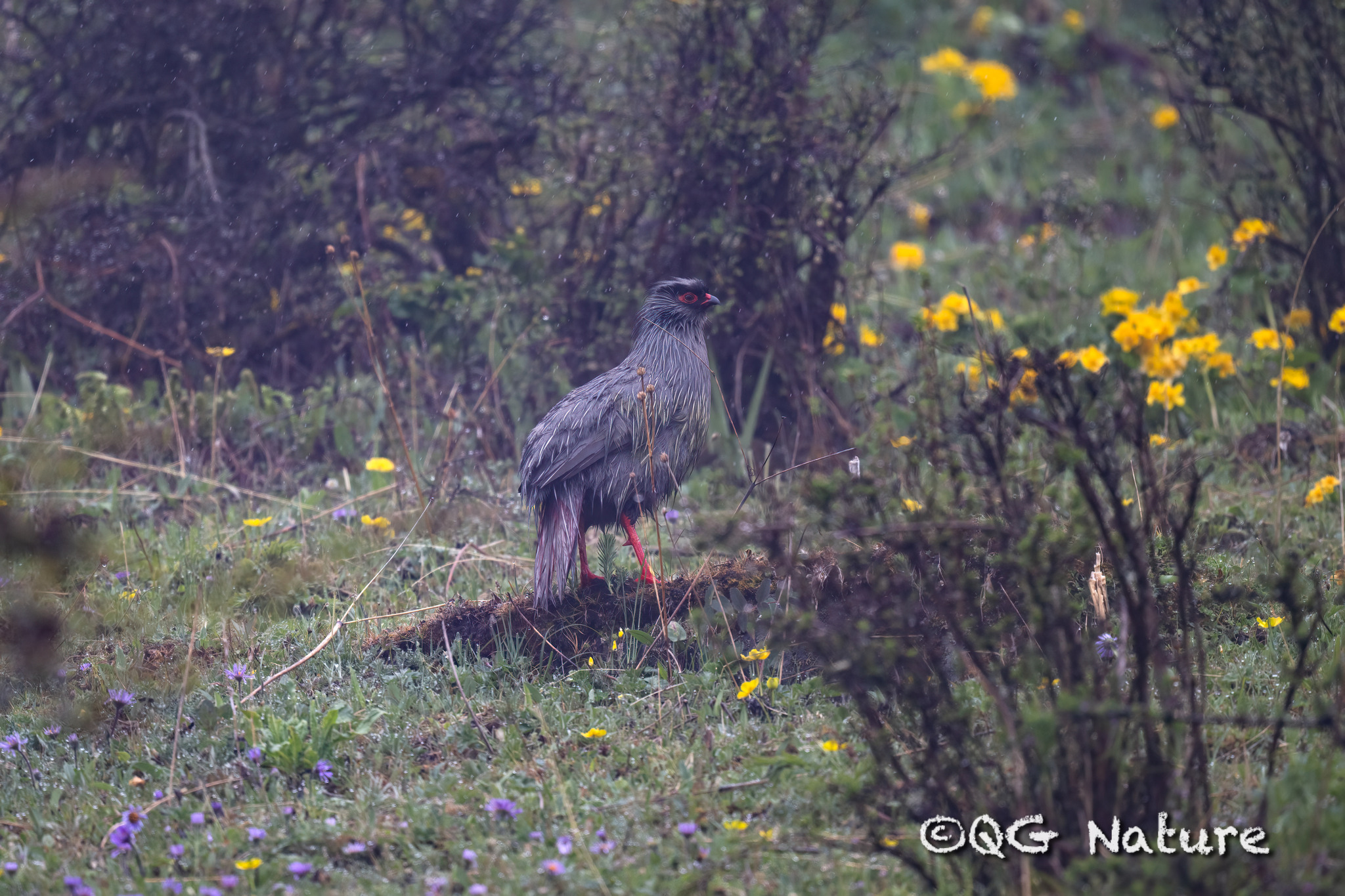
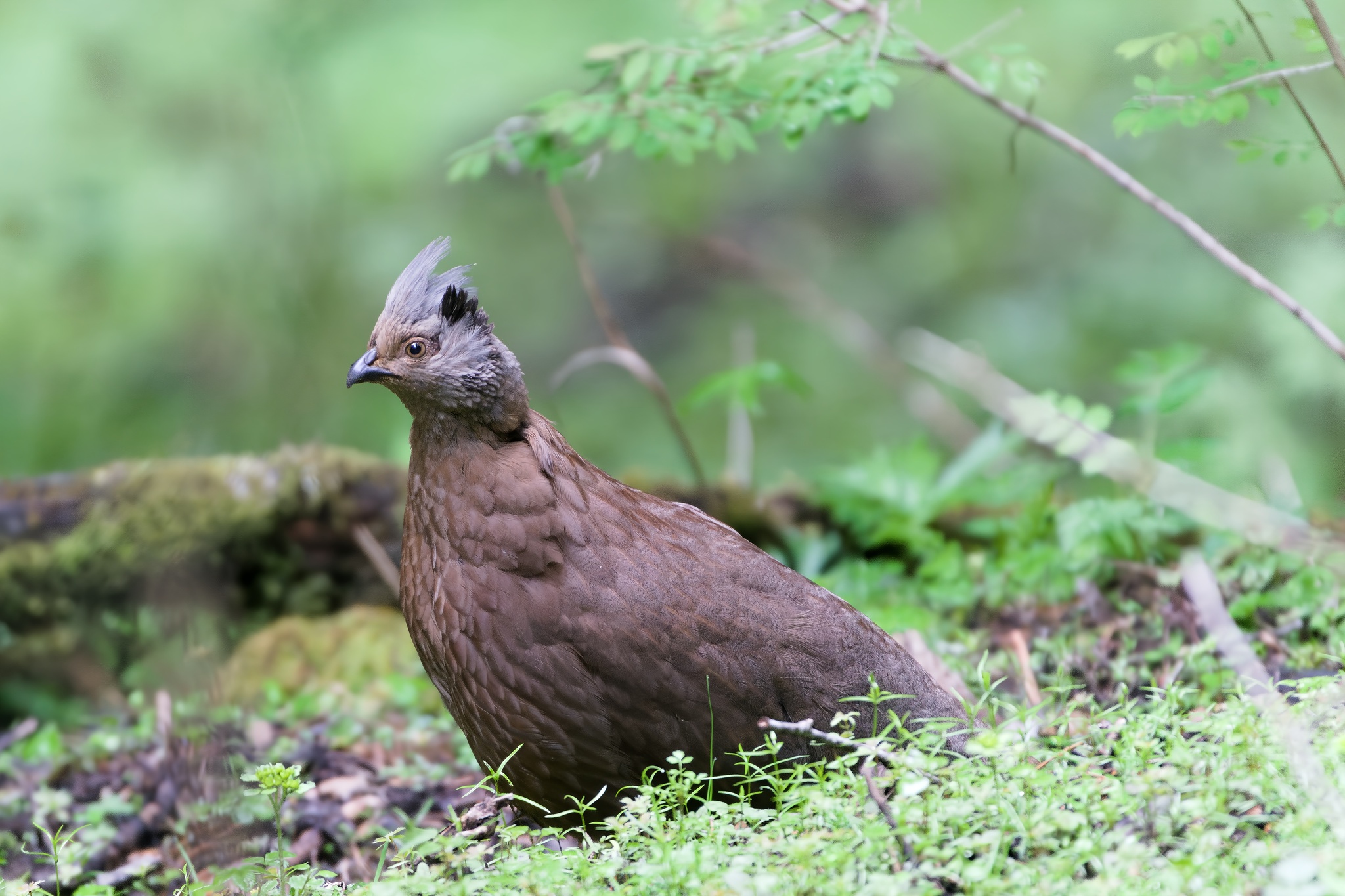
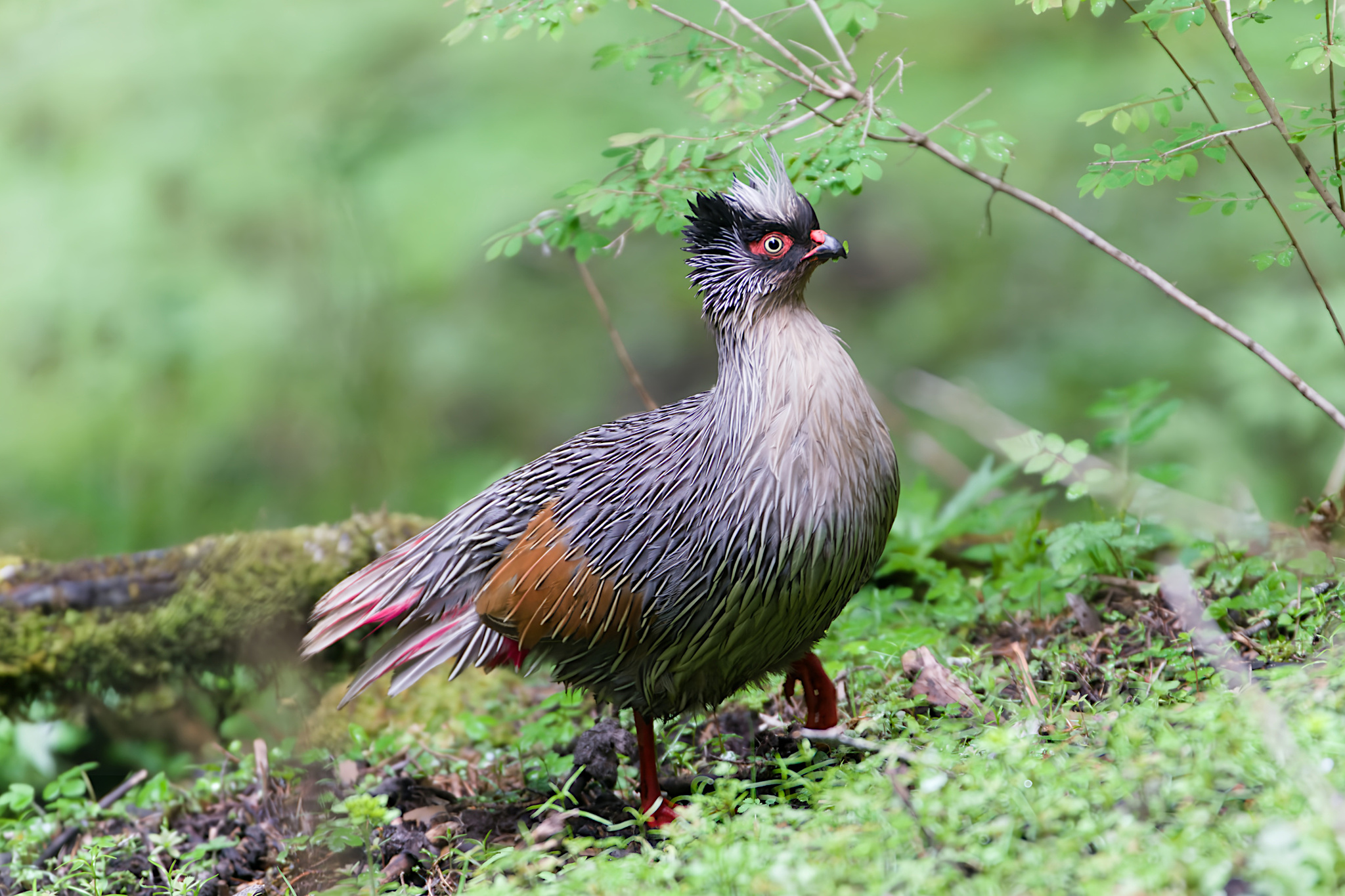
Approximately 17 in (43 cm) in length with a short, convex, very strong black bill feathered between bill and eye, and a small crest of variously coloured feathers. Upper plumage is dark ash with white shafts; wing coverts are tinged with green with broad white strokes. Chin feathers are deep crimson. Breast, belly, and sides feature lance-shaped feathers with green tips and crimson margins, resembling dashes of blood. The tail has 12 subequal rounded feathers with white shafts and whitish ends; coverts are rich crimson red. Both sexes have red feet and a distinct ring of bare skin around the eye, typically crimson but orange in some subspecies. Females are more uniformly dull brown, often with gray on the nape.
Identification
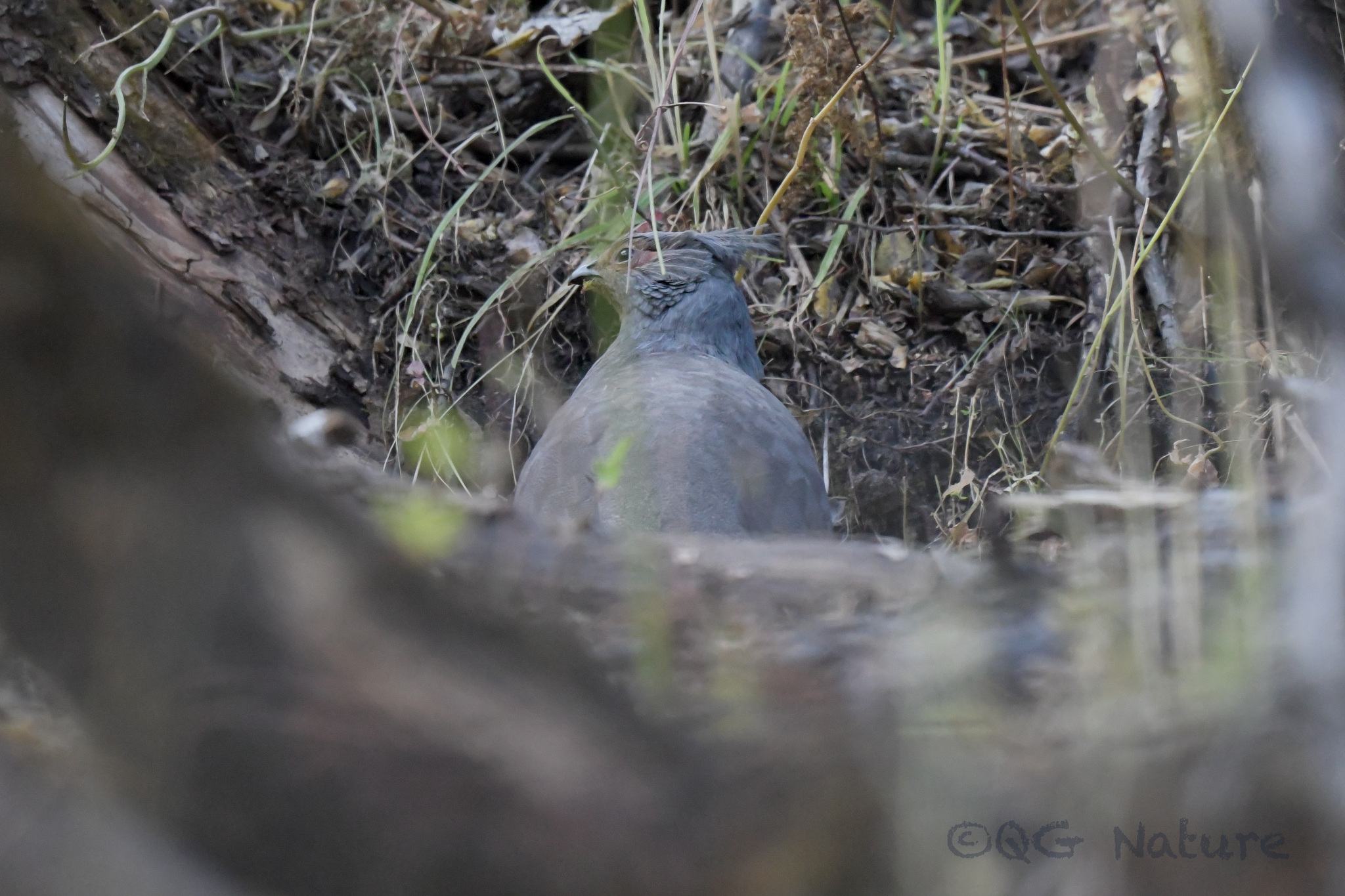
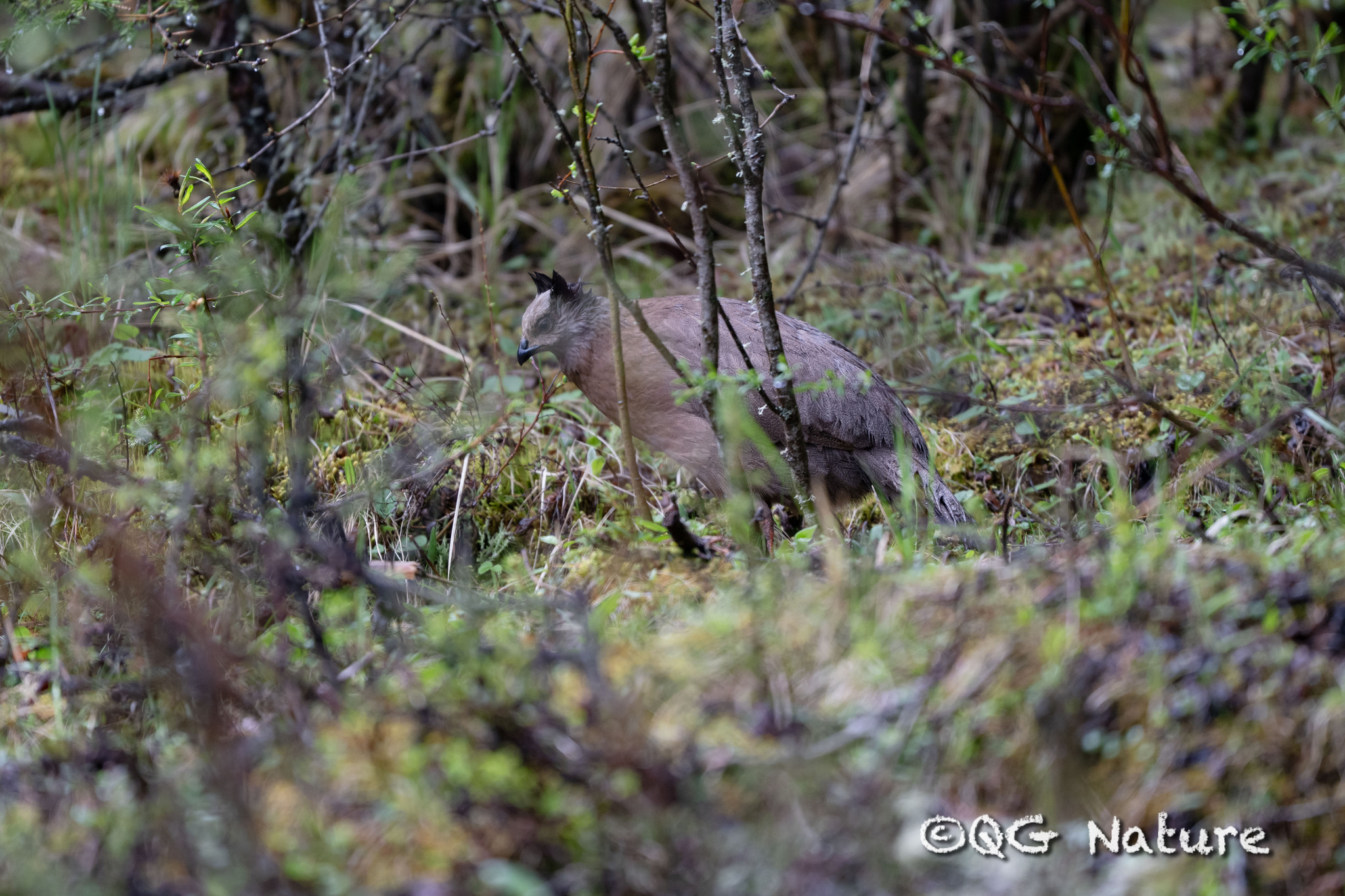
Males are distinguished by crimson chin, red-ringed eyes, and blood-like markings on the breast and belly. Females are dull brown with gray napes. Subspecies vary mainly in male plumage, specifically the amount of red or black on the throat, forehead, neck, chest, and tail, and the presence or absence of rufous in the wings.
Distribution & Habitat
Found in the mountains of Nepal, Sikkim, northern Myanmar, Tibet, and central and south-central China. Prefers coniferous or mixed forests and scrub areas near the snowline. Exhibits seasonal altitudinal migration, moving to higher elevations in summer and descending to lower elevations in fall and winter as snow increases.
Behavior & Ecology
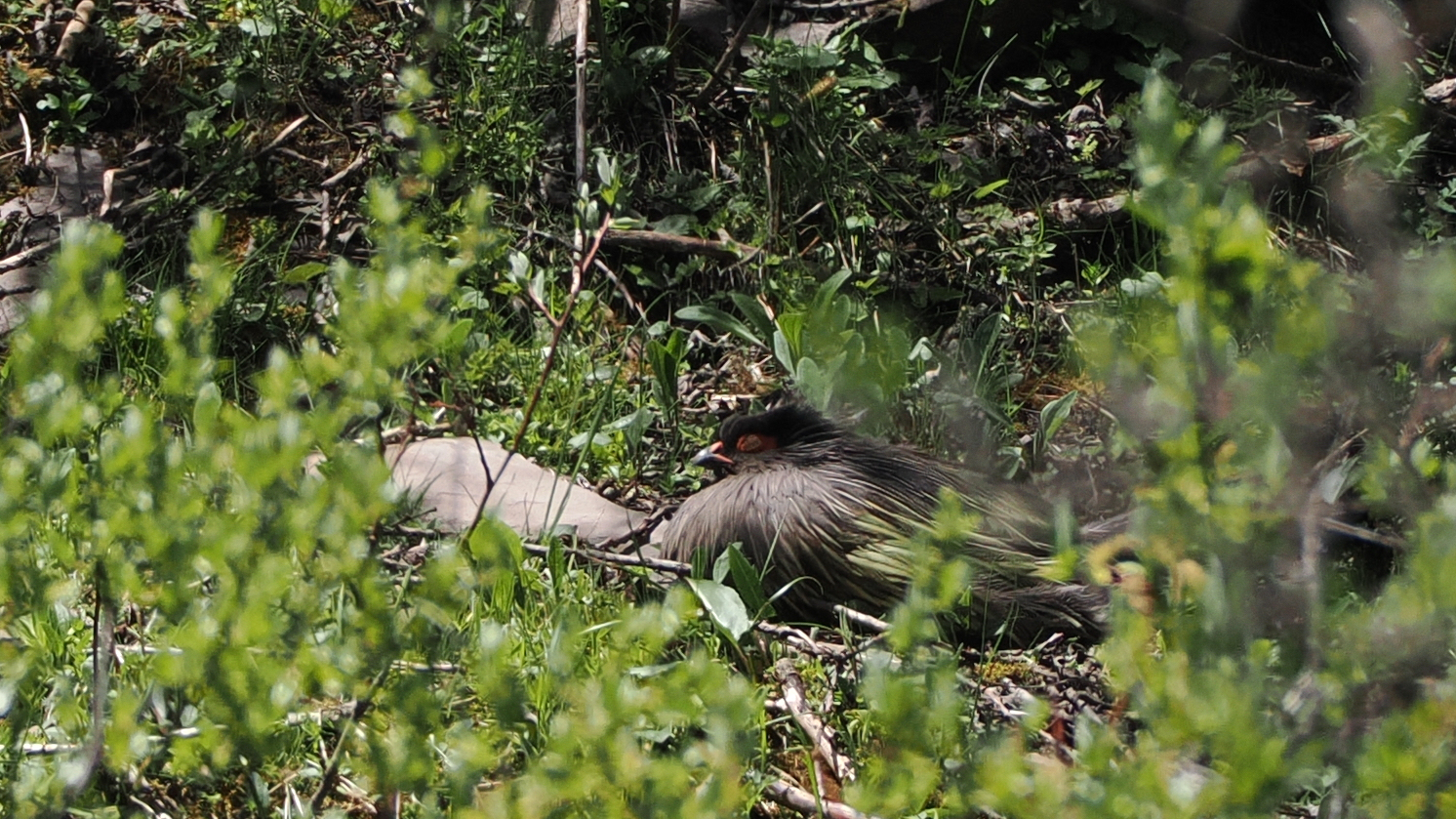
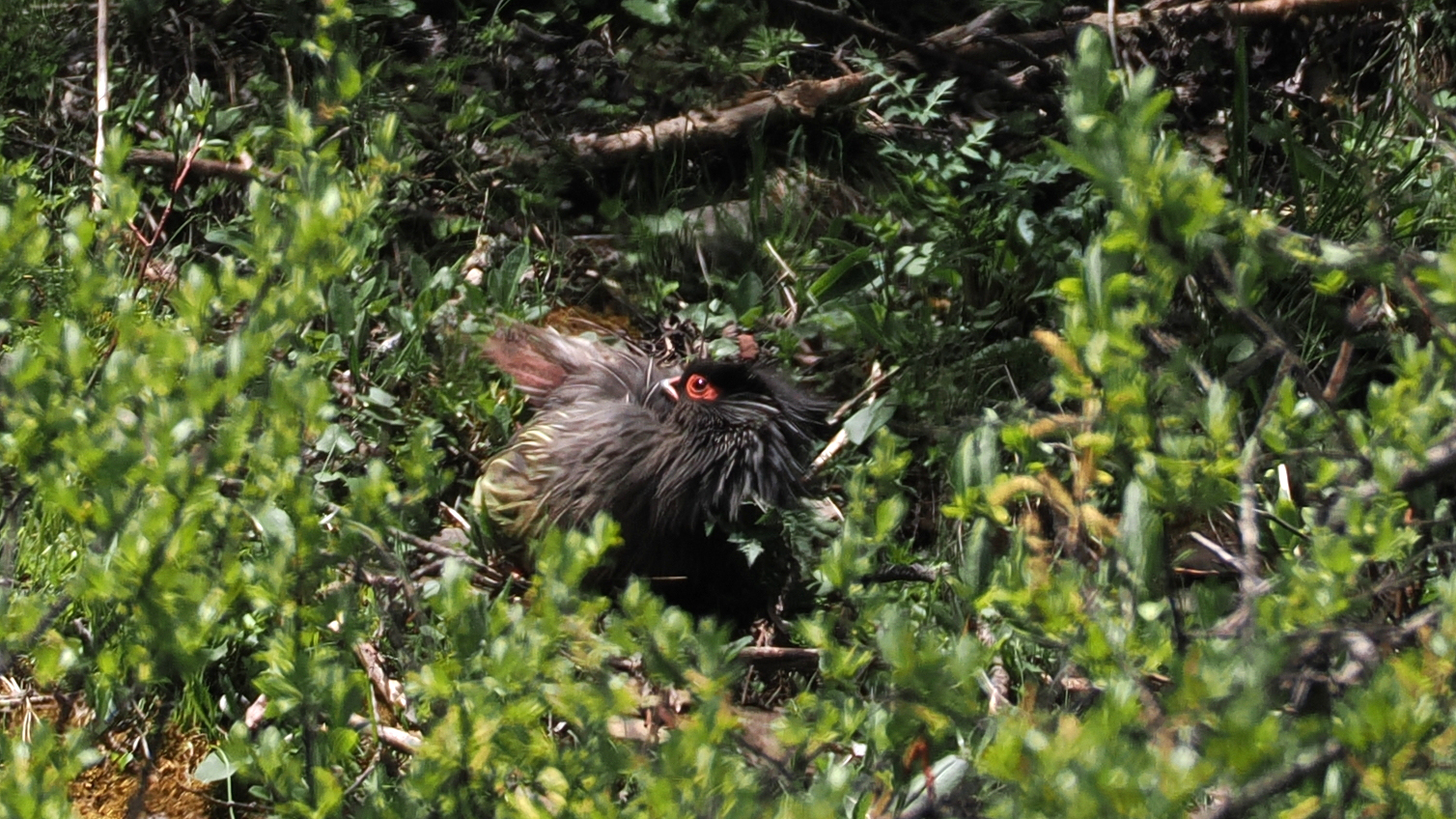
Monogamous. Breeding season begins in late April with male courtship displays involving breast-to-breast flying, wattle biting, or high leaps with kicks. Female mate choice depends on tail length, ear tuft length, and black points in the wattle. Sexual maturity is reached in one year. Nests are shallow, pot-like structures lined with moss, pine needles, and feathers, located under paddy straw heaps, in brush, small caves, or tree holes near the ground. Females lay 4-14 yellowish-white eggs with brown speckles at intervals of two or three days. Incubation lasts 27-33 days, during which males defend the territory. Forages on moss, ferns, pine shoots, and lichens, adapting to hypoxia and high ultraviolet radiation.
Conservation
Classified as Least Concern on the IUCN Red List. More than half the population is threatened by habitat loss, fragmentation, illegal hunting, and human disturbance. Livestock grazing is the most prevalent human disturbance in protection areas overlapping with giant panda habitat. Ground-nesting habits and long incubation periods make the species vulnerable to trampling and habitat degradation by grazers.
Culture
State bird of Sikkim, India.
Source: Wikipedia · CC BY-SA 3.0
Taxonomy
- Order
- Galliformes
- Family
- Phasianidae
- Genus
- Ithaginis
Subspecies (12)
-
Ithaginis cruentus affinis
Sikkim
Data Sources
Species description from Wikipedia, licensed under CC BY-SA 3.0.
Bird images and sounds sourced from GBIF, contributed by citizen scientists worldwide under Creative Commons licenses.
Taxonomy data from AviList 2025.