




Black Eagle
Ictinaetus malaiensis
林雕
Introduction
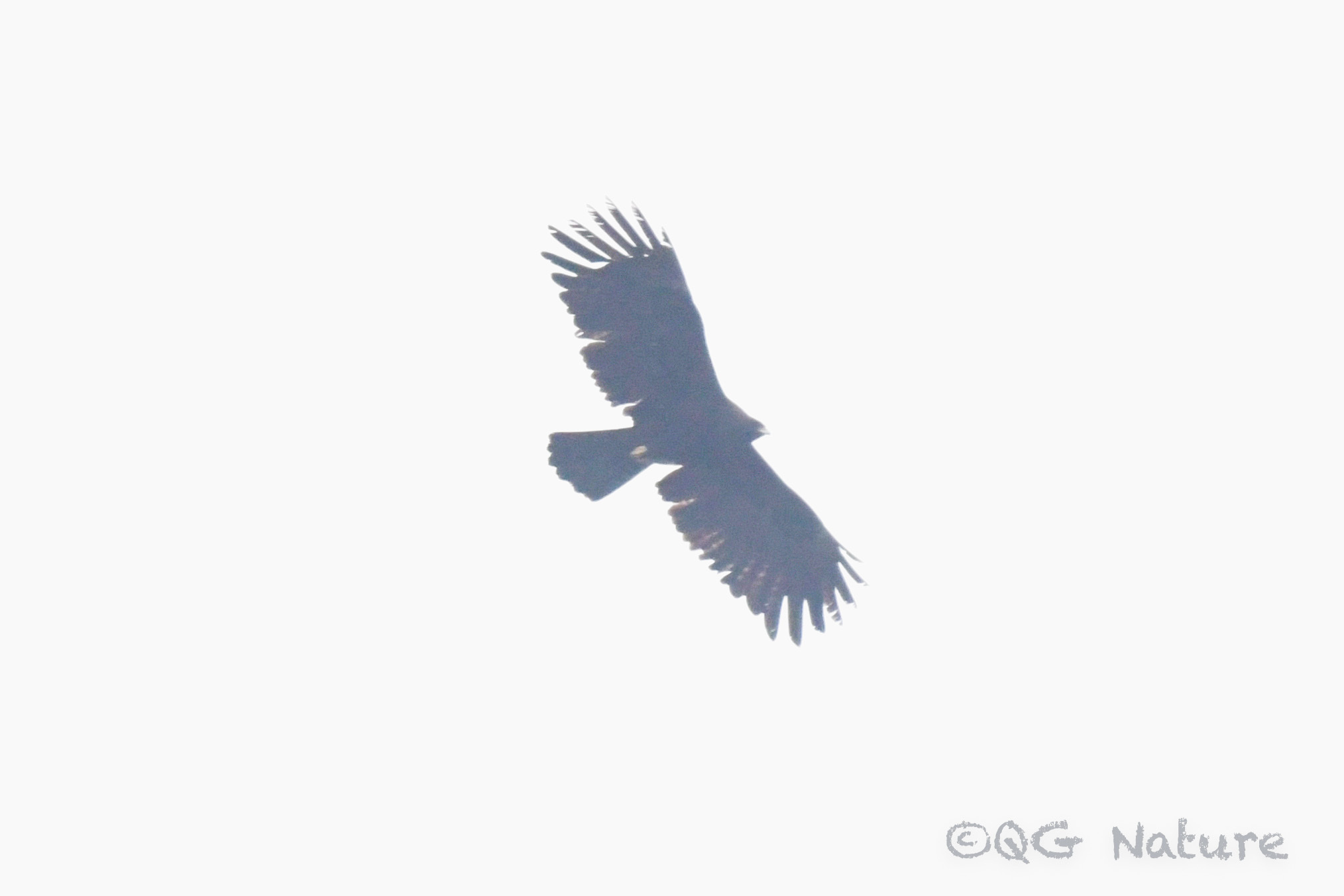
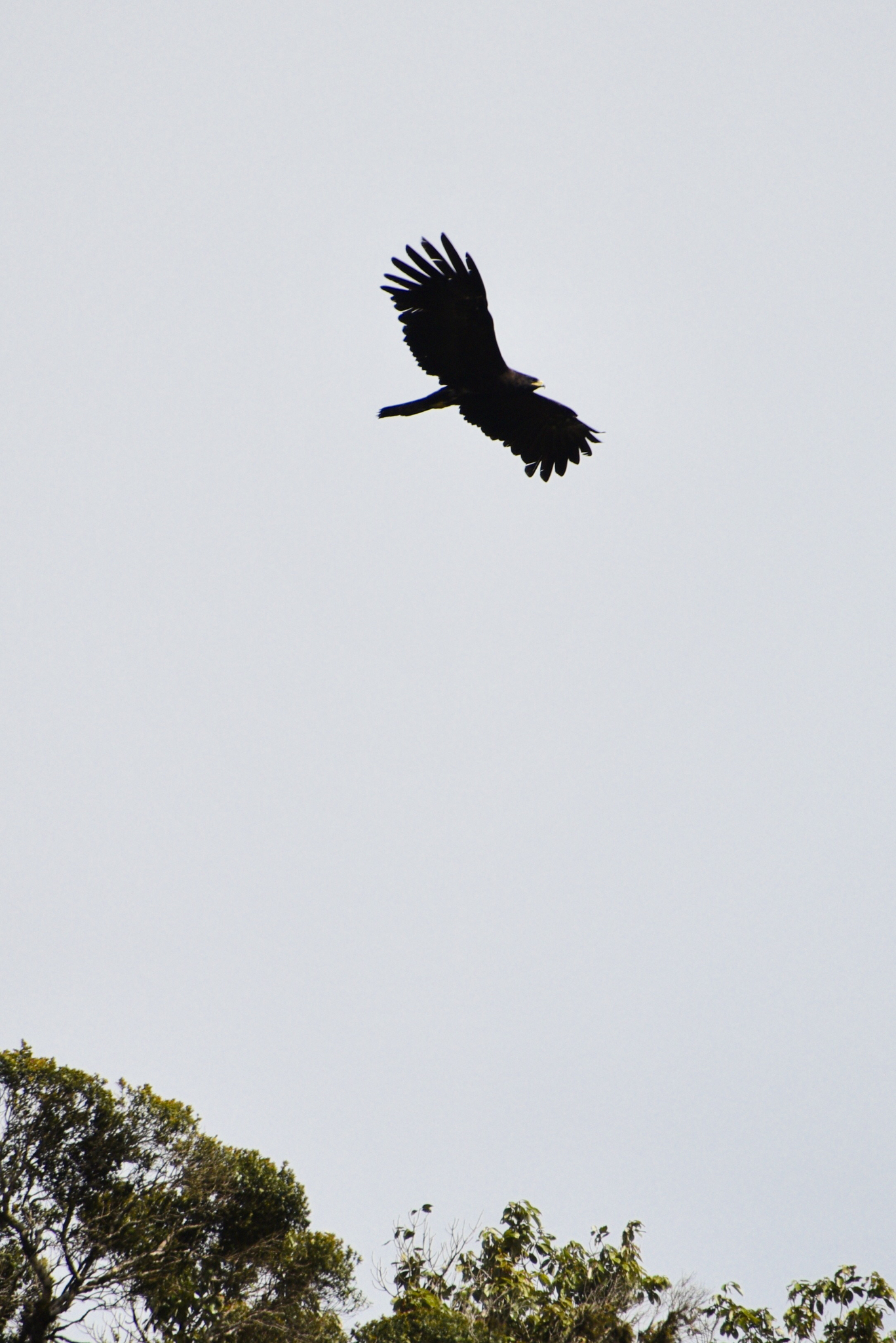
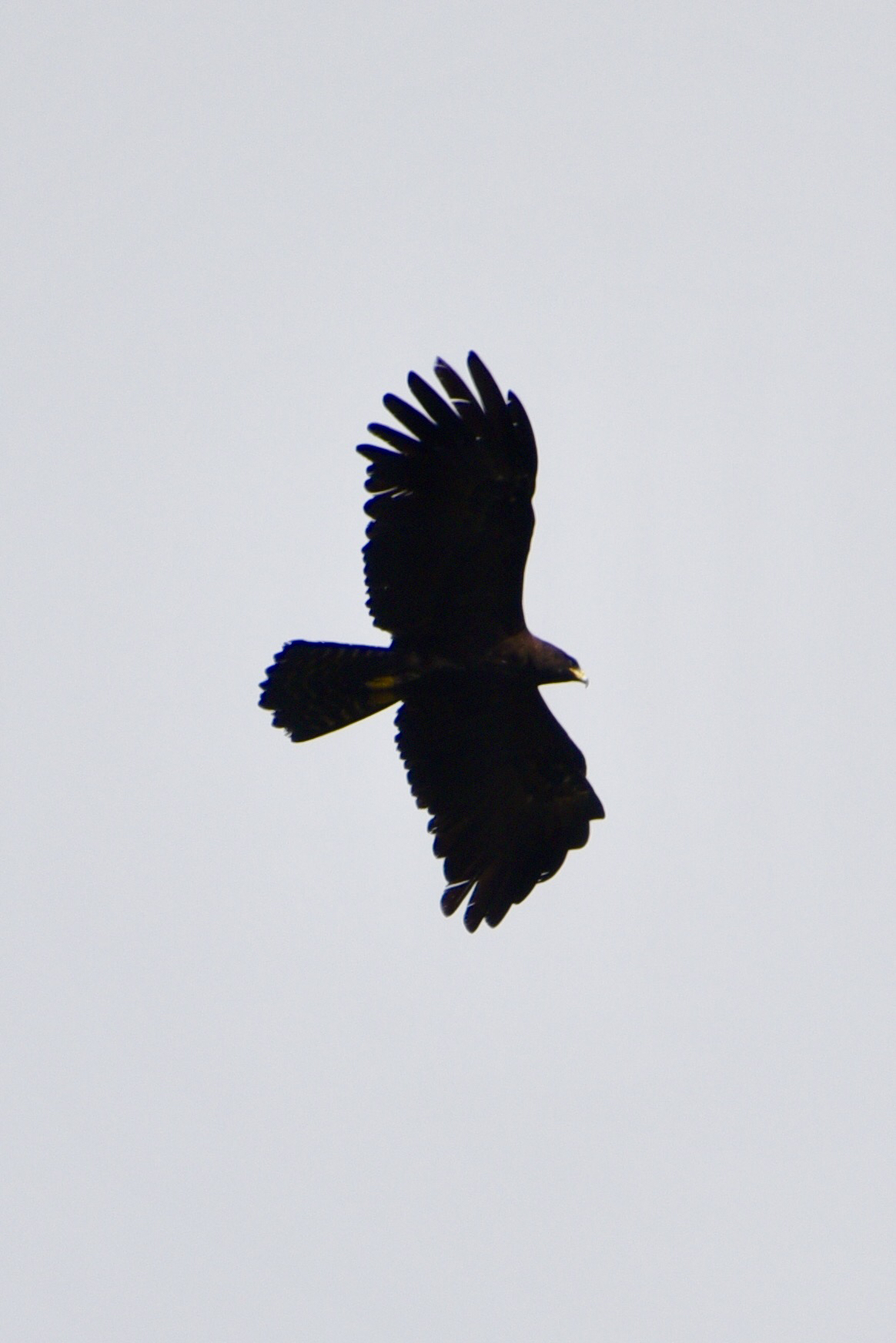
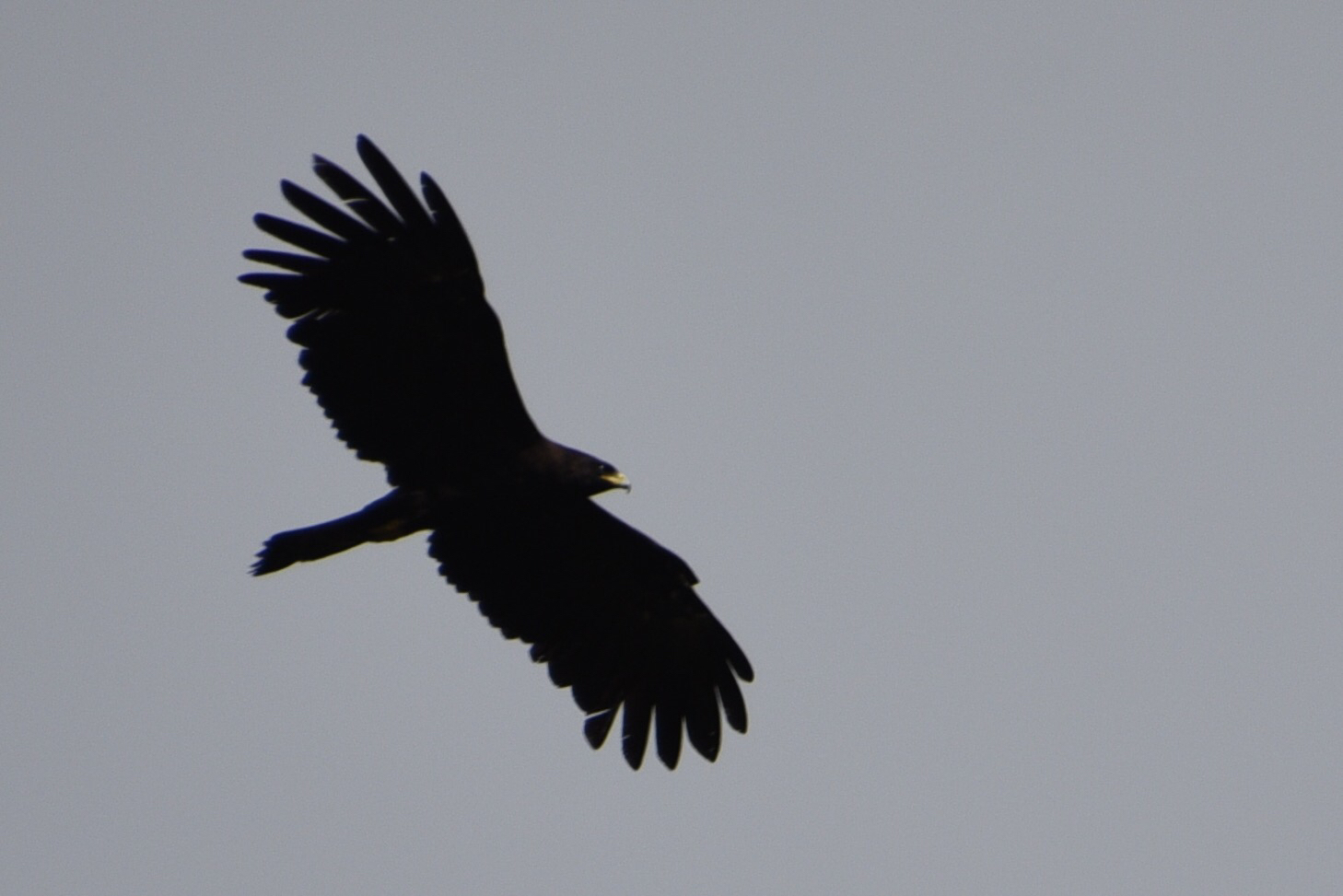
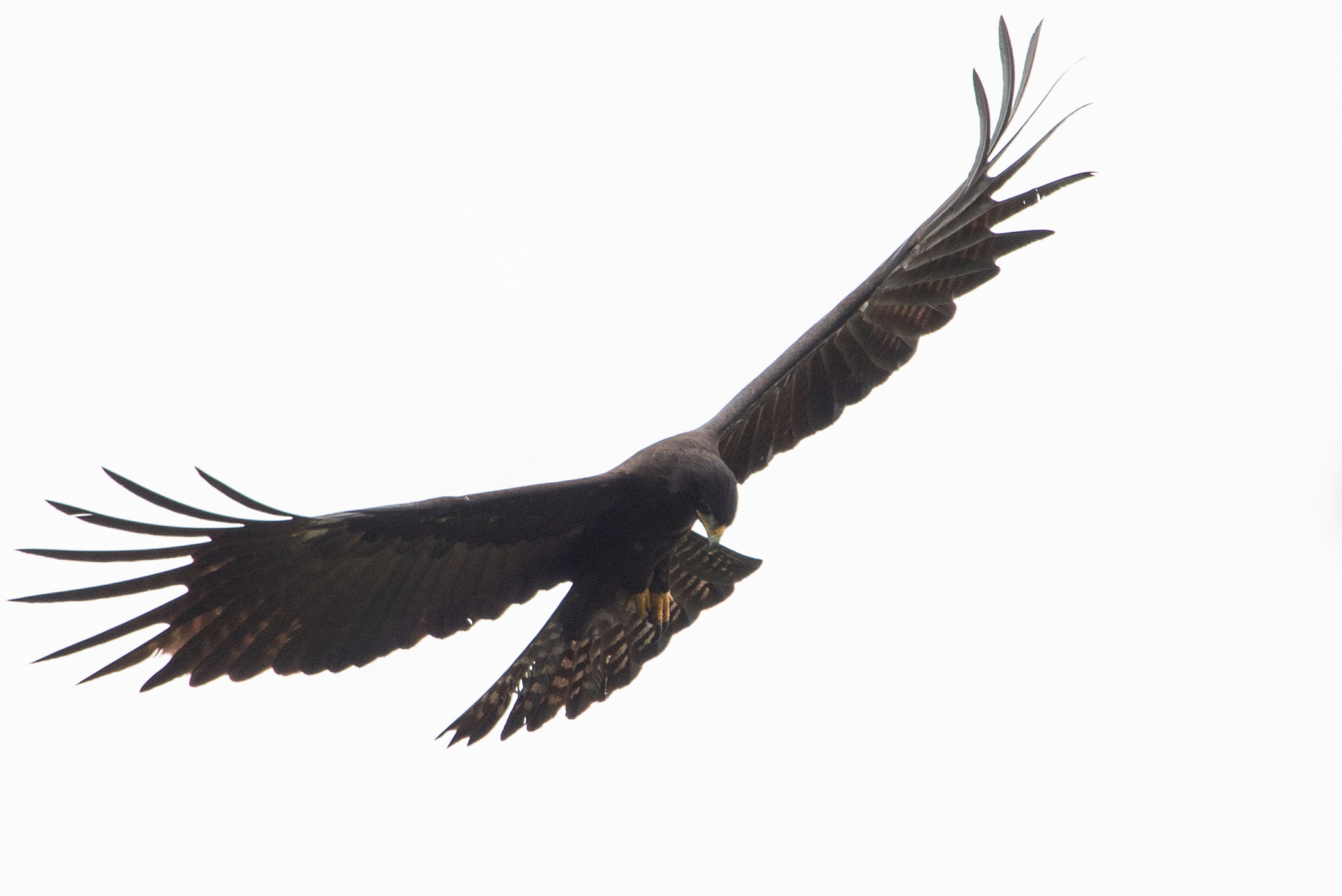
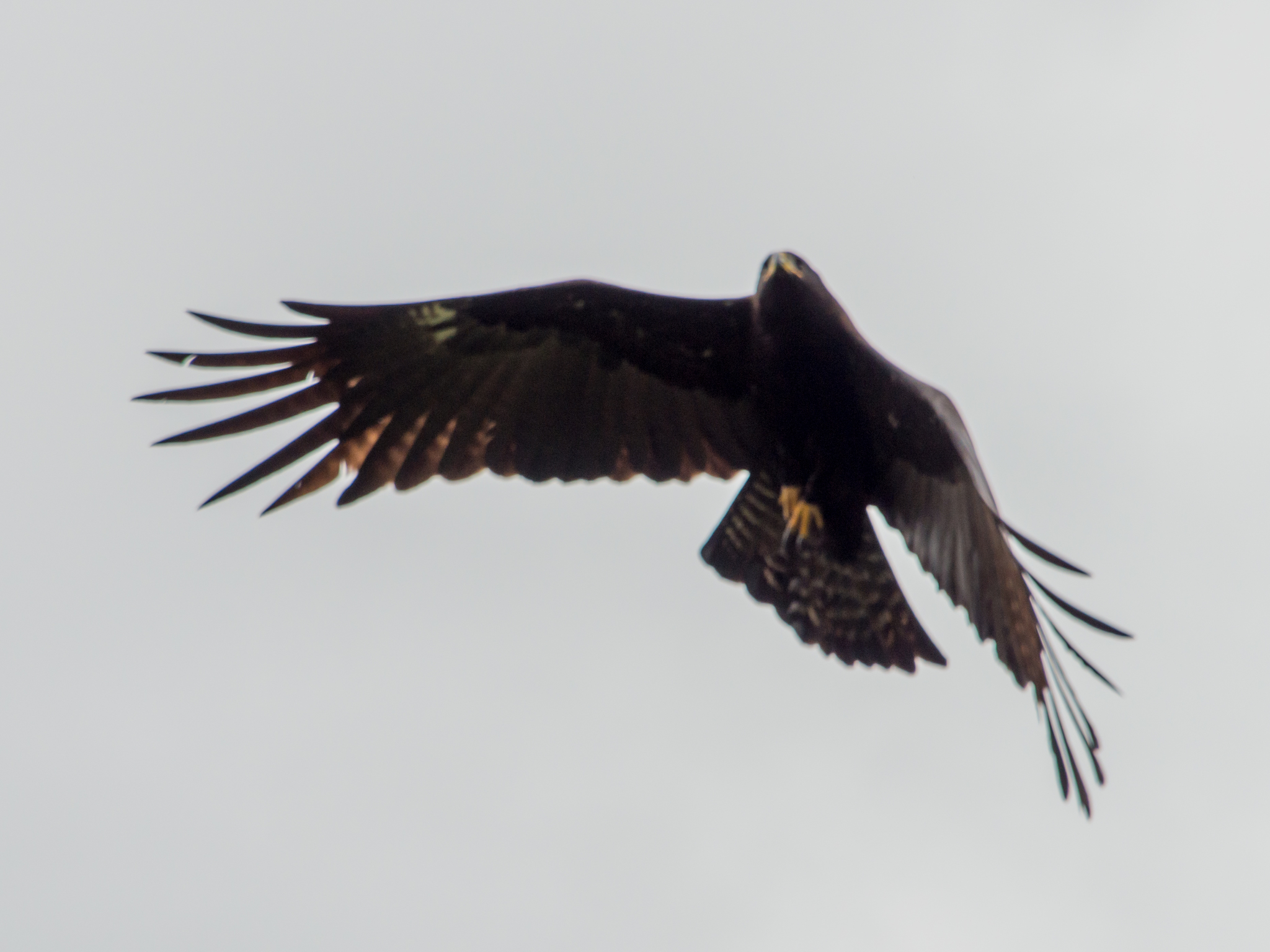
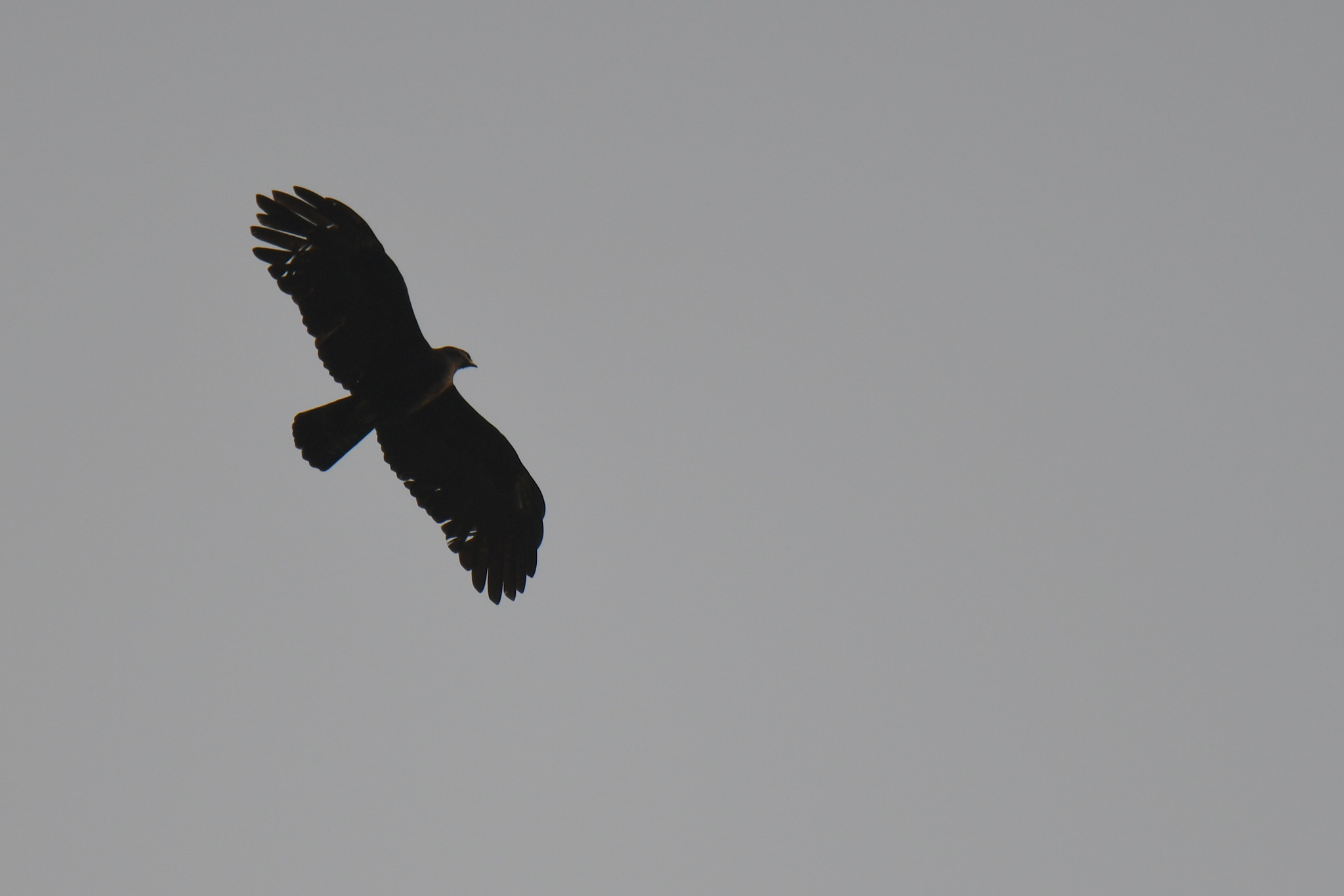
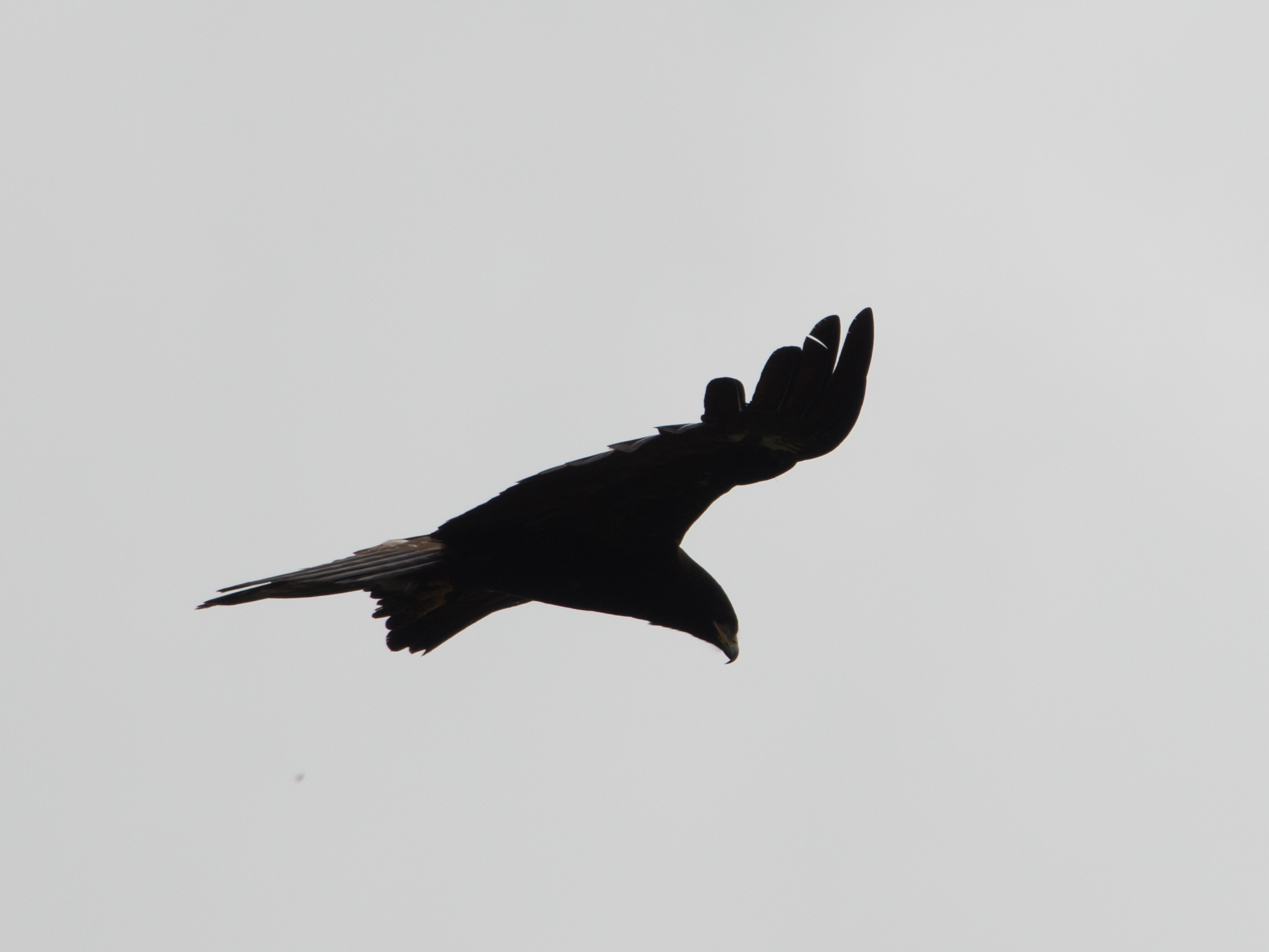
A large bird of prey in the family Accipitridae and the sole member of the genus Ictinaetus. It ranges across tropical and subtropical South and Southeast Asia, including the Himalayan foothills, peninsular India, Sri Lanka, Myanmar, Bangladesh, southern China, Taiwan, and the Indonesian Archipelago. This species inhabits forests in hilly regions. It is characterized by its distinctive silhouette with widely splayed primary 'fingers,' slow flight just above the canopy, and yellow ceres and legs contrasting with all-black plumage. It is a prolific nest-predator targeting mammals and birds, particularly at their nests. While not globally threatened, it is uncommon across much of its range due to habitat loss from deforestation.
Description
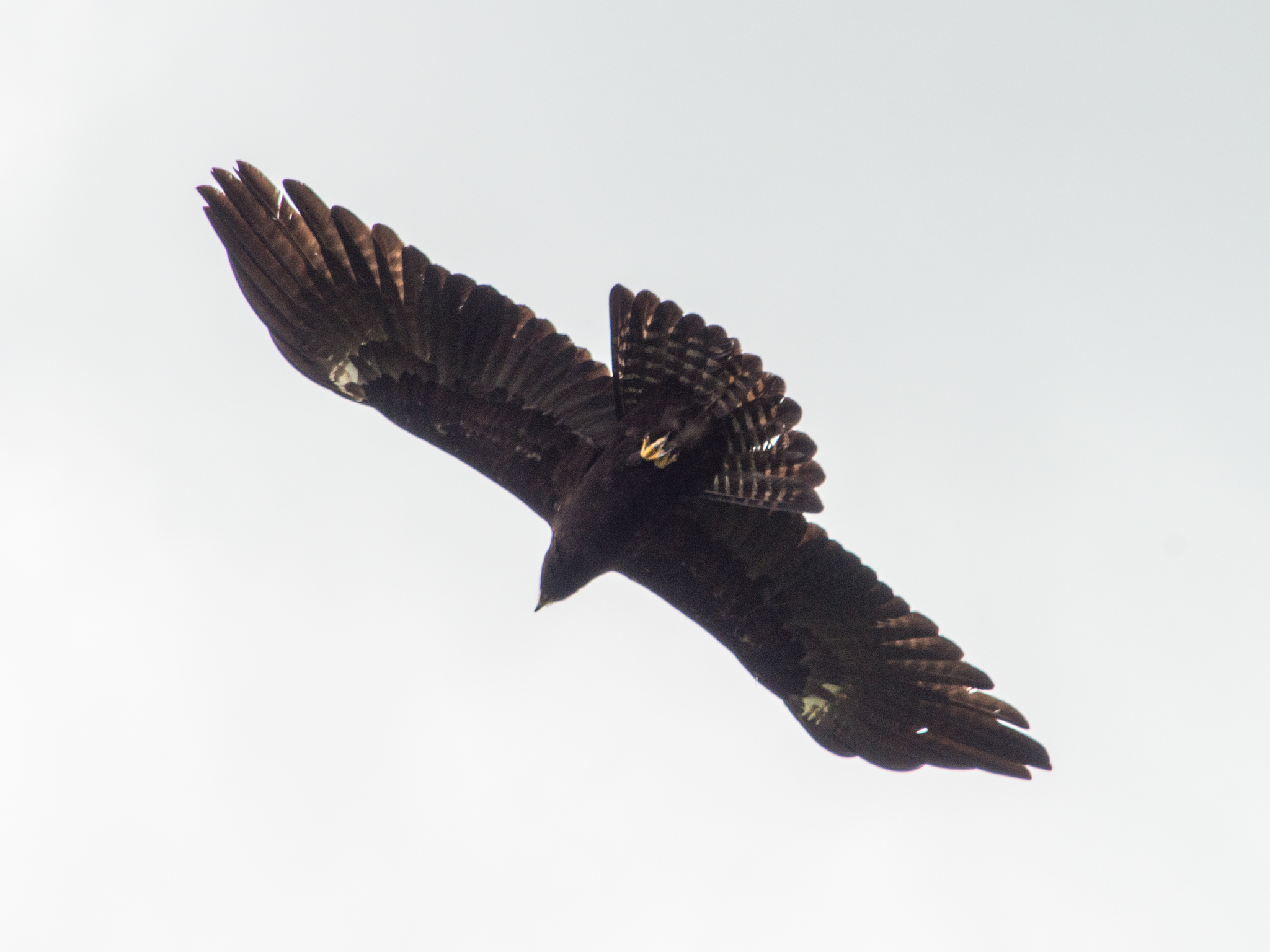
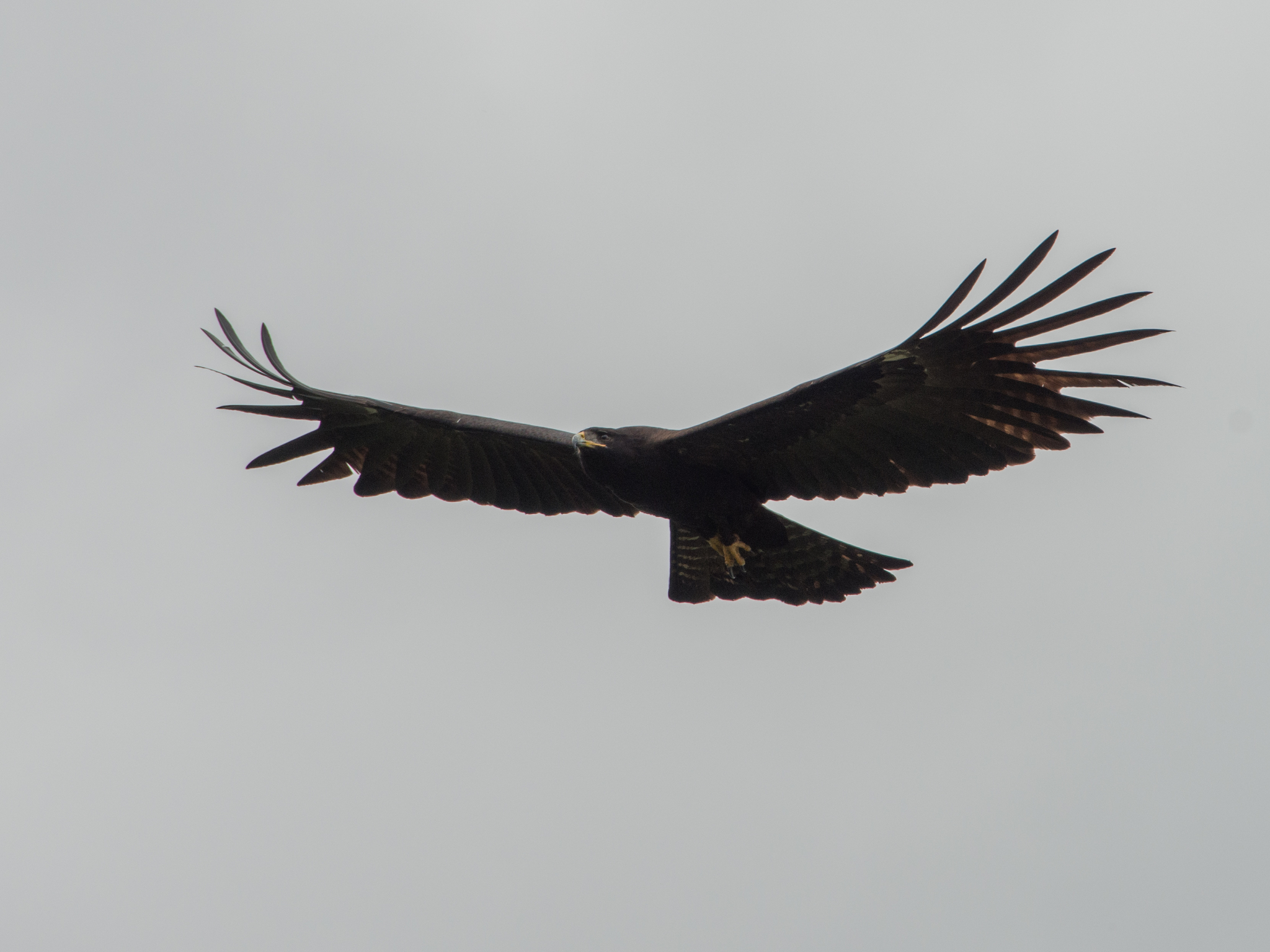
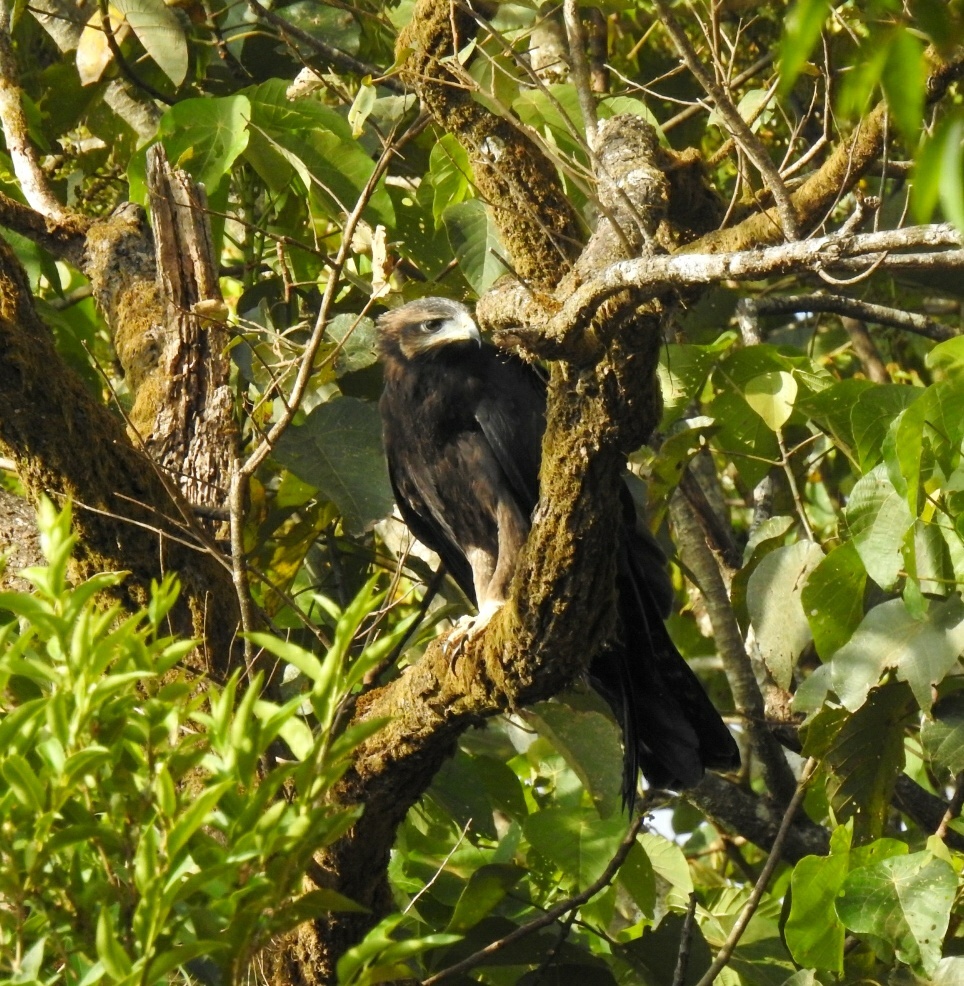
A large but relatively slender eagle measuring approximately 75 cm in length with a wingspan of 148 to 182 cm. Despite its size, known weights are modest at 1,000 to 1,600 g. Adults have entirely black plumage with a contrasting yellow cere and feet. The wings are long and distinctive, pinching in at the innermost primaries with widely splayed primary tips. The tail shows faint barring and the upper tail coverts are paler. When perched, wing tips reach or exceed the tail tip. The species holds its wings in a shallow V during flight. Sexes are similar in appearance, but juveniles display buff coloring on the head, underparts, and underwing coverts. The tarsi are fully feathered and the toes are stout and short with relatively long claws.
Identification
Identified by its jet black coloration, large size, and distinctive slow flight often just above the forest canopy. The wing shape, with long and widely splayed primary 'fingers,' helps distinguish it from similar dark-plumaged eagles such as the changeable hawk-eagle. The contrasting yellow cere and legs are visible in good views. Its slow, deliberate flight style and tendency to soar over forested hills are characteristic field marks.
Distribution & Habitat
Occurs across tropical and subtropical Asia. The subspecies I. m. perniger inhabits the Himalayan foothills from Nepal through Bhutan to north India, as well as peninsular India, Sri Lanka, and extends west to forested areas in Gujarat and the Aravalli range. The nominate subspecies I. m. malaiensis ranges from Myanmar and Bangladesh through Southeast Asia to southern China, Taiwan, and the Indonesian Archipelago (excluding the Lesser Sunda Islands). It is generally resident with no migration observed. The species requires good forest cover, with studies showing absence from areas with less than 50% forest cover.
Behavior & Ecology
A nest-predator that feeds on mammals (including bats and squirrels), birds, and eggs. It is noted for its slow, low flight over the canopy in search of nests. Along with swallow-tailed kites, it uniquely carries away entire nests with nestlings to feeding perches. Its curved claws and wide gape enable it to take eggs from nests and swiftlets from caves. Breeding occurs between January and April, with courtship involving steep dives with folded wings and U-shaped swoops into vertical stalls. Nests are large platforms 3-4 feet wide built on tall trees overlooking steep valleys. One or two white eggs blotched in brown and mauve are laid, and nest sites may be reused for multiple years. Alarm calls from squirrels, macaques, and birds often alert to its presence.
Conservation
Listed as Least Concern globally. The species is not threatened but remains uncommon across much of its range. Population declines have occurred due to shrinking forested areas from large-scale extraction and habitat loss. The species favors well-forested habitats and has disappeared from areas with insufficient forest cover.
Culture
The Lepcha people of India's Darjeeling district described this bird as one that never sits down, referring to its ability to remain aloft for long periods with minimal effort. The Soliga people call it Kaana Kattale, a name recalling its black coloration and presence in forested areas.
Source: Wikipedia · CC BY-SA 3.0
Taxonomy
- Order
- Accipitriformes
- Family
- Accipitridae
- Genus
- Ictinaetus
- eBird Code
- blaeag1
Subspecies (2)
-
Ictinaetus malaiensis malaiensis
Myanmar to southern China, southeastern Asia, and Indonesia
-
Ictinaetus malaiensis perniger
northern India and Nepal; southern India and Sri Lanka
Data Sources
Species description from Wikipedia, licensed under CC BY-SA 3.0.
Bird images and sounds sourced from GBIF, contributed by citizen scientists worldwide under Creative Commons licenses.
Taxonomy data from AviList 2025.