Relict Gull
Ichthyaetus relictus
遗鸥
Introduction
A medium-sized gull, this species was recognized as distinct in 1971, having previously been classified as an eastern race of the Mediterranean gull. It was formerly placed in the genus Larus but is now assigned to Ichthyaetus. The species breeds colonially on islands within brackish and saltwater lake systems in the remote interior of Central Asia, including parts of Mongolia, Kazakhstan, Russia, and China. Populations are declining.
Description
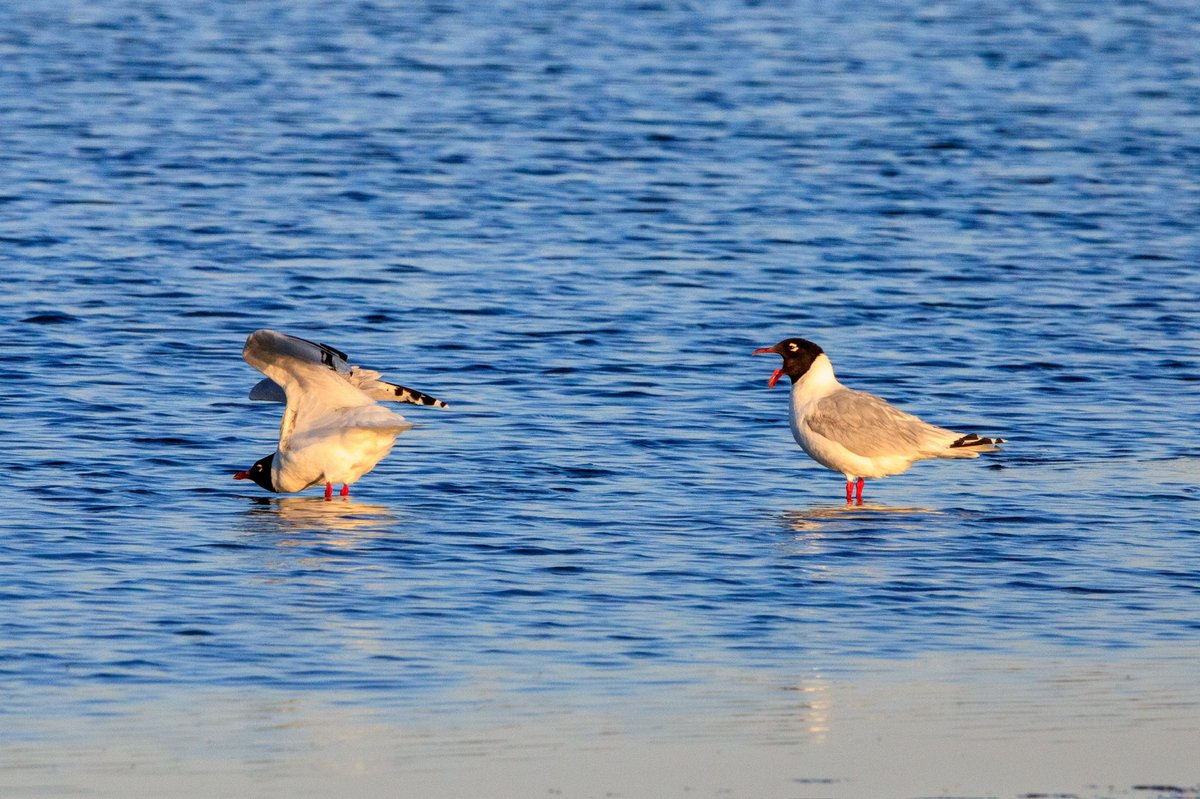
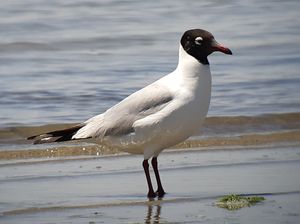
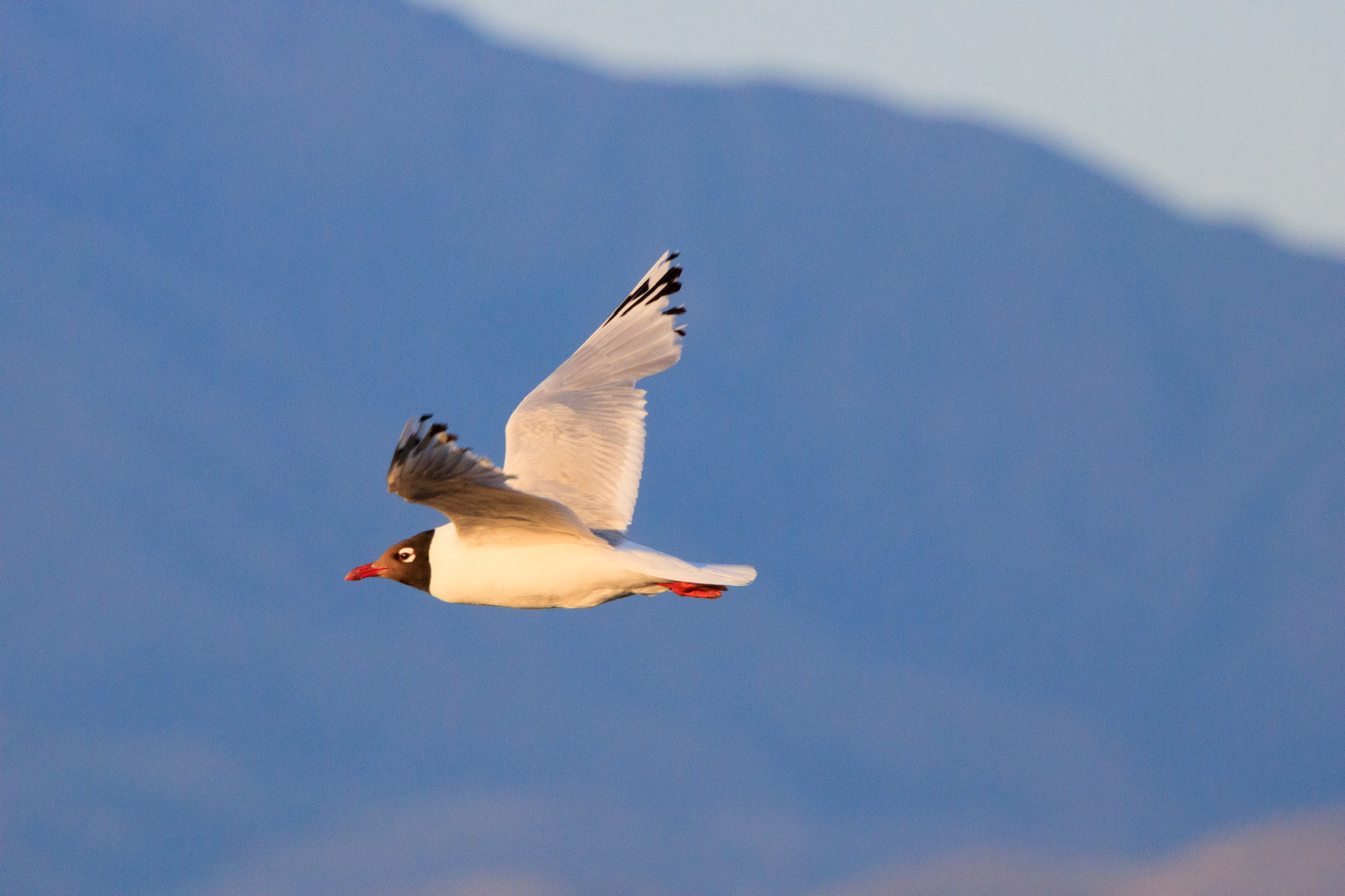
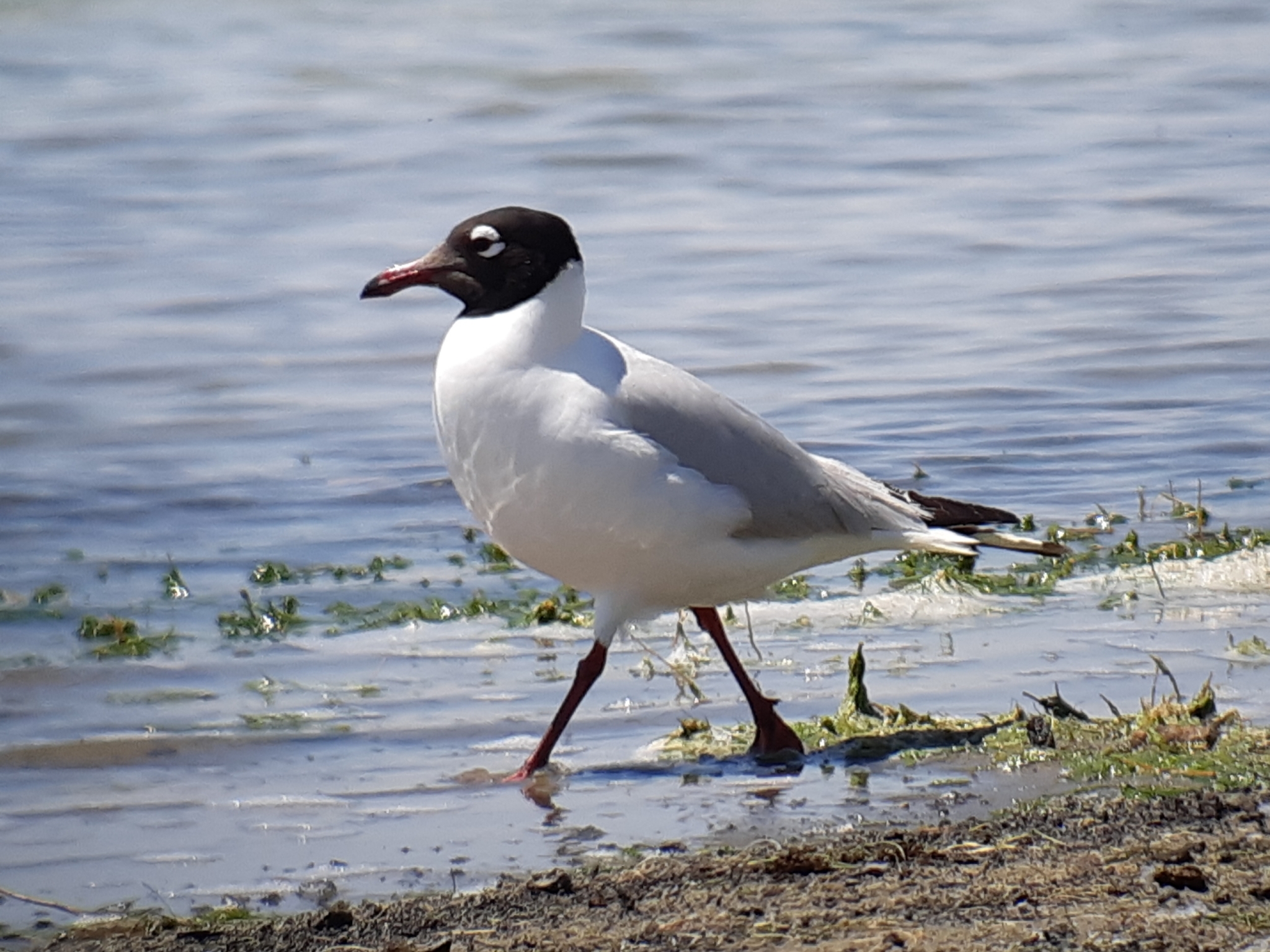
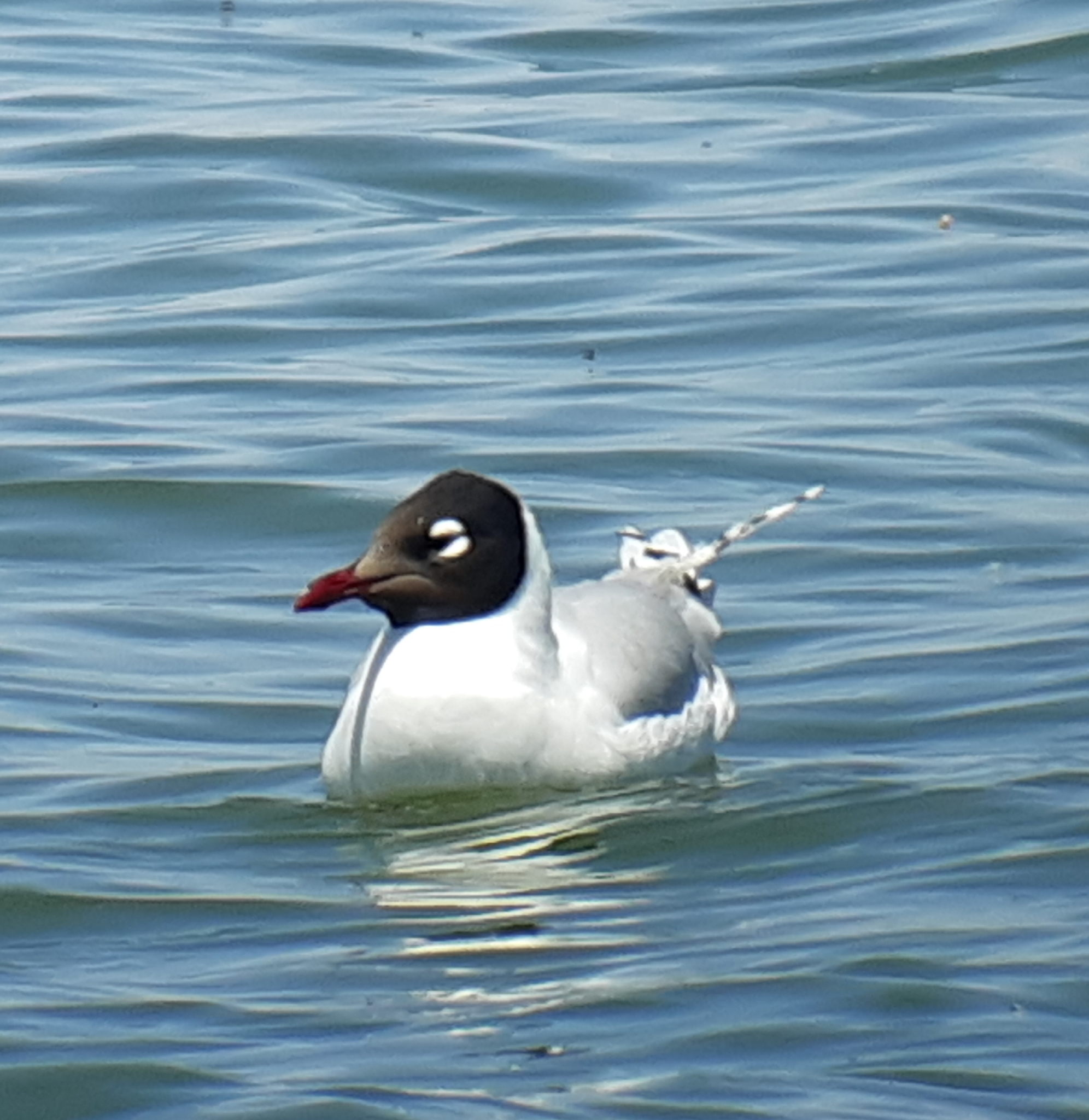
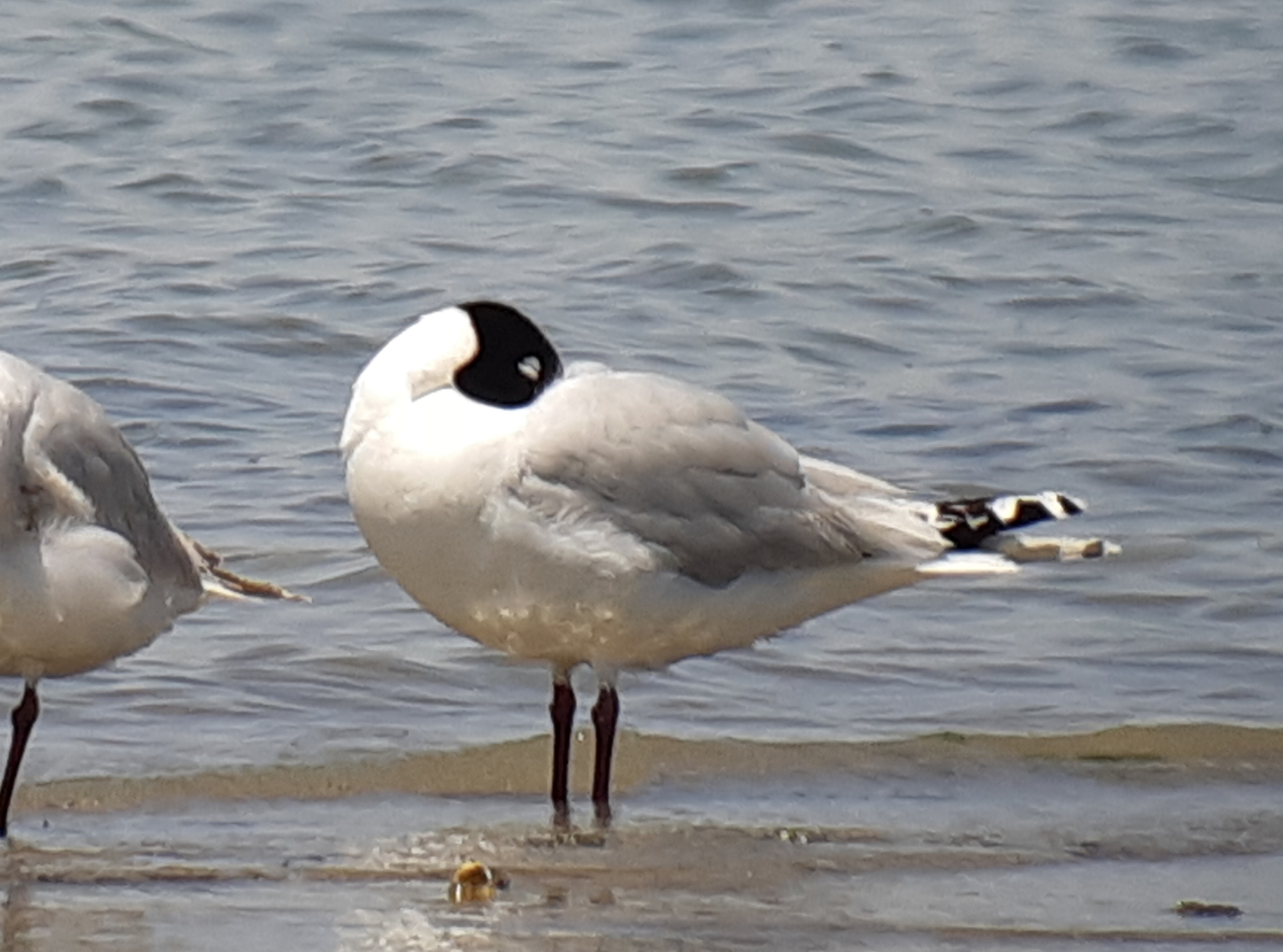
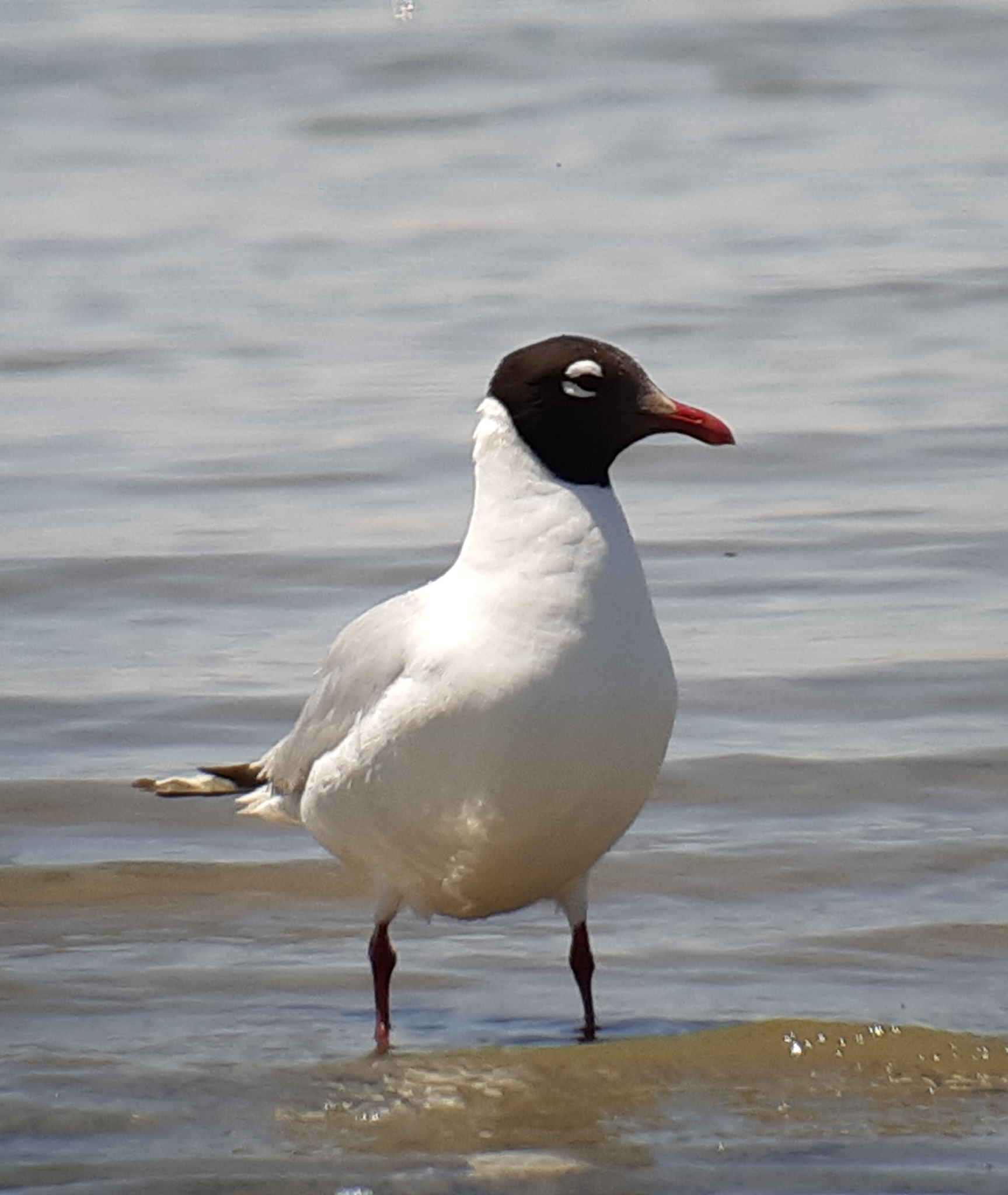
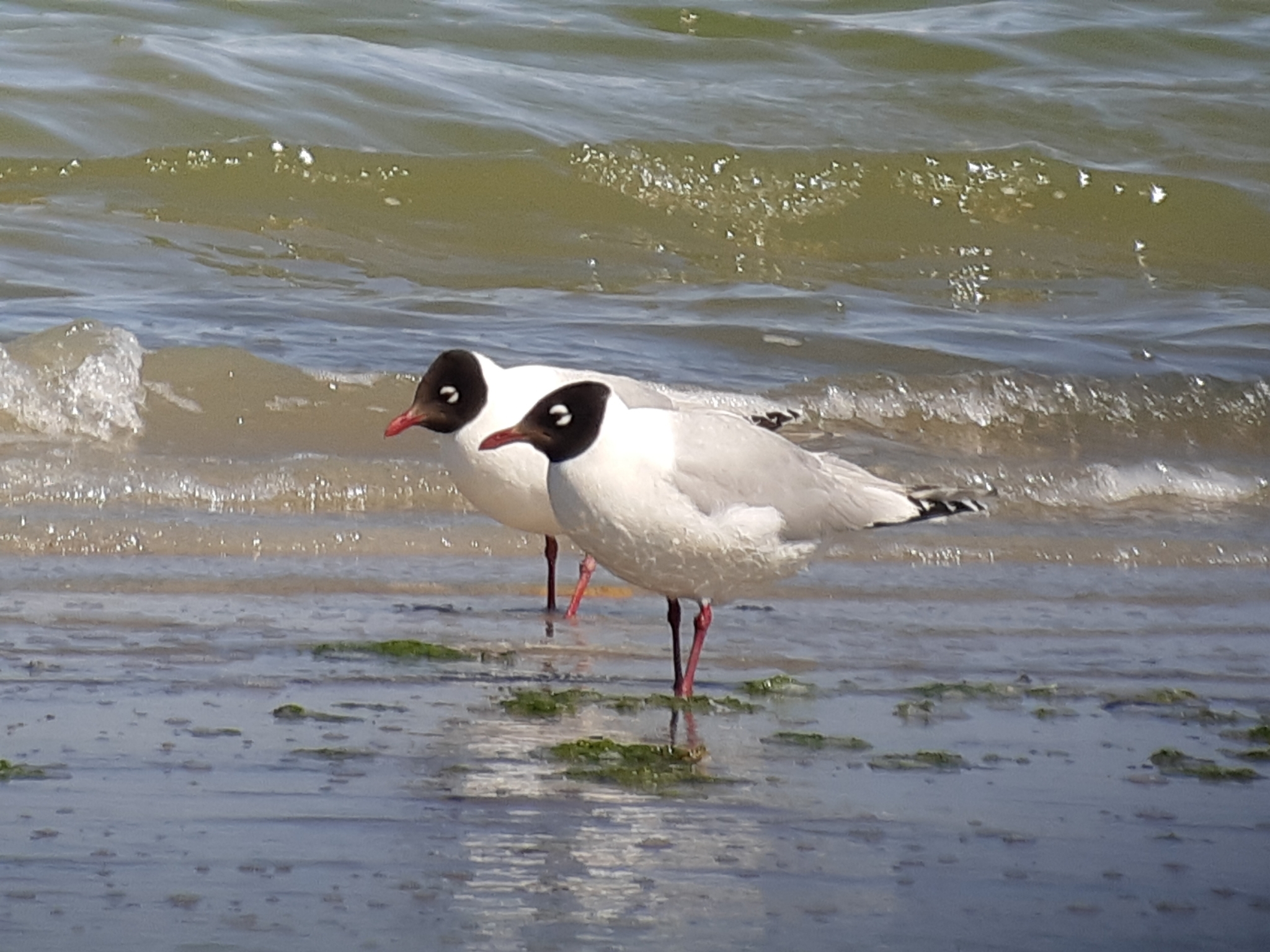
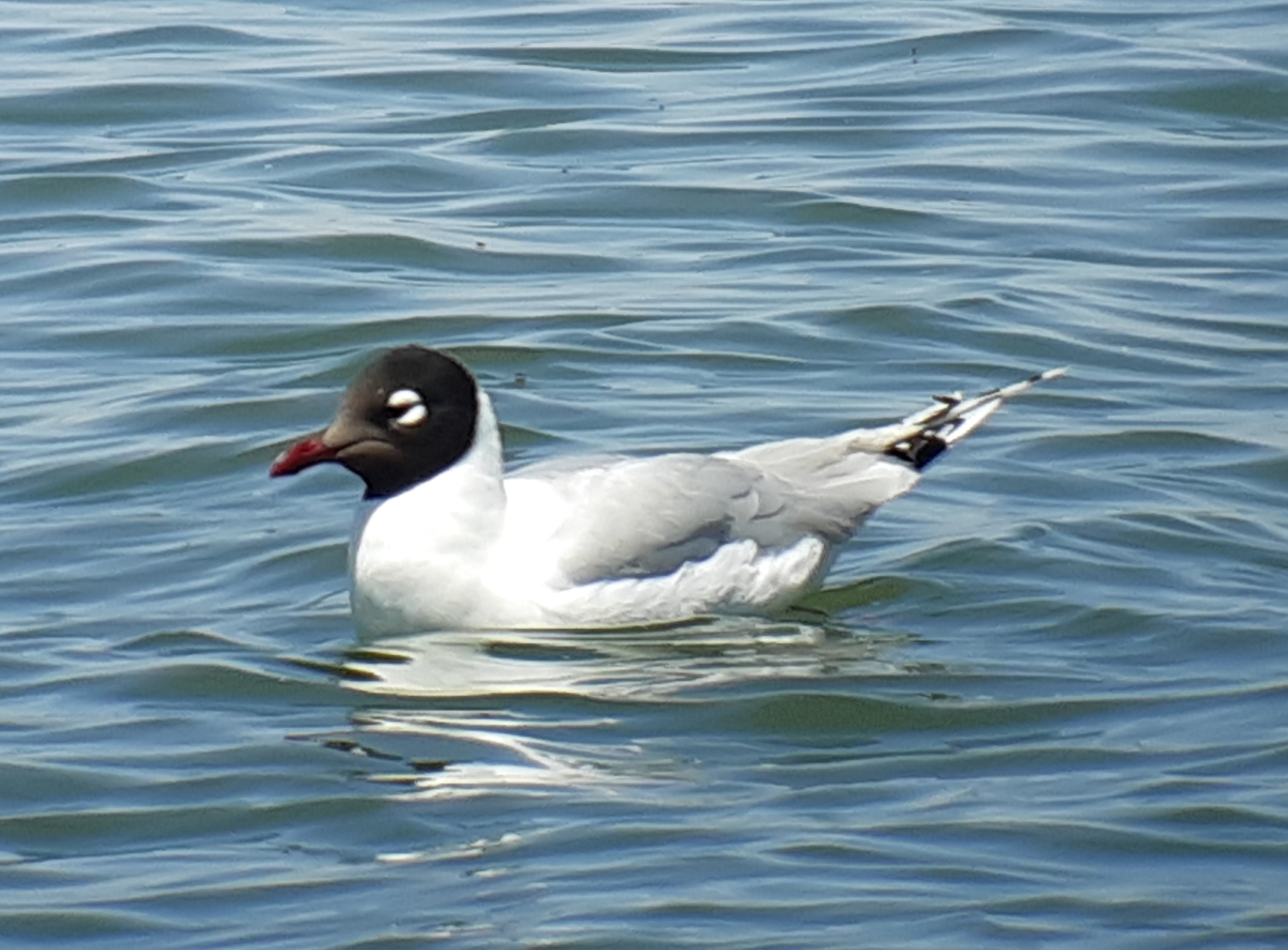
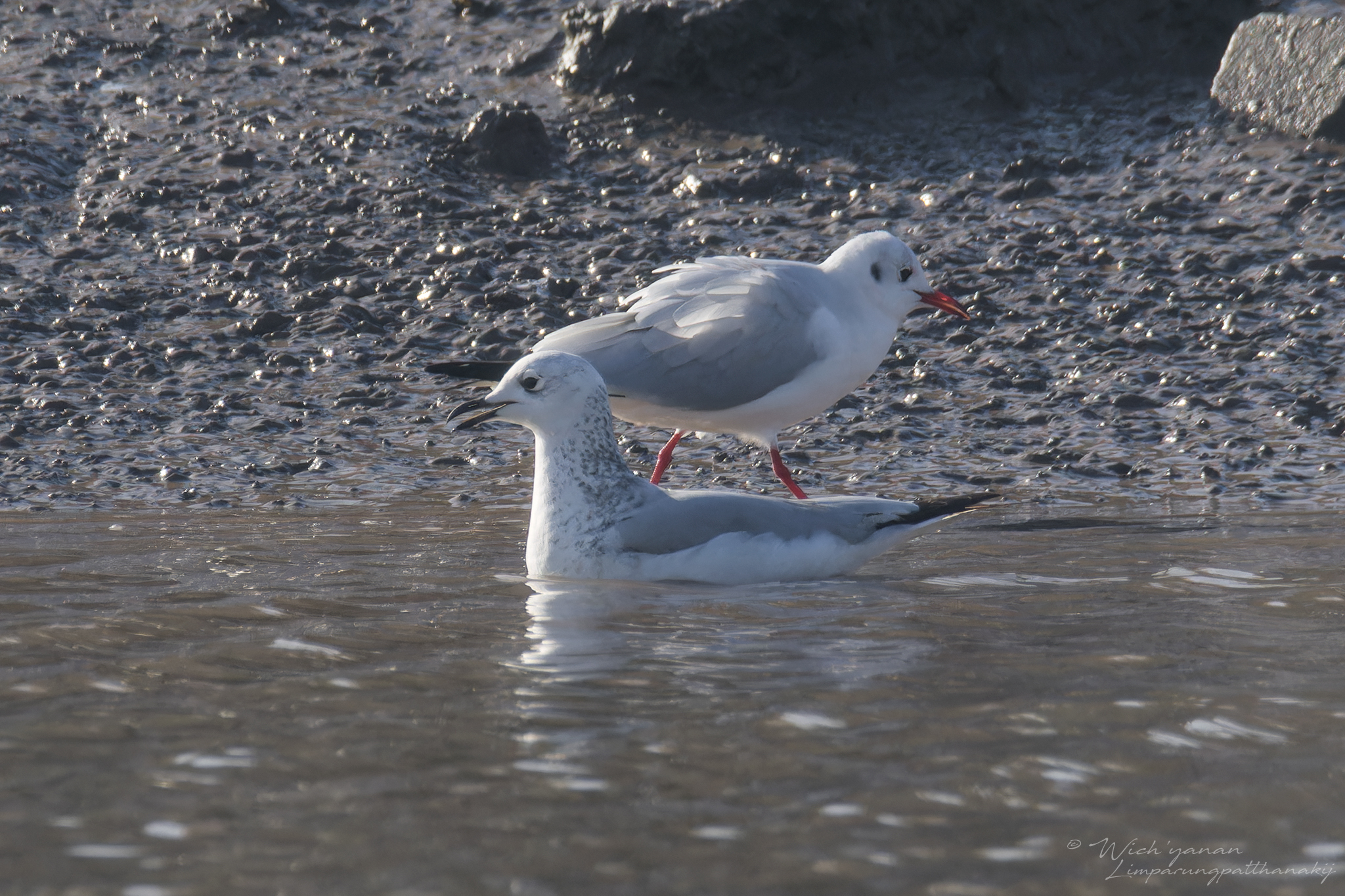
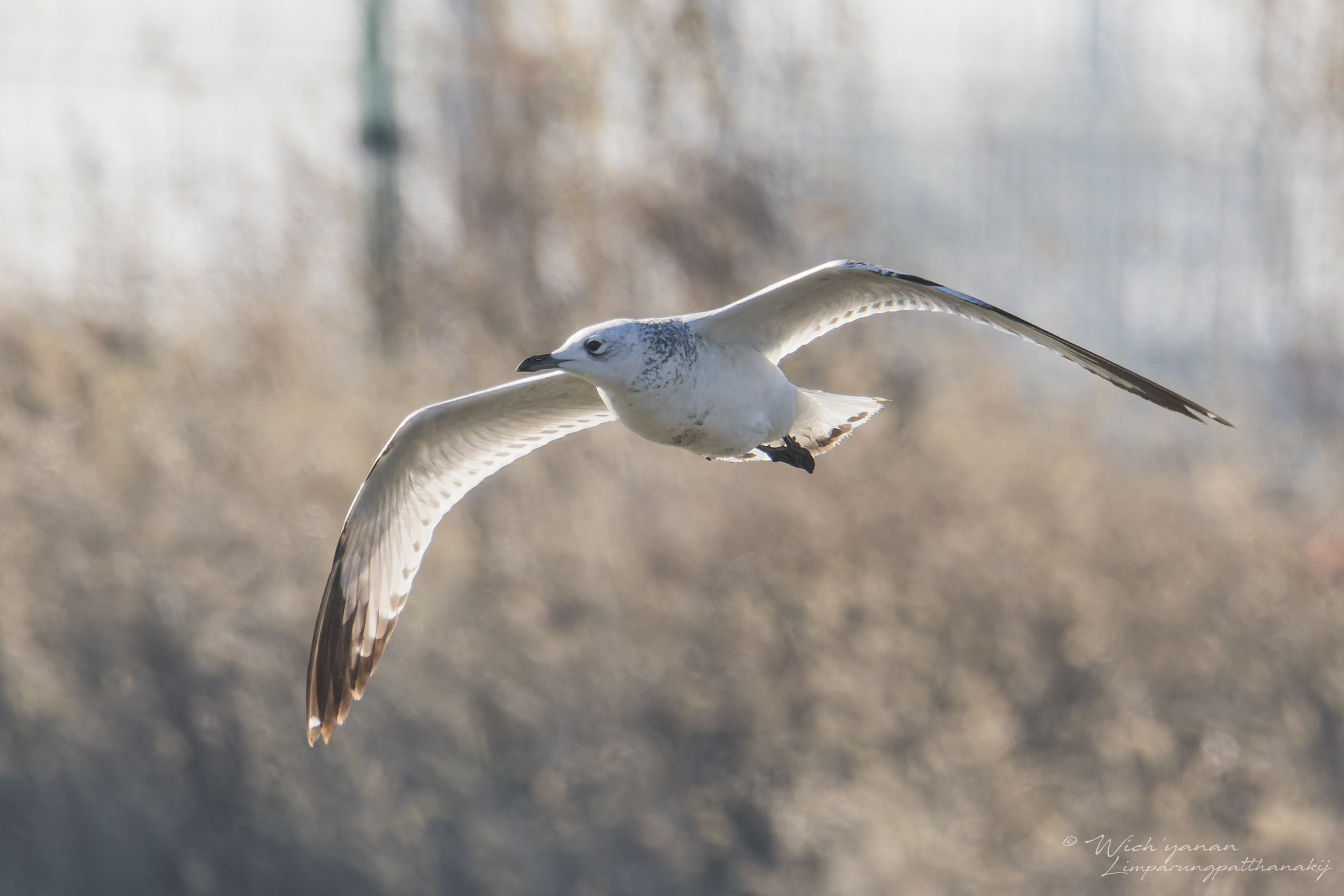
Adults measure 44 to 45 centimeters in length and display a stocky, thick-bodied appearance. Non-breeding plumage features uniformly dark-smudged ear-coverts and hind crown, while the wings show white tips and prominent, isolated black subterminal markings on the outer primaries without a white leading edge. Breeding birds develop striking black hoods covering the head and napes, with grey-brown foreheads accented by broad white half-moon markings around, below, and above the eyes. The legs are orange and the bill is a vivid scarlet, providing excellent contrast against the dark breeding plumage.
Identification
The combination of dark smudging on the head in non-breeding plumage and isolated black subterminal spots on white-tipped primaries helps distinguish this species from similar gulls. The absence of a white leading edge on the outer wing is a key field mark. During breeding season, the extensive black hood with grey-brown forehead and prominent white eye crescents separates it from other hooded gulls in its range. Its stocky build and relatively medium size also aid identification.
Distribution & Habitat
This Central Asian endemic breeds at scattered locations across the region, including several sites in Mongolia (Galuut Lake, Khukh Lake, and Chukh Lake), two sites in Kazakhstan, single sites in Russia and China (Lake Hongjiannao). The species migrates relatively short distances, with small numbers reaching South Korea during the nonbreeding period and possibly larger numbers in eastern China, though this remains unverified. Breeding occurs from early June through early August on islands within saltwater lakes. Nonbreeding birds frequent estuarine mudflats and sandflats.
Behavior & Ecology
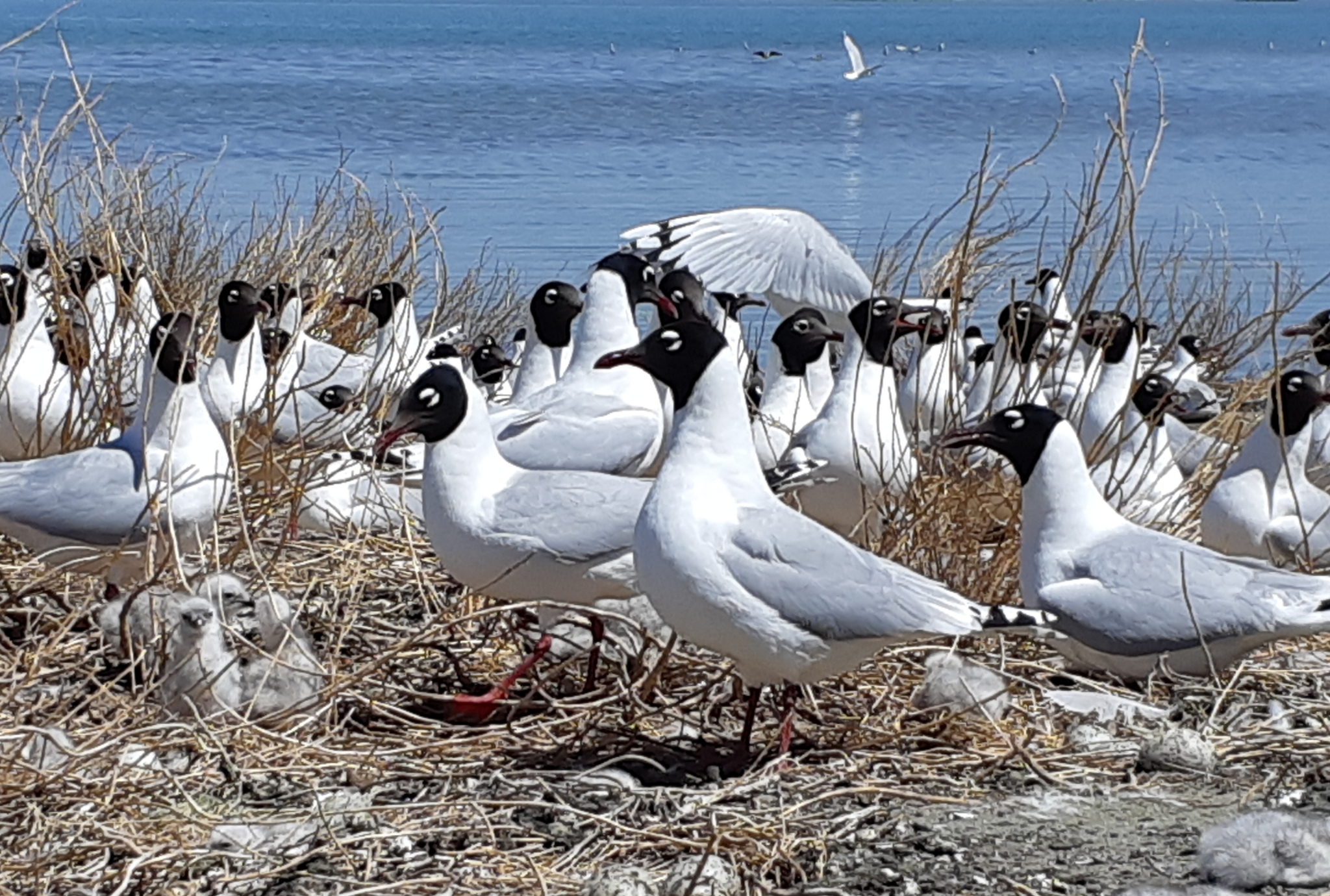
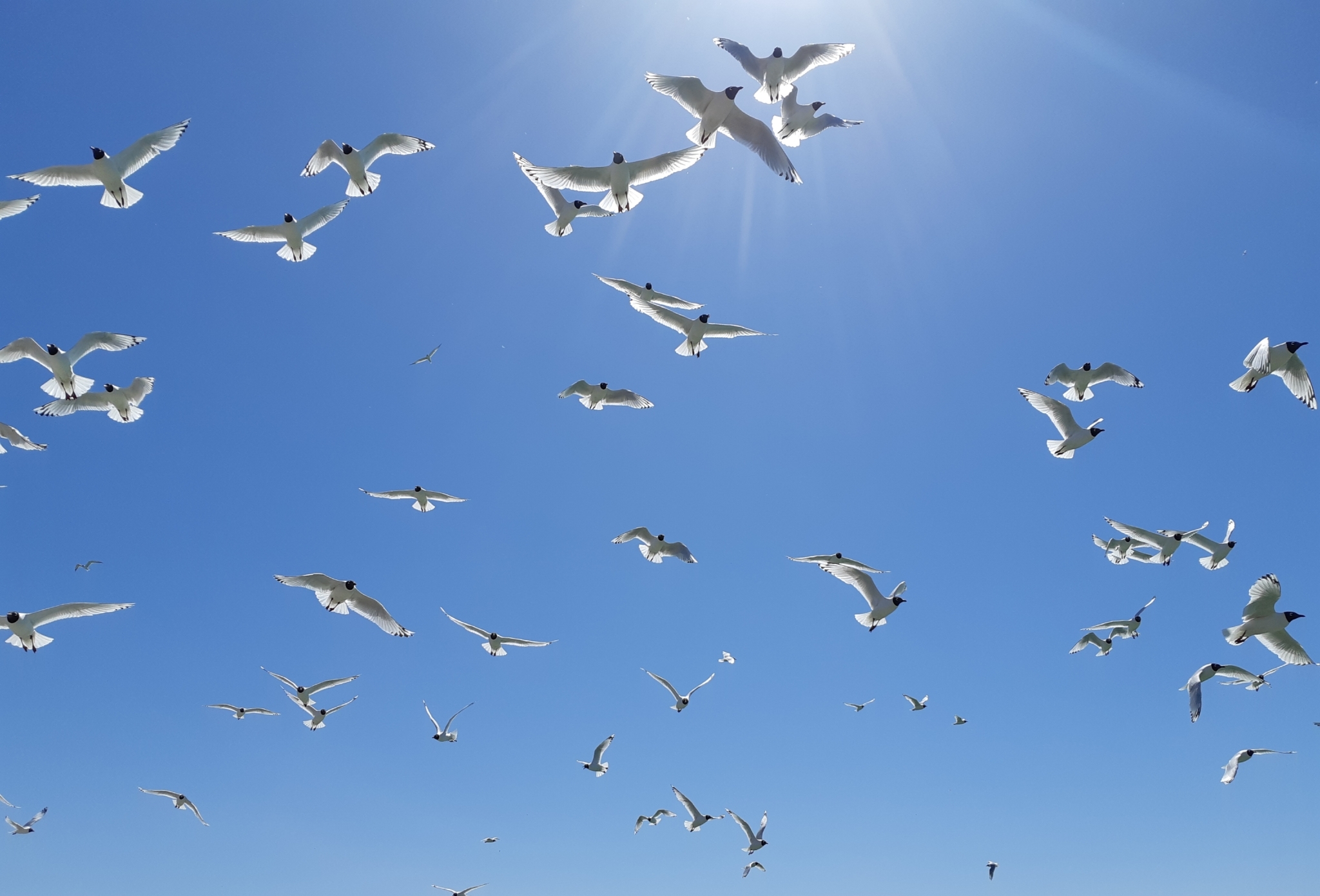
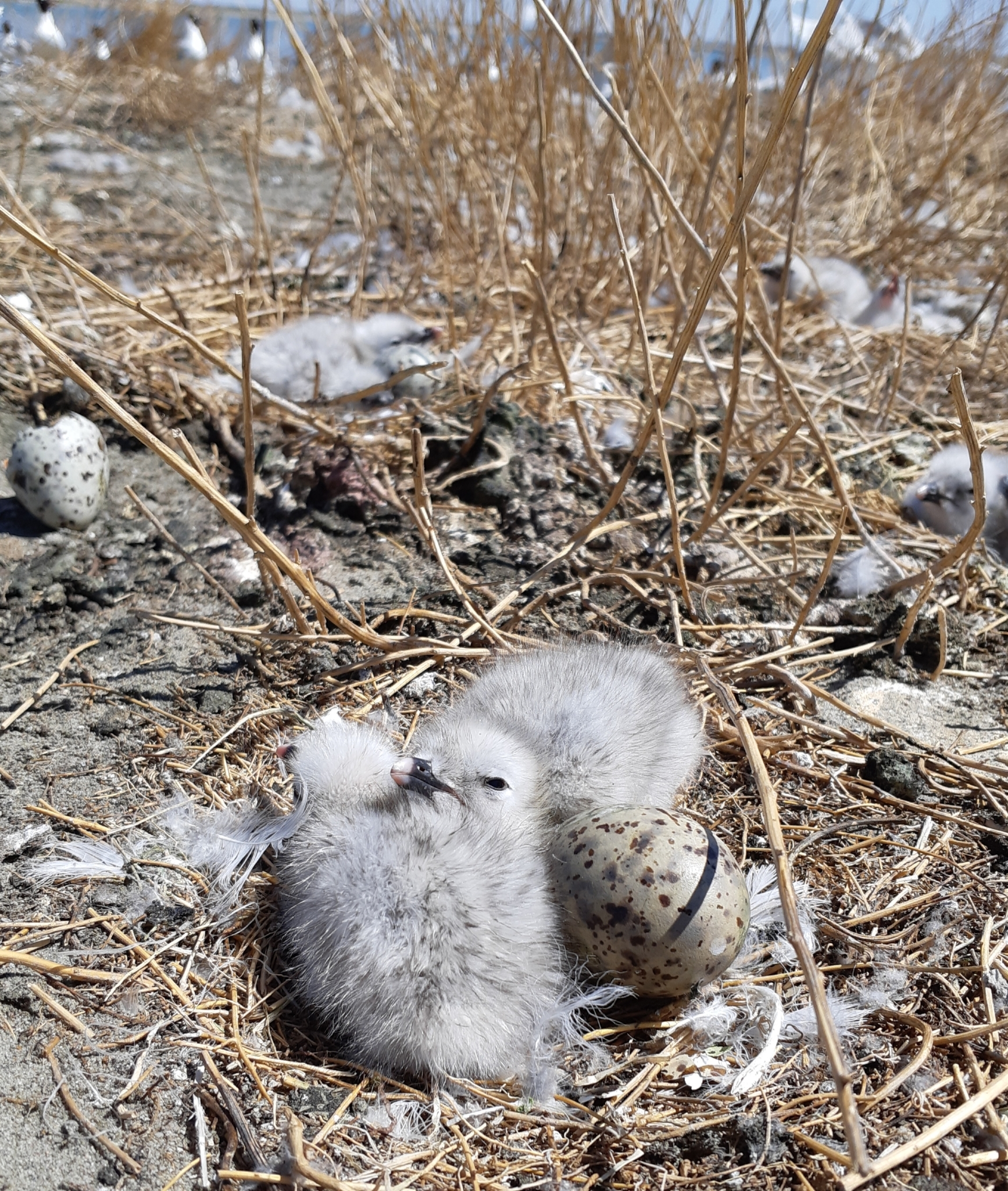
Breeding takes place in colonies established on islands in saltwater lakes, with timing spanning early June to early August. The species demonstrates strong habitat fidelity but requires specific island conditions for successful nesting—it will not breed when lakes dry out, when water levels rise too high, or when islands become too small, overgrown with vegetation, or large enough to connect with shorelines. During nonbreeding periods, birds utilize estuarine mud and sandflat habitats for feeding.
Conservation
The global population is estimated at 10,000 or fewer individuals and continues to decline, resulting in classification as Vulnerable on the IUCN Red List. Primary threats include fluctuating water levels at breeding lakes, predation by other gull species, hailstorms, and flooding. Human disturbance has intensified vulnerability to all these factors, causing increased mortality among adults, chicks, and eggs. Degradation of stopover sites along migration routes compounds the threats. Protected nature reserves have been established in Mongolia (including the Mongol Daguur region), Kazakhstan, and Russia to safeguard critical habitat.
Source: Wikipedia · CC BY-SA 3.0
Taxonomy
- Order
- Charadriiformes
- Family
- Laridae
- Genus
- Ichthyaetus
- eBird Code
- relgul2
Distribution
breeds lakes of northeastern Kazakhstan eastward to Transbaikalia (southeastern Russia) and Inner Mongolia (northeastern China); winters coasts of Korean Peninsula, Bohai Bay, Yellow Sea, and East China Sea
Data Sources
Species description from Wikipedia, licensed under CC BY-SA 3.0.
Bird images and sounds sourced from GBIF, contributed by citizen scientists worldwide under Creative Commons licenses.
Taxonomy data from AviList 2025.