
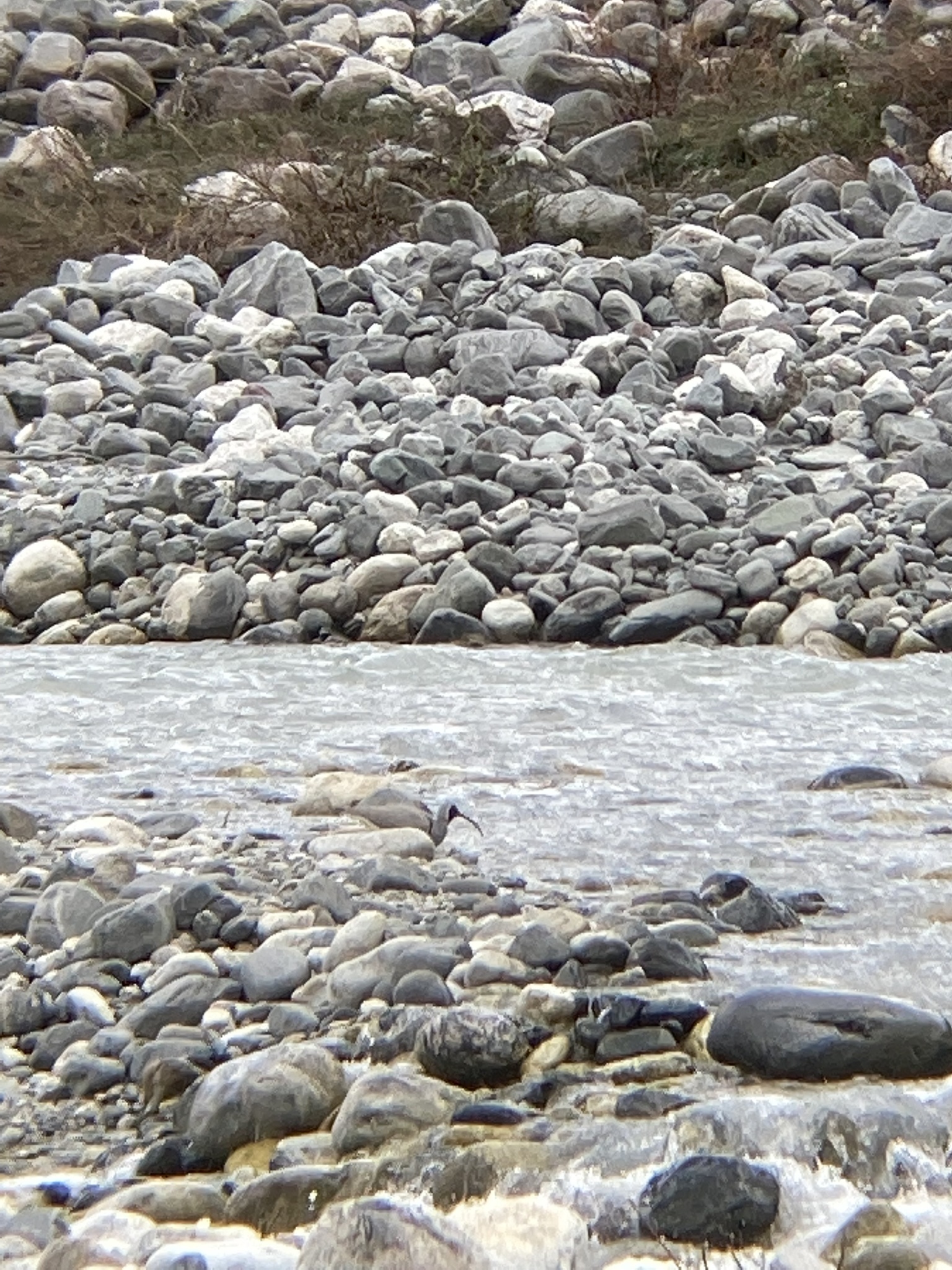
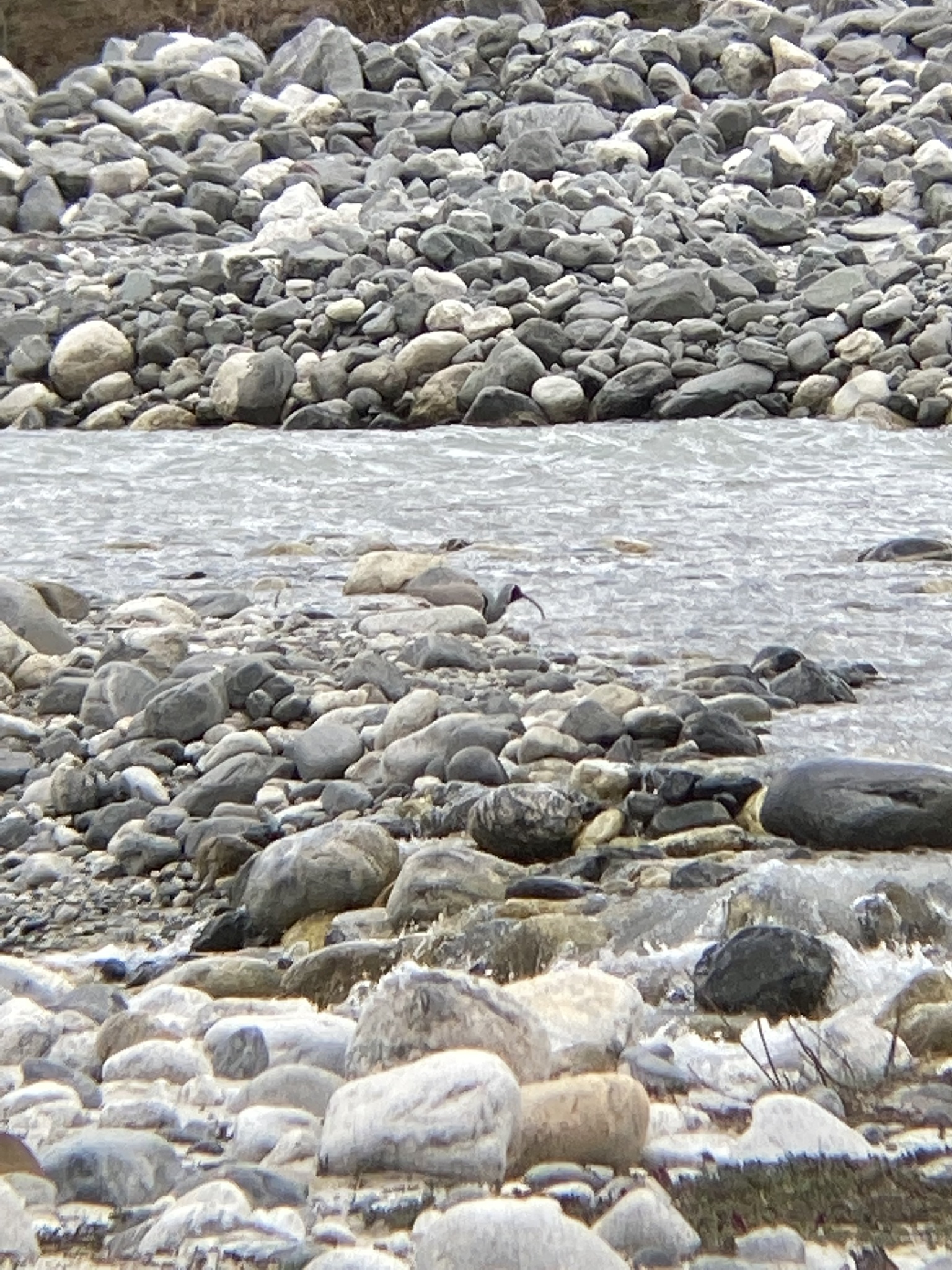
Charadriiformes / Ibidorhynchidae / Ibidorhyncha
Ibisbill
Ibidorhyncha struthersii · 鹮嘴鹬
Introduction
Member of the order Charadriiformes and the sole species in the family Ibidorhynchidae. Occurs on shingle riverbanks of high plateaux in Central Asia and the Himalayas. Distinctive for its long down-curved bill and preference for slow-flowing water habitats. Evaluated as Least Concern by the IUCN.
Description
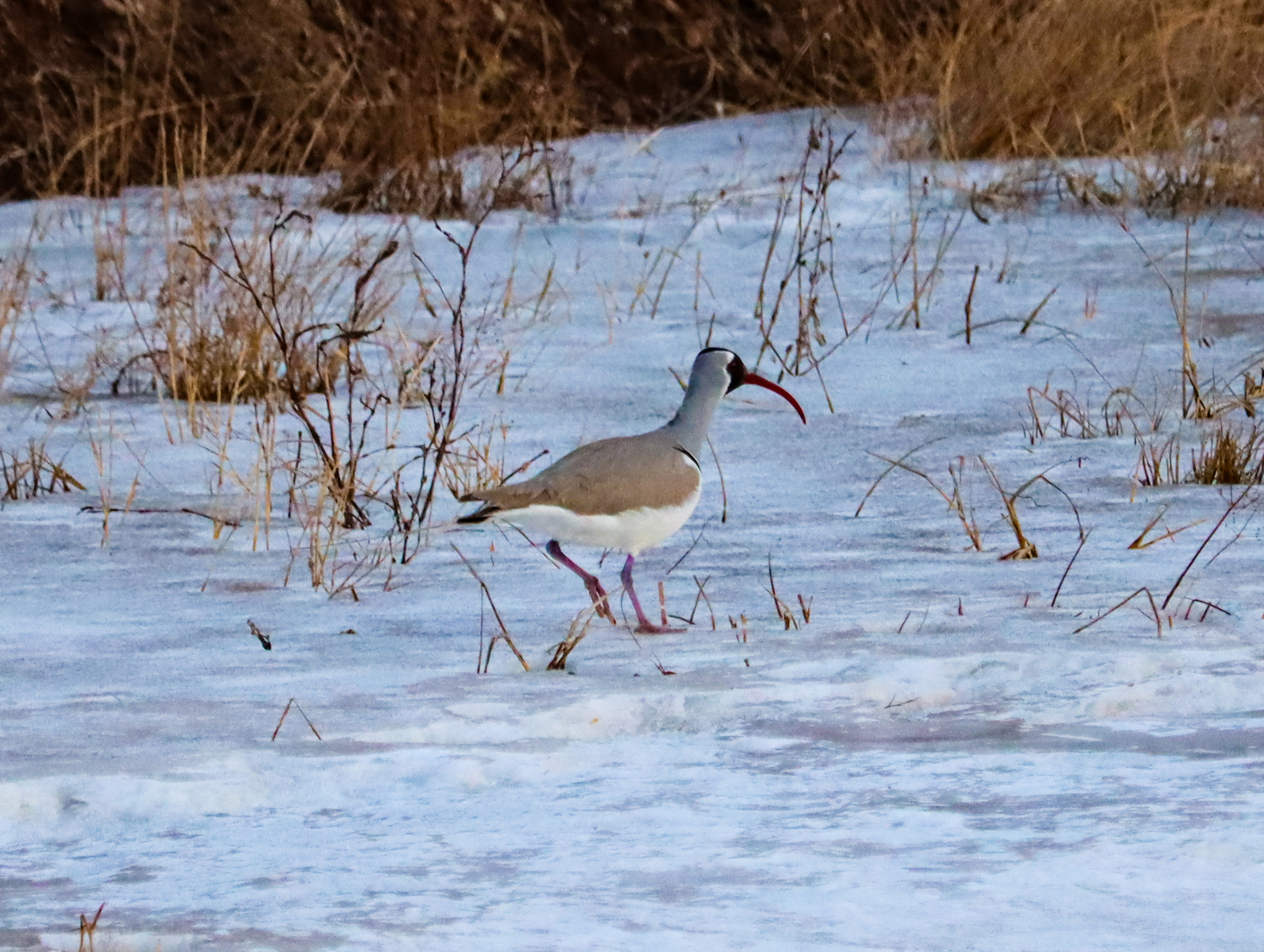
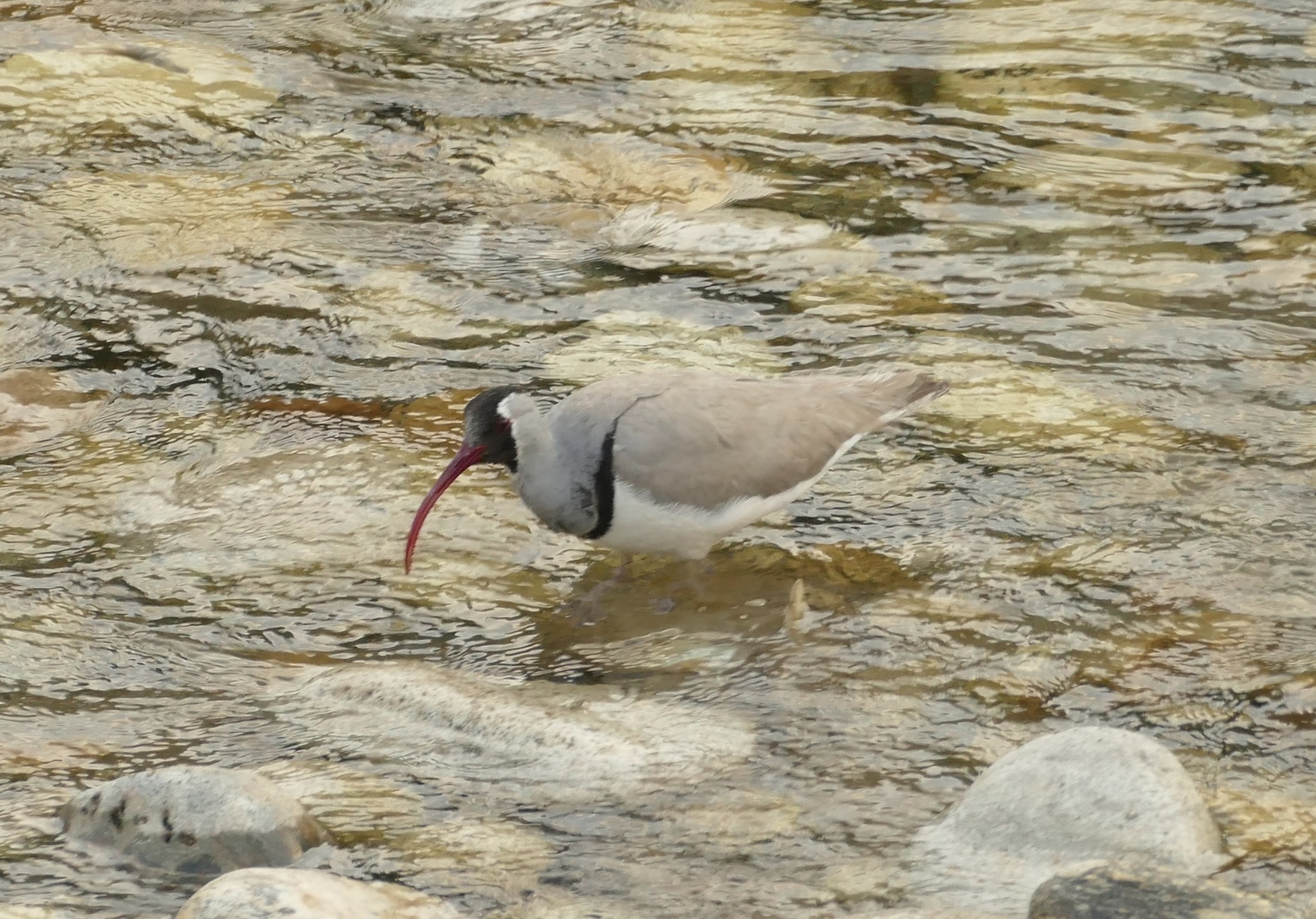
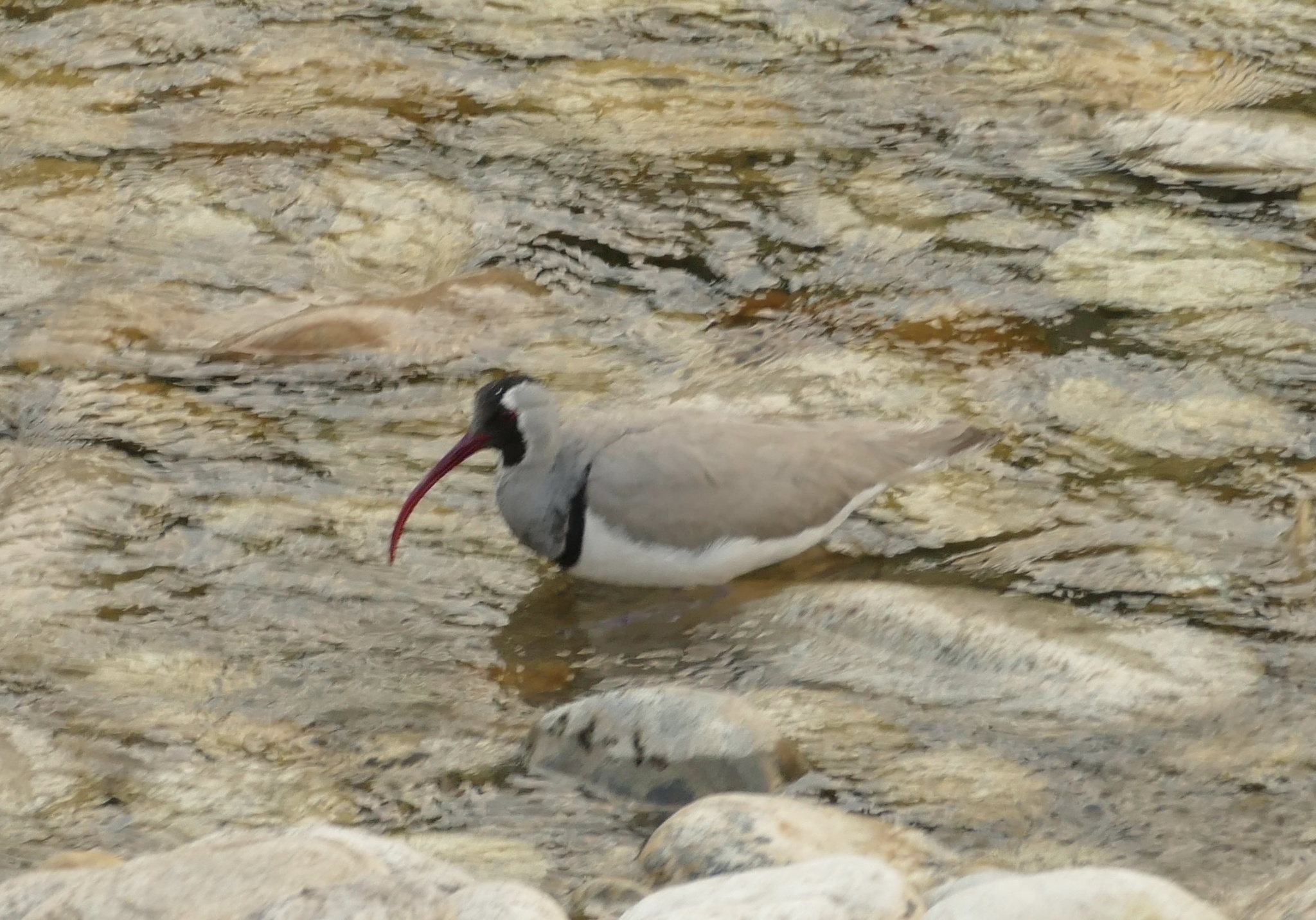
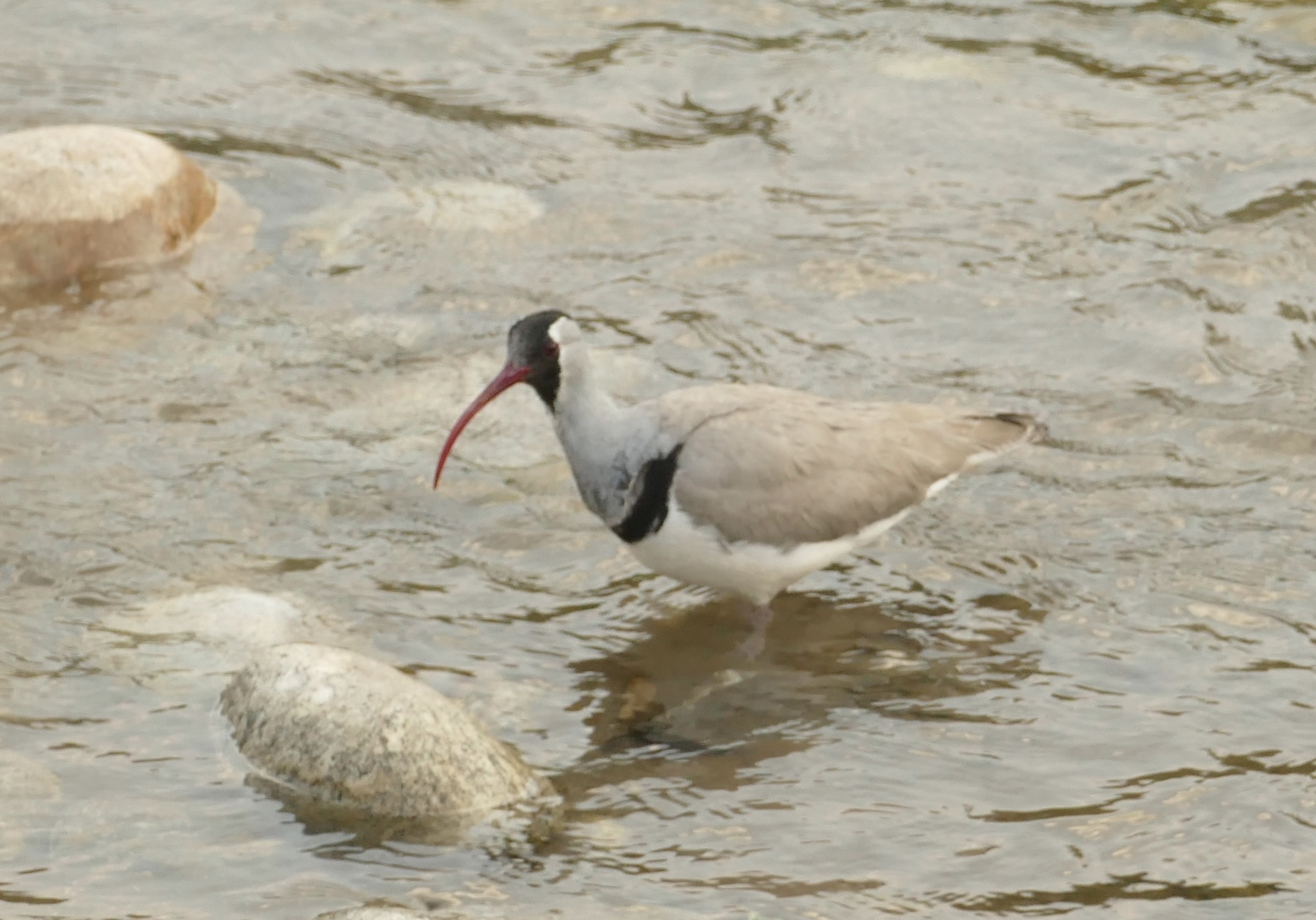
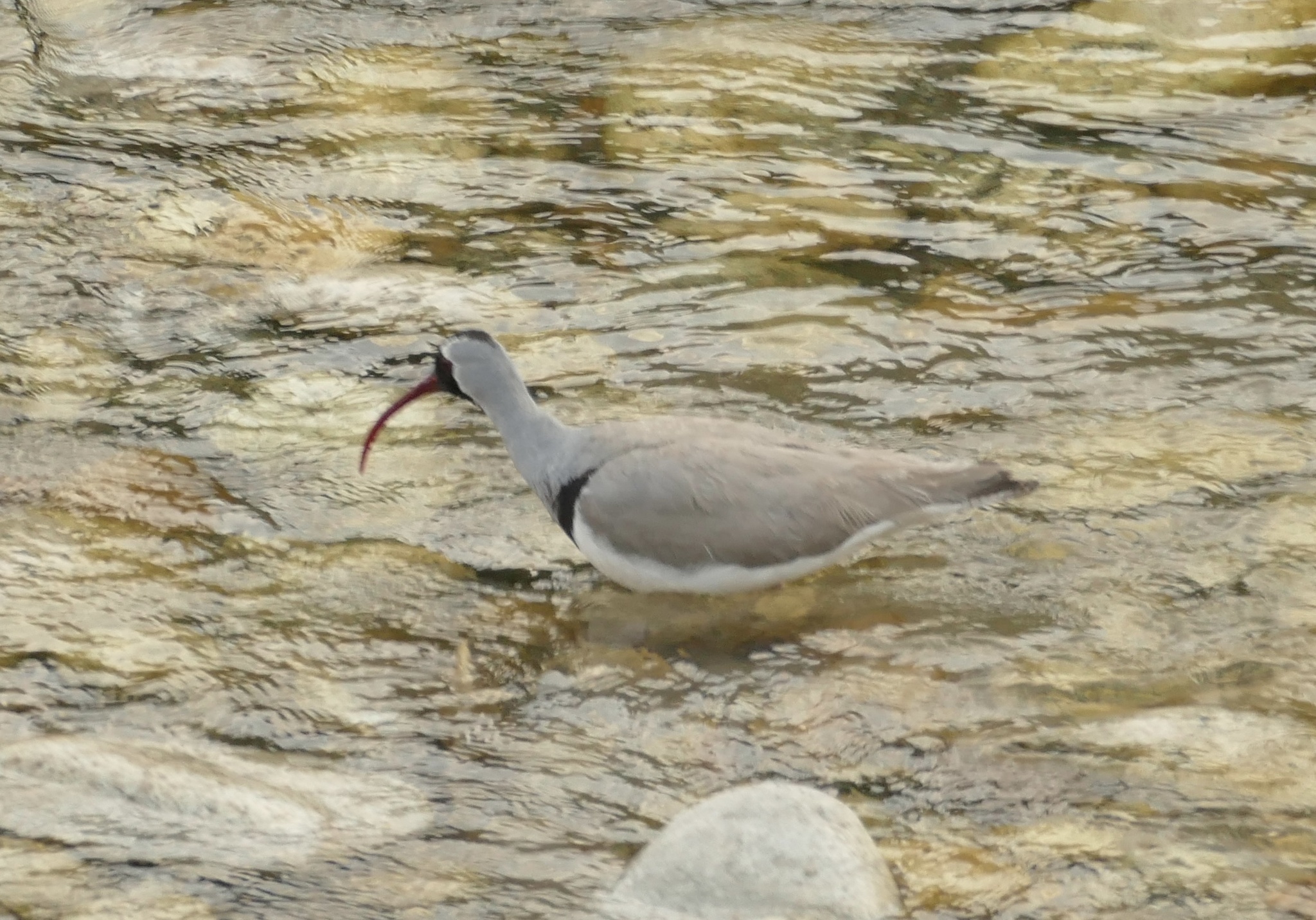
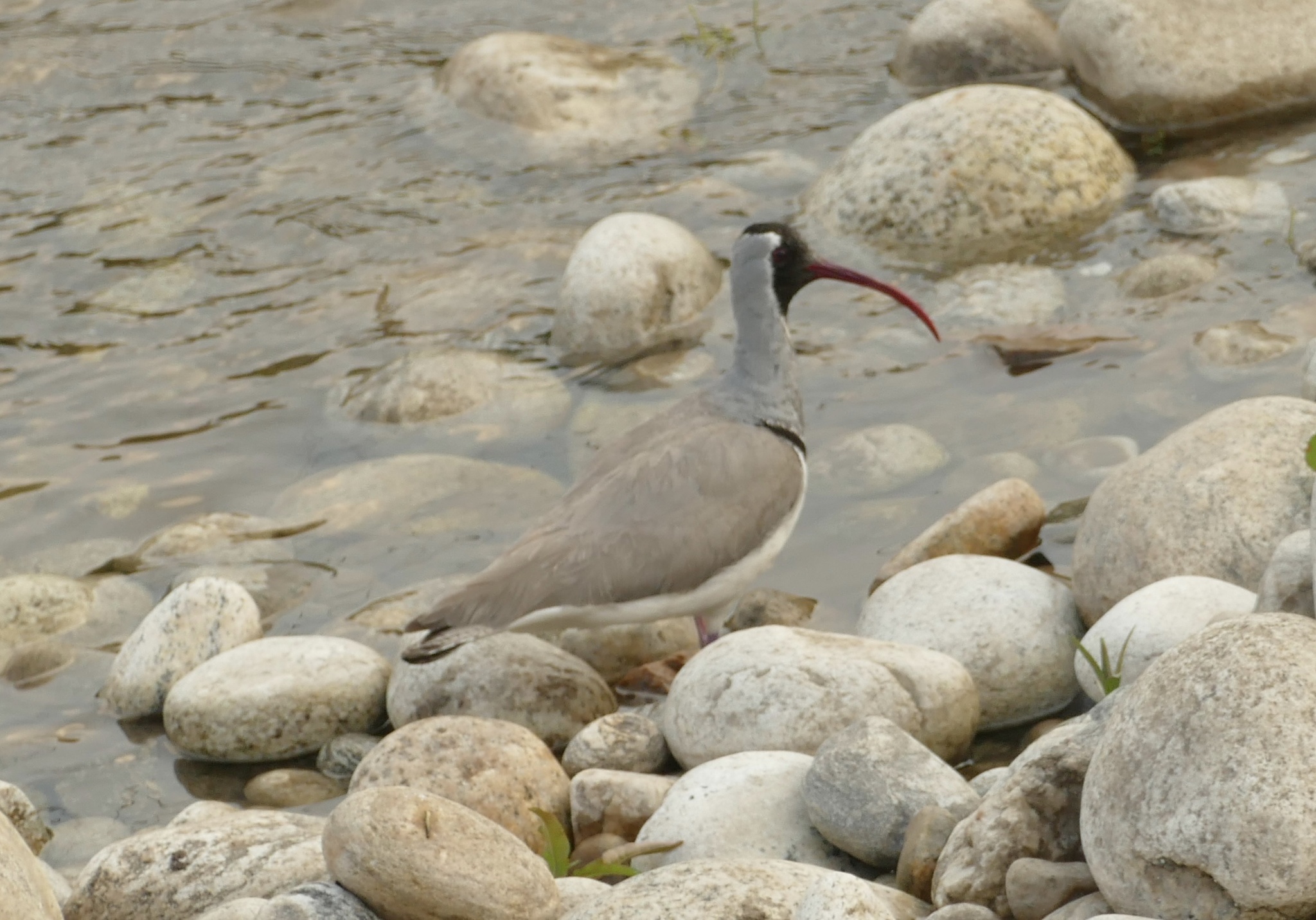
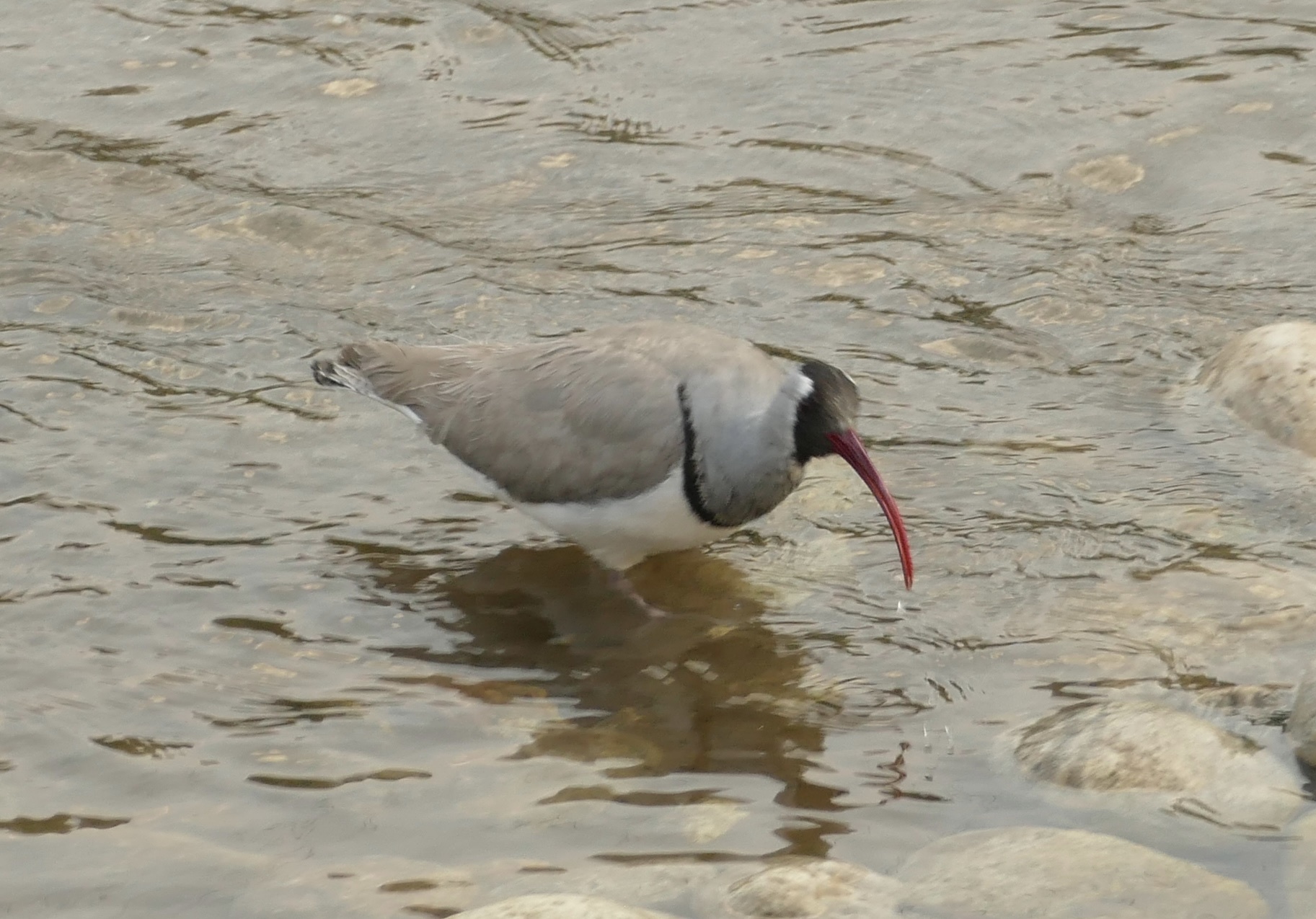
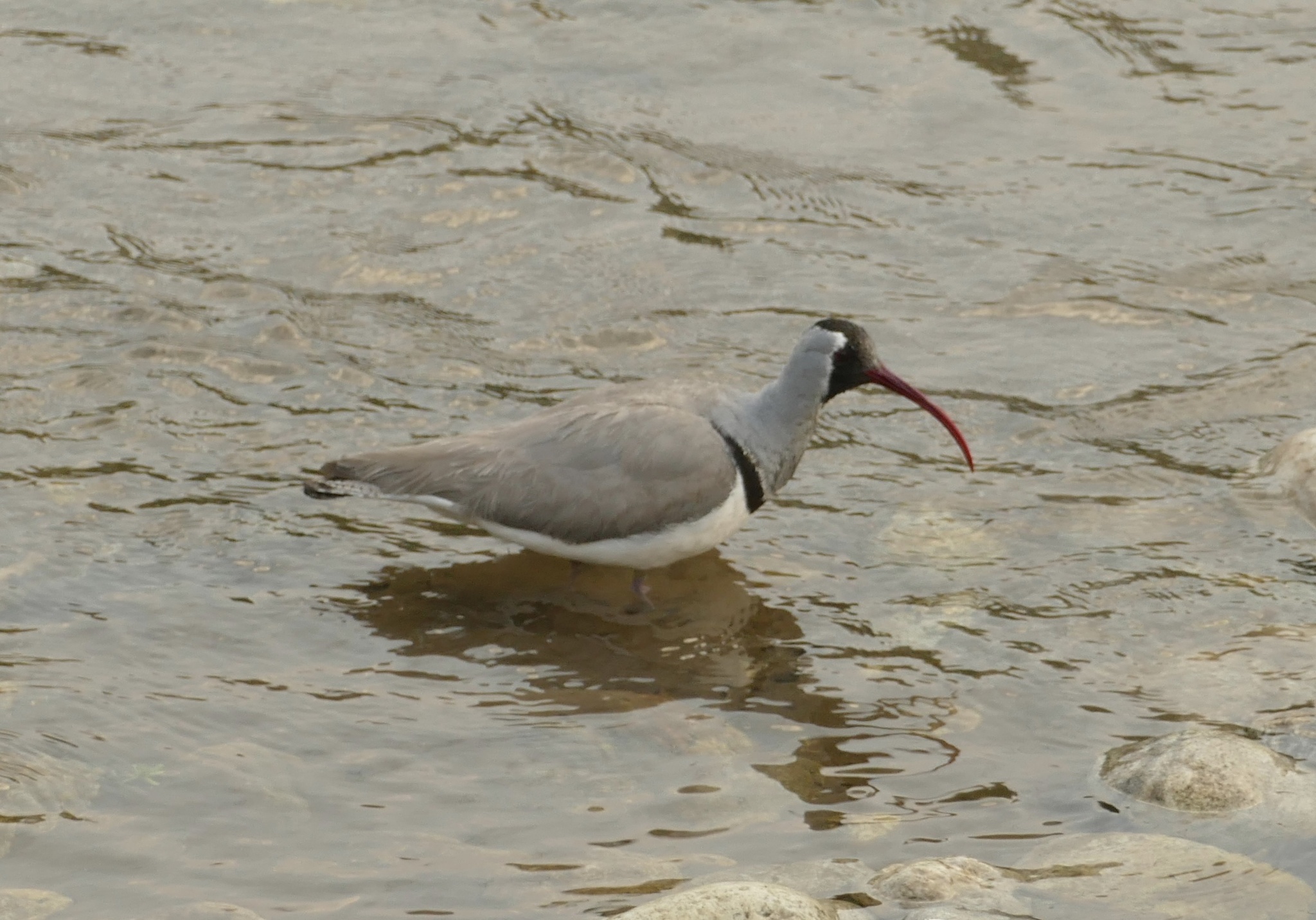
Length 38–41 cm; weight 270–320 g, with females slightly heavier. Plumage is grey with a white belly, black face, and black breast band. Bill is crimson, long, and down-curved, measuring 6.8–8.2 cm, and is slightly longer in females. Breeding adults have greyish-purple legs, while juveniles or non-breeding birds have dull sepia or greenish legs. Young birds lack black facial and breast markings and have duller bills. The bird has three toes lacking a hind toe, with a small web between the outer and middle toes.
Identification
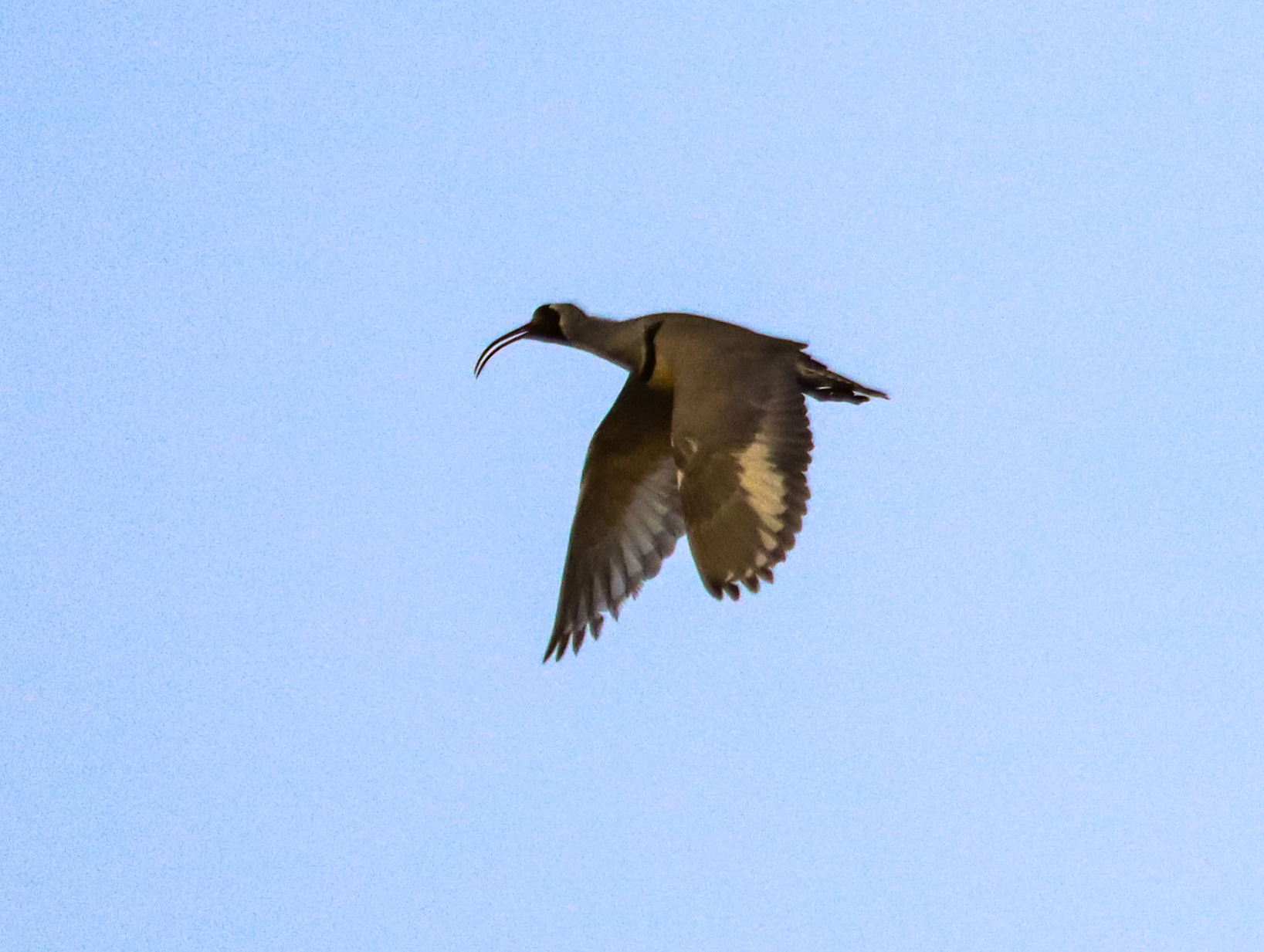
Unmistakable appearance featuring a grey body, white belly, and prominent black face and breast band. The long, down-curved crimson bill resembles that of an ibis. In flight, displays an outstretched neck and rounded wings. Call is a ringing 'klew-klew', similar to a greenshank.
Distribution & Habitat
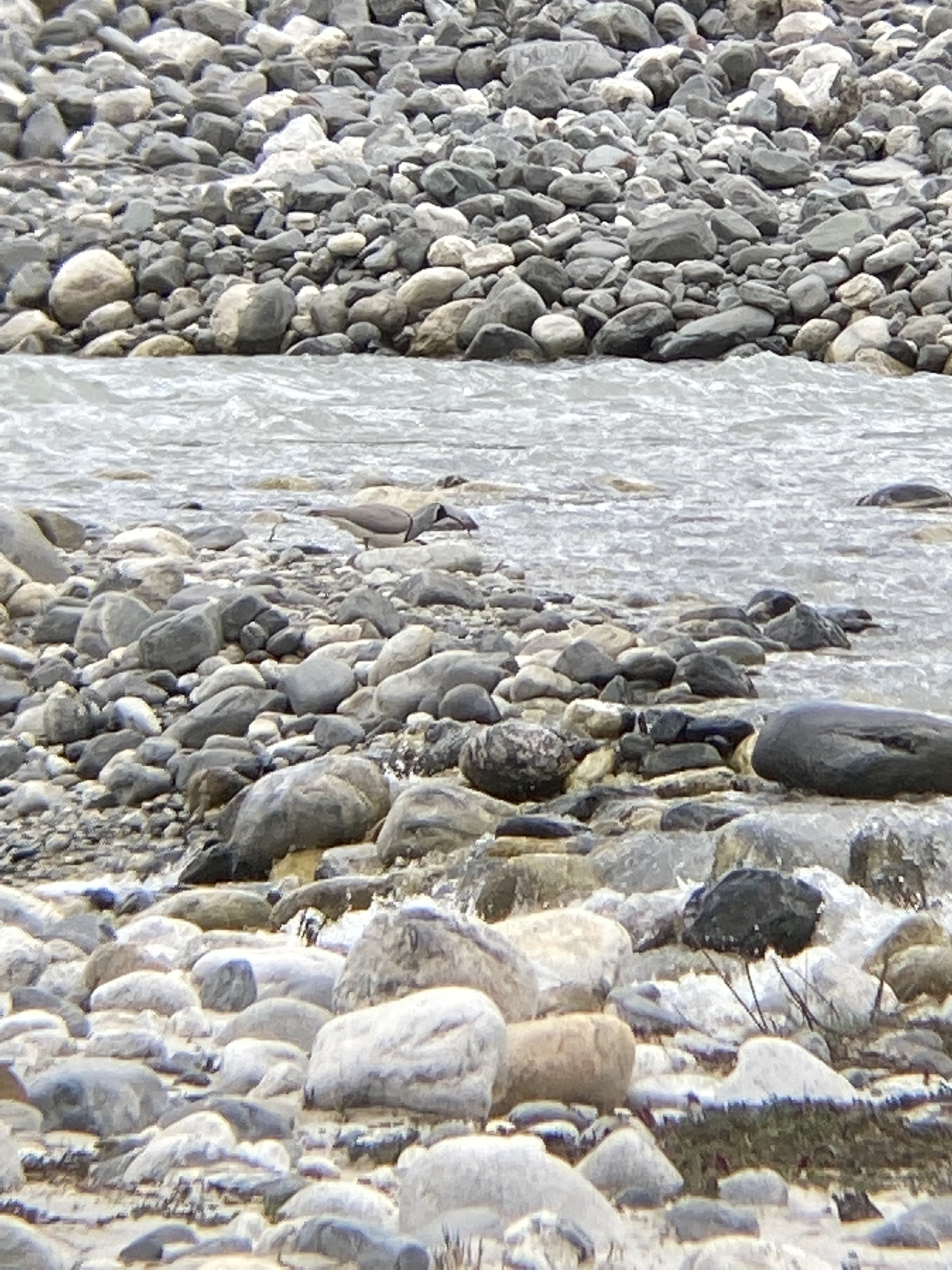
Range extends from Lake Issyk-Kul to the southern border of Manchuria, including the Altai region of Russia and highlands of Central and Northern Tien Shan in Kazakhstan. Breeds typically between 1,700 and 4,400 m, with records as low as 500 m. Outside breeding season, descends to 100 m. Inhabits shingle-bed river valleys with slow-flowing water, sand, silt, pebbles, and little vegetation.
Behavior & Ecology
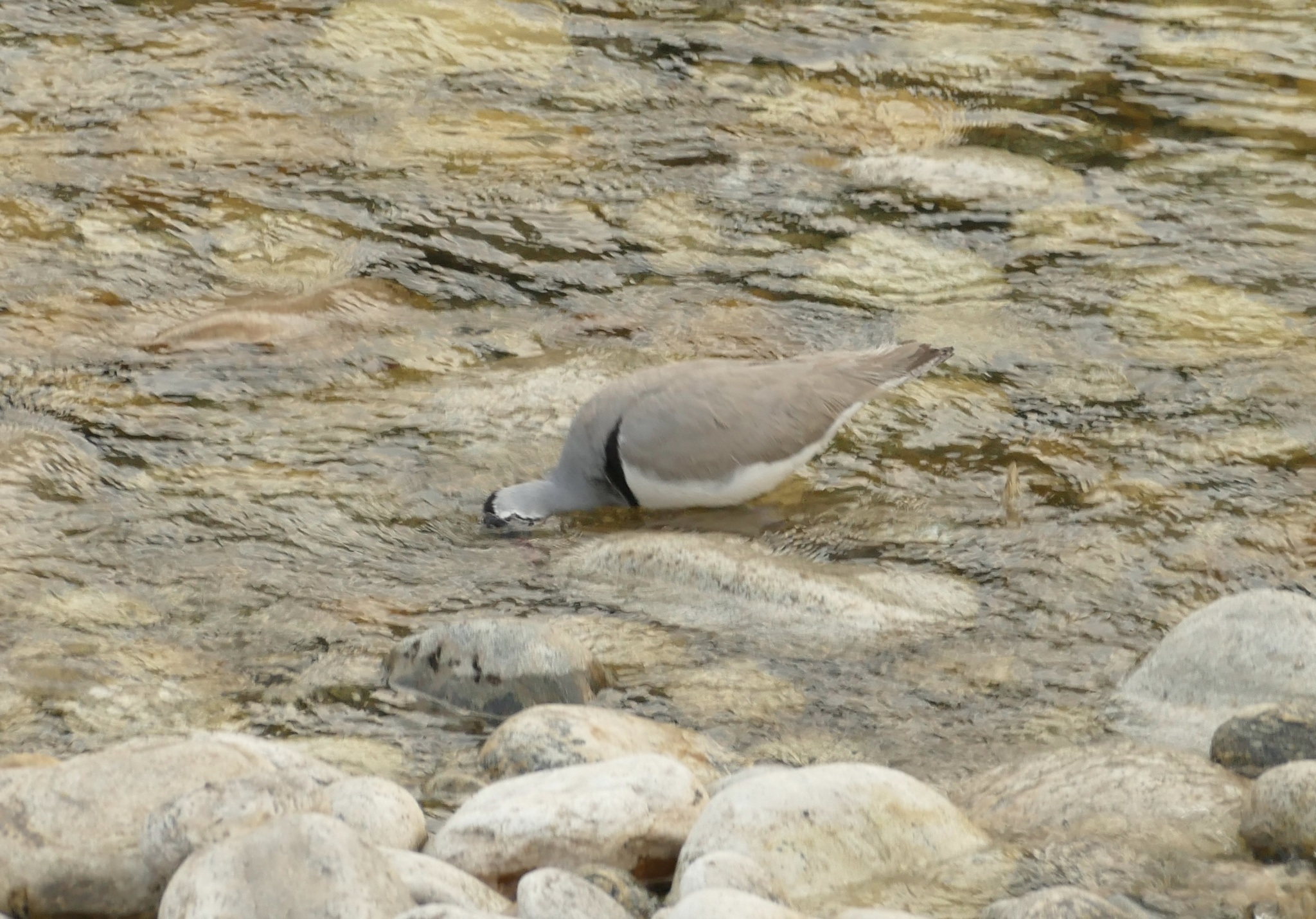
Solitary in autumn and winter, occasionally forming pairs or small flocks up to eight individuals. Breeds solitarily and territorially. Good swimmer, preferring to cross rivers by swimming rather than flying. Feeds by probing under rocks and gravel for aquatic and terrestrial invertebrates such as caddisfly and mayfly larvae, grasshoppers, and small fish. Nest is a ground scrape on river banks or islands, lined with pebbles. Clutch size is two to four oval eggs laid in late April or early May. Both parents share incubation duties.
Conservation
Evaluated as Least Concern by the IUCN. Has a large estimated range of 5 million square kilometres. Population trend is not believed to be declining or fragmenting, though exact population numbers are unknown.
Source: Wikipedia · CC BY-SA 3.0
Taxonomy
- Order
- Charadriiformes
- Family
- Ibidorhynchidae
- Genus
- Ibidorhyncha
Distribution
montane rivers of western Tajikistan, southeastern Kazakhstan, northwestern Xinjiang and northeastern Afghanistan eastward through Himalayas and Tibetan Plateau to Hebei (northeastern China)
Data Sources
Species description from Wikipedia, licensed under CC BY-SA 3.0.
Bird images and sounds sourced from GBIF, contributed by citizen scientists worldwide under Creative Commons licenses.
Taxonomy data from AviList 2025.