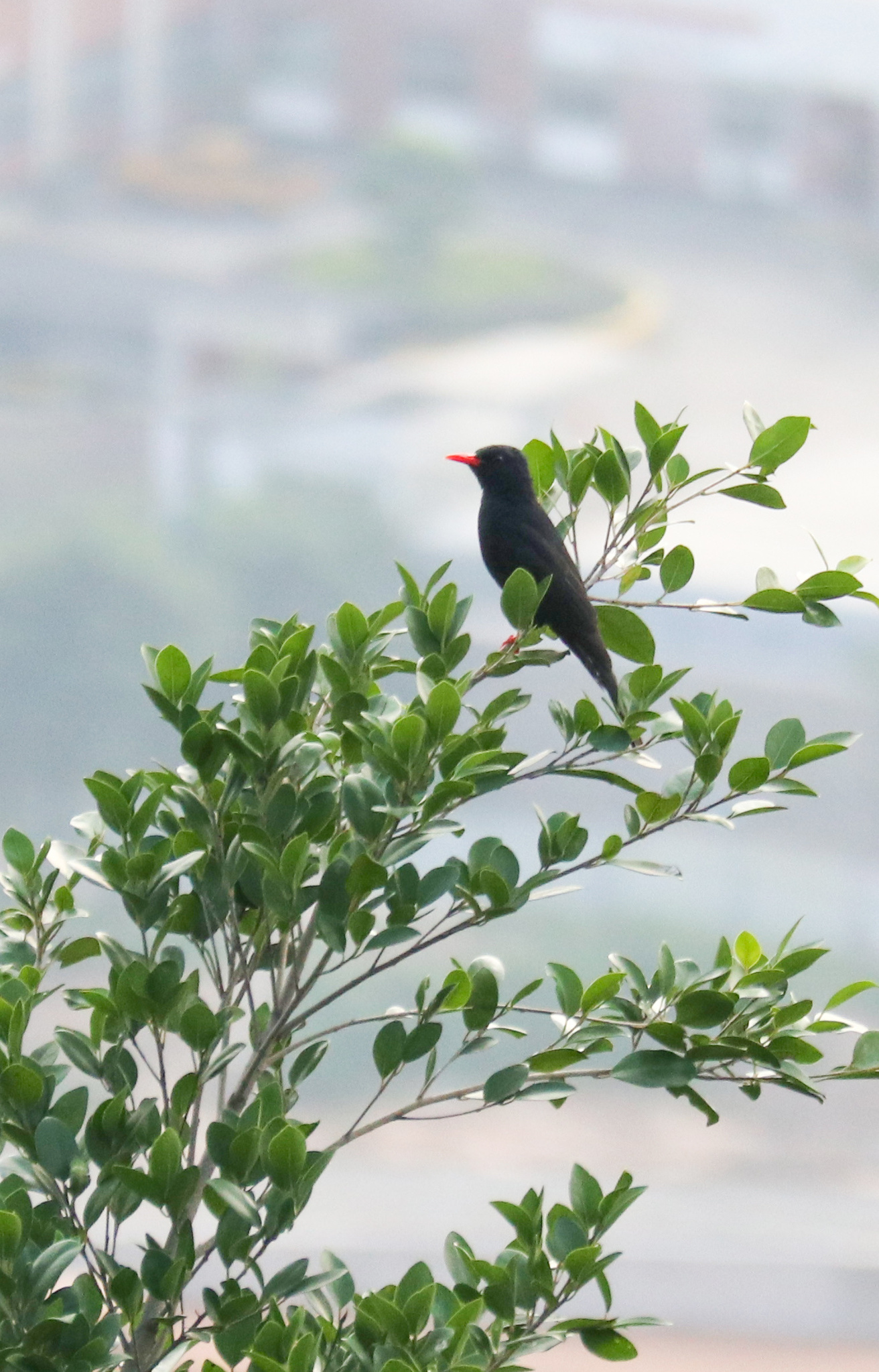
Passeriformes / Pycnonotidae / Hypsipetes
Black Bulbul
Hypsipetes leucocephalus · 黑短脚鹎
Introduction
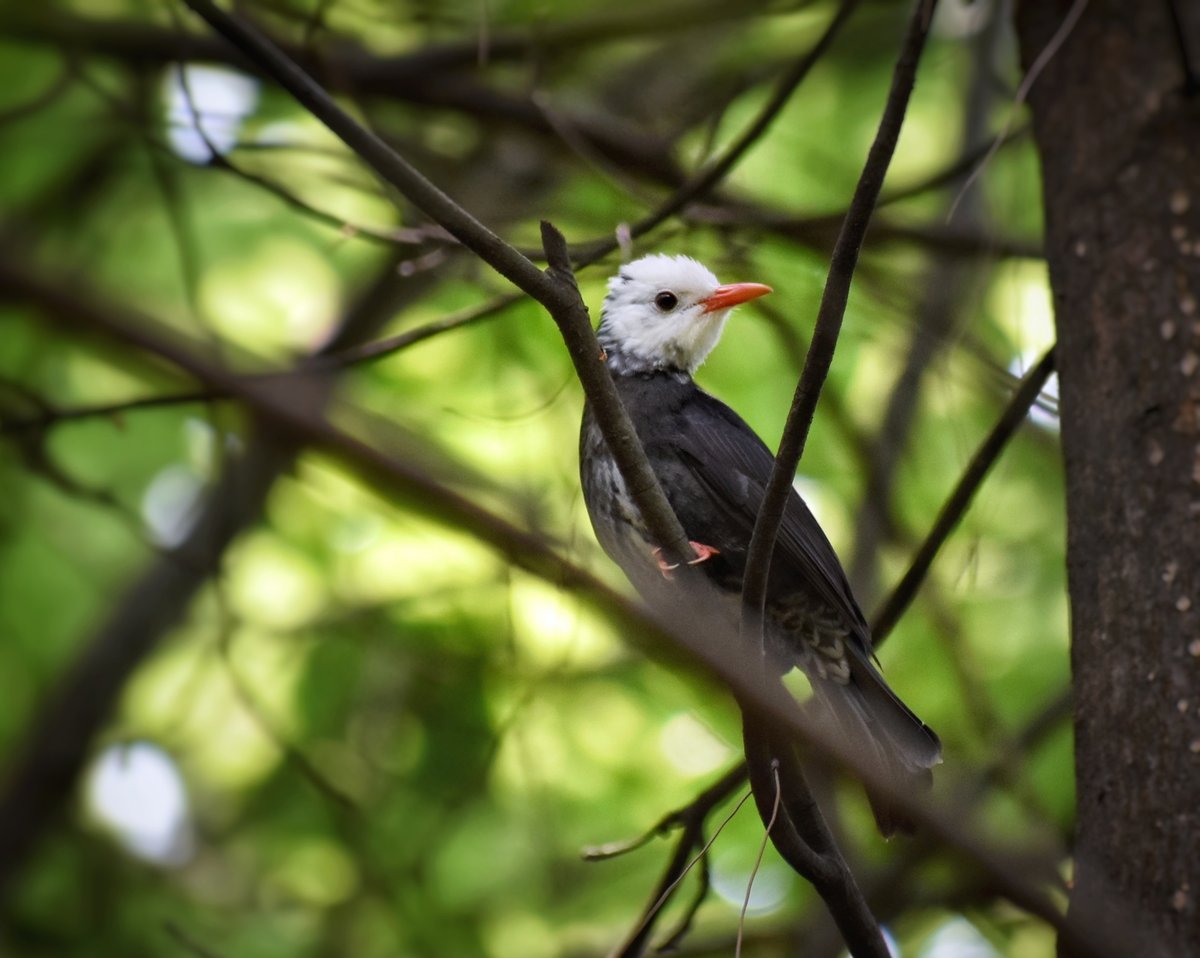
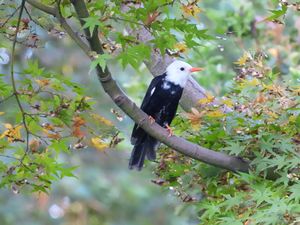
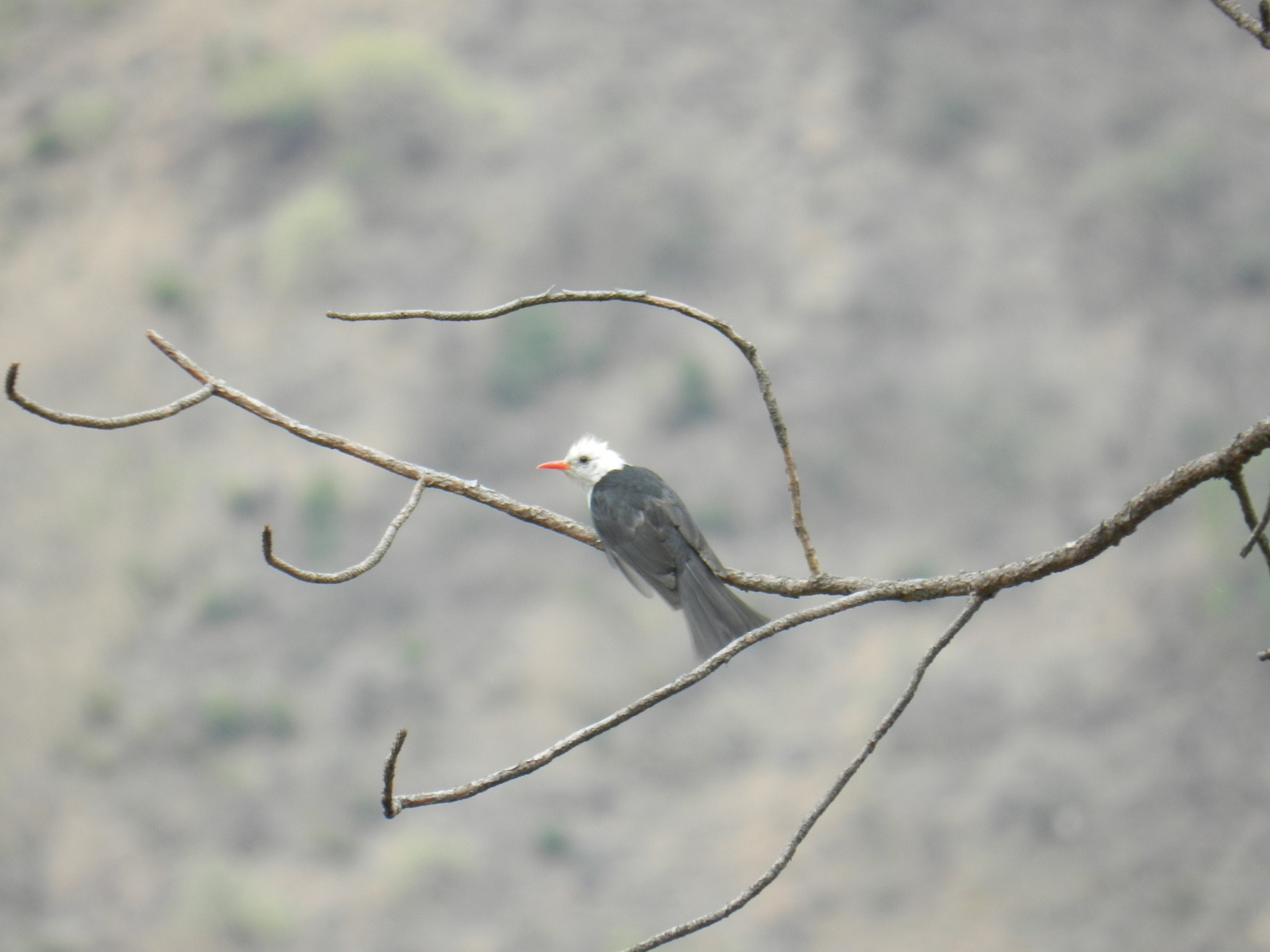
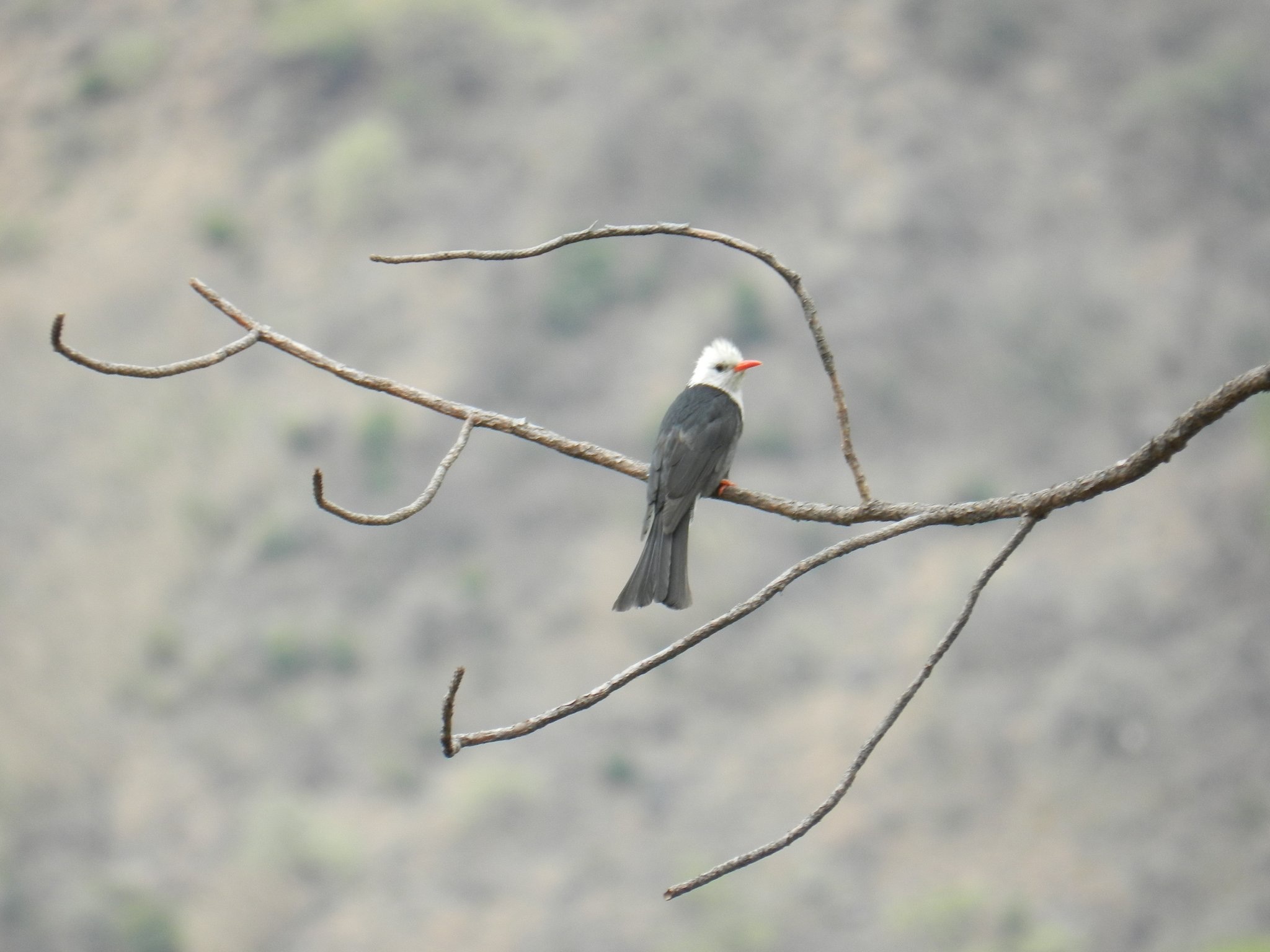
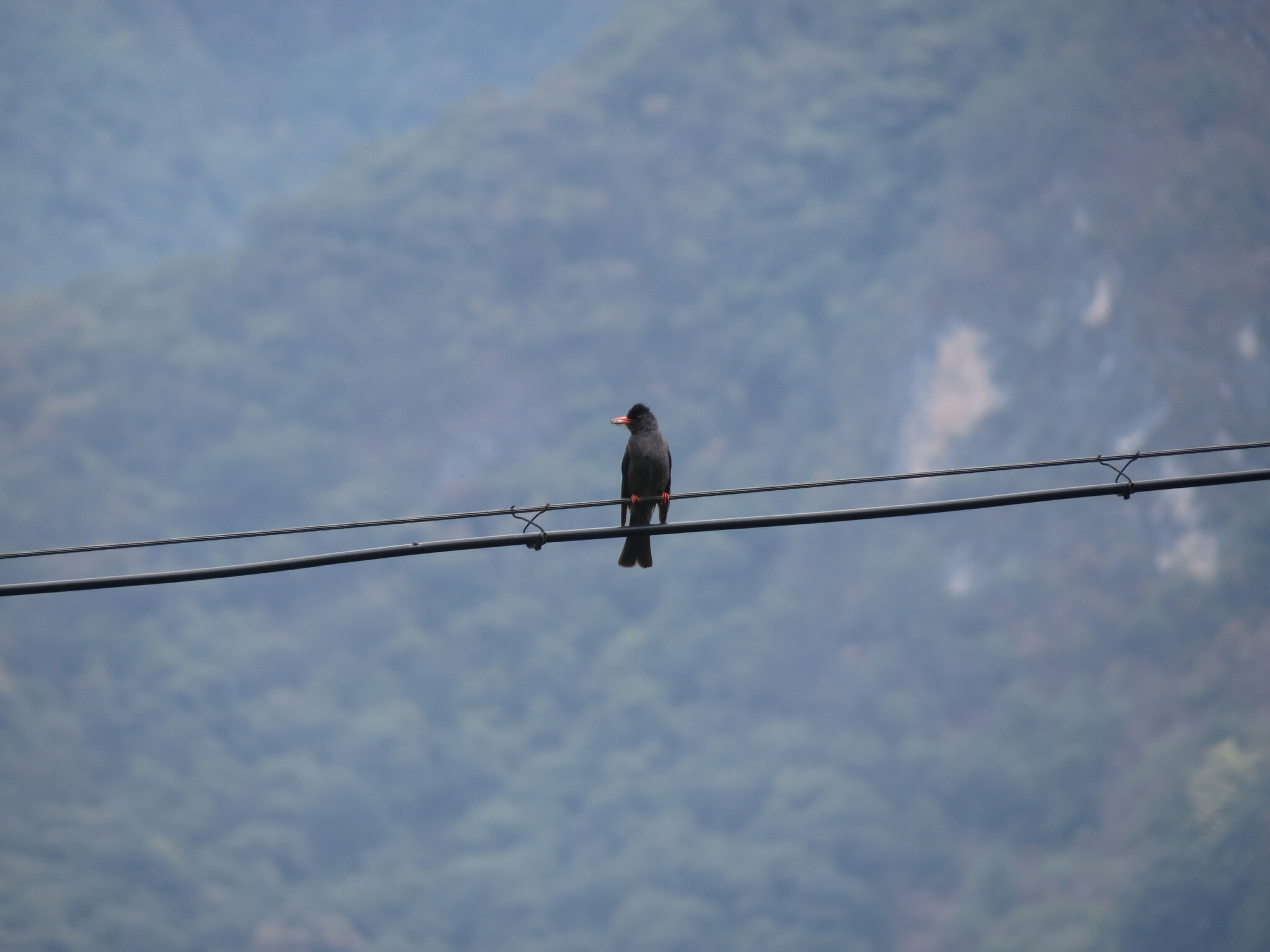
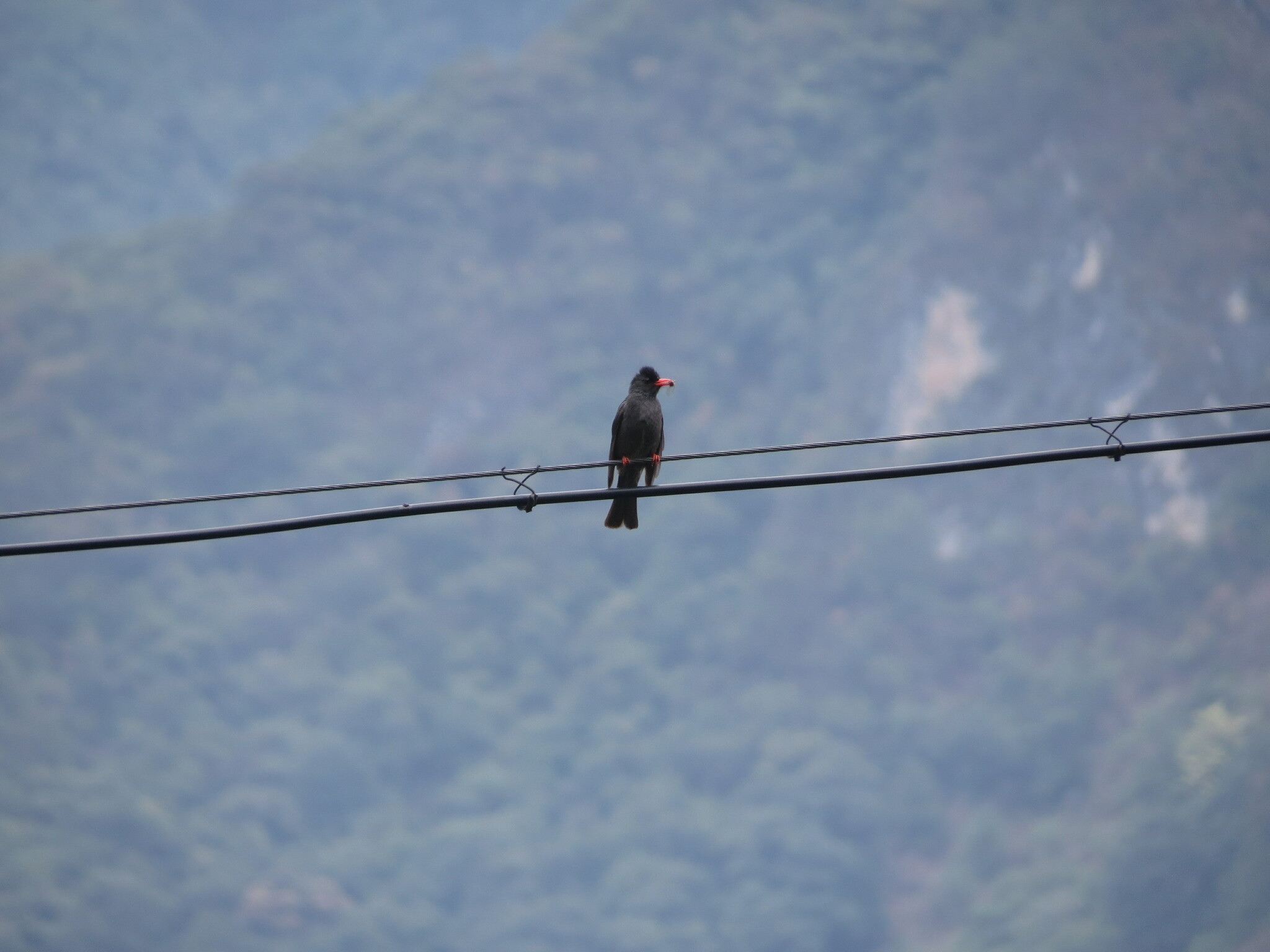
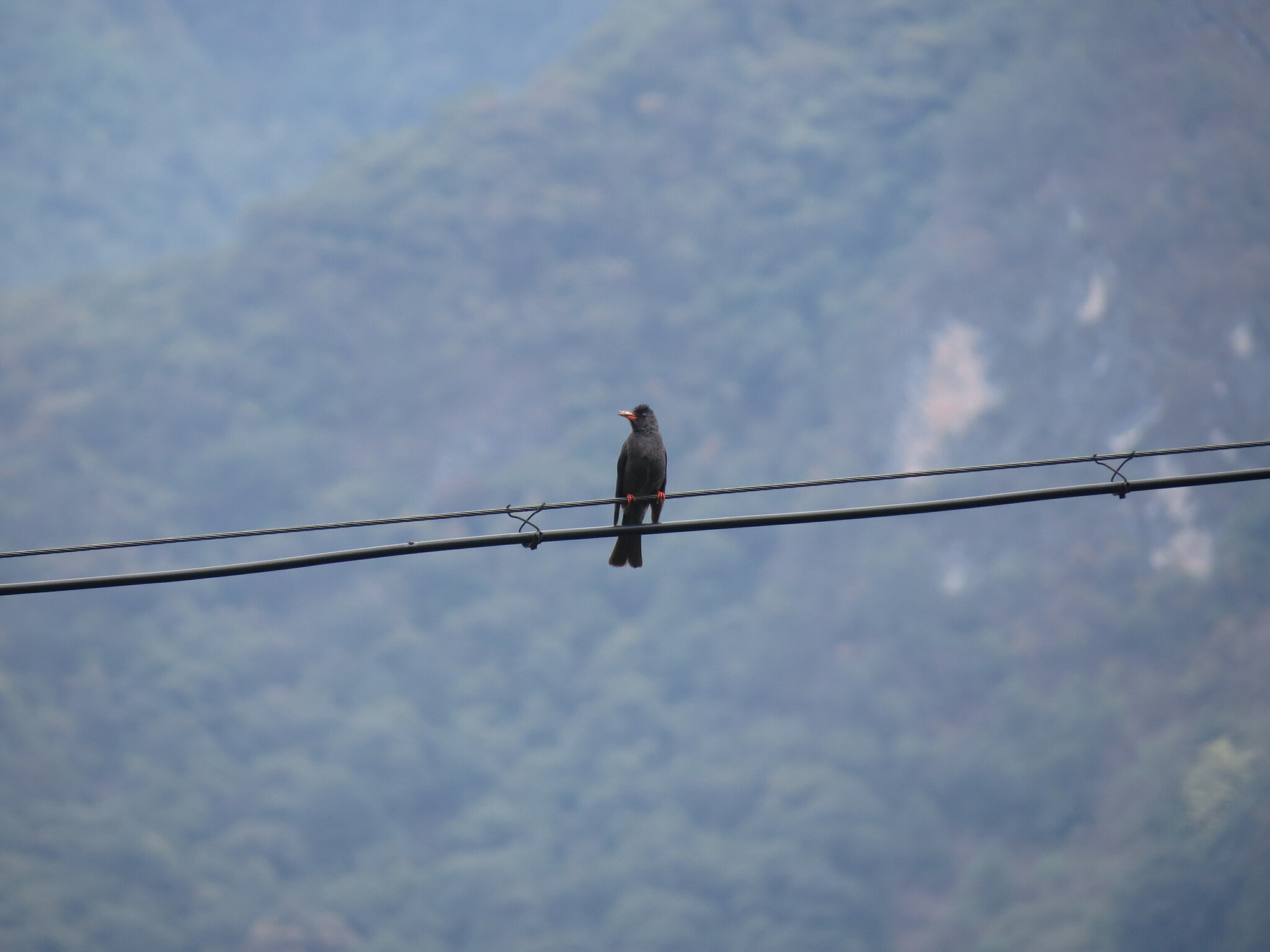
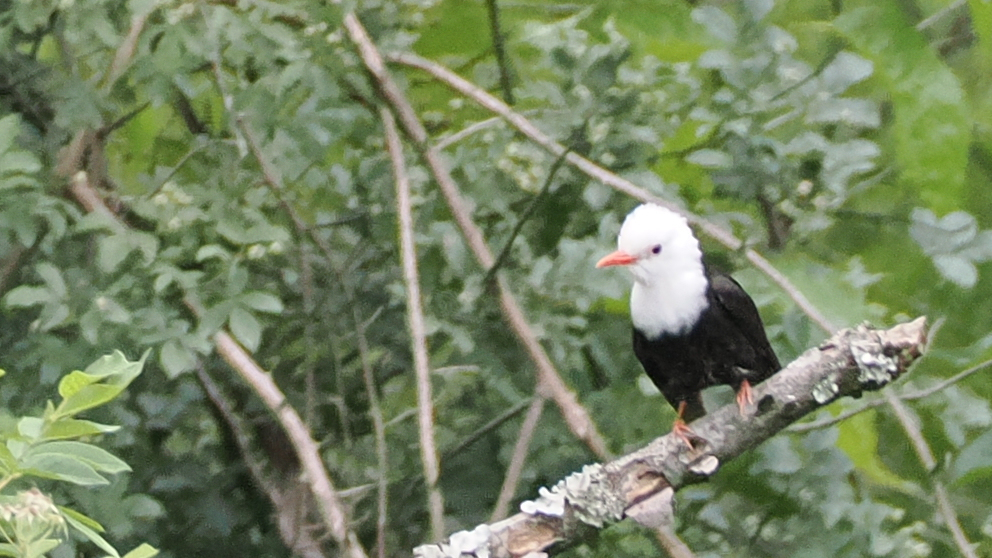
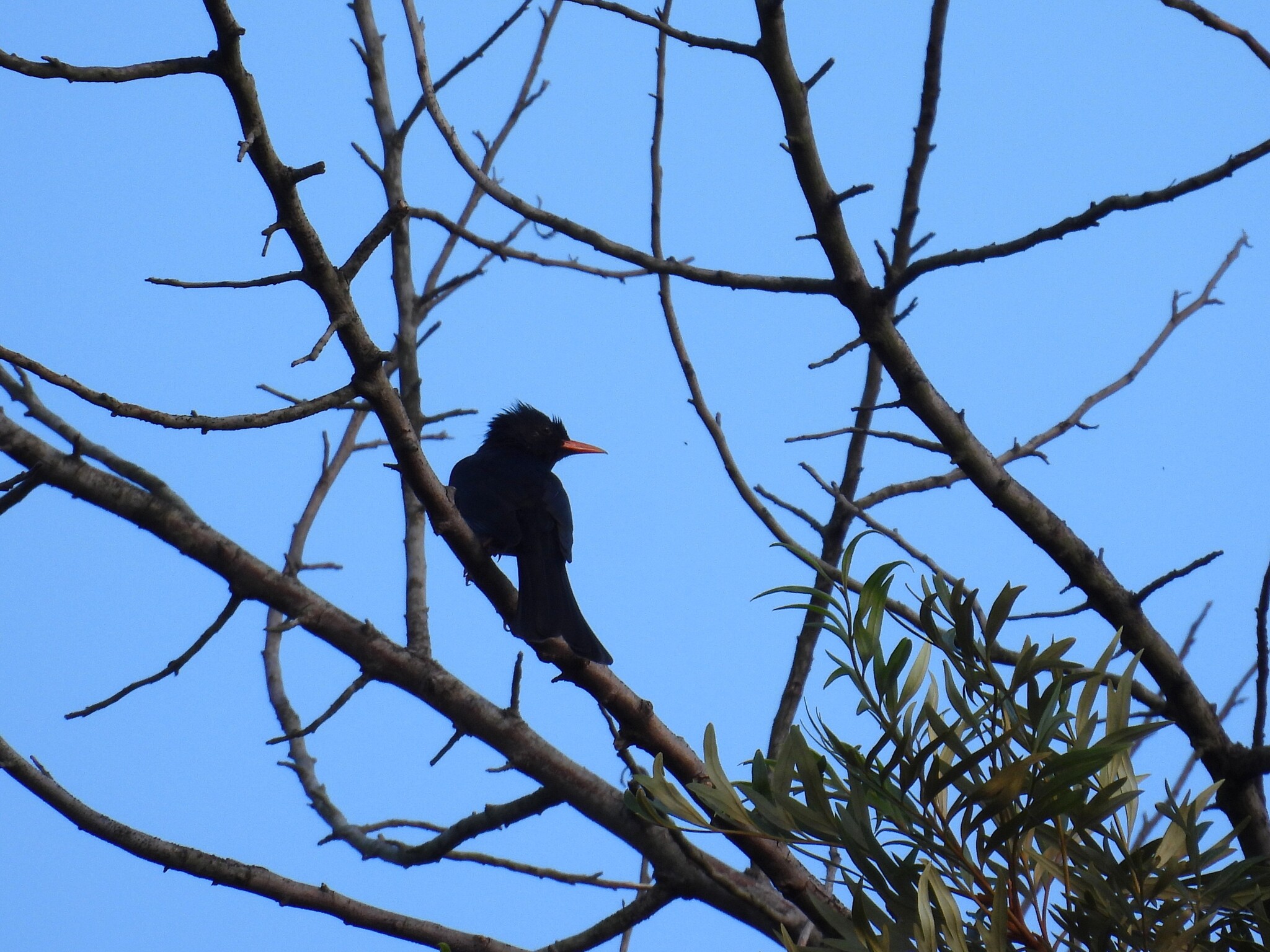
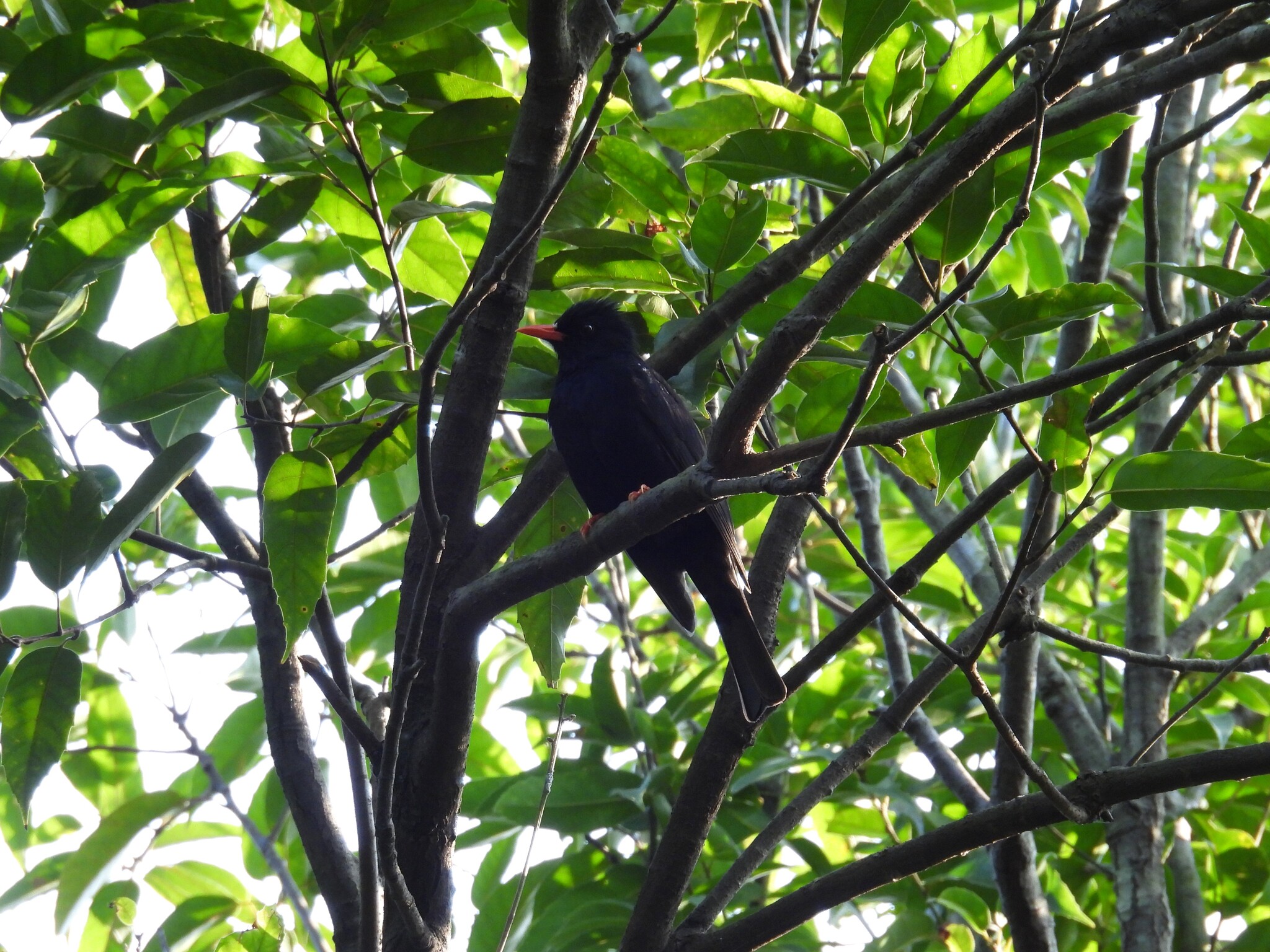
This bulbul is the type species of its genus. It inhabits the Himalayan foothills and extends eastward through Southeast Asia. Populations show plumage variation from slate-grey to jet-black, with several subspecies exhibiting white-headed morphs. The legs and bill are orange-red. This species occurs in hilly forested areas and cultivated areas. It is characterized by loud, varied calls.
Description
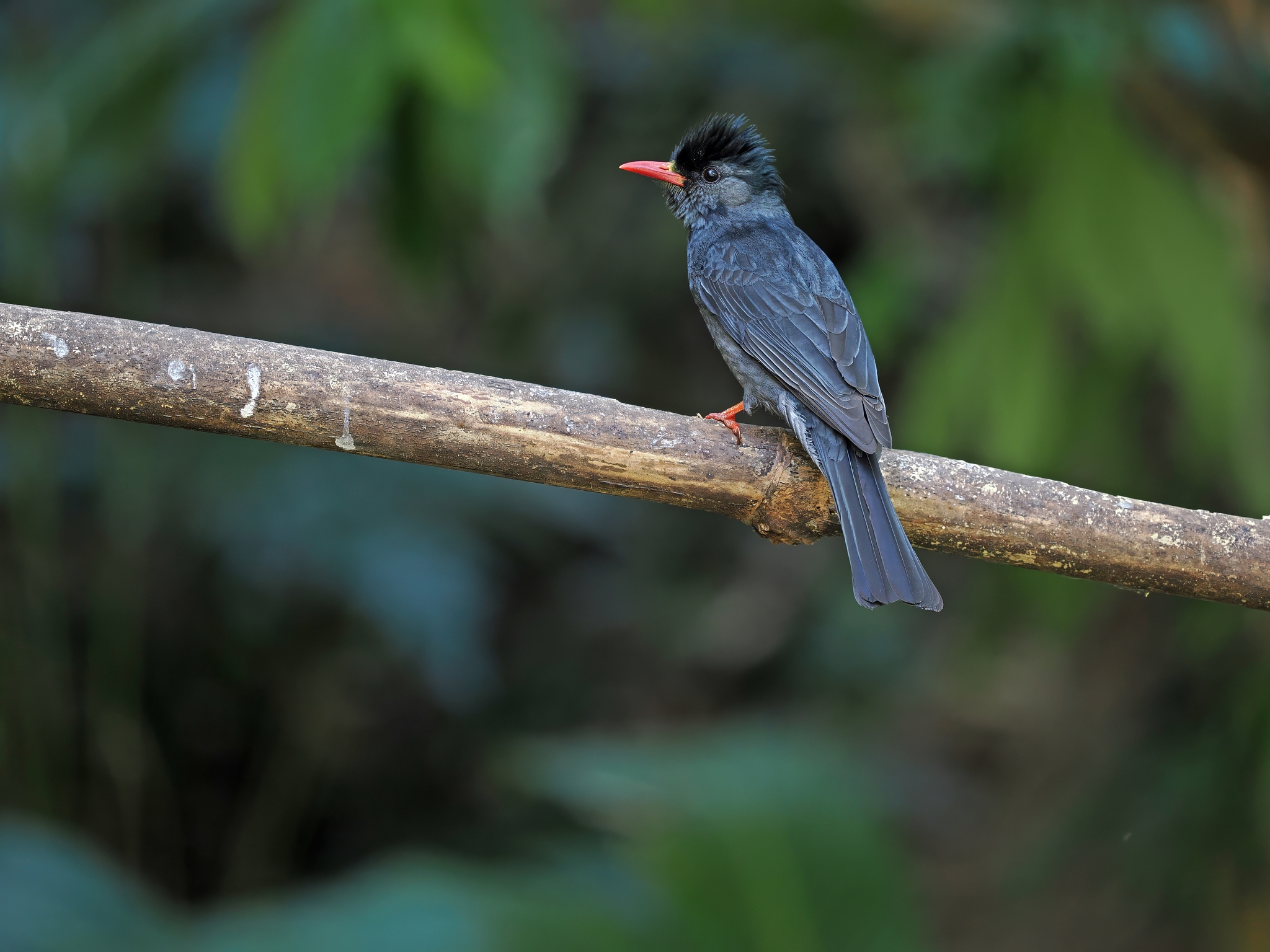
This bulbul measures 24-25 cm in length with a notably long tail. The body plumage varies considerably by subspecies, ranging from slate-grey to shimmering black. The most distinctive features are the bright orange-red coloration of the beak, legs, and feet, and the prominent black fluffy crest on the head. Sexes appear identical in plumage, though birds in ultraviolet light show differences invisible to human observers. Juveniles are distinguishable by their lack of crest, whitish underparts with a grey breast band, brown-tinged upperparts, and black markings behind the eye and on the ear coverts.
Identification
The combination of dark plumage, orange-red legs and bill, and crested head provides reliable identification clues across all subspecies. The white-headed morphs, occurring in several central and eastern subspecies, are particularly distinctive and should not be confused with entirely different species. The Himalayan population reportedly gives a call reminiscent of a goat kid, often delivered with the neck thrown back, which helps distinguish it from other bulbul species in overlapping ranges.
Distribution & Habitat
The species ranges from Pakistan eastward through the Himalayas and Southeast Asia, encompassing northeastern Afghanistan, northern Pakistan, northern and northeastern India, Myanmar, Thailand, Laos, Vietnam, southern China, Taiwan, and Hainan Island. It primarily inhabits broad-leaved forests, cultivation, and gardens in hilly regions. Himalayan populations exhibit altitudinal movements, sometimes descending to adjacent plains during winter months.
Behavior & Ecology
Black bulbuls are opportunistic feeders consuming seeds, insects, and berries. They show particular fondness for fruits of Celtis, Rosa, Melia, and Ehretia in Himalayan regions, and also visit flowers of Salmalia, Erythrina, and Rhododendron for nectar. They capture flying insects through aerial sallies and often forage in small groups. The breeding season involves nest construction by both sexes, using grasses, dry leaves, mosses, lichens, and cobwebs lined with ferns and rootlets. Clutches typically contain two or three eggs. Vocalizations include loud, varied cheeping, mewing, and grating calls that can be quite noisy.
Culture
The red-billed black bulbul holds significant cultural importance in Formosan (Taiwanese) mythology. Several indigenous groups including the Bunun, Kankanavu, Paiwan, and Pazeh peoples feature this bird prominently in their deluge texts. According to these traditional narratives, the bulbul is credited with a heroic role—donating fire and millet to survivors of a great flood, thereby playing a crucial part in human survival and restoration after the catastrophic event.
Source: Wikipedia · CC BY-SA 3.0
Taxonomy
- Order
- Passeriformes
- Family
- Pycnonotidae
- Genus
- Hypsipetes
Vocalizations
Subspecies (10)
-
Hypsipetes leucocephalus ambiens
northeastern Myanmar to southwestern China (western Yunnan in Irrawaddy watershed)
Data Sources
Species description from Wikipedia, licensed under CC BY-SA 3.0.
Bird images and sounds sourced from GBIF, contributed by citizen scientists worldwide under Creative Commons licenses.
Taxonomy data from AviList 2025.