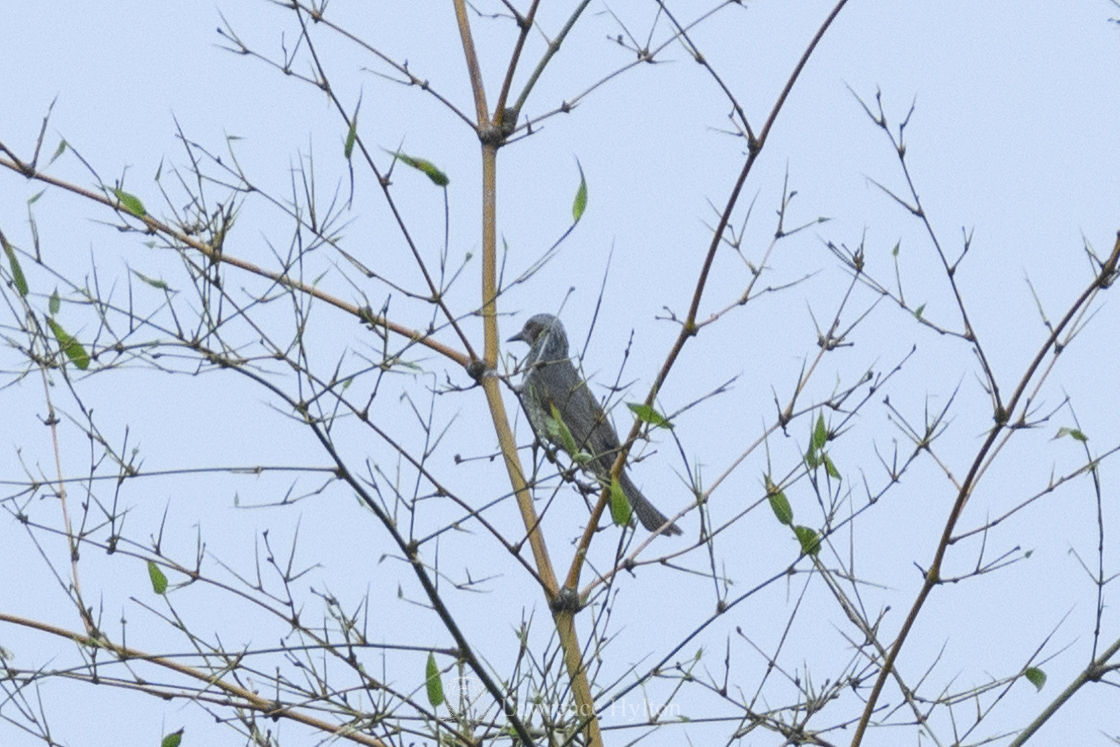
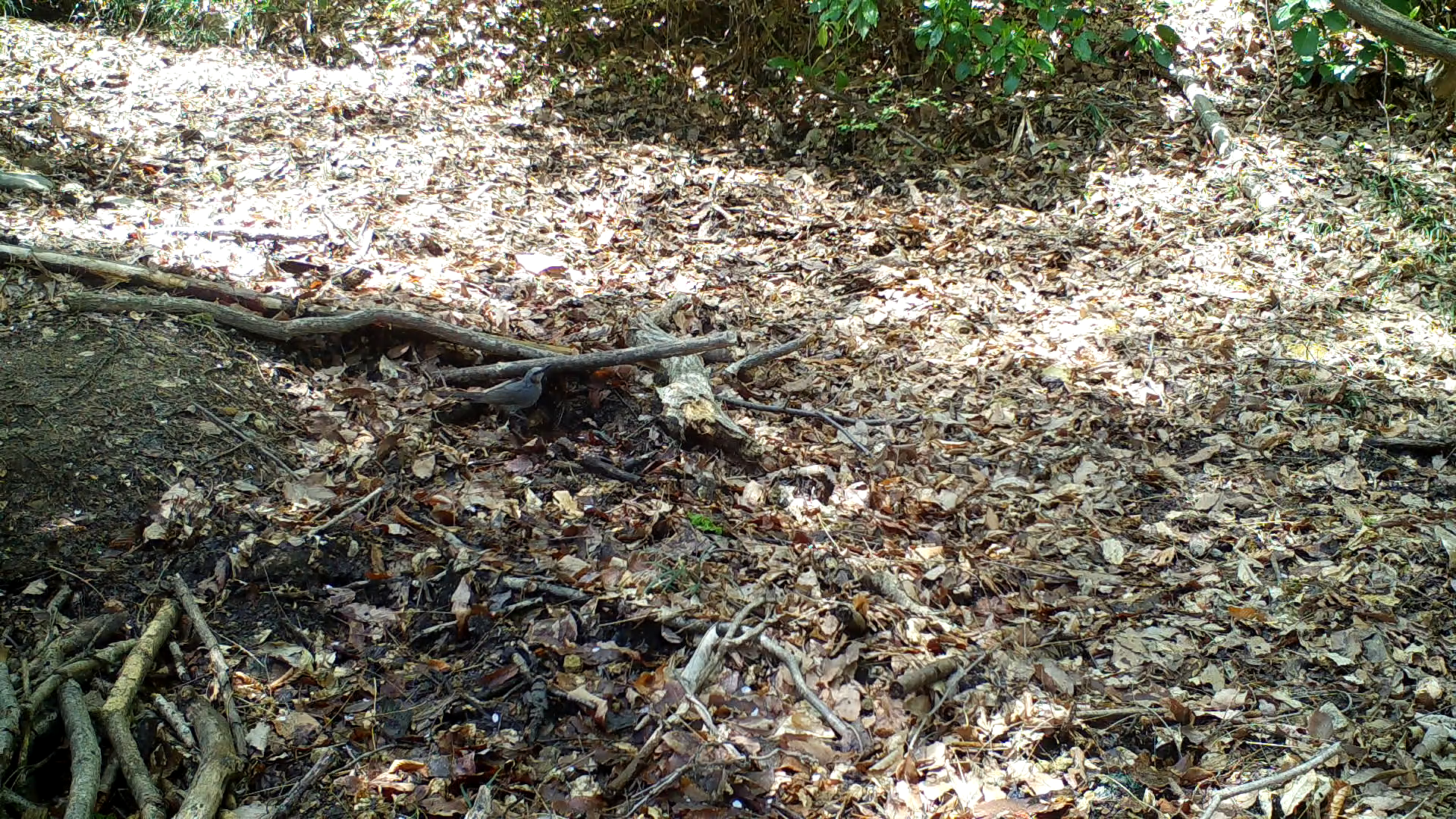
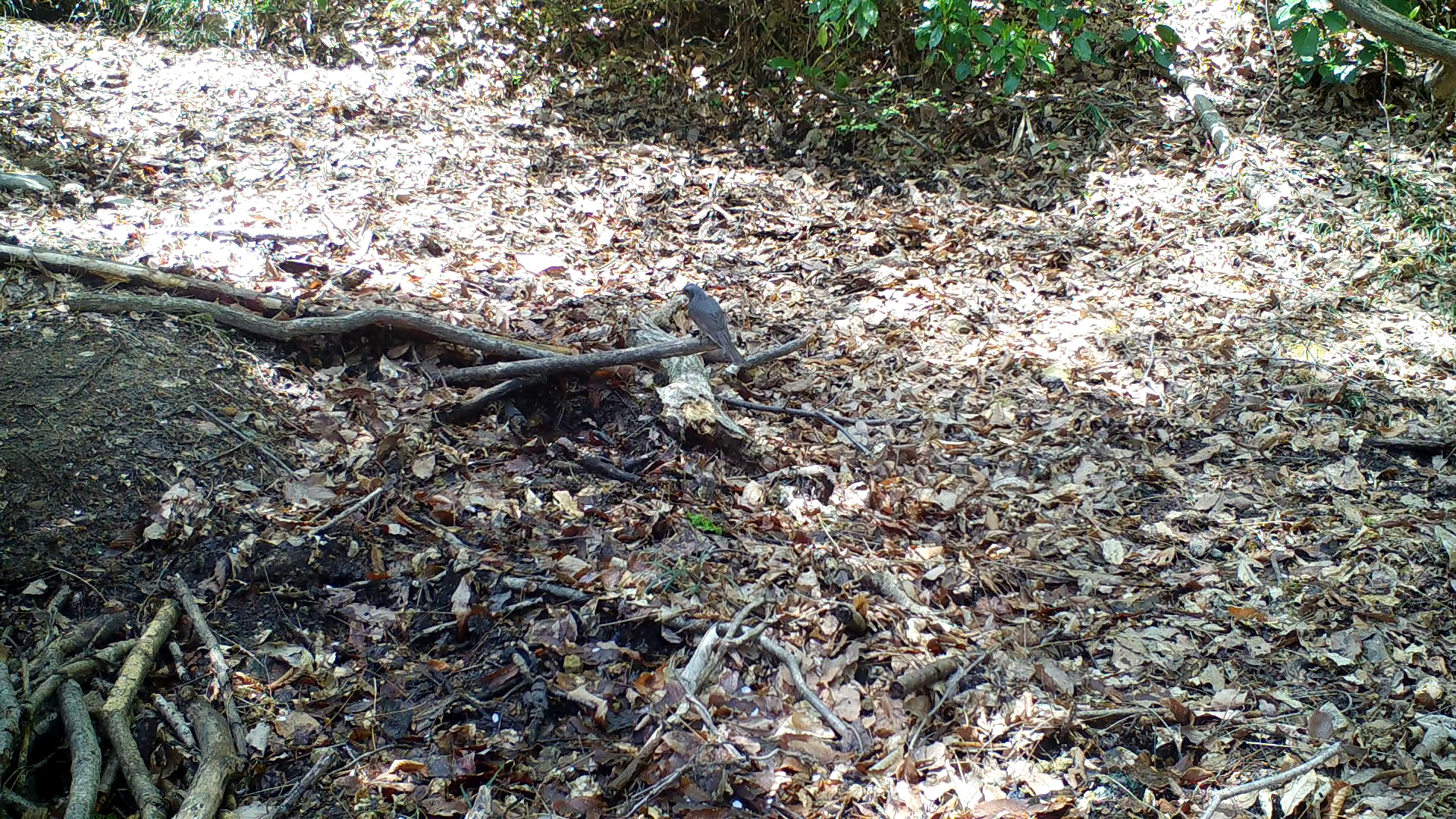
Brown-eared Bulbul
Hypsipetes amaurotis
栗耳短脚鹎
Introduction
The brown-eared bulbul (Ixos amaurotis) is distributed across eastern Asia, from the Russian Far East to the northern Philippines. It occupies forested habitats as well as urban parks, gardens, and agricultural areas. The species is vocal and conspicuous, often remaining visible rather than hidden in dense vegetation. It serves as a pollinator of Camellia flowers during winter months. Conservation status: Least Concern.
Description
This medium-sized bulbul reaches approximately 28 cm in length with a relatively long tail. The overall plumage is grayish-brown, providing effective camouflage in wooded habitats. As the common name suggests, the most distinctive feature is the rich brown coloration on the cheeks and ear coverts, creating the appearance of 'brown ears.' The long tail aids in maneuverability through vegetation. The bill is slender and slightly curved, adapted for a varied diet of fruits, insects, and nectar. Sexes appear similar, with no pronounced seasonal plumage changes. Juveniles resemble adults but may show slightly duller coloration and softer plumage.
Identification
The combination of grayish-brown upperparts, prominent brown cheek patches, and long tail is distinctive across most of its range. The brown ear patches immediately separate it from other bulbul species in the region. In flight, the long tail and undulating wingbeats are characteristic. The loud, harsh calls are often the first indicator of presence - a sharp 'shreep' and slurred 'weesp' given year-round. Unlike some similar bulbuls that may show crests or brighter plumage, this species maintains a relatively subdued appearance. The prominent brown cheek is the key field mark separating it from the more uniformly colored bulbuls found in overlapping areas.
Distribution & Habitat
This species occupies an extensive range across eastern Asia, breeding across the Russian Far East including Sakhalin Island, northeastern China, the Korean Peninsula, and throughout the Japanese archipelago. Its distribution extends southward to Taiwan and the Babuyan and Batanes island chains in the northern Philippines. The species shows variable migration patterns - historically migratory throughout most of its range, many populations now overwinter considerably farther north than previously recorded, taking advantage of agricultural changes and milder winters. However, most individuals still migrate southward in autumn, often forming large flocks during migration. Habitat preferences include forested areas, but the species readily adapts to urban parks, gardens, and agricultural landscapes.
Behavior & Ecology
Breeding occurs from April through July, sometimes extending into August. Pairs build cup-shaped nests in the lower branches of trees, shrubs, or on man-made structures, typically 1.5 to 4.5 meters above ground. The female lays approximately five eggs and incubates them alone for 13 to 14 days. This species is frequently parasitized by cuckoos, whose chicks will eject bulbul eggs and chicks from the nest. Diet shifts seasonally - insects dominate the summer diet, while fruits, berries, seeds, and Camellia nectar become primary food sources in fall and winter. The nectar-feeding behavior makes these birds important pollinators of Camellia flowers during periods when few insect pollinators are active. Vocalizations are loud and frequent year-round, with flocks producing characteristic 'shreep' and 'weesp' calls.
Conservation
The species is currently assessed as Least Concern by the IUCN due to its extremely large range and presumed large population. It remains common to abundant throughout most of its range, particularly in the northern portions. No significant population declines have been documented, and the species has actually expanded its wintering range northward in recent decades. However, in some areas of Japan, the species is considered an agricultural pest for damaging orchard crops and vegetables such as cabbages, cauliflowers, and spinach. Conservation priorities focus on monitoring agricultural conflict and maintaining suitable habitat across its extensive range.
Culture
No specific cultural significance, folklore, or mythology was documented in the available sources for this species.
Source: Wikipedia · CC BY-SA 3.0
Taxonomy
- Order
- Passeriformes
- Family
- Pycnonotidae
- Genus
- Hypsipetes
- eBird Code
- brebul1
Vocalizations
Subspecies (12)
-
Hypsipetes amaurotis amaurotis
breeds southern Sakhalin Island, Japan, and South Korea; winters to eastern China
-
Hypsipetes amaurotis batanensis
far northern Philippines (Babuyan Claro, Batan, Ivujos, and Sabtang)
-
Hypsipetes amaurotis borodinonis
Daito Islands (Japan)
-
Hypsipetes amaurotis camiguinensis
far northern Camiguin Norte (northern Philippines)
-
Hypsipetes amaurotis fugensis
far northern Philippines (Calayan, Fuga, and Dalupiri)
-
Hypsipetes amaurotis magnirostris
Volcano Islands (Japan)
-
Hypsipetes amaurotis matchiae
southern Izu Islands (Hachijo-jima, Tanegashima, and Yakushima, southeastern Japan)
-
Hypsipetes amaurotis nagamichii
southern Taiwan including Lan-yü Island
-
Hypsipetes amaurotis ogawae
northern Ryukyu Islands (Amami Ōshima and Tokuno-Shima, southern Japan)
-
Hypsipetes amaurotis pryeri
central Ryukyu Islands
-
Hypsipetes amaurotis squamiceps
Bonin Islands (Mukojima, Chichijima, and Hahajima)
-
Hypsipetes amaurotis stejnegeri
Ryukyu Islands (Ishigaki, Iriomote, and Yonaguni, southern Japan)
Data Sources
Species description from Wikipedia, licensed under CC BY-SA 3.0.
Bird images and sounds sourced from GBIF, contributed by citizen scientists worldwide under Creative Commons licenses.
Taxonomy data from AviList 2025.