Charadriiformes / Laridae / Hydroprogne
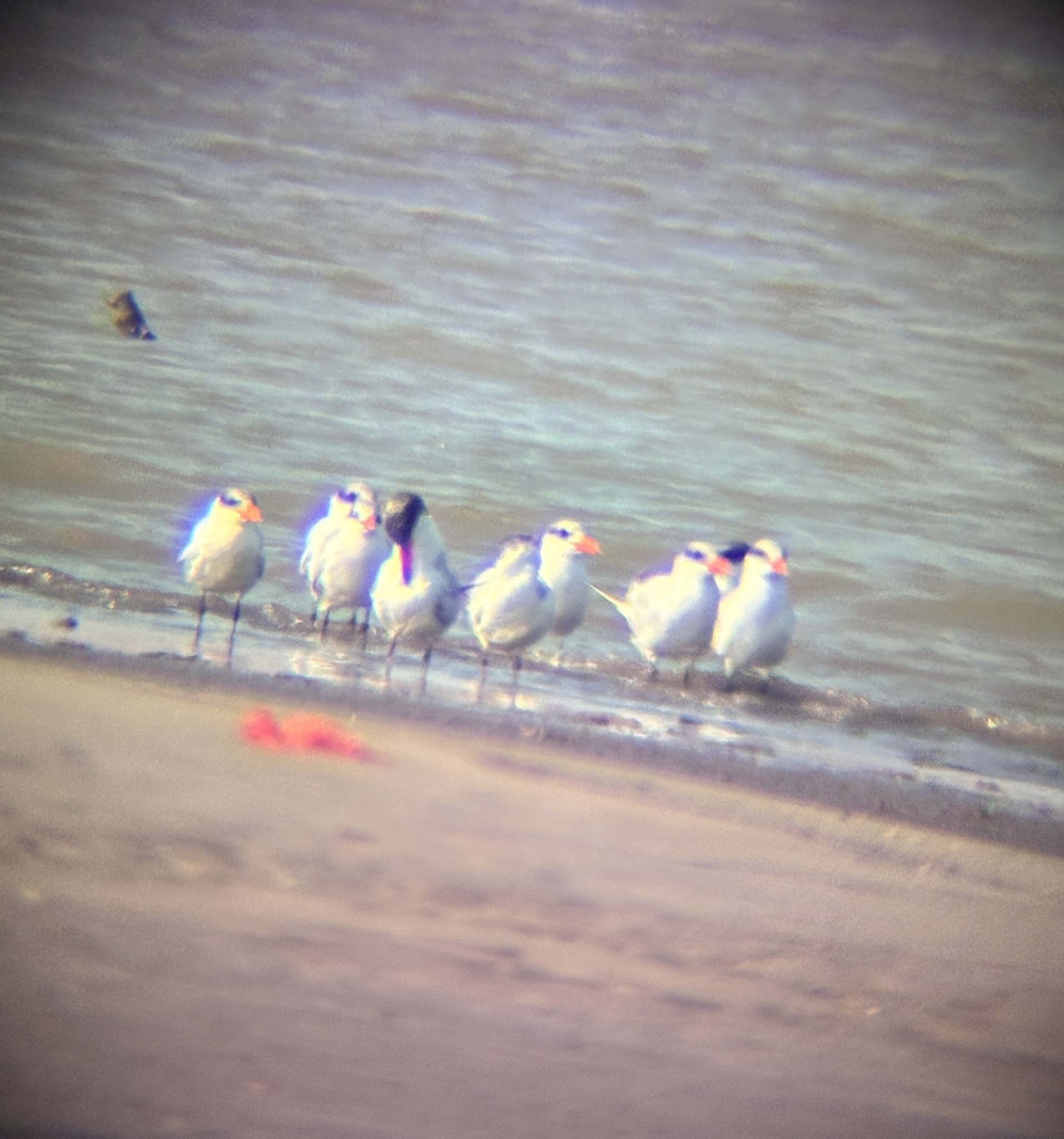
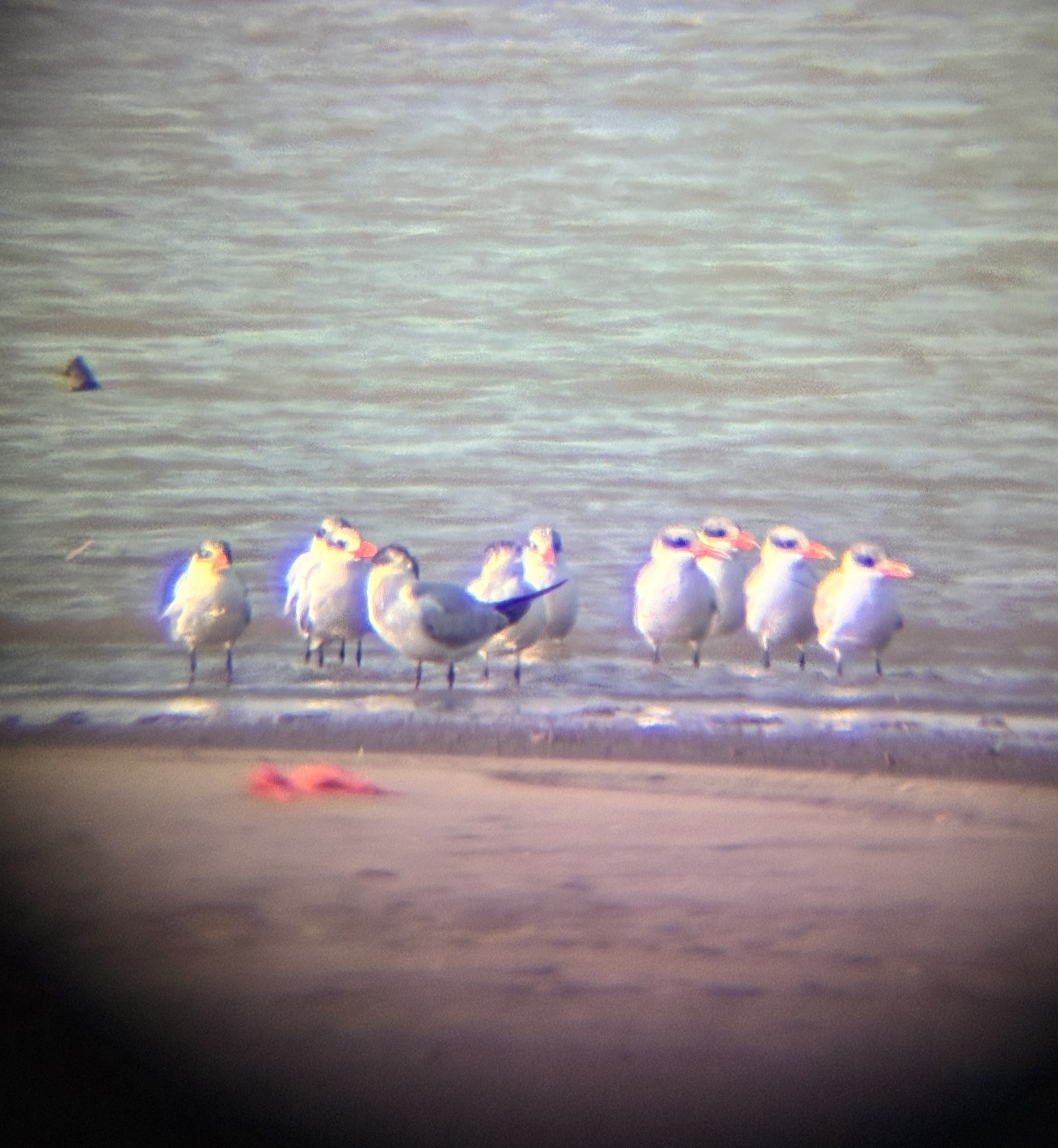
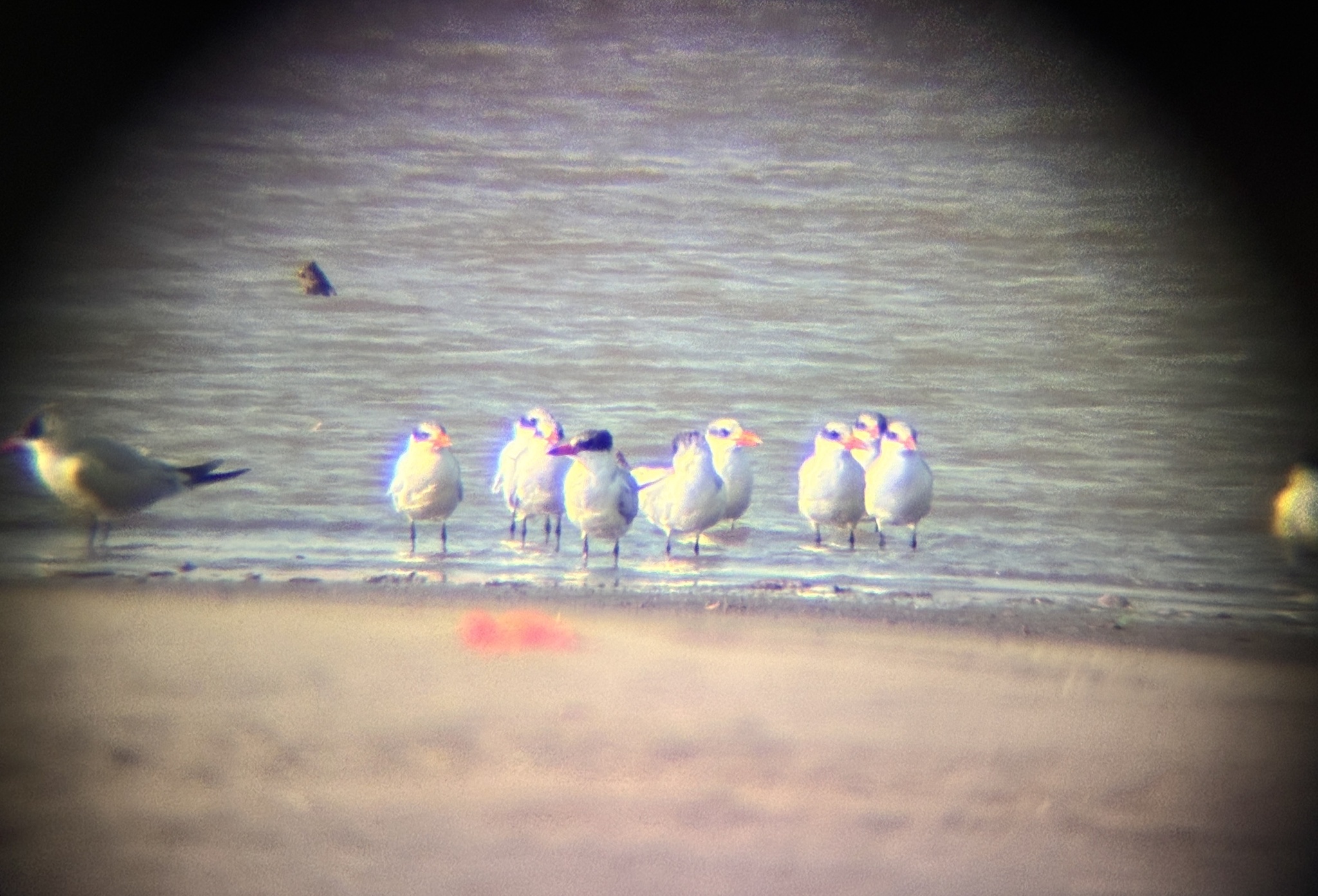
Caspian Tern
Hydroprogne caspia · 红嘴巨燕鸥
Introduction
Largest species of tern with a subcosmopolitan but scattered distribution. Monotypic within its genus with no accepted subspecies. Breeds on large lakes and ocean coasts across North America, Europe, Asia, Africa, and Australasia. Feeds mainly by diving for fish.
Description
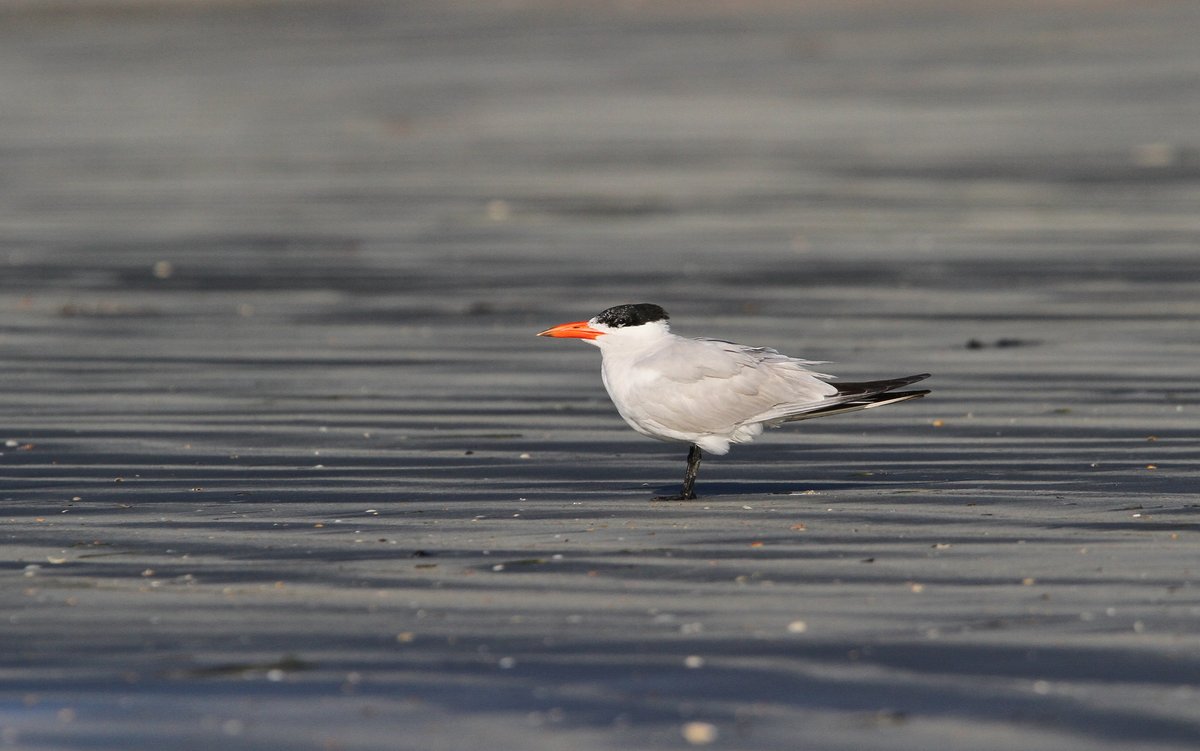
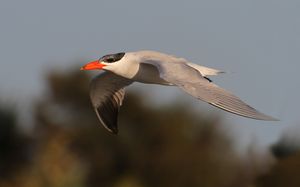
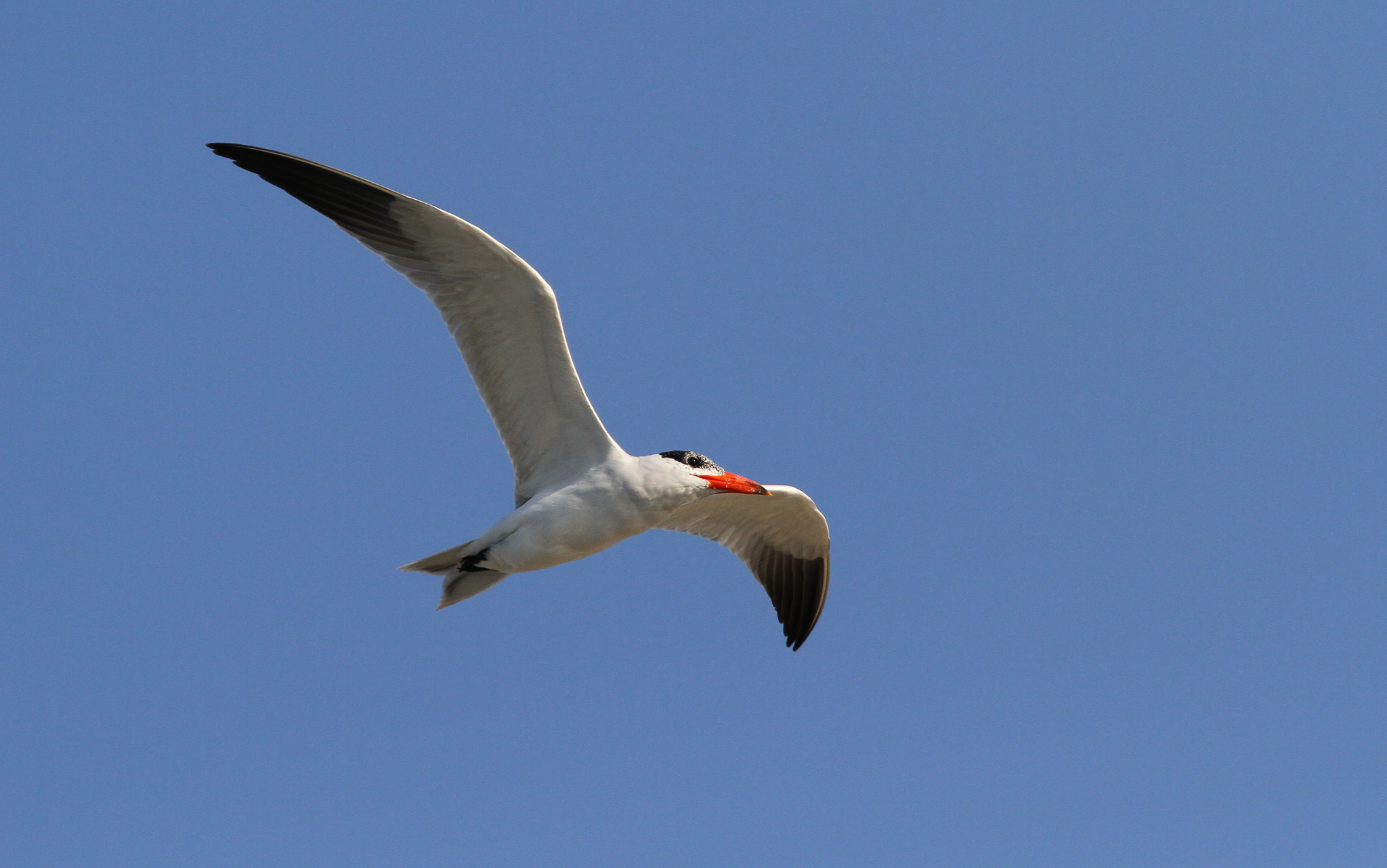
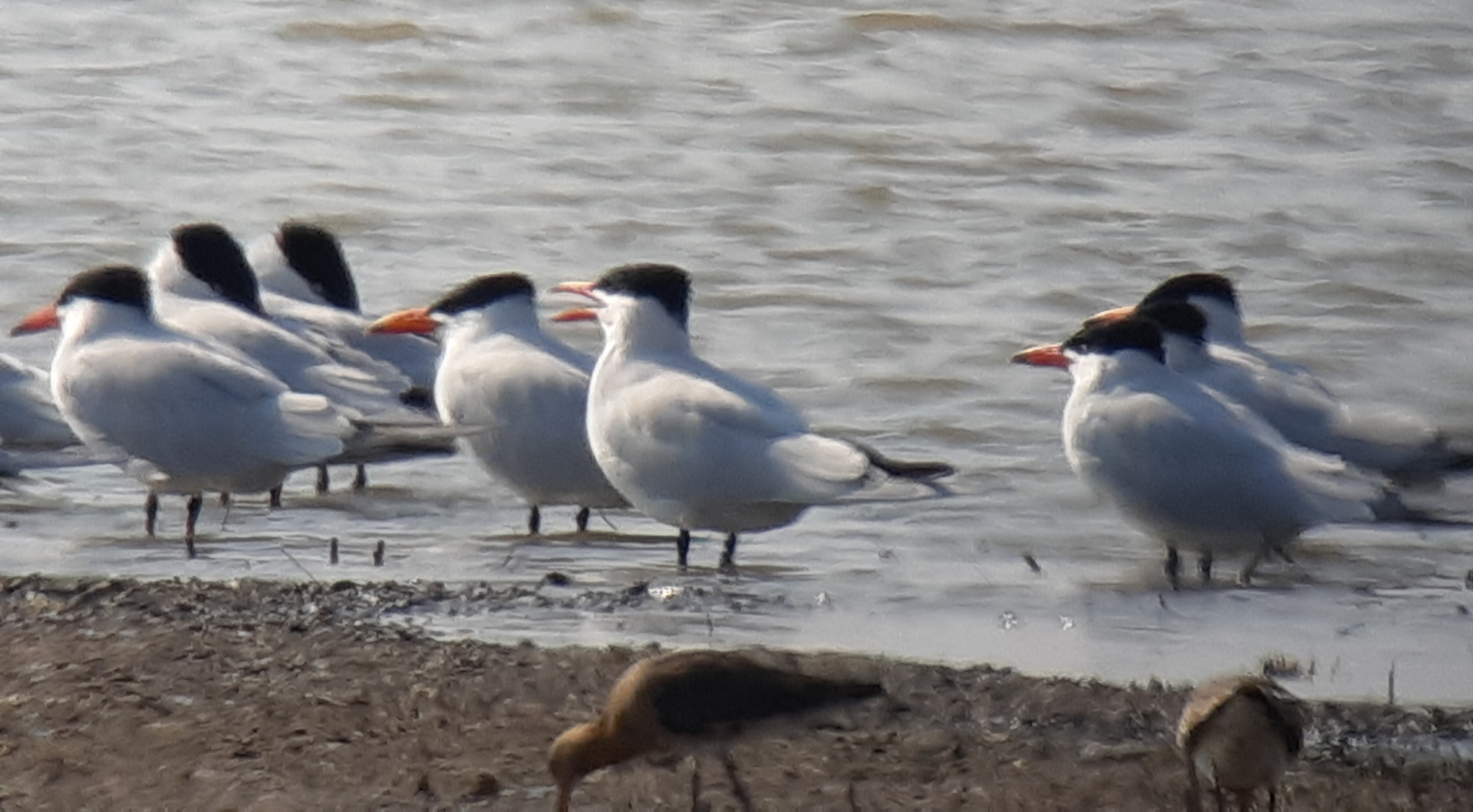
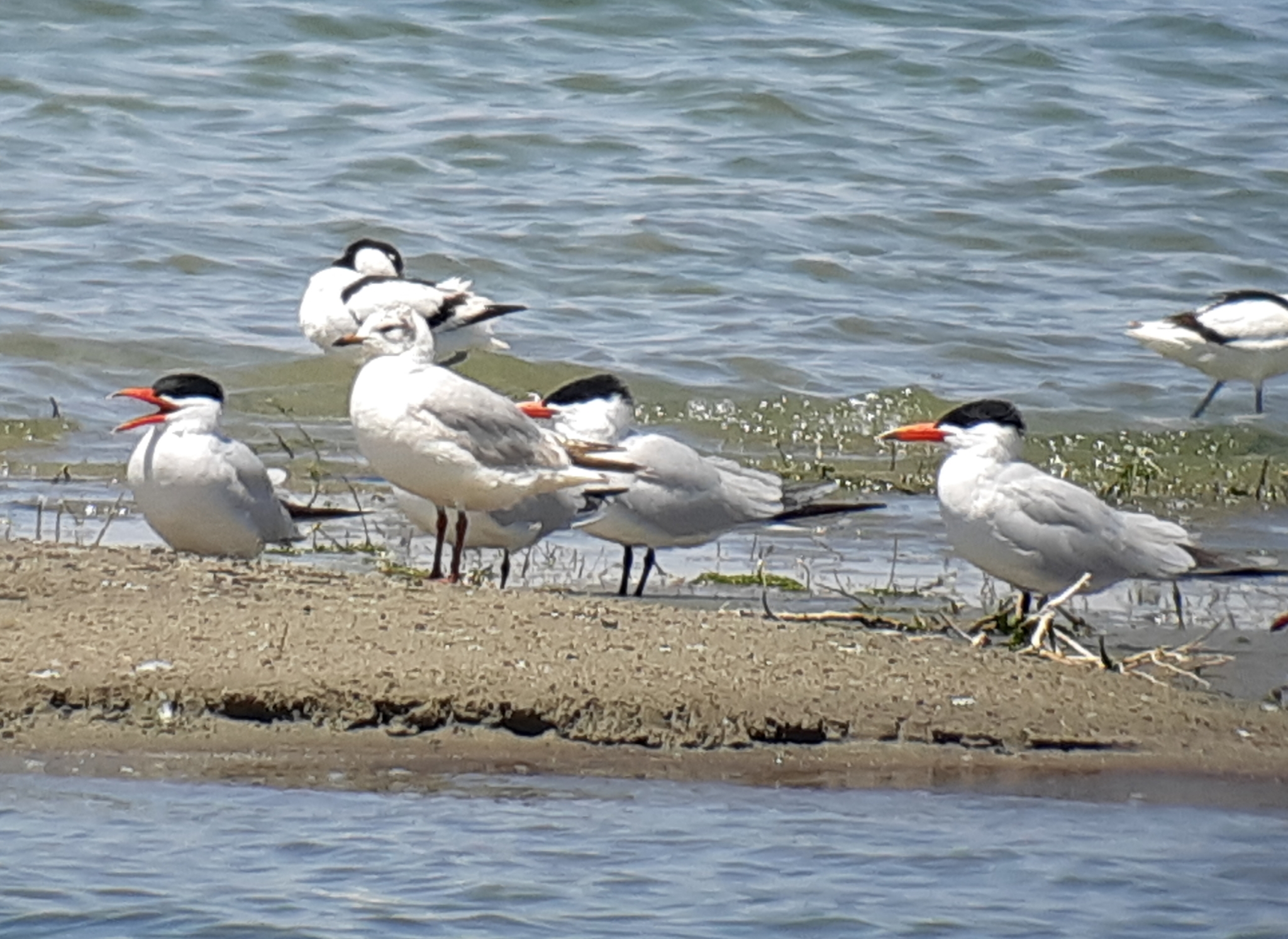
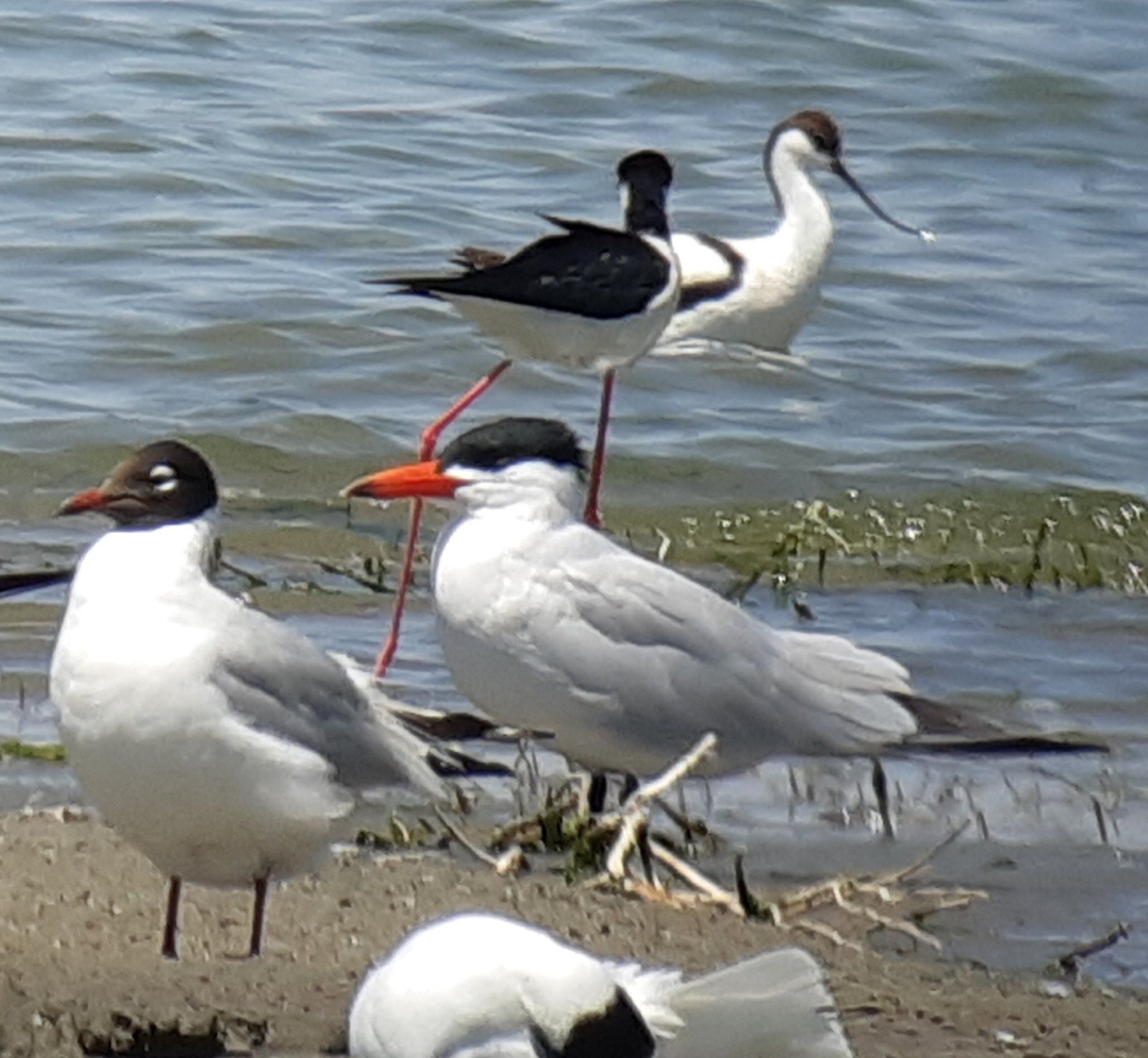
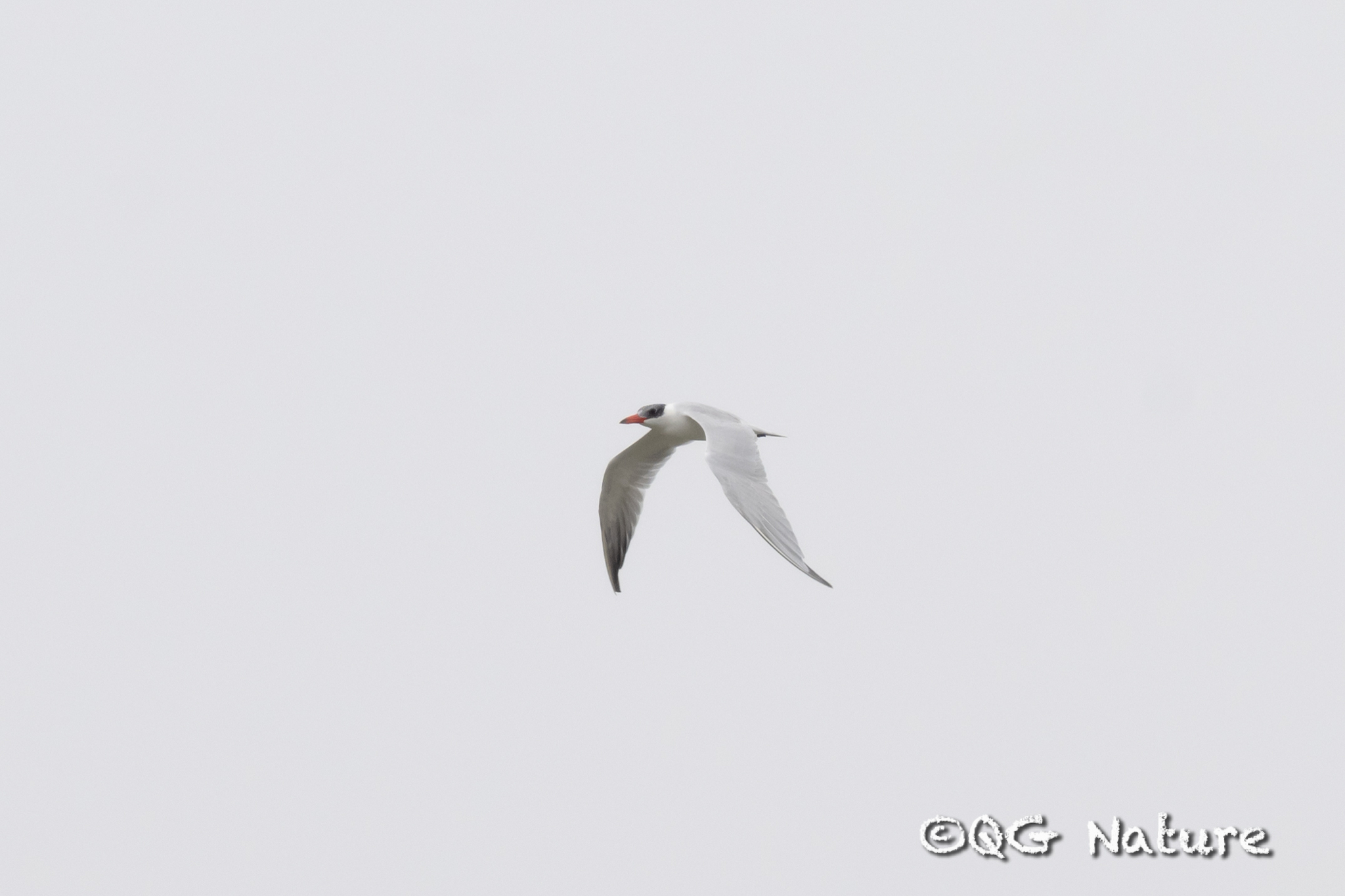
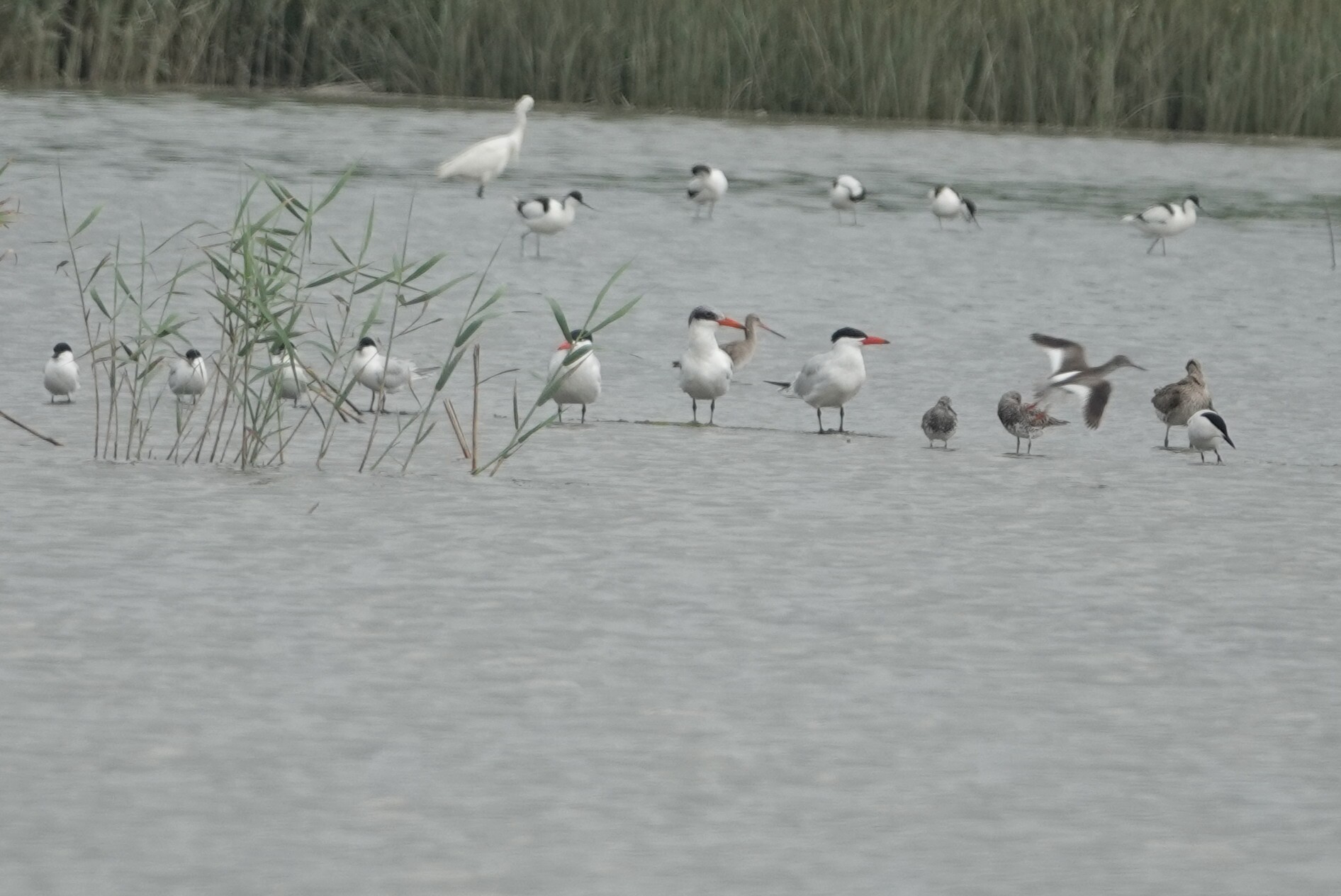
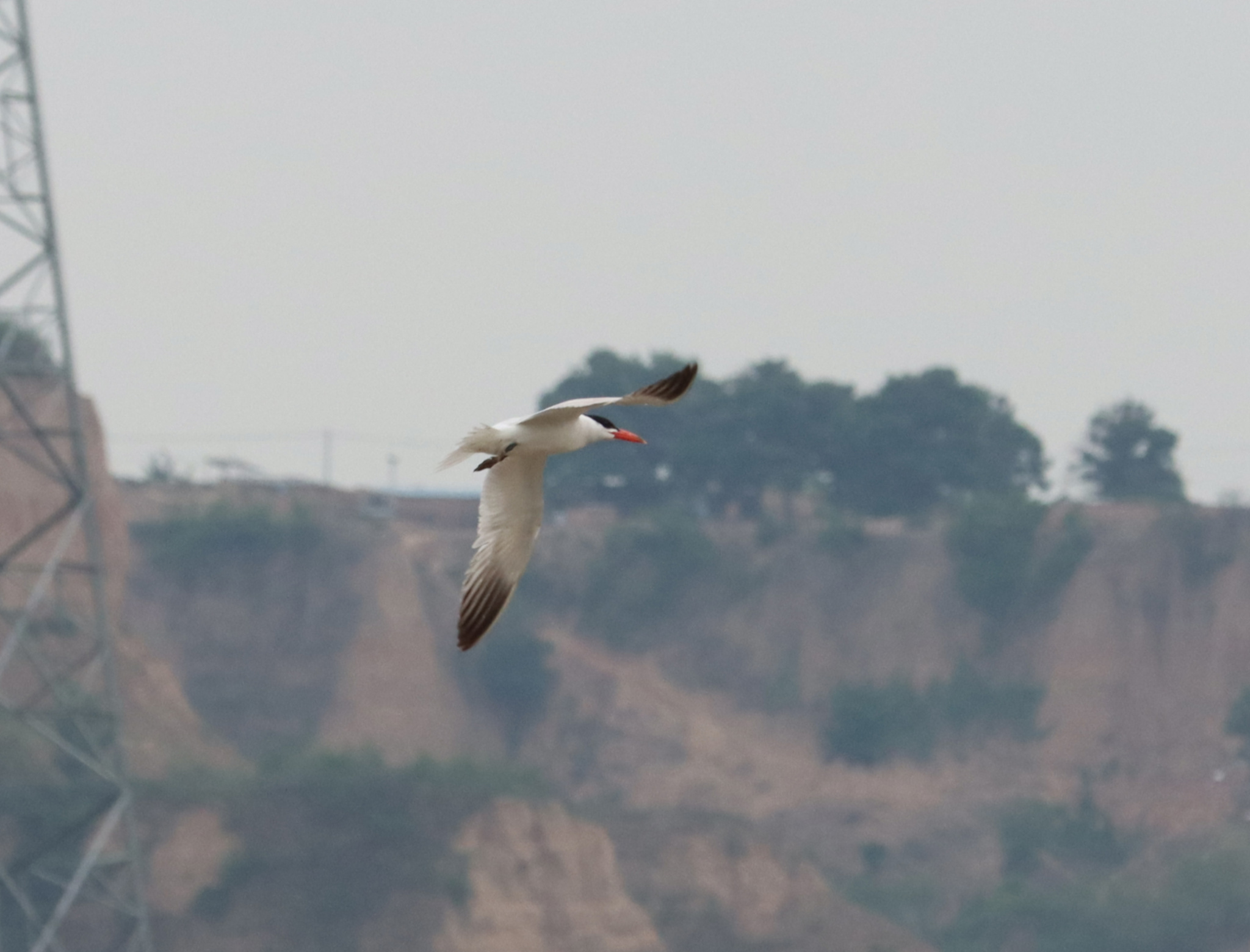
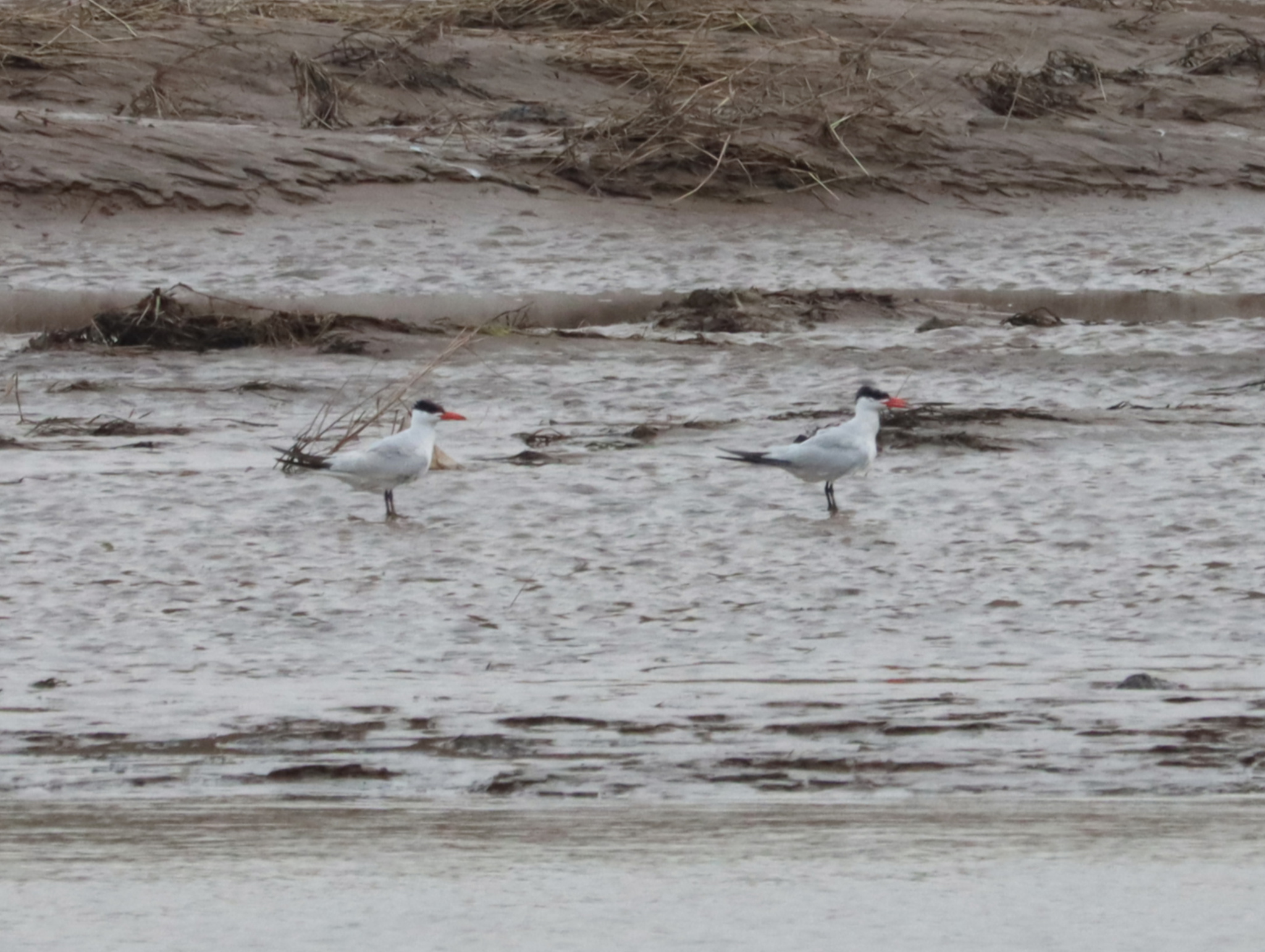
Length 48–60 cm (19–24 in), wingspan 127–145 cm (50–57 in), weight 530–782 g (18.7–27.6 oz). Adults have black legs and a long thick red-orange bill with a small black tip. Head is white with a black cap; neck, belly, and tail are white. Upper wings and back are pale grey; underwings are pale with dark primary feathers and black wingtips on the underside. In winter, the black cap remains but shows white streaking on the forehead.
Identification
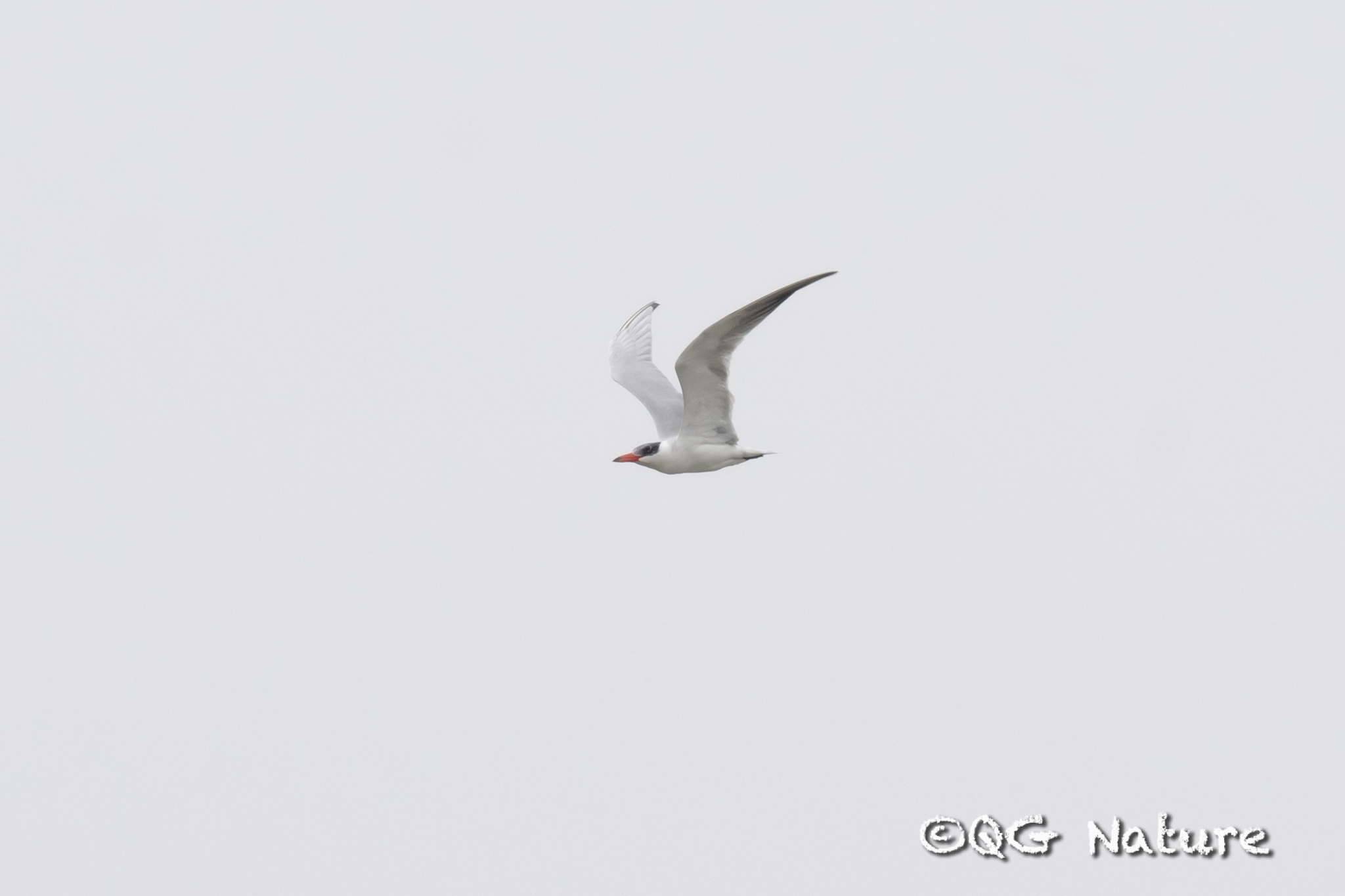
In flight, the tail is less forked than other terns. Underwing tips are black. Distinctive loud heron-like croak. Winter plumage retains the black cap with white forehead streaking, unlike many other terns that lose the cap.
Distribution & Habitat
Breeds on large lakes and ocean coasts in North America (including Great Lakes), Europe (Baltic and Black Seas), Asia, Africa, and Australasia (Australia and New Zealand). North American populations migrate to southern coasts, West Indies, and northern South America. European and Asian birds winter in Old World tropics. African and Australasian birds are resident or disperse short distances. Breeding recorded as far north as Cape Krusenstern National Monument, Alaska.
Behavior & Ecology
Feeds mainly on fish by hovering high over water and plunging; also eats large insects, bird eggs/young, and rodents. May fly up to 60 km (37 mi) from breeding colonies. Breeds in spring and summer in colonies or singly among other terns and gulls. Nests on ground among gravel, sand, or vegetation. Lays 1–3 pale blue-green eggs with heavy brown spotting. Incubation lasts 26–28 days; fledging occurs after 35–45 days. Chicks vary from pale creamy to darker grey-brown.
Conservation
Global population is about 50,000 pairs. Numbers are stable in most regions, but the Baltic Sea population (1400–1475 pairs in early 1990s) is declining and of conservation concern. Listed under the Agreement on the Conservation of African-Eurasian Migratory Waterbirds (AEWA).
Source: Wikipedia · CC BY-SA 3.0
Taxonomy
- Order
- Charadriiformes
- Family
- Laridae
- Genus
- Hydroprogne
Distribution
breeds patchily coastal Baltic Sea and inland southeast Europe to western Mongolia and Ussuriland (southeastern Russia) and northeastern China and southern Asian coasts; coastal and inland western and southern Africa; Europa (west of southern Madagascar, Mozambique Channel), coastal Madagascar and Aldabra group (southwestern Seychelles); coastal and inland northern and eastern Australia, coastal New Zealand (North, South and Stewart islands); inland Northwest Territories to northeastern Canada, in south to central California and Great Lakes; winters to coastal Africa, Red Sea, Persian Gulf, India, Thailand, Malay Peninsula, and Vietnam; eastern Pacific and Caribbean to Panama
Vocalizations
Data Sources
CBR Notes: 中文名由红嘴巨鸥改为红嘴巨燕鸥
Species description from Wikipedia, licensed under CC BY-SA 3.0.
Bird images and sounds sourced from GBIF, contributed by citizen scientists worldwide under Creative Commons licenses.
Taxonomy data from AviList 2025.