
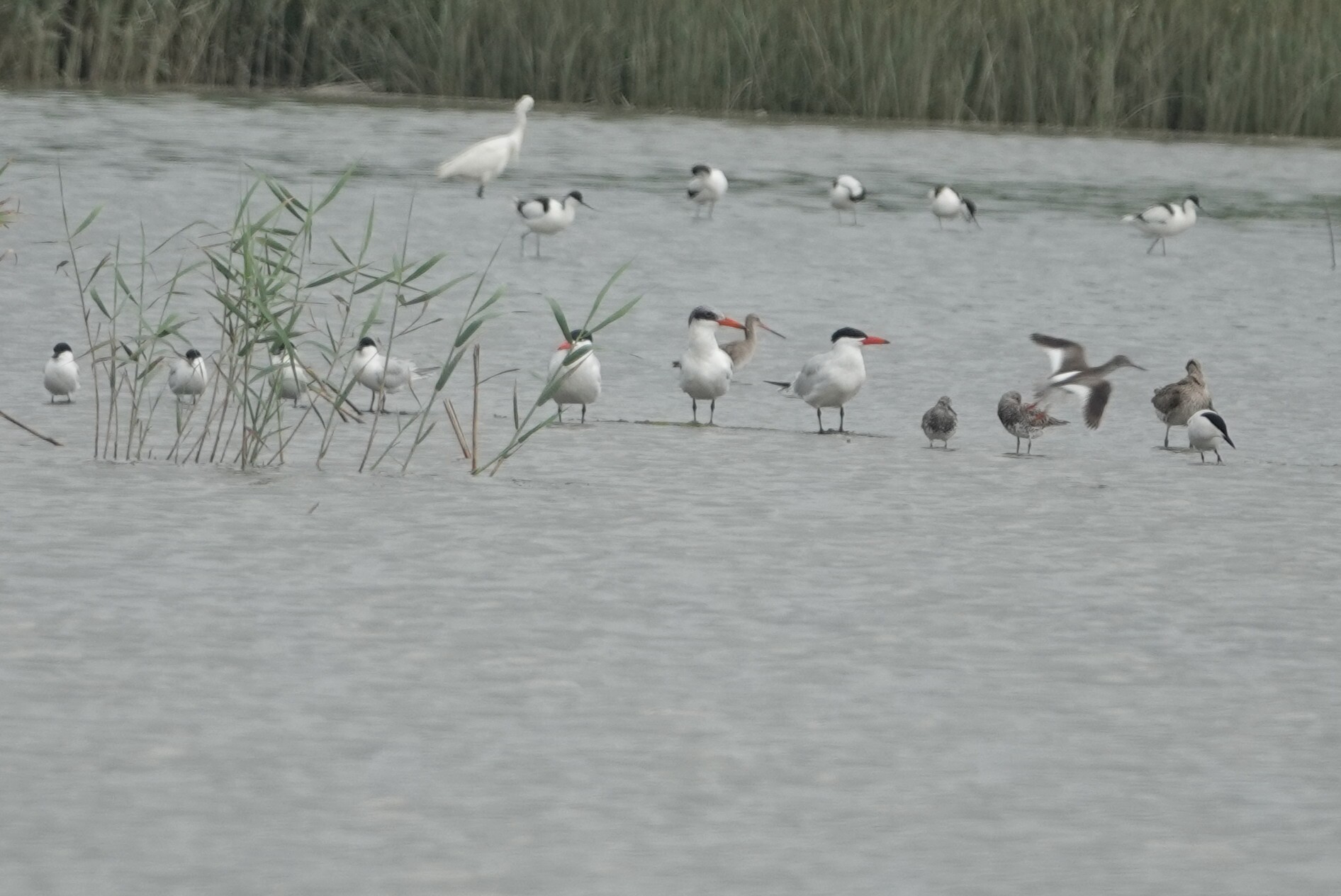
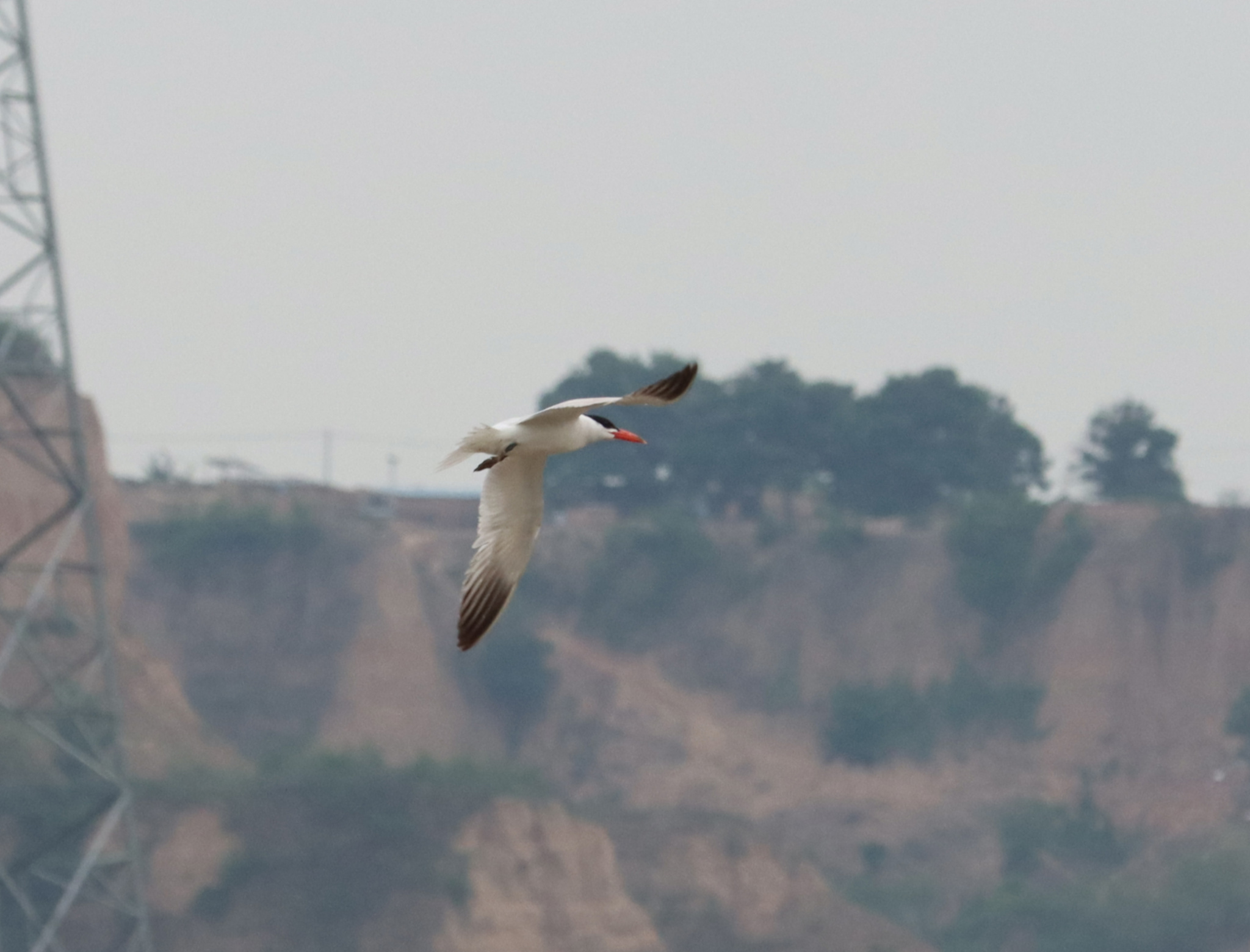
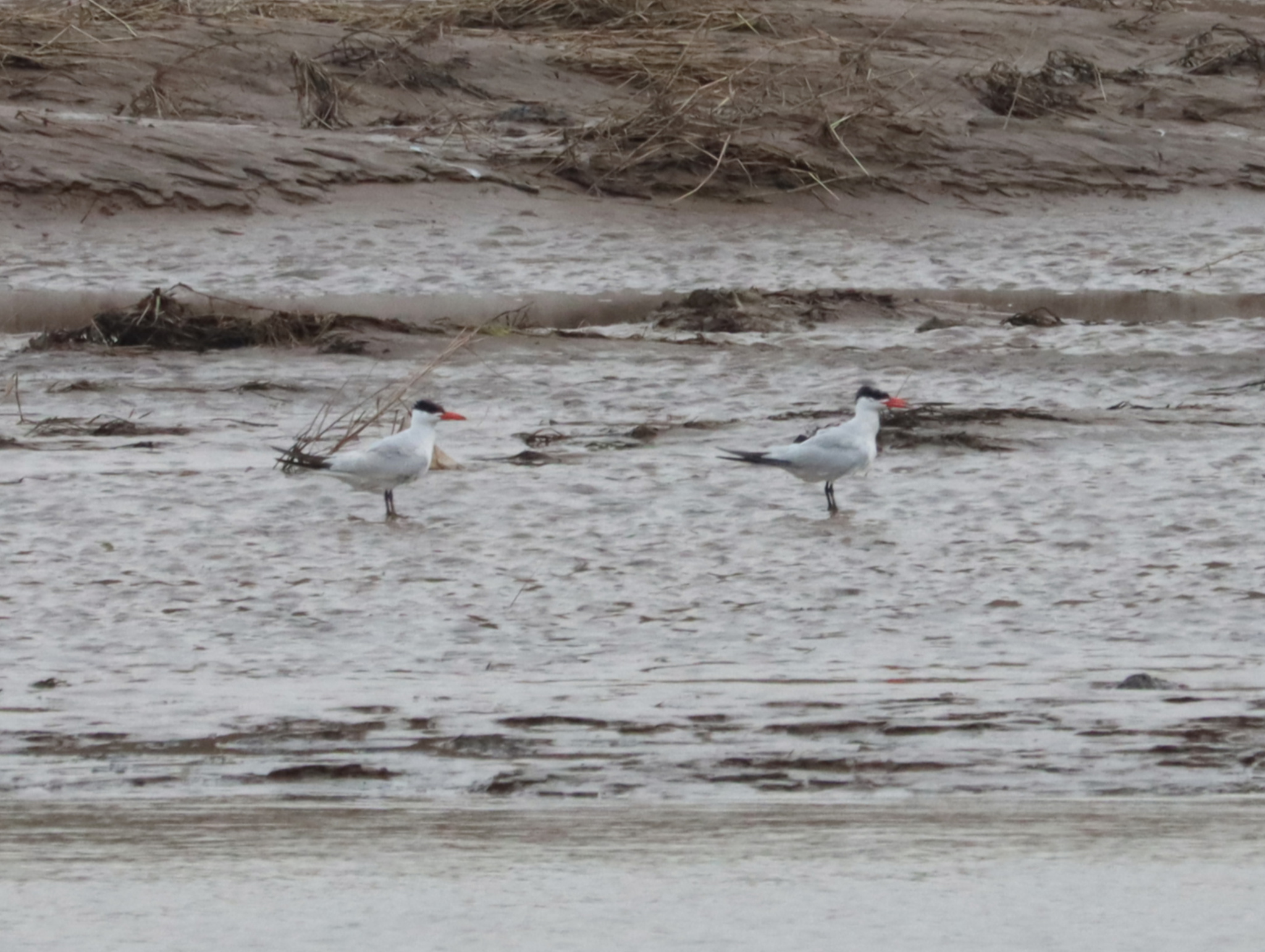
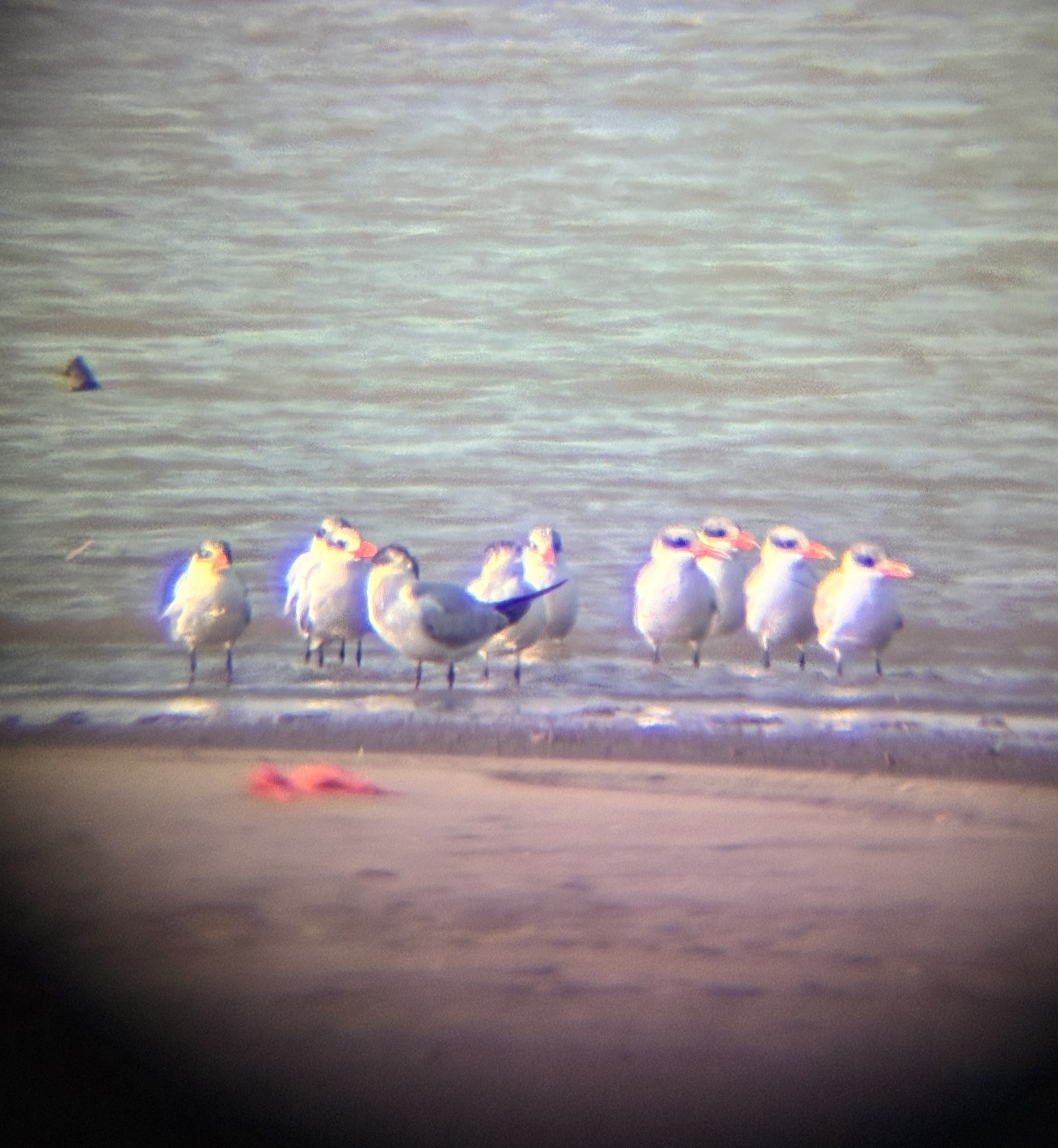
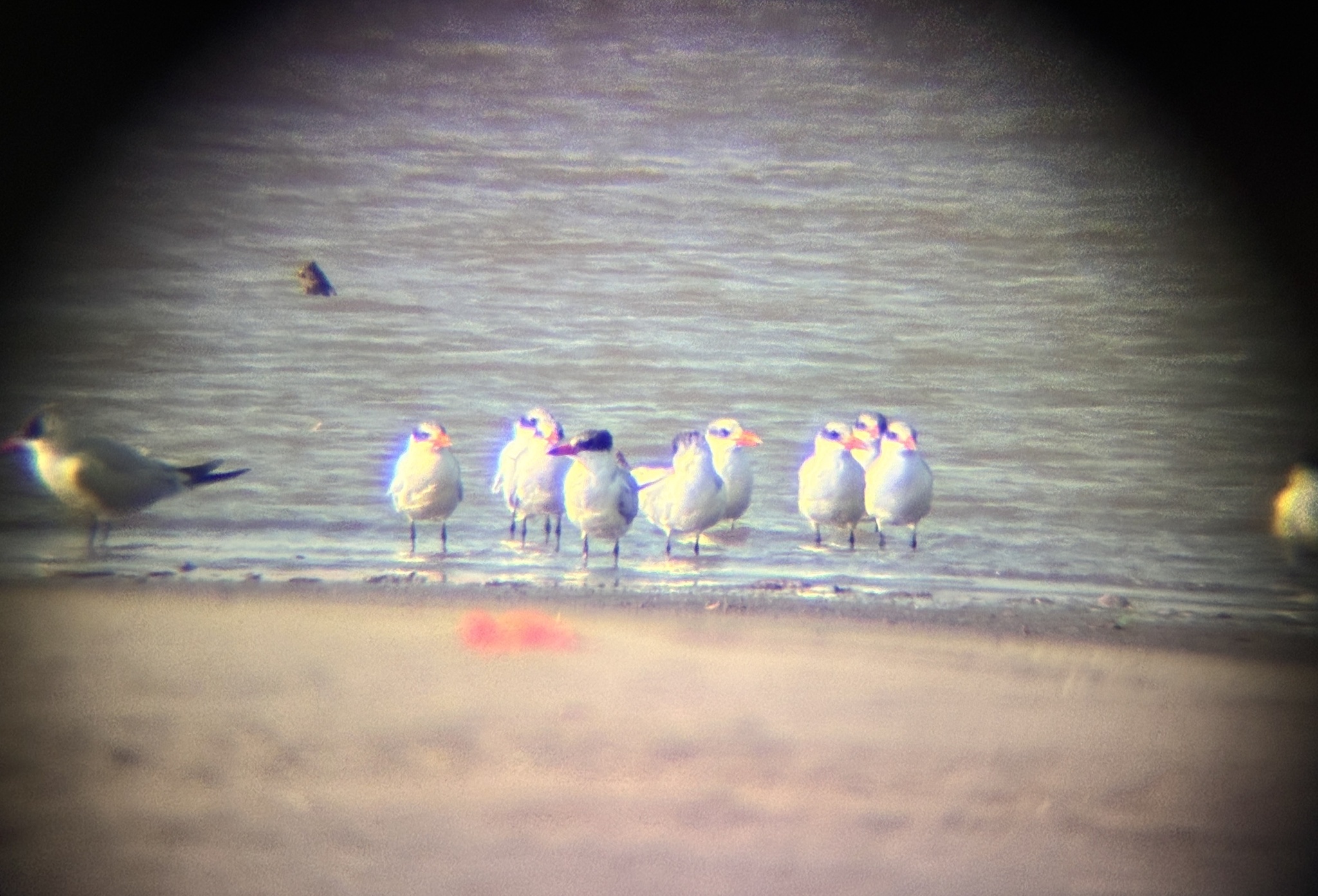
Caspian Tern
Hydroprogne caspia
红嘴巨燕鸥
Introduction
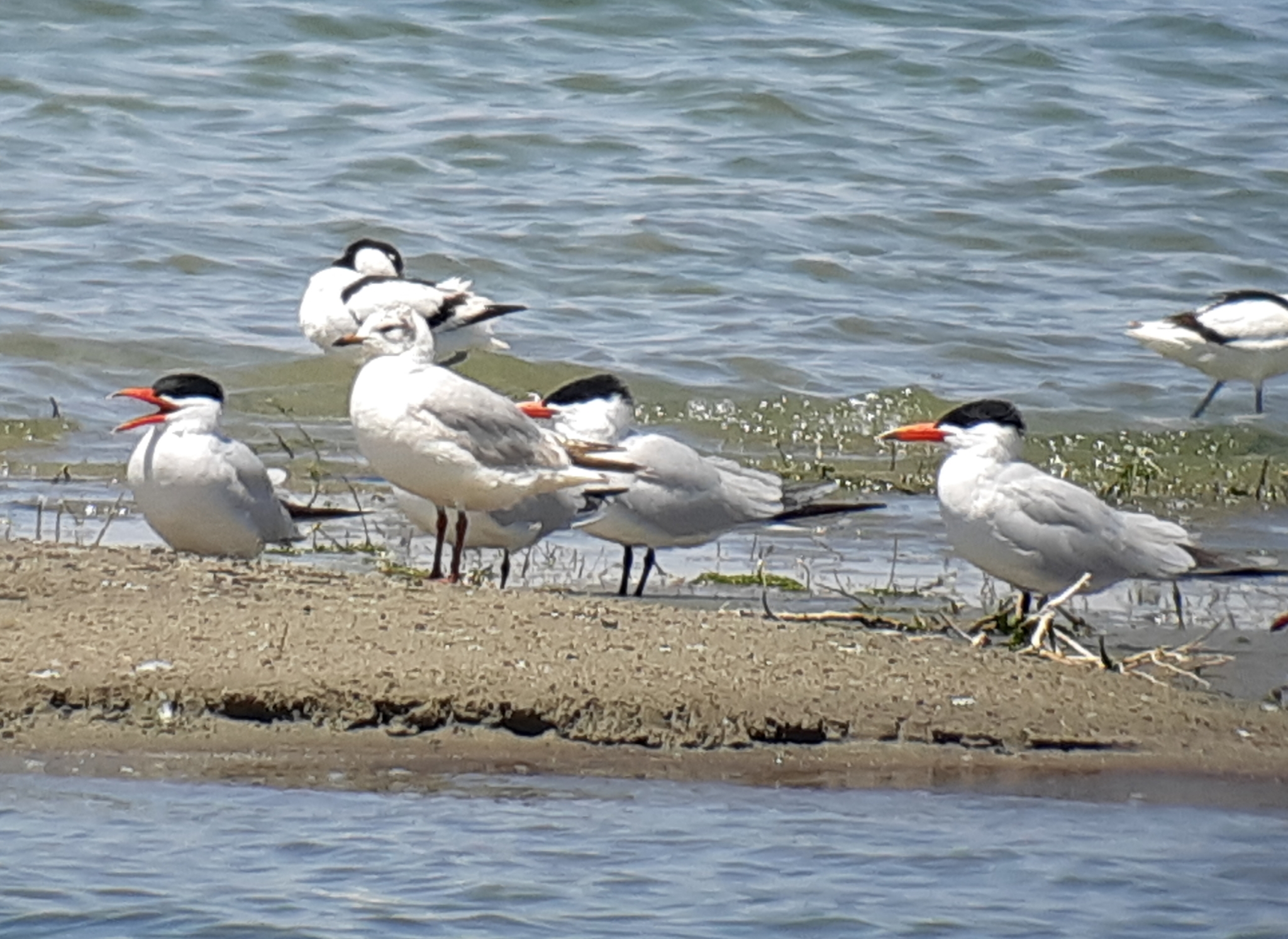
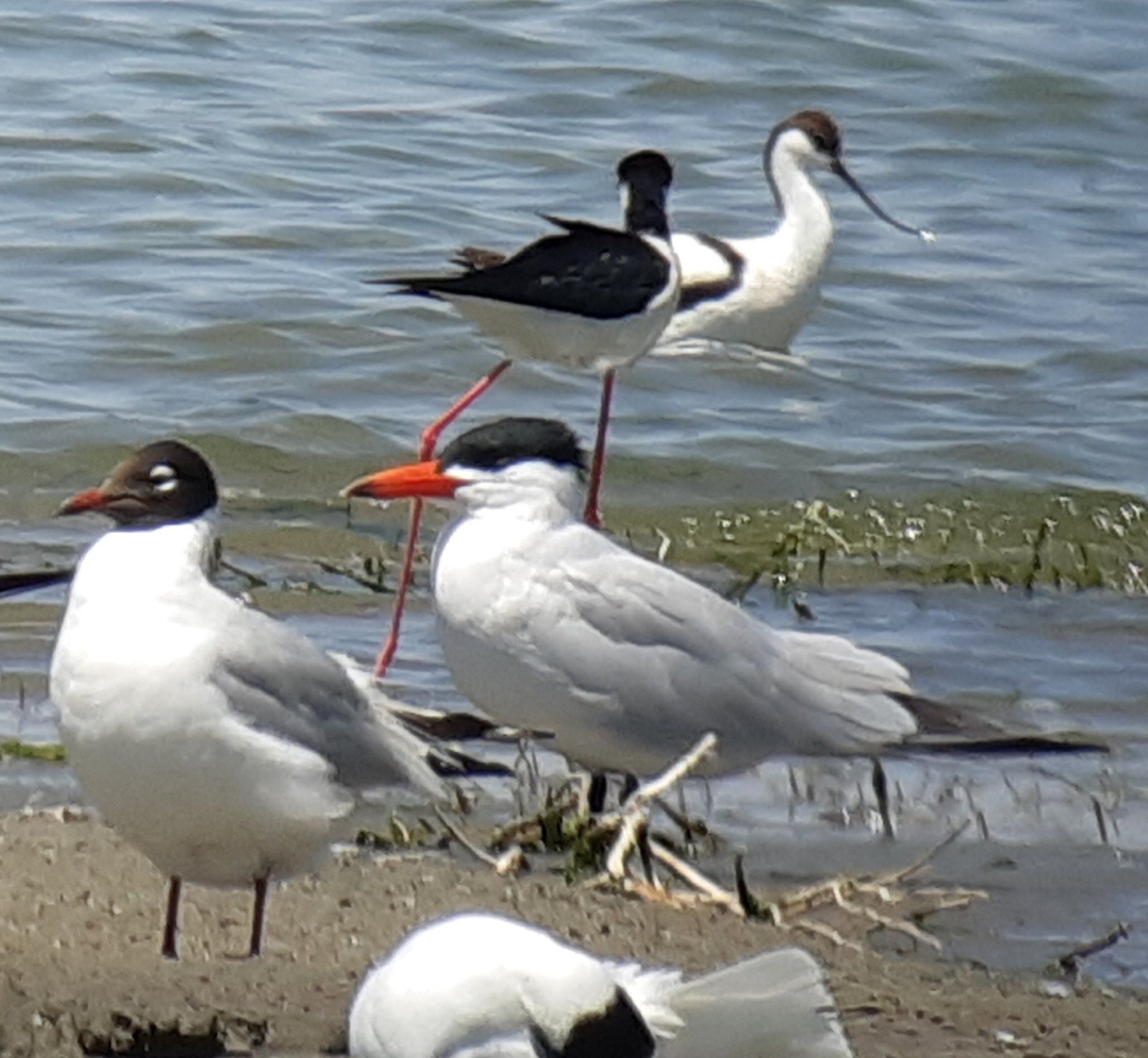
The Caspian Tern (Hydroprogne caspia) is the largest tern species worldwide. It has a global distribution spanning five continents, including the Great Lakes of North America, the Baltic coast of Europe, and the lakes of Australasia. Its habitat encompasses coastlines and large inland water bodies. The species has a robust build comparable to a gull, with a black-capped head and massive orange-red bill. Distinguishing features include a less forked tail and a year-round cap. The global population is approximately 50,000 pairs.
Description
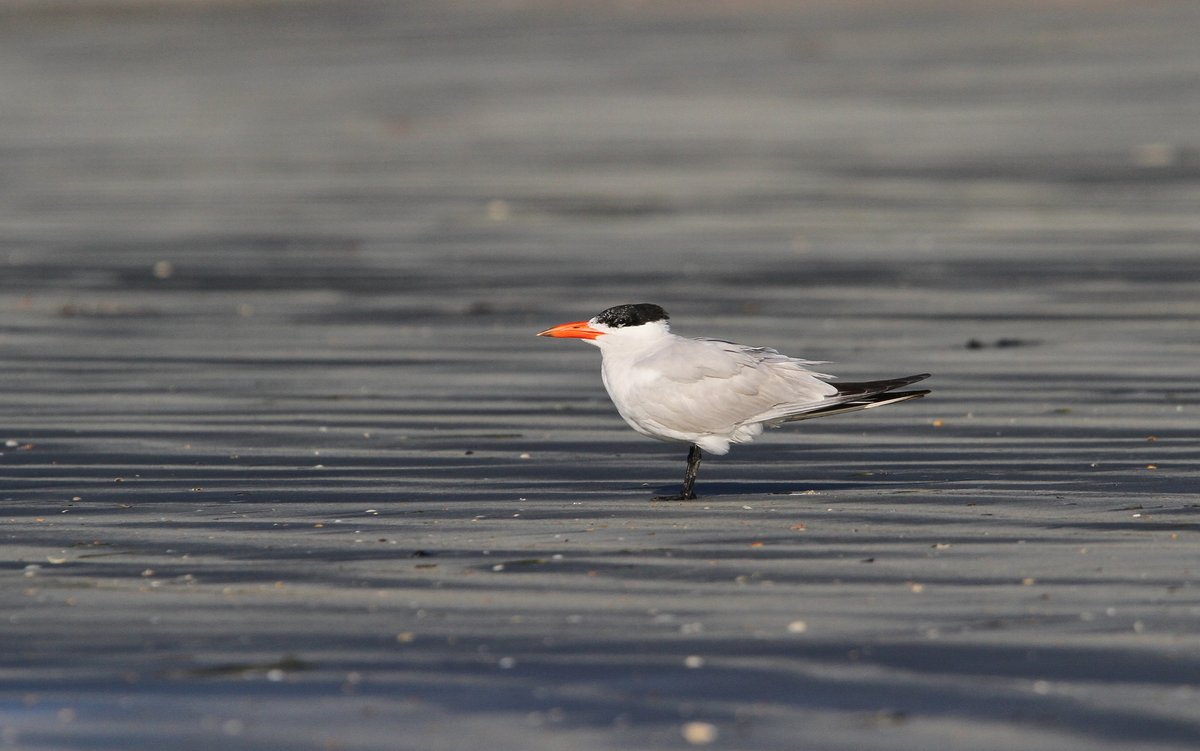
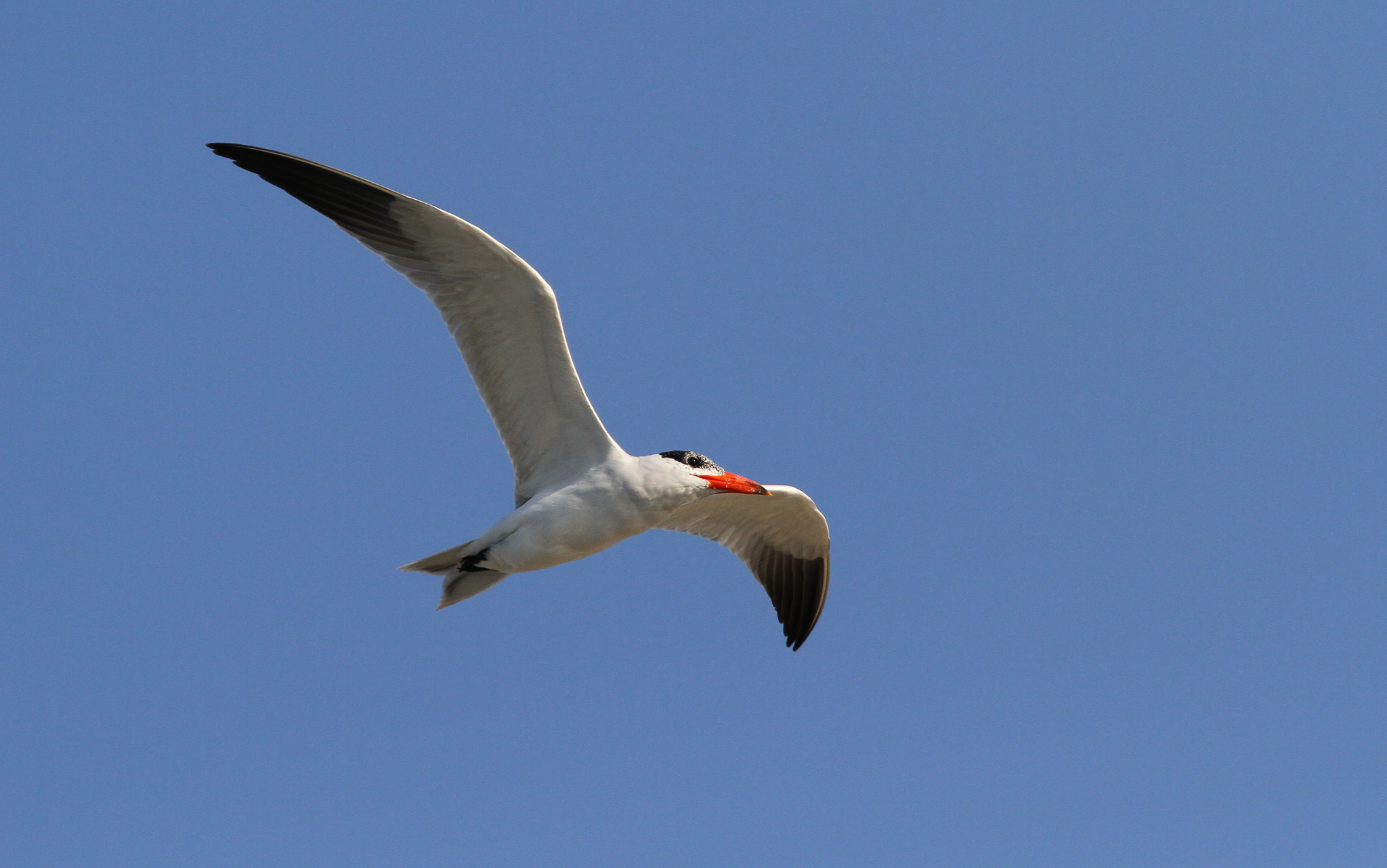
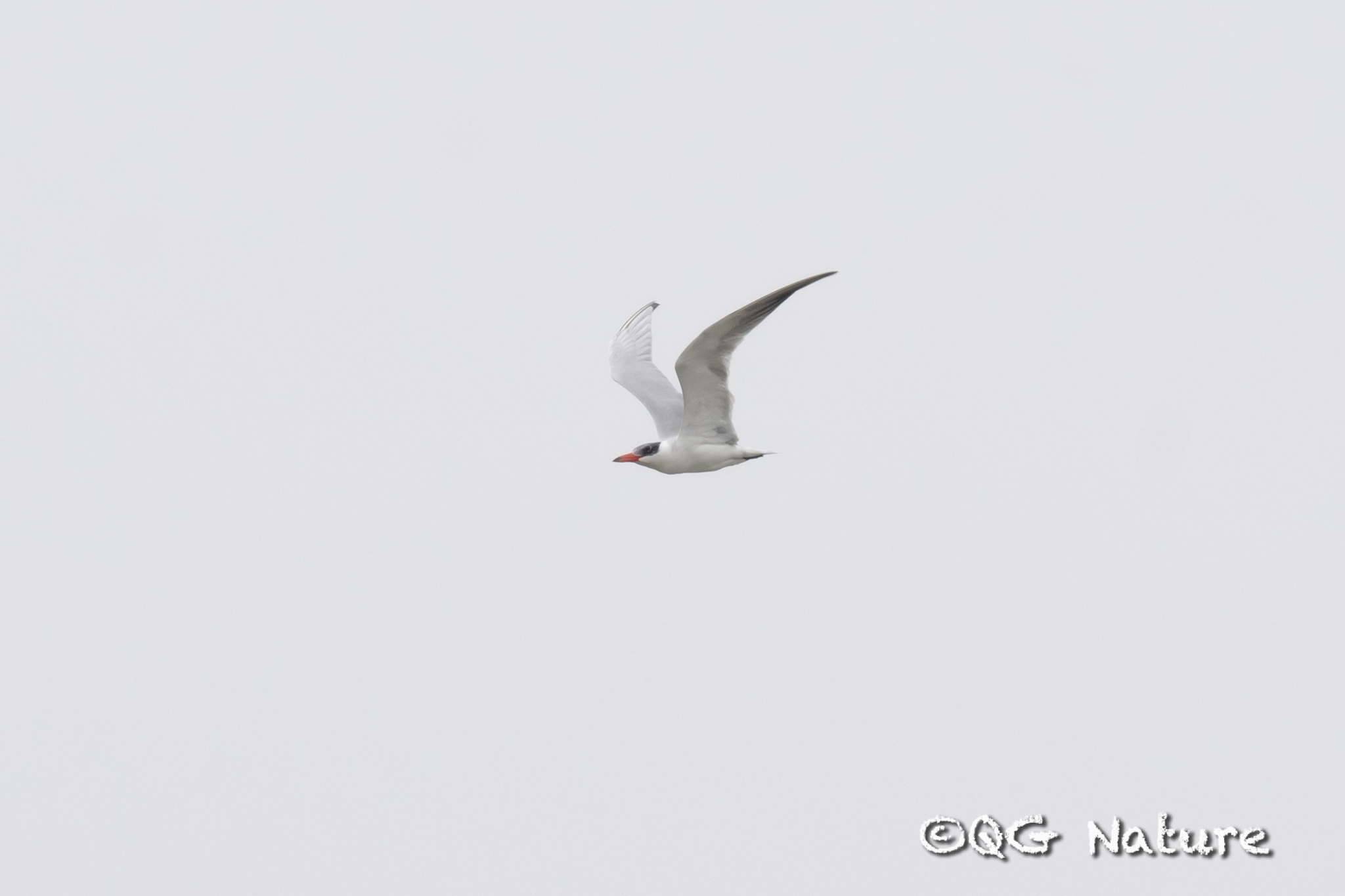
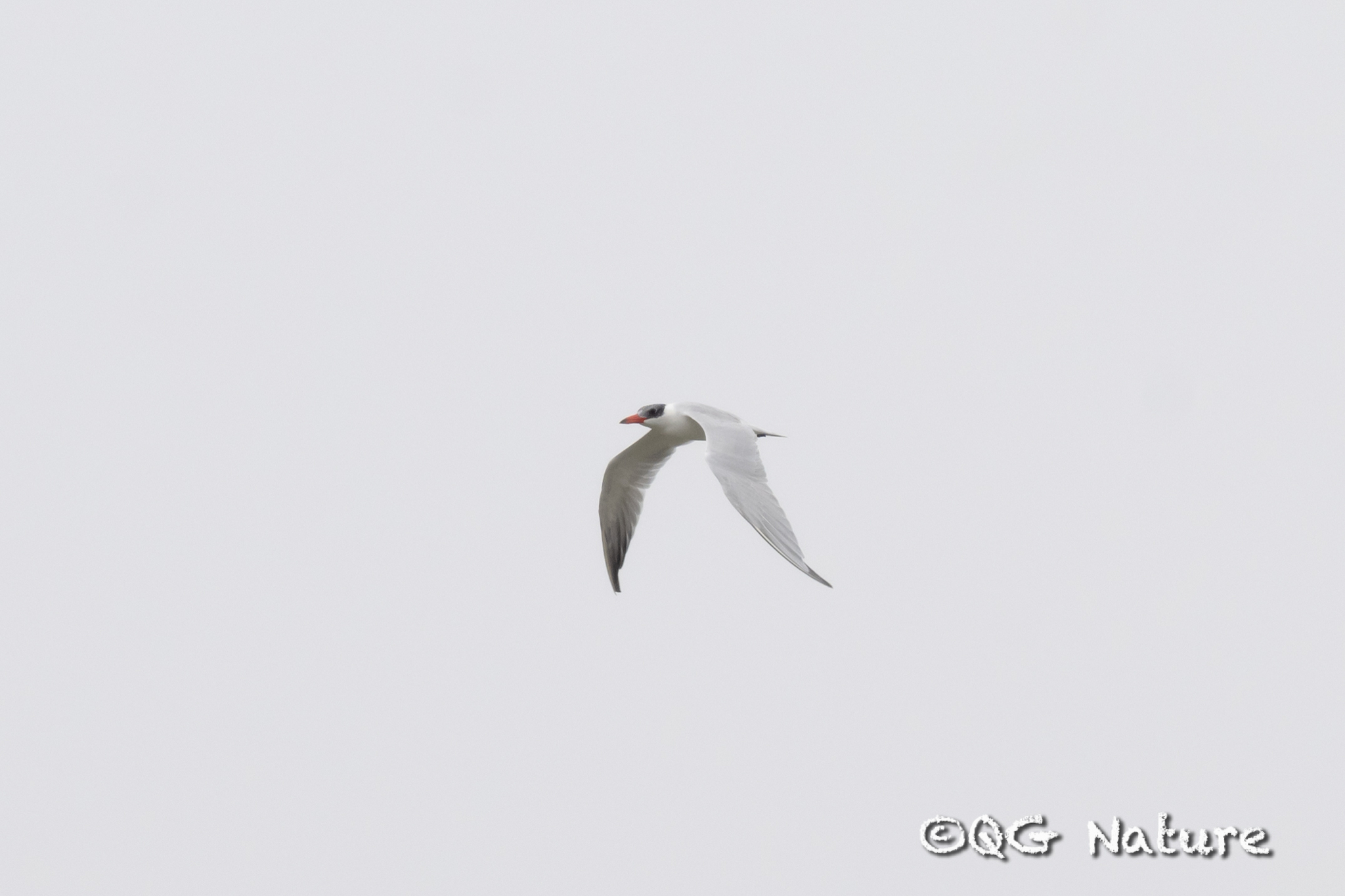
As the world's largest tern, this species commands attention with its substantial dimensions: 48-60 cm in length, an impressive wingspan of 127-145 cm, and a weight of 530-782 g. The most striking feature is its long, thick bill in a vivid red-orange shade, tipped with black. The head displays a crisp white plumage with a defining black cap, while the neck, belly, and tail are pure white. Upper wings and back show pale grey tones, contrasting with underwings that appear pale with dark primary feathers. Unlike many terns, the tail displays minimal forking, and the wingtips reveal black undersides during flight. The legs are black. In winter plumage, the black cap remains largely intact but develops white streaking on the forehead—a key identification feature. The call is a distinctive loud, heron-like croak, quite unlike the typical tern vocalizations.
Identification
This species' large size immediately sets it apart from other terns and serves as the primary field identification clue. The massive red-orange bill, unlike any other tern in its range, provides definitive identification when visible. The tail's minimal fork distinguishes it from the deeply forked tails of common and roseate terns. The underwing pattern—pale with dark wingtips—contrasts with the more uniformly colored underwings of similar species. Notably, this species maintains its black cap throughout the year, unlike many other terns that lose it in winter plumage. When approaching mixed tern colonies, observers should look for the combination of size, bill color, and cap pattern. The heavy, gull-like flight also differs from the lighter, more buoyant flight of smaller terns.
Distribution & Habitat
This species occupies a scattered but subcosmopolitan distribution across five continents. Breeding habitats include large lakes and ocean coasts in North America (notably the Great Lakes), Europe (primarily Baltic Sea and Black Sea regions), Asia, Africa, and Australasia (Australia and New Zealand). North American populations migrate to southern coastal areas, the West Indies, and northern South America for the non-breeding season. European and Asian birds winter in Old World tropical regions, while African and Australasian populations are largely resident or disperse only short distances. A notable range expansion occurred in 2016 when a pair bred in northwestern Alaska's Cape Krusenstern National Monument, 600 km beyond previous North American breeding records—a trend attributed to warming temperatures. The global population numbers approximately 50,000 pairs, though the Baltic Sea population of 1,400-1,475 pairs faces conservation concerns due to decline.
Behavior & Ecology
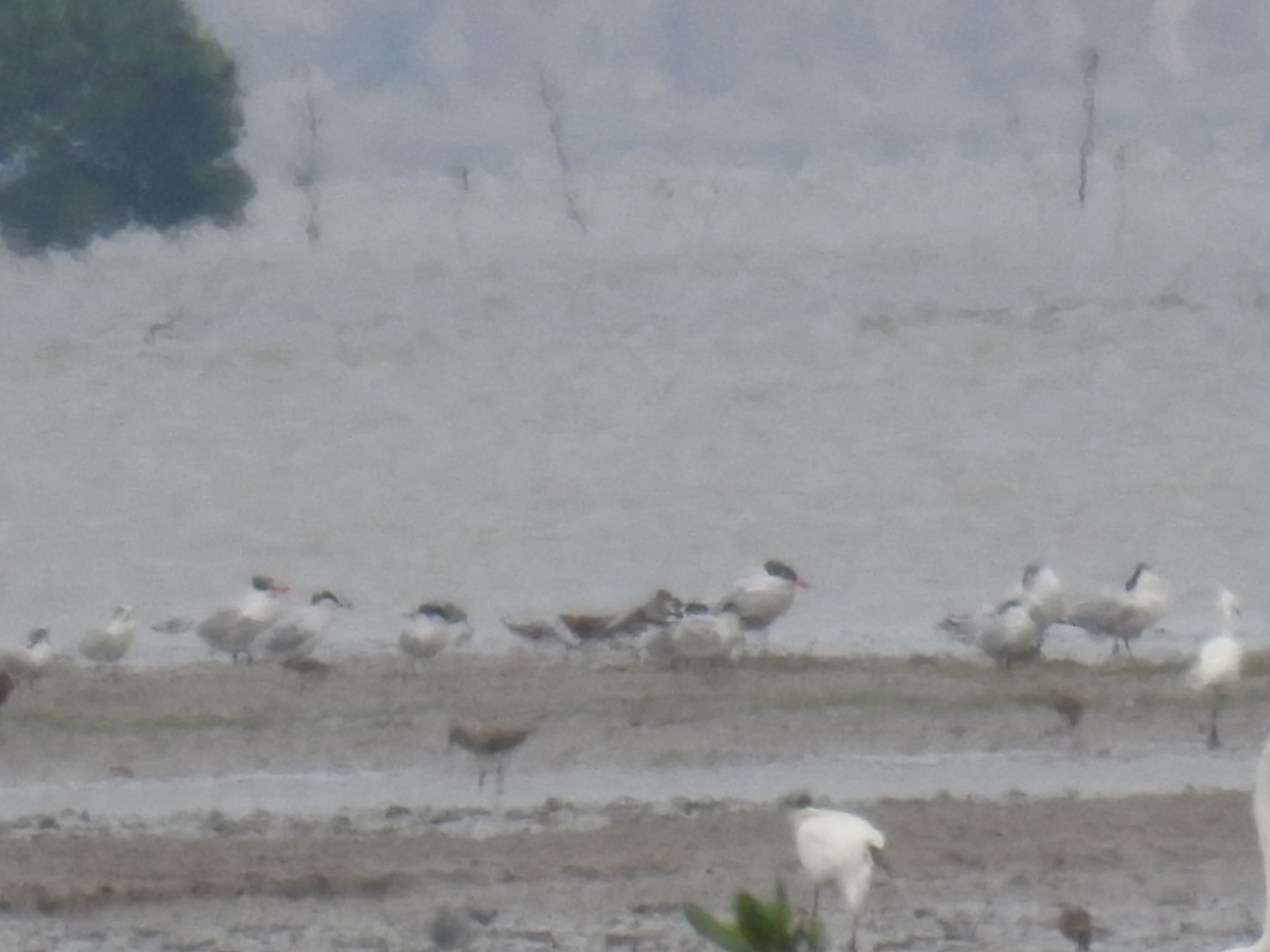
This species employs a distinctive fishing strategy, hovering high above water before plunging into dives to catch fish—the primary component of its diet. It also consumes large insects, eggs, and young of other bird species, and occasionally rodents. Birds may travel up to 60 km from breeding colonies to feed, utilizing both freshwater lakes and marine environments. Breeding occurs in spring and summer, with females laying one to three pale blue-green eggs heavily marked with brown. Nests are simple ground scrapes among gravel and sand, sometimes amid vegetation. Colonies range from single pairs to mixed aggregations with other terns and gulls. Incubation lasts 26-28 days, and chicks fledge after 35-45 days. Chicks display variable plumage from pale creamy to darker grey-brown, an adaptation helping parents recognize their own young amid dense colonies. The loud, heron-like croak serves as the primary vocalization, notably different from the piercing calls of smaller terns.
Conservation
The species holds a status of Least Concern globally, with an estimated population of 50,000 pairs showing stability across most of its range. However, the Baltic Sea population of 1,400-1,475 breeding pairs faces significant decline and requires conservation attention. The species benefits from international protection under the Agreement on the Conservation of African-Eurasian Migratory Waterbirds (AEWA). Primary threats include habitat degradation and disturbance at breeding colonies, pollution affecting fish populations, and competition with other colonial waterbirds. Human recreational disturbance near nesting sites poses particular concerns in heavily visited coastal areas. Conservation efforts focus on protecting key breeding and wintering habitats, managing human disturbance, and monitoring population trends across the species' range.
Culture
No significant cultural, folklore, or mythological associations are documented for this species in available sources.
Source: Wikipedia · CC BY-SA 3.0
Taxonomy
- Order
- Charadriiformes
- Family
- Laridae
- Genus
- Hydroprogne
- eBird Code
- caster1
Distribution
breeds patchily coastal Baltic Sea and inland southeast Europe to western Mongolia and Ussuriland (southeastern Russia) and northeastern China and southern Asian coasts; coastal and inland western and southern Africa; Europa (west of southern Madagascar, Mozambique Channel), coastal Madagascar and Aldabra group (southwestern Seychelles); coastal and inland northern and eastern Australia, coastal New Zealand (North, South and Stewart islands); inland Northwest Territories to northeastern Canada, in south to central California and Great Lakes; winters to coastal Africa, Red Sea, Persian Gulf, India, Thailand, Malay Peninsula, and Vietnam; eastern Pacific and Caribbean to Panama
Vocalizations
Data Sources
CBR Notes: 中文名由红嘴巨鸥改为红嘴巨燕鸥
Species description from Wikipedia, licensed under CC BY-SA 3.0.
Bird images and sounds sourced from GBIF, contributed by citizen scientists worldwide under Creative Commons licenses.
Taxonomy data from AviList 2025.