Charadriiformes / Jacanidae / Hydrophasianus
Pheasant-tailed Jacana
Hydrophasianus chirurgus · 水雉
Introduction
A jacana in the monotypic genus Hydrophasianus, found in tropical Asia from Yemen to the Philippines. It inhabits shallow lakes with floating vegetation and is distinguished by elongated toes for walking on aquatic plants. It is the only jacana species that migrates long distances and exhibits distinct breeding and non-breeding plumages. Females are larger than males and practice polyandry.
Description
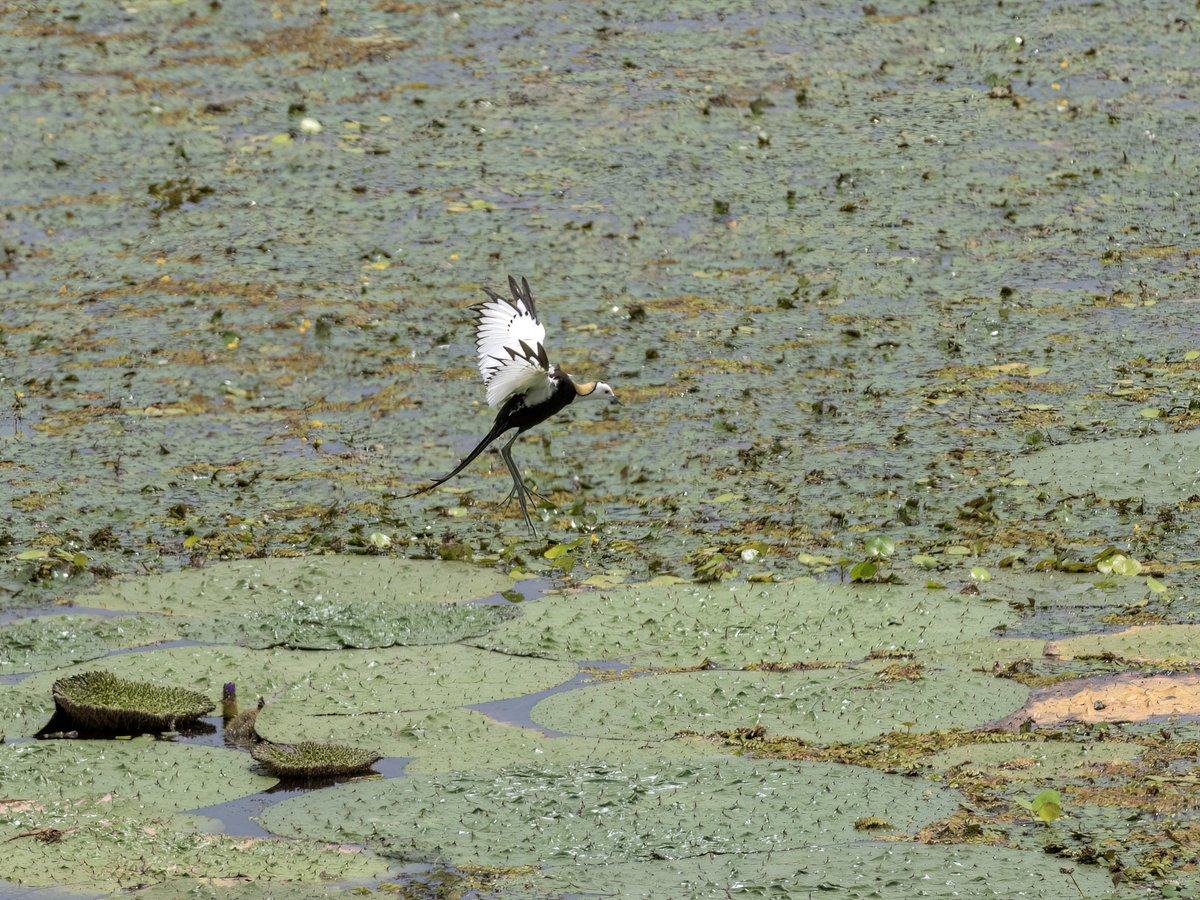
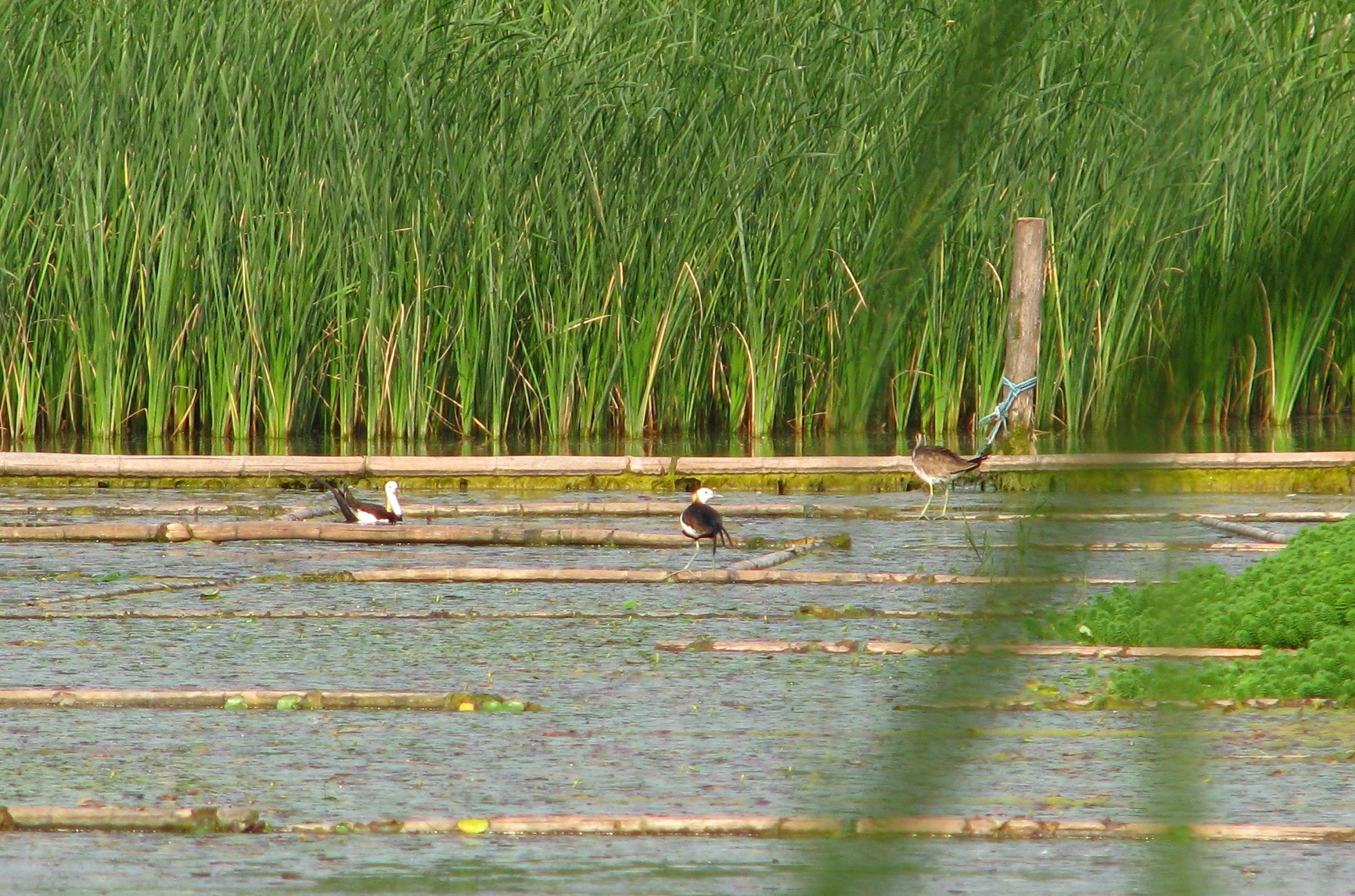
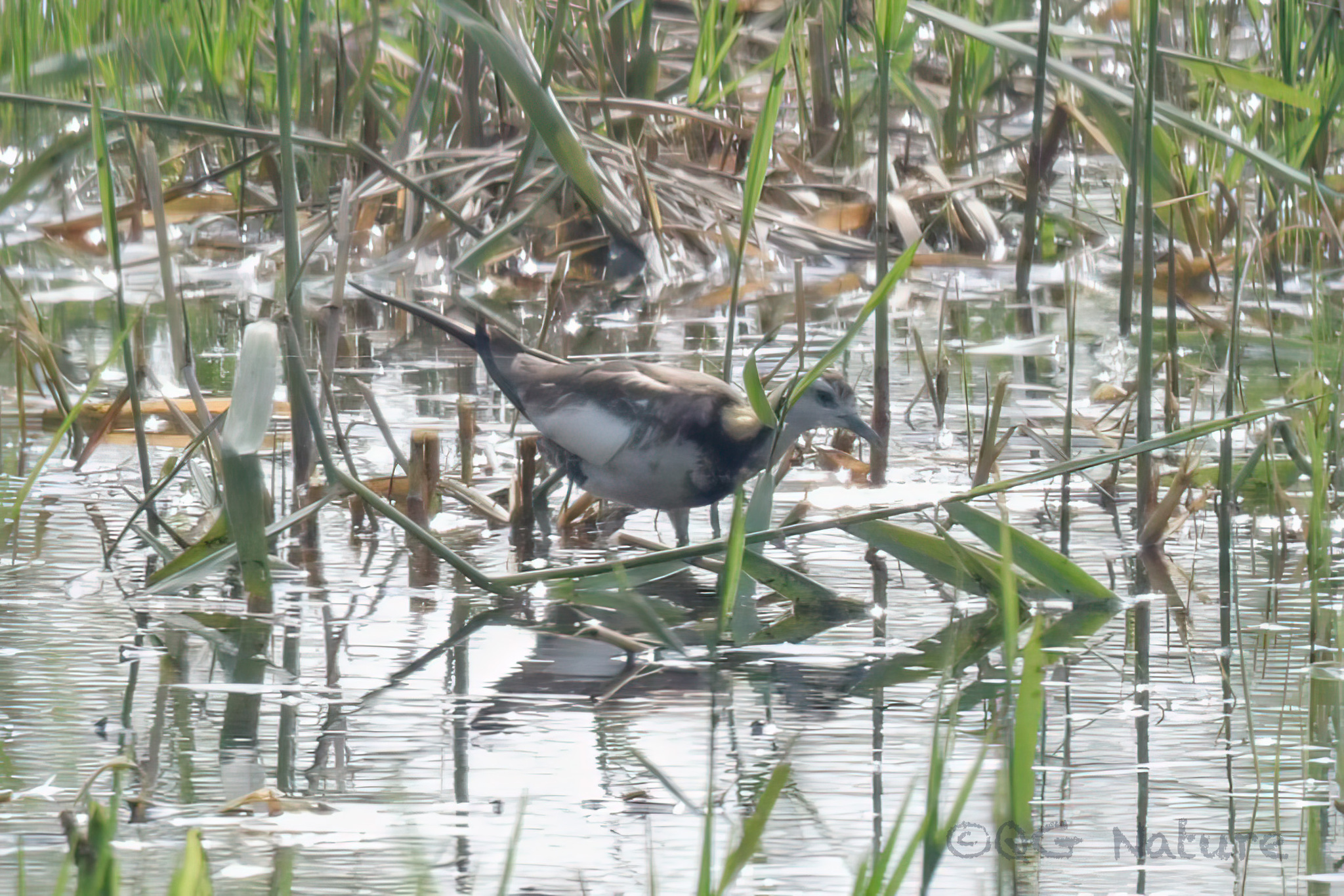
The longest species in the jacana family when tail streamers are included. Breeding plumage features a chocolate brown body, white face, black crown back with white neck stripes, silky golden yellow nape, and predominantly white wings with black borders. Elongated central tail feathers are prominent. Non-breeding plumage has a dark brown head and back, a dark eyestripe forming a necklace on a white front, and only traces of golden nape feathers. The bill is bluish-black with a yellow tip in breeding season and dull brown with a yellowish base otherwise. Legs are dark bluish-grey, iris brown. Females possess longer sharp white carpal spurs than males. Body mass ranges from 120–140 g in males to 190–200 g in females.
Identification
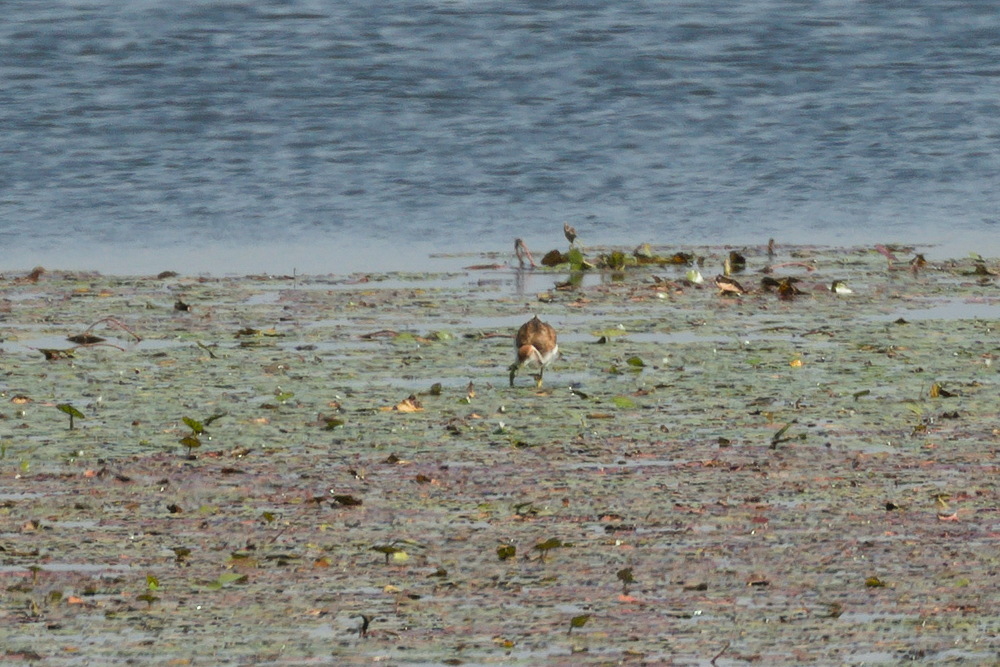
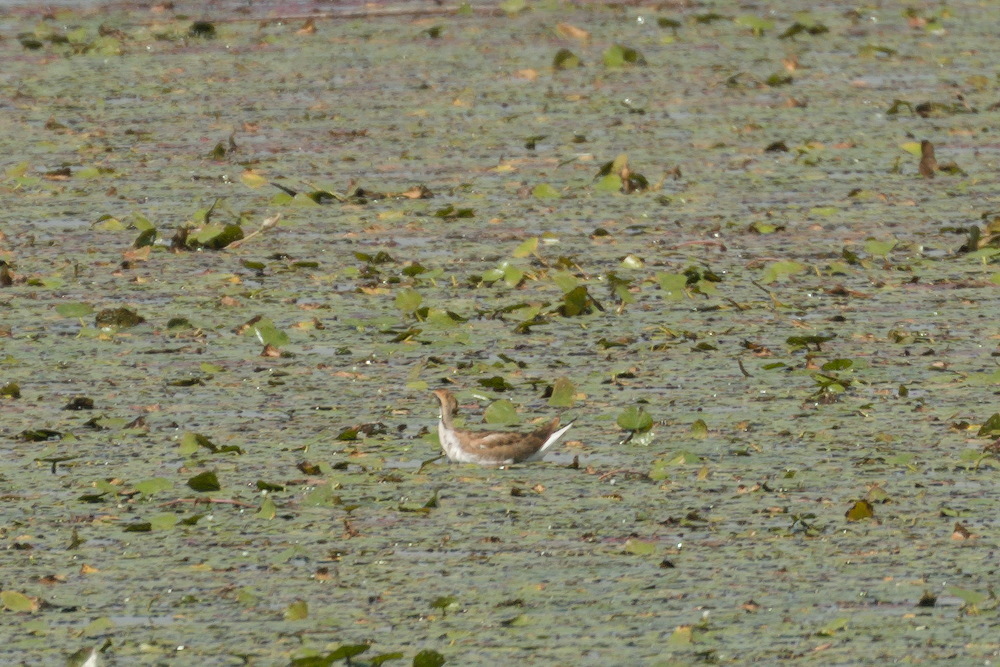
Unmistakable due to elongated central tail feathers in breeding plumage and white wings with black borders in flight. The pointed tip of the fourth primary is visible in flight. Non-breeding birds show a dark necklace and lack the golden nape. Juveniles have brown upper parts, a broken dark necklace, and a dark stripe on the side of the neck, distinguishing them from bronze-winged jacana immatures. The bill is more slender than that of the bronze-winged jacana.
Distribution & Habitat
Resident breeder in tropical India, Southeast Asia, Indonesia, Sri Lanka, and Taiwan. Northern breeders from south China and the Himalayas migrate south to Southeast Asia and peninsular India. Migratory movements occur between November and April. Found on small to large lakes with sufficient floating vegetation, from low elevations up to 3800 m in Lahul. Vagrants recorded in Socotra, Qatar, Australia, and southern Japan.
Behavior & Ecology
Forages for insects, molluscs, and invertebrates by walking on floating vegetation or swimming; occasionally ingests plant material. Forms flocks of 50–100 individuals. Calls include a mewing 'me-onp' or nasal 'teeun'. Polyandrous breeding system: females court multiple males and lay up to ten clutches per season. Males build nests on floating vegetation, incubate four eggs for 26–28 days, and care for chicks. Males may move eggs or nests up to 15 metres and perform distraction displays. Chicks are nidifugous and freeze when threatened.
Conservation
Considered endangered in Taiwan.
Culture
Known as 'cat teal' or juana in Sinhalese in Sri Lanka due to its mewing call. In Assam's Cachar district, it is called rani didao gophita, meaning 'little white water princess'.
Source: Wikipedia · CC BY-SA 3.0
Taxonomy
- Order
- Charadriiformes
- Family
- Jacanidae
- Genus
- Hydrophasianus
Distribution
breeds northern Pakistan eastward in sub-Himalayan region to southeastern China and Taiwan, and southward to southern India, Sri Lanka, southeastern Asia, and Philippines; winters sparsely southward to Malayan Peninsula, Sumatra, Java, and Bali
Data Sources
Species description from Wikipedia, licensed under CC BY-SA 3.0.
Bird images and sounds sourced from GBIF, contributed by citizen scientists worldwide under Creative Commons licenses.
Taxonomy data from AviList 2025.