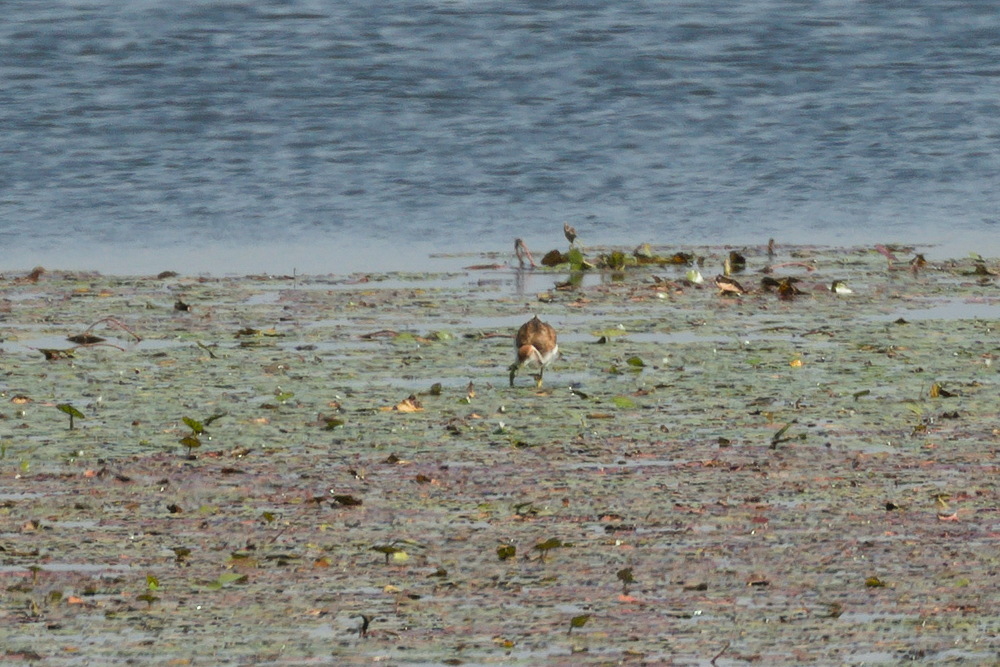
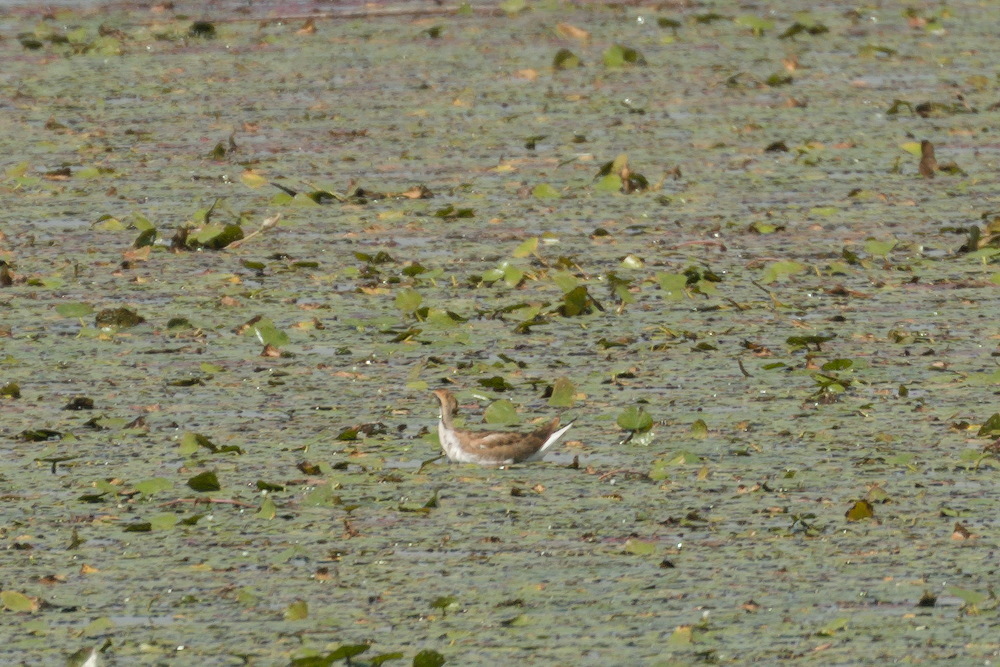
Pheasant-tailed Jacana
Hydrophasianus chirurgus
水雉
Introduction
The pheasant-tailed jacana (Hydrophasianus chirurgus) is the only migratory species within the jacana family (Jacanidae). It occupies tropical wetlands across the Indian subcontinent, Southeast Asia, and island chains extending to the Philippines, where slow-moving waters, marshes, and lakes support abundant floating vegetation. This species is distinguished by elongated toes that enable locomotion across lily pads and submerged vegetation while foraging for invertebrates. Breeding plumage is chocolate and golden, while non-breeding plumage is more subdued. During winter, flocks of 50 to 100 individuals aggregate on larger water bodies. The species demonstrates high tolerance for human activity. Its presence serves as an indicator of healthy freshwater ecosystems with abundant floating vegetation.
Description
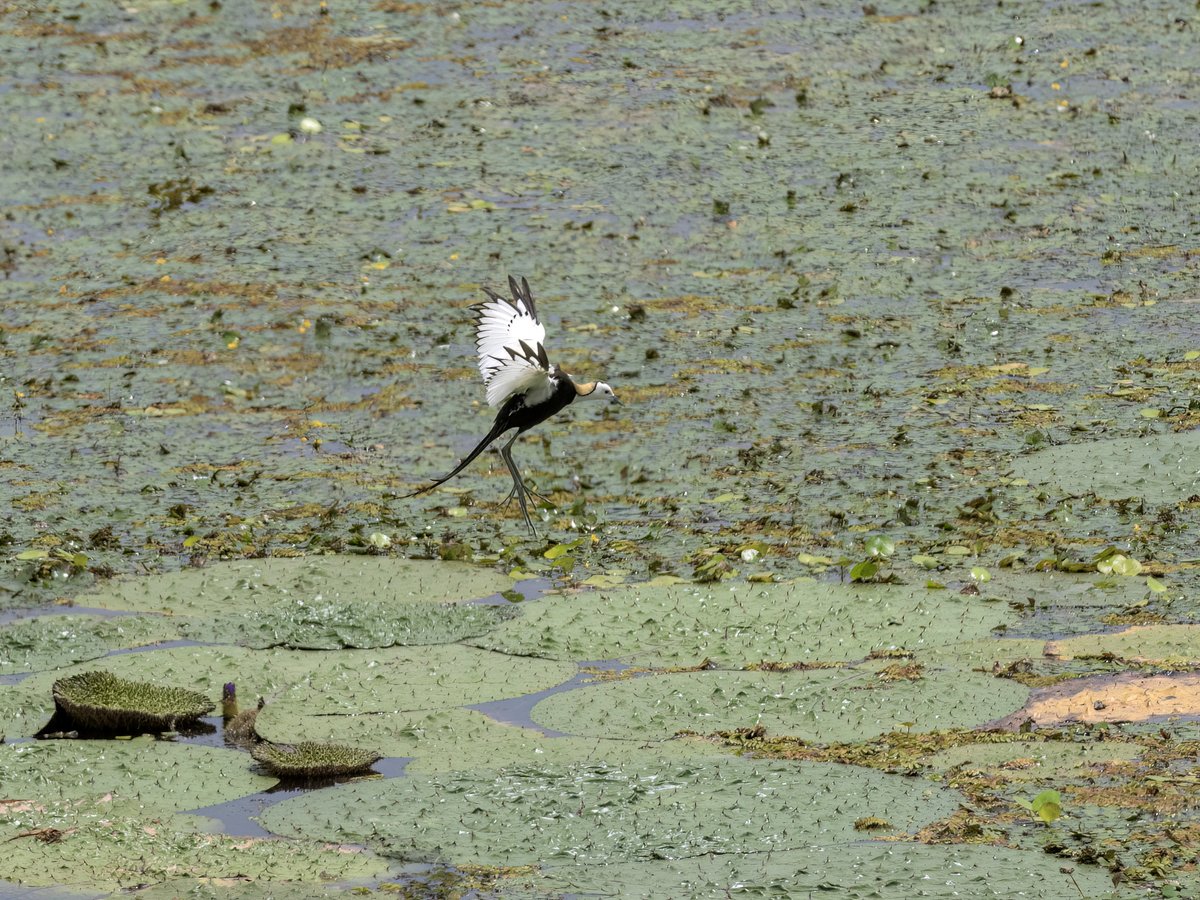
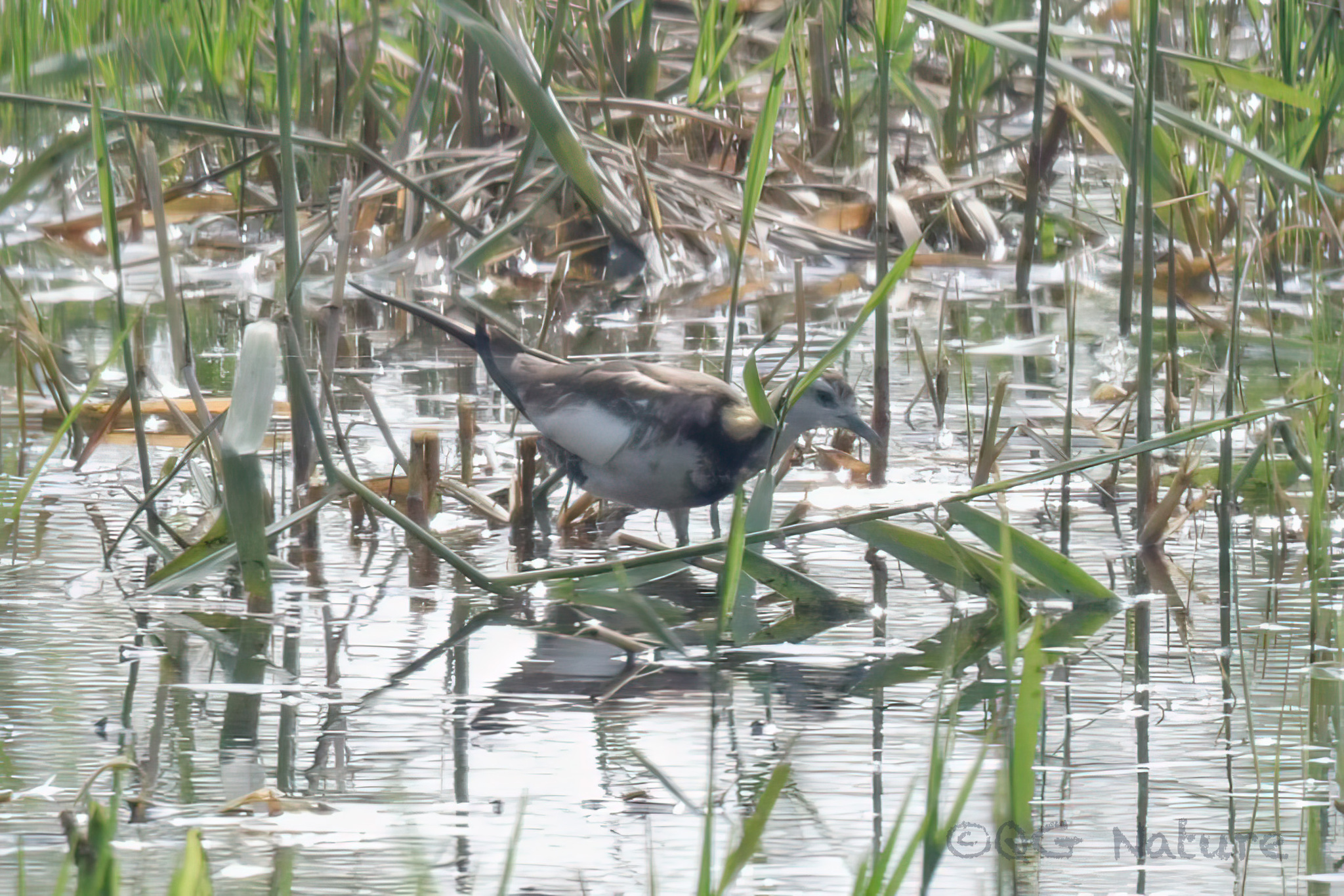
This is the largest jacana species when the distinctive tail streamers are measured. Adults display dramatic seasonal plumage variation. During breeding season, the body is chocolate brown, the face white, and the back of the crown black with white stripes running down the neck sides. The nape features silky golden-yellow feathers. Wings are predominantly white with black borders on the outermost primaries and secondary tips. The bill is slender and bluish-black with a yellow tip, while legs are dark bluish grey and the iris brown. Non-breeding plumage shows dark brown upperparts with only traces of golden nape feathers, a dark eyestripe, and a sullied white front. Body mass ranges from 120-140g in males to 190-200g in females. The outer two primaries have distinctive lanceolate extensions, and the fourth primary has a pointed tip visible in flight. Young birds have brown upperparts with a broken dark necklace.
Identification
This species is unmistakable when in breeding plumage due to its elongated central tail feathers and striking color pattern. The white wings and dark neck stripe help separate it from similar species. Compared to bronze-winged jacana immatures, this species shows traces of the black neck stripe and has white wings, whereas bronze-winged juveniles lack these features. A key identification mark is the dark stripe on the side of the neck in juveniles, which distinguishes them from young bronze-winged jacanas that lack this feature. Both sexes possess sharp white carpal spurs, with those of females being longer. In flight, the pointed tip of the fourth primary and the lanceolate extensions on the outer two primaries are distinctive field marks.
Distribution & Habitat
This species breeds across tropical Asia from Yemen to the Philippines, including the Indian subcontinent, Southeast Asia, and Indonesia. It occupies small to large lakes with abundant floating vegetation, ranging from sea level to high altitudes in the Himalayas (recorded at 3650-3800m in Kashmir and Lahul). While sedentary in most of its range, northern populations from south China and the Himalayas migrate south to Southeast Asia and peninsular India for winter. In Taiwan, the species is resident but considered endangered. Vagrant records exist from Socotra, Qatar, Australia, and southern Japan (Okinawa, Yonaguni, Ishigaki, and Iriomote). Unlike the bronze-winged jacana, this species occurs in Sri Lanka and tends to be more common at lower elevations.
Behavior & Ecology
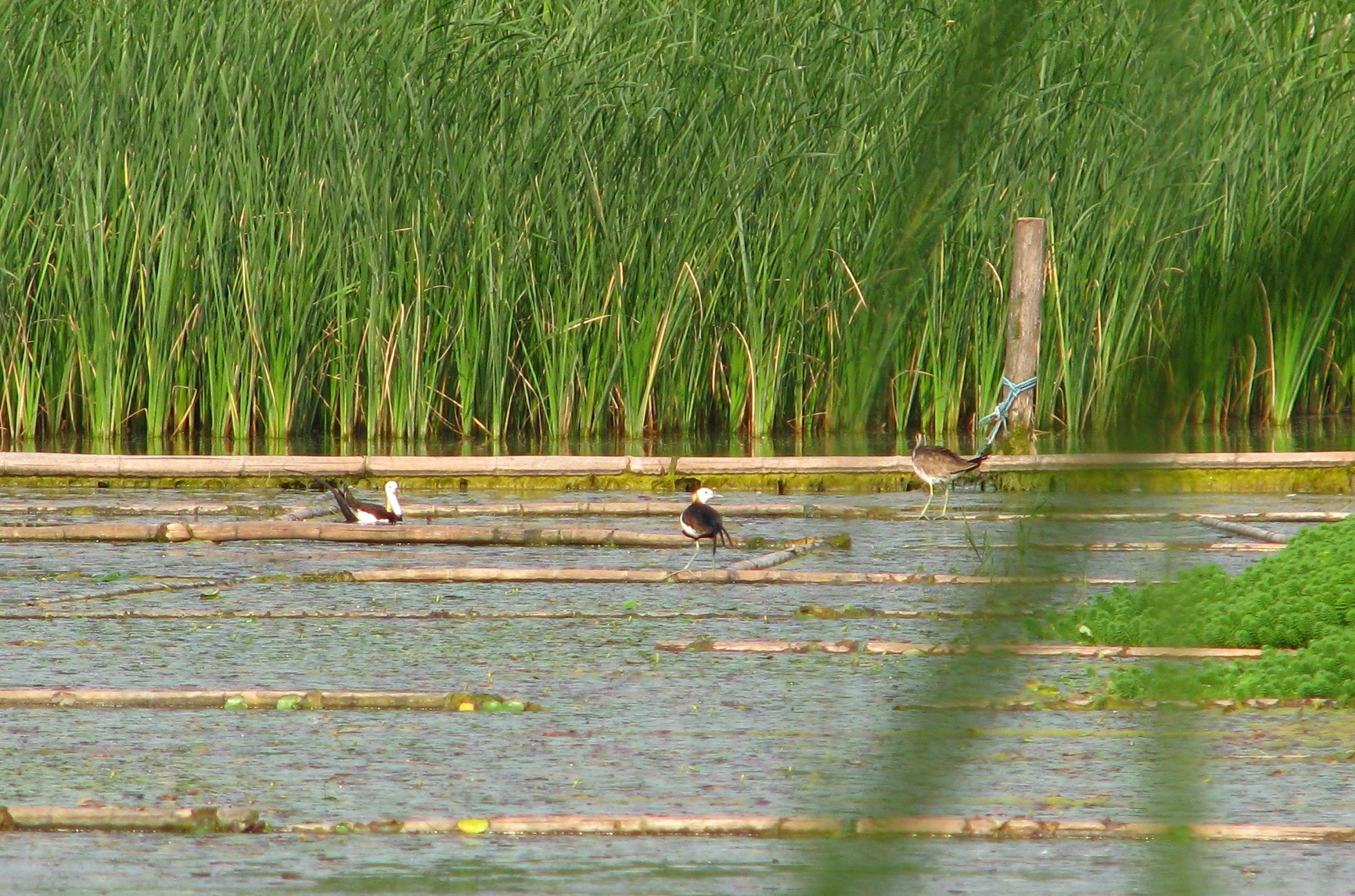
Foraging involves walking on floating vegetation or swimming to pick insects, molluscs, and other invertebrates from vegetation and water surfaces. The species is polyandrous, with females maintaining harems of multiple males. A single female may lay up to ten clutches in a season, each cared for by a different male. Courtship involves female flight displays and calling. Nests are built on floating vegetation as platforms of leaves and stalks. Clutches consist of four dark-olive-brown eggs with glossy black markings. Males perform broken-wing displays to distract predators and may move eggs to safety when disturbed. Chicks are nidifugous and freeze when threatened. The typical call is a mewing 'me-onp' or nasal 'teeun,' with distinct male and female calls during breeding season. Young produce a low cheep. Flocks of 50 to 100 birds gather on larger water bodies.
Conservation
The population in Taiwan is considered endangered, reflecting localized conservation concerns. While no specific IUCN assessment is provided in available sources, the species faces habitat degradation threats across its range through wetland drainage, pollution, and invasive species pressures. Conservation of freshwater ecosystems with intact floating vegetation communities is essential for maintaining healthy populations. Protected area management that preserves wetland complexes supports this species throughout its range.
Culture
In Sri Lanka, this bird is commonly found in lily ponds and is locally known as the 'cat teal' or 'juana' in Sinhalese, referring to its mewing call. In Cachar district of Assam, the local name 'rani didao gophita' translates to 'little white water princess,' reflecting cultural appreciation for this elegant wetland bird. The species features in local folklore and traditional knowledge systems across its range, valued both for its distinctive appearance and vocalizations in village wetlands and traditional water bodies.
Source: Wikipedia · CC BY-SA 3.0
Taxonomy
- Order
- Charadriiformes
- Family
- Jacanidae
- Genus
- Hydrophasianus
- eBird Code
- phtjac1
Distribution
breeds northern Pakistan eastward in sub-Himalayan region to southeastern China and Taiwan, and southward to southern India, Sri Lanka, southeastern Asia, and Philippines; winters sparsely southward to Malayan Peninsula, Sumatra, Java, and Bali
Data Sources
Species description from Wikipedia, licensed under CC BY-SA 3.0.
Bird images and sounds sourced from GBIF, contributed by citizen scientists worldwide under Creative Commons licenses.
Taxonomy data from AviList 2025.