Passeriformes / Cettiidae / Horornis
Japanese Bush Warbler
Horornis diphone · 短翅树莺
Introduction
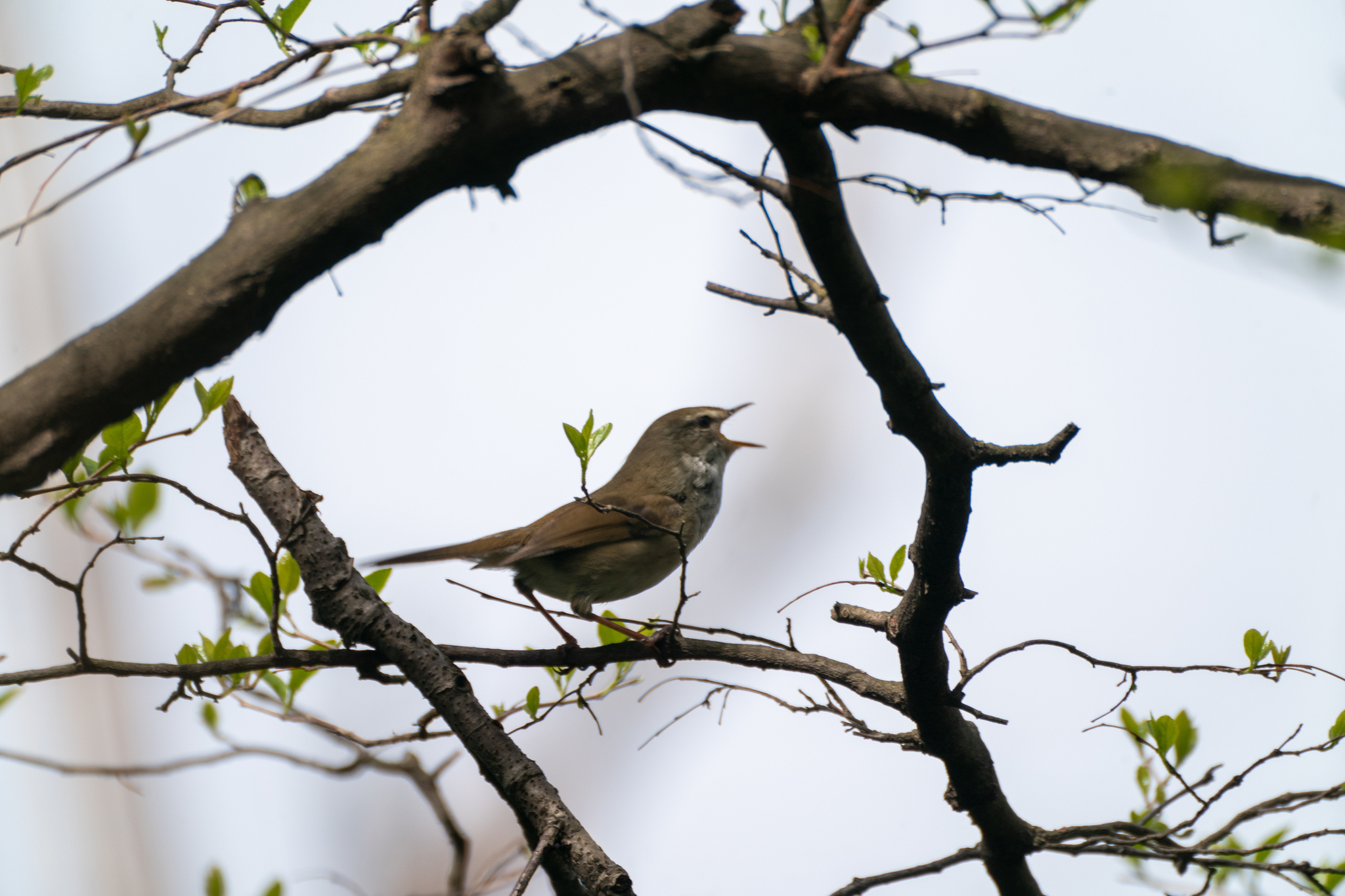
Asian passerine bird more often heard than seen. Distinctive breeding song is audible throughout much of Japan from the start of spring.
Description
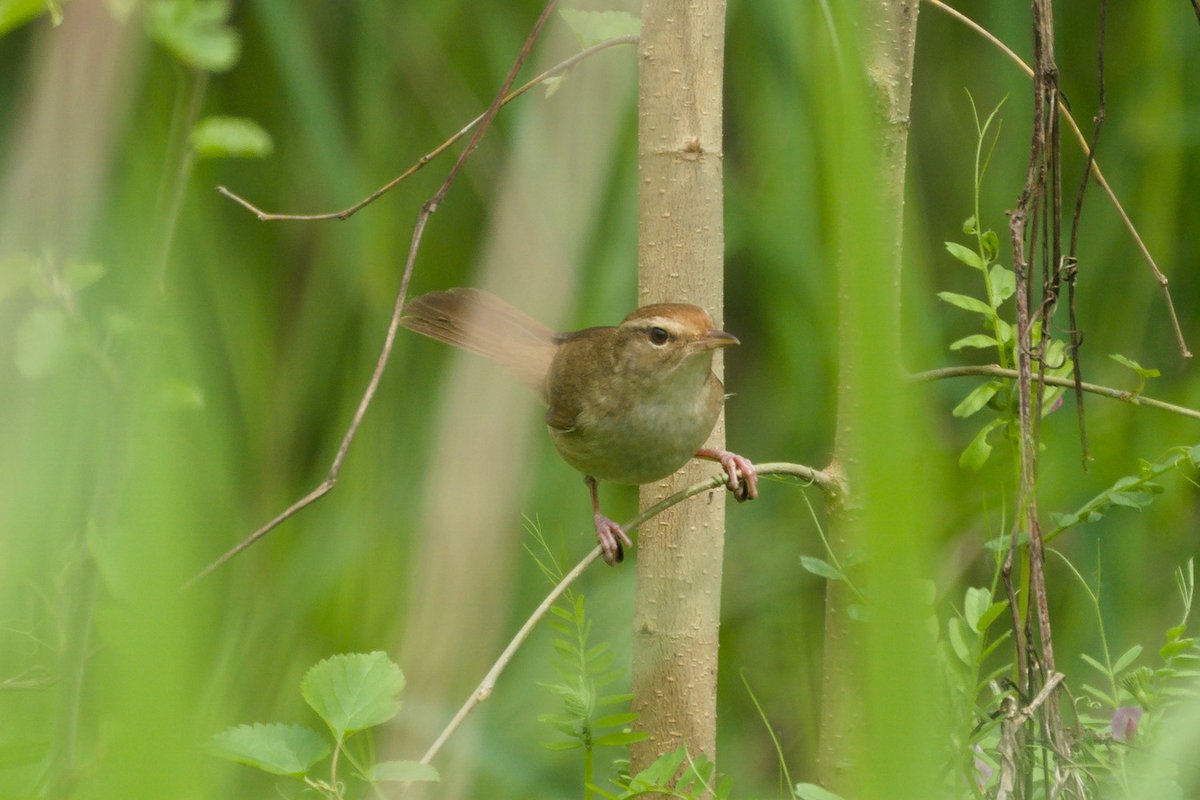
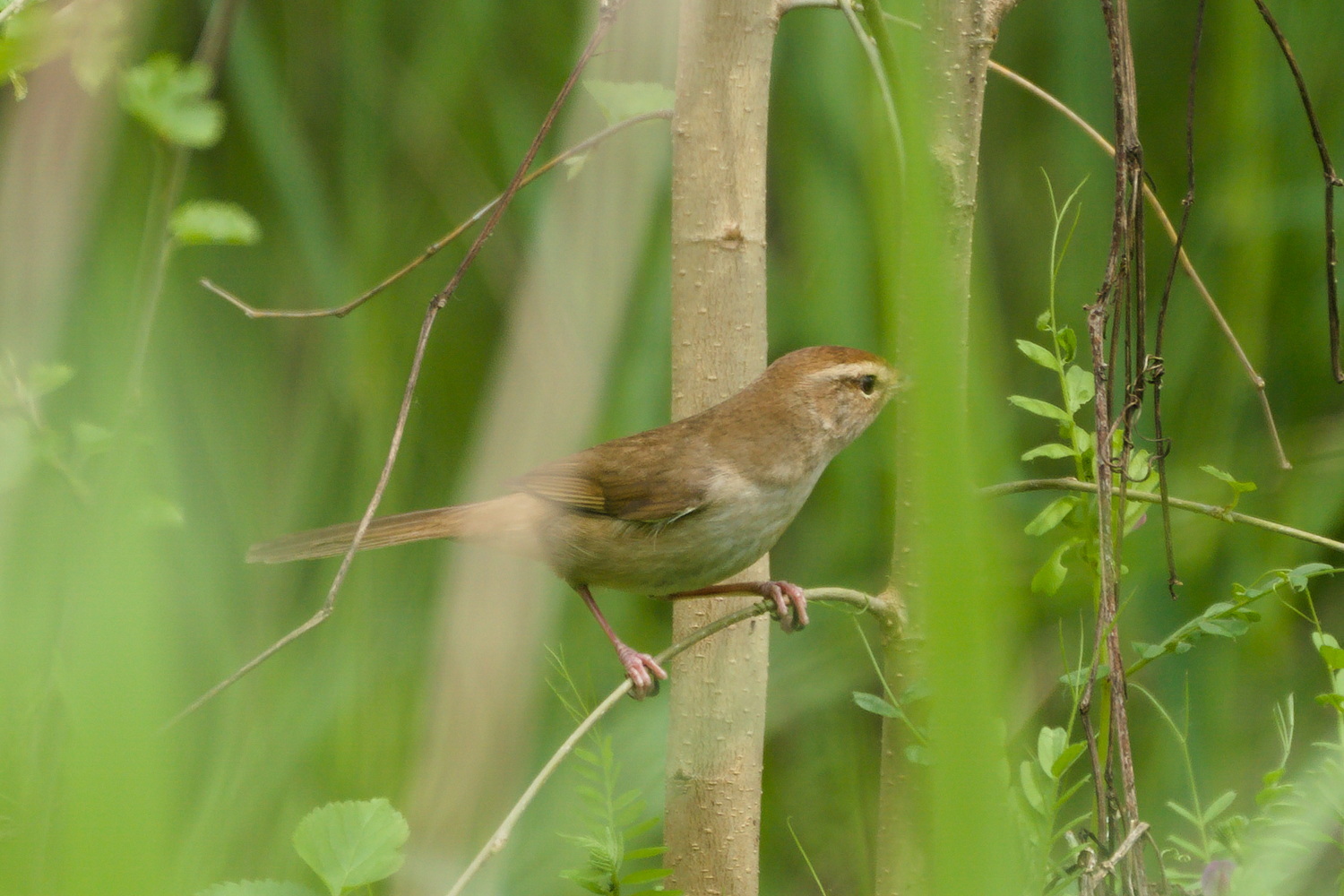
Olive brown above and tending toward dusky colors below. Has pale eyebrows and a beak that curves up. Typically 15.5 centimetres (6.1 in) in length.
Distribution & Habitat
Common year-round resident throughout Japan (except Hokkaidō) and the northern Philippines. In summer, found in Hokkaidō, Manchuria, Korea, and central China. In winter, found in southern China and Taiwan. Introduced to Oahu between 1929 and 1941 and has since spread throughout the main Hawaiian Islands. In summer, ranges from low hills to high mountains, preferring bamboo thickets and black pine trees. In winter, seeks cover at lower elevations.
Behavior & Ecology
Young birds do not initially perform the distinctive song skillfully but gradually learn by imitating others. The propensity to sing has led to the species being kept as cage birds; cages were historically covered with wooden boxes allowing only subdued light to encourage singing.
Culture
Known in Japanese as uguisu. Viewed by Japanese as a herald of springtime along with the barn swallow. Favorite motif of Japanese poetry, featured in Man'yōshū and Kokin Wakashū. In haiku and renga, it is a kigo signifying early spring, associated with ume blossom and appearing on hanafuda playing cards. A popular sweet named Uguisu-boru resembles ume flower buds. In haiku, the bird with its distinctive song is known as sasako, and the song as sasanaki. The English name Japanese Nightingale is no longer commonly used. Female announcers at Japanese baseball games or retail advertisers are called uguisu-jō due to their warbling voices. Uguisubari, or nightingale floors, have squeaking floorboards resembling the bird's low chirping, designed to warn of intruders; examples exist at Eikan-dō temple, Nijō Castle, and Chion-in temple. Droppings contain an enzyme used as a skin whitening agent, to remove fine wrinkles, and to remove stains from kimono; sometimes sold as uguisu powder.
Source: Wikipedia · CC BY-SA 3.0
Taxonomy
- Order
- Passeriformes
- Family
- Cettiidae
- Genus
- Horornis
Vocalizations
Subspecies (4)
-
Horornis diphone cantans
breeds main Japanese islands (Hokkaido south) and associated smaller islands southward to the northern Ryukyu Islands (Tanegashima, Yakushima, and Amami Ōshima, southern Japan) and northern Izu Islands (south to Aogashima), and in southern South Korea (including Jeju Island); northern populations migratory; introduced Hawaiian Islands
Data Sources
Species description from Wikipedia, licensed under CC BY-SA 3.0.
Bird images and sounds sourced from GBIF, contributed by citizen scientists worldwide under Creative Commons licenses.
Taxonomy data from AviList 2025.