
Passeriformes / Hirundinidae / Hirundo
Barn Swallow
Hirundo rustica · 家燕
Introduction
This passerine bird is the most widespread swallow species globally, occurring on all continents with vagrants reported in Antarctica. It inhabits open country with low vegetation, such as pasture and farmland, and closely associates with humans by nesting in man-made structures. Distinctive traits include a deeply forked tail and aerial insectivory. The species is evaluated as Least Concern by the IUCN, with an estimated global population of 190 million individuals.
Description
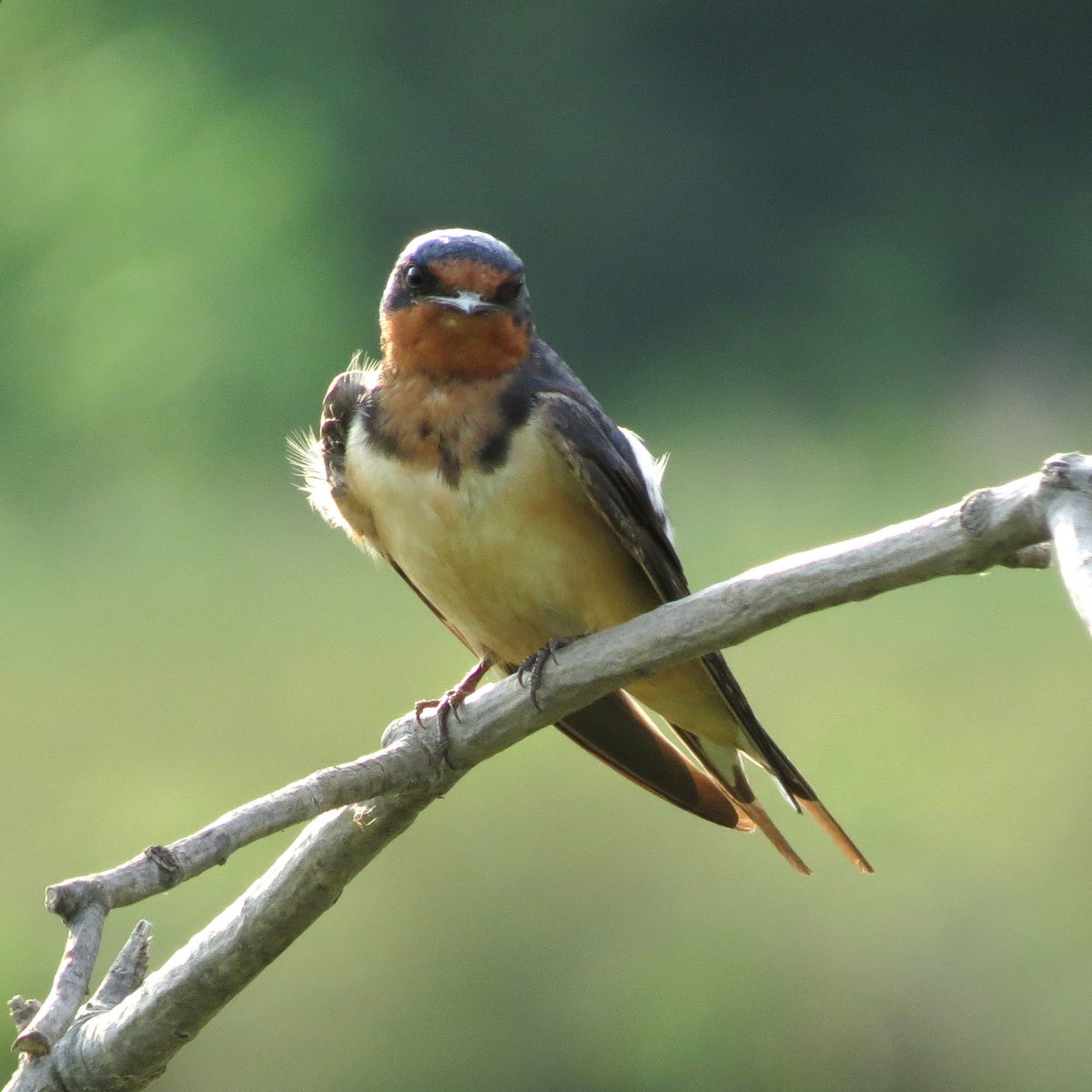
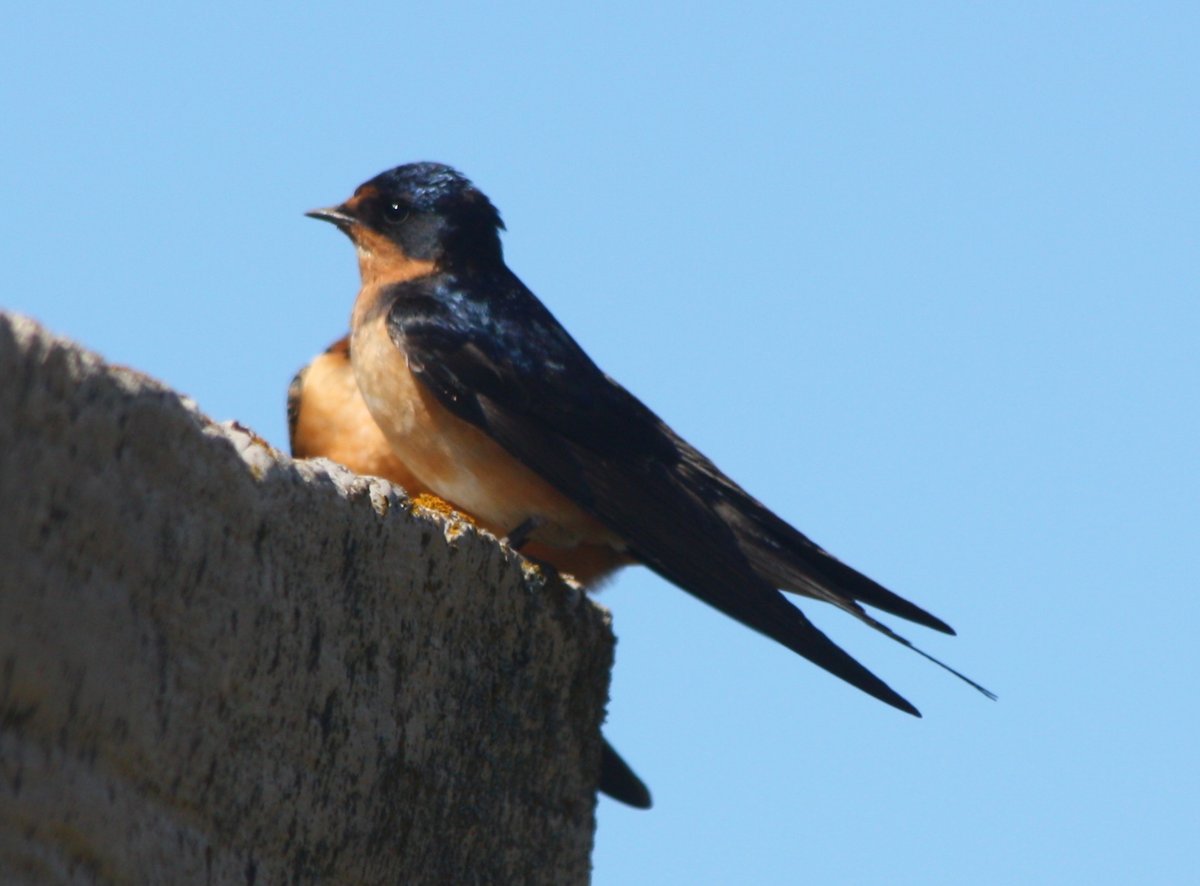
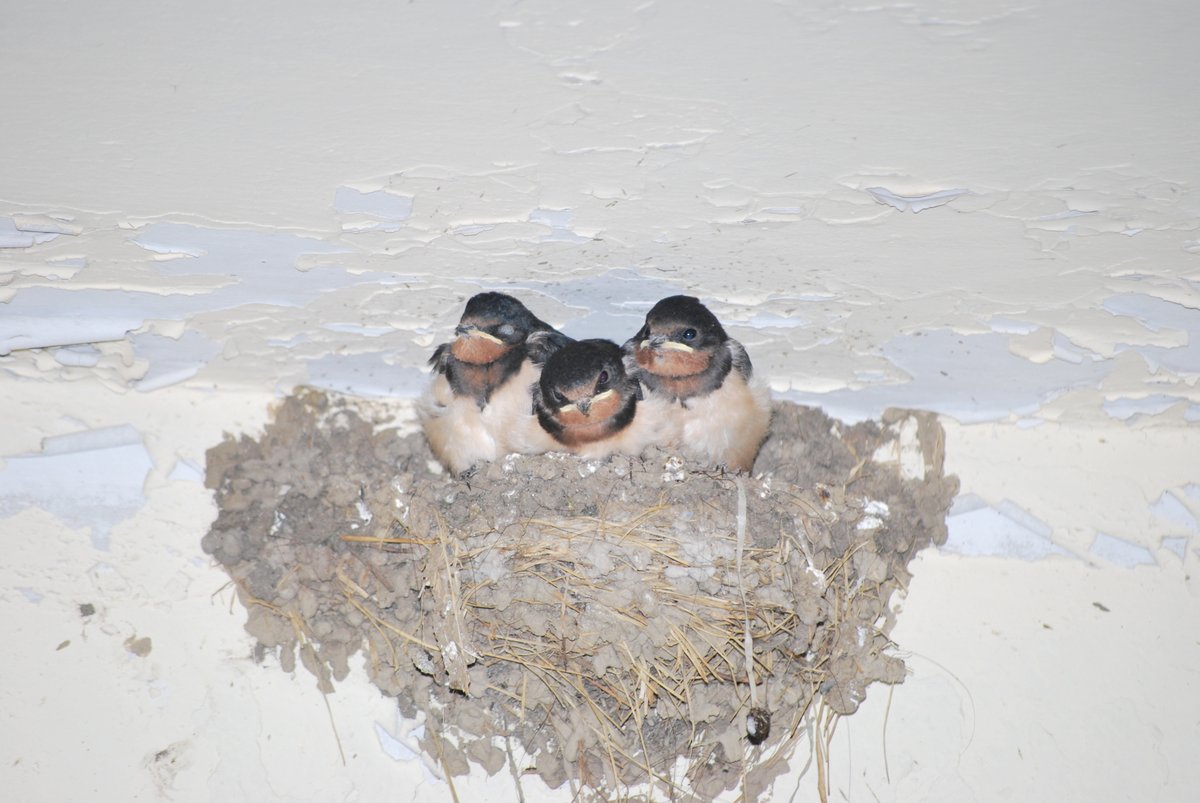
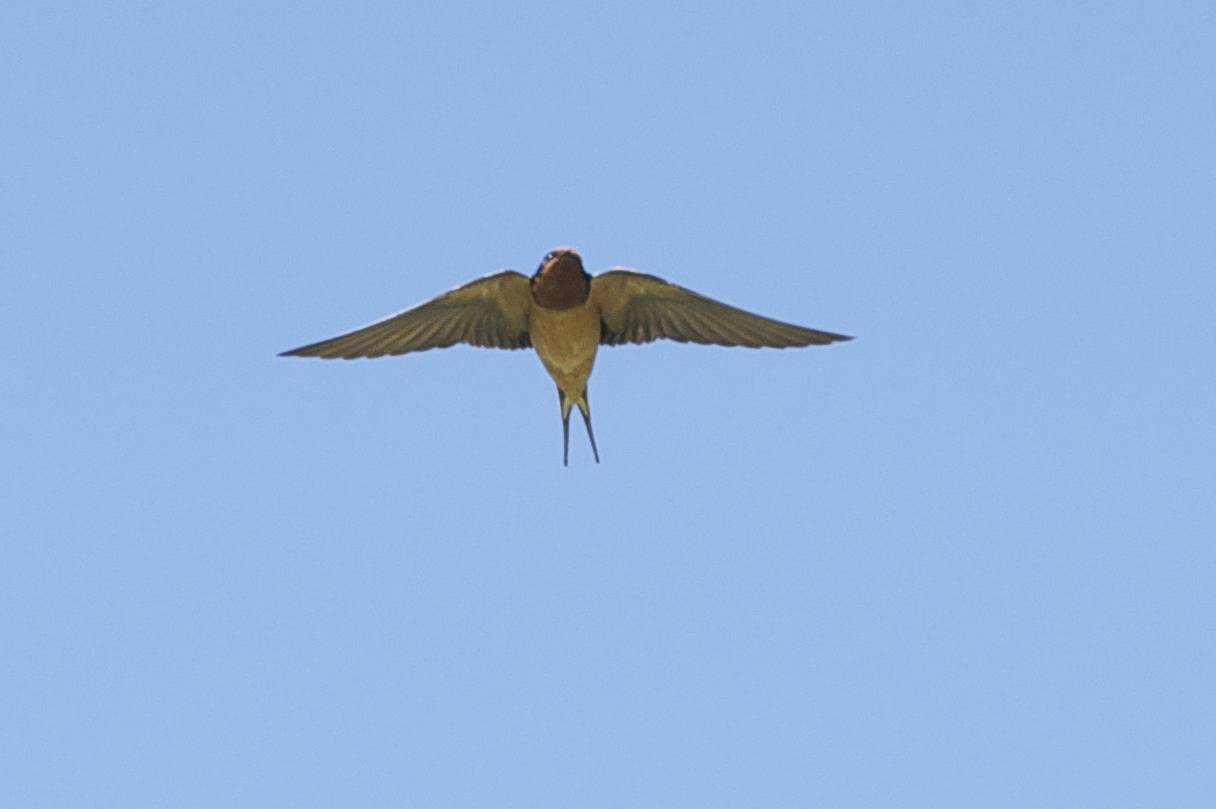
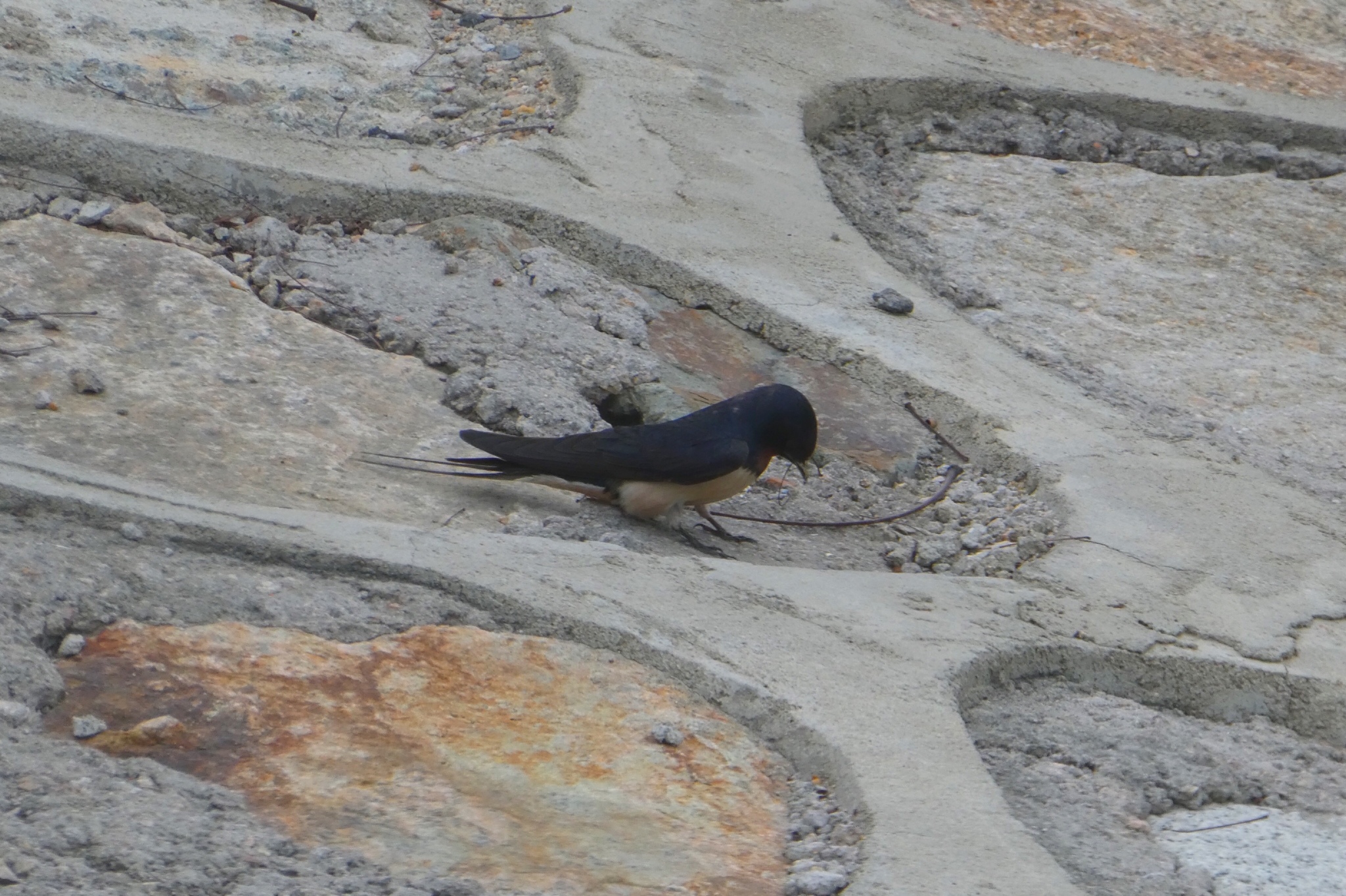
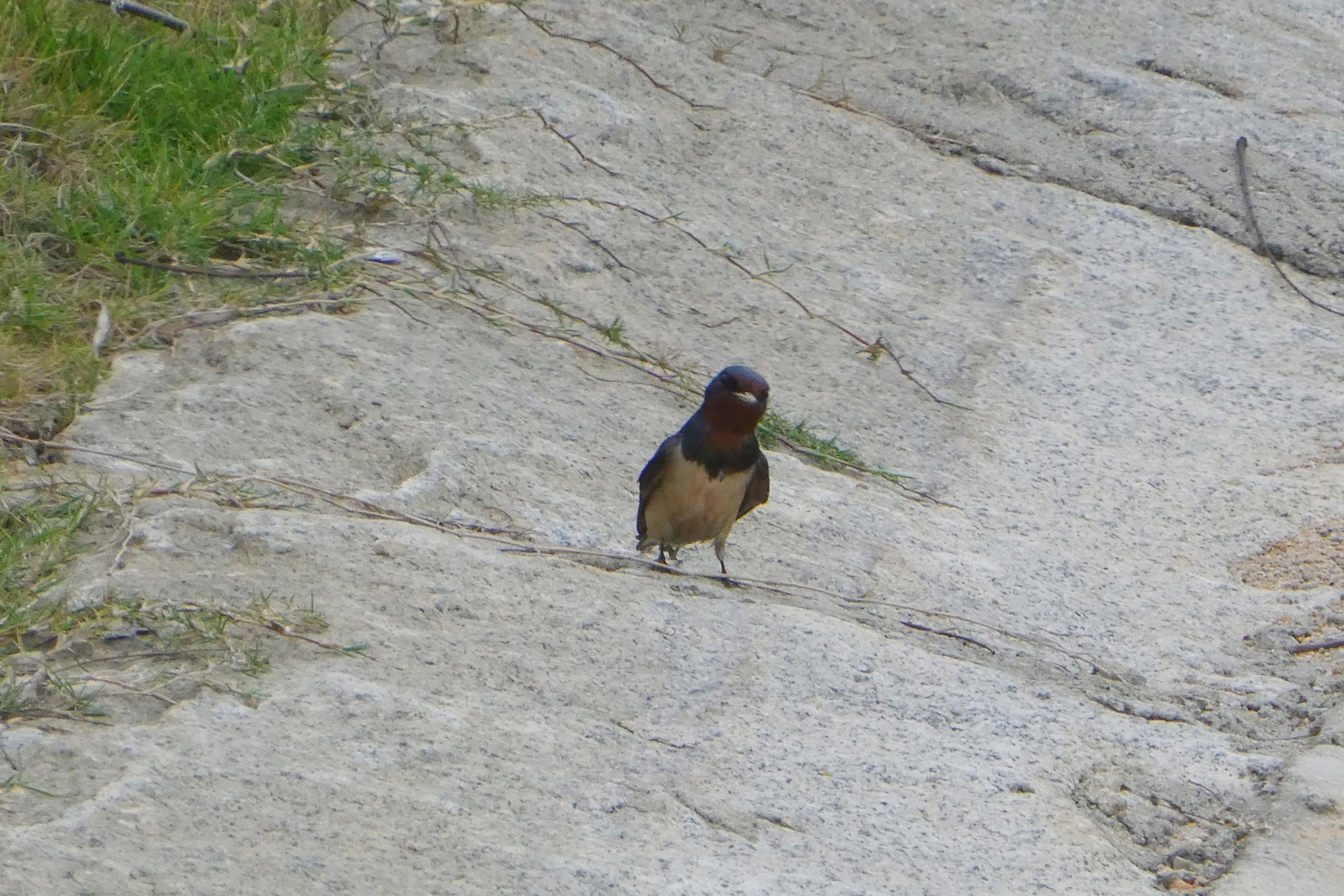
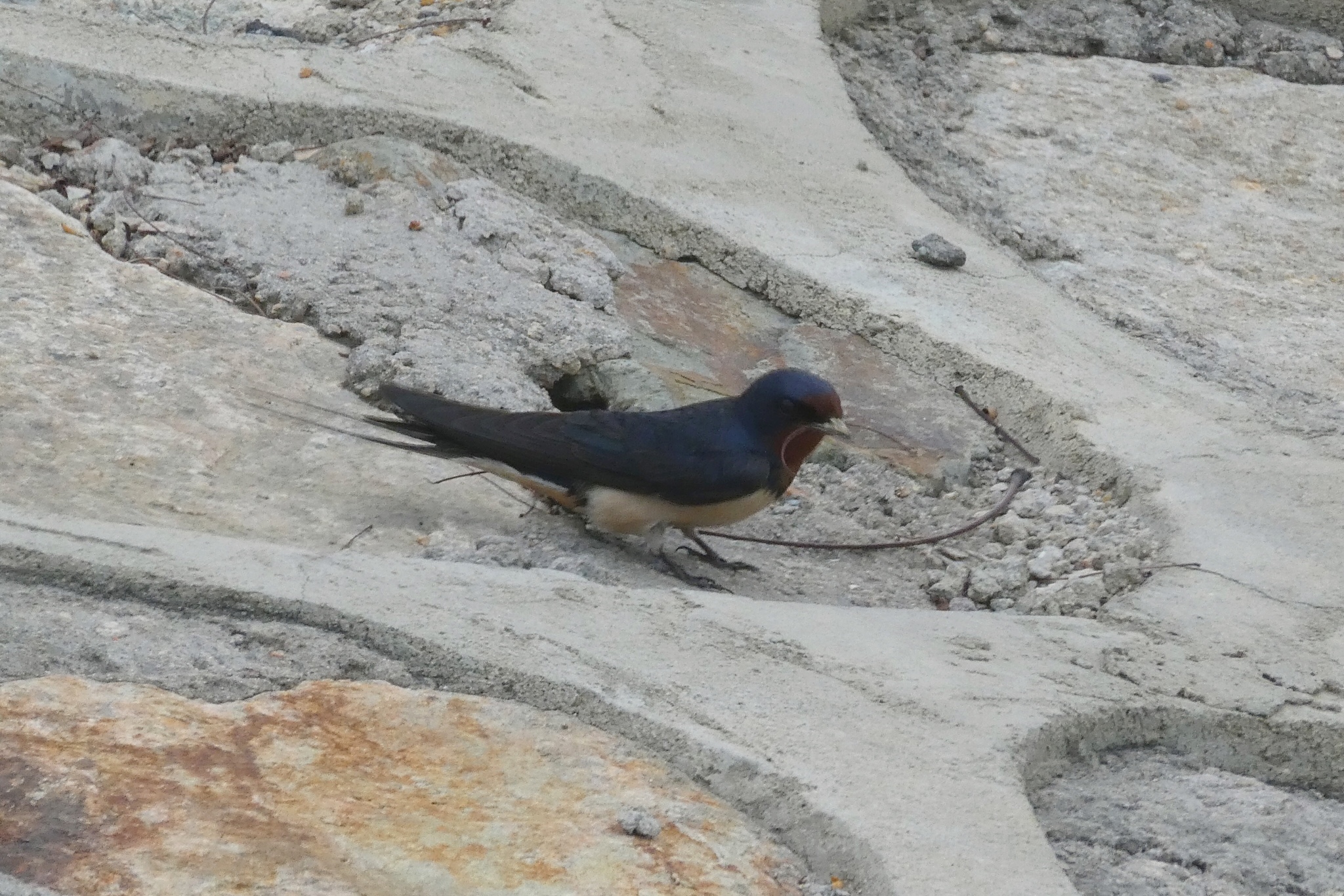
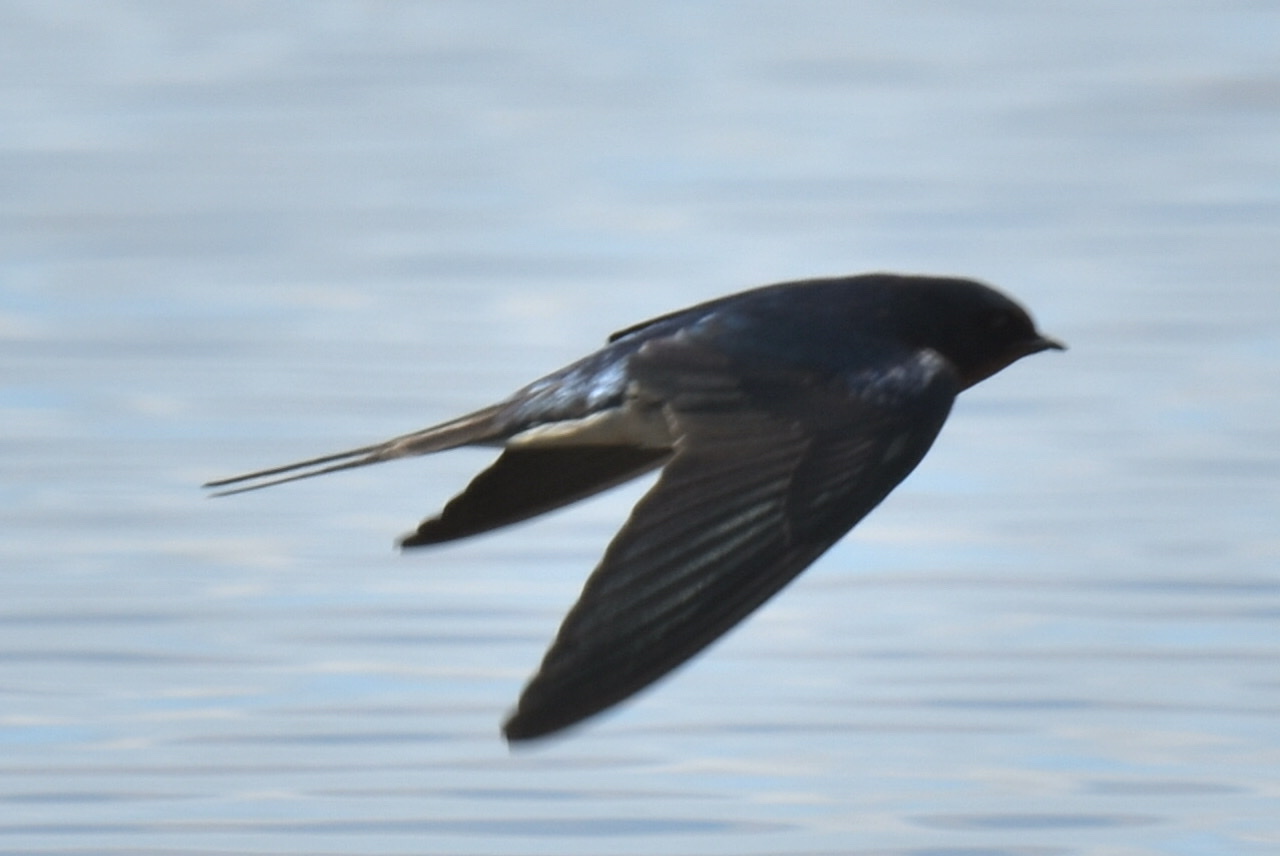
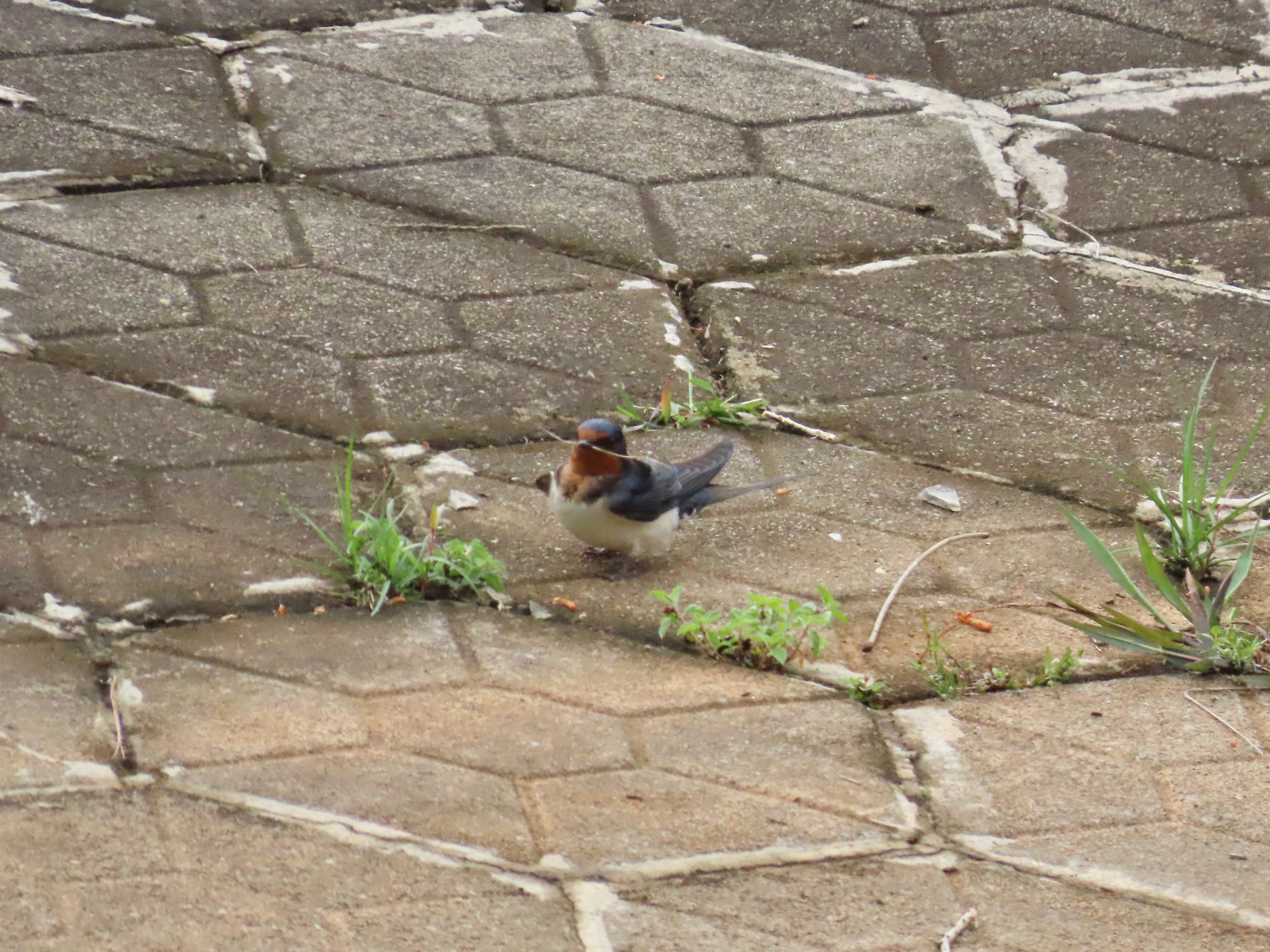
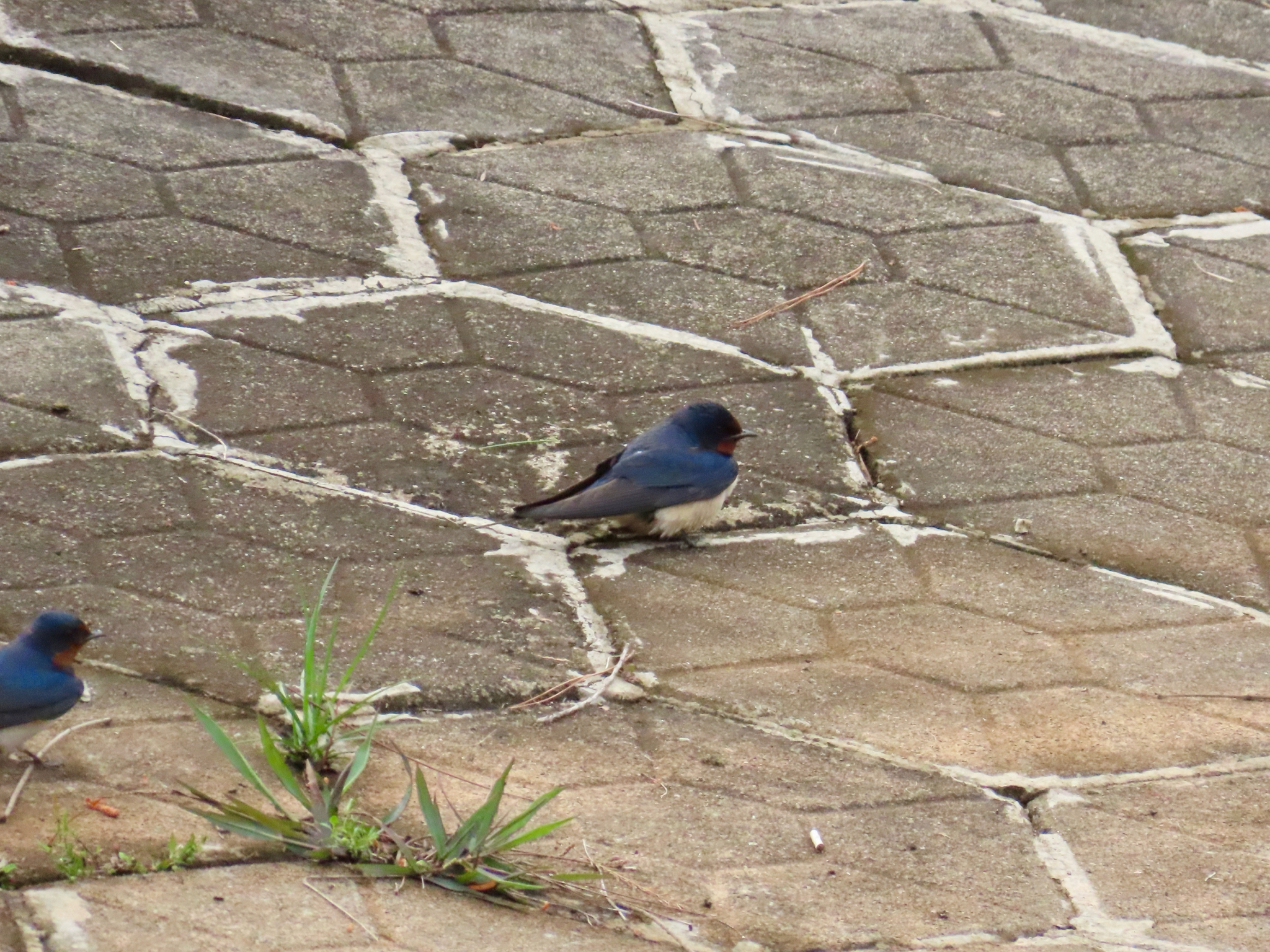
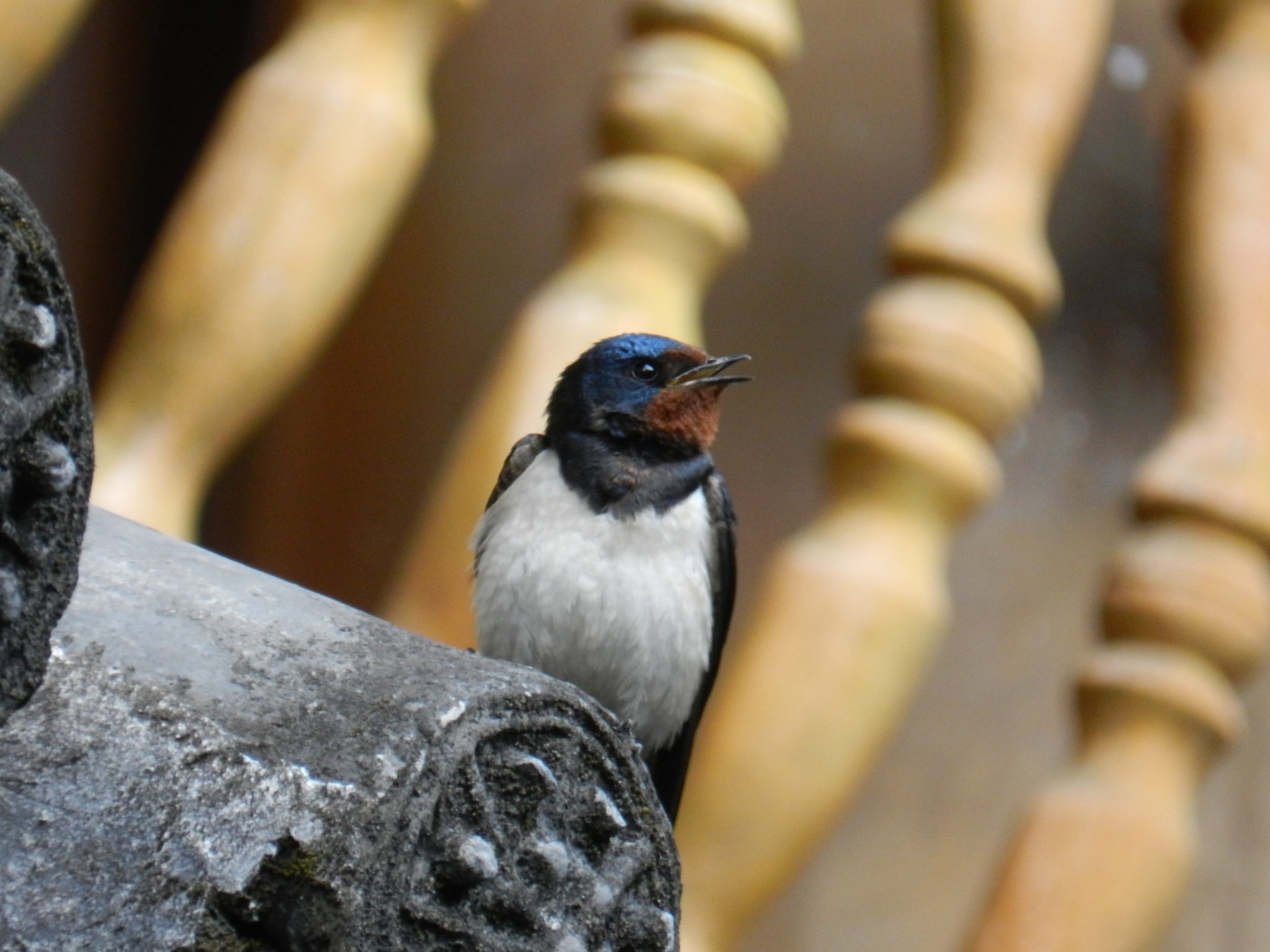
The adult male of the nominate subspecies measures 17–19 cm in length, including 2–7 cm of elongated outer tail feathers, with a wingspan of 32–34.5 cm and weight of 16–22 g. It features steel blue upperparts, a rufous forehead, chin, and throat, separated from off-white underparts by a broad dark blue breast band. A line of white spots marks the outer end of the upper tail. Females resemble males but have shorter tail streamers, less glossy blue plumage, and paler underparts. Juveniles are browner with a paler rufous face, whiter underparts, and lack the long tail streamers of adults.
Identification
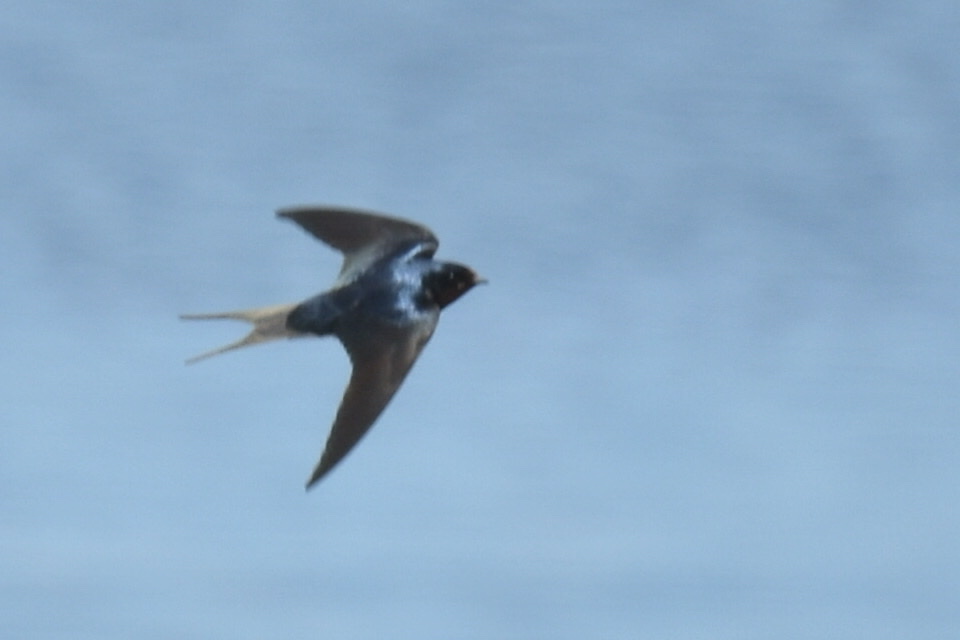
The combination of a red face and blue breast band distinguishes adults from African Hirundo species and the welcome swallow. In flight, the deeply forked tail is distinctive. Juveniles may be confused with the juvenile red-chested swallow in Africa; however, the latter has a narrower breast band and more white in the tail. The North American subspecies differs from the Asian H. r. gutturalis by having redder underparts. In Europe, it is replaced in urban areas by the house martin, which lacks the red throat and long tail streamers.
Distribution & Habitat
Eight subspecies breed across the Northern Hemisphere, from sea level to 3,000 m, absent only from deserts and extreme northern latitudes. The nominate subspecies breeds in Europe and Asia, migrating to Africa, Arabia, and the Indian subcontinent. The North American subspecies breeds from Alaska to southern Mexico, wintering in South America. Two subspecies have restricted ranges in the Nile valley and eastern Mediterranean. Wintering habitats include open savanna and ranch land, avoiding dense forests and deserts. Migration distances can reach up to 11,660 km.
Behavior & Ecology
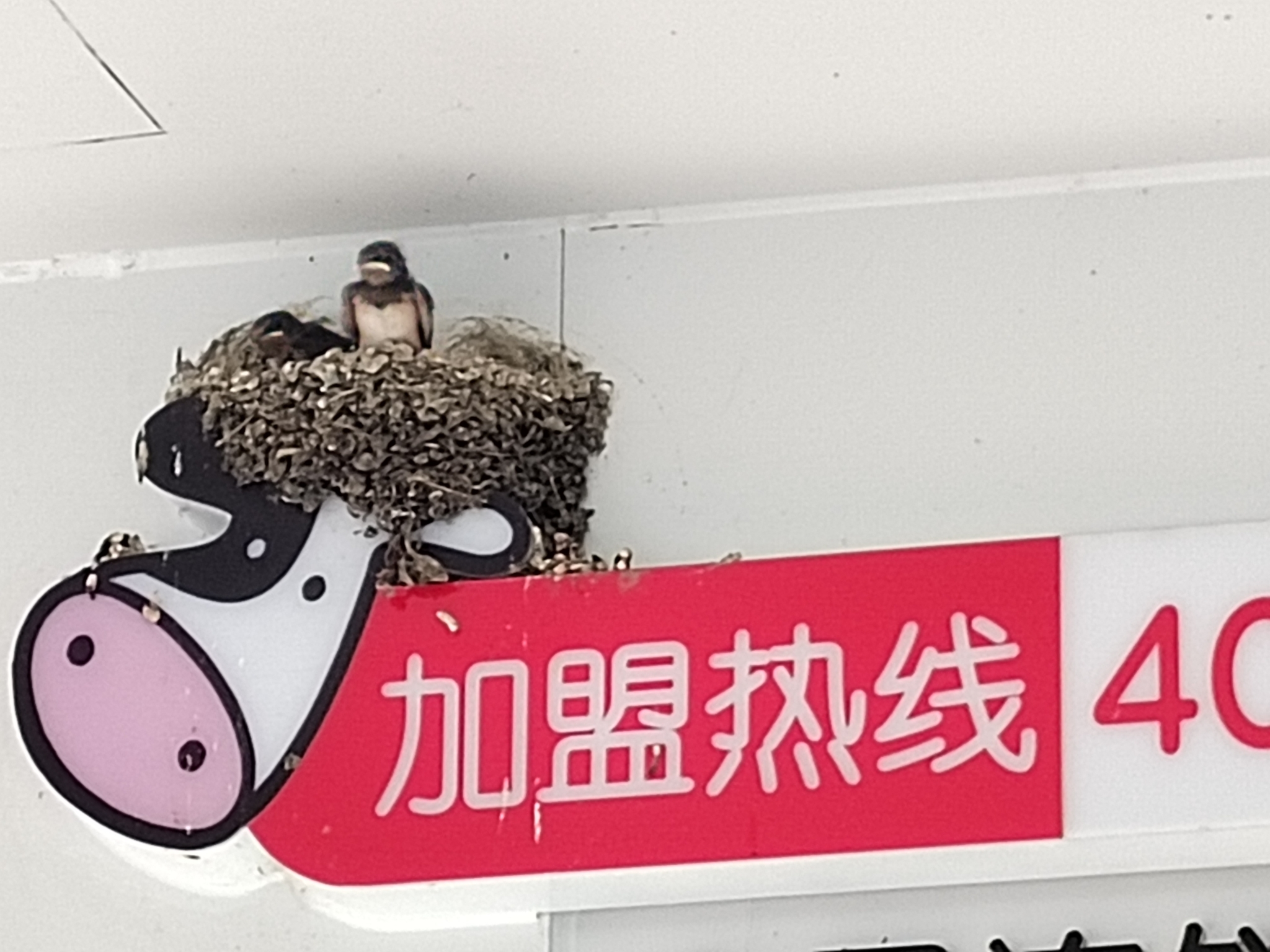
This aerial insectivore feeds on flies, aphids, and flying ants, typically 7–8 m above ground or water, often following farm machinery. It builds a cup nest from mud pellets, grass, and feathers in barns or under bridges. Clutch size is typically four or five reddish-spotted white eggs. Incubation lasts 14–19 days, with fledging occurring after 18–23 days. Males sing to defend territories and attract mates, producing a twitter warble followed by a rattle. The species is socially monogamous but genetically polygamous, often raising two broods per season.
Conservation
Evaluated as Least Concern on the IUCN Red List with a stable global population of approximately 190 million. Historical benefits from forest clearance and human habitation have supported range expansion. However, local declines occur in parts of Europe and Asia due to agricultural intensification reducing insect availability. Specific threats include habitat loss at wintering roosts, such as reed beds in South Africa, though mitigation measures like radar technology are being implemented. Climate change poses risks through drought and reduced food availability during hot summers.
Culture
The species is the national bird of Austria and Estonia. In literature, it symbolizes spring and love, referenced in works by Virgil and T.S. Eliot. Among sailors, a swallow tattoo traditionally signifies a safe return after sailing 5,000 nautical miles. Folklore suggests that damaging a nest brings bad luck, such as cows giving bloody milk, which historically protected the birds. In heraldry, it is depicted as a martlet, representing younger sons without lands, often shown without feet due to the historical belief that they never landed.
Source: Wikipedia · CC BY-SA 3.0
Taxonomy
- Order
- Passeriformes
- Family
- Hirundinidae
- Genus
- Hirundo
Subspecies (8)
-
Hirundo rustica erythrogaster
breeds from southeastern Alaska and Canada southward to southern Mexico; winters from Mexico southward to southern South America (Tierra del Fuego); recently (ca. 1980) also colonized northeastern Argentina, where breeding range continues to expand
Data Sources
Species description from Wikipedia, licensed under CC BY-SA 3.0.
Bird images and sounds sourced from GBIF, contributed by citizen scientists worldwide under Creative Commons licenses.
Taxonomy data from AviList 2025.