White-throated Needletail
Hirundapus caudacutus
白喉针尾雨燕
Introduction
This swift species is among the largest found in the Old World. It spends nearly its entire life in flight, landing only to nest. Unverified claims suggest horizontal flight speeds up to 170 km/h, though more conservative estimates put it at around 75 km/h. Its plumage is dark with a white throat patch. The species breeds in Central Asia and migrates to Australia for the winter. It occasionally appears as a vagrant in Western Europe.
Description
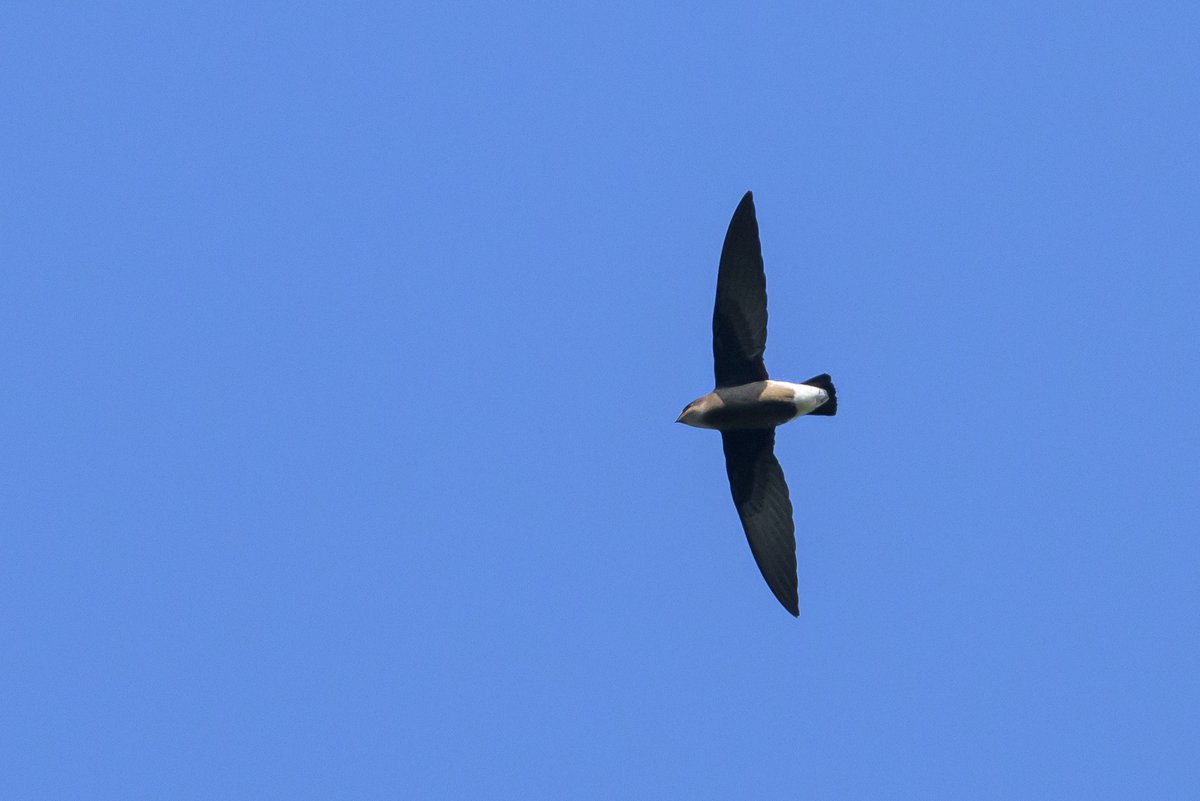
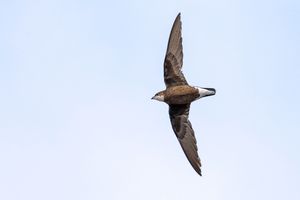
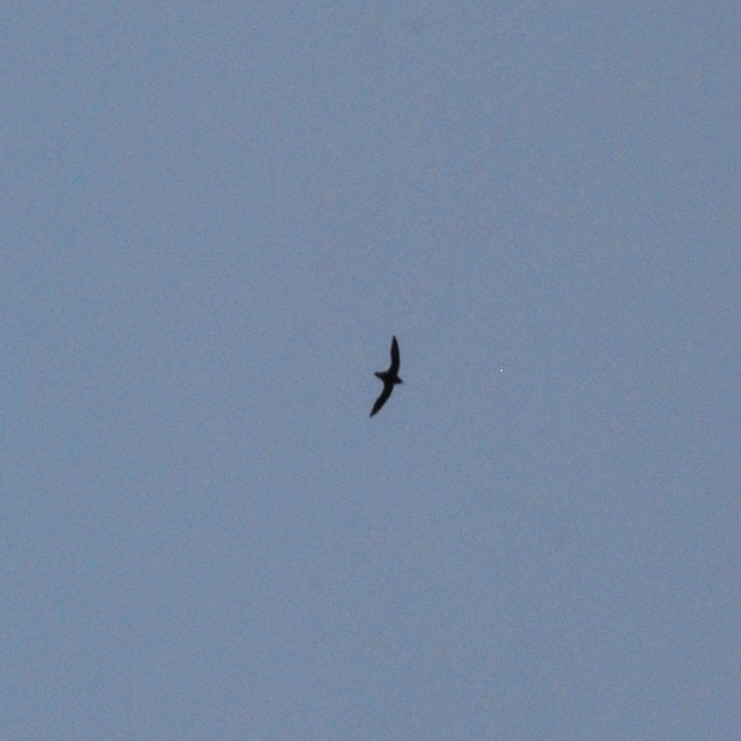
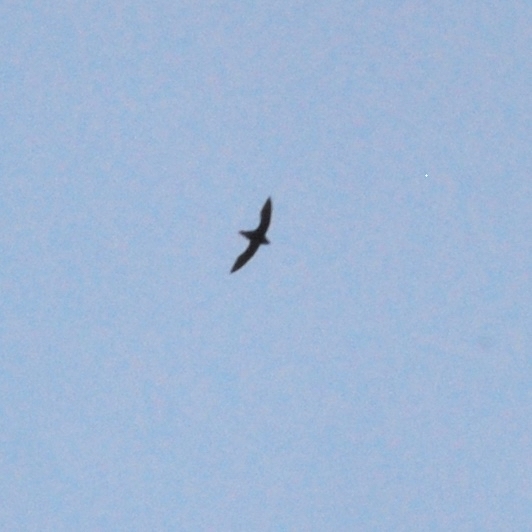
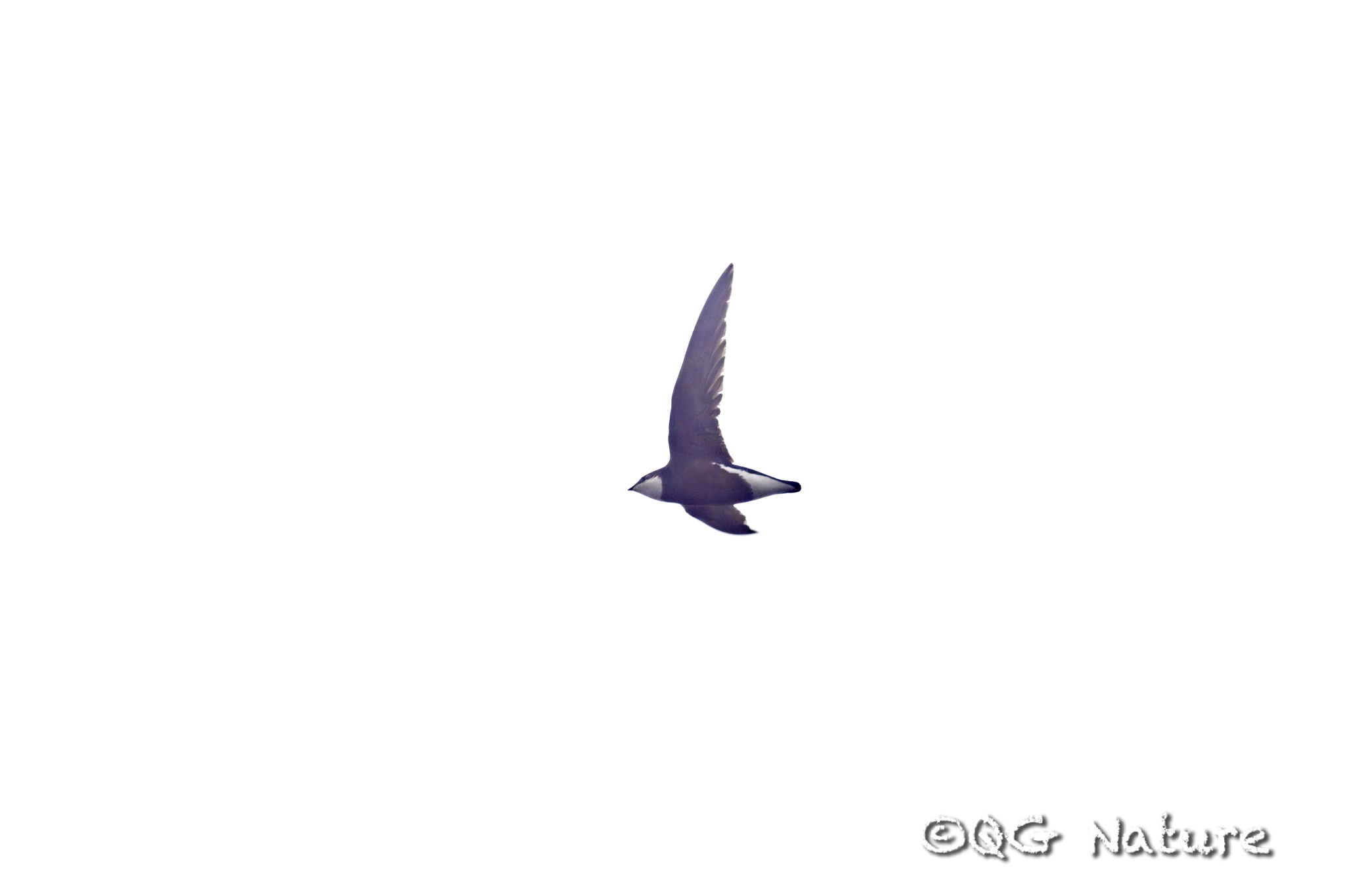
This is a large, robust swift with a distinctive barrel-shaped body and powerful wings. Adults measure approximately 20 centimeters in length and weigh between 110 and 120 grams. The plumage is predominantly greyish-brown, creating a dark silhouette in flight. The most striking features are the white throat and a conspicuous white patch that extends from the base of the tail along the flanks. Unlike many swifts that possess deeply forked tails, this species has a uniquely spined tail tip, which gives rise to its alternative name and serves as a key identification feature. The wings are long and curved, adapted for rapid, sustained flight.
Identification
The combination of large size, robust body shape, and distinctive tail structure distinguishes this species from other swifts. The spined, unforked tail is the most reliable field mark, as most swift species in the genus Apus have deeply forked tails. The prominent white throat and flank patch are visible at close range and help separate it from similarly sized but duller swift species. In flight, its heavy, barrel-like silhouette appears more substantial than the sleeker, more streamlined typical swifts. The white rump patch can be conspicuous when the bird banks or turns.
Distribution & Habitat
This species breeds across Central Asia and southern Siberia, favoring mountainous regions with suitable cliff crevices and forested areas containing hollow trees for nesting. During the non-breeding season, it migrates south to the Indian subcontinent, Southeast Asia, and Australia. While resident across much of its Asian range, it is an extremely rare vagrant to Western Europe, with only occasional records from Norway, Sweden, and Great Britain. Notable British occurrences include one in June 2013—the first in 22 years—and another in June 2022 near Fair Isle, Scotland.
Behavior & Ecology
Nesting occurs in rock crevices within cliff faces or in hollow trees, where the birds construct simple cup-shaped nests. This species is highly aerial and extremely reluctant to land, spending virtually all its time in flight except when incubating eggs or brooding young. It is a colonial nester, gathering in small groups at breeding sites. The diet consists entirely of small flying insects, including beetles, flies, bees, and moths, which are caught on the wing using its wide gape. Courtship displays involve elaborate aerial maneuvers.
Conservation
The species faces various threats during its extensive migration route, including habitat loss at breeding and wintering sites, pesticide use reducing insect prey availability, and collisions with human structures. A documented fatality occurred in Britain in 2013 when an individual flew into a wind turbine. While population trends are not fully quantified, the species' specialized habitat requirements and extensive range make it vulnerable to environmental changes.
Culture
The species has gained attention among British birdwatchers as a highly sought-after rarity, with each appearance generating significant interest and documentation within the birding community.
Source: Wikipedia · CC BY-SA 3.0
Taxonomy
- Order
- Apodiformes
- Family
- Apodidae
- Genus
- Hirundapus
- eBird Code
- whtnee
Vocalizations
Subspecies (2)
-
Hirundapus caudacutus caudacutus
breeds south-central eastward to northeastern Russia, Kuril Islands, and Japan, and southward in northern Mongolia, northeastern China, and the Korean Peninsula; winters to New Guinea and eastern Australia (including Tasmania)
-
Hirundapus caudacutus nudipes
Himalayas to southwestern China
Data Sources
Species description from Wikipedia, licensed under CC BY-SA 3.0.
Bird images and sounds sourced from GBIF, contributed by citizen scientists worldwide under Creative Commons licenses.
Taxonomy data from AviList 2025.