
Accipitriformes / Accipitridae / Hieraaetus
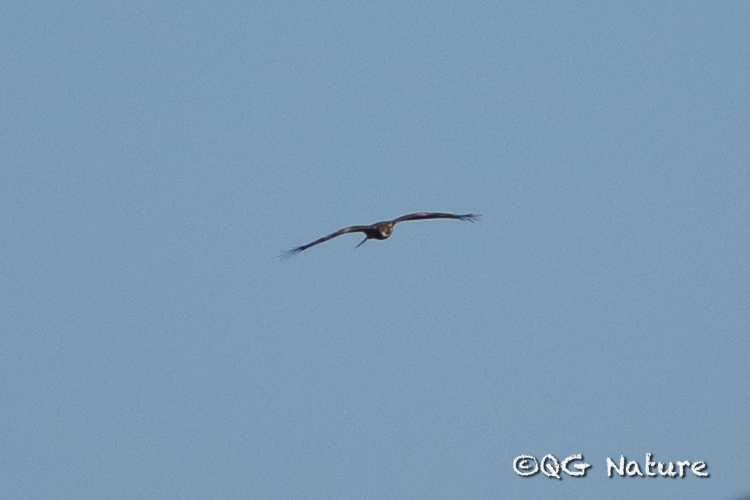
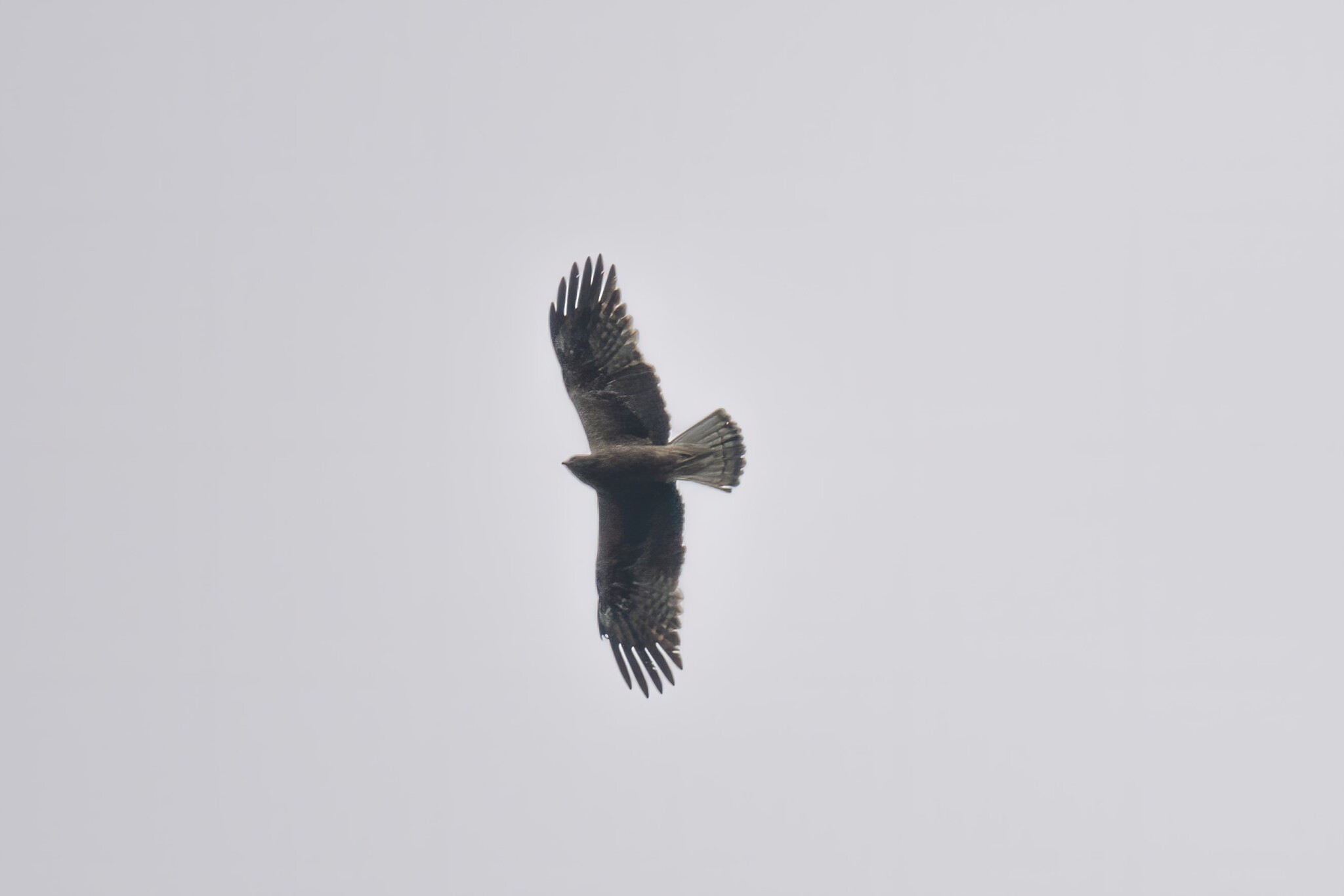
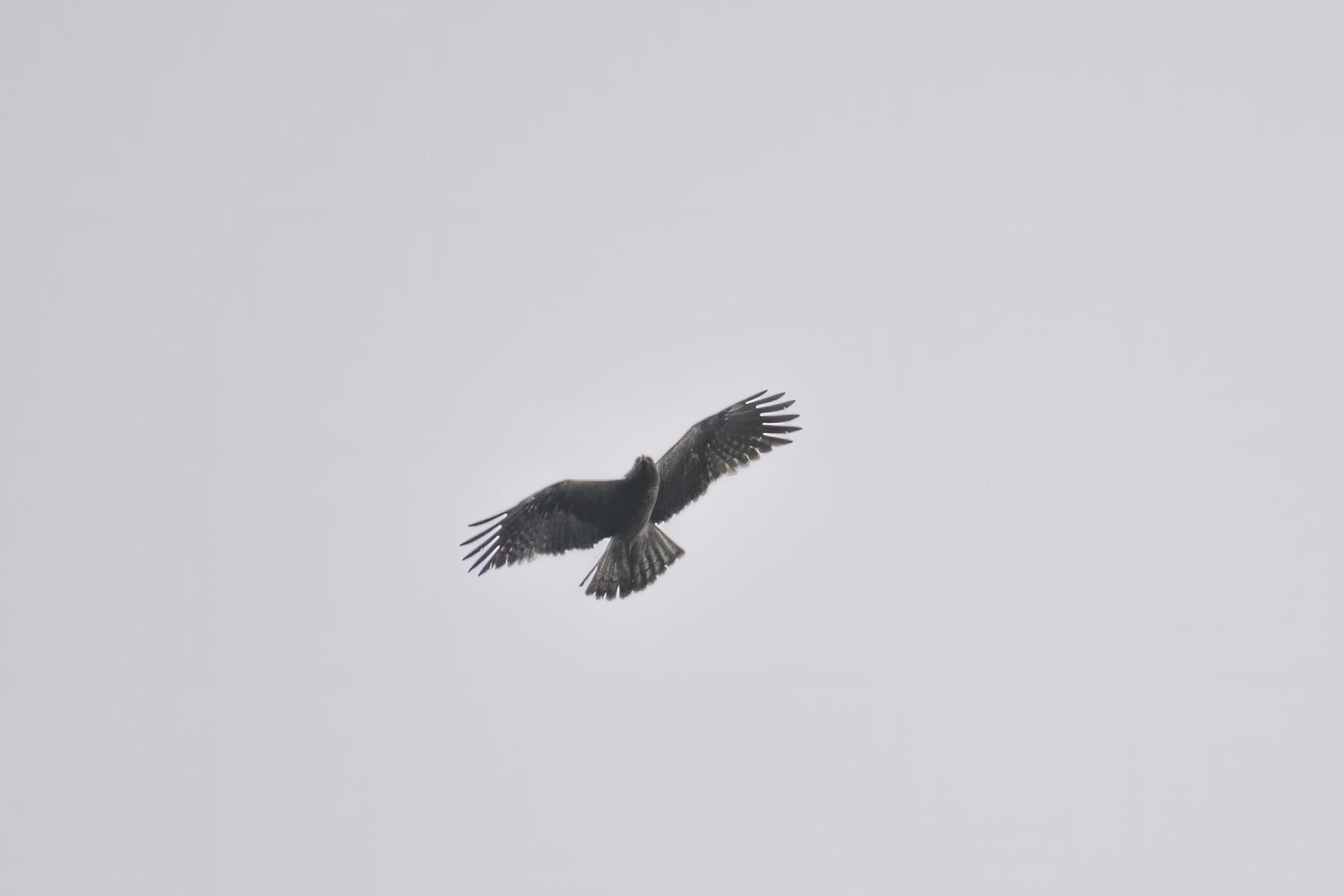
Booted Eagle
Hieraaetus pennatus · 靴隼雕
Introduction
A medium-sized, mostly migratory bird of prey in the family Accipitridae with a wide distribution across the Palearctic and southern Asia, wintering in the tropics of Africa and Asia. A small, disjunct breeding population exists in south-western Africa. It inhabits wooded, often hilly countryside with open areas, breeding in rocky terrain or woodlands.
Description
Small eagle comparable to the common buzzard in size but more eagle-like in shape. Length is 40 cm with a wingspan of 110–132 cm. Males weigh 510–770 g; females weigh 840–1,025 g. Two distinct plumage forms exist: pale birds are mainly light grey with a darker head and flight feathers, while the other form has mid-brown plumage with dark grey flight feathers. The paler allele is dominant in Mendelian inheritance patterns.
Identification
Typically flies at relatively low heights, making it conspicuous. The call is a shrill kli-kli-kli. Dark morphs can be confused with other local medium-sized birds of prey. In South Africa, 20% of the population is the dark colour morph, whereas darker morphs are more common in eastern populations such as Russia.
Distribution & Habitat
Breeding populations occur in southern Europe, North Africa, across Asia, and in western South Africa and Namibia. Northern populations are migratory, spending November to February in Sub-Saharan Africa and South Asia. Southern African populations are largely sedentary. Habitat includes wooded, hilly countryside with open areas; migrants use almost any habitat except dense forest. Palearctic birds nest in coniferous or deciduous woodlands, while Southern African birds breed on rocky cliffs in ravines and gorges, occasionally in trees.
Behavior & Ecology
Hunts on the wing, stooping quickly with wings folded and feet extended. Diet consists of small mammals, reptiles, and birds; in Southern Africa, birds are the most common prey, alongside lizards and rodents. Monogamous with sophisticated flight courtship rituals. Nests are built from sticks and lined with green leaves in trees or on crags, or disused nests of other large birds are occupied. The female incubates 1–2 white eggs (sometimes with red speckles) for 33–45 days while fed by the male. Chicks fledge after 70–75 days (or around two months in Southern Africa).
Conservation
There is a great lack of research about this migratory species. Southern African populations were discovered in the 1980s. Changes in human land use may have driven changes in migration patterns. The species is thought to be overlooked in Southern Africa due to the remote and discrete nature of nesting sites.
Source: Wikipedia · CC BY-SA 3.0
Taxonomy
- Order
- Accipitriformes
- Family
- Accipitridae
- Genus
- Hieraaetus
Distribution
breeds southern Palearctic and sub-Saharan Africa; winters to India and Sri Lanka, and southeastern Asia
Vocalizations
Data Sources
Species description from Wikipedia, licensed under CC BY-SA 3.0.
Bird images and sounds sourced from GBIF, contributed by citizen scientists worldwide under Creative Commons licenses.
Taxonomy data from AviList 2025.