Passeriformes / Vangidae / Hemipus
Bar-winged Flycatcher-shrike
Hemipus picatus · 褐背鹟鵙
Introduction
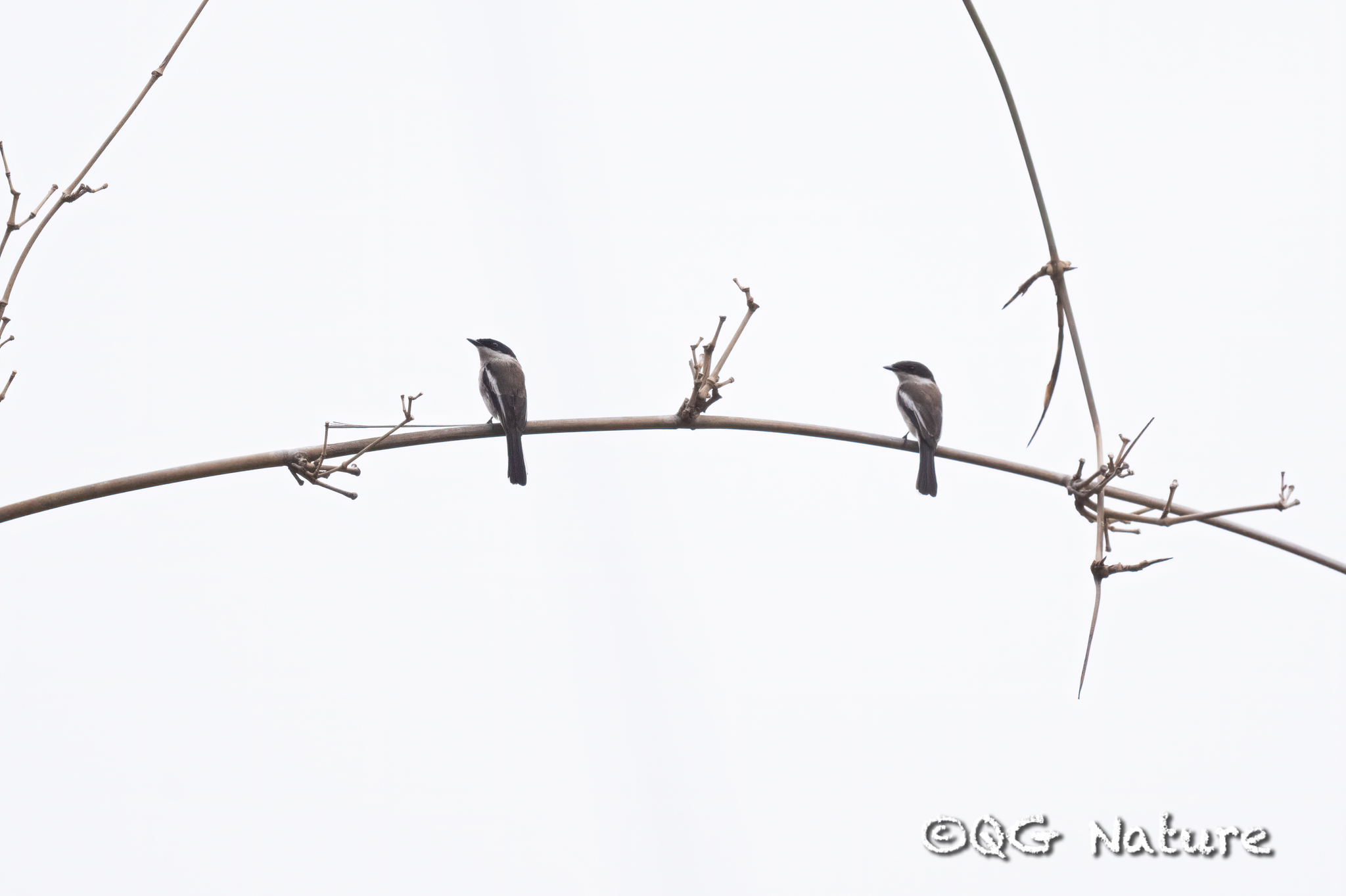
A small passerine bird usually placed in the Vangidae, found in forests of tropical southern Asia from the Himalayas and hills of southern India to Indonesia. Mainly insectivorous, it hunts in the mid-canopy, often joining mixed-species foraging flocks. It perches upright and displays a distinctive black and white pattern.
Description
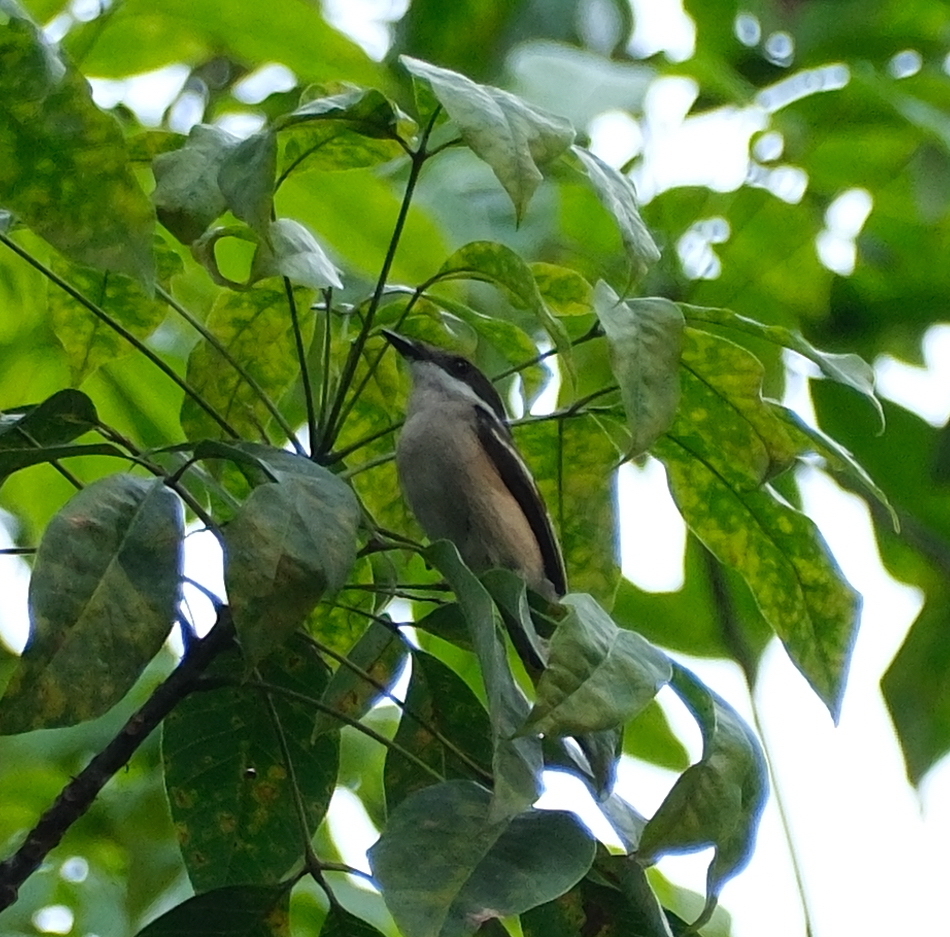
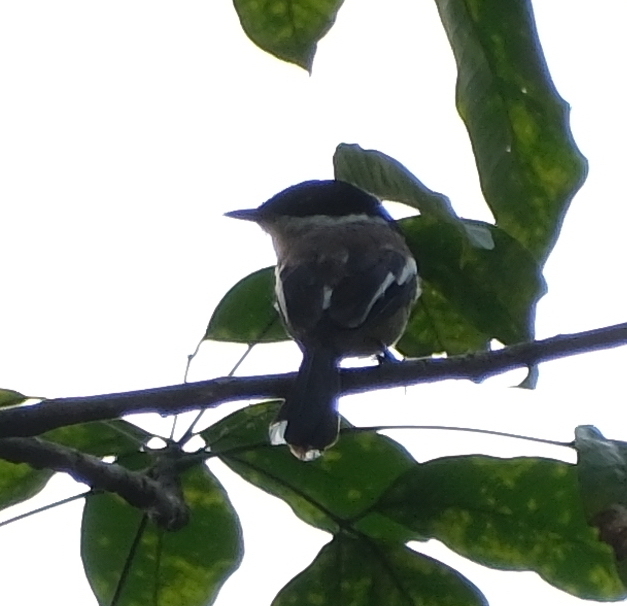
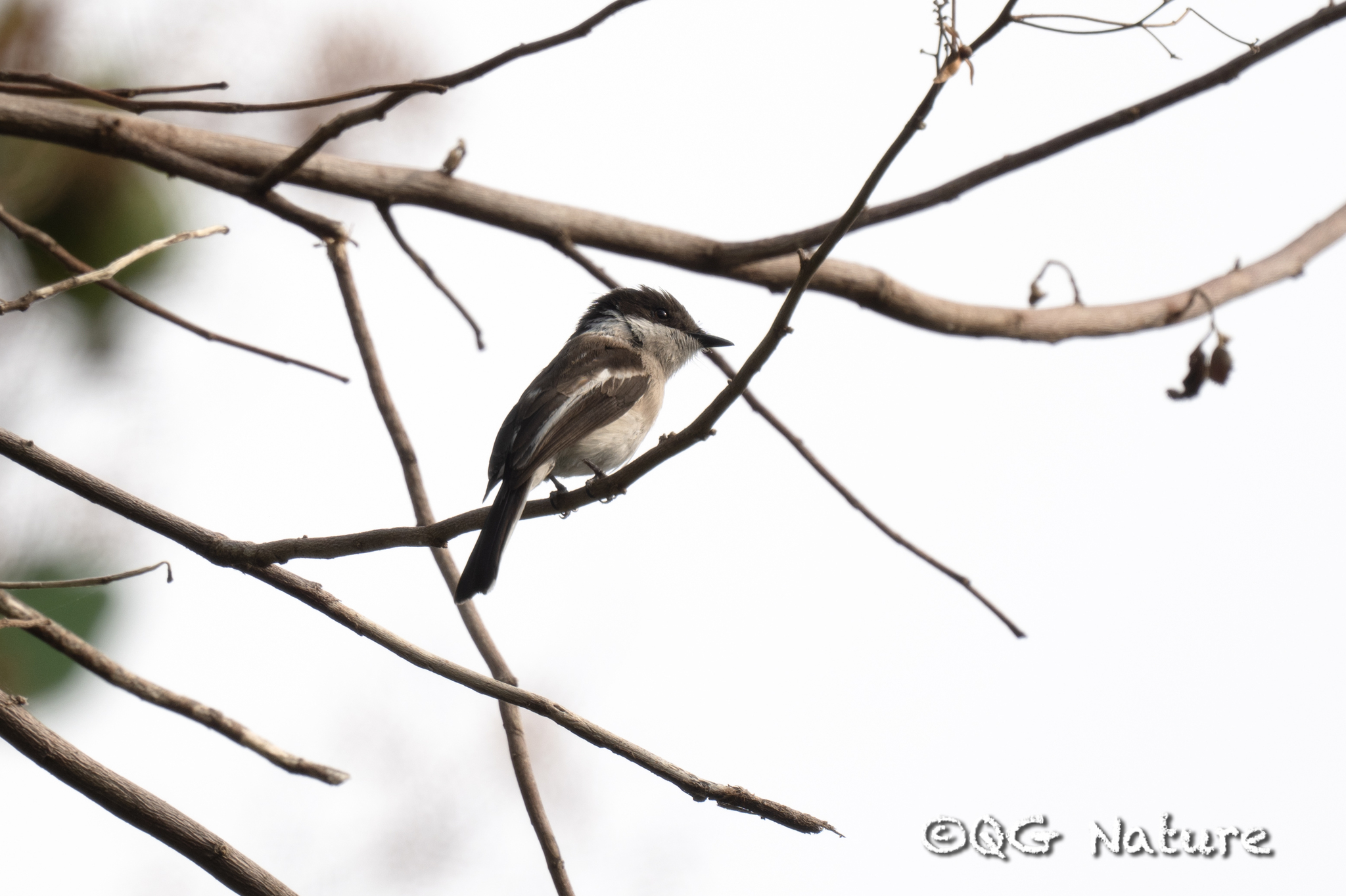
Black capped with black wings contrasting with a white body. Features a white slash across the wing and a white rump. Nostril is hidden by hairs; upper mandible has a curved tip. Males are velvety black, while females tend to be greyish brown, though patterns vary geographically. Himalayan subspecies have a brown back with males having a black head. Sri Lankan population lacks sexual dimorphism. Tail is black with white outer feathers and white-tipped non-central feathers. Young birds show a broken pattern of white and grey resembling lichens.
Identification
Sits upright on branches. Distinctive black and white plumage with white wing slash and rump. Call is a rapid, high tsit-it-it-it or whriri-whirriri-whirriri, sometimes a sharp chip. Male-female pairs in Sri Lanka duet with precision.
Distribution & Habitat
Found in forests from the Himalayas and southern India to Indonesia. Nominate race occurs mainly in the Western Ghats of India, extending into central and eastern India and Bangladesh. Subspecies capitalis ranges along the Himalayas from Simla east to Manipur, Chittagong, northern Thailand, Myanmar, and Laos. Subspecies leggei inhabits hill forests of Sri Lanka. Subspecies intermedius is found in Southeast Asia, including Sumatra, Borneo, and parts of the Malay Peninsula.
Behavior & Ecology
Catches insects by gleaning foliage and making aerial sallies. Associates with babblers, velvet-fronted nuthatches, and white-eyes in feeding flocks. Moves through forests without sticking to specific locations. Nesting season is February to August in Sri Lanka and March to May in India. Builds a neat cup nest bound with cobwebs, lined with fine grass and fibre, and covered with lichens. Placed on horizontal dry branches, often near tips or on leafless trees. Clutch size is 2 or 3 pale greenish-white eggs blotched with black and grey. Both sexes incubate. Chicks remain still with eyes closed, facing the center with bills held high.
Source: Wikipedia · CC BY-SA 3.0
Taxonomy
- Order
- Passeriformes
- Family
- Vangidae
- Genus
- Hemipus
Subspecies (4)
-
Hemipus picatus capitalis
Himalayas to northern Myanmar, southwestern China, northern Thailand, and northern Indochina
Data Sources
Species description from Wikipedia, licensed under CC BY-SA 3.0.
Bird images and sounds sourced from GBIF, contributed by citizen scientists worldwide under Creative Commons licenses.
Taxonomy data from AviList 2025.