Bar-winged Flycatcher-shrike
Hemipus picatus
褐背鹟鵙
Introduction
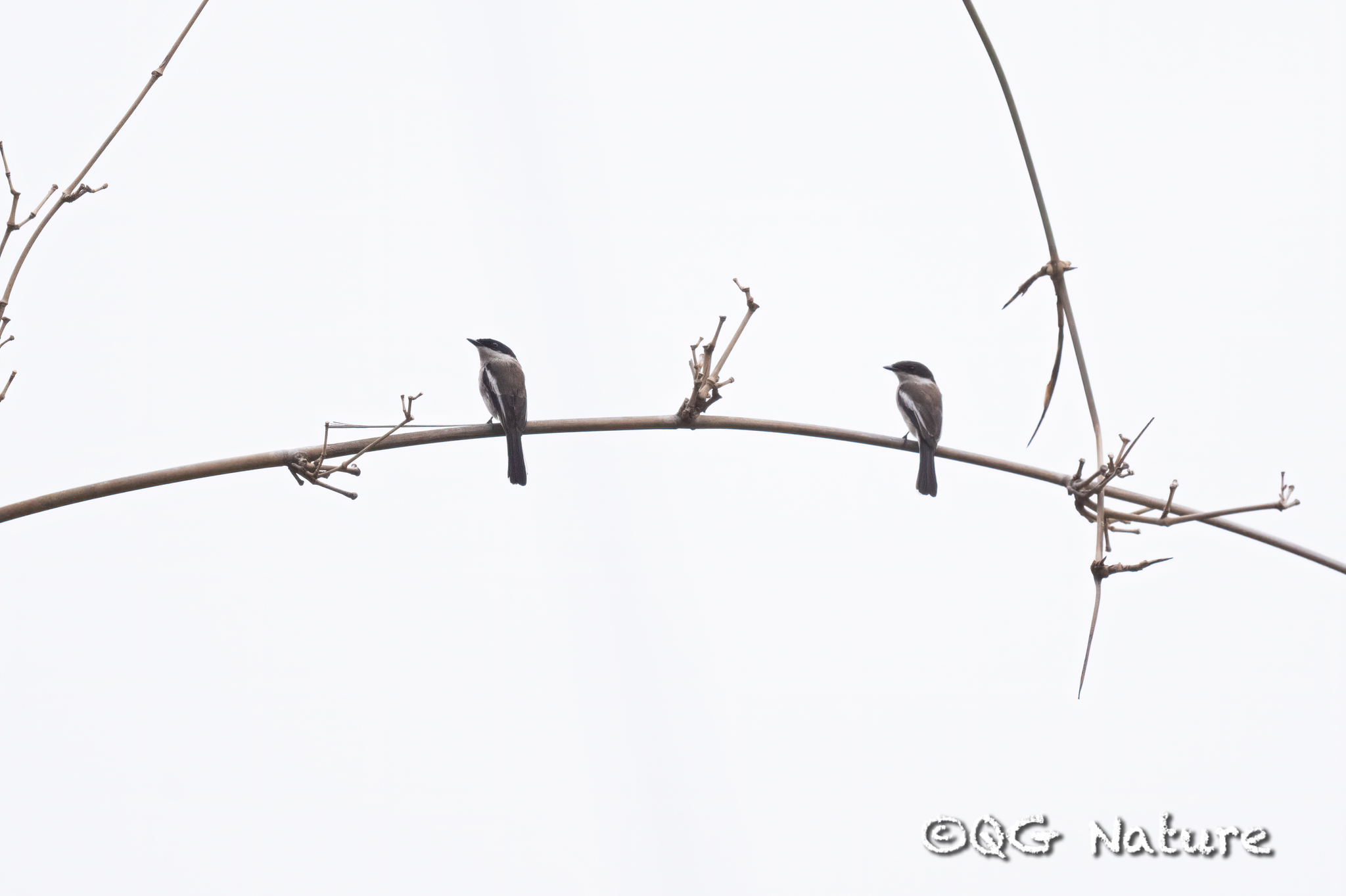
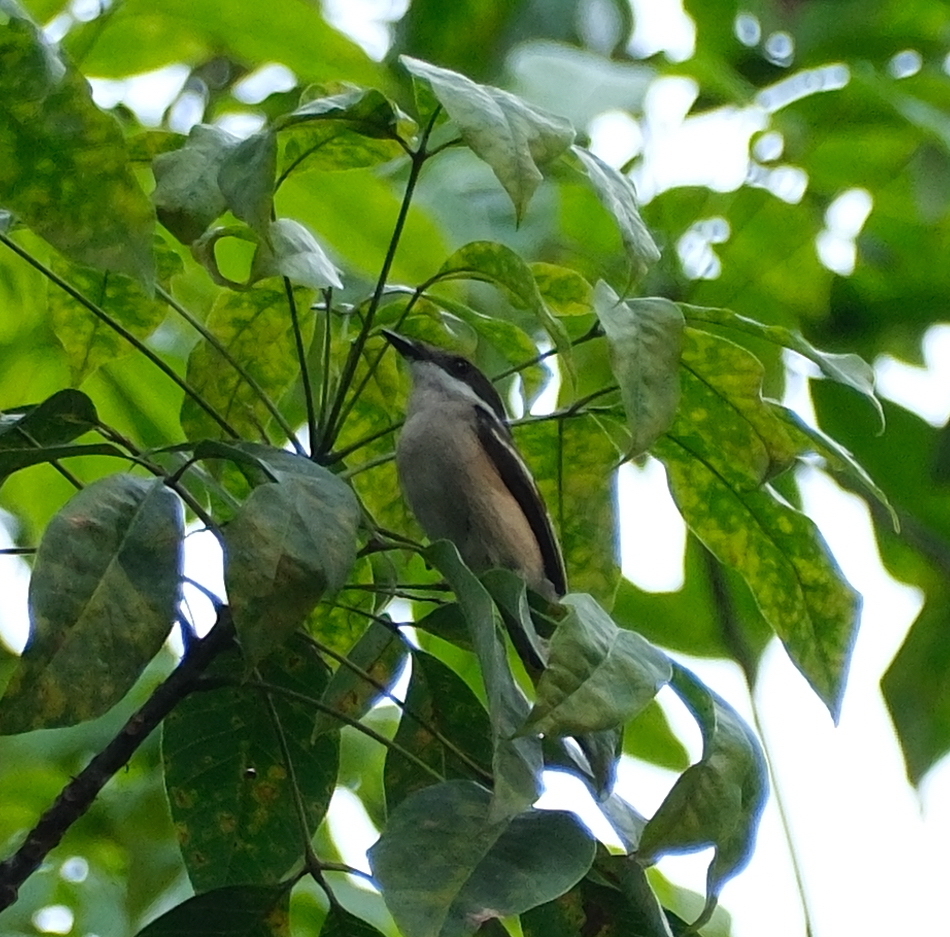
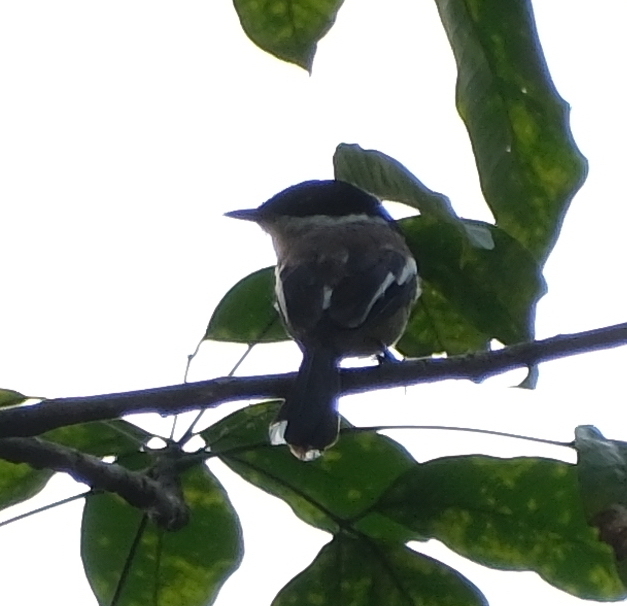
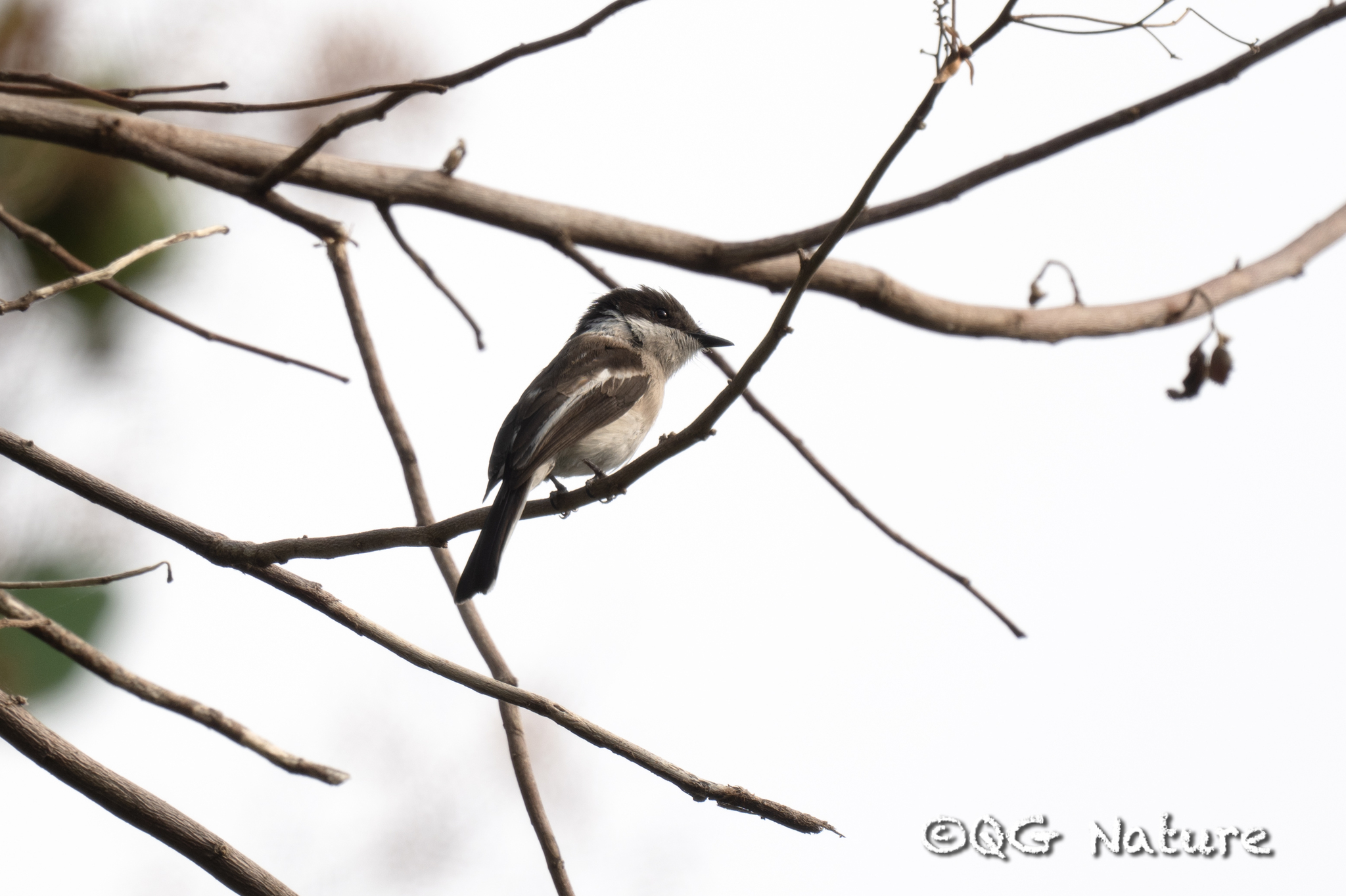
A small passerine bird placed in the family Vangidae. Found in the forests of tropical southern Asia from the Himalayas and hills of southern India to Indonesia. Primarily insectivorous, it hunts in the mid-canopy of forests and frequently joins mixed-species foraging flocks. Perches upright and displays a distinctive black and white plumage pattern, with males being more shiny black than females. Geographic populations show variation in plumage, with some having brownish backs and others showing dark wash on the underside.
Description
A small forest bird with black cap and black wings contrasting sharply with the white body. A distinctive white slash across the wing and white rump are prominent features. The nostrils are hidden by hairs and the upper mandible has a curved tip. The tail is black with white outer feathers and white tips on non-central feathers. Males are velvety black while females are typically greyish brown, though plumage varies geographically. The Himalayan subspecies capitalis has both sexes with brown backs but males retain black heads. Sri Lankan leggei lacks sexual dimorphism. Juveniles display a broken pattern of white and grey resembling lichens.
Identification
Recognize by the distinctive black and white plumage pattern with white wing slash and white rump. Upright perching posture is characteristic. Males appear velvety black while females are browner, though this varies by region. The white outer tail feathers and white-tipped non-central tail feathers help distinguish it from similar species. The Sri Lankan population shows no sexual plumage differences, unlike mainland populations.
Distribution & Habitat
The nominate race occurs in the Western Ghats of India but is very rare towards the Surat Dangs. Also found in parts of central and eastern India and Bangladesh. Subspecies capitalis ranges along the Himalayas from Simla east to Manipur and Chittagong, extending into northern Thailand, Myanmar and Laos. Sri Lankan leggei inhabits hill forests. Subspecies intermedius occurs in Southeast Asia including Sumatra, Borneo and parts of the Malay Peninsula.
Behavior & Ecology
Insectivorous, catching prey by gleaning foliage and making aerial sallies for flushed insects. Associates with babblers, velvet-fronted nuthatches and white-eyes in feeding flocks, moving continuously through the forest. Vocalizations include a rapid high-pitched tsit-it-it-it and whriri-whirriri-whirriri, plus a sharp chip. Sri Lankan leggei pairs duet with precision. Breeding season is February to August in Sri Lanka and March to May in India. Nest is a neat cup bound with cobwebs, lined with grass and fiber, covered in lichens, placed on horizontal branch tips. Clutch is 2-3 pale greenish white eggs blotched with black and grey. Both parents incubate.
Conservation
While some sources suggest sensitivity to forest degradation, other studies indicate the species can persist in considerably disturbed forests. No specific IUCN assessment or population numbers provided in source material.
Culture
No cultural significance, folklore or mythological references documented in available source material.
Source: Wikipedia · CC BY-SA 3.0
Taxonomy
- Order
- Passeriformes
- Family
- Vangidae
- Genus
- Hemipus
- eBird Code
- bwfshr1
Subspecies (4)
-
Hemipus picatus capitalis
Himalayas to northern Myanmar, southwestern China, northern Thailand, and northern Indochina
-
Hemipus picatus intermedius
Thai-Malay Peninsula, Sumatra, and Borneo
-
Hemipus picatus leggei
Sri Lanka
-
Hemipus picatus picatus
peninsular India to southern Myanmar, southern Thailand, and southern Indochina
Data Sources
Species description from Wikipedia, licensed under CC BY-SA 3.0.
Bird images and sounds sourced from GBIF, contributed by citizen scientists worldwide under Creative Commons licenses.
Taxonomy data from AviList 2025.