Trogoniformes / Trogonidae / Harpactes
Red-headed Trogon
Harpactes erythrocephalus · 红头咬鹃
Introduction
A species in the family Trogonidae distributed from central Nepal, Southeast Asia, and southern China to Sumatra. It inhabits upland broadleaved forests, including tropical and subtropical zones in the Himalayan foothills and evergreen forests at elevations of 300 to 2,600 m. Distinctive traits include being the only trogon with a red head and breast in males, and a foraging behavior involving perching on shaded branches to catch insects.
Description
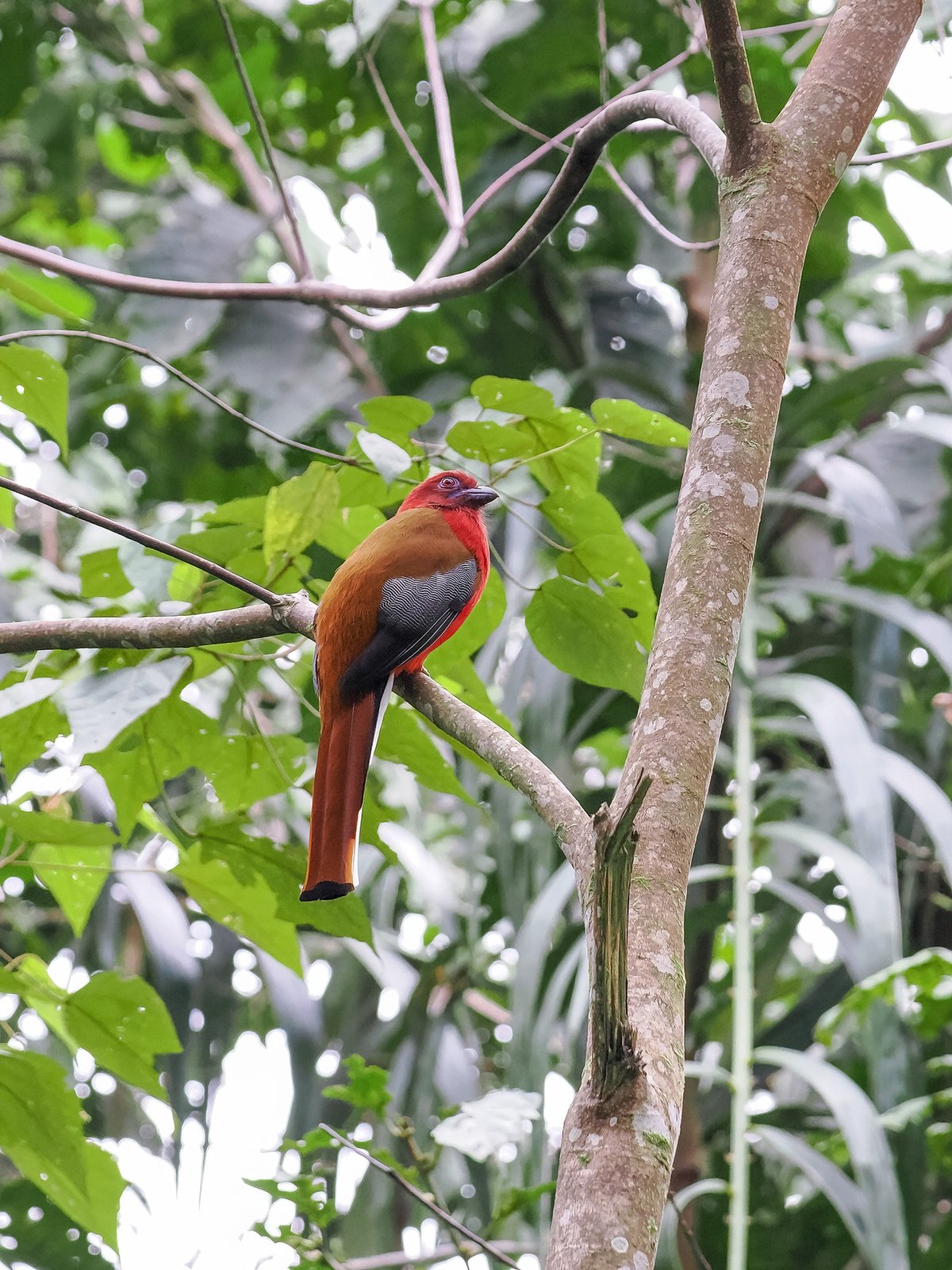
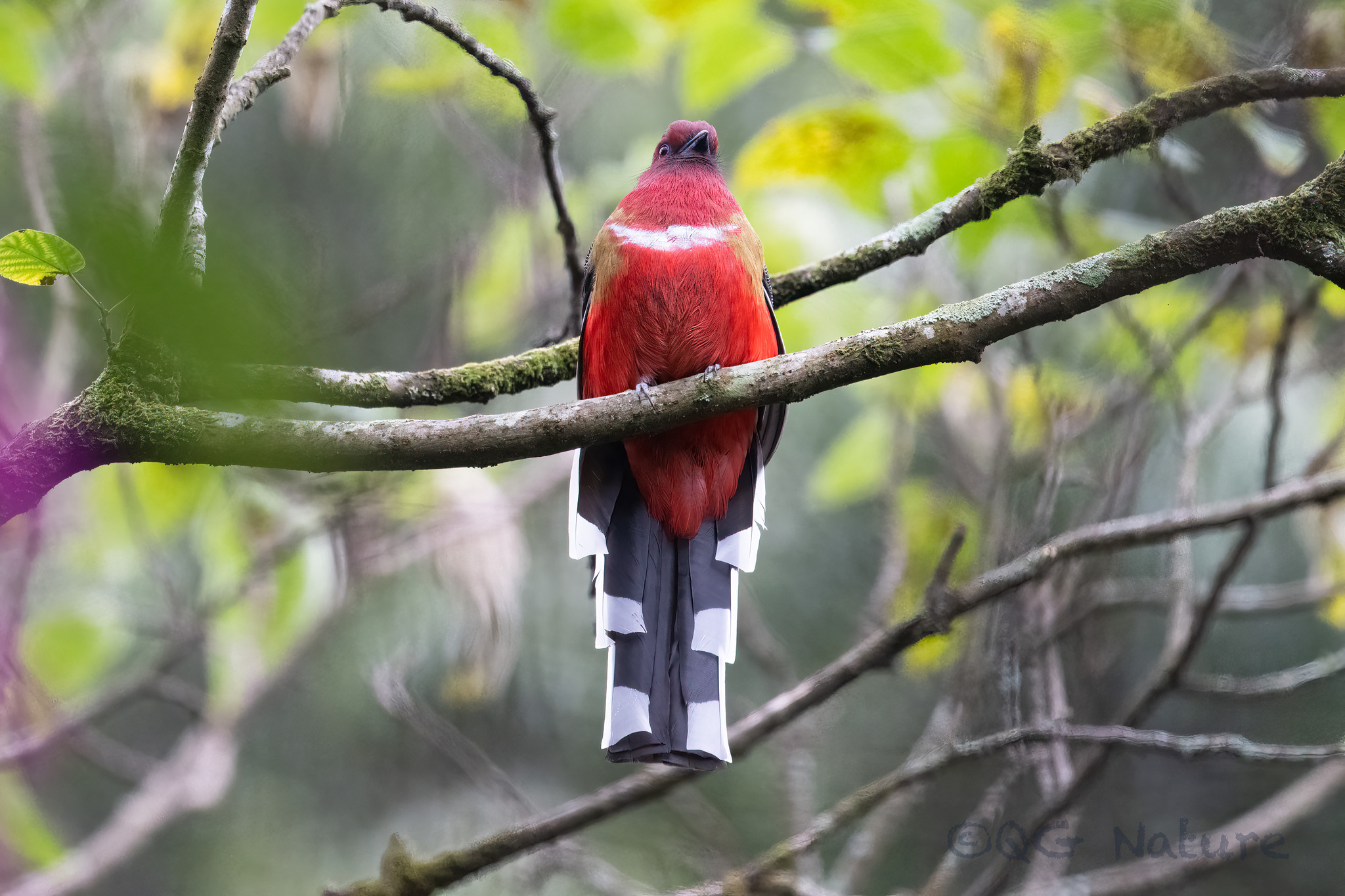
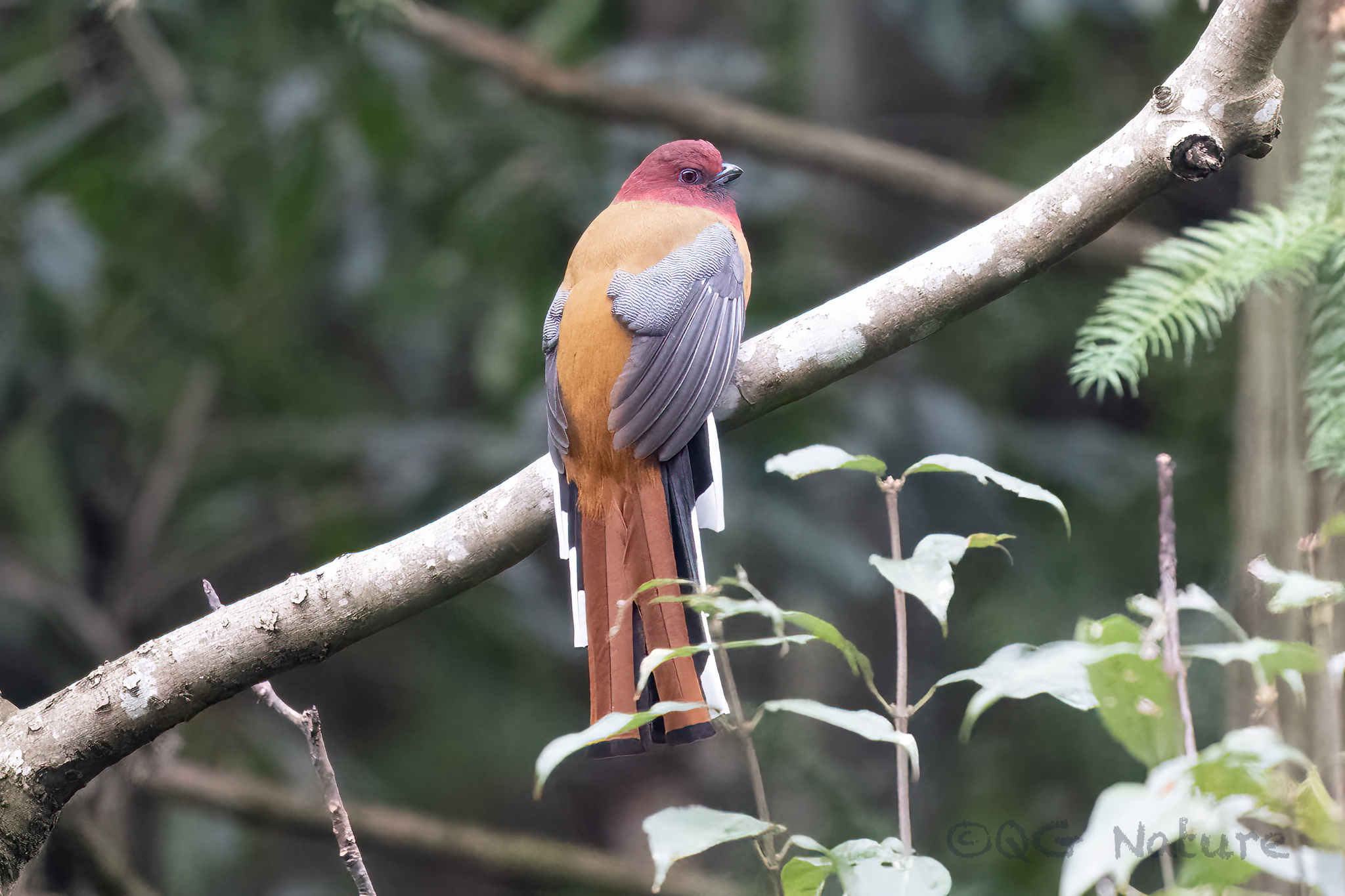
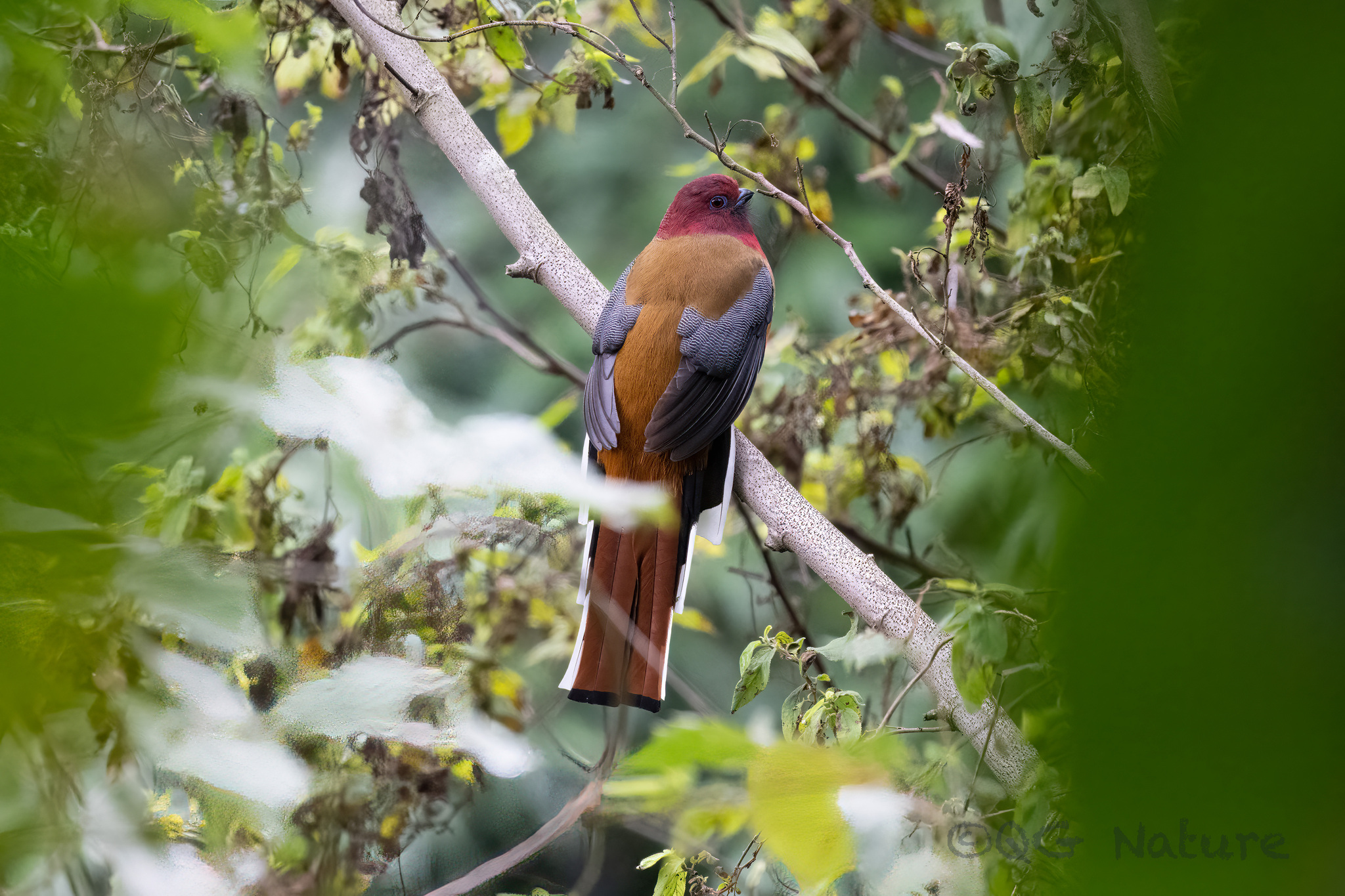
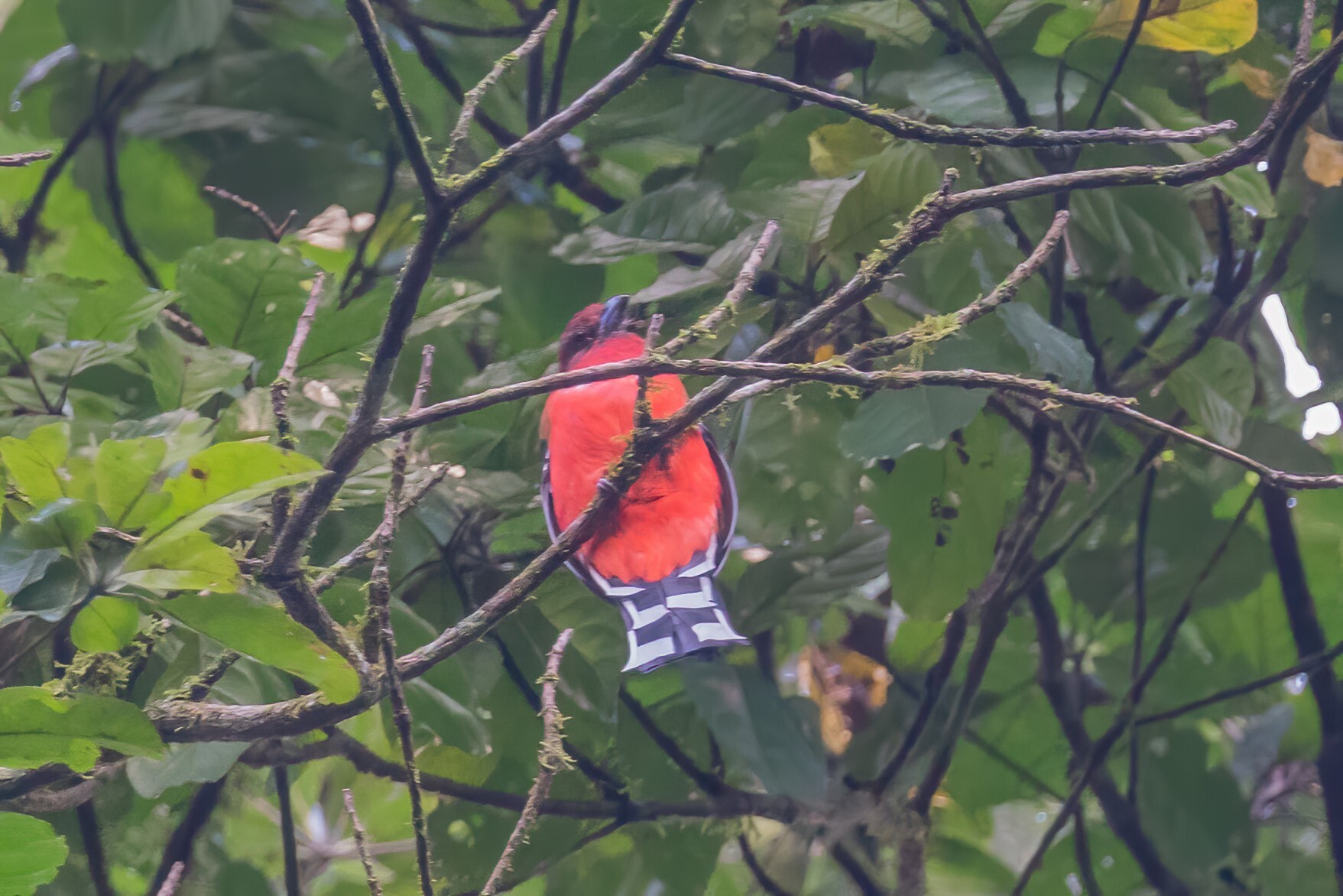
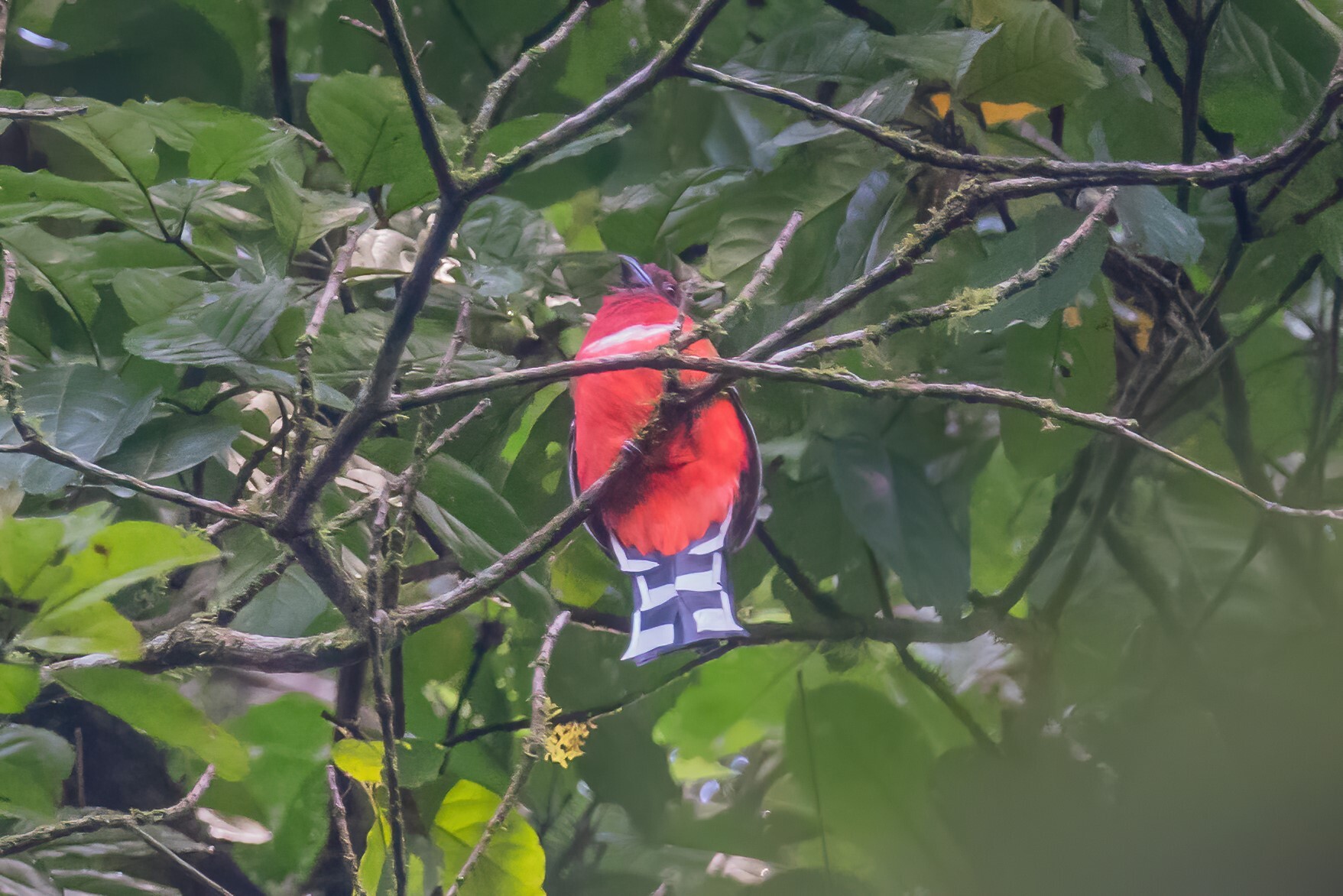
Average length is 34 cm (13 in). Adult males have a dull crimson head, neck, and upper breast, separated by a narrow white band from a light red to pink lower breast and abdomen. The mantle and back are rusty brown. Wings feature black and white vermiculated coverts and secondaries, with black and white primary feathers. The tail has dark brown central feathers with black tips, black second and third pairs, and white outer pairs with black bases. The bill is cobalt blue with a black tip, and the gape and eyering are deep mauve-blue. Adult females have an olive-brown head, neck, and upper breast, with an orange to brown mantle and back. Their wings are vermiculated dark brown and yellowish brown, and the bill, gape, and eyering are pale blue. Juveniles are buff brown above and buff white below, lacking black tips on central tail feathers.
Identification
Males are distinguished by a unique red head and breast within the trogon group. Females resemble Diard's trogon but lack a speckled undertail. Flight is sluggish and very low, often just a few meters above the ground. The male's call consists of five to six well-spaced mellow 'tyaup' notes repeated every minute, or an extended 'pluu-du' note with a terminal pitch drop repeated every 3–6 seconds.
Distribution & Habitat
Range extends from central Nepal, northeastern India, Bhutan, Bangladesh, southern China, Myanmar, Laos, Vietnam, Thailand, and the Malay Peninsula to Sumatra. Habitat includes dense broadleaved forests, bamboo and oak forests, and evergreen forests at elevations ranging from 300 to 2,600 m (980 to 8,530 ft). In the Malay Peninsula, it inhabits forests from 300 to 1,680 m, rarely seen below 700 m. Populations are uncommon to scarce in Nepal, fairly common in northeastern India, and frequent in Bhutan.
Behavior & Ecology
Sedentary in most regions, though altitudinal migration occurs in Laos. Active in early morning and at night, pursuing moths at forest clearing edges. Often follows mixed foraging flocks to catch flushed insects. Diet consists primarily of insects and larvae (orthopterans, stick-insects, cicadas, millipedes, flies, beetles, centipedes, woodlice, moths), as well as leaves and fruits. Nests in natural tree cavities or old woodpecker/barbet holes, 1.5 to 5 m above ground. Both sexes excavate, incubate, and brood; females spend more time brooding. Clutch size is 2 to 4 cream-colored eggs. Incubation lasts 18 days; chicks fledge after 13.4 days. Breeding seasons vary: March–July in Thailand, mid-April–mid-July in Northern India, and April in China and Myanmar.
Culture
The scientific name H. erythrocephalus derives from Ancient Greek terms for red and head.
Source: Wikipedia · CC BY-SA 3.0
Taxonomy
- Order
- Trogoniformes
- Family
- Trogonidae
- Genus
- Harpactes
Vocalizations
Subspecies (9)
-
Harpactes erythrocephalus annamensis
eastern Thailand, southern Laos, and Vietnam
Data Sources
Species description from Wikipedia, licensed under CC BY-SA 3.0.
Bird images and sounds sourced from GBIF, contributed by citizen scientists worldwide under Creative Commons licenses.
Taxonomy data from AviList 2025.