Accipitriformes / Accipitridae / Haliastur
Brahminy Kite
Haliastur indus · 栗鸢
Introduction
Medium-sized bird of prey in the family Accipitridae, found in the Indian subcontinent, Southeast Asia, and Australia. Inhabits coastal areas and inland wetlands, primarily feeding on dead fish and other prey. Adults are distinguished by reddish-brown body plumage contrasting with a white head and breast. Evaluated as Least Concern on the IUCN Red List.
Description
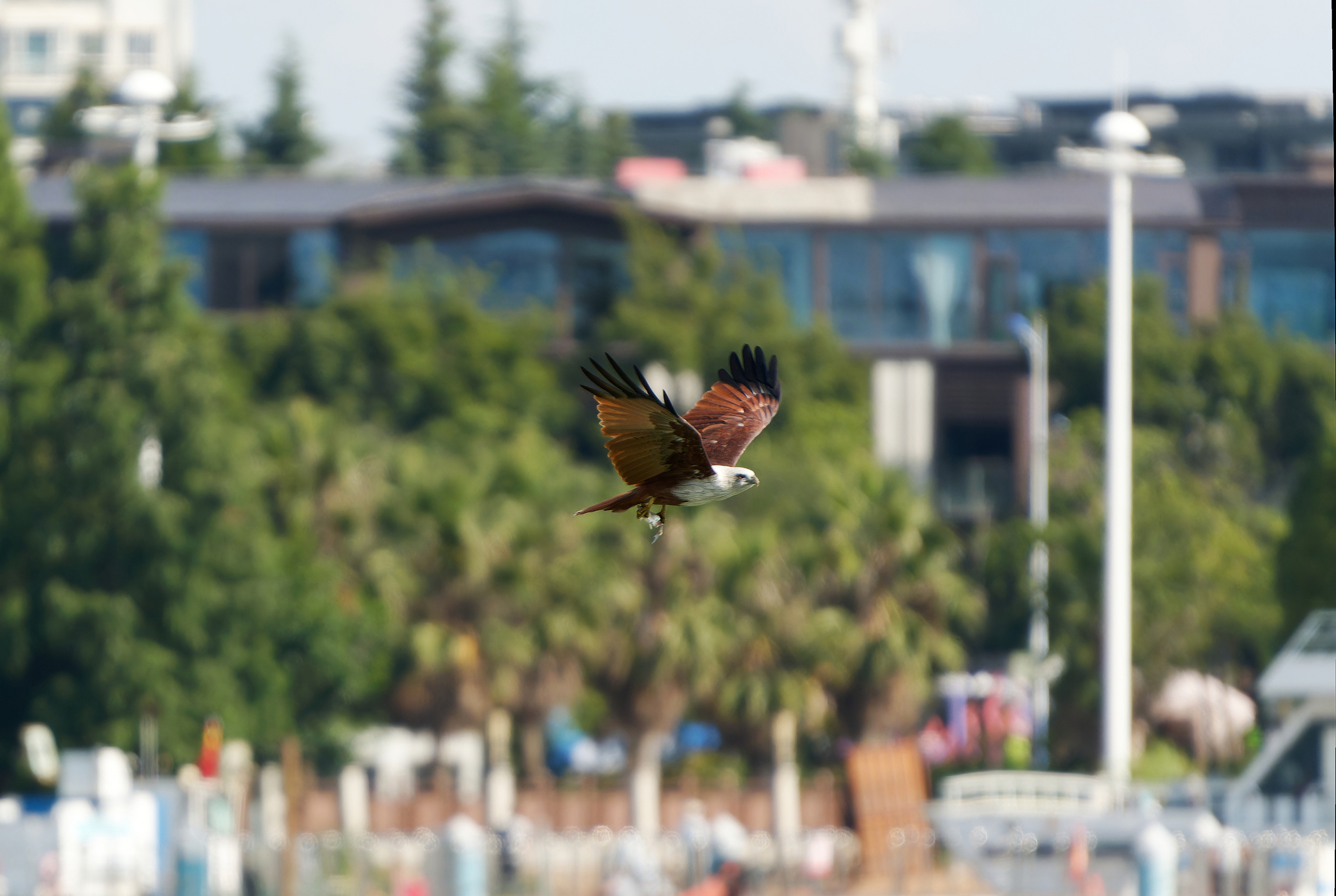
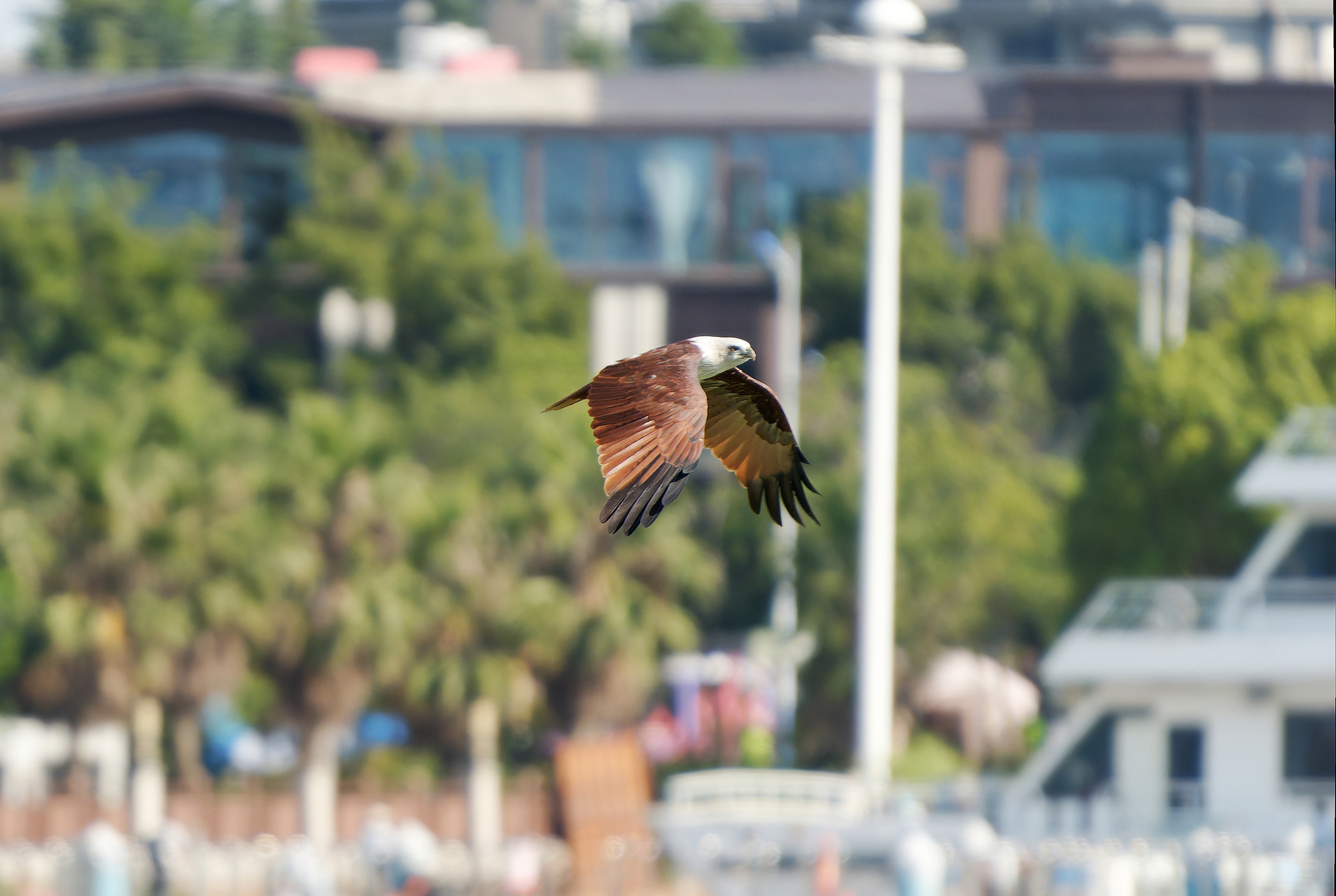
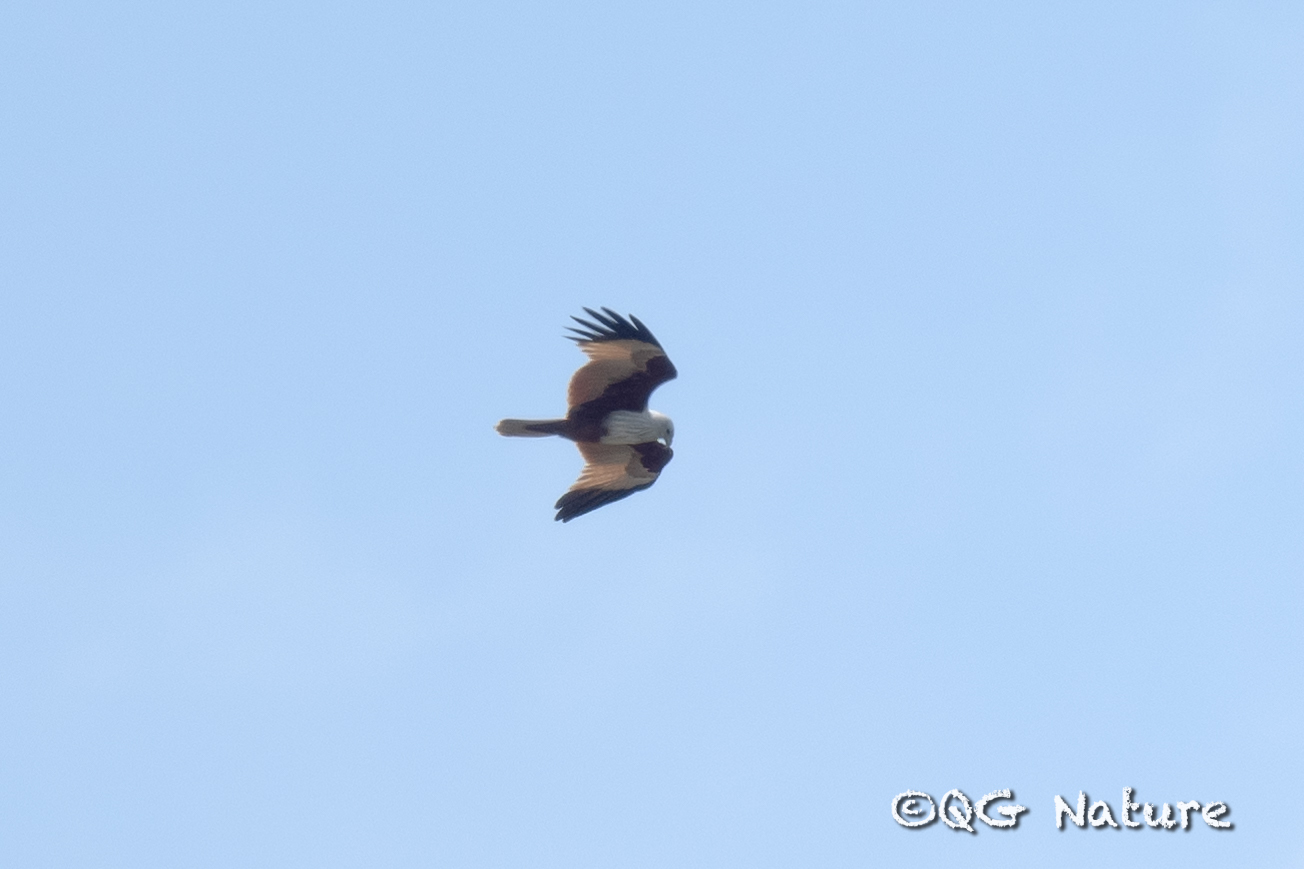
Distinctive contrastingly coloured plumage with chestnut body, white head and breast, and black wing tips. Juveniles are browner with a paler appearance, shorter wings, and a rounded tail. A squarish pale patch is present on the underwing carpal region. Similar in size to the black kite but possesses a rounded tail rather than a forked one.
Identification
Distinguished from black kites by paler appearance, shorter wings, rounded tail, and a squarish pale patch on the underwing carpal region. Flight features angled wings typical of kites. Vocalization is a mewing 'keeyew'.
Distribution & Habitat
Range includes Sri Lanka, Nepal, India, Iran, Pakistan, Bangladesh, Southeast Asia, and Australia (as far south as New South Wales). Widespread and resident in Australia. Performs seasonal movements associated with rainfall in some parts of the range. Mainly found in plains, but occurs above 5000 feet in the Himalayas.
Behavior & Ecology
Breeding season varies: December to April in South Asia; August to October in southern/eastern Australia; April to June in northern/western Australia. Nests of sticks and leaves are built in trees, often mangroves, with high site fidelity; rare ground nesting occurs. Clutch consists of two dull-white or bluish-white eggs (52 x 41 mm). Incubation lasts 26–27 days, likely by the female alone, though both parents build nests and feed young. Primarily a scavenger of dead fish and crabs; occasionally hunts live prey like hares and bats, engages in kleptoparasitism, and exploits Irrawaddy dolphins herding fish. Recorded feeding on honey and ritual food offerings. Young birds play by dropping and catching leaves. Can land, swim, and take off from water. Roosts communally, with up to 600 individuals at one site. May mob larger raptors such as steppe eagles.
Conservation
Evaluated as Least Concern on the IUCN Red List of Threatened Species. The species is on the decline in some parts of its range, such as Java.
Culture
Known as elang bondol in Indonesia and serves as the official mascot of Jakarta. In Hinduism, it is considered the contemporary representation of Garuda, the sacred bird of Vishnu. The island of Langkawi in Malaysia is named after the bird. For the Ibans of Sarawak, Malaysia, it is believed to be the manifestation of Singalang Burung, the god of war. A fable from Bougainville Island describes the bird's origin from a baby transformed into Kaa'nang.
Source: Wikipedia · CC BY-SA 3.0
Taxonomy
- Order
- Accipitriformes
- Family
- Accipitridae
- Genus
- Haliastur
Vocalizations
Subspecies (4)
-
Haliastur indus flavirostris
Solomon Islands
Data Sources
Species description from Wikipedia, licensed under CC BY-SA 3.0.
Bird images and sounds sourced from GBIF, contributed by citizen scientists worldwide under Creative Commons licenses.
Taxonomy data from AviList 2025.