Accipitriformes / Accipitridae / Haliaeetus
White-tailed Eagle
Haliaeetus albicilla · 白尾海雕
Introduction
A large bird of prey in the family Accipitridae and genus Haliaeetus, widely distributed across temperate Eurasia from Greenland and Iceland to Hokkaido, Japan. It inhabits coastal saltwater areas, inland freshwater lakes, wetlands, bogs, and rivers, requiring old-growth trees or sea cliffs for nesting. The species is both a powerful apex predator and an opportunistic scavenger, feeding primarily on fish and water birds. It forms a species pair with the bald eagle. Conservation status is assessed by the IUCN with a total mature breeding population estimated at 20,000–49,999 individuals.
Description
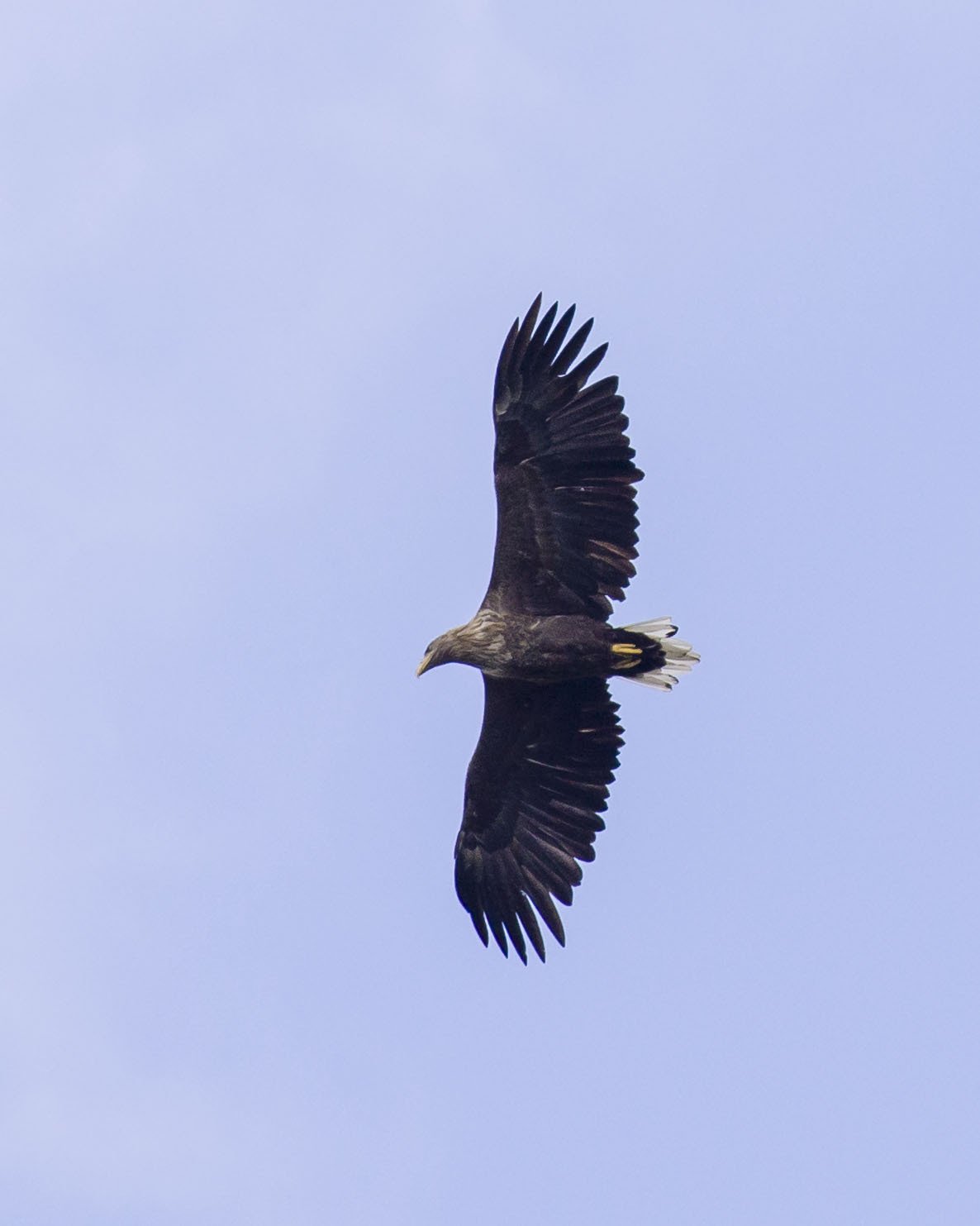
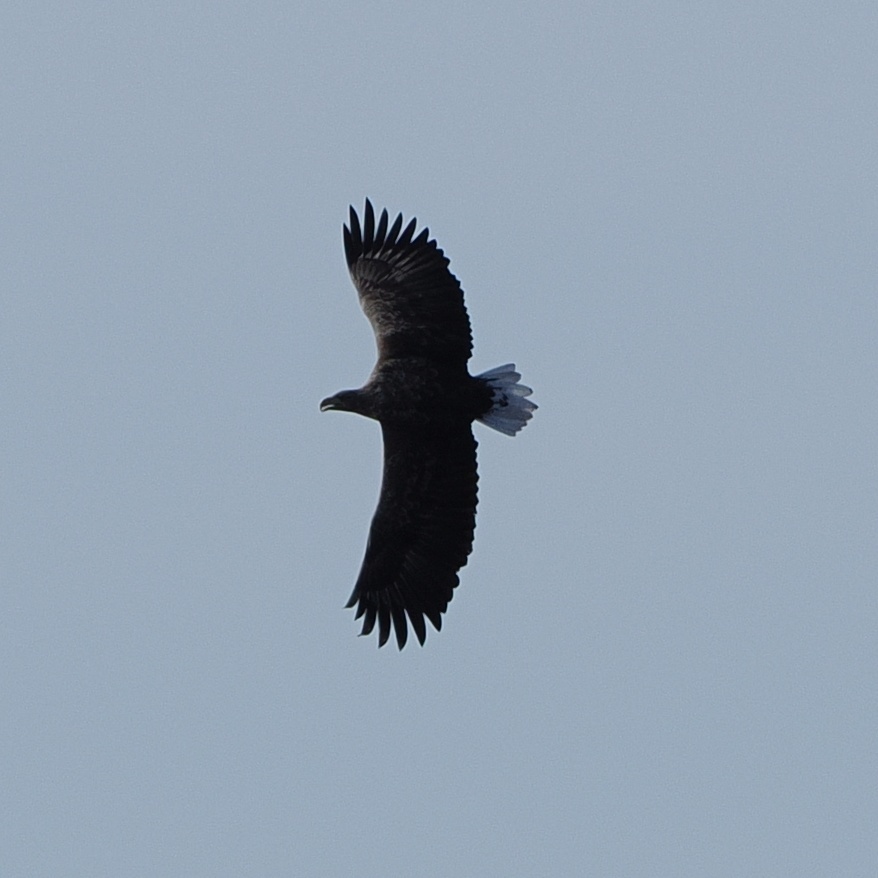
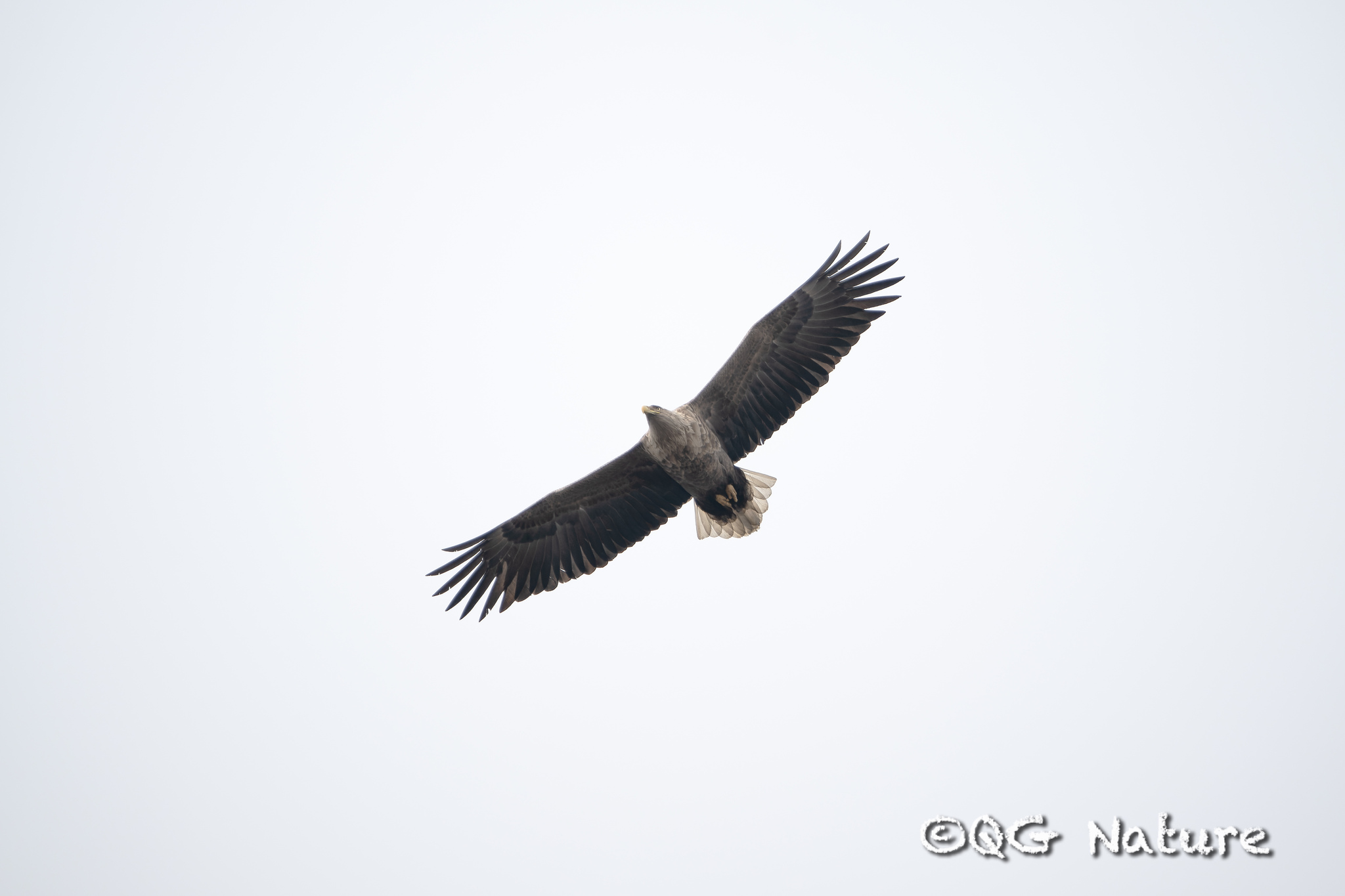
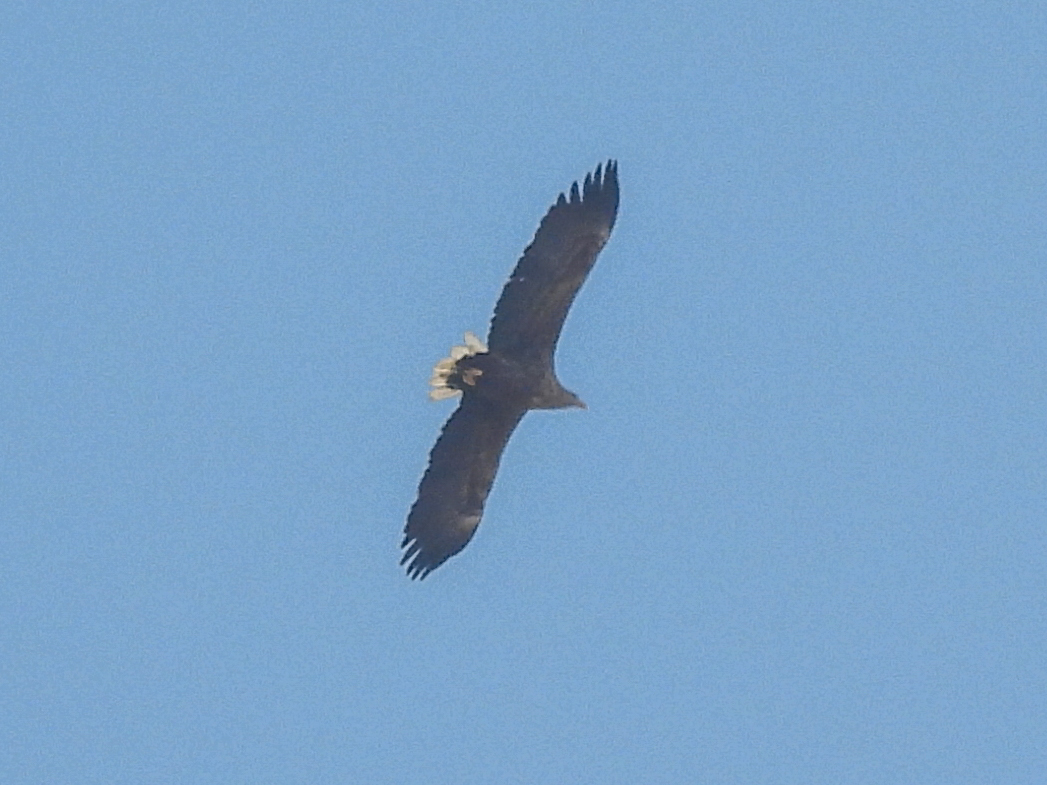
One of the largest living birds of prey, measuring 66 to 94 cm in total length with a typical wingspan of 1.78 to 2.45 m. Body mass ranges from 3.1 to 5.4 kg in males and 4 to 6.9 kg in females, with some females reaching up to 8 kg. Adults are greyish mid-brown overall with a paler, buff-colored head, neck, and upper breast. The tail is distinctly wedge-shaped and white. Bare parts, including the bill, cere, feet, and eyes, are yellow. Juveniles are dark brown with uneven whitish feather edgings, a narrow white axillary strip, and a washed-out greyish-cream tail with messy blackish edges. Juvenile bills are half dark brown and half dull yellowish-grey. Sexual maturity is reached at 5–6 years, but full adult plumage is typically attained by the eighth year.
Identification
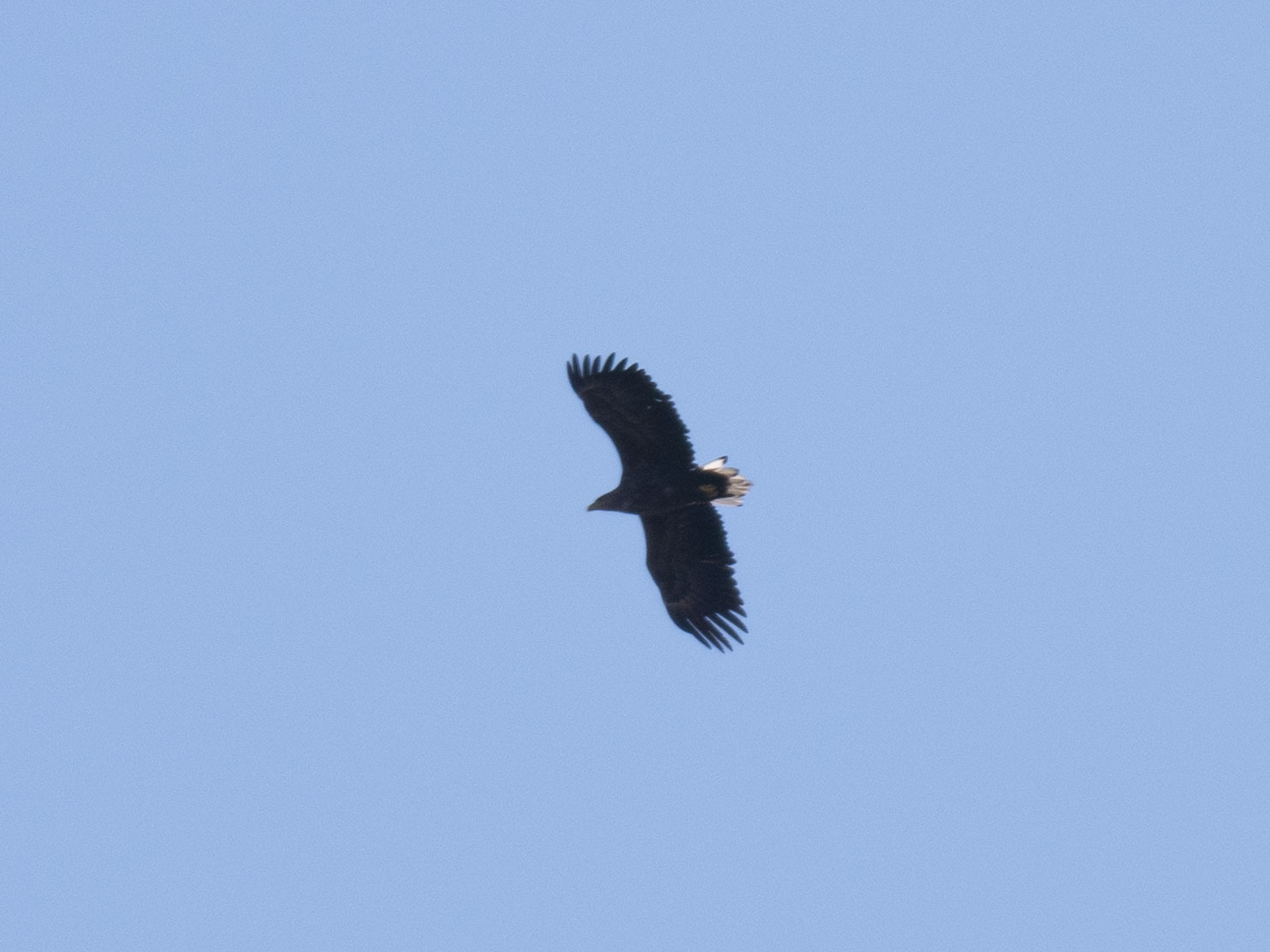
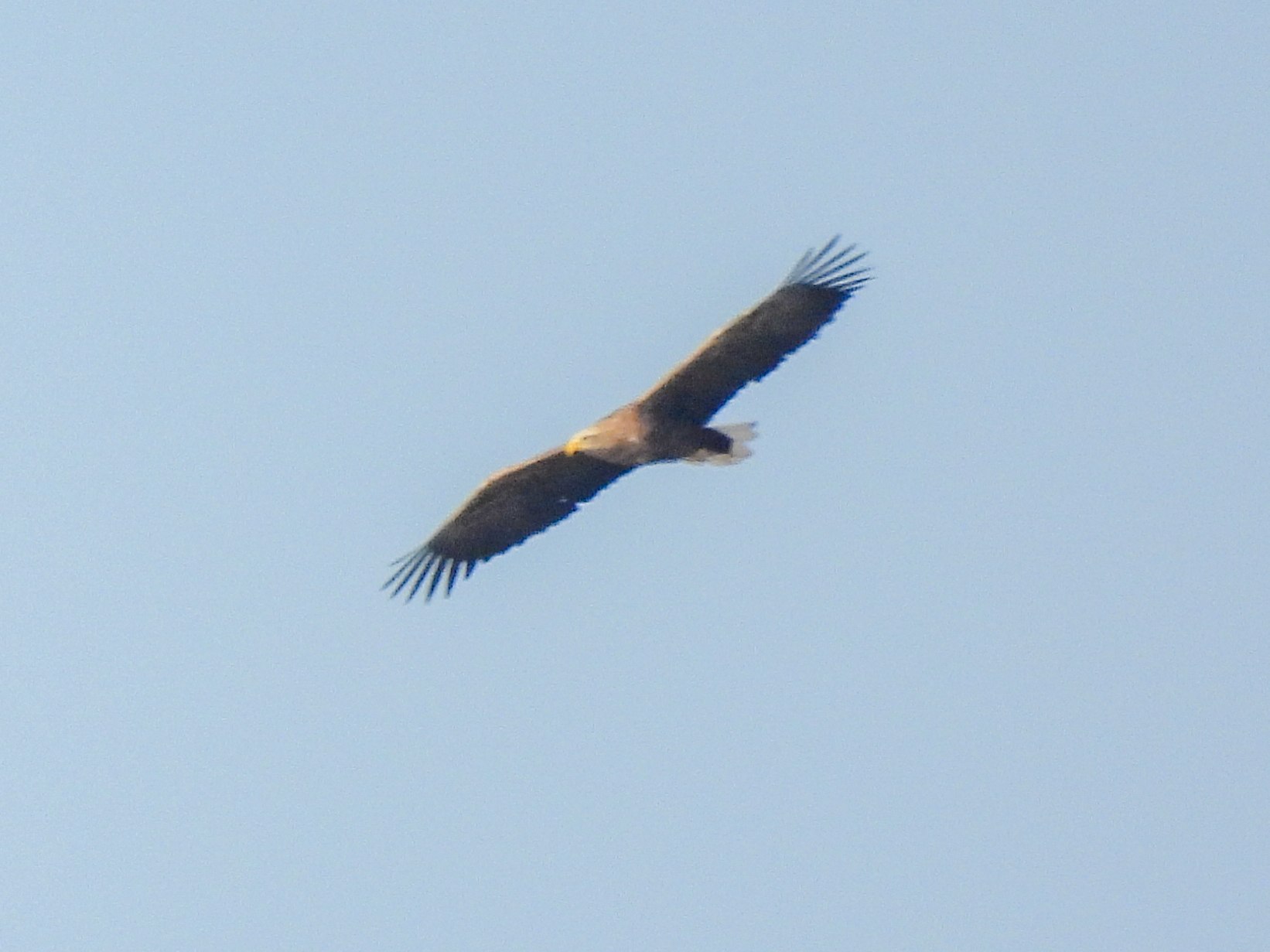
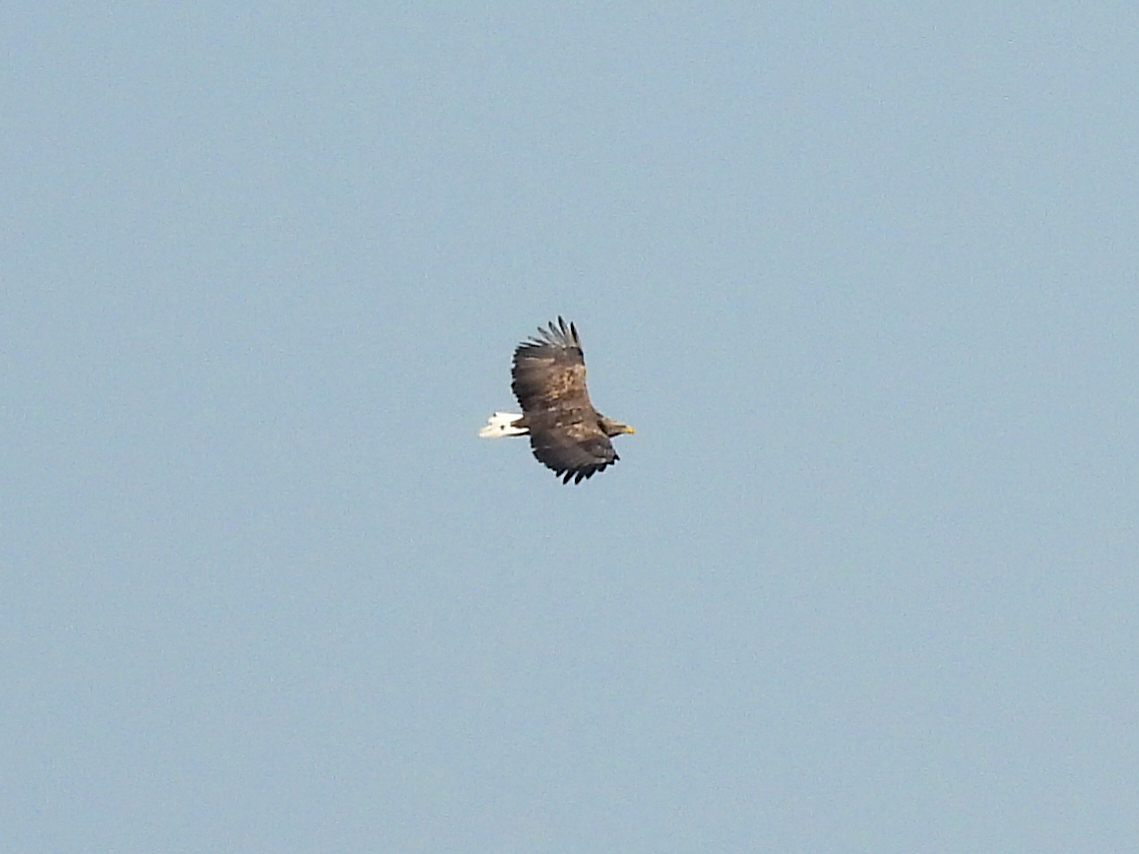
Adults are distinguished by their massive size, broad deeply fingered wings (usually showing at least six fingers), and contrasting white wedge-shaped tail. The head is pale buff, lacking the sharp white-to-dark demarcation seen in bald eagles. In flight, wings are held flat or slightly upraised, with shallow wing beats interspersed with gliding. Juveniles are darker and more unevenly marked than adults, often showing a pale axillary strip. They differ from juvenile Steller's sea eagles by having a less massive, darker bill and less distinct white underwing markings. Unlike golden eagles, they have a longer neck, broader wings, and a shorter, wedge-shaped tail.
Distribution & Habitat
Breeds across northern Europe and northern Asia, ranging from southern Greenland, Iceland, and coastal Norway east to the Bering Sea, Sakhalin, the Kuril Islands, and Hokkaido, Japan. Southern breeding limits include Turkey, Georgia, Iran, Turkmenistan, Kazakhstan, and sporadically Greece and the Danube Delta. Wintering populations occur in western and central Europe, including the Netherlands, Germany, Denmark, Italy, and Austria, as well as in Northeast China, South Korea, and Japan. Vagrants reach North America, including Alaska and the Aleutian Islands. Habitat includes coastal cliffs, islands, estuaries, and inland wetlands with mature trees for nesting.
Behavior & Ecology
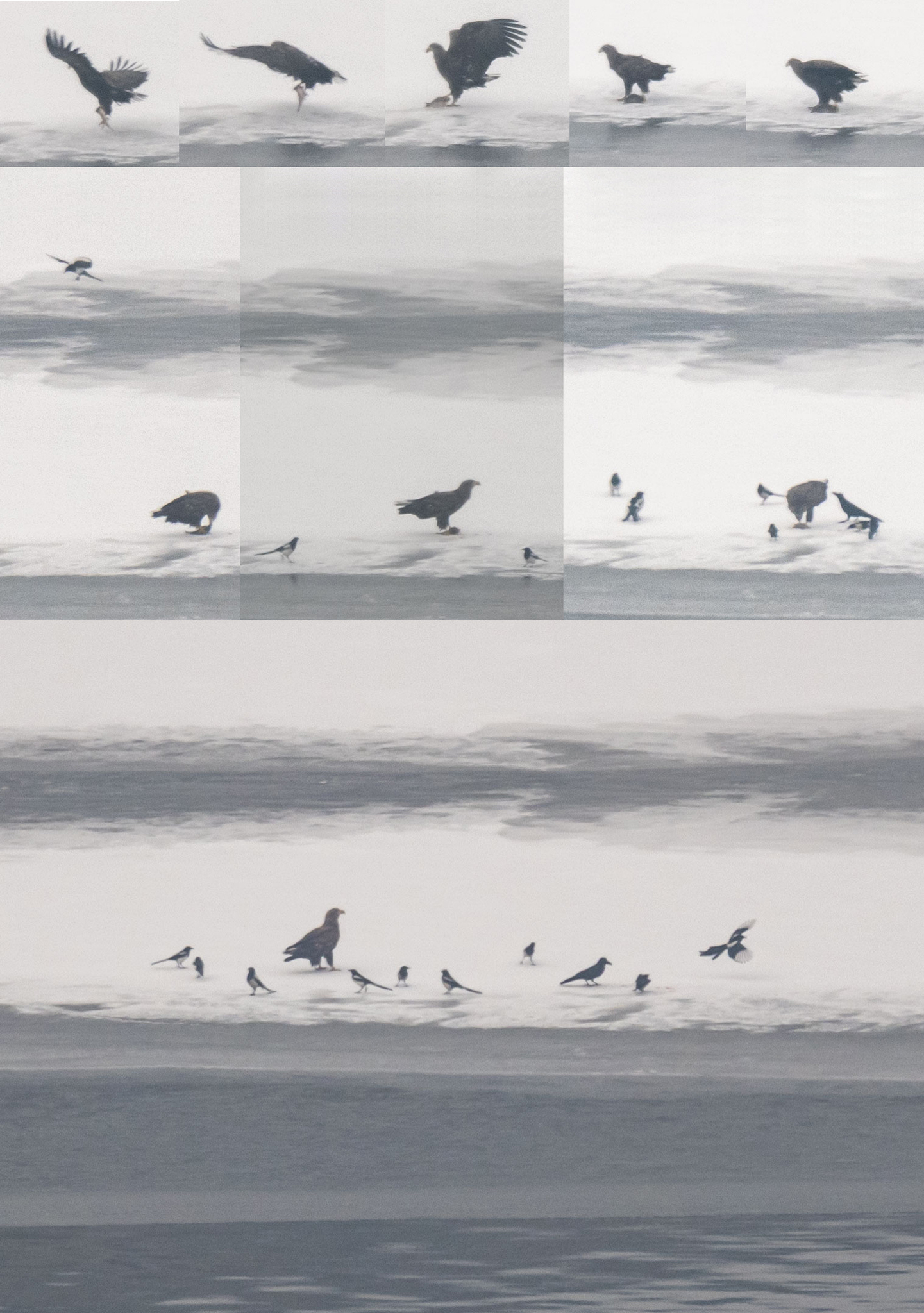
Spends up to 90% of the day perched, alternating with soaring over water. Diet is varied and opportunistic: 48.5% birds, 39.95% fish, and 9.95% mammals. Fish are caught in shallow water (<2 m) via plunge-dives or surface grabs; preferred species include northern pike and common bream. Bird prey includes diving ducks (exhausted by repeated attacks), coots, gulls, and seabirds. Mammals such as hares and rabbits are taken, especially in winter. Scavenging is common. Territorial, with pairs engaging in aerial displays including mutual cartwheeling. Nests are huge stick structures in tall trees or on cliffs. Clutch size averages 1.5–2 eggs; incubation lasts 38–42 days. Fledging occurs at 70–90 days. Sexual maturity at 5–6 years.
Conservation
IUCN estimates 20,000–49,999 mature individuals. Historically declined due to persecution, habitat loss, and pesticides (DDT causing eggshell thinning). Populations have recovered in many European countries through legal protection, pesticide bans, habitat conservation, and reintroduction programs in Scotland, Ireland, and the Czech Republic. Current threats include illegal poisoning, lead poisoning from ammunition, collisions with wind turbines (e.g., Smøla Wind Farm), and power lines. Genetic diversity remains appreciable in recovering European populations.
Culture
Prominent in ancient Saxon folklore and artwork; believed to be the white eagle in the Polish coat of arms. Often depicted grasping a fish. Bones found in 6,000-year-old burial mounds in Orkney, Scotland, suggesting prehistoric reverence. Neanderthal use of talons for jewelry is suggested by cut marks found in Krapina. In Shetland folklore, fishermen believed sea eagles signaled rising fish.
Source: Wikipedia · CC BY-SA 3.0
Taxonomy
- Order
- Accipitriformes
- Family
- Accipitridae
- Genus
- Haliaeetus
Subspecies (2)
-
Haliaeetus albicilla albicilla
locally in Palearctic, western Iceland, and western Alaska
Data Sources
Species description from Wikipedia, licensed under CC BY-SA 3.0.
Bird images and sounds sourced from GBIF, contributed by citizen scientists worldwide under Creative Commons licenses.
Taxonomy data from AviList 2025.