
White-tailed Eagle
Haliaeetus albicilla
白尾海雕
Introduction
A large bird of prey in the family Accipitridae, genus Haliaeetus (sea eagles). Widely distributed across temperate Eurasia, breeding from Greenland and Iceland east to Hokkaido, Japan. Inhabits coastal saltwater areas and inland freshwater lakes, wetlands, bogs, and rivers, requiring old-growth trees or sea cliffs for nesting. An apex predator and opportunistic scavenger with a diet dominated by fish and water birds. Forms a species pair with the bald eagle of North America. Following severe population declines from 19th-century persecution and mid-20th-century pesticide poisoning, conservation measures have enabled significant recovery across much of its range.
Description
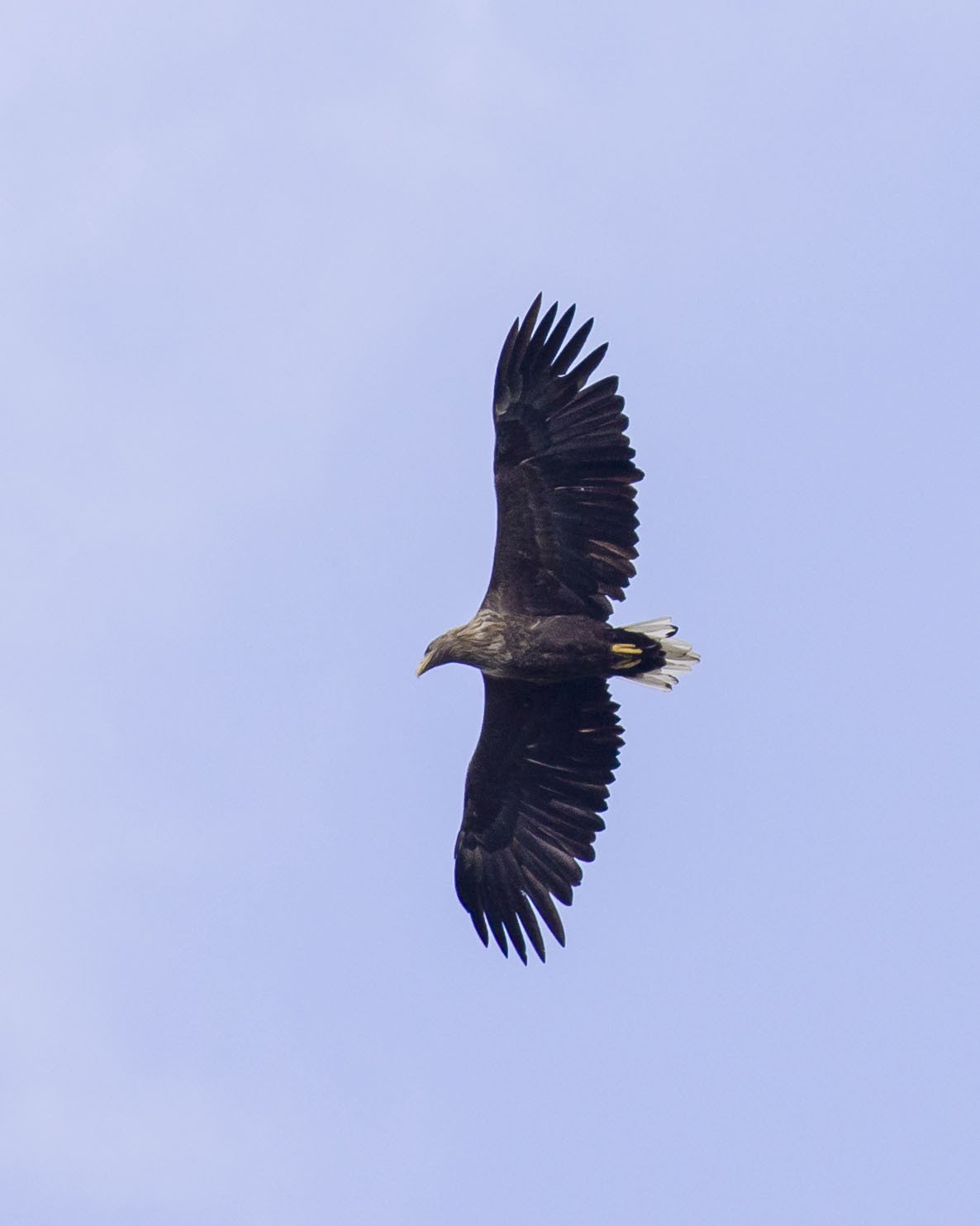
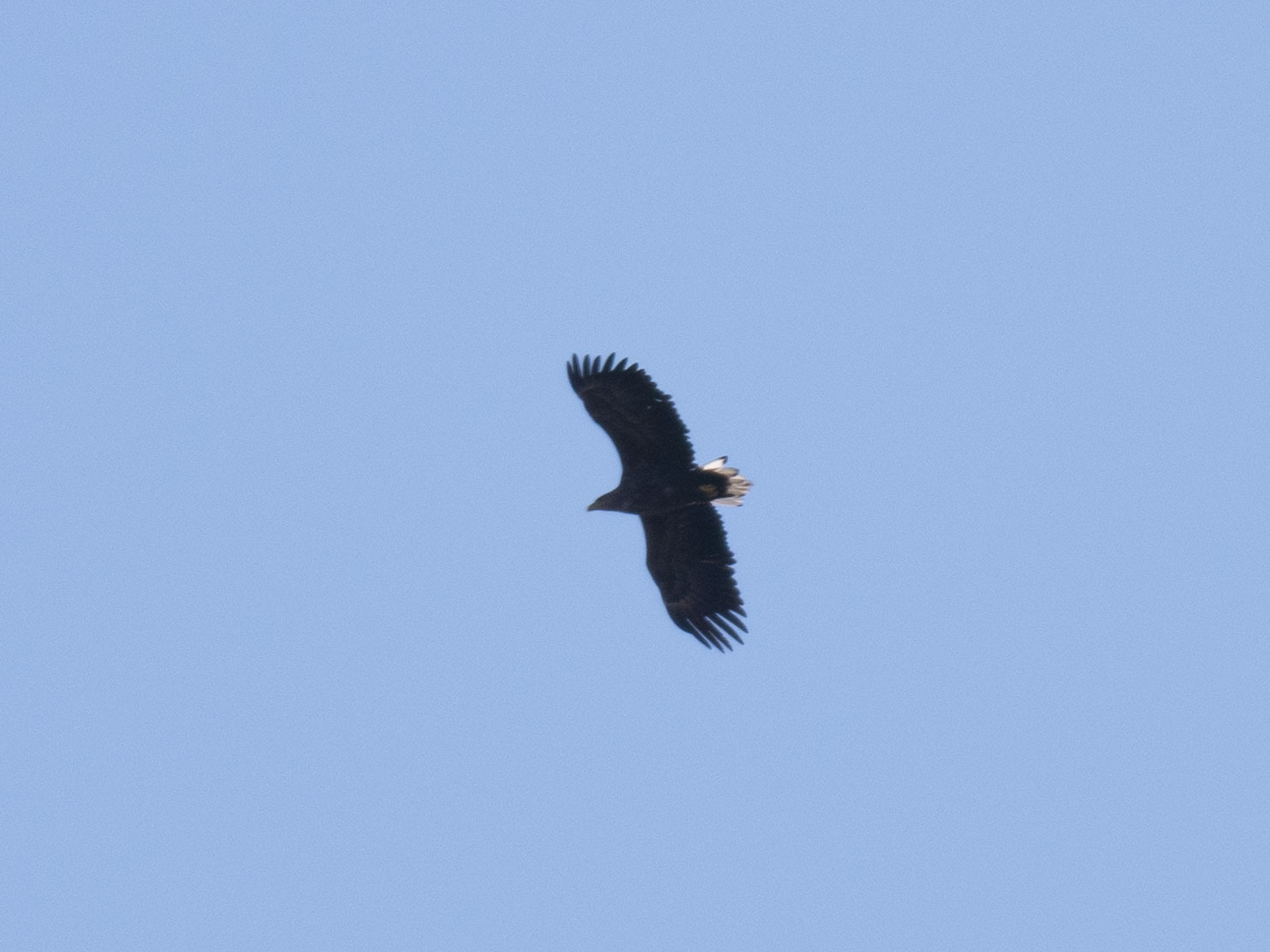
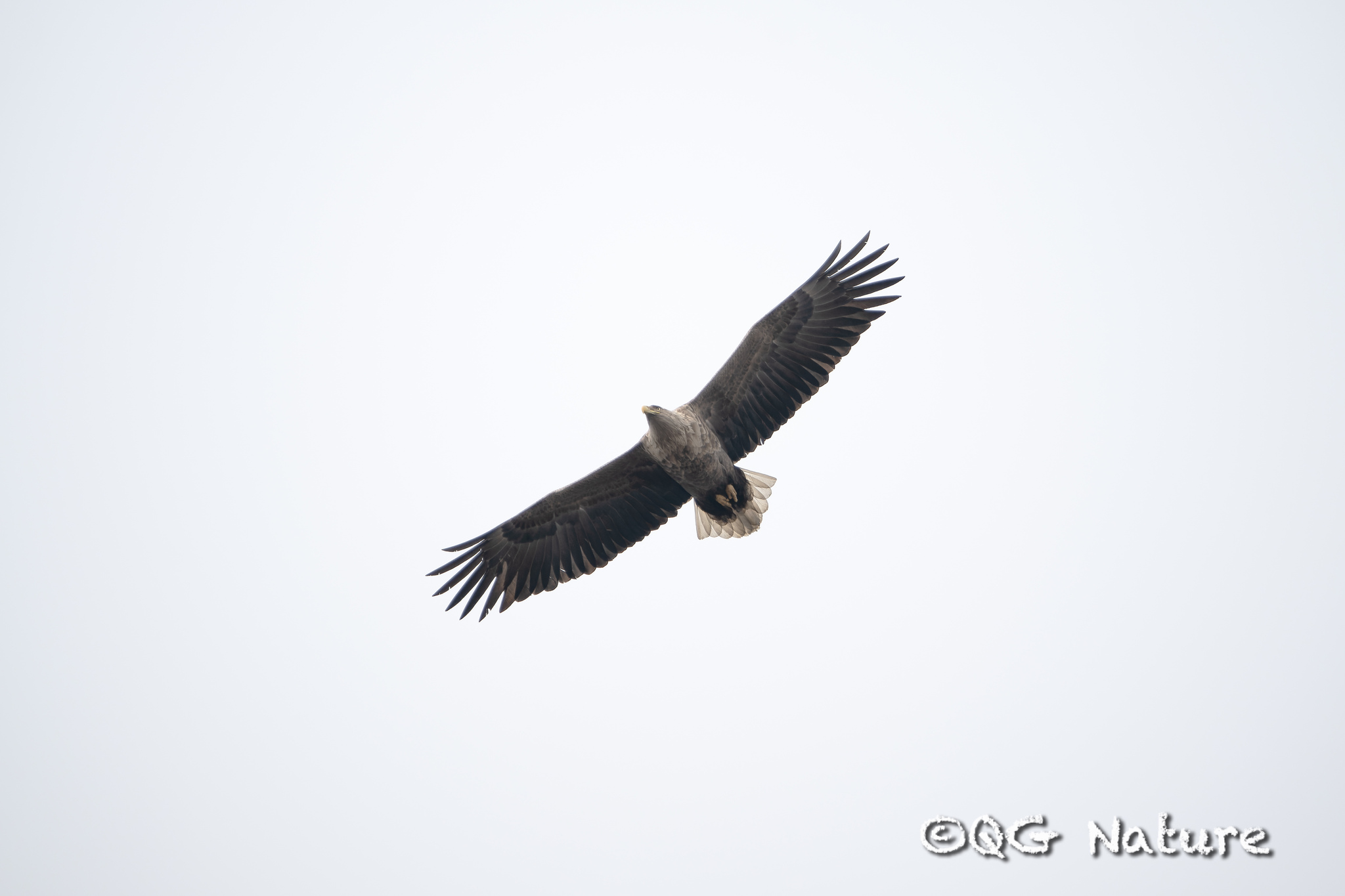
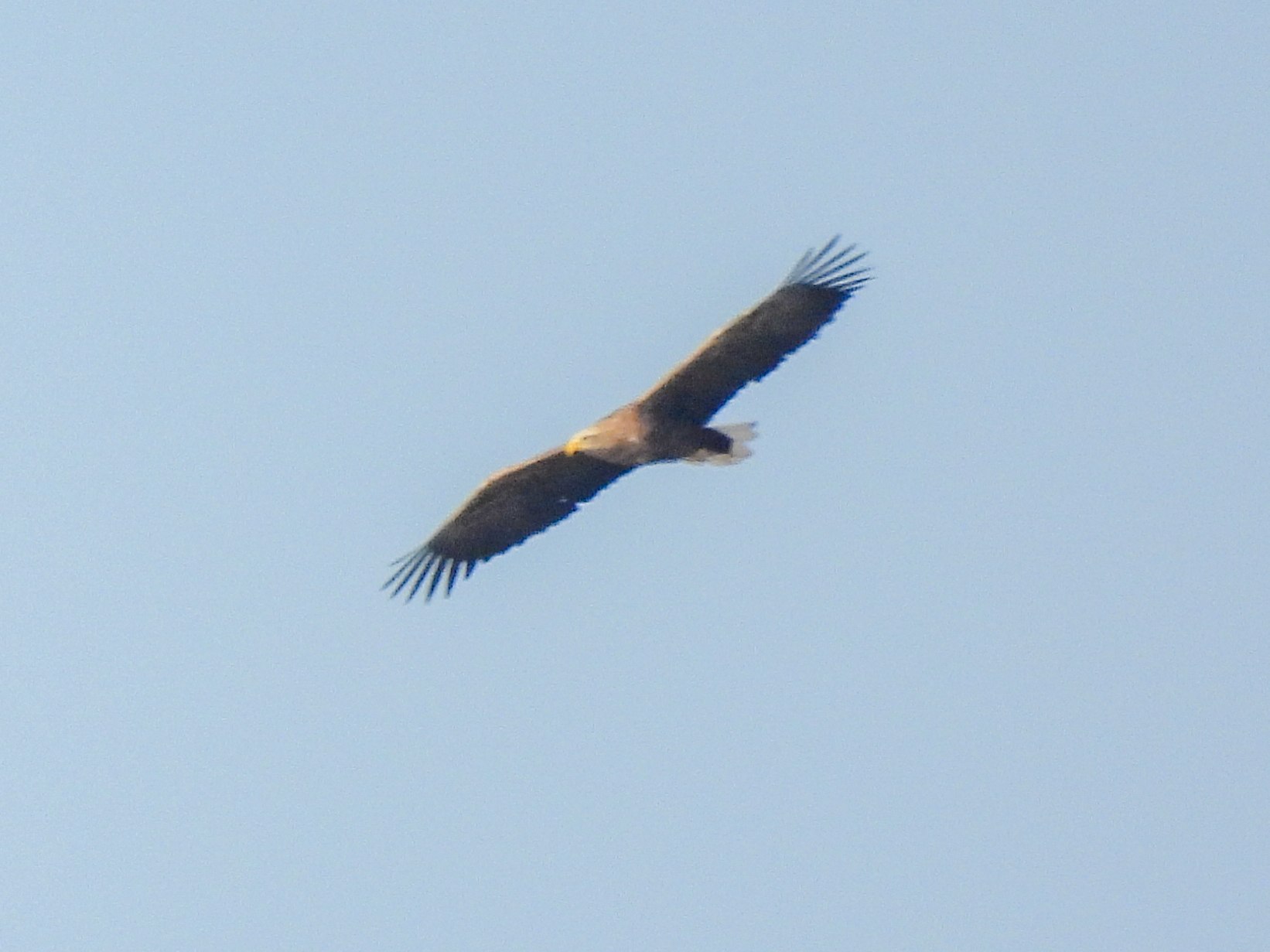
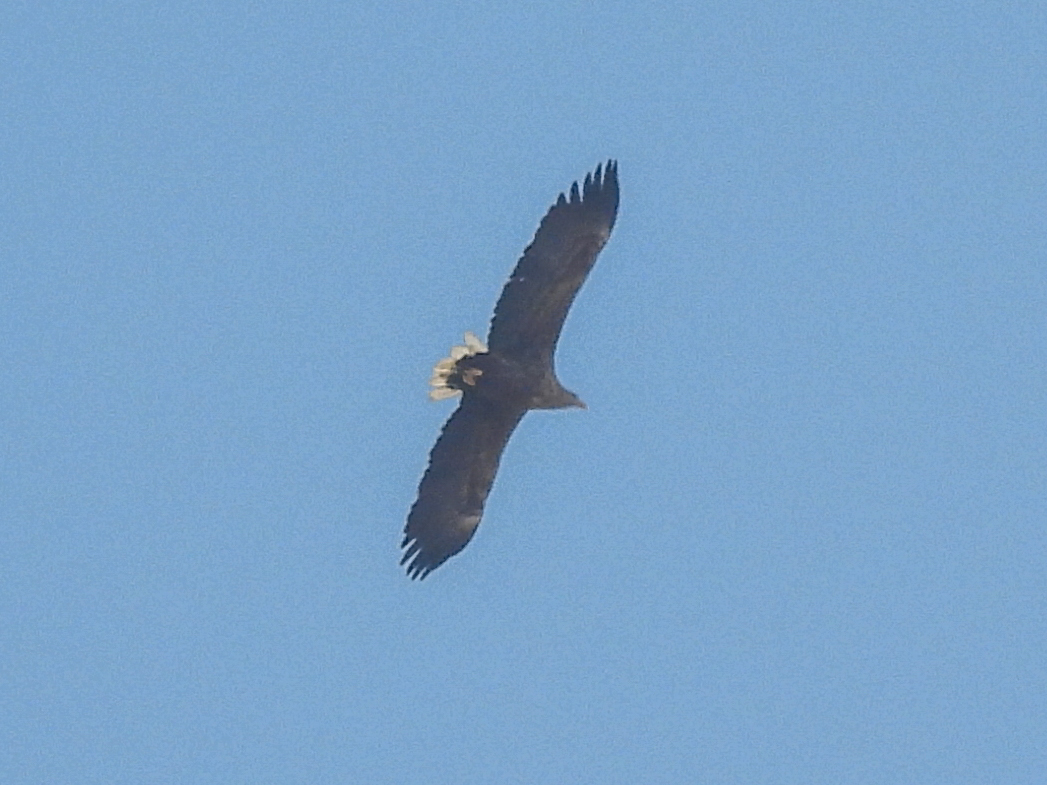
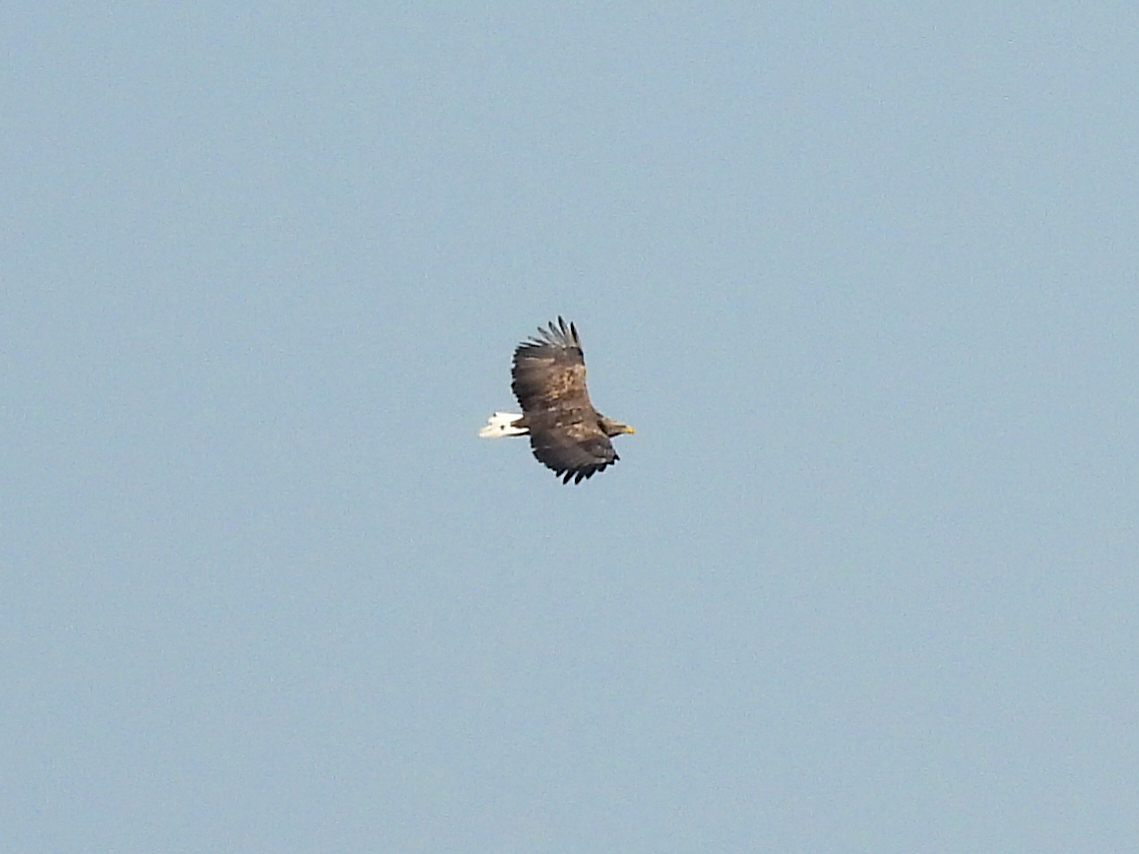
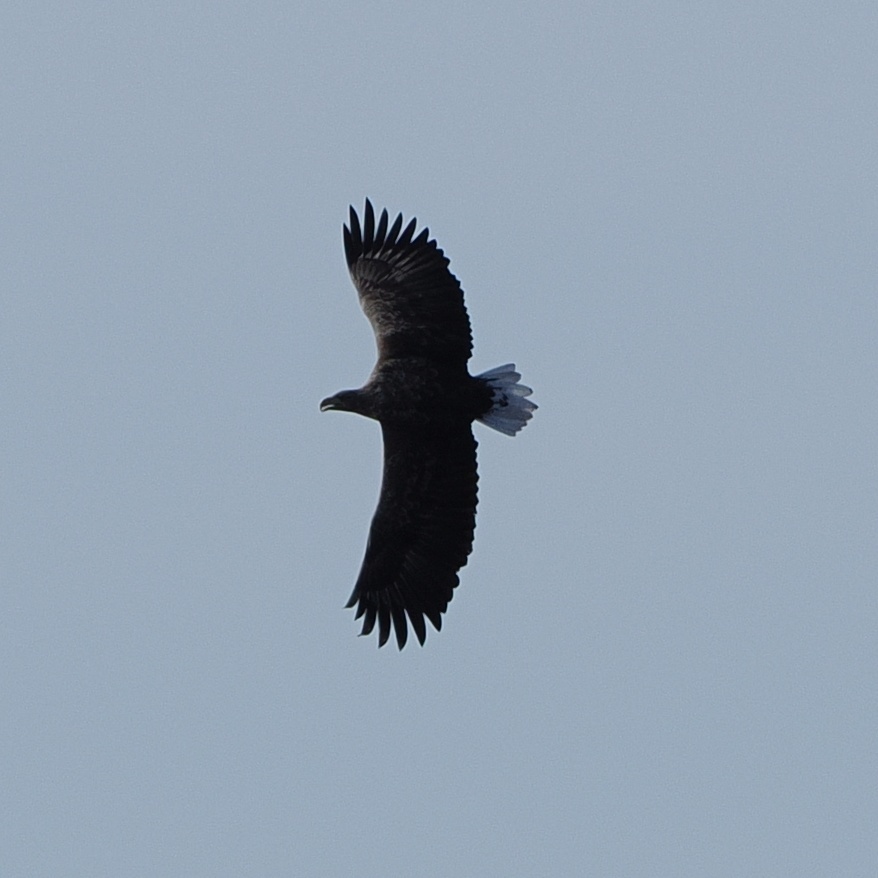
One of the world's largest birds of prey, measuring 66-94 cm in length with a wingspan of 1.78-2.45 m. Adults are greyish mid-brown overall with distinctly paler buff-colored head, neck, and upper breast. The wedge-shaped white tail contrasts prominently with the brown plumage. All bare parts—including the bill, cere, feet, and eyes—are yellow. Juveniles are darker brown with whitish feather edgings, a washed-out greyish-cream tail with blackish edges, a dark brown head, and a bicolored bill. The hallux claw (largest talon) measures 37-46 mm. Sexes are similar but females average 25% heavier.
Identification
Adults are unmistakable with their fully white tails; no other eagle in their range shares this trait except at the eastern limits. At distance, may resemble Griffon vultures but distinguished by smaller head, curved trailing wing-edges, and more raised wings. Compared to bald eagles, the color transition between brown body and buff head is subtler, and the neck appears longer. Juveniles closely resemble bald eagle juveniles but have a longer neck, broader wings, and less extensive whitish mottling on the underwing. Steller's sea eagles are larger with a more massive pale bill and paddle-shaped wings. Golden eagles are smaller with a shorter neck, longer squarer tail, and darker rich brown plumage.
Distribution & Habitat
Breeds across northern Europe and northern Asia, from southern Greenland and Iceland through Scandinavia, Russia (absent only from high Arctic regions), and east to the Bering Sea. Extends into northern Mongolia, northwestern China, North Korea, Sakhalin, the Kurils, and Hokkaido. Northern limits reach 75 degrees north on the Taymyr Peninsula. Wintering occurs throughout breeding range and south to southern Europe, central Asia, the Indian subcontinent, China, Korea, and Japan. Dispersing birds occasionally reach North America via the Aleutian Islands. Habitat is lowland areas near large bodies of open water, including coastal cliffs, estuaries, inland lakes, rivers, marshes, and alluvial wetlands.
Behavior & Ecology
Diet is varied, opportunistic, and seasonal, comprising approximately 48.5% birds, 40% fish, 10% mammals, and 1.6% other prey. Over 300 prey species recorded. Primarily hunts from perches near water, capturing fish in shallow dives or by wading. Forces diving water birds to exhaust themselves through repeated attacks. Regularly scavenges carrion, especially in winter, and piratically steals food from other birds and otters. Breeding season ranges from January to September across the range. Courtship involves spectacular aerial displays including mutual talon-grappling cartwheels. Nests are massive stick structures in trees or on cliffs, often reused and enlarged over years. Pairs are long-term monogamous. Vocalizations include gri-gri-gri calls by males and deeper gra-gra-gra by females, with duetting in spring.
Conservation
IUCN Red List status is Least Concern as of 2013, with total population estimated at 20,000-49,999 mature individuals. Previously endangered or extinct in several countries due to 19th-century persecution, mid-20th-century pesticide contamination (especially DDT causing eggshell thinning), and habitat loss. Population recovery has been driven by legal protections, habitat conservation, winter feeding programs, and reintroduction efforts. Key populations include Norway (9,000-11,000 pairs), European Russia (900-1,100 pairs), and expanding populations in Germany, Poland, Denmark, and the Netherlands. Reintroductions have been successful in Scotland (first successful program 1975-1987) and Ireland (since 2007). Ongoing threats include illegal poisoning, lead poisoning from bullet fragments, wind turbine collisions, and human disturbance at nesting sites.
Culture
Prominent in ancient Saxon folklore and artwork. The white-tailed eagle is depicted in the Polish coat of arms and other heraldic symbols across northern Europe. Sea eagles are often depicted grasping a fish in their talons in heraldry. Archaeological evidence from Orkney, Scotland shows sea eagle bones in 6,000-year-old burial mounds, suggesting prehistoric reverence. The Tomb of the Eagles on Orkney contained sea eagle bones alongside human remains. Cut marks on eagle talons from Krapina indicate Neanderthal use of talons as jewelry. In Shetland folklore, fishermen believed eagle appearances caused fish to rise belly-up, leading to use of eagle fat on bait.
Source: Wikipedia · CC BY-SA 3.0
Taxonomy
- Order
- Accipitriformes
- Family
- Accipitridae
- Genus
- Haliaeetus
- eBird Code
- whteag
Subspecies (2)
-
Haliaeetus albicilla albicilla
locally in Palearctic, western Iceland, and western Alaska
-
Haliaeetus albicilla groenlandicus
southwestern Greenland
Data Sources
Species description from Wikipedia, licensed under CC BY-SA 3.0.
Bird images and sounds sourced from GBIF, contributed by citizen scientists worldwide under Creative Commons licenses.
Taxonomy data from AviList 2025.