Coraciiformes / Alcedinidae / Halcyon
White-throated Kingfisher
Halcyon smyrnensis · 白胸翡翠
Introduction
A tree kingfisher widely distributed in Asia from the Sinai east through the Indian subcontinent to China and Indonesia. It is a resident over much of its range, though some populations make short-distance movements. Distinctively, it is often found well away from water, feeding on a wide range of prey including small reptiles, amphibians, crabs, rodents, and birds.
Description
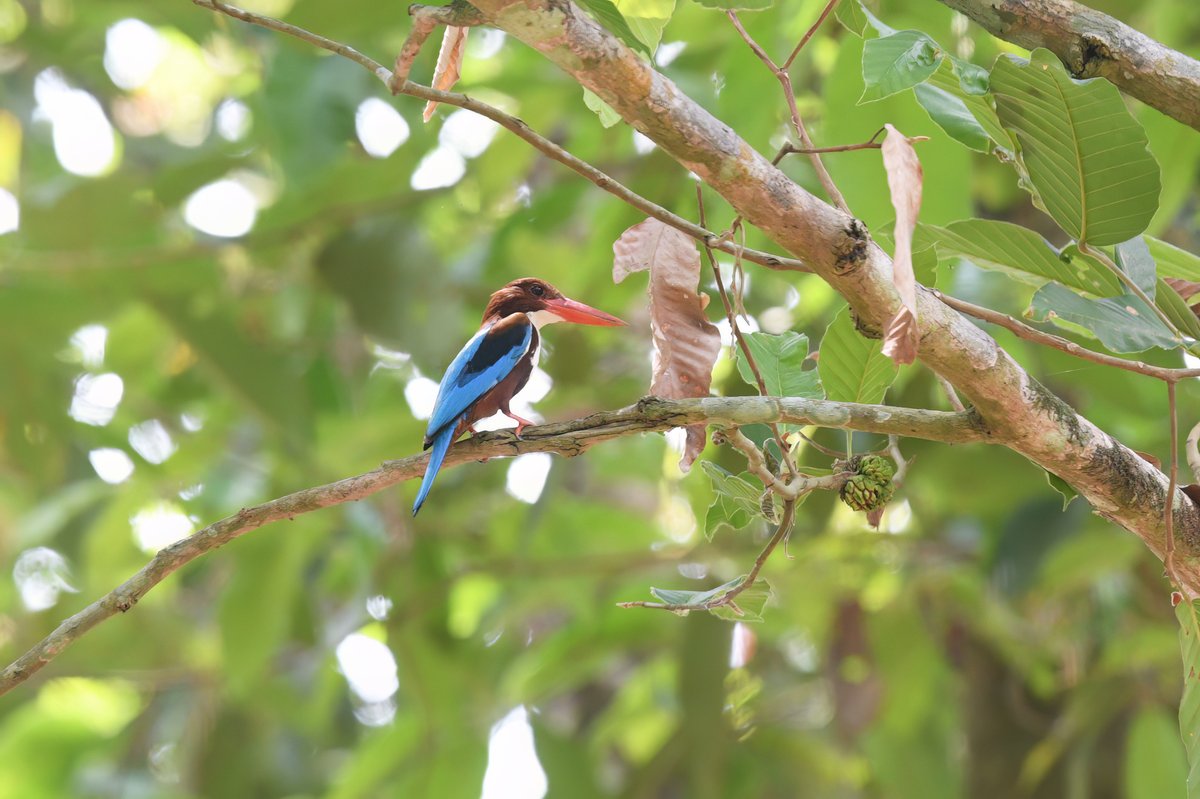
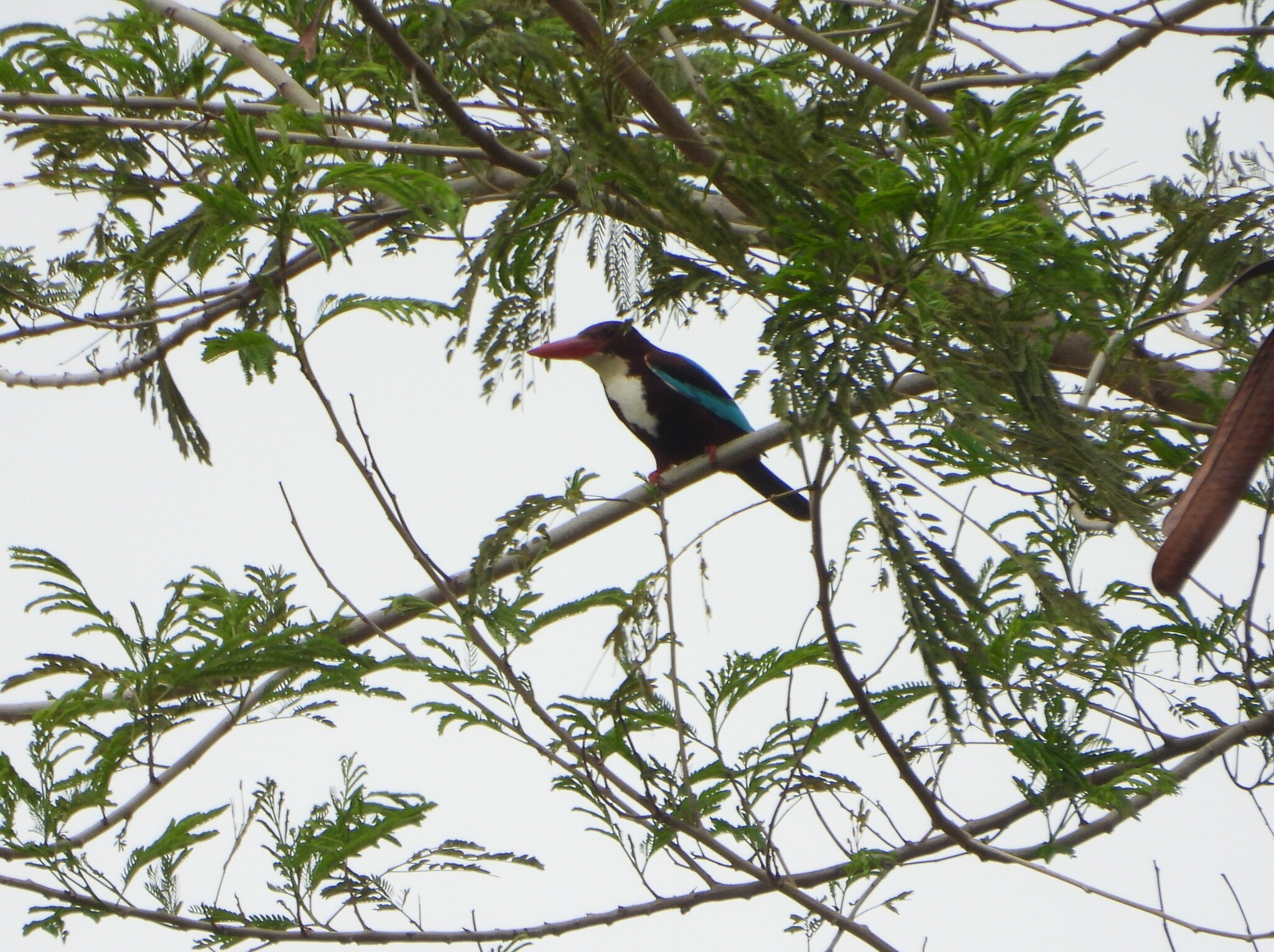
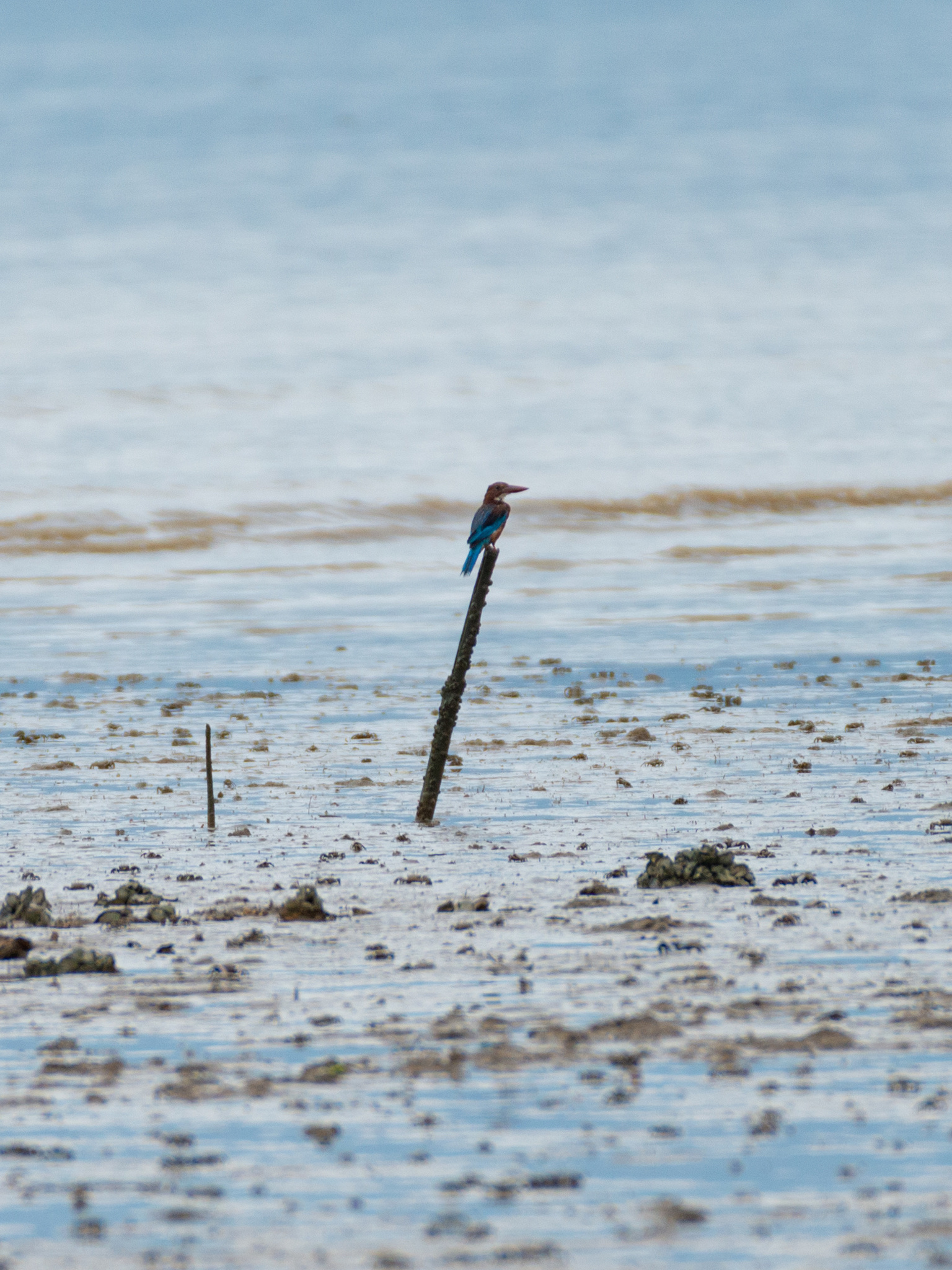
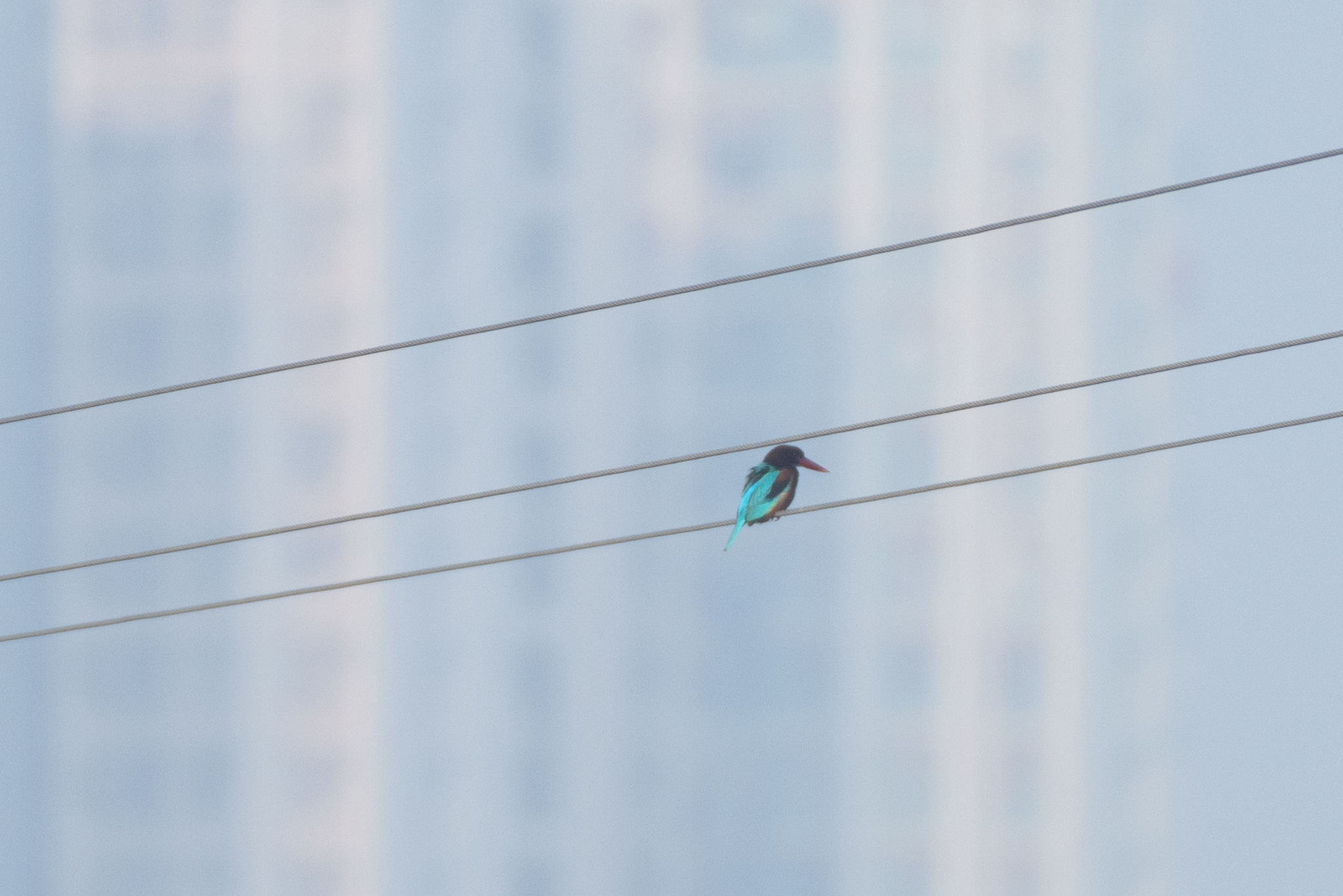
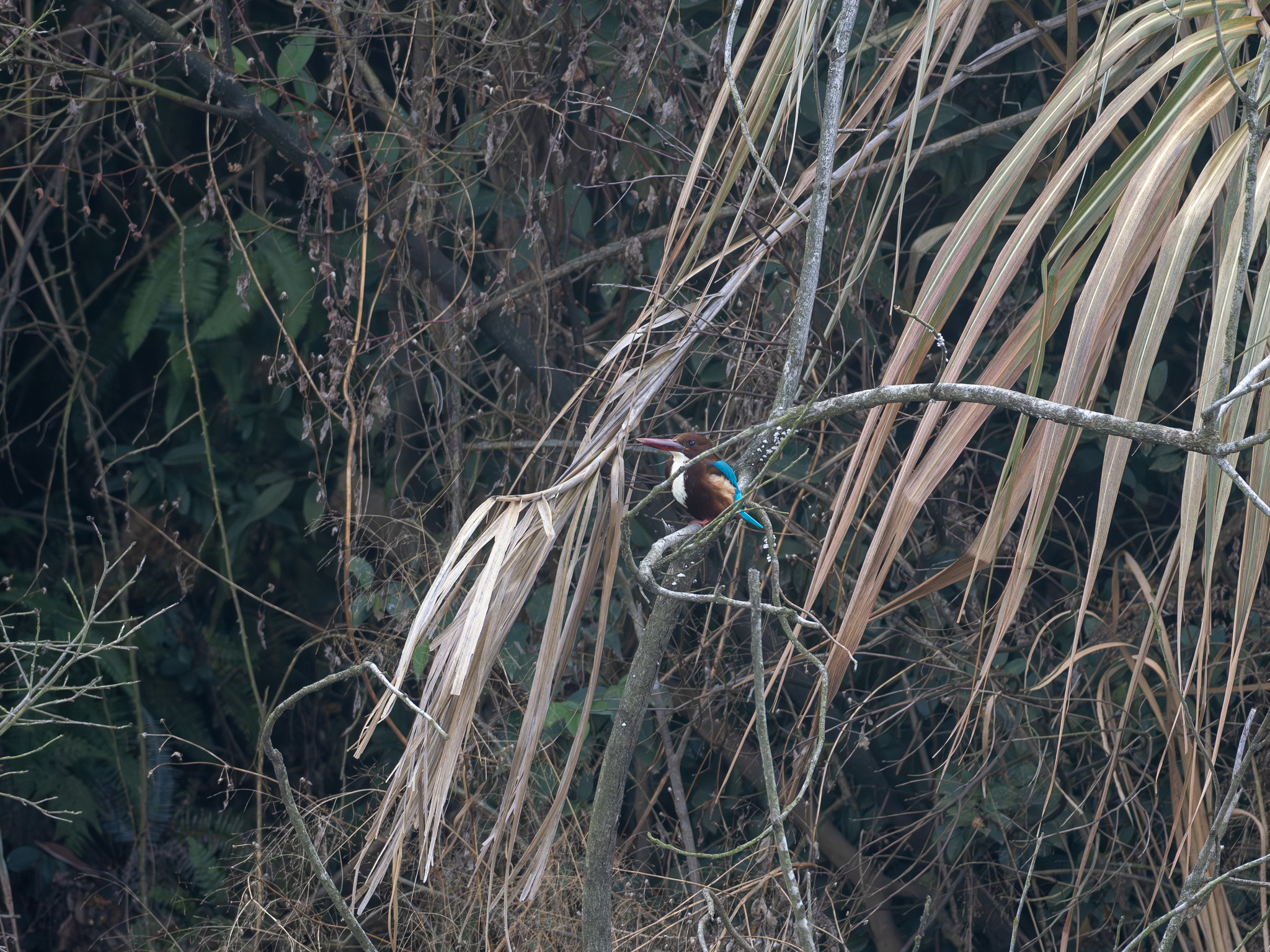
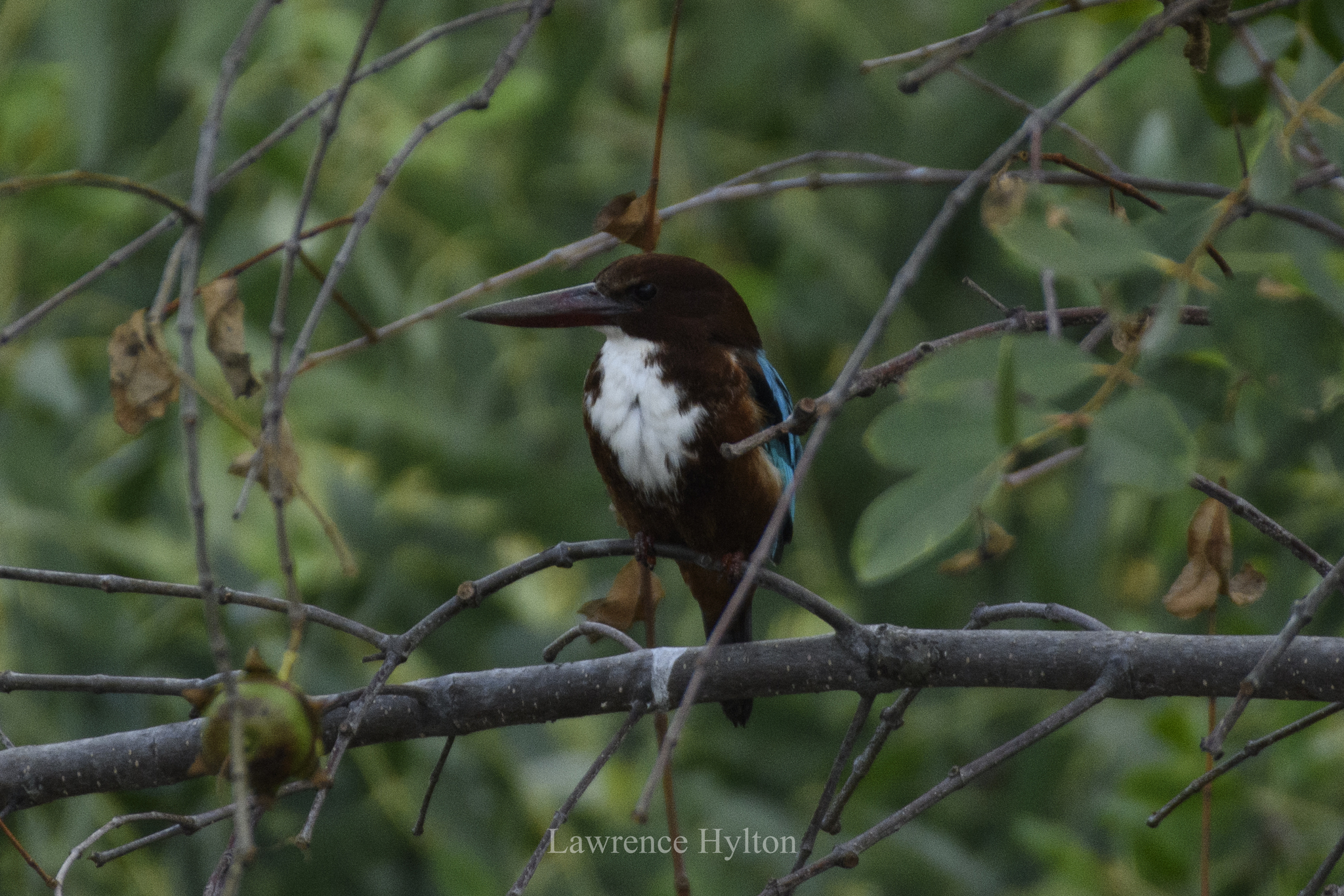
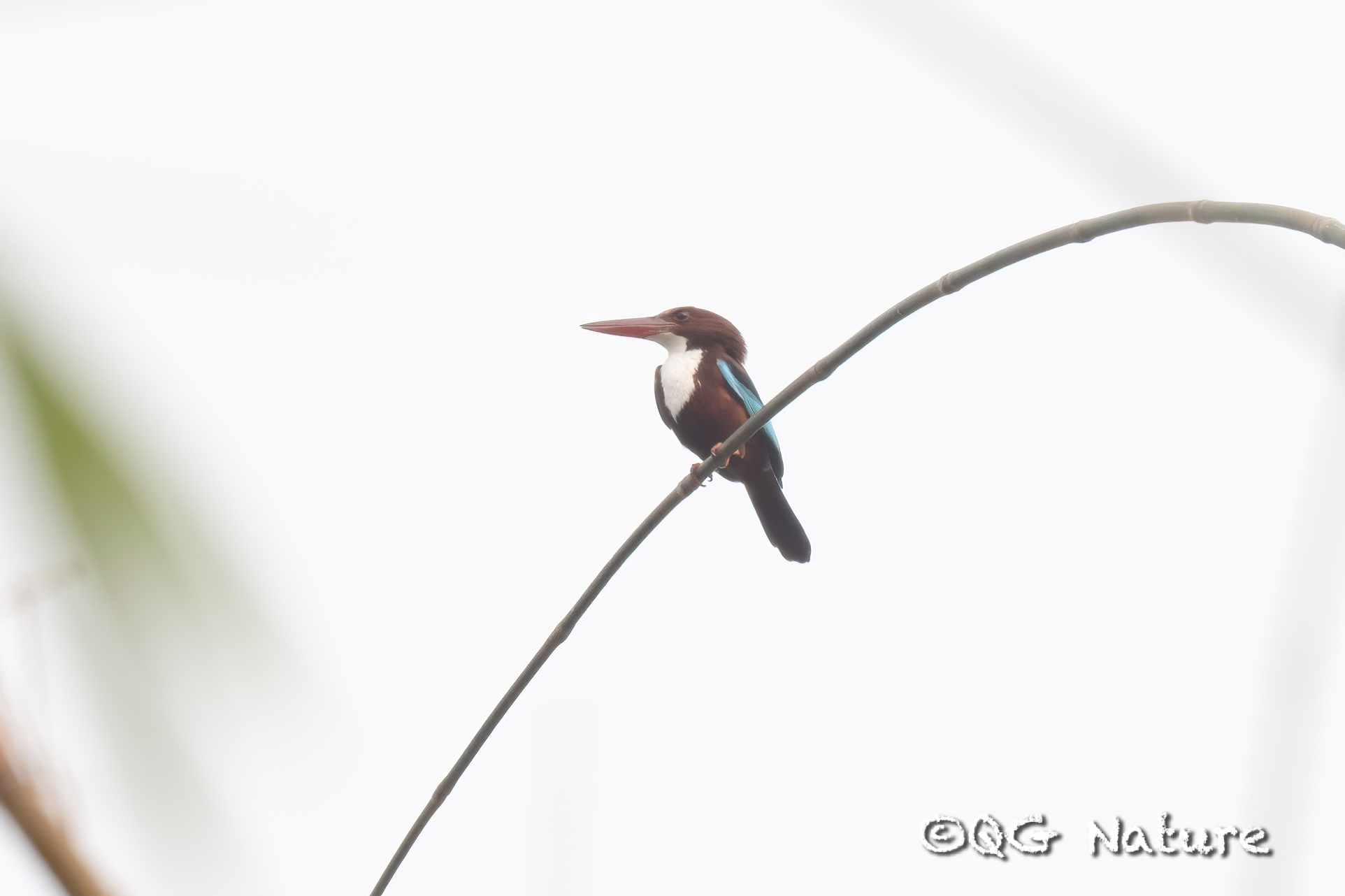
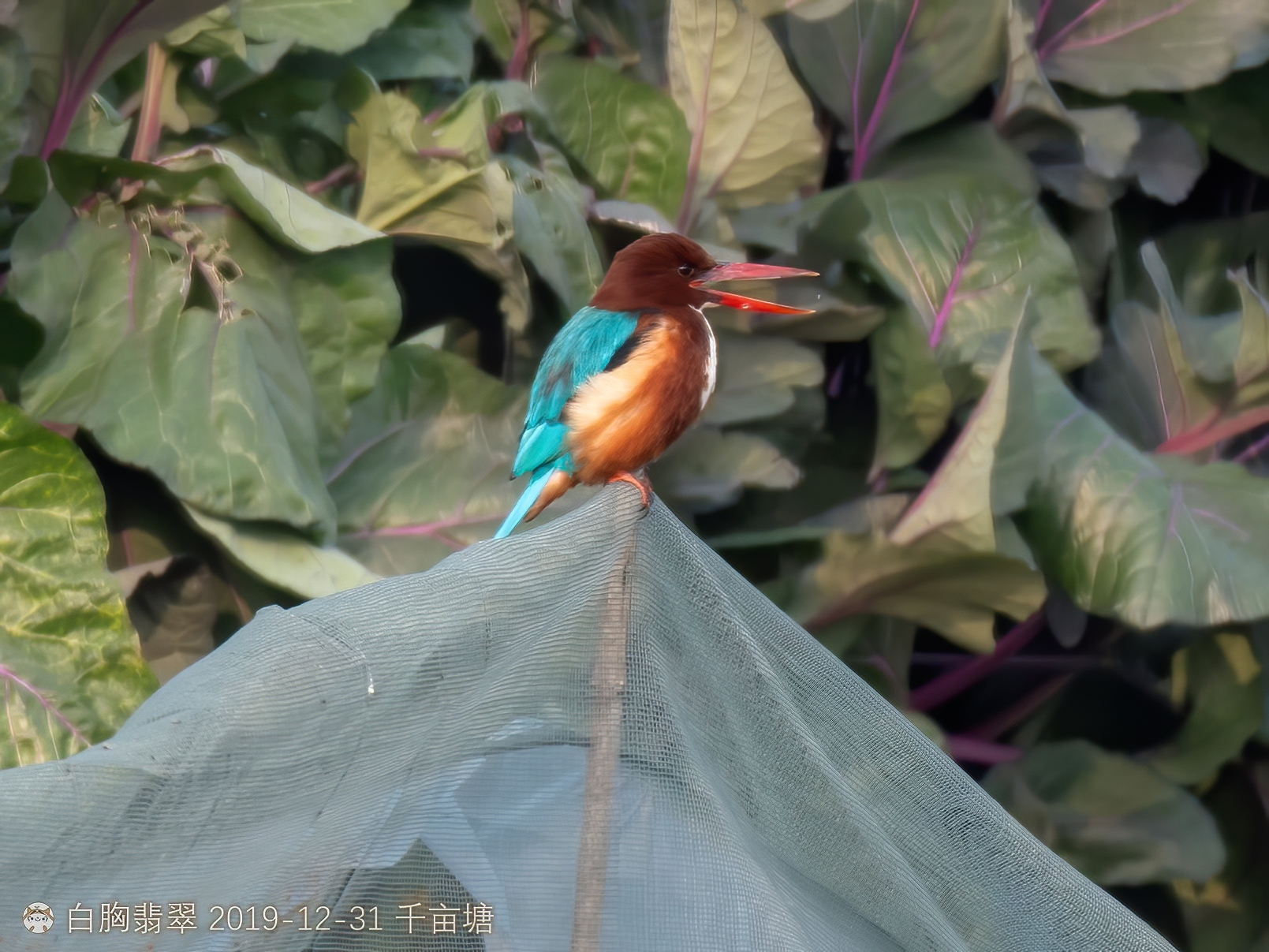
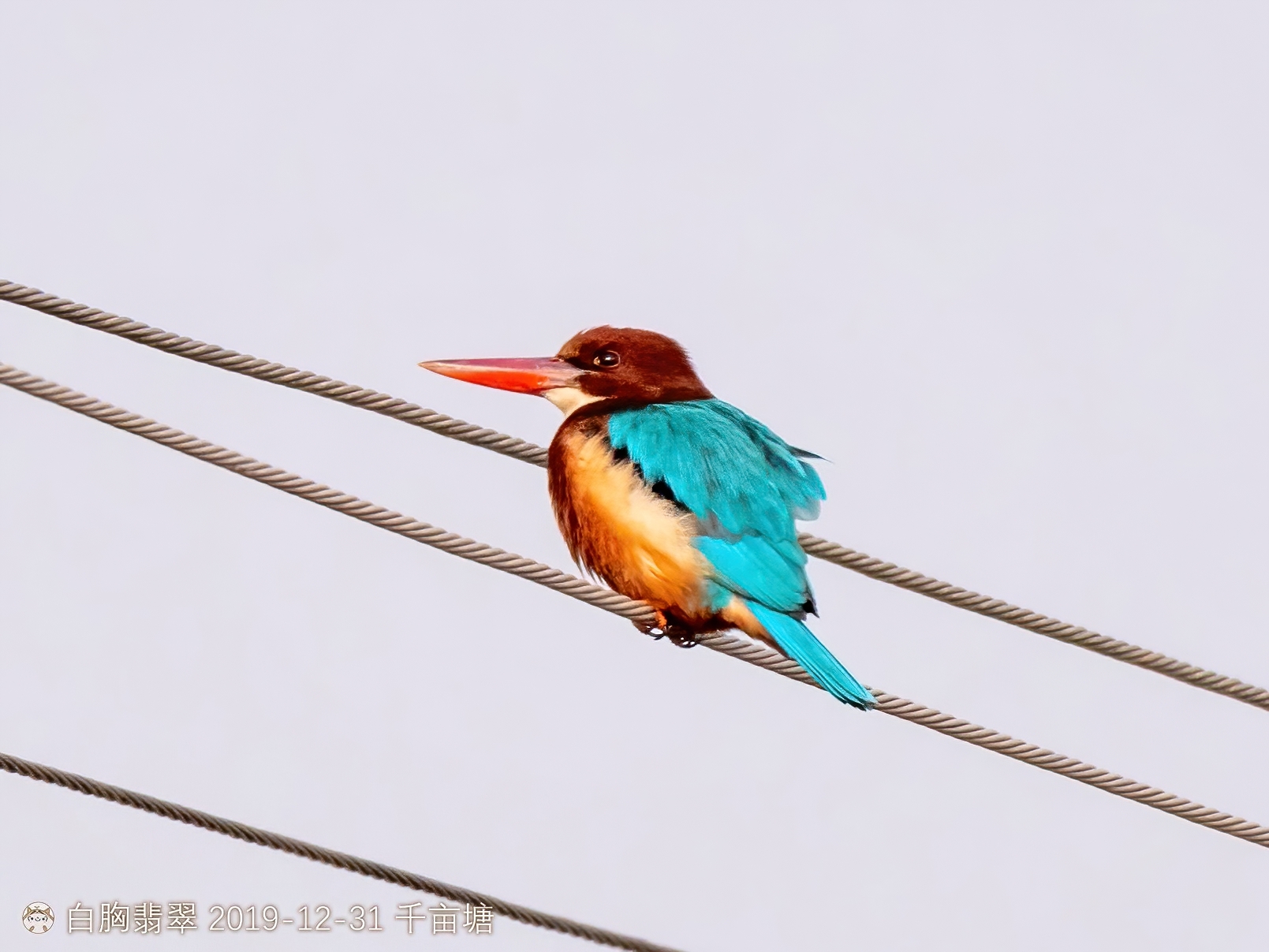
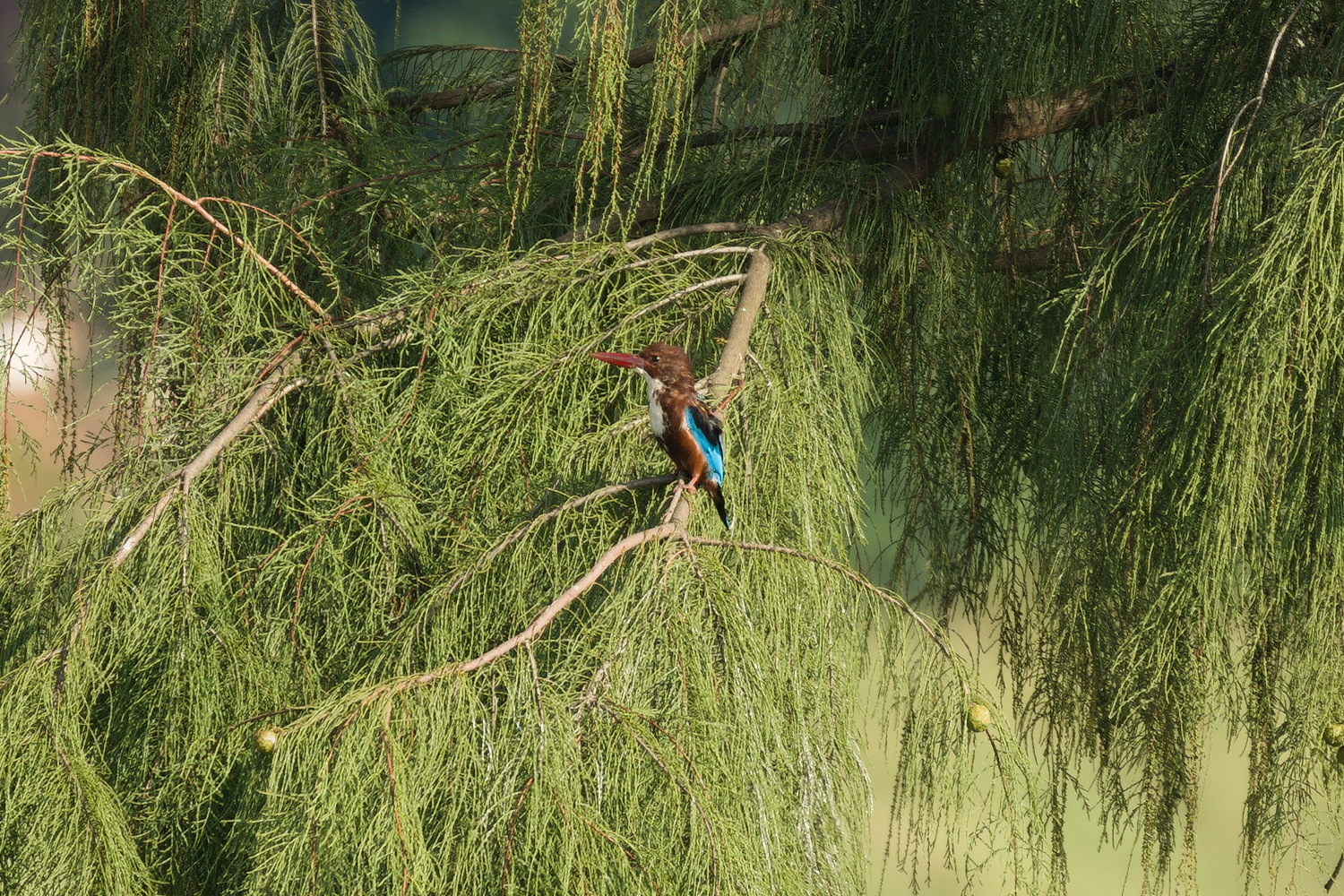
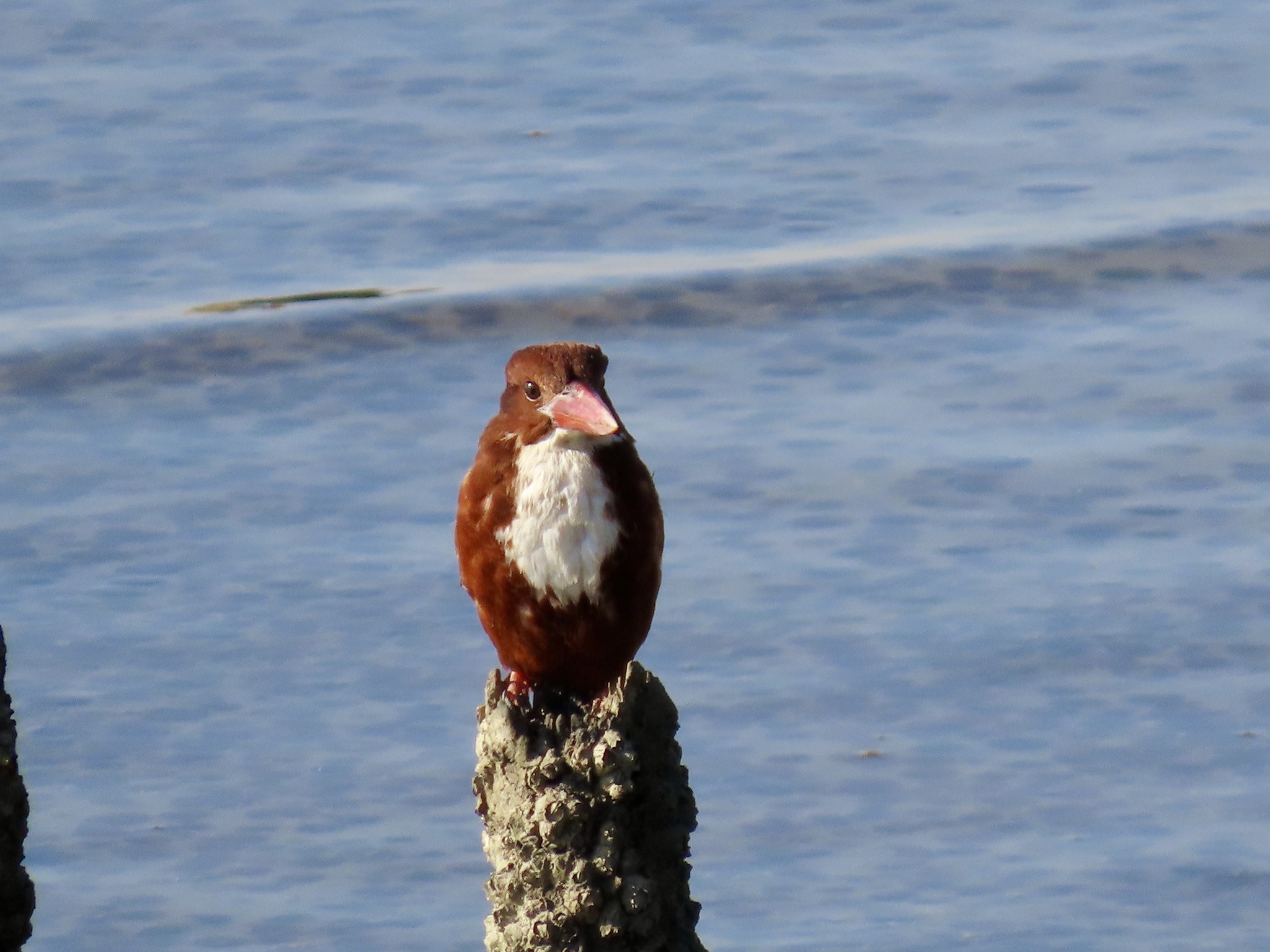
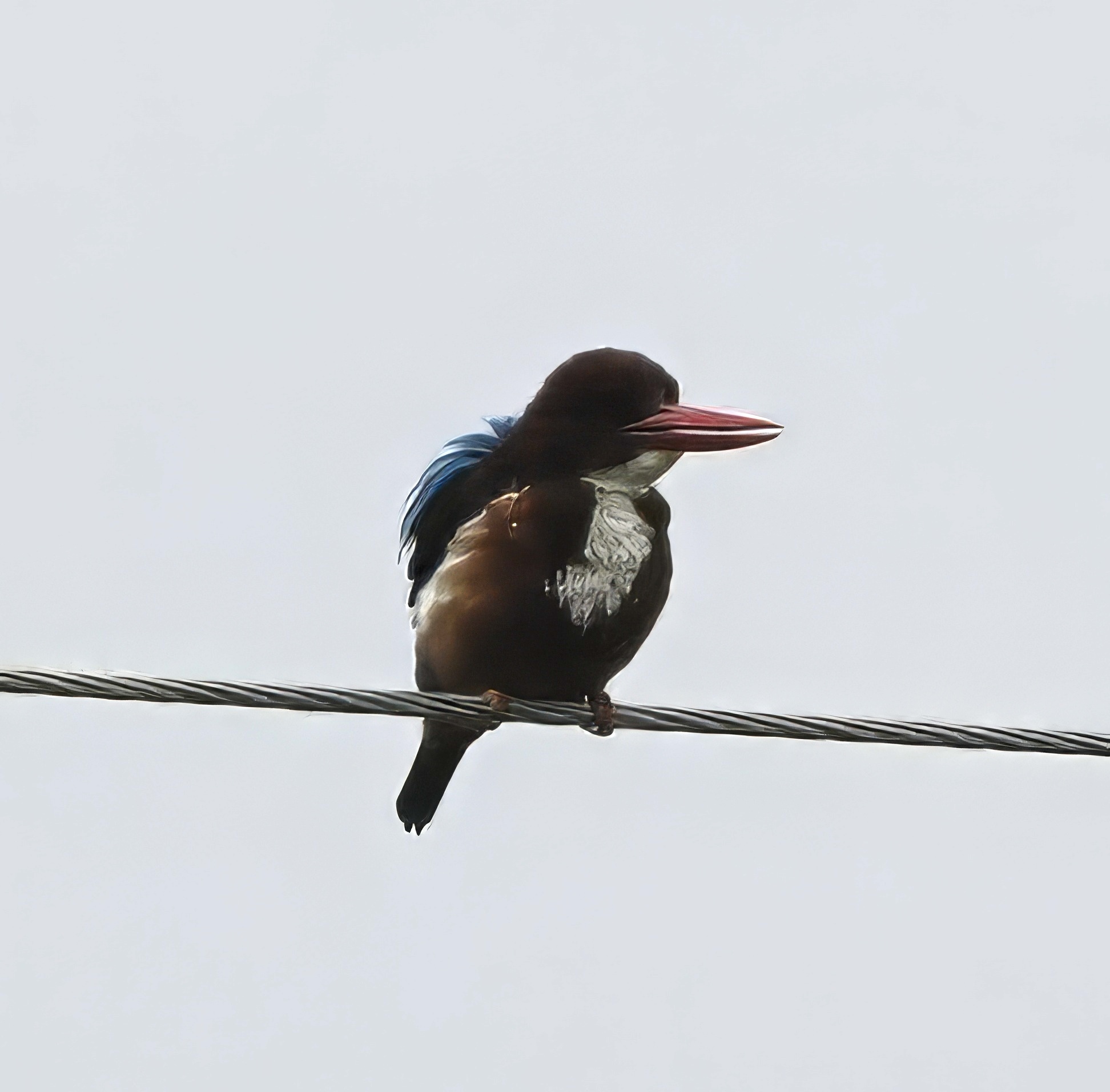
This is a large kingfisher, 27–28 cm (10.6–11.0 in) in length. The adult has a bright blue back, wings, and tail. Its head, shoulders, flanks, and lower belly are chestnut, while the throat and breast are white. The large bill and legs are bright red. Sexes are similar, but juveniles are a duller version of the adult. Subspecies vary clinally in size and shade; for instance, the mantle is more greenish in some races and more blue or purplish in others. Race fusca is slightly smaller and bluer with a darker brown underside than the nominate race. Race saturatior is larger with darker brown underparts. Albinism has been noted on occasion.
Identification
In flight, the species exhibits rapid, direct movement with whirring short rounded wings. Large white patches are visible on the blue and black wings. Key field marks include the bright red bill and legs, chestnut head and flanks, and white throat and breast.
Distribution & Habitat
Widespread in Asia from the Sinai east through the Indian subcontinent to China and Indonesia. Five subspecies are recognized: H. s. smyrnensis (south Turkey to northeast Egypt, Iraq to northwest India), H. s. fusca (west India and Sri Lanka), H. s. perpulchra (Bhutan to east India, Indochina, Malay Peninsula, west Java), H. s. saturatior (Andaman Islands), and H. s. fokiensis (south and east China, Taiwan, Hainan). It inhabits open country in the plains with trees, wires, or other perches, and has been recorded at elevations up to 7500 ft in the Himalayas. The range of the species is expanding.
Behavior & Ecology
Breeding begins at the onset of the Monsoons. Males call loudly from prominent perches in the early morning and perform courtship displays involving stiffly flicking wings to expose white wing mirrors and raising the bill to display the white throat. Females make a rapid kit-kit-kit... call. The nest is a tunnel, typically 50 cm long but up to 3 feet, dug into earth banks or haystacks using bills. A single clutch of 4–7 round white eggs is typical; incubation lasts 20–22 days, and chicks fledge in 19 days. The diet includes large crustaceans, insects, earthworms, rodents, lizards, snakes, fish, frogs, and small birds such as sparrows and munias. Young are fed mostly invertebrates. Birds are sometimes attracted to lights at night, suggesting partial migration.
Conservation
Populations are not threatened. An average density of 4.58 individuals per km² has been noted in the Sundarbans mangroves.
Source: Wikipedia · CC BY-SA 3.0
Taxonomy
- Order
- Coraciiformes
- Family
- Alcedinidae
- Genus
- Halcyon
Vocalizations
Subspecies (5)
-
Halcyon smyrnensis fokiensis
southern and eastern China; Hainan and Taiwan
Data Sources
Species description from Wikipedia, licensed under CC BY-SA 3.0.
Bird images and sounds sourced from GBIF, contributed by citizen scientists worldwide under Creative Commons licenses.
Taxonomy data from AviList 2025.