Charadriiformes / Haematopodidae / Haematopus
Eurasian Oystercatcher
Haematopus ostralegus · 蛎鹬
Introduction
A wader in the family Haematopodidae, this species is the most widespread of the oystercatchers. It breeds in western Europe, central Eurosiberia, Kamchatka, China, and the western coast of Korea. Distinctive traits include a specialized bill for opening molluscs or probing for earthworms and a monogamous mating system with long-term pair bonds.
Description
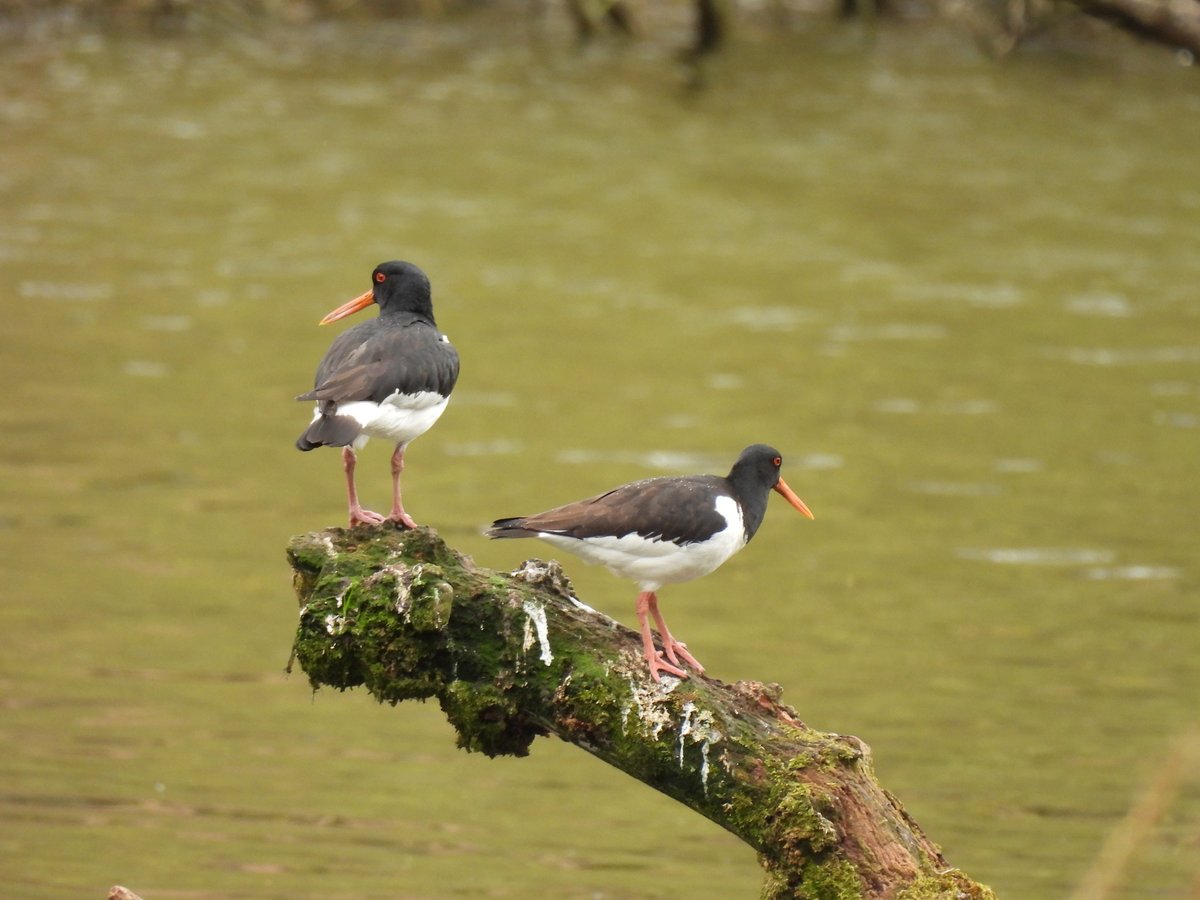
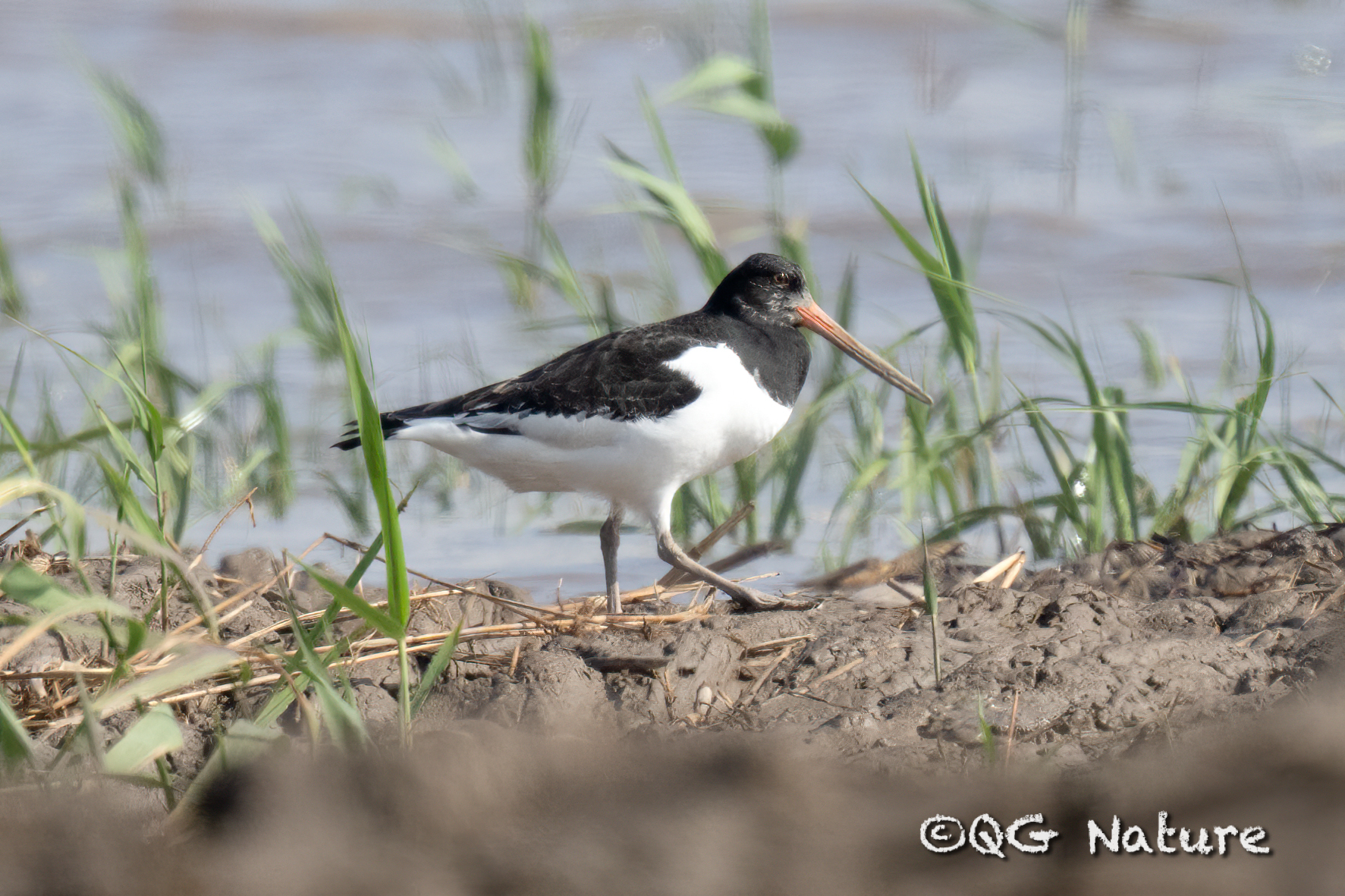
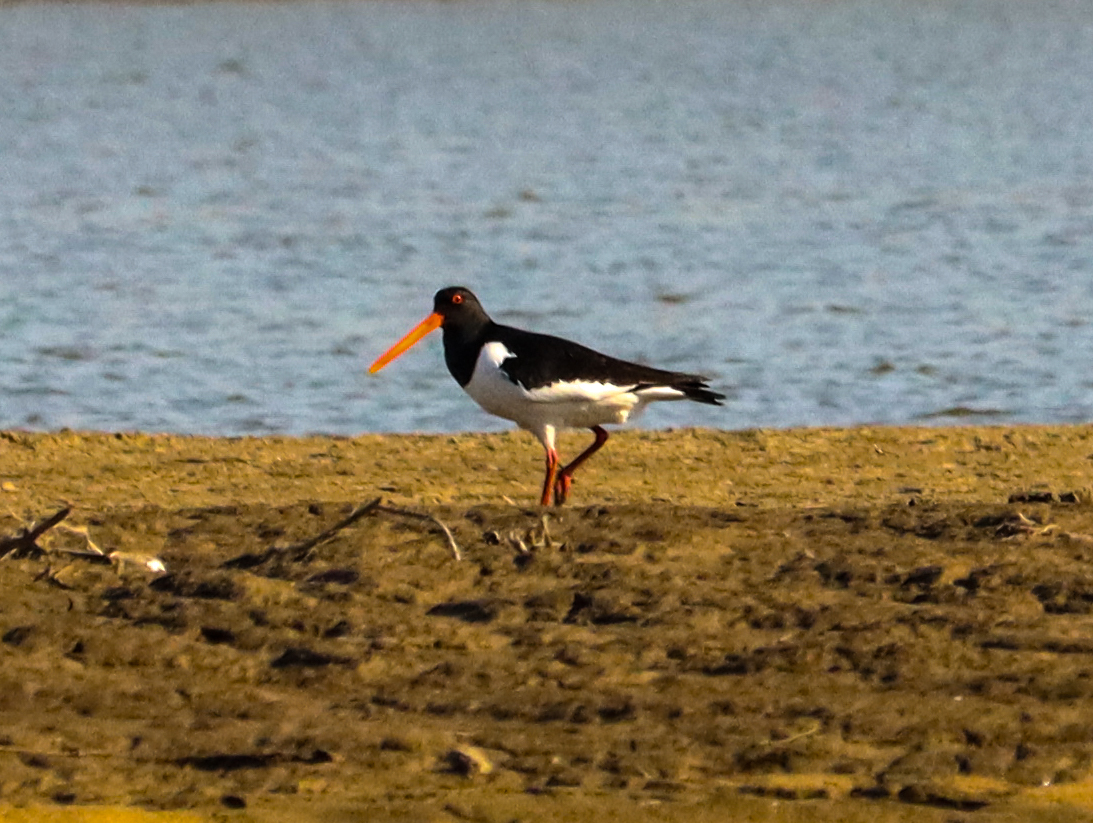
One of the largest waders in its region, measuring 40–45 cm (16–18 in) in length with a wingspan of 80–85 cm (31–33 in). The bill accounts for 8–9 cm (3–3.5 in). Plumage is striking black and white with pink legs and red eyes. Sexes are similar, though females have longer bills. Winter plumage features a white throat collar, visible briefly in adults but longer in immatures. Young birds are browner with a white neck collar and duller bills. Subspecies H. o. longipes has brownish upperparts.
Identification
Unmistakable in flight due to white patches on wings and tail, contrasting with black upperparts and white underparts. Possesses a strong, broad orange-red bill. Vocalizations include a distinctive loud piping call. Differs from the American oystercatcher by having red eyes and black dorsal plumage rather than yellow eyes and blackish-brown back.
Distribution & Habitat
Breeds in western Europe, central Eurosiberia, Kamchatka, China, and western Korea. Migratory over most of its range; European populations winter in North Africa and southern Europe. Present year-round in Ireland, Great Britain, and adjacent coasts, with internal migration from northern breeding grounds to southwestern estuaries. Asian populations show similar movements. A rare vagrant to southern Africa. Inhabits lowland plains (<200 m a.s.l.) with flat terrain, short vegetation, and proximity to water.
Behavior & Ecology
Forages by smashing or prising open molluscs like mussels with broad-tipped bills, or digging for earthworms with pointed bills; techniques are learned from parents. Highly gregarious outside the breeding season. Monogamous with pair bonds lasting many years; first breeds at 3–5 years. Nests in bare scrapes on pebbles or gravelly islands. Lays 2–4 buffish-yellow eggs with black-brown blotches, incubated by both parents for 24–27 days. Chicks are precocial and nidifugous, leaving the nest after 1–2 days. Parents defend nests by attacking aerial predators and using distraction displays for ground threats. Long-lived, with recorded ages exceeding 46 years.
Conservation
Serves as an important indicator species for ecosystem health due to large numbers and identifiable behavior. Subject of extensive long-term foraging studies in northern Germany, the Netherlands, and the River Exe estuary in England.
Source: Wikipedia · CC BY-SA 3.0
Taxonomy
- Order
- Charadriiformes
- Family
- Haematopodidae
- Genus
- Haematopus
Subspecies (4)
-
Haematopus ostralegus buturlini
breeds western Kazakhstan to northwestern China; winters to southwestern Asia and India
Data Sources
Species description from Wikipedia, licensed under CC BY-SA 3.0.
Bird images and sounds sourced from GBIF, contributed by citizen scientists worldwide under Creative Commons licenses.
Taxonomy data from AviList 2025.