Eurasian Oystercatcher
Haematopus ostralegus
蛎鹬
Introduction
A large wader with black-and-white plumage and an orange-red bill. Found across Eurasia along coastlines, estuaries, and inland waterways. The species is gregarious outside the breeding season, forming large flocks. Diet consists primarily of molluscs and worms; oysters form only a small component. Feeding techniques include hammering through shells and prising them apart. Long-term behavioral ecology research has been conducted on populations in northern Germany, the Netherlands, and England's River Exe estuary.
Description
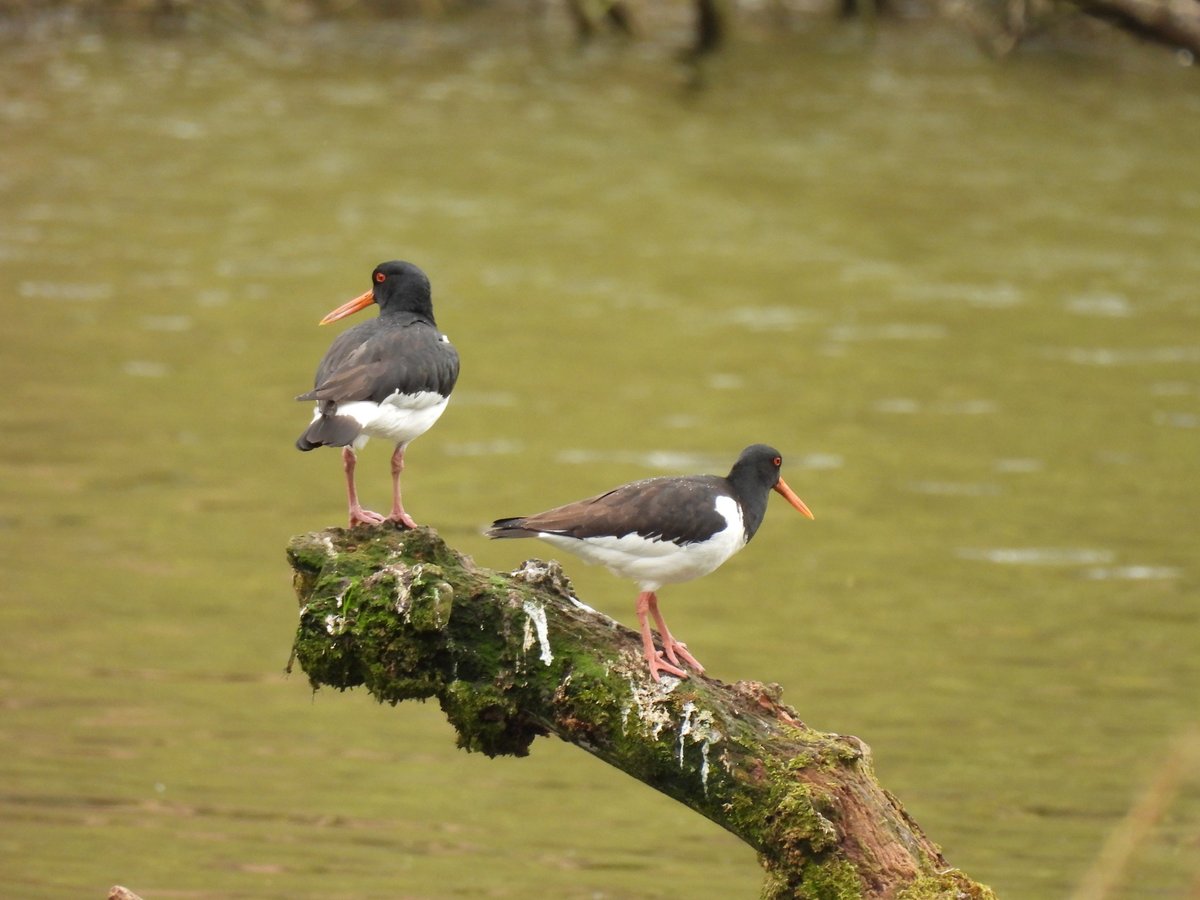
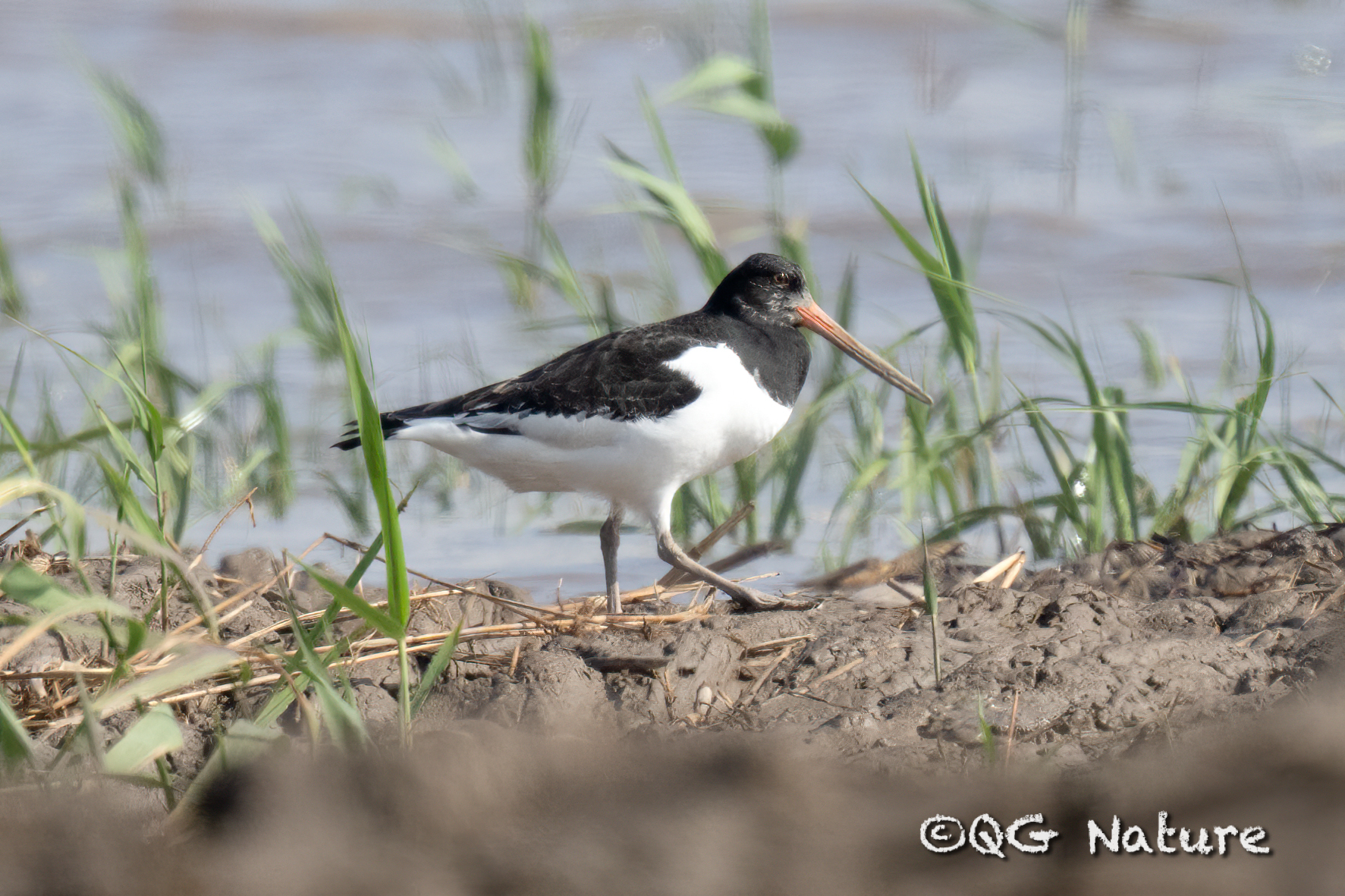
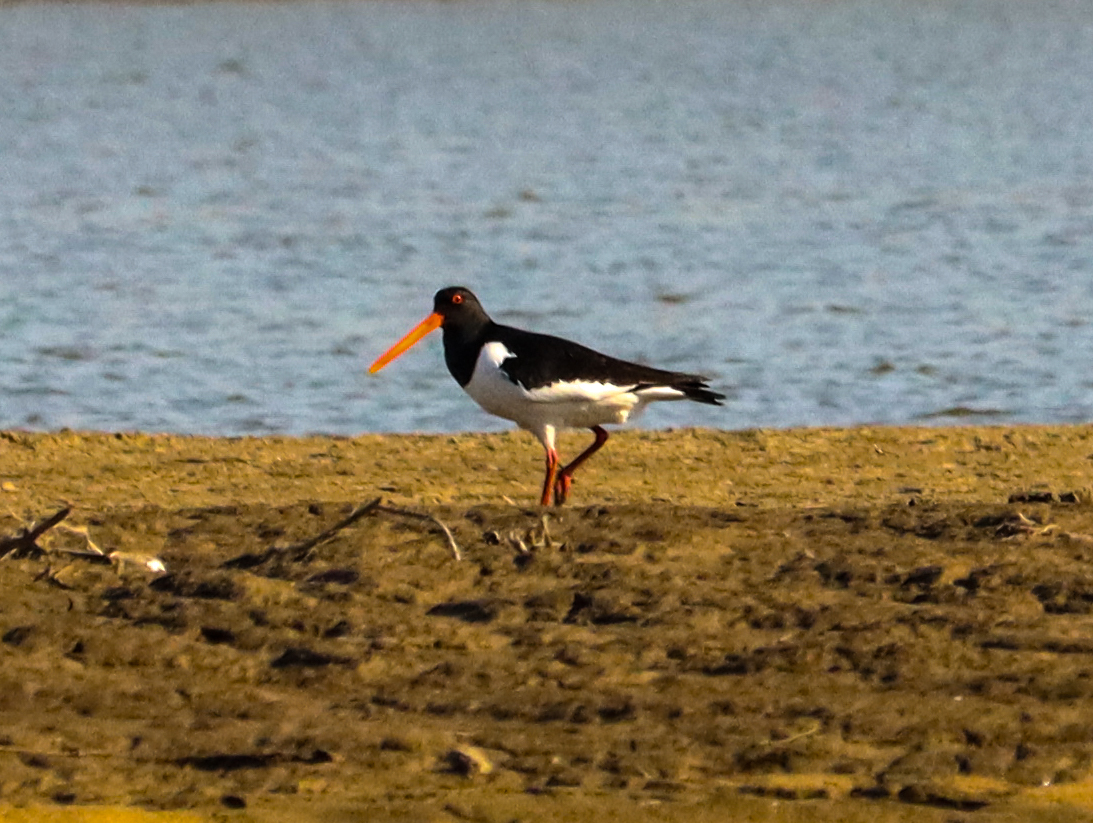
This is one of the largest waders in its range, measuring 40-45 cm in length with a substantial 8-9 cm bill and wingspan of 80-85 cm. The striking plumage features bold black upperparts and clean white underparts, set off by relatively short dull pink legs and vivid orange-red bill. The eyes are red, and both sexes appear similar, though females possess noticeably longer bills. In winter plumage, adults develop a white throat collar, though this is only visible briefly. Juveniles are overall browner with more pronounced white neck collars and duller bills. The bill shape varies geographically and individually, with western populations tending toward broader tips suited for opening molluscs, while eastern birds often have more pointed bills for digging worms.
Identification
In flight, this species is unmistakable with prominent white patches on the wings and tail contrasting against otherwise black upperparts and white underparts. The loud, distinctive piping call alerts observers to its presence. The only similar species within its range is the African oystercatcher, which is entirely black. Vagrants reaching southern Africa may occur alongside the all-black African species. The American oystercatcher, which does not overlap in range, differs in having yellow eyes and blackish-brown rather than black dorsal plumage. The white wing and tail patches in flight are diagnostic among oystercatchers within the Eurasian range.
Distribution & Habitat
The most widespread oystercatcher species, occurring across western Europe through central Eurosiberia to Kamchatka, China, and the western coast of Korea. It is largely migratory, with European populations breeding in northern regions and wintering in north Africa and southern Europe. However, breeding populations in Ireland, Great Britain, and adjacent European coasts are resident year-round, though they still move within local areas. Winter flocks concentrate in estuaries, particularly in southwest England where birds from northern England and Scotland join residents. Asian populations show similar migratory patterns. The species prefers lowland plains below 200 meters elevation with flat terrain, short vegetation, and proximity to water. It is a rare vagrant as far south as southern Africa.
Behavior & Ecology
The diet consists primarily of molluscs such as mussels and other bivalves, plus earthworms, using specialized feeding techniques that are learned from parents. Broad-tipped bills operate by prising shells apart or hammering through them, while pointed bills are adapted for digging worms. Adults are monogamous with bonds typically lasting many years, first breeding at three to five years of age. The nest is a simple scrape on pebbles or gravelly islands, either coastal or inland. Two to four eggs are laid, buffish-yellow with dark blotches, and incubated by both parents for 24-27 days. Both parents brood and feed the precocial chicks, which leave the nest after one or two days. Only one brood is raised per season. The species defends nests aggressively against aerial predators through空中 attacks, while using distraction displays against ground threats. Outside breeding, it forms large, noisy flocks.
Conservation
The species holds IUCN Least Concern status due to its large population and extensive range. It serves as an important indicator species for ecosystem health in the coastal and estuarine environments where it congregates. While not currently threatened, concerns exist regarding habitat degradation, disturbance at nesting sites, and potential impacts from climate change affecting prey availability. The species has demonstrated remarkable longevity, with one individual ringed in England in 1982 recaptured in 2025 at an estimated age of 46 years.
Culture
The species holds historical significance in ornithological taxonomy, having been formally described by Carl Linnaeus in the 10th edition of Systema Naturae in 1758. The common name 'oyster catcher' was coined by Mark Catesby in 1731 for the North American species, though the name was later applied to this Eurasian bird. Prior to this, European populations were known as 'sea pie.' The extensive behavioral ecology studies conducted on this species have contributed substantially to the development of that scientific discipline.
Source: Wikipedia · CC BY-SA 3.0
Taxonomy
- Order
- Charadriiformes
- Family
- Haematopodidae
- Genus
- Haematopus
- eBird Code
- euroys1
Subspecies (4)
-
Haematopus ostralegus buturlini
breeds western Kazakhstan to northwestern China; winters to southwestern Asia and India
-
Haematopus ostralegus longipes
breeds Ukraine to central Russia and western Siberia; winters to eastern Africa
-
Haematopus ostralegus osculans
breeds coastal Kamchatka, Sea of Okhotsk, northern Korean Peninsula, and northeastern China; winters to eastern China
-
Haematopus ostralegus ostralegus
breeds Iceland and Scandinavia eastward to northwestern Russia and southward to Iberian Peninsula and Türkiye; winters to western Africa
Data Sources
Species description from Wikipedia, licensed under CC BY-SA 3.0.
Bird images and sounds sourced from GBIF, contributed by citizen scientists worldwide under Creative Commons licenses.
Taxonomy data from AviList 2025.