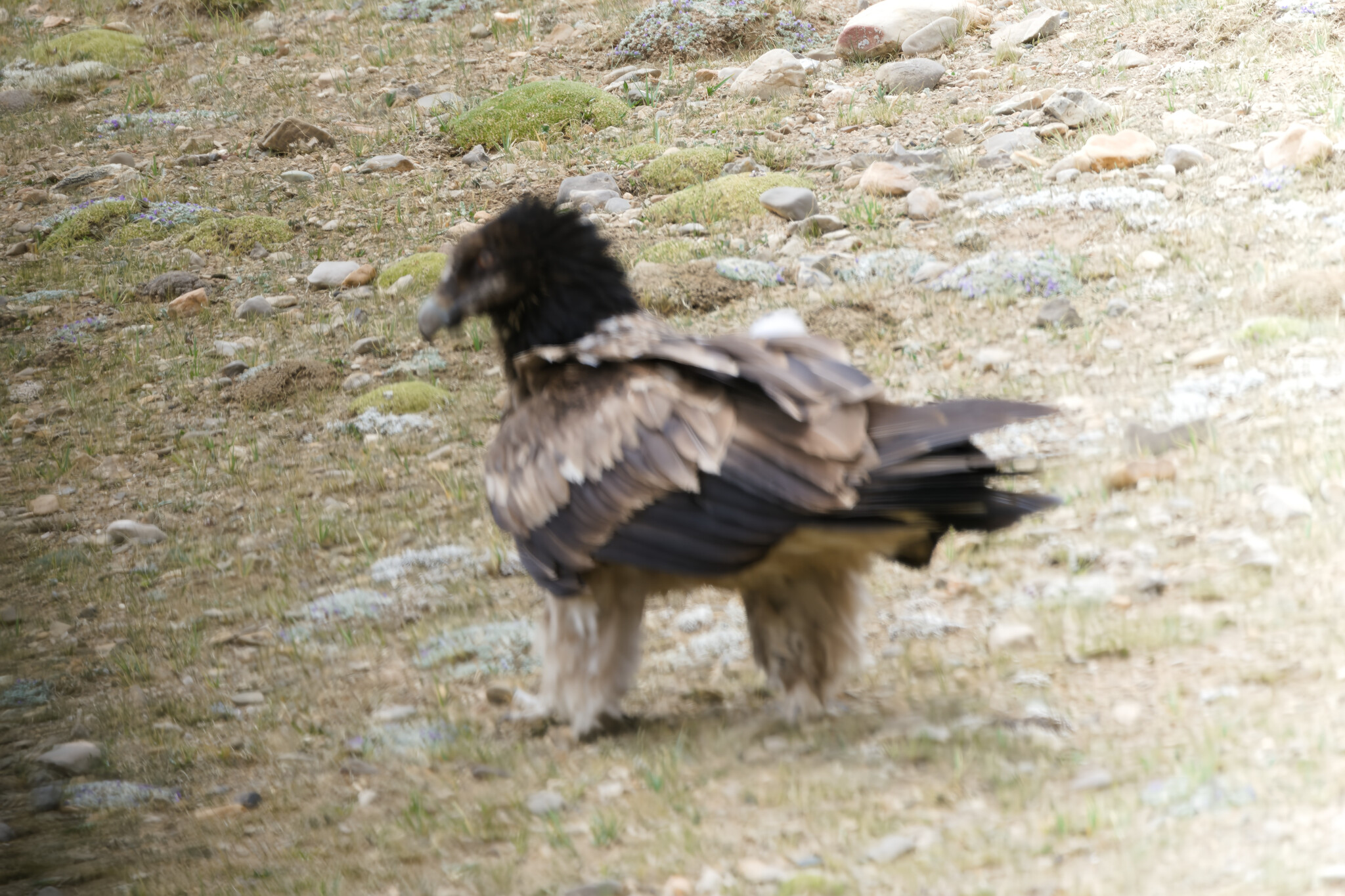
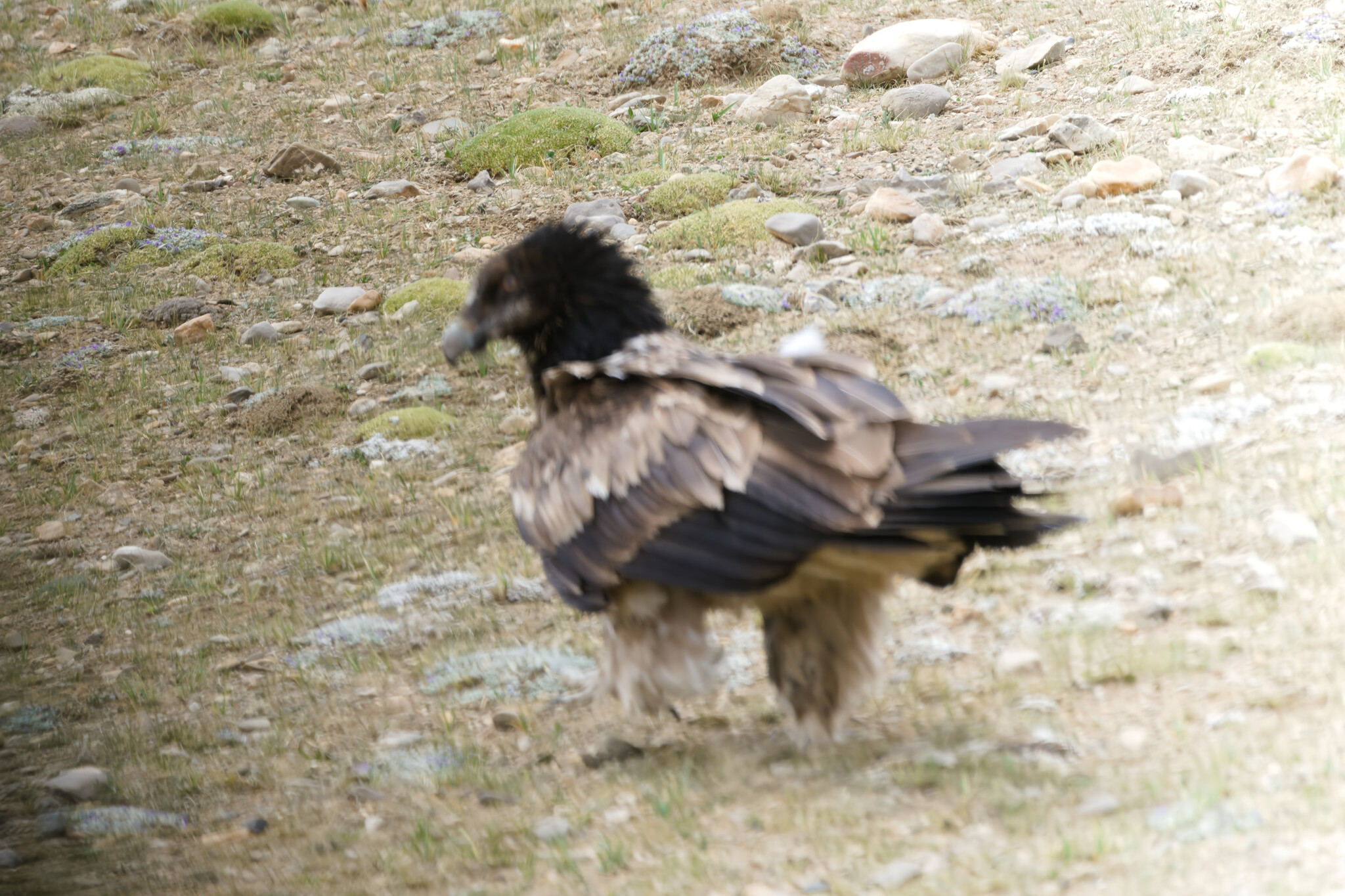
Accipitriformes / Accipitridae / Gypaetus
Bearded Vulture
Gypaetus barbatus · 胡兀鹫
Introduction
A very large bird of prey in the monotypic genus Gypaetus, forming a separate minor lineage of Accipitridae with the Egyptian vulture. It is the only known vertebrate whose diet consists of 70–90% bone. The species inhabits high mountain crags across Iran, southern Europe, East Africa, the Indian subcontinent, Tibet, and the Caucasus. Listed as Near Threatened on the IUCN Red List since 2014.
Description
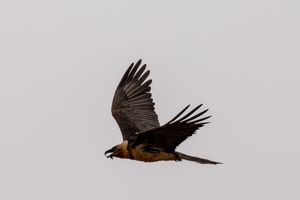
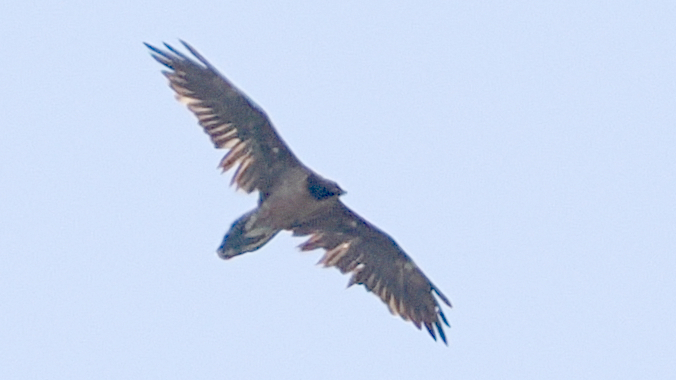
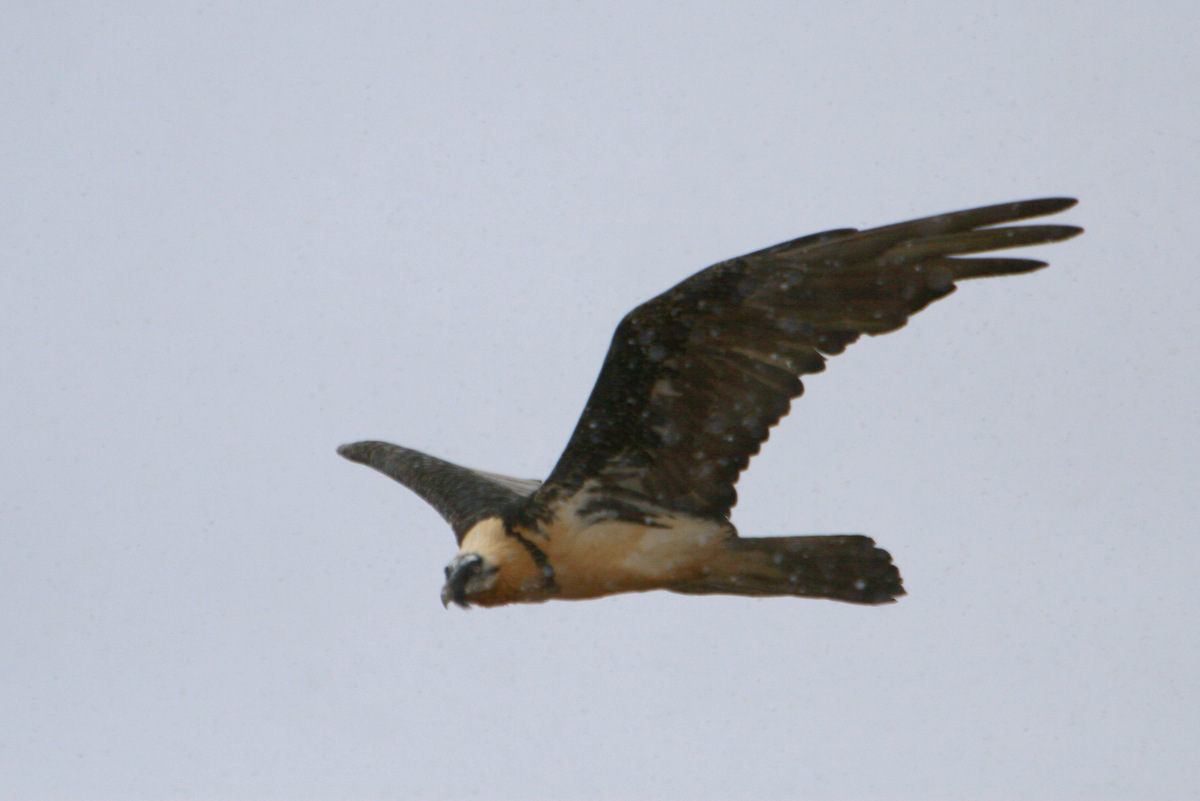
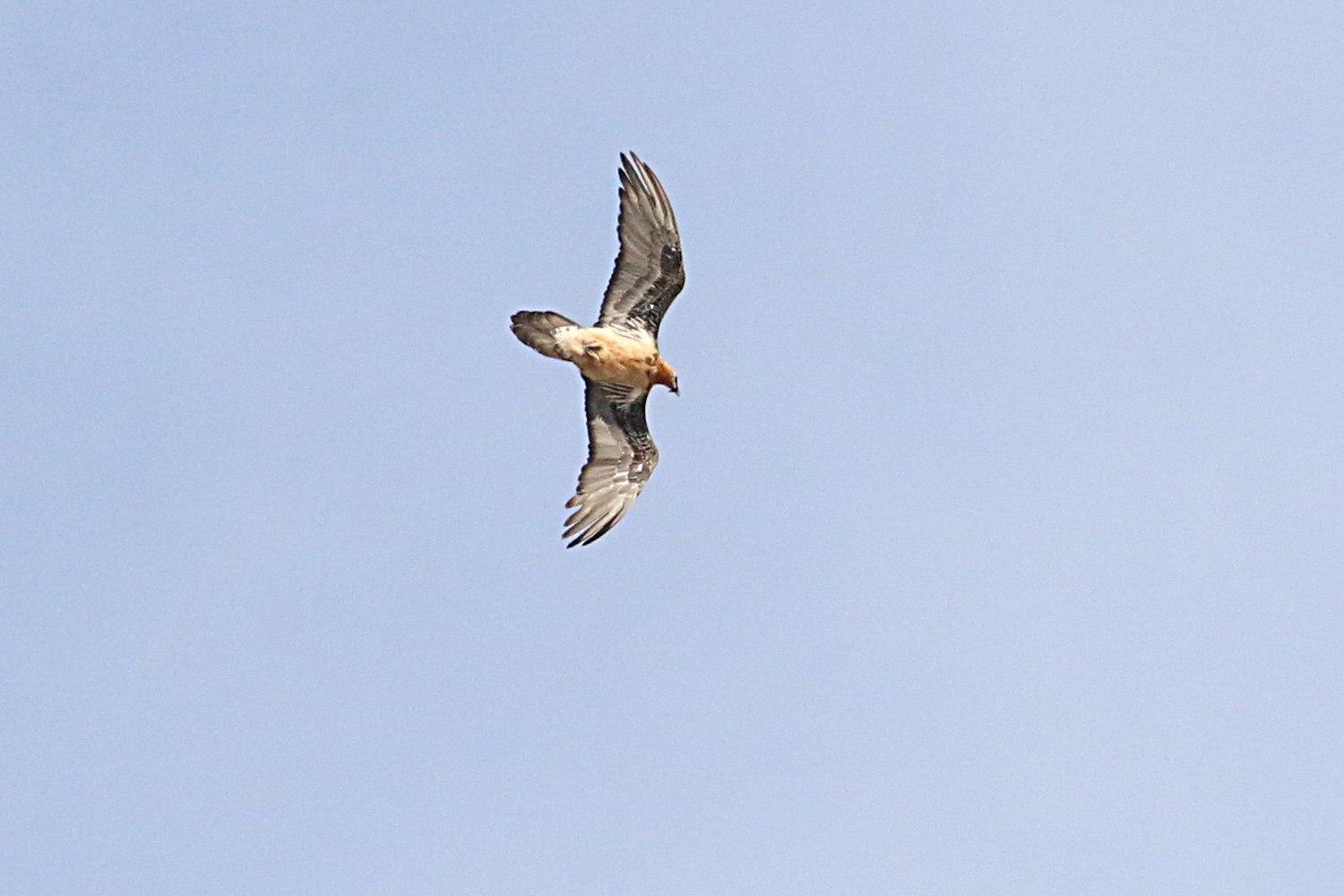
Length 94–125 cm; wingspan 2.31–2.83 m; weight 4.5–7.8 kg. Females are slightly larger than males. The adult has a generally elongated, slender shape with long, narrow wings and a long, wedge-shaped tail. Plumage is grey-blue to grey-black above, with a creamy forehead contrasting against a black band across the eyes and lores. Black bristles under the chin form a beard. Head, breast, and leg feathers are variably orange or rust-colored due to cosmetic dust-bathing in iron-rich mud. Juveniles are dark black-brown, attaining adult plumage over five to seven years.
Identification
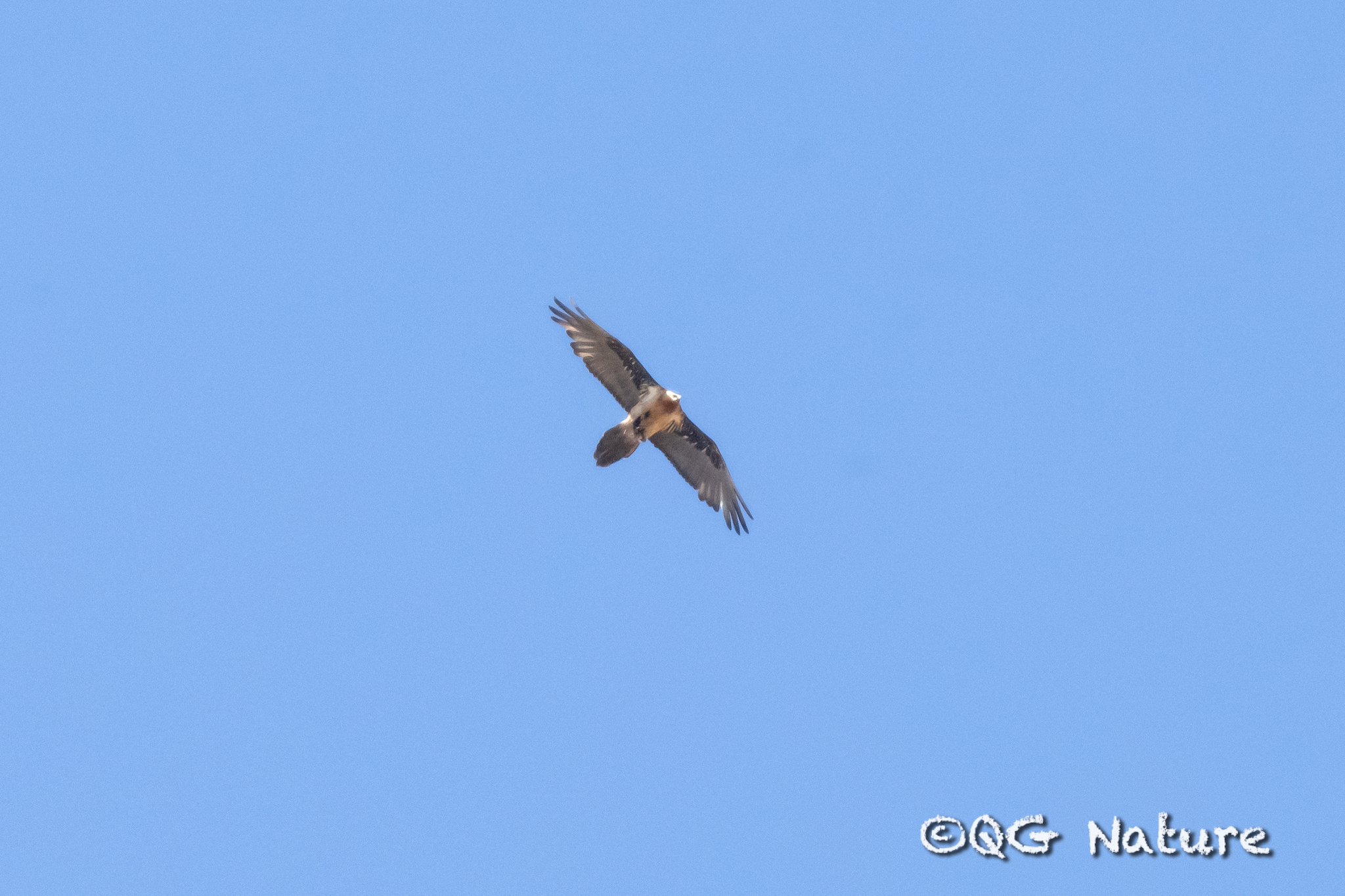
Unmistakable in flight due to long, narrow wings and a long, wedge-shaped tail that is longer than the wing width. Unlike most vultures, it has a feathered neck and head. Key marks include the black eye-band and chin bristles (beard) and often rusty-orange staining on the underside from mud-bathing. Flight style involves soaring with wings held flat or slightly raised.
Distribution & Habitat
Sparsely distributed in mountainous regions including the Pyrenees, Alps, Caucasus, Zagros and Alborz Mountains, Himalayas, Altai Mountains, and western/central China. In Africa, found in the Atlas Mountains, Ethiopian Highlands, and from Sudan to northern Tanzania, with an isolated population in the Drakensberg. Typically resides above 2,000 m, up to 7,500 m in the Himalayas. Reintroduced populations exist in the Swiss and Italian Alps and parts of Spain.
Behavior & Ecology
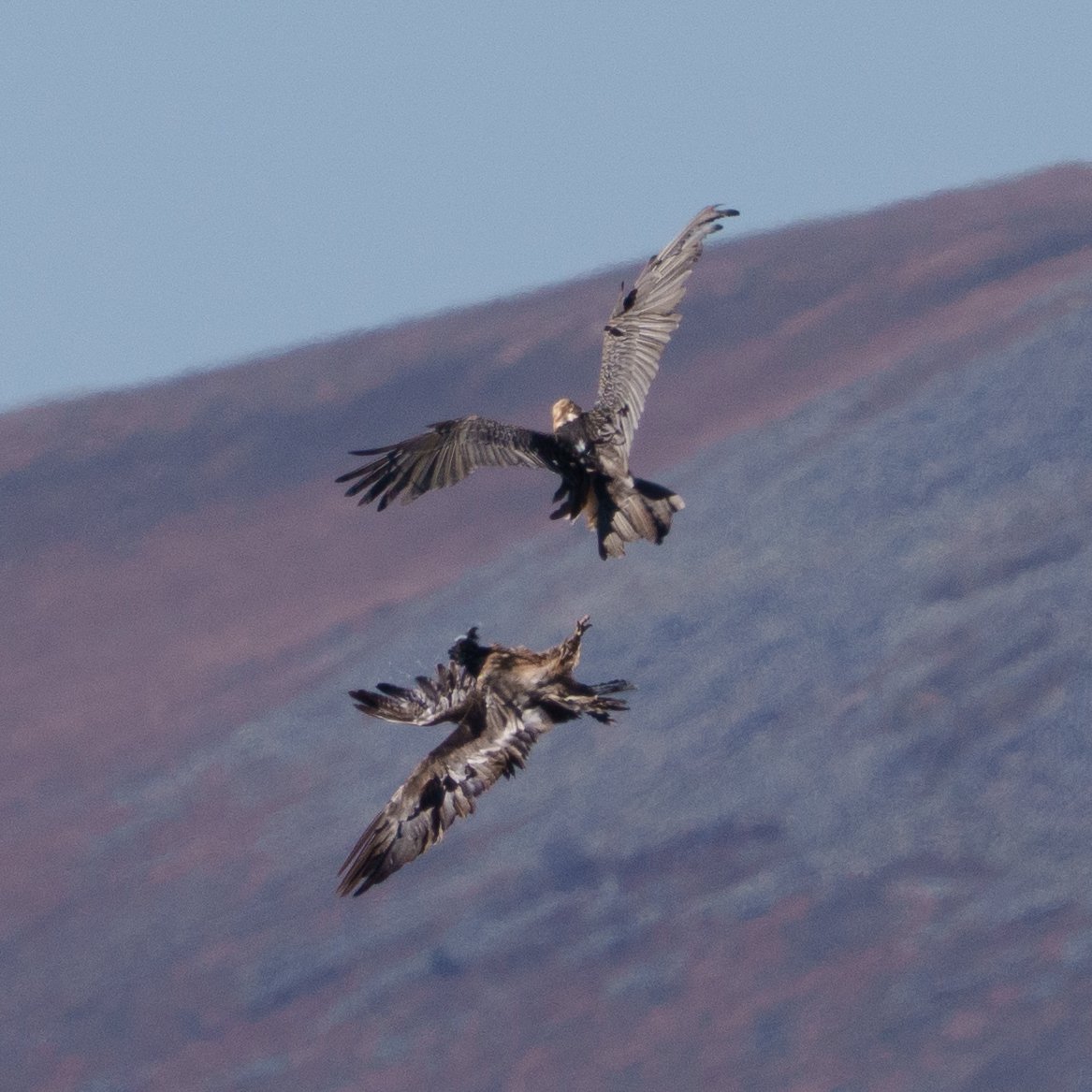
Specialized scavenger feeding 85–90% on bones. Cracks large bones by carrying them 50–150 m high and dropping them onto rocks. Also preys on live tortoises, hares, and young ungulates by dropping them or battering them off cliffs. Nests on steep rock ledges or in caves. Breeding pairs perform aerial displays involving tumbling and locking feet. Clutch size is 1–2 eggs; incubation lasts 53–60 days. Young fledge after 100–130 days but may remain dependent for up to two years.
Conservation
Listed as Near Threatened on the IUCN Red List. Populations have declined due to habitat loss, collision with power lines, poisoning, and persecution. Reintroduction programs in the Alps and Spain have helped recover numbers. Conservation measures include mitigating energy structure collisions, managing supplementary feeding sites to reduce poisoning risks, and outreach programs.
Culture
Known as Homa in Iranian mythology, symbolizing luck and sovereignty. Associated with sky burials in Tibet, where corpses are fed to the birds. Mentioned in the Bible/Torah as forbidden food. The Hebrew name peres inspired the surname of Shimon Peres. Greek legend suggests Aeschylus was killed by a tortoise dropped by this bird.
Source: Wikipedia · CC BY-SA 3.0
Taxonomy
- Order
- Accipitriformes
- Family
- Accipitridae
- Genus
- Gypaetus
Subspecies (2)
-
Gypaetus barbatus barbatus
mountains of southern Europe and northwestern Africa to central and northeastern China
Data Sources
Species description from Wikipedia, licensed under CC BY-SA 3.0.
Bird images and sounds sourced from GBIF, contributed by citizen scientists worldwide under Creative Commons licenses.
Taxonomy data from AviList 2025.