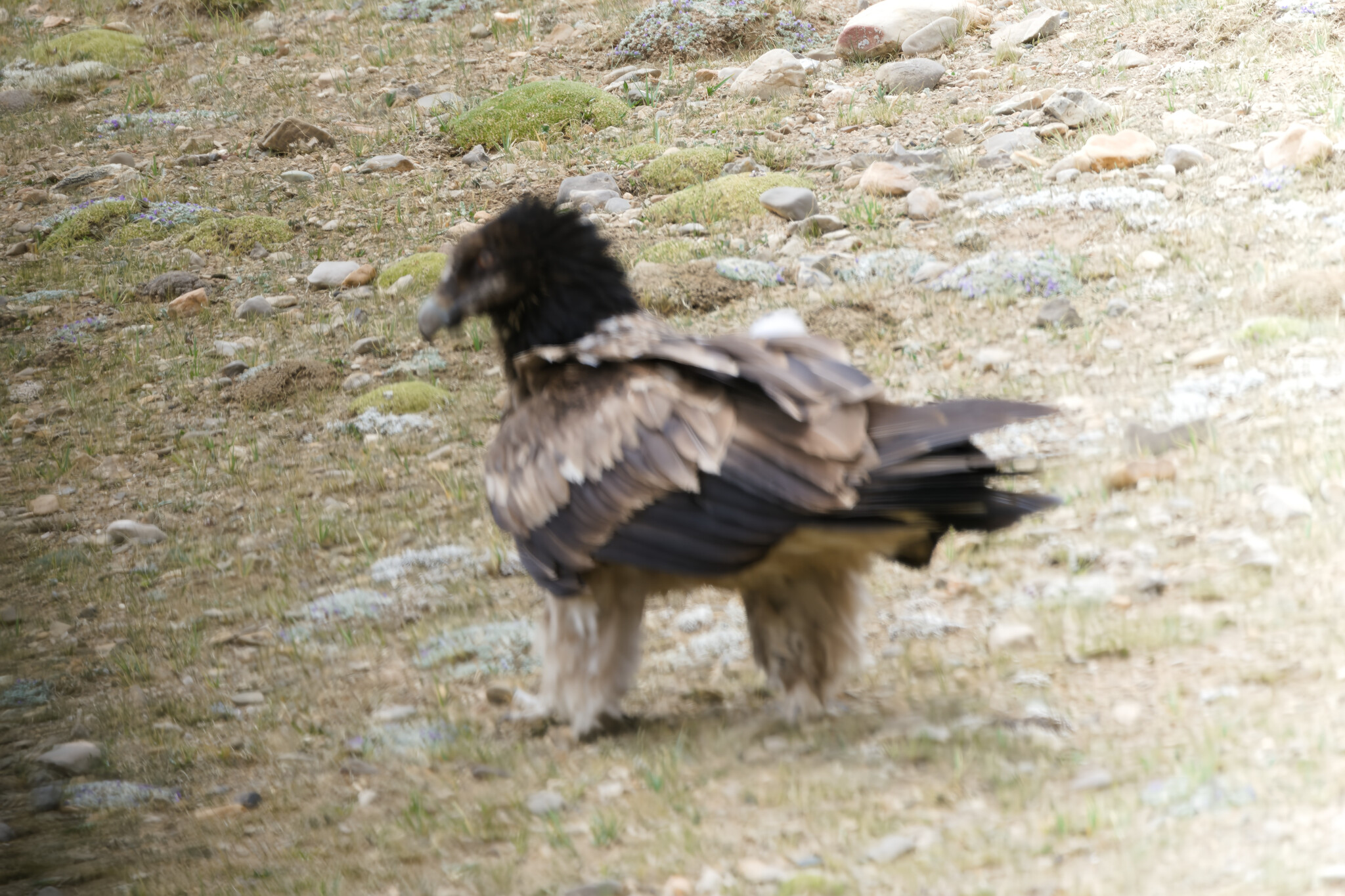
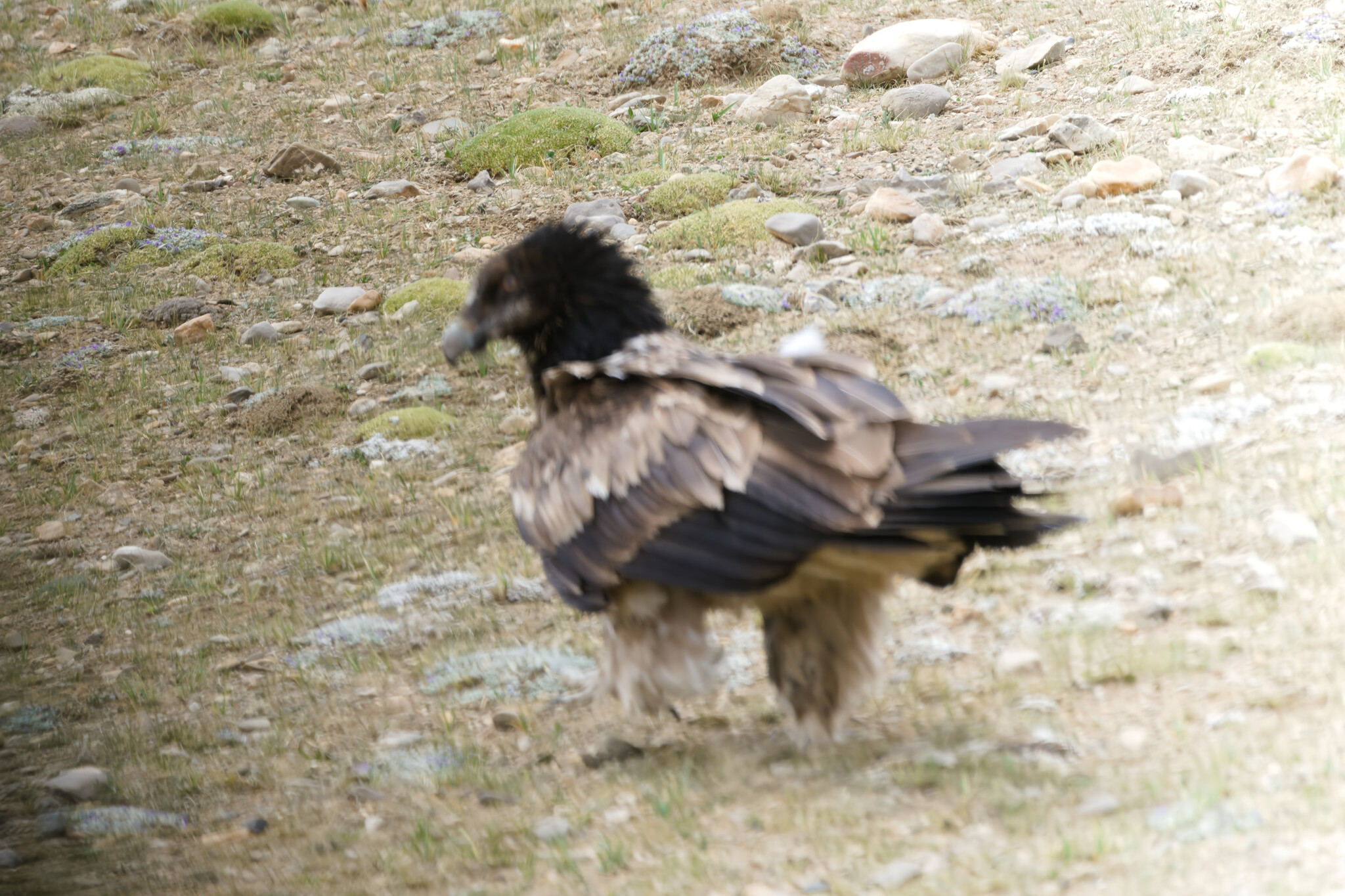
Bearded Vulture
Gypaetus barbatus
胡兀鹫
Introduction
Monotypic genus Gypaetus in family Accipitridae. Forms a separate minor lineage of Accipitridae together with the Egyptian vulture, its closest living relative. Distinguished from Old World vultures by feathered neck and lozenge-shaped tail. The only vertebrate known to have a diet of 70-90% bone. Range includes high mountain crags in Iran, southern Europe, East Africa, the Indian subcontinent, Tibet, and the Caucasus. Conservation status: Near Threatened since 2014 (was Least Concern in 2004). Females lay one or two eggs in mid-winter that hatch at the beginning of spring.
Description
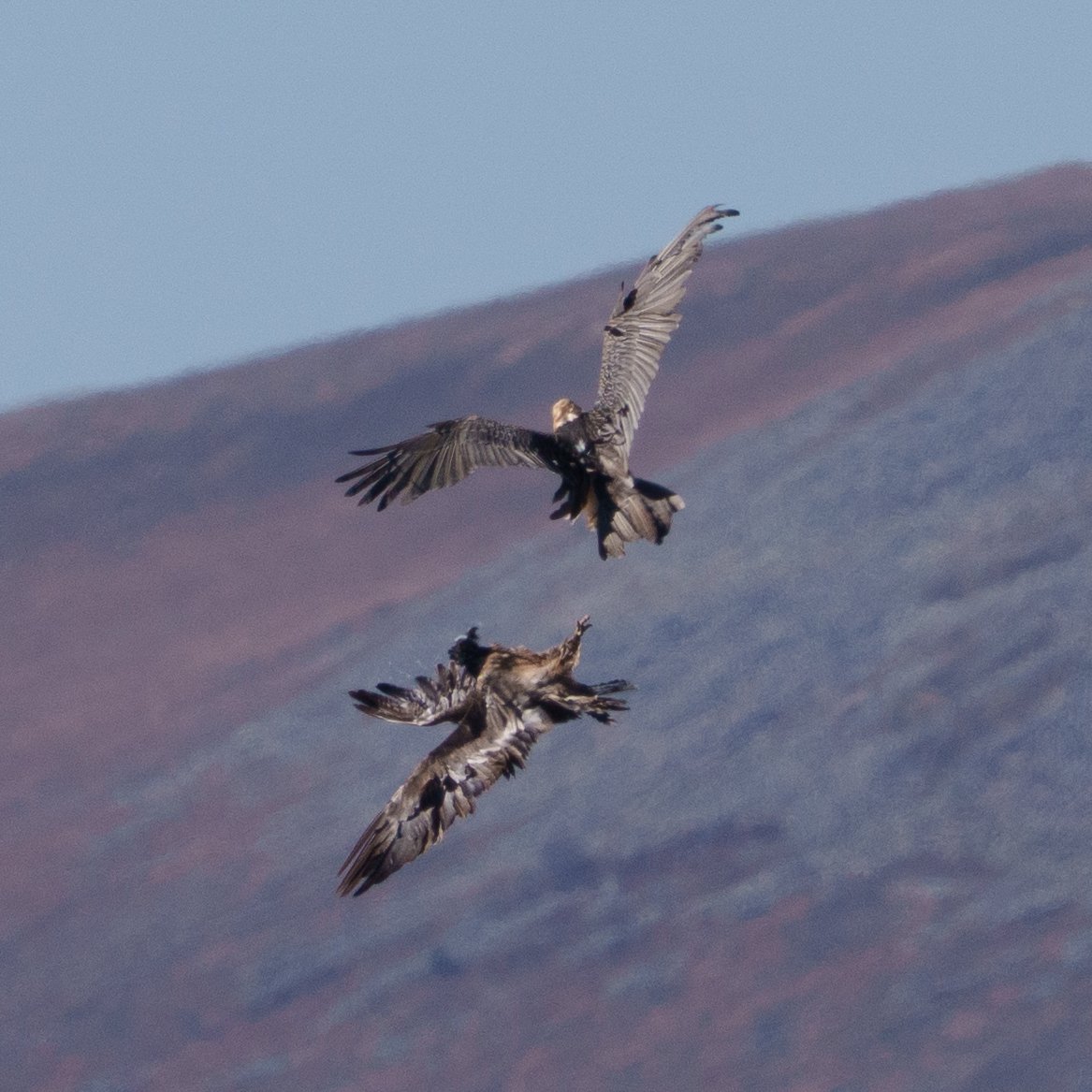
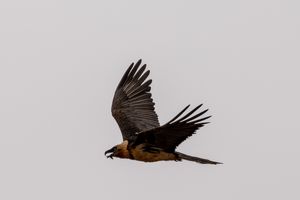
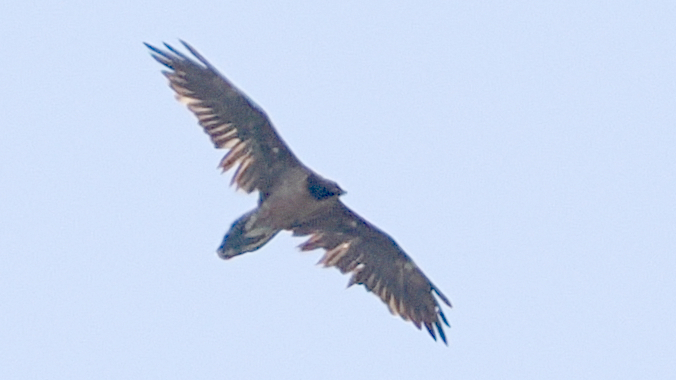
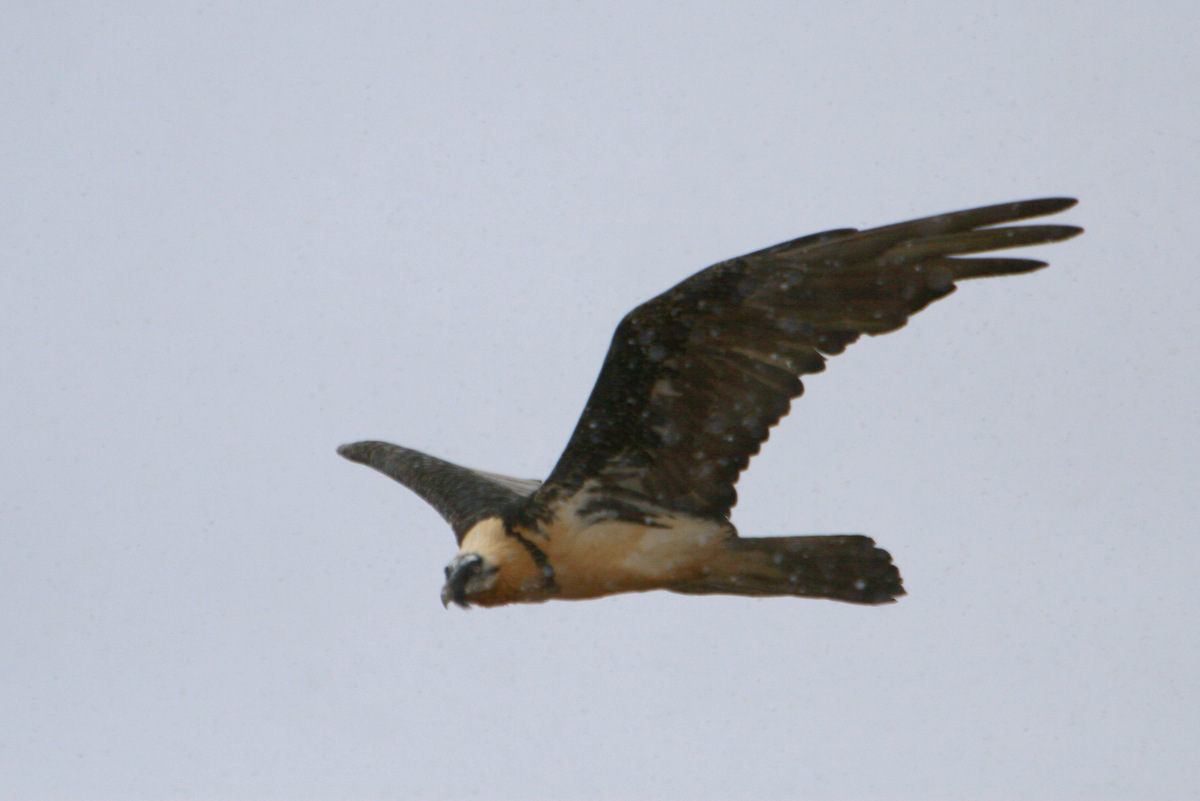
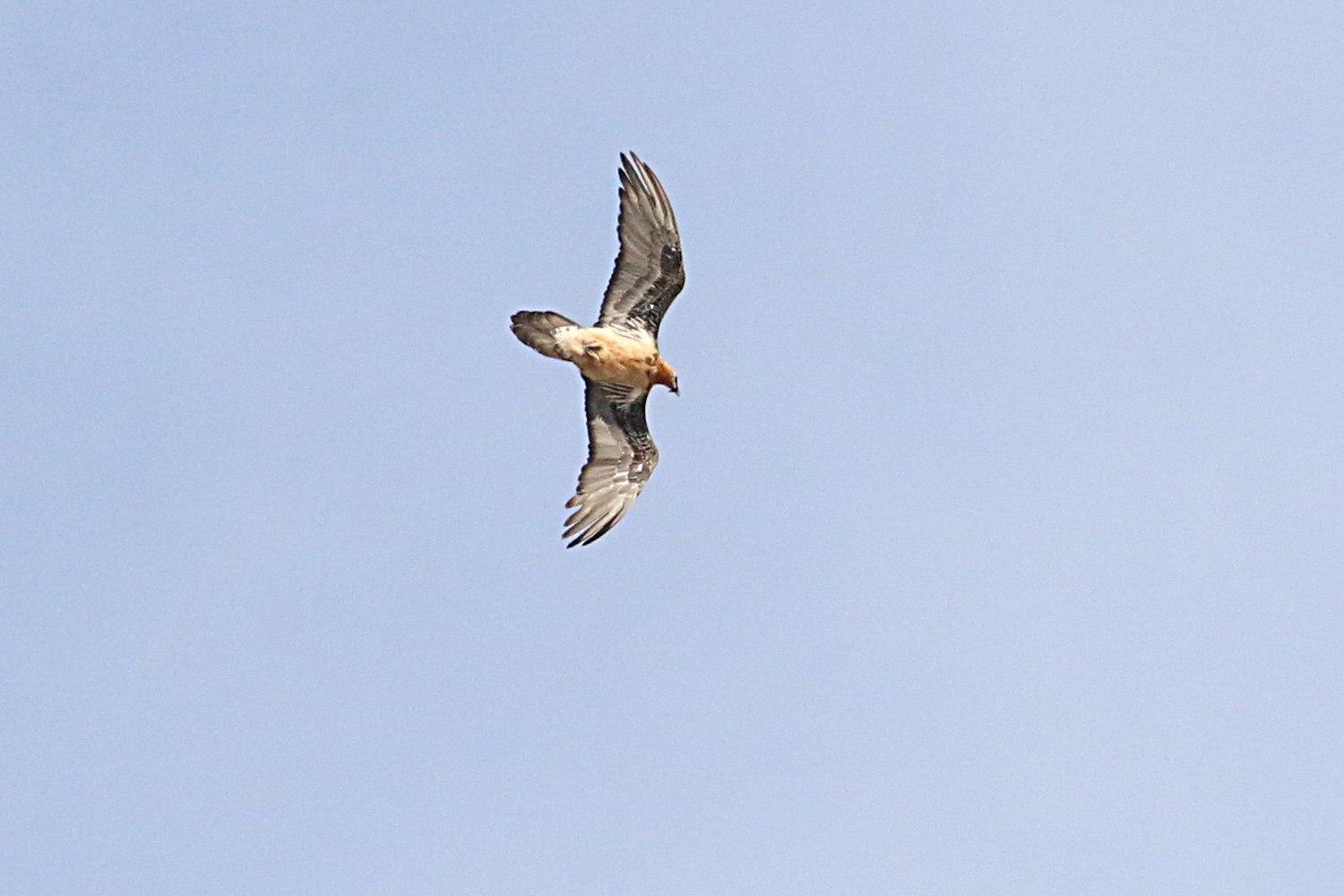
Length 94-125 cm with wingspan 2.31-2.83 m. Weight 4.5-7.8 kg; nominate race averages 6.21 kg, African race 5.7 kg. Females slightly larger than males. Long, narrow wings with chord 71.5-91 cm and wedge-shaped tail 42.7-52 cm, longer than wing width. Tarsus 8.8-10 cm. Adult is grey-blue to grey-black above with mostly dark grey, rusty, and whitish plumage. Creamy forehead contrasts with black band across eyes and lores, and black bristles under chin form characteristic beard. Head, breast, and leg feathers appear orange or rust from iron-rich mud. Wings and tail dark grey. Juveniles are dark black-brown with grey-brown breast; plumage takes 5-7 years to mature, first breeding at 8 years or older.
Identification
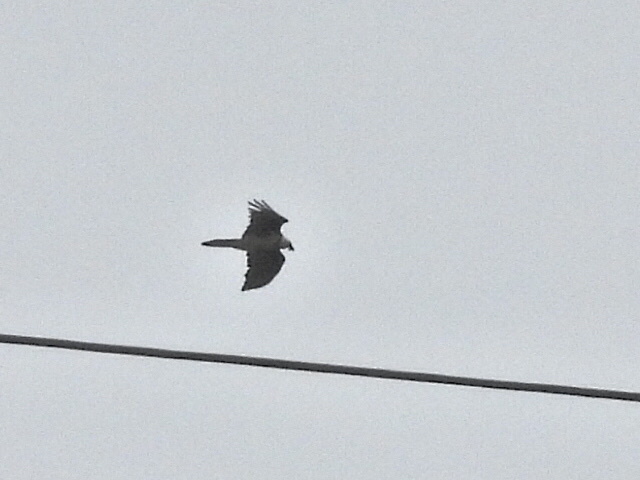
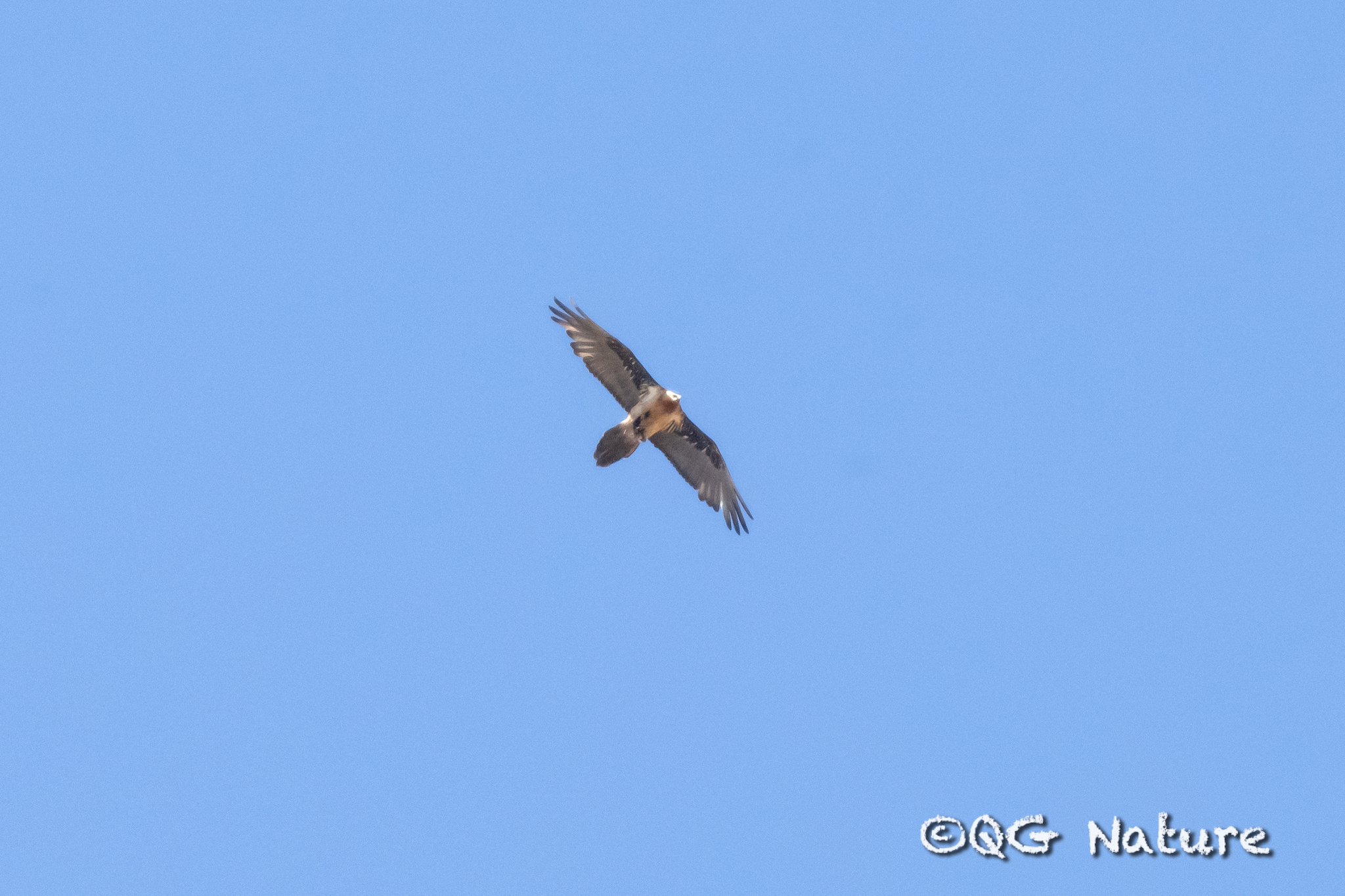
Unmistakable in flight due to extremely long, narrow wings and long wedge-shaped tail. Proportions resemble a falcon scaled to enormous size. Differs from other vultures by having fully feathered neck rather than bald head. The combination of feathered neck, lozenge-shaped tail, and distinctive orange-rust staining on head and underparts is unique among birds of prey.
Distribution & Habitat
Sparsely distributed across vast range in mountainous regions. European populations occur in Pyrenees, Alps, and reintroduced areas in Spain. Asian range extends through Caucasus, Iranian mountains, Altai, Himalayas, and western/central China. African populations inhabit Atlas Mountains, Ethiopian Highlands, and range from Sudan to northeastern DRC, central Kenya, and northern Tanzania, with isolated population in Drakensberg, South Africa. Resident Spanish population estimated at 1,200-1,500 individuals as of 2018; southern African population about 632 birds in 2010. Typically rare below 1,000 m, normally resides above 2,000 m; occurs up to 2,000 m in Europe, 4,500 m in Africa, 5,000 m in central Asia, and recorded at 7,500 m in Himalayas.
Behavior & Ecology
Specialized scavenger feeding mostly on remains of dead animals; diet 93% mammals, 6% birds, 1% reptiles. Typically consumes 85-90% bones including marrow. Swallows whole or cracks bones up to lamb femur size. Drops large bones from 50-150 m height onto rocks to shatter them, exposing marrow. Can carry bones up to 10 cm diameter weighing over 4 kg. Also preys on live tortoises, dropping them from height to crack shells. Forages by flying low, 2-4 m over rocky ground. Breeding period varies by region: December-September in Eurasia, November-June in Indian subcontinent, October-May in Ethiopia, year-round in eastern Africa. Monogamous with biparental care; rare cases of polyandry. Nest is massive pile of sticks 1-2.5 m across. Female lays 1-2 eggs incubated 53-60 days; young fledge after 100-130 days and may remain dependent up to 2 years. Silent except for shrill whistles in breeding displays and falcon-like call around nest. Lifespan averages 21.4 years, up to 45 years in captivity.
Conservation
IUCN status: Near Threatened. Among most endangered European bird species, with drastic range and abundance decline over last century. European population was almost wiped out; by early 20th century only significant numbers remained in Spanish and French Pyrenees. Ethiopian population 1,400-2,200 pairs represents largest population. Threats include habitat loss from human expansion and infrastructure (houses, roads, power lines), collision with power lines, reduced food availability, poisoned bait left for carnivores, direct persecution, and trophy hunting. Conservation actions include South African Biodiversity Management Plan, mitigation of energy structures to prevent collisions, improved management of feeding sites, outreach programs to reduce poisoning, and reintroduction programs. Foundation for Conservation of Bearded Vulture (established 1995 in Spain) has helped recover Spanish population to over 1,000 individuals. Alpine reintroduction from 1987-2015 released over 200 birds, establishing self-sustaining population.
Culture
Considered symbol of luck and happiness in Iranian mythology (Homa), believed that anyone shooting the bird would die in forty days. Ancient Greeks used ornithomancers for political guidance; ossifrage was one of few species yielding valid signs to soothsayers. Tibetans practice sky burial, feeding corpses to this vulture accompanied by prayers; birds are called jagod and considered blessed. Mentioned in Bible/Torah (Leviticus 11:13) among birds forbidden to eat. Greek playwright Aeschylus reputedly killed in 456 BC by tortoise dropped by eagle; bearded vulture is likely candidate for this eagle. Shimon Peres and David Ben-Gurion found a nest in Negev desert in 1944; Shimon Persky later adopted 'Peres' as surname.
Source: Wikipedia · CC BY-SA 3.0
Taxonomy
- Order
- Accipitriformes
- Family
- Accipitridae
- Genus
- Gypaetus
- eBird Code
- lammer1
Subspecies (2)
-
Gypaetus barbatus barbatus
mountains of southern Europe and northwestern Africa to central and northeastern China
-
Gypaetus barbatus meridionalis
locally in eastern and southern Africa and southwestern Arabia
Data Sources
Species description from Wikipedia, licensed under CC BY-SA 3.0.
Bird images and sounds sourced from GBIF, contributed by citizen scientists worldwide under Creative Commons licenses.
Taxonomy data from AviList 2025.